
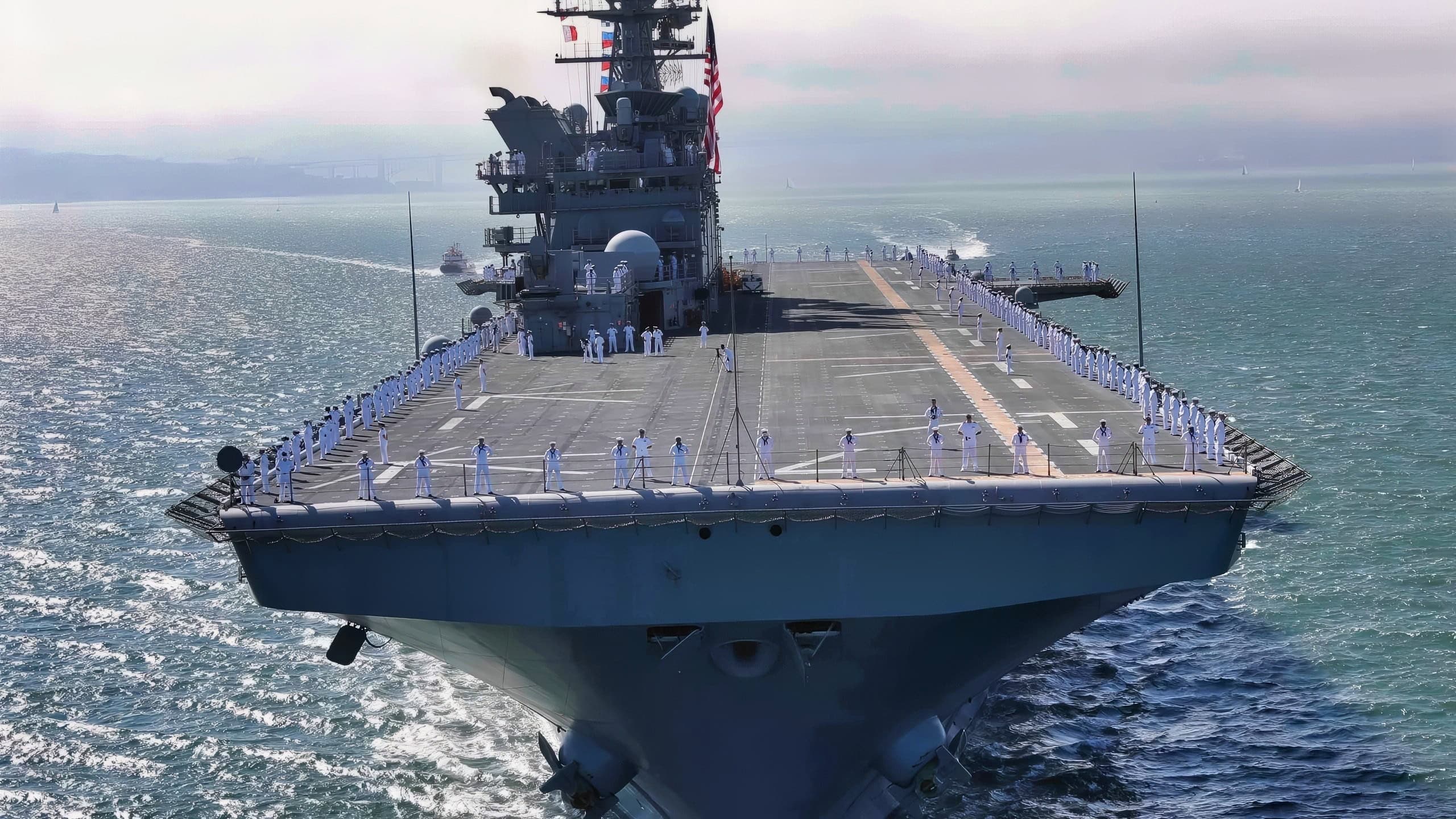
1 Aircraft Carrier Fighting Iran, 1 on Fire, 1 Still Days Away: The Navy Is Improvising in Iran War
Negative rhetoric from the mainstream media and political pundits notwithstanding, the Operation Epic Fury/Operation Roaring Lion campaign against the totalitarian, theocratic, and terroristic regime of the Islamic Republic of Iran is going quite well for the most part. And the Navy and overall U.S. military has some tricks up its sleeve.
However, there is at least one glaring area of concern: though this is the United States Armed Forces’ largest air campaign since Operation Iraqi Freedom back in 2003, the U.S. Navy has only one nuclear-powered aircraft carrier (AKA “supercarrier”) contributing to the fight against Iran, that being the namely the Nimitz-class “flattop” USS Abraham Lincoln (CVN-72).
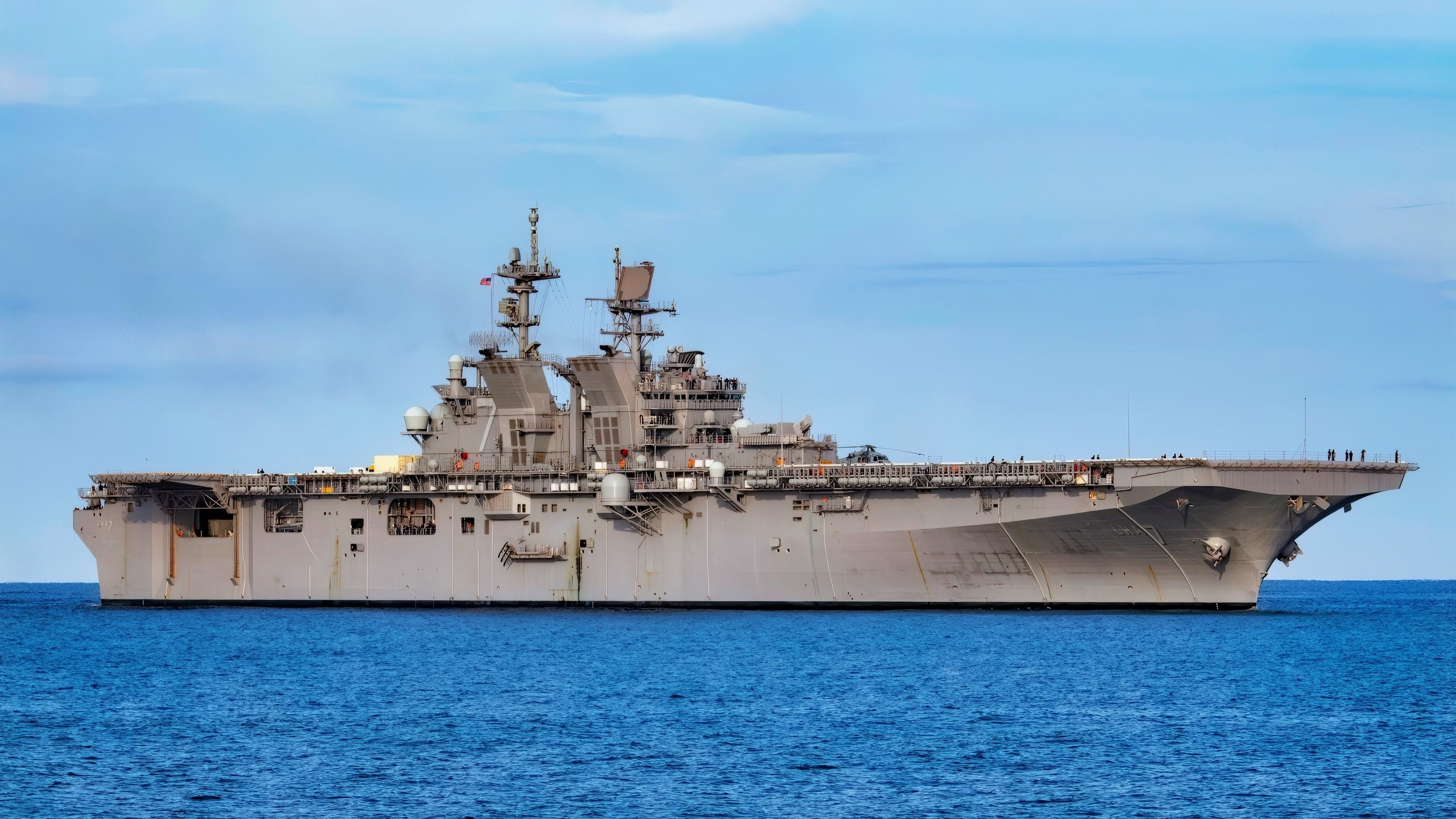
GUANTANAMO BAY, Cuba (Aug. 3, 2020) The amphibious assault ship USS Tripoli (LHA 7), the second America-class amphibious assault ship, transits toward Naval Station Guantanamo Bay, Aug. 3, 2020. Tripoli commissioned July 15 and is en route to homeport in San Diego. Naval Station Guantanamo Bay is the forward, ready, irreplaceable U.S. sea power platform in the Caribbean. (U.S. Navy photo by Mass Communication Specialist 2nd Class Samantha Oblander)
Part of the reason for this carrier shortage is the fact that the USS Gerald R. Ford (CVN-78) suffered a fire two weeks ago, forcing her to sail to Naval Support Activity Souda Bay in Crete for more than a week of pierside repairs.
Help is on the way, though it’ll take several days to reach the region.
First of all, the USS George H.W. Bush (CVN-77)–which just so happens to be the newest ship of the Nimitz class (commissioned in January 2009)—— is en route. Second, our current topic, the USS Tripoli (LHA-7), is also rushing to the region.
Now, if one wanted to nitpick from a glass-half-empty standpoint, one could point out that, technically speaking, the USS Tripoli is considered an amphibious assault ship and not a true full-fledged aircraft carrier.
But from the glass-half-full standpoint, she’s embodying the military mantra of “Improvise, Adapt, Overcome,” the Tripoli is punching above her weight and “winging it” (bad pun intended) as a light aircraft carrier…and with stealth warplanes to boot.
Semantics Part I: What Exactly Is an Amphibious Assault Ship?
A useful working definition of the term is provided by an October 16, 2024, Sea Force Editorial:
“Amphibious assault ships are specialized vessels designed to deliver and support ground troops and equipment during military operations. These ships facilitate seamless transitions from sea to land, playing an integral role in amphibious warfare…Key features of these ships include their unique design and structure, which allow for the transport of troops, vehicles, and supplies. They typically possess a well deck for launching and recovering landing craft, a flight deck for operating **helicopters**, and extensive internal storage areas.” [emphasis added]
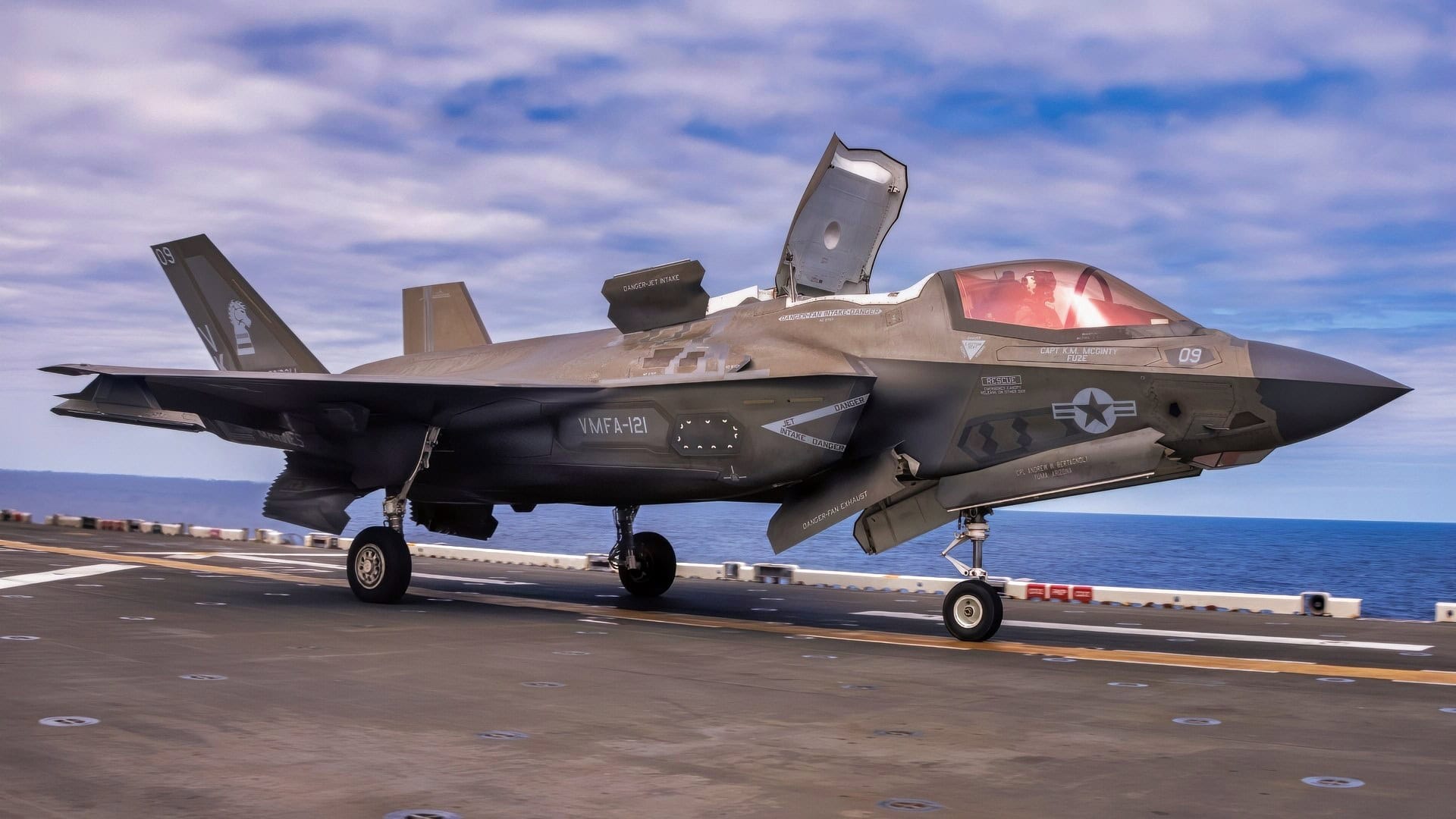
A U.S. Marine Corps F-35B Lightning II assigned to Marine Fighter Attack Squadron (VMFA) 121, 31st Marine Expeditionary Unit, takes off during a joint service flyover in the Philippine Sea, Feb. 26, 2026. Aircraft participated in a coordinated event to demonstrate joint service readiness and maritime capabilities. The 31st MEU is a persistent, combat credible force operating aboard the ships of the Tripoli Amphibious Ready Group in the U.S. 7th fleet area of operations, routinely interacting and operating with our allies and partners to contribute to deterrence, security, crisis response, and combat operations in the Indo-Pacific region. (U.S. Marine Corps photo by Lance Cpl. Victor Gurrola)
Note that the definition specifically mentions helicopters, i.e., rotary wing assets, and nothing about fixed-wing aircraft (more on this in a bit).
Semantics Part Deux: The Proud Tripoli Namesake
In addition to serving as the name of the capital of Libya (as well as the name of a city in northern Lebanon), the word “Tripoli” strikes a chord with past and present U.S. Marines, by virtue of the opening line of The Marines’ Hymn: “From the halls of Montezuma, to the shores of Tripoli.”
Those latter five words refer to the Marines’ victory (under the leadership of 1stFirst Lieutenant Presley O’Bannon) in the Battle of Derna during the First Barbary War in 1805.
Two previous U.S. Navy vessels bore the moniker USS Tripoli: (1) CVE-64, a World War II Casablanca-class escort carrier; and (2) LPH-10, an amphibious assault ship that served during the Cold War, Operation Desert Storm (the 1992 Persian Gulf War), and Operation Restore Hope (the disastrous Somalia operation of 1992-1993).
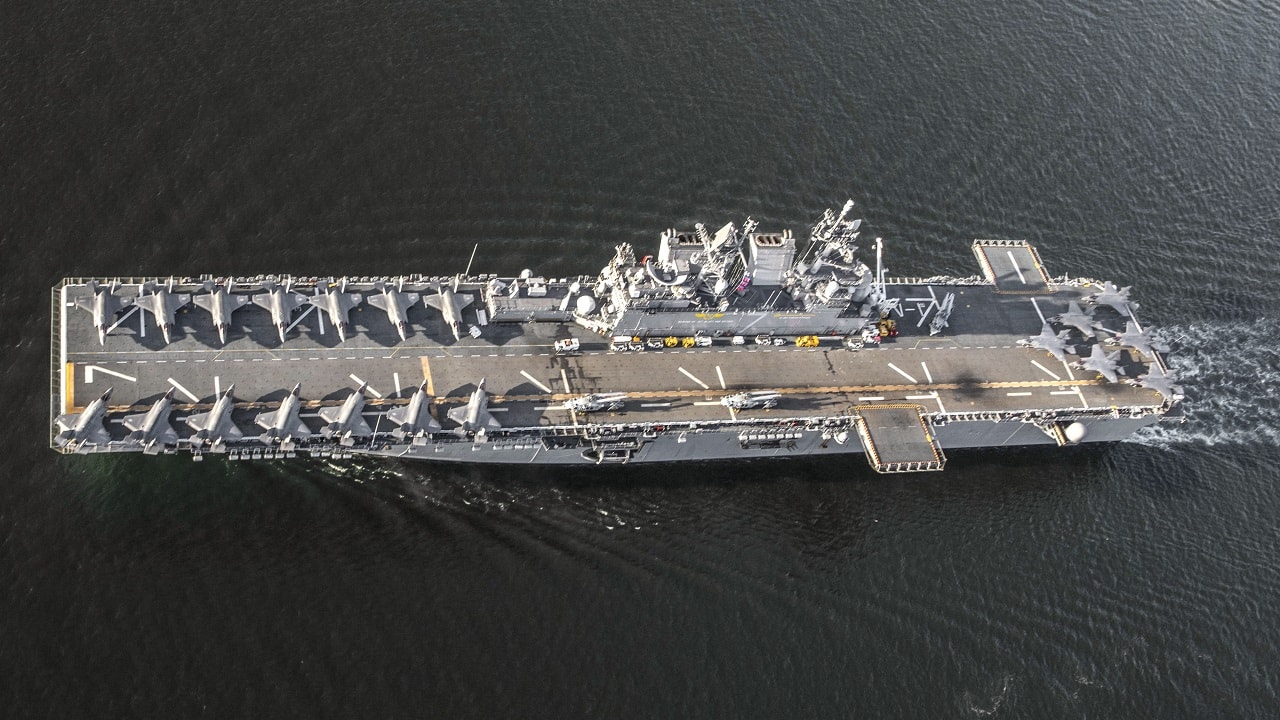
Amphibious assault ship USS Tripoli (LHA- 7) , departs Naval Air Station North Island, Calif., April 7, 2022. Tripoli completed flight deck operations with 20 F-35B Lightning II jets from Marine Fighter Attack Squadrons 211 and 225, Marine Aircraft Group 13, and 3rd Marine Aircraft Wing, as well as Marine Operational Test and Evaluation Squadron 1, as part of the U.S. Marine Corps’ Lightning carrier concept demonstration. The Lightning carrier concept demonstration shows Tripoli and other amphibious assault ships are capable of operating as dedicated fixed-wing strike platforms when needed, capable of bringing fifth generation Short Takeoff/Vertical Landing aircraft wherever they are required. (U.S. Marine Corps photo by Sgt. Samuel Ruiz)
USS Tripoli (LHA-7) Initial History
Built by Huntington Ingalls Industries (HII) at their shipyard in Pascagoula, Mississippi, the third USN warship to bear the USS Tripoli name was awarded on May 31, 2012, laid down on June 20, 2014, launched on May 1, 2017, christened on September 16, 2017 by Lynne Mabus (the wife of the 75th Secretary of the Navy [SECNAV], the Honorable Ray Mabus), acquired on February 28, 2020, and commissioned on July 15, 2020 (yes, smackdab in the middle of the COVID crisis).
Her motto is “IN ÆRE TERRAM MARIQUE,“ which translates to “IN THE AIR, ON LAND, AND SEA” and evokes the second line of The Marines’ Hymn (“We fight our country’s battle, in the air, on land, and sea”).
LHA-7 Tech Specs and Vital Stats
-Displacement: Approximately 45,000 long tons
-Hull Length: 844 feet
-Beam Width: 106 feet
-Draft: 26 feet
-Propulsion: Gas turbine propulsion plant, zonal electrical distribution, and fuel-efficient electric auxiliary propulsion systems generating 70,000 bhp (52,000 kW)
-Max Speed: In excess of 20 knots
-Crew Complement: 102 commissioned officers, 1,102 enlisted seamen, 1,687 Marines
-Armament: 2 × Rolling Airframe Missile (RAM) launchers; 2 × Evolved Sea Sparrow Missile launchers; 2 × 20 mm Phalanx CIWS (close-in weapon systems) mounts; 7 × twin .50 BMG (“Ma Deuce”) machine guns
Other noteworthy features of the third iteration of the USS Tripoli include an enlarged hangar deck, realignment and expansion of the aviation maintenance facilities, a significant increase in available stowage for parts and support equipment, and increased aviation fuel capacity.
Most significantly for our purposes, she’s the first LHA replacement ship to depart the shipyard fully ready to integrate the entire air combat element of the Marine Corps, to include the Joint Strike Fighter (JSF), i.e., the F-35 Lightning II 5th Generation stealth fighter, more specifically the F-35B variant.
In other words, that makes the Tripoli a literal “lightning carrier” in addition to being an improvised light carrier.
Indeed, during her maiden deployment in 2022, she carried 20 F-35B specimens aboard.
(In addition, true to form for a traditional amphibious assault ship, the ship can carry MV-22 Osprey tilt-rotors, warbirds, and MH-60S Knighthawk whirlybirds.)
The Way Ahead for USS Tripoli: Charging Toward Iran
As reported by Sam Allcock of Aviation Analysis on March 25, 2026, in a piece titled “U.S. Deploys USS Tripoli to Middle East as Iran Tensions and Energy Risks Rise”:
“The United States is accelerating its military posture in the Middle East, dispatching the amphibious assault ship USS Tripoli and thousands of Marines as tensions with Iran escalate alongside renewed diplomatic negotiations. The move reflects a calculated effort to balance deterrence with diplomacy near the Strait of Hormuz, one of the world’s most critical energy corridors…The USS Tripoli, an America-class amphibious assault ship, is en route from Japan carrying approximately 2,200 to 2,500 Marines. Its deployment comes at a time when Washington is attempting to de-escalate tensions through talks with Tehran while simultaneously reinforcing its military presence in the region.”
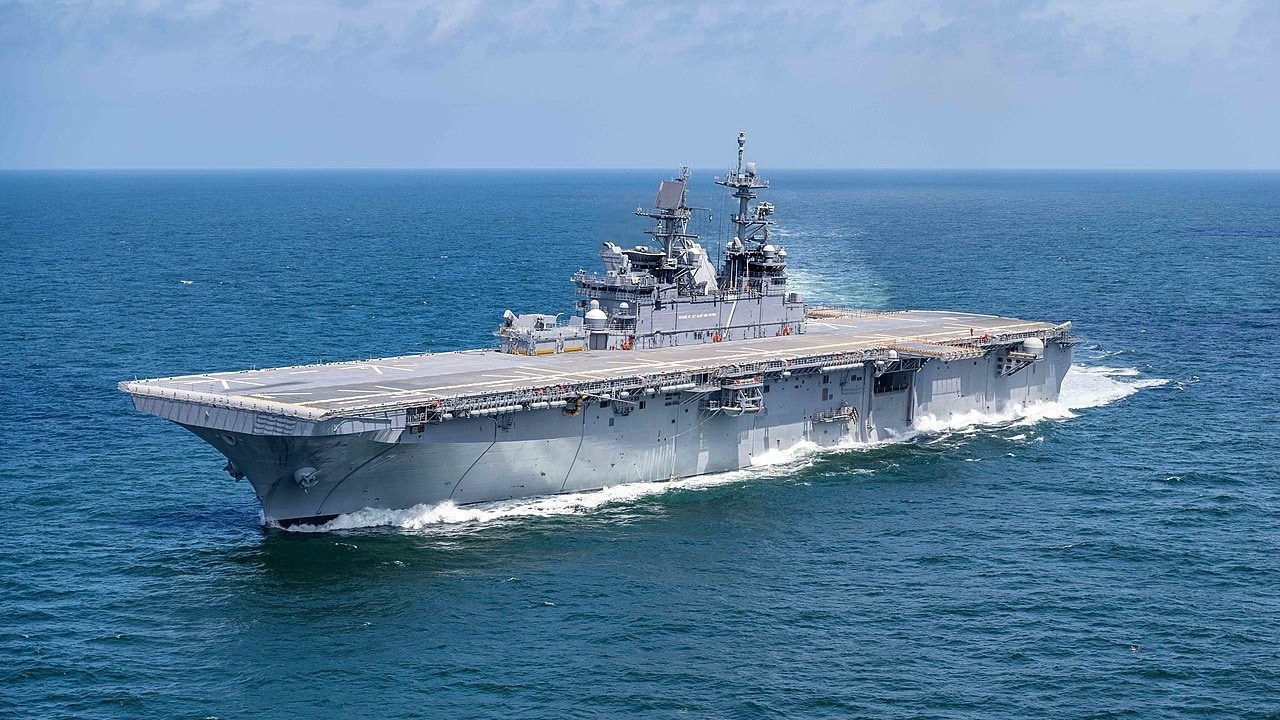
The U.S. Navy amphibious assault ship USS Tripoli (LHA-7) conducts builder’s trials in the Gulf of Mexico on 15 July 2019. Tripoli was scheduled to be commissioned in May 2020 and was the third U.S. Navy ship named for the Battle of Derne in 1805.
Even if it weren’t for the nuke carrier shortage in the region, the presence of the “leatherneck” ground-pounders and aviators alike would be a definite force multiplier with the potential to wreak even more devastation and havoc upon the Iranian regime.
About the Author: Christian D. Orr
Christian D. Orr is a Senior Defense Editor. He is a former Air Force Security Forces officer, Federal law enforcement officer, and private military contractor (with assignments worked in Iraq, the United Arab Emirates, Kosovo, Japan, Germany, and the Pentagon). Chris holds a B.A. in International Relations from the University of Southern California (USC) and an M.A. in Intelligence Studies (with a concentration in Terrorism Studies) from American Military University (AMU). He is also the author of the newly published book “Five Decades of a Fabulous Firearm: Celebrating the 50th Anniversary of the Beretta 92 Pistol Series.”