
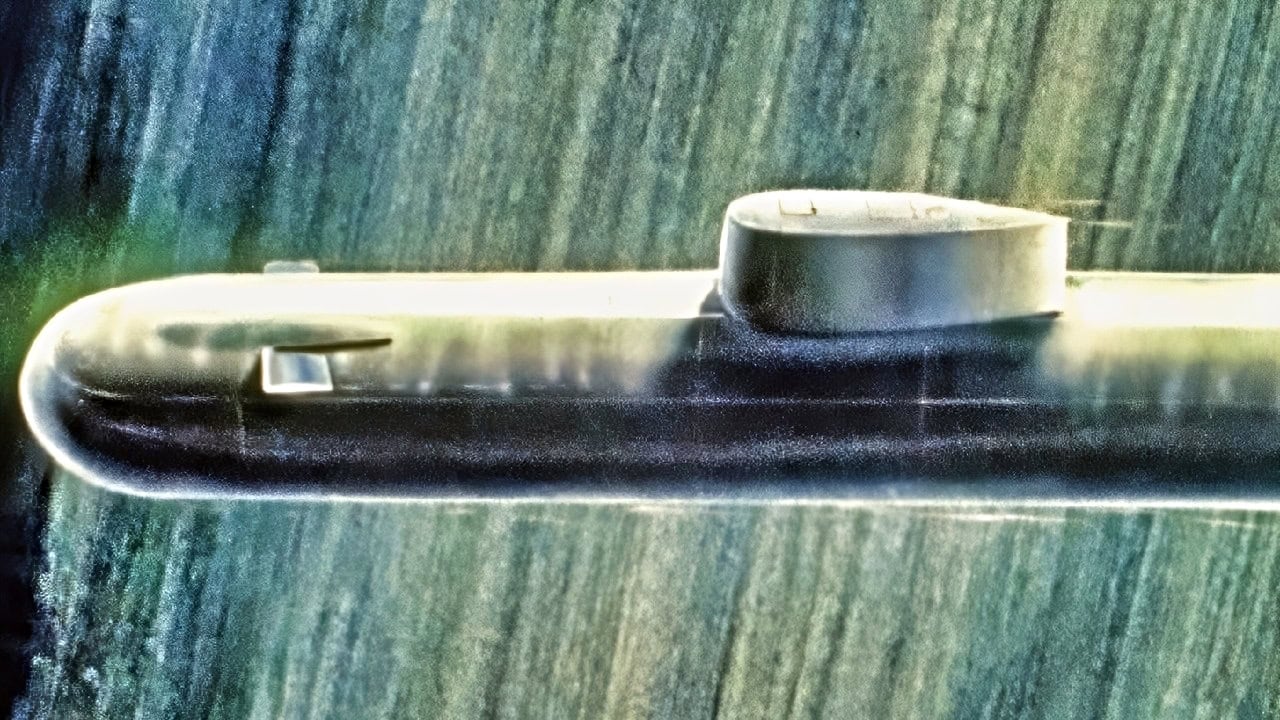
Summary and Key Points: The Soviet nuclear-powered submarine K-278 Komsomolets sank 5,500 feet deep off Norway’s Bear Island on April 7, 1989 after an uncontrolled electrical fire in the engineering compartment forced the crew to abandon ship.
-Thirty-six years later, the wreck’s nuclear reactor is still leaking radioactive isotopes at hundreds of thousands of times background seawater levels, according to new analysis by Justin Gwynn of the Norwegian Radiation and Nuclear Safety Authority published in the Proceedings of the National Academy of Sciences.
A Lost Russian Submarine Still Causing Problems

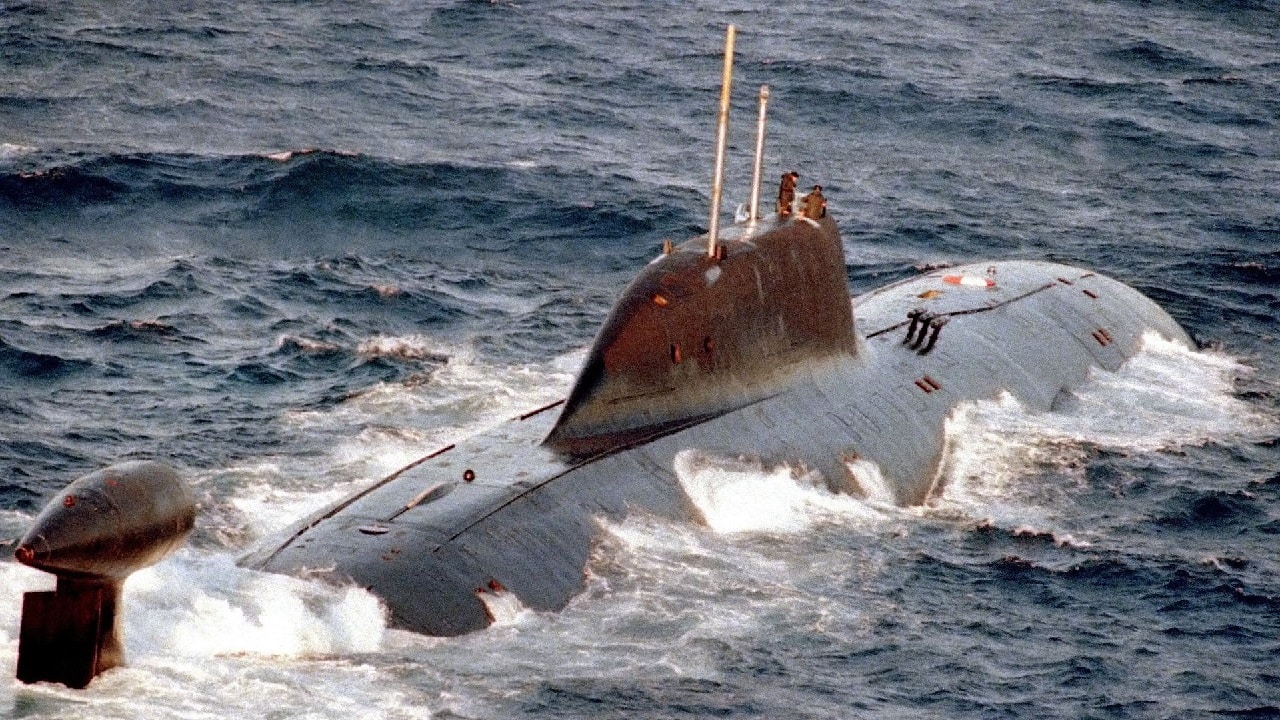
An aerial port quarter view of a Soviet Mike-class nuclear-powered attack submarine underway.
What is the first thought in your mind about the Soviet Union’s energy policy at the end of the Cold War? Probably the 1986 Chernobyl tragedy is the one you remember the most. This was an international nuclear event that scared the world about the negatives associated with nuclear power. It killed two during the explosion and 28 from radiation exposure, plus placing hundreds of thousands in danger of nuclear waste contamination.
A Chornobyl-like Event Undersea?
But what about less powerful reactors in Soviet nuclear submarines?
These would not have the same potential danger to the population, but another nuclear disaster could have spelled danger for the crew and environmental damage should a nuclear-powered submarine be sunk for good or damaged in some way.
What Happened to the Komsomolets Sub?
That is just what happened to the Soviet nuclear-powered submarine K-278 Komsomolets. The environmental web magazine Nautilus tells the story of the sunken vessel and provides an update on the damage the leaking nuclear reactor is causing to the marine ecosystem.
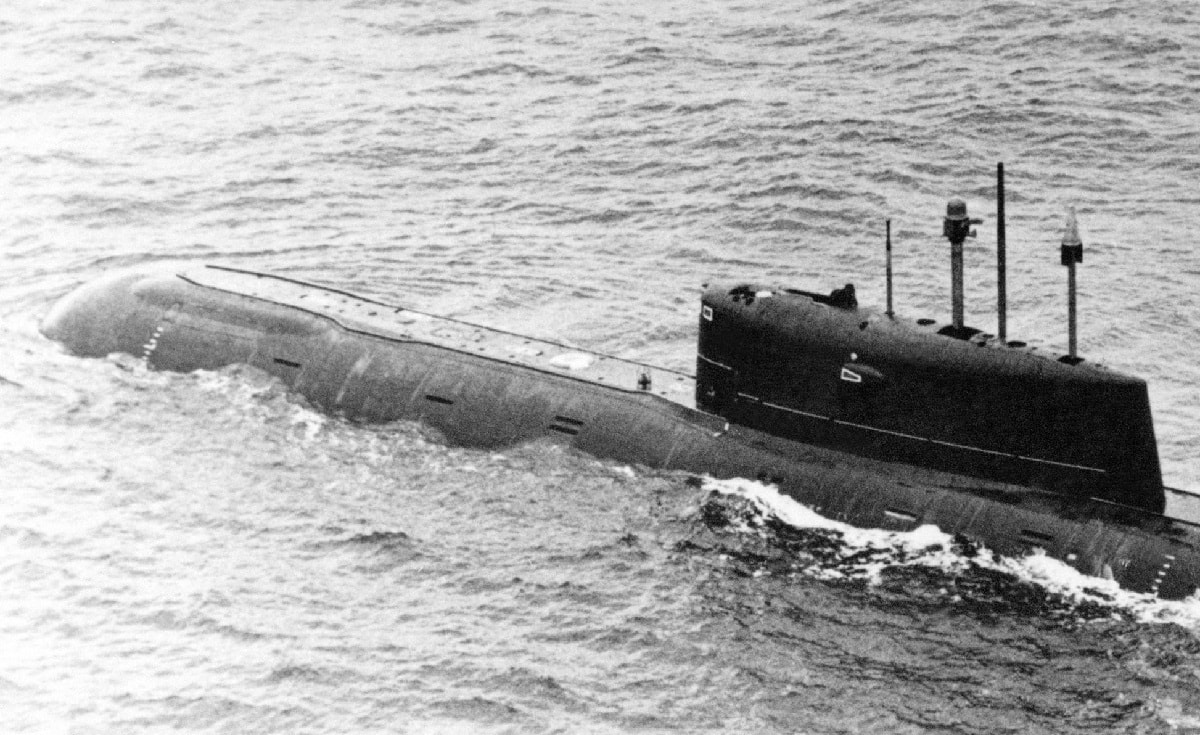
Komsomolets Submarine. Image Credit: Creative Commons.
The Story Begins Toward the End of the Cold War
The saga began in April 1989. The Komsomelets were deployed with two nuclear warheads. This was a routine patrol mission. The sub was sneaking around the coast of Norway’s Bear Island. The sea was freezing, and the boat was sailing quietly in the littoral waters, probably mapping the shore and watching out for other NATO-allied shipping.
A Fire Burns Out of Control
Then one of the worst things that could happen on any type of vessel reared its ugly head. There was a fire, and the crew was alerted to put it out quickly. But the flames were spreading too fast. It happened in the engineering compartment where a spark short-circuited electrical components. This looked bad to the officers on the bridge. They had to act fast and make difficult decisions, or the worst would happen.
The Situation Looked Dire
The flames went through the bulkheads, and the intense heat affected electrical cables. This fed the flames, and it looked like it would spread faster than the sailors could react. The entire electrical system was failing. This kept the nuclear reactor from operating properly, and the sub was dead in the water and burning out of control.
The Sub’s Commander Gives Up
The captain ordered to abandon ship. Down went the sub to a watery grave, and it settled at the bottom 5,500 feet underwater. It is still there. And this has marine scientists concerned about the aftermath. The Nautilus journalists examined new research on the submarine wreck published in the Proceedings of the National Academy of Sciences.
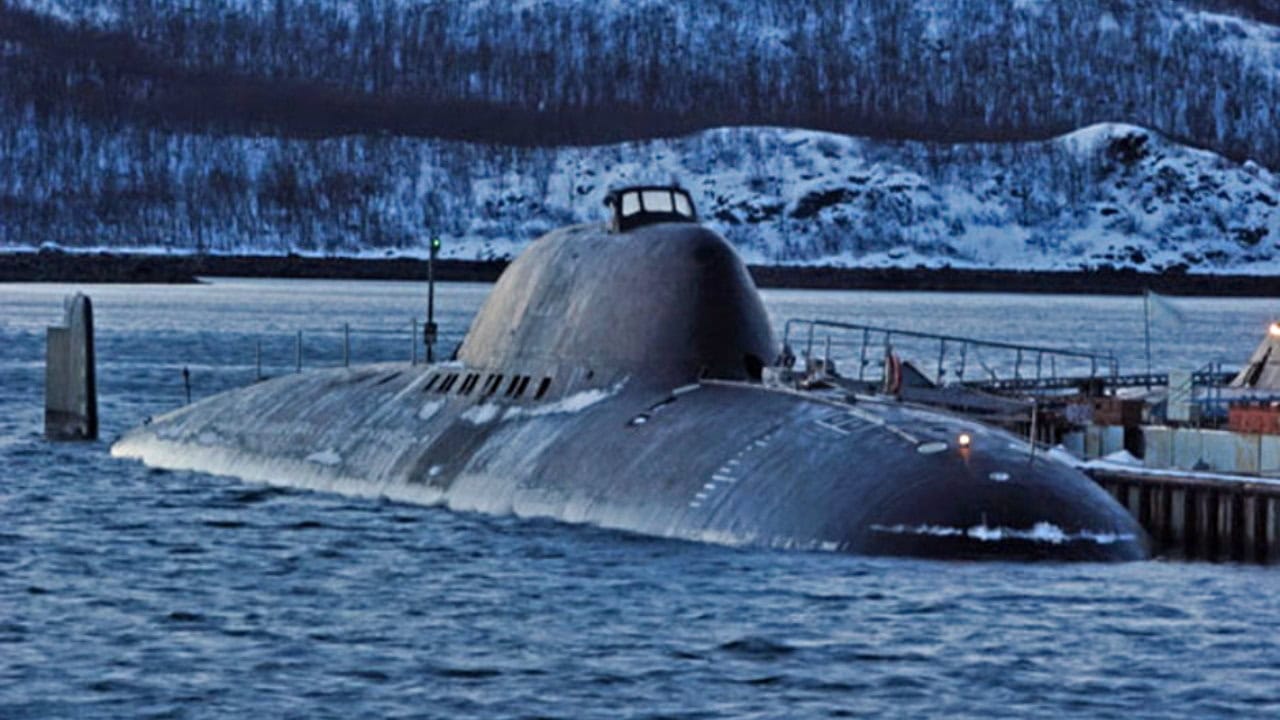
Alfa-Class Russian Navy. Image Credit: Creative Commons.
Sea Drone Takes Samples from the Bottom
This survey data was first collected in 2019. The Institute of Marine Research used a remotely piloted underwater craft to check whether the sub was leaking radioactive material. They used video cameras to search around the wreck and took samples from the seabed and tested marine wildlife, looking for damaging remnants of nuclear waste.
New Eyes on the Problem
Justin Gwynn of the Norwegian Radiation and Nuclear Safety Authority took a second look at the original survey and published an update on what the underwater remotely-piloted vehicle found.
Gwynn and the researchers discovered the forward section of the submarine was destroyed, exposing the torpedo compartment containing the nuclear weapons to seawater. Luckily, their analysis showed no signs of plutonium escaping.
Titanium plates installed by the Russian government over 30 years ago to prevent seawater from moving through the torpedo compartment remained in place,” according to Nautilus.
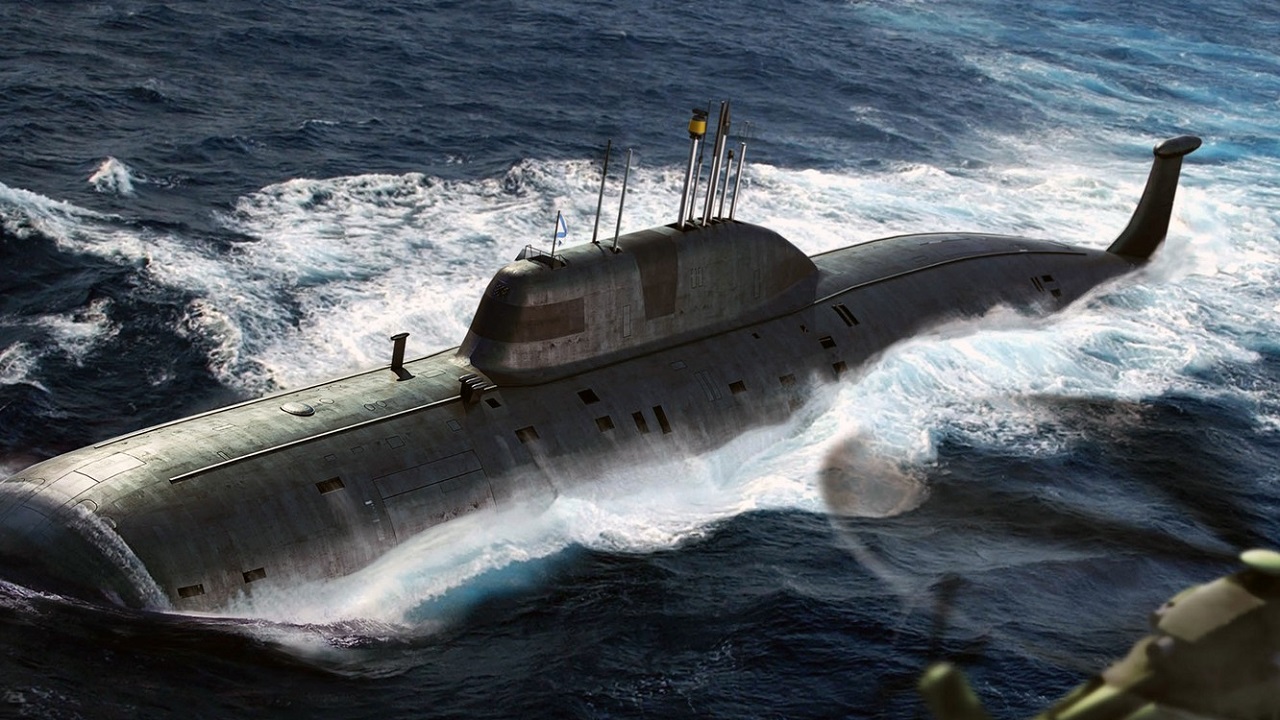
Akula-Class Submarine. Image Credit: Computer-generated image, Screenshot.
K-322 Cachalot, Akula class submarine underway. A port quarter aerial view of the Russian Northern Fleet AKULA class nuclear-powered attack submarine underway on the surface.
That was an encouraging finding. Thankfully, the Soviets protected the sub from radioactive material leaking.
The Nuclear Reactor Is Still Problematic
However, the state of the nuclear reactor itself was worrying. Radioactive isotopes were present in the reactor area. “The levels of radioactive strontium and cesium [two isotopes generated by nuclear fission] were 400,000 and 800,000 times higher, respectively, than normal seawater. Samples from sponges, corals, and anemones showed high concentrations of radioactive cesium as well,” as Nautilus described.
Scientists Are Still Hopeful
But there is good news here. Seawater appears to be causing a decline in the levels of radioactive isotopes. The reactor is still corroding, and radiation is not accumulating, according to the researchers.
There is a decline in the radioactivity as the underwater drone is examined a few feet away from the reactor. The water is diluting the isotopes, and measurements of sediment further away showed no radioactivity.
How Long Will This Be a Problem?
However, the reactor is still spewing strontium and cesium isotopes, and this could continue indefinitely. The researchers will still need to monitor the situation with undersea drones and conduct annual surveys.
One Would Think That the Russians Could Help Monitor the Situation
One frustration is that the Russians do not seem to be concerned about the potential environmental damage their own sub has caused. Hopefully, with more media attention, an international effort could be launched to monitor the vessel’s leakage. Most marine life seems unaffected by the potential radioactivity.
Let’s make sure the countries operating nuclear-powered subs take notice of this research. The design of new boats must take into consideration that a fire or other disaster could sink a sub, and its nuclear reactor could leak. Give credit to the intrepid scientists who are keeping an eye on the old Soviet sub to make sure no environmental damage is worsening as the years creep by.
About the Author: Dr. Brent M. Eastwood
Author of now over 3,500 articles on defense issues, Brent M. Eastwood, PhD, is the author of Don’t Turn Your Back On the World: A Conservative Foreign Policy and Humans, Machines, and Data: Future Trends in Warfare, plus two other books. Brent was the founder and CEO of a tech firm that predicted world events using artificial intelligence. He served as a legislative fellow for US Senator Tim Scott and advised the senator on defense and foreign policy issues. He has taught at American University, George Washington University, and George Mason University. Brent is a former US Army Infantry officer. He can be followed on X @BMEastwood.