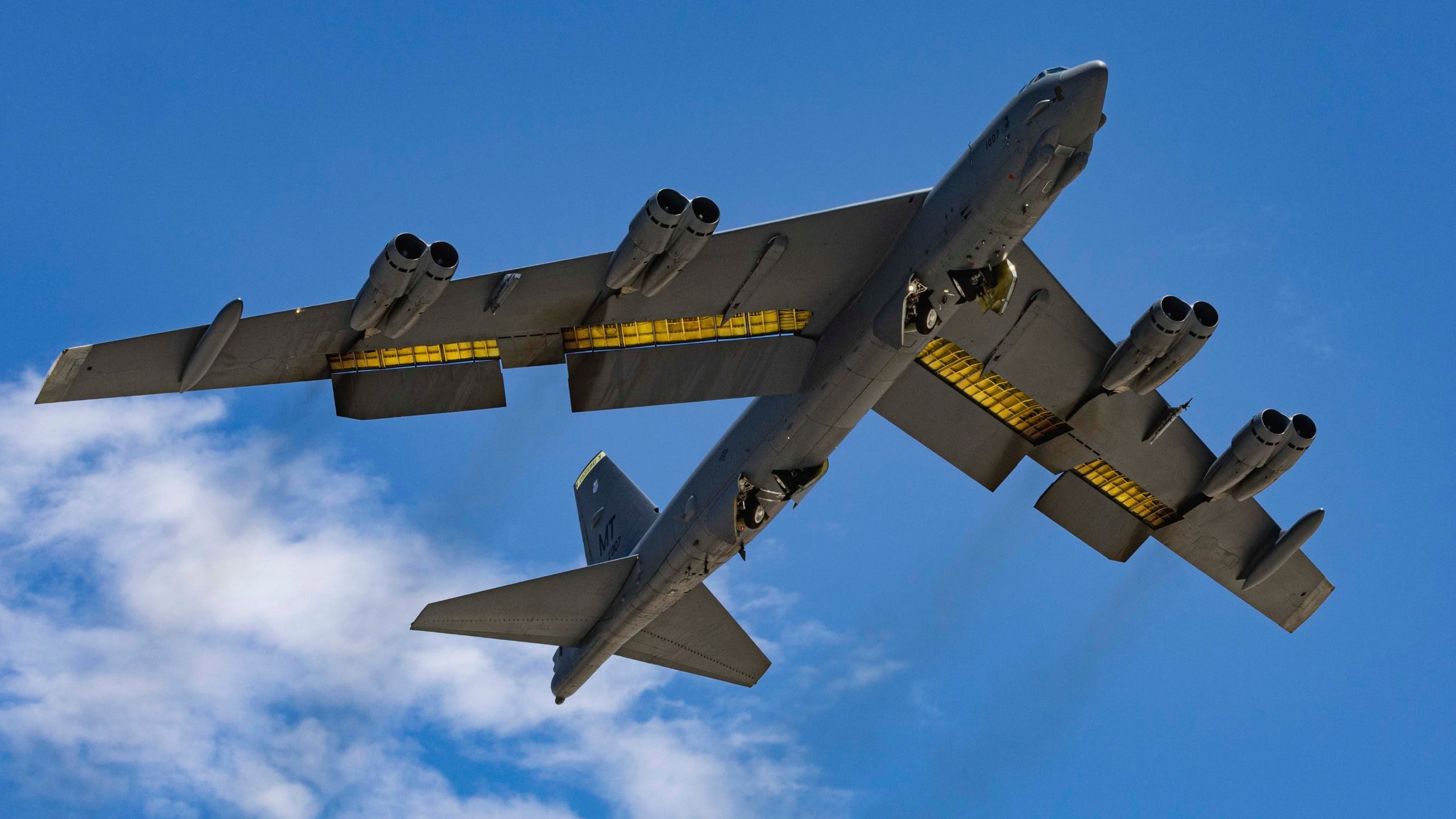
The United States Air Force has some of the best-trained pilots in the world serving in its ranks. These pilots are trained to serve and conduct air operations under any condition imaginable. That’s where the “whifferdill” maneuver, or simply the “Whiff” maneuver, comes in.
This example of incredible—even insane—piloting is just one of many ways the Air Force constantly pushes the limits of its people and equipment… and how, usually, both come out ahead.
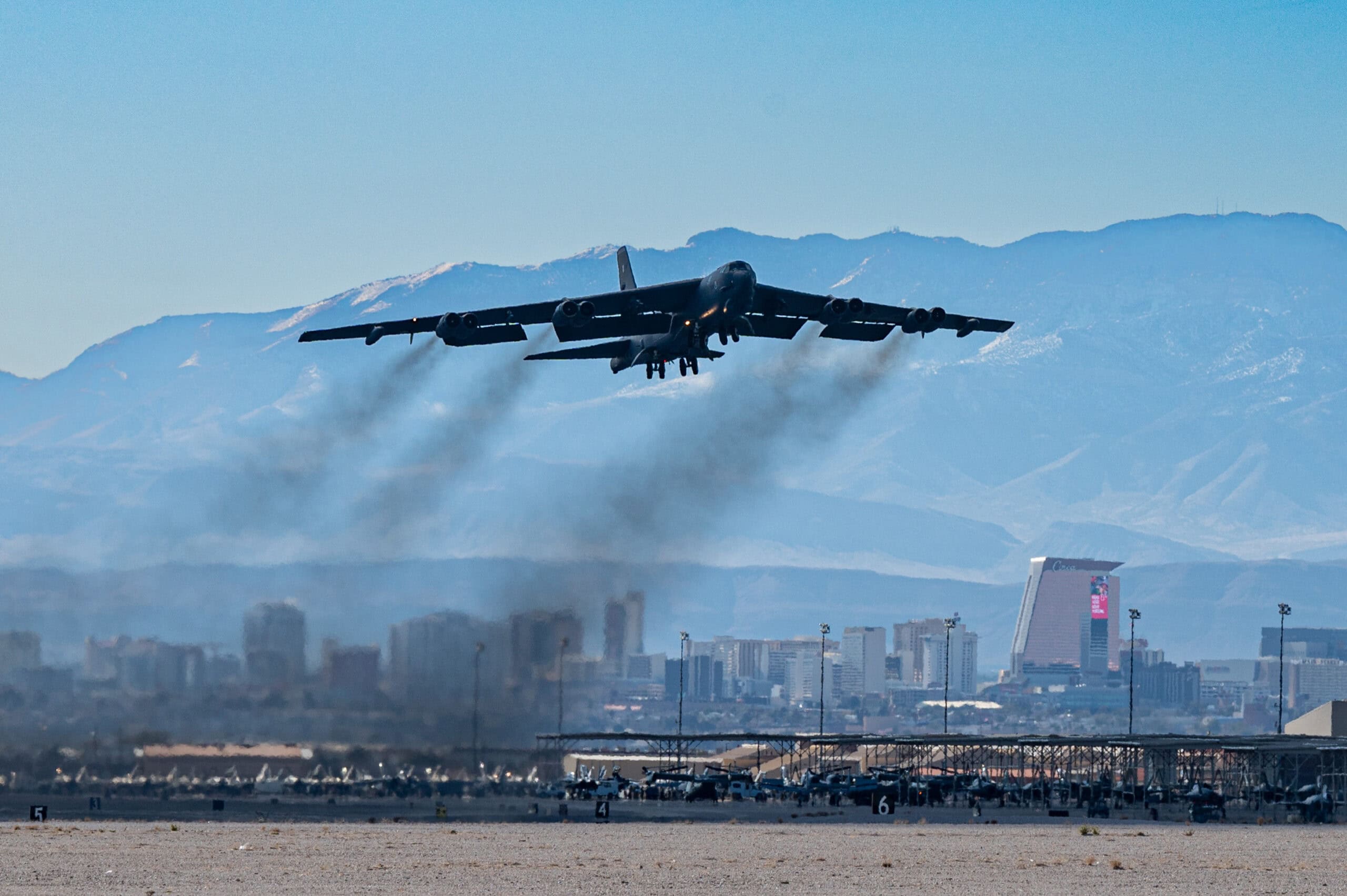
A B-52 Stratofortress from the 2nd Bomb Wing at Barksdale Air Force Base takes off for a Red Flag 23-1 Mission at Nellis Air Force Base, Nevada, Jan. 23, 2022. With approximately 2,200 targets, realistic threat systems and an opposing enemy enemy force that cannot be replicated anywhere else in the world, Nellis and the NTTR enable combat air forces to train to fly, fight and win.(U.S. Air Force photo by Airman 1st Class Trevor Bell)
B-52: Between the “Whiff” Maneuver and a Prayer
A “Whiff” maneuver is a multi-axis maneuver that involves steep banking, climbing (and descending), as well as continuous turning. Many people don’t understand that piloting, especially flying warplanes and related aircraft, is all about how energy is used and conserved.
In the Whiff maneuver, the Air Force pilot attempts to conserve energy while rapidly repositioning the plane.
What makes the Whiff maneuver so incredible is the fact that a B-52 Stratofortress long-range bomber is used in the maneuver. Essentially, the B-52 takes around 70-degree turns while engaged in air-to-air refueling. Understand that mid-air refueling is already one of the most difficult and dangerous operations an Air Force plane performs.
Since the outbreak of the Iran War on February 28, the world has witnessed how mid-air refueling operations have become fertile ground for mid-air disasters in the Middle East.
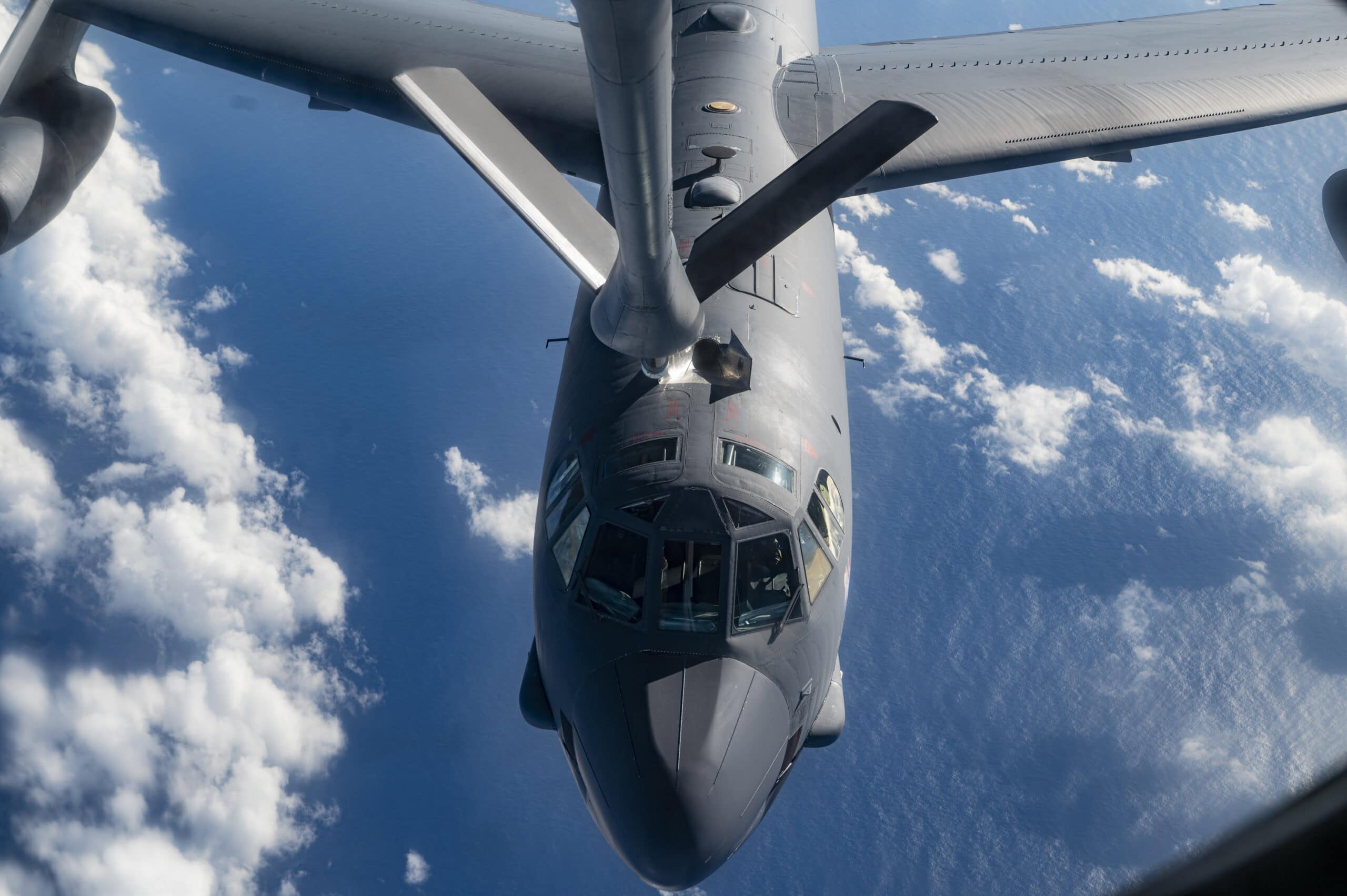
A U.S. Air Force KC-135 Stratotanker from Fairchild Air Force Base, Washington, refuels a B-52 Stratofortess from Barksdale Air Force Base, Louisiana, during a bomber task force mission over the Pacific Ocean, Dec. 17, 2022. BTF missions contribute to joint force lethality by demonstrating the U.S. Air Force’s ability to operate anywhere in the world. (U.S. Air Force photo by 2nd Lt. Ariana Wilkinson)
But even during peacetime, these operations are fraught with danger. Now you’ve got the massive B-52 topping off mid-air, while performing nearly 70-degree bank angles, and it’s quite the danger zone.
Flying Blind: Trusting the Tanker, Not the Horizon
During this maneuver, pilots are instructed to ignore the horizon entirely and make the refueling tanker their sole reference point. You are constantly climbing, descending, and turning, but through it all, one must ensure their plane remains plugged into the tanker “boom,” which links the B-52 to the refueling tanker.
The “Whiff” maneuver has not been attempted while in combat. There are far too many variables that could work against both the B-52 and the refueler during combat refueling. Instead, the Whiff was attempted as a confidence-building measure during pilot training.
Trainers at the Strategic Air Command (SAC) wanted their pilots to know that they could push the B-52s (and the refuelers) further than they thought. It was all part of the cutting-edge training Air Force pilots receive, which ensures their lethality and effectiveness in combat. Plus, it demonstrates to new pilots how durable their planes really are (which is an important piece of knowledge when one is in a tight spot and needs to push their bird—even a big plane like the B-52—to its limits).
Of course, trying these maneuvers did not always result in positive outcomes.
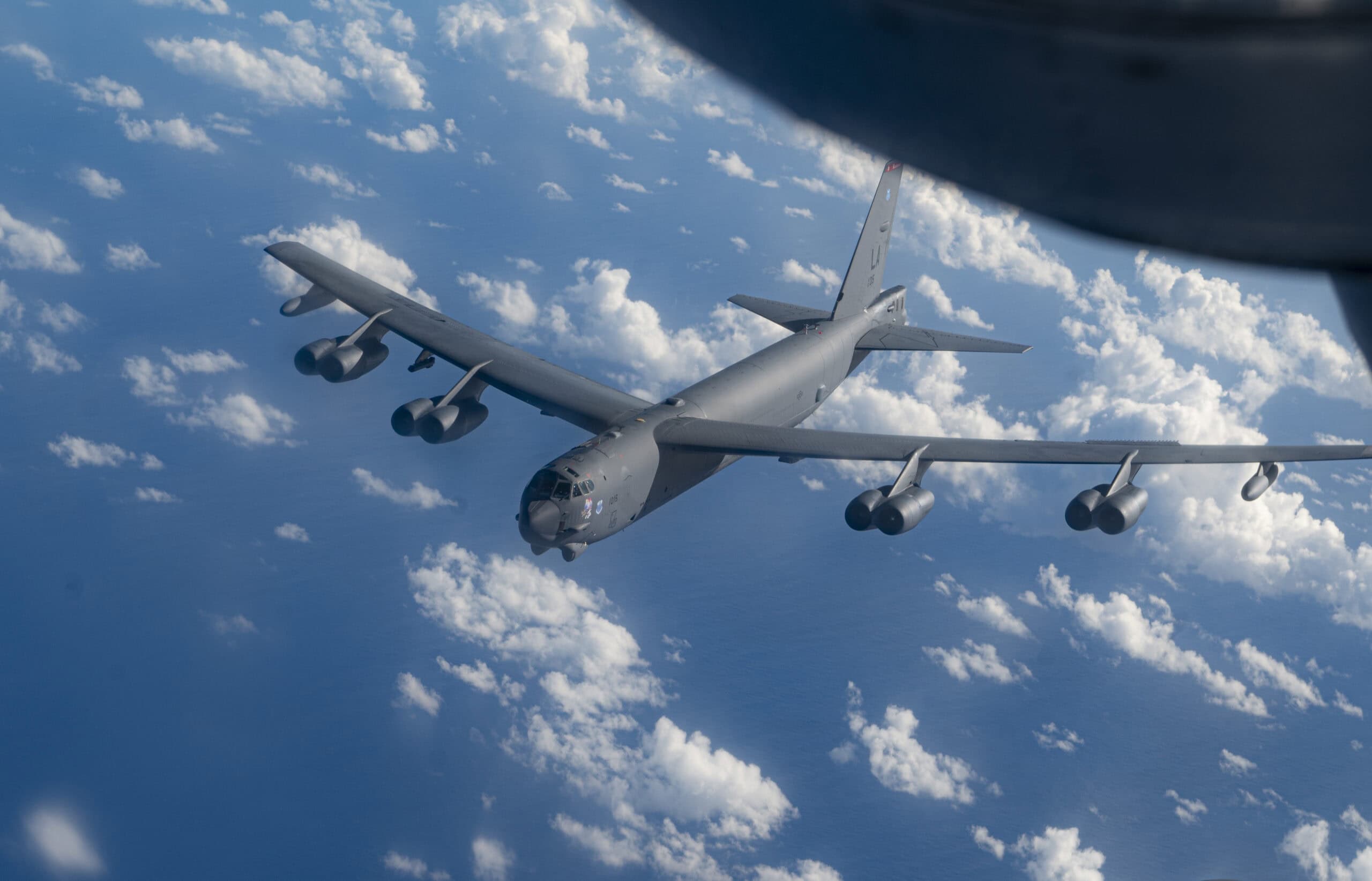
A B-52 Stratofortress assigned to the 2nd Bomber Wing at Barksdale Air Force Base, Louisiana, flies next to a KC-135 during a bomber task force mission over the Pacific Ocean, Dec. 17, 2022. Bomber missions demonstrate our long-range precision strike capabilities, which are integral to enforcing a free and open Indo-Pacific. (U.S. Air Force photo by 2nd Lt. Ariana Wilkinson)
When Pushing the Limits Turns Deadly: The Fairchild Crash
There is the infamous Fairchild Crash. Back in 1994, Air Force Lt. Col. Bud Holland was flying his B-52 during an airshow practice at Fairchild Air Force Base.
During that practice run, Lt. Col. Holland flew his Stratofortress at extremely low altitudes, entered a tight 360-degree turn, and banked beyond 60 degrees. He then banked his plane harder beyond 90 degrees. Due to this move, Holland lost airspeed, and his low-flying plane entered what’s known as an aerodynamic stall.
Holland’s B-52 crashed at Fairchild, killing all four crewmembers onboard.
The Moments Physics Took Over
What killed the men on that B-52 was physics. Or at least the attempt by Lt. Col. Holland to defy physics. Remember, above, where it was mentioned that the key to flying is understanding energy distribution and conservation in flight.
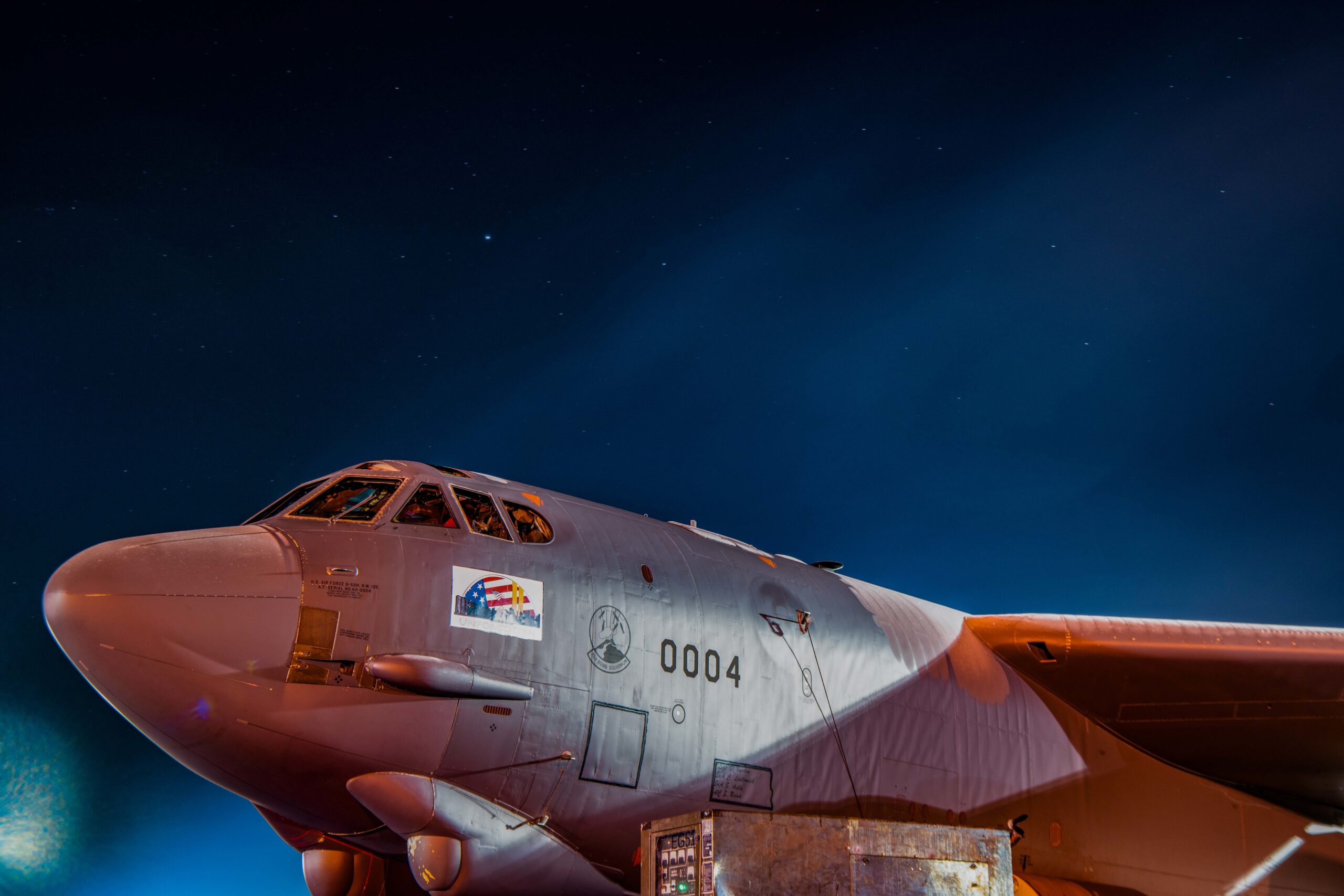
A 23rd Bomb Squadron B-52H Stratofortress is prepared for launch Oct. 26, 2022, at Minot Air Force Base, North Dakota. In a conventional conflict, the B-52 can perform strategic attack, close-air support, air interdiction, offensive counter-air and maritime operations. (U.S. Air Force photo by Senior Airman Michael A. Richmond)
Because Holland put his low-flying bird into a steep turn, he increased the stall speed. Holland’s B-52 was flying too slow, too steep, and too low. It lost its lift and lacked adequate altitude to recover.
Herein lies the key difference between the SAC pilots who engaged in the Whifferdill maneuver and Bud Holland.
The Whiff pilots pushed the limits of their plane without defying the laws of physics. They kept the B-52 within its training structure, its altitude margins, and its aircraft envelope. Bud Holland, on the other hand, pushed his bird beyond its limits, doing so at a dangerously low altitude and ignoring the rules governing Air Force flight operations.
The Final Lesson: Physics Always Wins
The B-52 is much more maneuverable than people think.
It is, however, still governed by lift, airspeed, and load factor. The Whiff maneuver proves the jet can be pushed hard. The Fairchild crash ensures that you cannot cheat physics, and attempting to do so is not the hallmark of a skilled pilot. It’s the result of bad piloting and improper procedures.
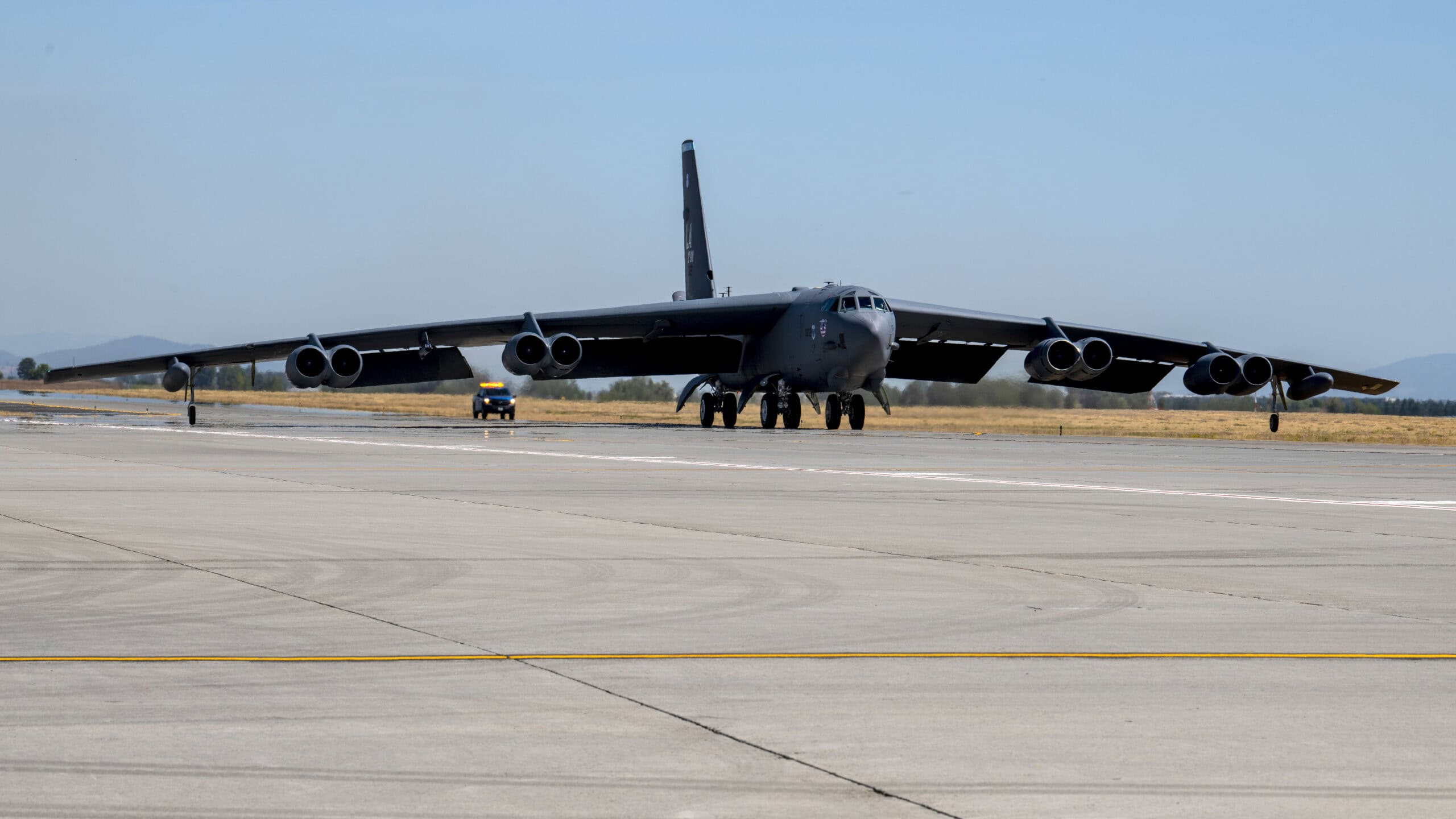
A B-52 Stratofortress from Barksdale AFB lands on the flight line at Fairchild Air Force Base, Washington, Aug. 16, 2022. The B-52s landed at Fairchild to conduct their own Agile Combat Employment exercise creating more multi-capable Airmen ready to deploy anywhere, anytime. (U.S. Air Force photo by Staff Sgt. Lawrence Sena)
In the end, the lesson is simple but unforgiving: elite training and powerful machines can take you right up to the edge, but never beyond it.
The difference between mastery and disaster is discipline.
The Air Force’s best pilots understand that true skill isn’t about defying physics. Instead, it’s about respecting physics while under pressure.
In aviation, as in war, the margin for error is razor-thin. And physics always wins.
About the Author: Brandon J. Weichert
Brandon J. Weichert is the Senior National Security Editor at 19FortyFive.com. Recently, Weichert became the editor of the “NatSec Guy” section at Emerald.TV. He was previously the senior national security editor at The National Interest. Weichert is the host of The National Security Hour on iHeartRadio, where he discusses national security policy every Wednesday at 8pm Eastern. He hosts a companion show on Rumble entitled “National Security Talk.” Weichert consults regularly with various government institutions and private organizations on geopolitical issues. His writings have appeared in numerous publications, among them Popular Mechanics, National Review, MSN, and The American Spectator. And his books include Winning Space: How America Remains a Superpower, Biohacked: China’s Race to Control Life, and The Shadow War: Iran’s Quest for Supremacy. Weichert’s newest book, A Disaster of Our Own Making: How the West Lost Ukraine, is available for purchase wherever books are sold. He can be followed via Twitter/X @WeTheBrandon.