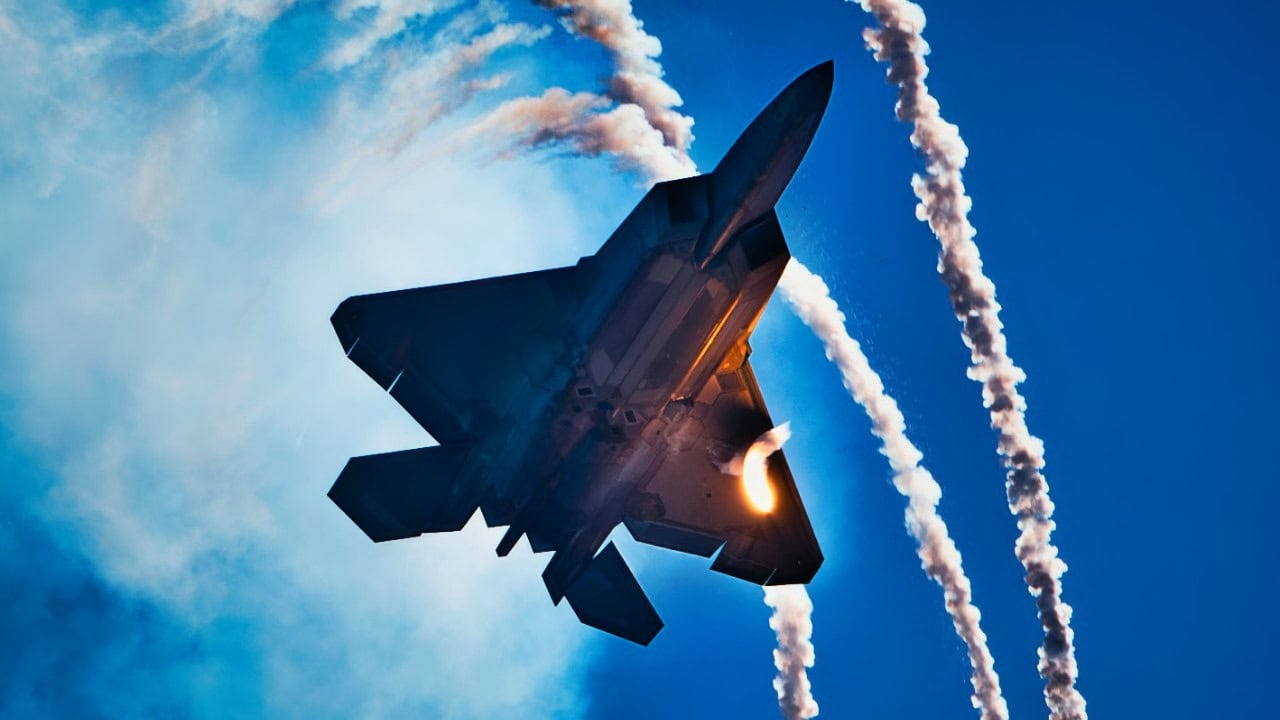
Summary and Key Points: National Security Editor Brandon J. Weichert asserts that extending the F-22 Raptor to 2060 signals a crisis in the NGAD (F-47) program.
-With the F-35A struggling at a 50% combat readiness rate and the fourth-generation fleet aging into obsolescence, the Air Force is forced to modernize the Raptor into a “Raptor 2.0.”
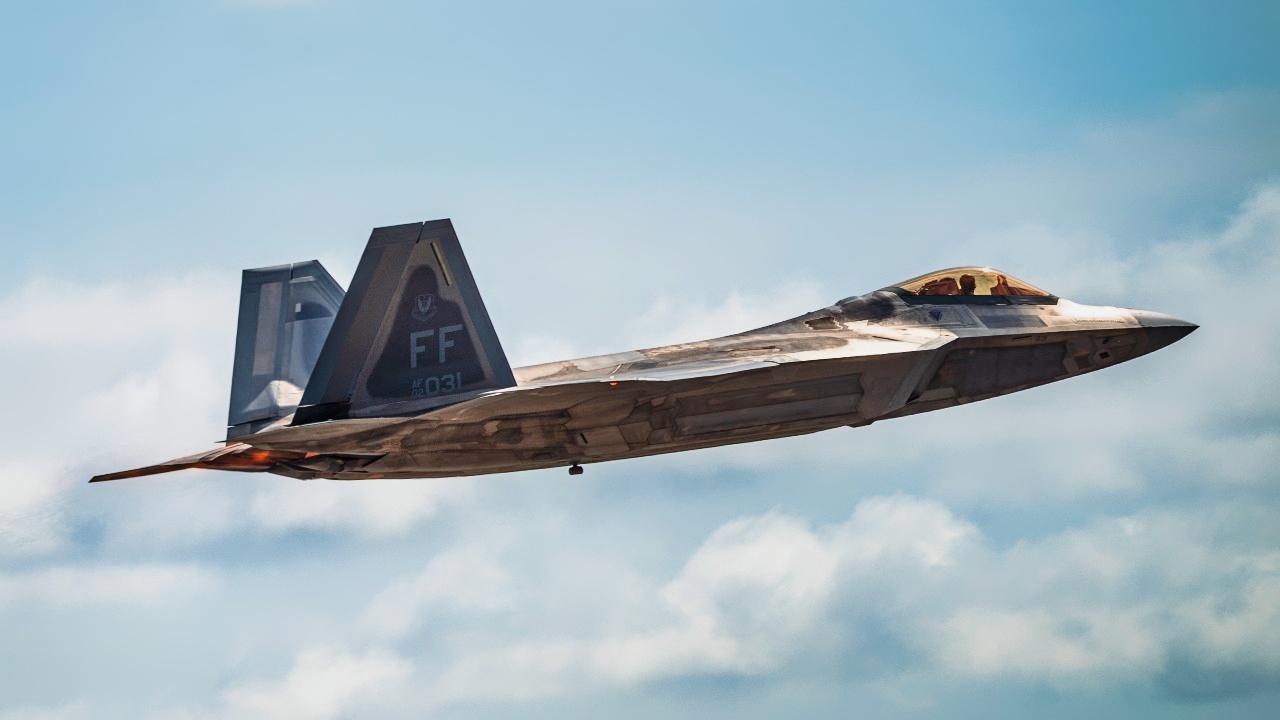
A U.S. Air Force F-22 Raptor assigned to the 71st Fighter Squadron, Joint Base Langley-Eustis, Virginia, takes off during Checkered Flag 25-2 at Tyndall Air Force Base, Florida, May 8, 2025. Air Combat Command’s Checkered Flag exercise simulates the full mobilization and deployment cycle, ensuring unit readiness for contingency operations. (U.S. Air Force photo by Airman 1st Class Zeeshan Naeem)
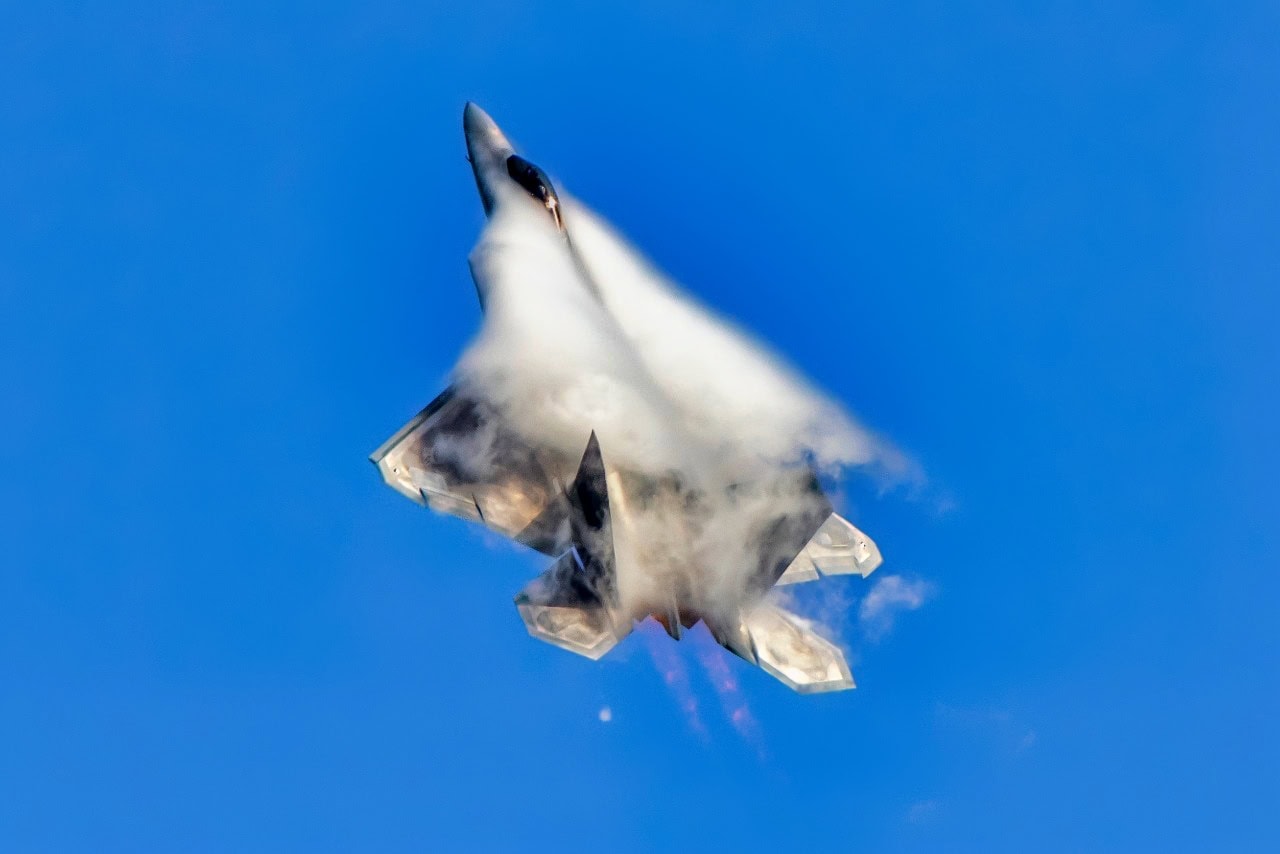
A U.S. Air Force F-22 Raptor performs a sharp aerial maneuver above the flight line during the 2024 Marine Corps Air Station Miramar Airshow in San Diego, Sept. 28, 2024. The F-22 Raptor Demonstration Team performs precision aerial maneuvers at airshows across the world to demonstrate the unique capabilities of the world’s premier 5th generation fighter aircraft. America’s Airshow 2024 is a unique and incredible opportunity to witness Marine and joint aviation capabilities, civilian performers, and the world-famous Blue Angels; to interact first-hand with Marines, other service members, and first responders; and to see first-hand the innovative spirit of the Marine Corps through emerging technologies and forward-thinking. (U.S. Marine Corps photo by Lance Cpl. Seferino Gamez)
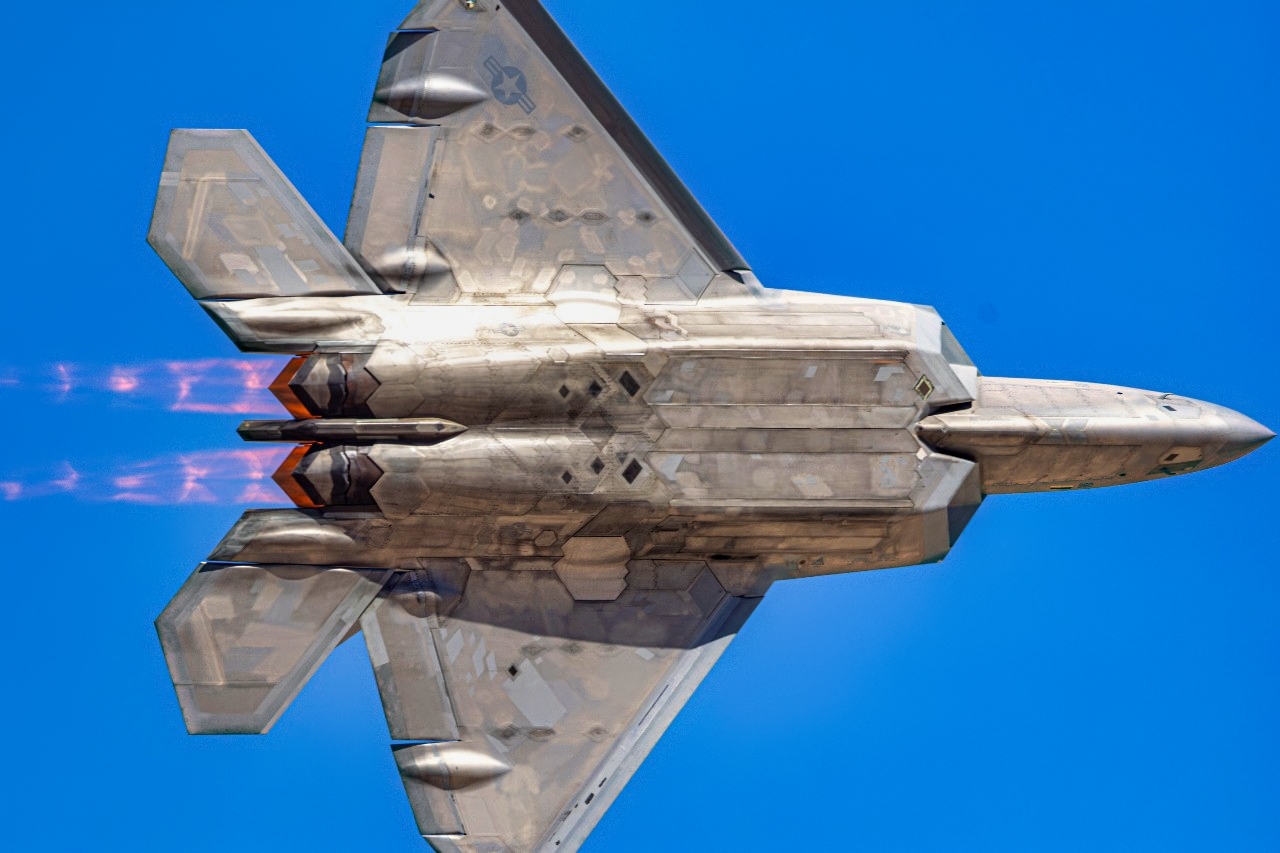
A U.S. Air Force F-22 Raptor performs an aerial demonstration during Aviation Nation 2025 at Nellis Air Force Base, Nevada, April 6, 2025. Aviation Nation is an airshow held at Nellis Air Force Base, showcasing the pride, precision and capabilities of the U.S. Air Force through aerial demonstrations and static displays. The F-22 Raptor performed there to highlight its unmatched agility and air dominance as part of the Air Force’s efforts to inspire, recruit and connect with the public. (U.S. Air Force photo by Staff Sgt. Lauren Cobin)
-These upgrades—including stealth-compatible external fuel tanks for Indo-Pacific range and rapid software-defined mission systems—address the “sclerotic” nature of the U.S. defense industrial base.
-The Raptor has officially transitioned from a transitional air-superiority platform to a permanent strategic backbone.
The Air Force Admits the F-47 is a Failure By Extending the F-22 Lifespan Until 2060
The fifth-generation F-22 Raptor stealth air-superiority warplane is the crown jewel of the U.S. Air Force. But despite the many advanced capabilities the service threw into this bird, the Air Force always envisioned it as a transitional platform to something even better.
Instead, the opposite happened. The Raptor is not disappearing to be replaced by the next big thing. It is getting significant upgrades that should dramatically extend the plane’s lifespan.
What this should tell you is that the Air Force is not confident that it can sustain air superiority with just the sixth-generation Next Generation Air Dominance (NGAD) platform—the future F-47. Nor does it wish to rely on its fifth-generation multirole fighter, the F-35A Lightning II.

F-22 Raptor Fighter. Image Credit: Creative Commons.
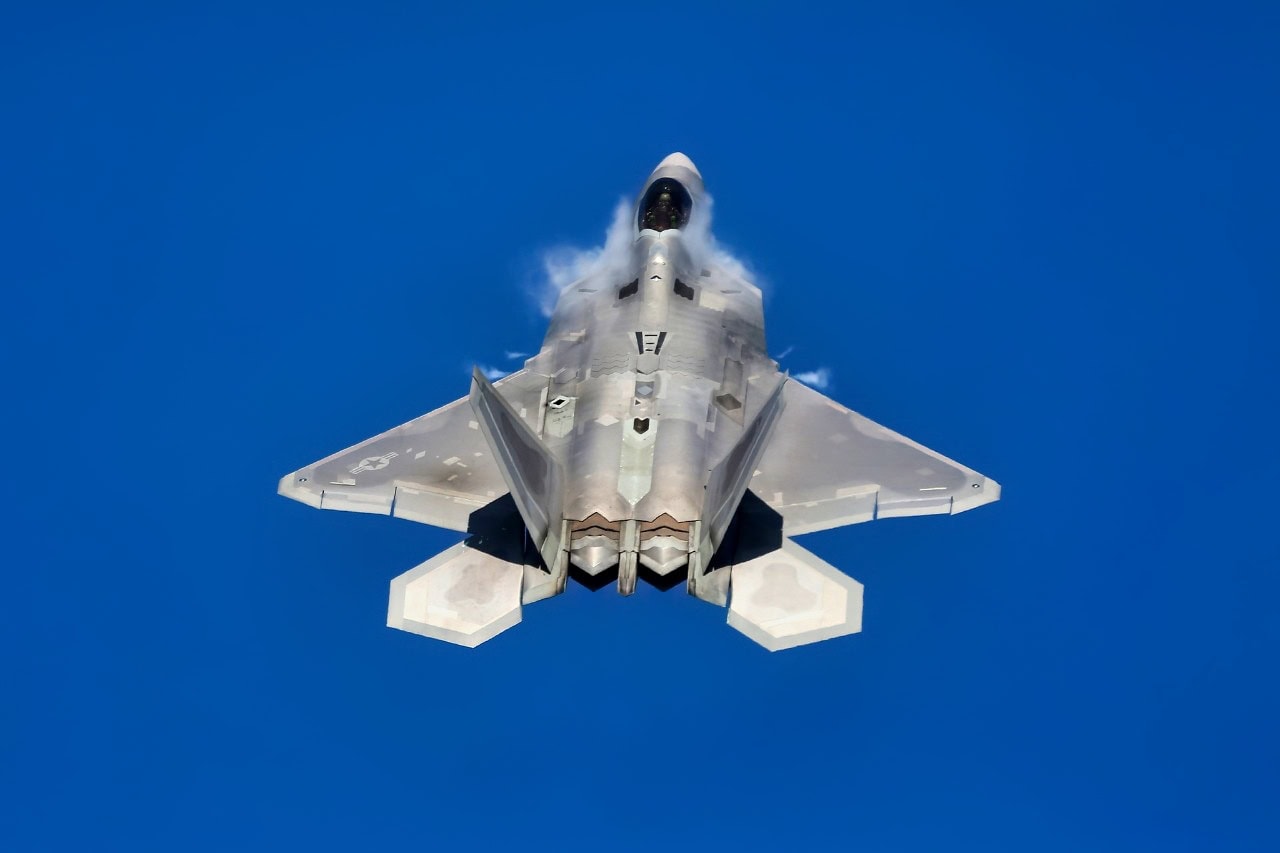
F-22 Raptor Fighter. Image Credit: Creative Commons.
The F-47 is expensive, its future is uncertain, and it is years away from being fielded in meaningful numbers. Meanwhile, after running considerably over budget, the F-35 has underperformed.
In fact, the F-35 has only a 50 percent combat readiness rating. And the iconic fourth-generation warplanes in the Air Force’s arsenal are already showing signs of aging. If their service is extended until whenever the F-47 is available in large numbers, the fourth-generation birds will be obsolete.
In essence, the F-22 is no longer a bridge to a brighter technological future in the form of the F-47. It has become the Air Force’s insurance policy for the risky future the service has planned.
The Raptor’s Life Extension Tells a Larger Story
The Air Force now expects the F-22 to remain flying far longer than originally planned. By extending its life cycle potentially into the 2060s, the Air Force is acknowledging that its procurement practices are broken.
Because new aircraft take decades to design, test, and produce—and the global threat environment is only worsening for U.S. forces—the Americans need something to keep them viable as a fighting force. Complicating the issue is the way costs grow and production numbers sink in the hands of the sclerotic U.S. defense industrial base. Meanwhile adversaries such as China continue to deploy advanced fighters at a steady pace.
Enter the “Raptor 2.0”
Recent models displayed by the Air Force show a dramatically enhanced F-22 configuration, sometimes described informally as Raptor 2.0. Changes include stealth-compatible external fuel tanks, new infrared search-and-track sensors, improved electronic warfare systems, and advanced networking capabilities that will allow the aircraft to operate as part of a larger combat network.
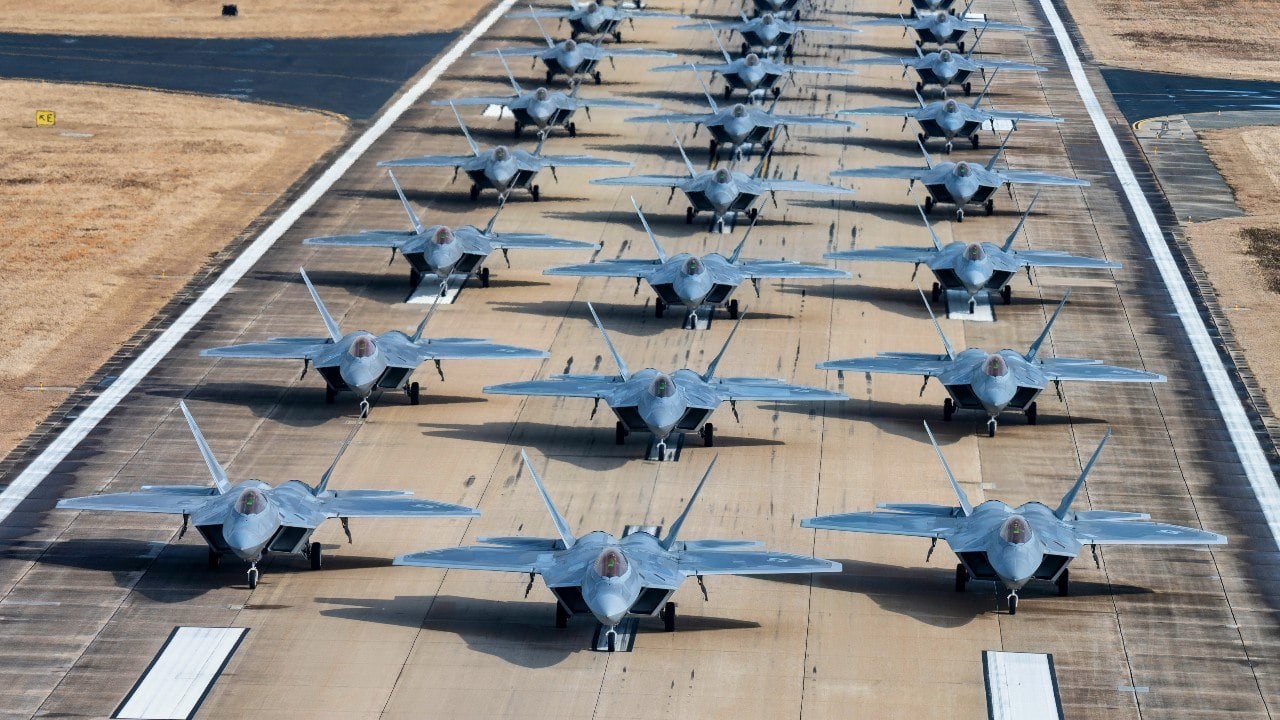
Aircraft from the 1st Fighter Wing conducted an Elephant Walk at Langley Air Force Base, Virginia, Jan. 31, 2025, showcasing the wing’s readiness and operational agility. This demonstration highlighted the wing’s capability to mobilize forces rapidly in high-stress scenarios. The wing’s fleet includes F-22 Raptors and T-38 Talons. As Air Combat Command’s lead wing, the 1 FW maintains unparalleled combat readiness to ensure national defense at a moment’s notice. (U.S. Air Force photo by Tech Sgt. Matthew Coleman-Foster)
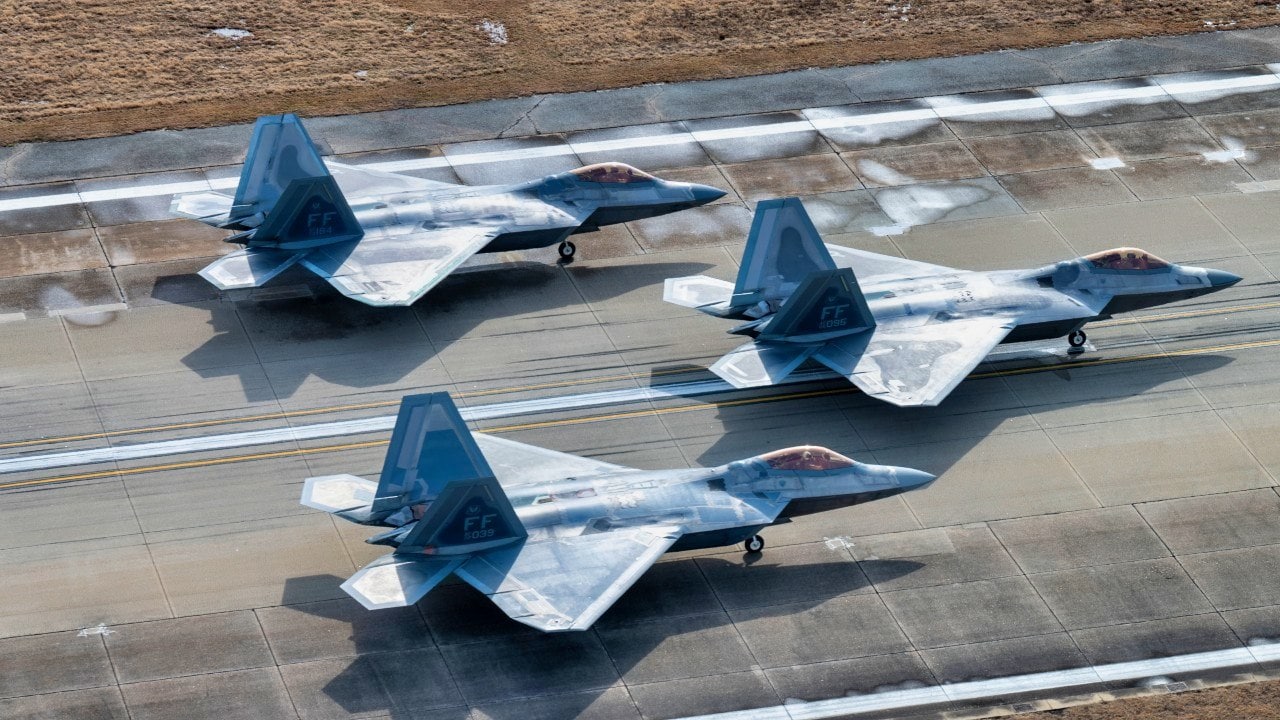
LANGLEY AIR FORCE BASE, Va. – F-22 Raptors from the 1st Fighter Wing sit in position on the runway during the Elephant Walk at Langley Air Force Base, Virginia, Jan. 31, 2025. The surge was designed to showcase the wing’s operational readiness and its ability to rapidly mobilize airpower. The 1st FW operates F-22 Raptors and T-38 Talons, maintaining combat capabilities that enable the U.S. Air Force to execute missions across the globe. With a focus on air superiority, the 1st FW plays a critical role in defending the nation’s interests. (U.S. Air Force photo by Tech Sgt. Matthew Coleman-Foster)
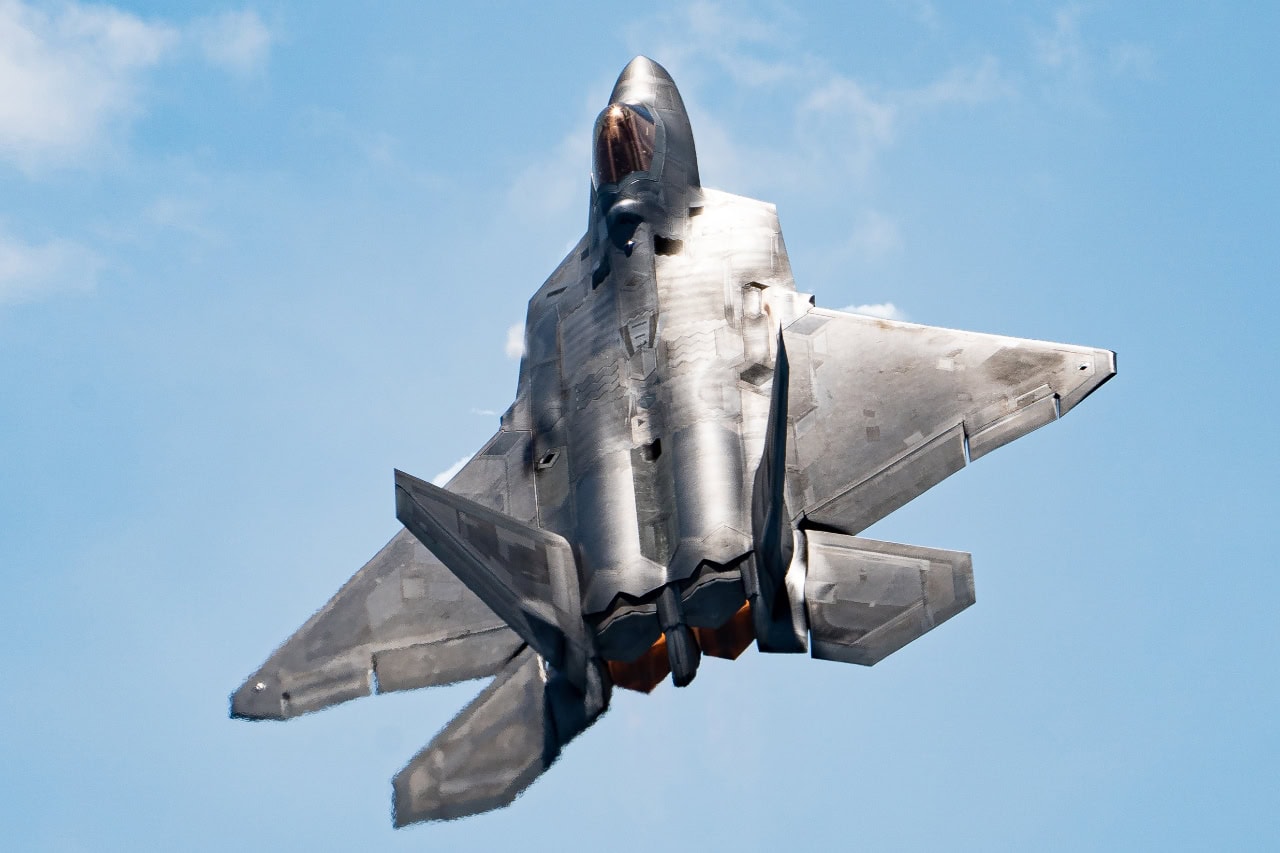
Maj. Joshua “Cabo” Gunderson, F-22 Raptor Demo Team commander and pilot, maneuvers into a climb after a tactical-pitch at the Cold Lake Air Show July 17, 2022, at Cold Lake, Alberta, Canada. The F-22 Raptor’s two Pratt and Whitney F119 Turbofan engines bring a combined 70,000 pounds of thrust in combination with two-dimensional thrust vectoring to enable maximum maneuverability for the multi-role air-to-air stealth fighter. (U.S. Air Force photo by Tech. Sgt. Don Hudson)
The changes are meant to address the F-22’s greatest weakness: its range.
The Raptor was designed for short, intense conflicts over Europe and the Middle East. But the most likely future war—a conflict with China—would occur across the vast distances of the Indo-Pacific. To win that war, fighters must travel farther, stay airborne longer, and survive in an environment filled with long-range missiles and sophisticated sensors.
Extending the Raptor’s range and situational awareness is therefore not optional. It is the key to making the bird useful for the next 30-plus years.
Software May Matter More Than Hardware
Perhaps the most significant change to the F-22 is not seen on the outside of the sleek, iconic warplane. Instead, it sits within the plane. The Air Force is developing rapid software-update systems that allow new capabilities to be installed in minutes (rather than months).
s, the F-22 is being streamlined for the second part of the 21st century.
In the past, upgrading a fighter meant physically modifying the aircraft—a slow and expensive process. Now the goal is to treat fighters as software-defined platforms that can be updated continually. New threat data, weapons, and mission systems can be added almost in real time.
In a future war between technologically sophisticated opponents, the side that can adapt fastest may win—even if the aircraft themselves are similar. This is why the Raptor is being rebuilt as much for software as hardware.
Even Old Raptors are Coming Back
Another sign of the Pentagon’s concern is the effort to return additional F-22s—mostly older models—to combat status. These early F-22s were once considered too old or too expensive to upgrade. Now their status is being reconsidered.
Modernization could bring dozens of Raptors back into the operational fleet, equipped with updated sensors, improved stealth coatings, and open-architecture mission systems.
This would increase the number of combat-ready air superiority fighters at a time when the Air Force faces a growing gap between its commitments and its available forces.
The fact that the service is looking to revive the F-22s they once intended to scrap indicates that fighter numbers matter more today than they did a decade ago, when the Air Force first wanted to kill these planes.
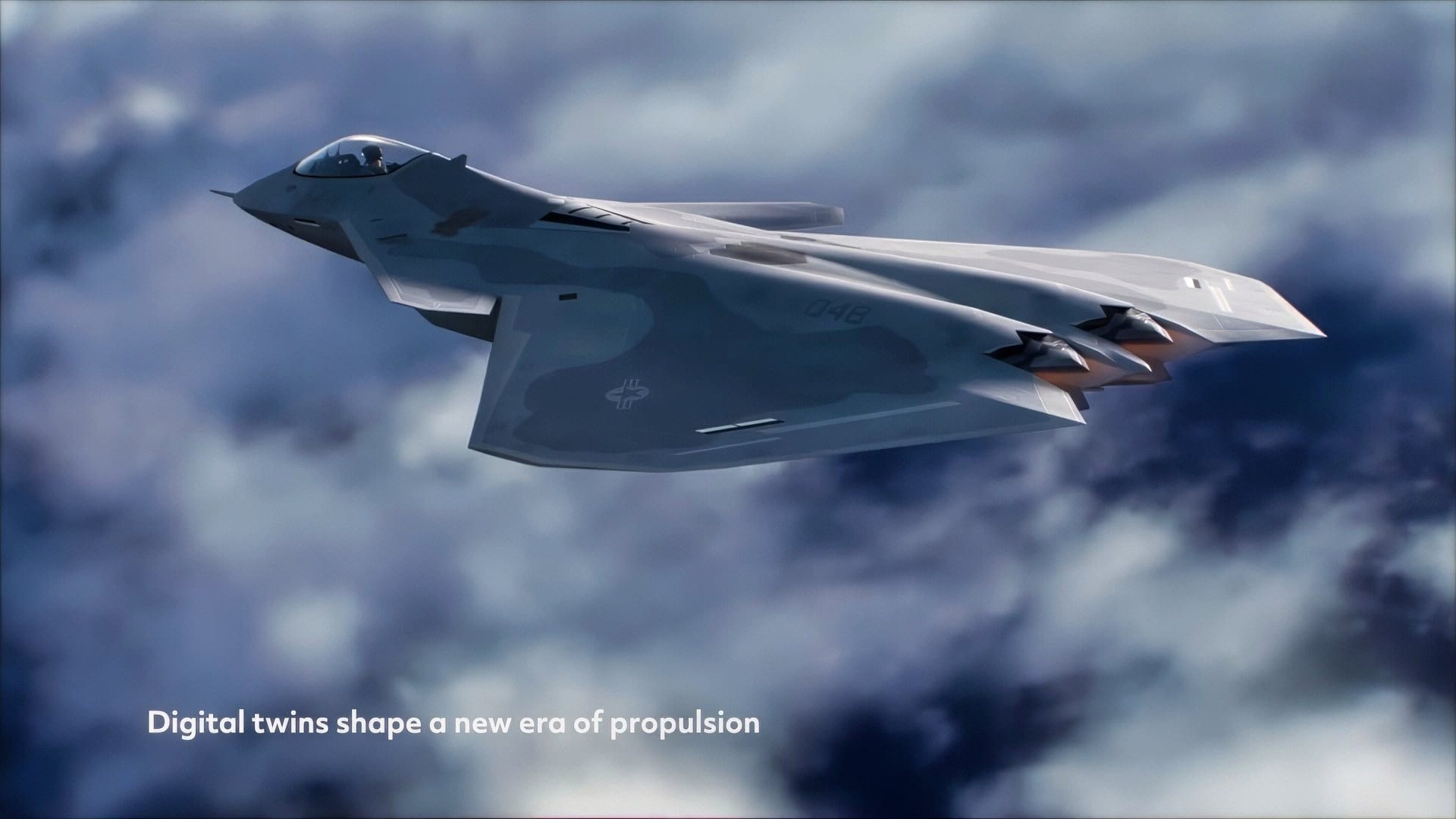
F-47 NGAD Fighter Possible Image. Image Credit: Screenshot.
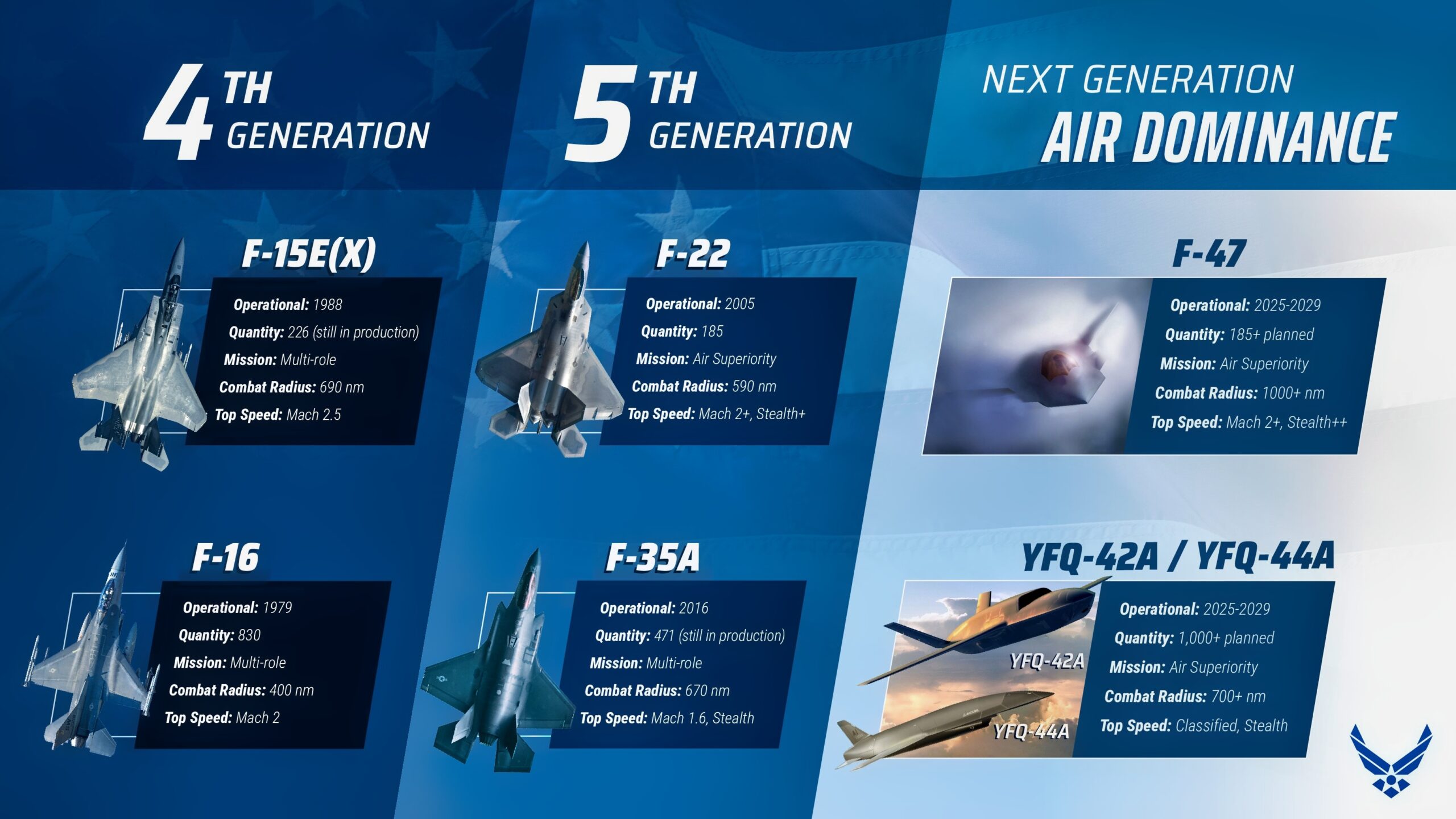
F-47 Infographic. Image Credit: U.S. Air Force
The Shadow of NGAD
All these decisions are happening in the shadow of the NGAD program. The F-47 is supposed to deliver a sixth-generation warplane capable of dominating future battlefields. But the program is too expensive and too technologically ambitious, and it is still many years away from large-scale production.
As a result, few inside the Pentagon are willing to assume the NGAD will arrive on time, in appropriate numbers, and at a cost the Defense Department can sustain.
The B-52 of Stealth Fighters?
In many respects, the F-22 is starting to remind people of the B-52 long-range strategic bomber. The B-52 was designed for a specific era but proved so adaptable that the bird remains flying today—with plans to keep it flying into the middle of the century.
It looks increasingly like the Raptor will follow a similar path of development.
What was once the ultimate fifth-generation warplane is now a long-term platform that will operate alongside newer systems; it will control drones, share data, and provide the backbone of American air superiority for decades to come.
Here’s where the B-52 and F-22 comparisons diverge. The B-52 stayed in service since the Truman era because it was cheap to build and maintain. The F-22 will keep flying because the future of the Air Force’s manned-warplane fleet is uncertain.
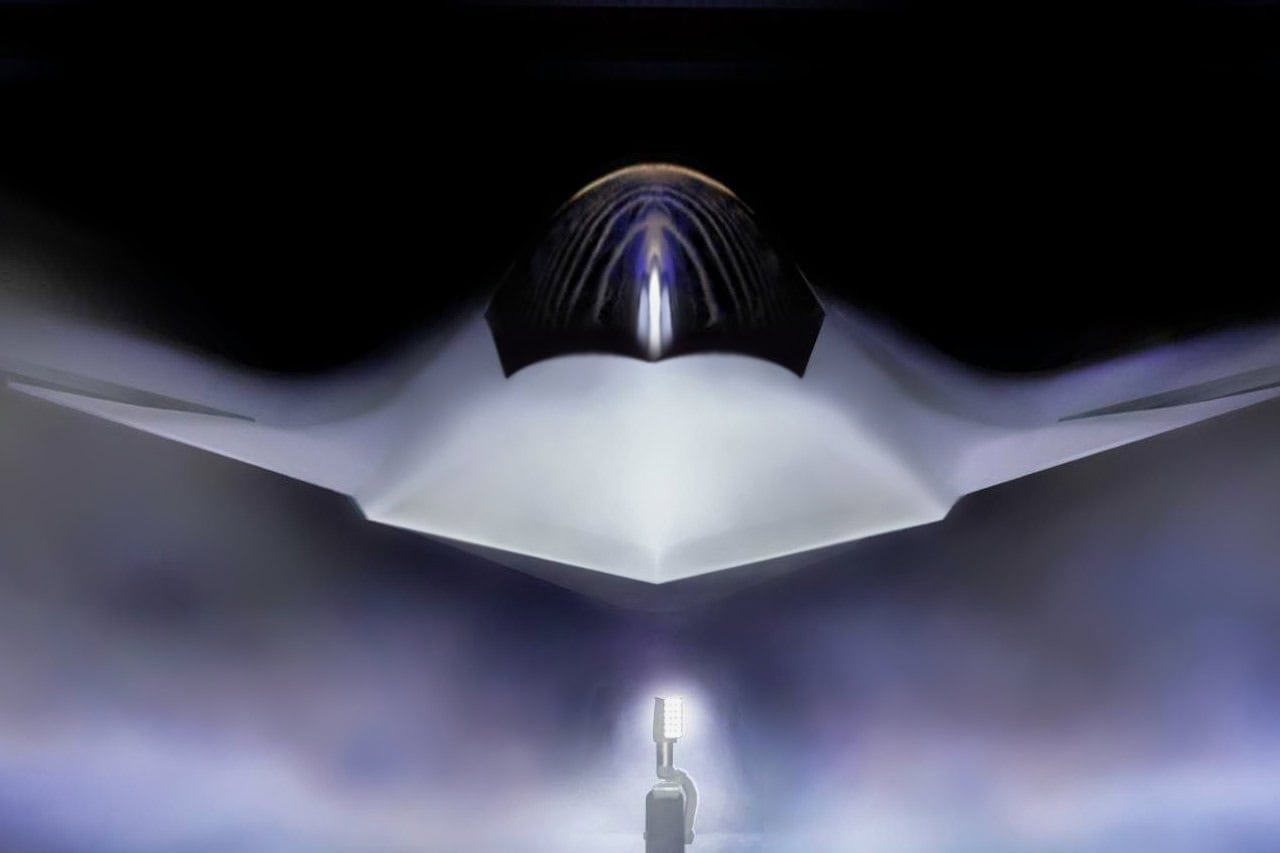
Shown is a graphical artist rendering of the Next Generation Air Dominance (NGAD) Platform. The rendering highlights the Air Force’s sixth generation fighter, the F-47. The NGAD Platform will bring lethal, next-generation technologies to ensure air superiority for the Joint Force in any conflict. (U.S. Air Force graphic)
The Real Lesson
The Raptor’s unexpected longevity is not just a story about one aircraft. It is a story about the state of the U.S. defense industrial base, the quickening pace of Chinese military modernization, and the growing difficulty of fielding new weapons on schedule.
The United States is extending the life of its best fighter because it cannot assume the next new warplane will arrive.
And that might be the clearest sign that the era of unquestioned U.S. air dominance is over.
About the Author: Brandon J. Weichert
Brandon J. Weichert is the Senior National Security Editor at 19FortyFive.com. Recently, Weichert became the editor of the “NatSec Guy” section at Emerald.TV. He was previously the senior national security editor at The National Interest. Weichert is the host of The National Security Hour on iHeartRadio, where he discusses national security policy every Wednesday at 8pm Eastern. He hosts a companion show on Rumble entitled “National Security Talk.” Weichert consults regularly with various government institutions and private organizations on geopolitical issues. His writings have appeared in numerous publications, among them Popular Mechanics, National Review, MSN, and The American Spectator. And his books include Winning Space: How America Remains a Superpower, Biohacked: China’s Race to Control Life, and The Shadow War: Iran’s Quest for Supremacy. Weichert’s newest book, A Disaster of Our Own Making: How the West Lost Ukraine, is available for purchase wherever books are sold. He can be followed via Twitter/X @WeTheBrandon.