
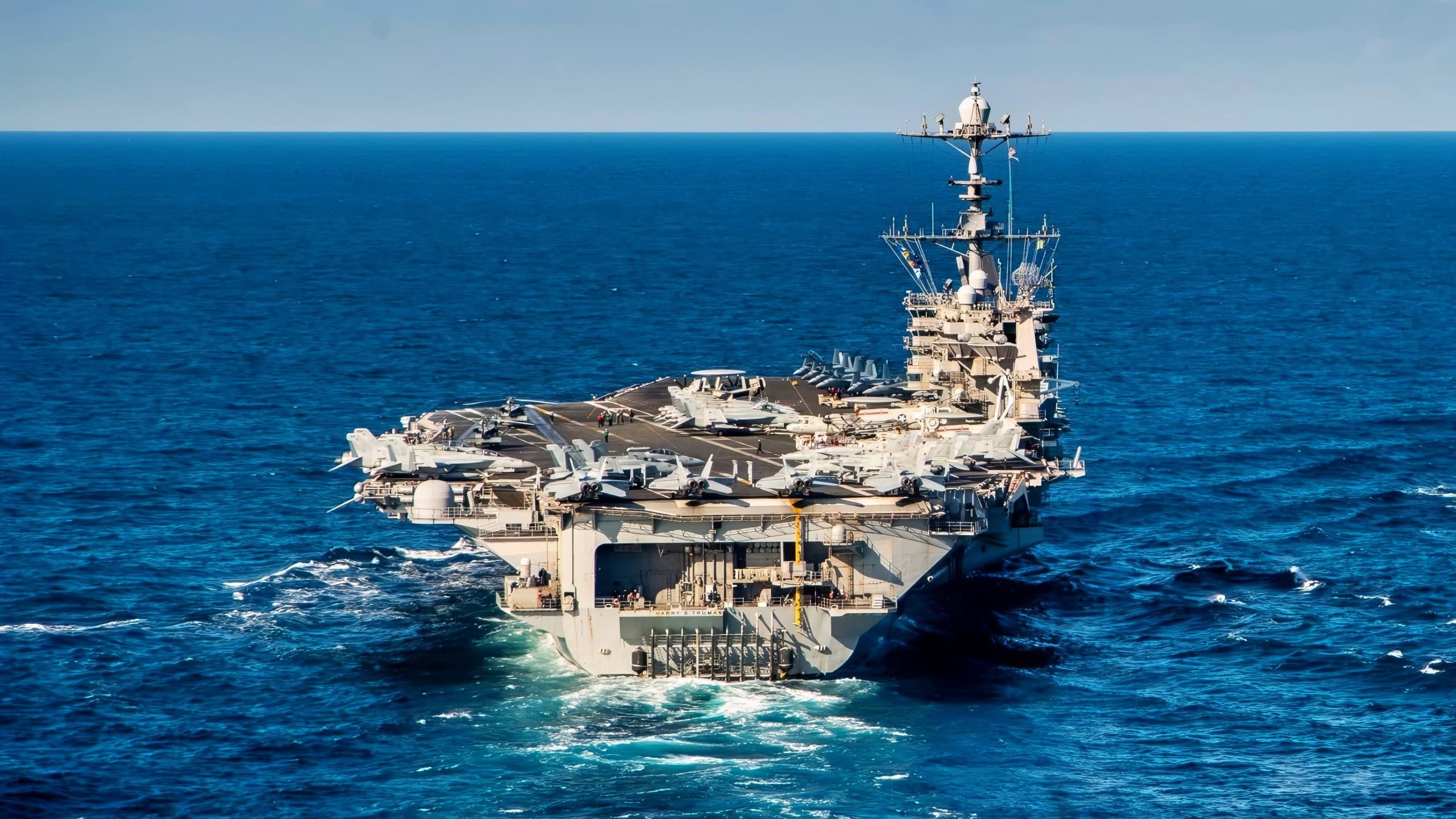
U.S. Navy Aircraft Carrier In Maintenance Until 2030 or Later: It will take at least four years before the USS Harry S. Truman (CVN-75) sails the high seas again. The eighth Nimitz-class carrier will soon enter Refueling and Complex Overhaul (RCOH) at Huntington Ingalls Industries’ Newport News Shipbuilding. RCOHs are time-consuming and tedious processes for refueling nuclear reactors and for maintaining and modernizing other parts of the ship.
Once the RCOH is complete in 2030, the carrier will be good to go for another 25 years, which aligns with the Navy’s strategy to keep numerous carriers in the water at all times. However, HII experienced delays during the pandemic in its RCOHs for the USS George Washington (CVN-73) and John C. Stennis (CVN-74), because of supply chain snarls and worker shortages. The John C. Stennis is running about 12 months behind schedule.
Nearly $100 Million in Funding Could Help the RCOH Process
Newport News Shipbuilding received a $97.7 million contract to complete the RCOH for the Harry S. Truman and address the delays affecting the John C. Stennis.
Naval Sea Systems Command is currently preparing for the Truman RCOH and hopes to avoid delays and cost overruns during the maintenance requirement.
A String of Bad Luck
The Harry S. Truman requires additional repairs after a collision at sea in February 2025. The Truman crashed into the merchant ship Besiktas-M, a Panamanian-flagged vessel, near Port Said, Egypt, in the Mediterranean Sea.
The incident “damaged a sponson on the starboard side near one of the aircraft elevators and tore through the exterior bulkheads of two storage rooms and a maintenance space,” according to Forbes.
Newport News will have to repair that damage during the RCOH, and this could extend the maintenance process beyond four years. Fortunately, the crash did not hurt the nuclear reactors, but the ship did have to sail to Souda Bay, Greece, for emergency repairs. Workers repaired some bulkheads and slapped on paint to enable the Truman to return to the United States.
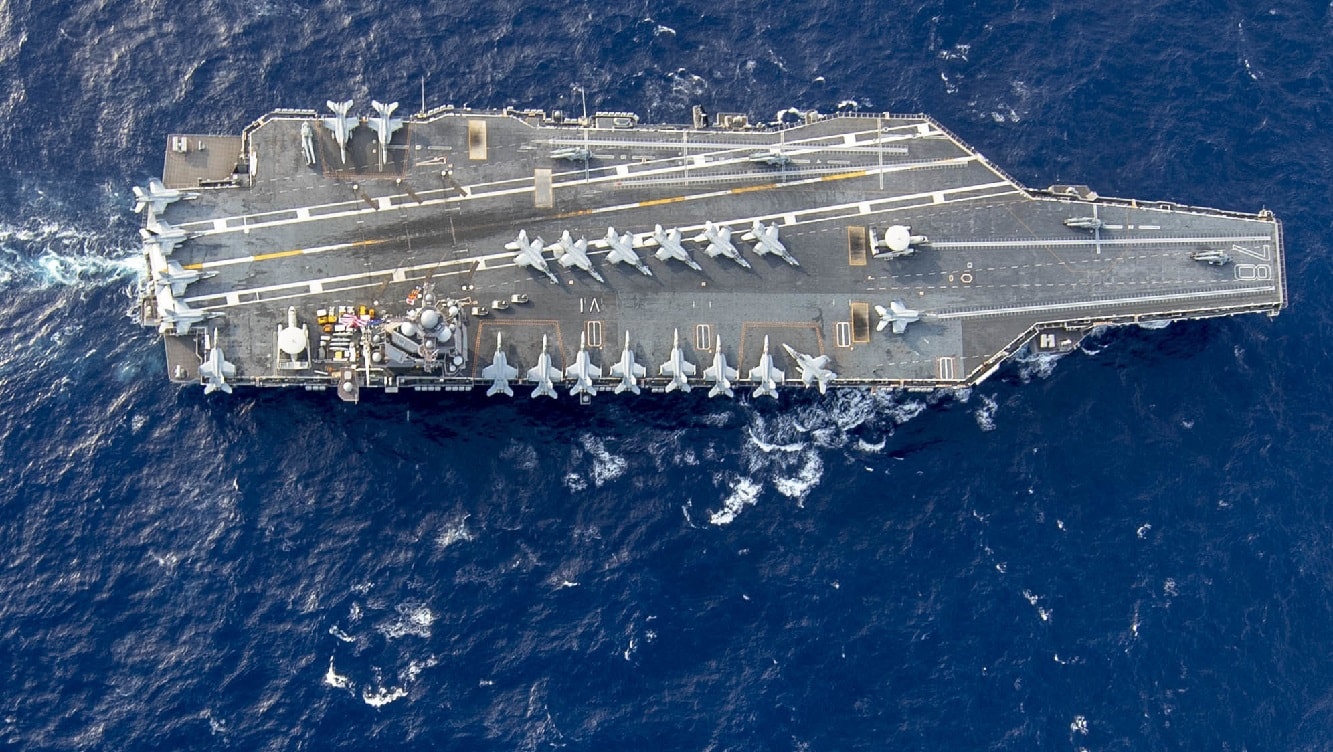
The Ford-class aircraft carrier USS Gerald R. Ford (CVN 78) and the Nimitz-class aircraft carrier USS Harry S. Truman (CVN 75) transit the Atlantic Ocean June 4, 2020, marking the first time a Ford-class and a Nimitz-class aircraft carrier operated together underway. Ford is underway conducting integrated air wing operations, and the Harry S. Truman Carrier Strike Group remains at sea in the Atlantic as a certified carrier strike group force ready for tasking in order to protect the crew from the risks posed by COVID-19, following their successful deployment to the U.S. 5th and 6th Fleet areas of operation. (U.S. Navy photo by Mass Communication Specialist Seaman Riley McDowell)
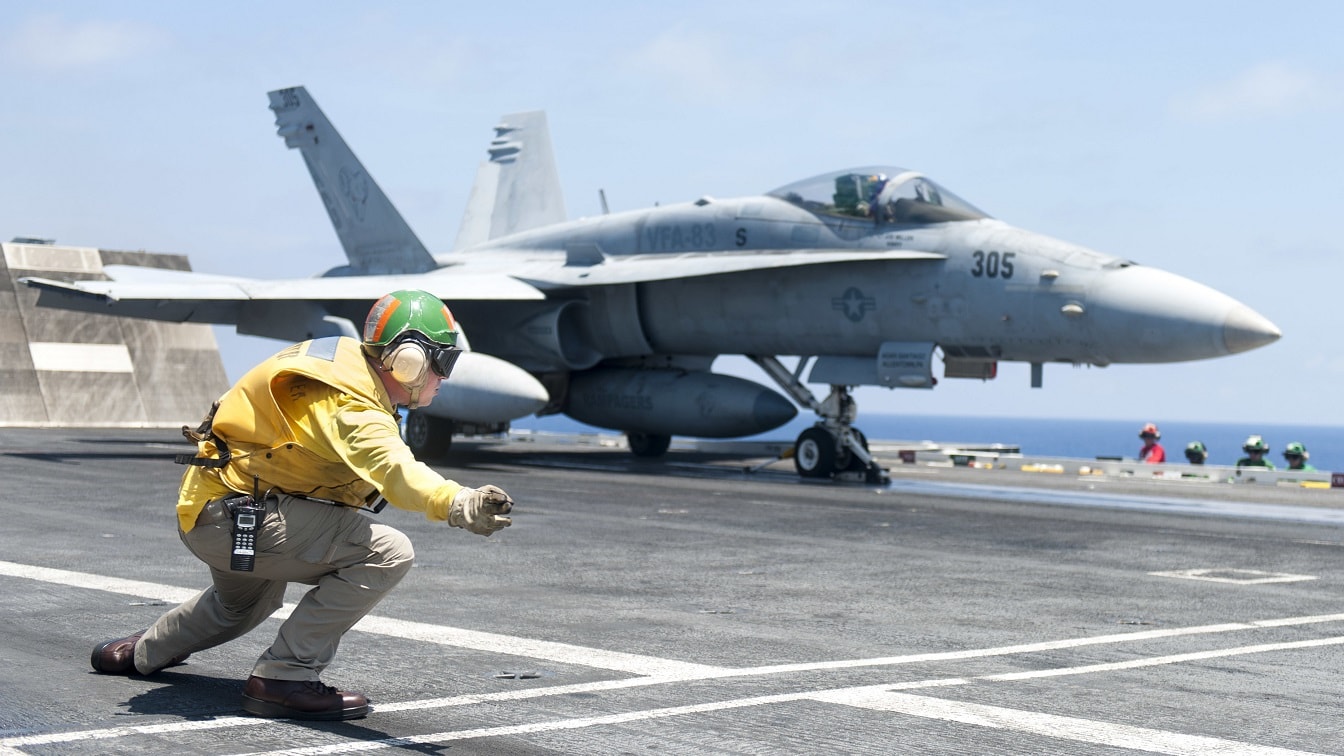
(June 15, 2015) Lt. B. J. Burnham signals to launch an F/A-18C Hornet, assigned to the “Rampagers” of Strike Fighter Squadron (VFA) 83, on the flight deck of aircraft carrier USS Harry S. Truman (CVN 75). Truman is underway conducting Tailored Ship’s Training Availability (TSTA) off the east coast of the United States. TSTA is the first combined training event of a ship’s inter-deployment training cycle that tests and evaluates shipboard drills, including general quarters, damage control, medical and firefighting. Upon successful completion of TSTA, Truman will be considered proficient in all mission areas. (U.S. Navy photo by Mass Communication Specialist 2nd Class K. H. Anderson/Released)
Captain Relieved During Conflict with Houthi Terrorists
The Navy conducted an investigation into the wreck. It subsequently relieved Captain David Snowden and named a replacement on the spot. This all happened at a fraught time, as Iranian-backed Houthi terrorists were firing at shipping in the Gulf of Aden and the Red Sea outside of Yemen.
More Mishaps Added to the Woes
Overall, the Harry S. Truman had bad luck during its cruise. In December 2024, two F/A-18 E/F Super Hornets from the Truman were flying on patrol when disaster struck. The USS Gettysburg (CG-64) believed the two Super Hornets were incoming missiles and fired two SM-2 interceptors. One of the F/A-18 E/Fs was shot down while attempting to land on the carrier. Both crewmen ejected and survived, but this was a close call.
Close Missile Launch Resulted In Another Disappointing Incident
Another mishap occurred in the spring of 2025. During a Houthi missile launch, the Truman had to make an evasive maneuver, turning away from the incoming bogey. A Super Hornet was coming up to the deck from an elevator, and the ship’s turn caused it and a towing vehicle to plunge into the Red Sea. No one was hurt, but it was disappointing to lose an important fighter jet.
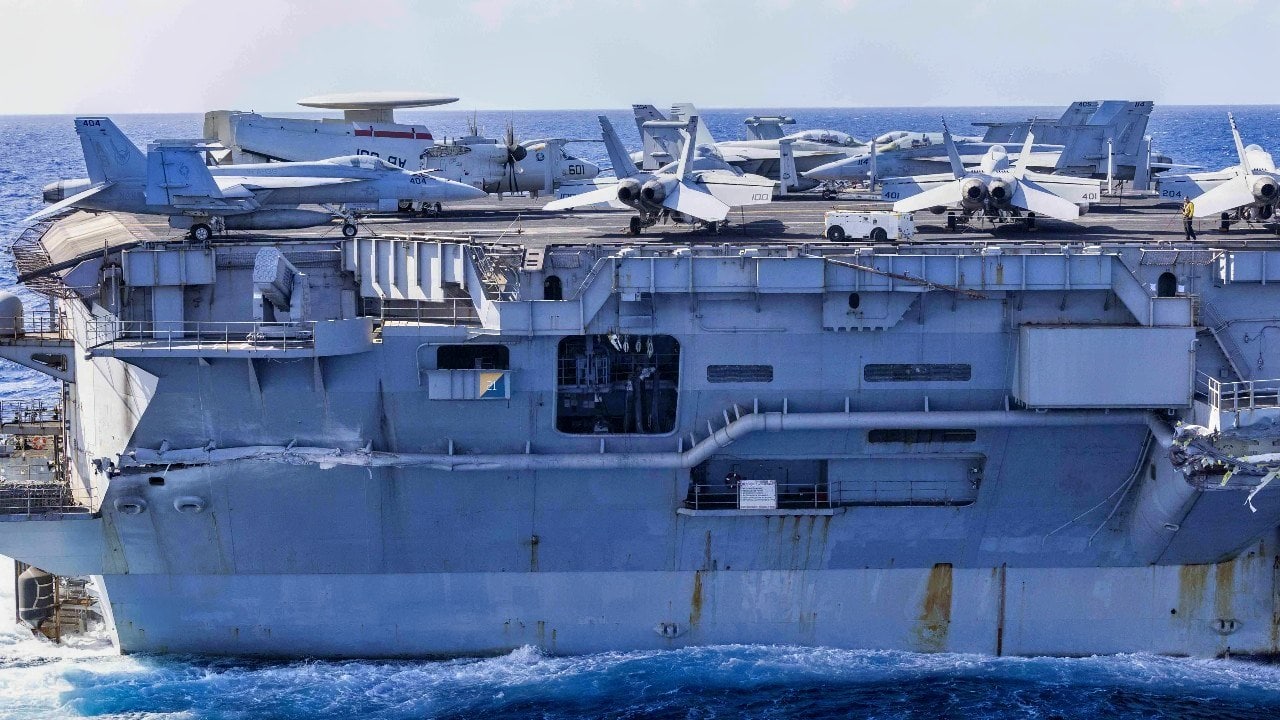
(Feb. 13, 2025) Exterior damage of USS Harry S. Truman (CVN 75) viewed from an MH-60S Sea Hawk helicopter, attached to the “Dragonslayers” of Helicopter Sea Combat Squadron (HSC) 11 following a collision with the merchant vessel Besiktas-M, Feb. 12, while operating in the vicinity of Port Said, Egypt. USS Harry S. Truman, the flagship of the Harry S. Truman Carrier Strike Group (HSTCSG), is on a scheduled deployment in the U.S. 6th Fleet area of operations supporting U.S. Naval Forces Europe-Africa to defend U.S., Allied and partner interests. (U.S. Navy photo by Chief Mass Communication Specialist Jose Hernandez)
Super Hornet Fell Into the Sea
A few weeks later, another F/A-18F tried to land but fell off the deck into the Red Sea. Fortunately, no one was killed or wounded. Investigations faulted human error and the high operational tempo and sortie rate demanded by the Houthi threat. Investigators concluded that the strike group performed admirably despite the mishaps.
Long Deployment Could Have Added to Hard Luck Incidents
The Truman underwent a lengthy deployment, and this could have contributed to the negative incidents. Its time at sea was extended from six months to more than eight months, and the crew might have been tired and not operating at optimum efficiency.
Same With the Gerald R. Ford
Overextension has also been a problem for the USS Gerald R. Ford (CVN-78), which was also deployed from a counternarcotics operation in Southern Command to the Central Command area of responsibility. The Ford has endured sewage problems and a laundry fire that forced it to divert to Greece for repairs.
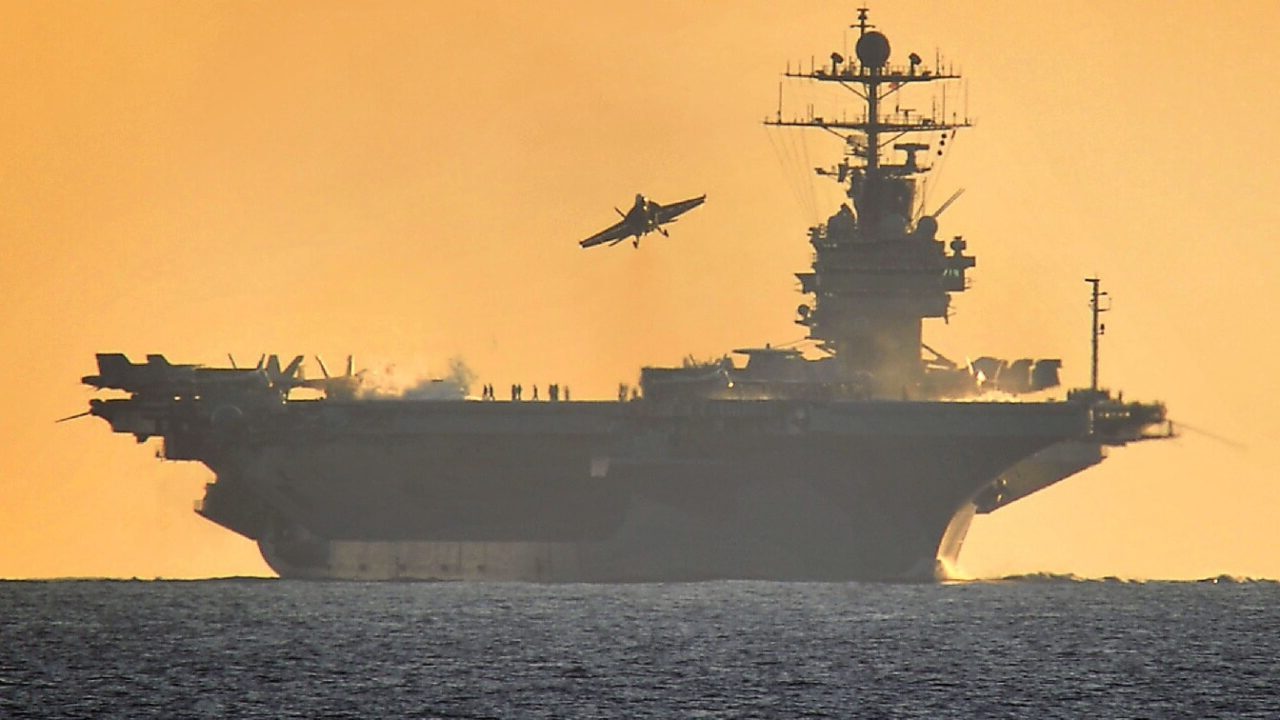
American Nimitz class aircraft carrier USS Harry S Truman is pictured during flying operations in the company of HMS Somerset in the Mediterranean. HMS Somerset was perforing anti-submarine duties for the immense vessel at the the time.
What Lessons Can the Navy Learn?
The Navy should take a close look at the way long carrier deployments affect performance. The sailors on board the Harry S. Truman are well-trained and expert in their jobs—but accidents can nevertheless happen during dangerous, busy deployments.
Perhaps there should be a limit on lengthy deployments, but the broader geopolitical reality is that the Navy may not have enough carriers to patrol all the dangerous hotspots around the world. The maritime branch could use another carrier in the Middle East, and indeed, the George H.W. Bush (CVN-77) is steaming there to assist in Operation Epic Fury. At the same time, Russia and China are always a threat.
But the bottom line is the stubborn fact that Harry S. Truman will be out of action for at least four years during its RCOH. During that time, the Navy can do another after-action review to examine its last deployment in greater detail. Airplane crashes and losses cannot happen again.
About the Author: Dr. Brent M. Eastwood
Author of now over 3,500 articles on defense issues, Brent M. Eastwood, PhD, is the author of Don’t Turn Your Back On the World: A Conservative Foreign Policy and Humans, Machines, and Data: Future Trends in Warfare, plus two other books. Brent was the founder and CEO of a tech firm that predicted world events using artificial intelligence. He served as a legislative fellow for US Senator Tim Scott and advised the senator on defense and foreign policy issues. He has taught at American University, George Washington University, and George Mason University. Brent is a former US Army Infantry officer. He can be followed on X @BMEastwood.