
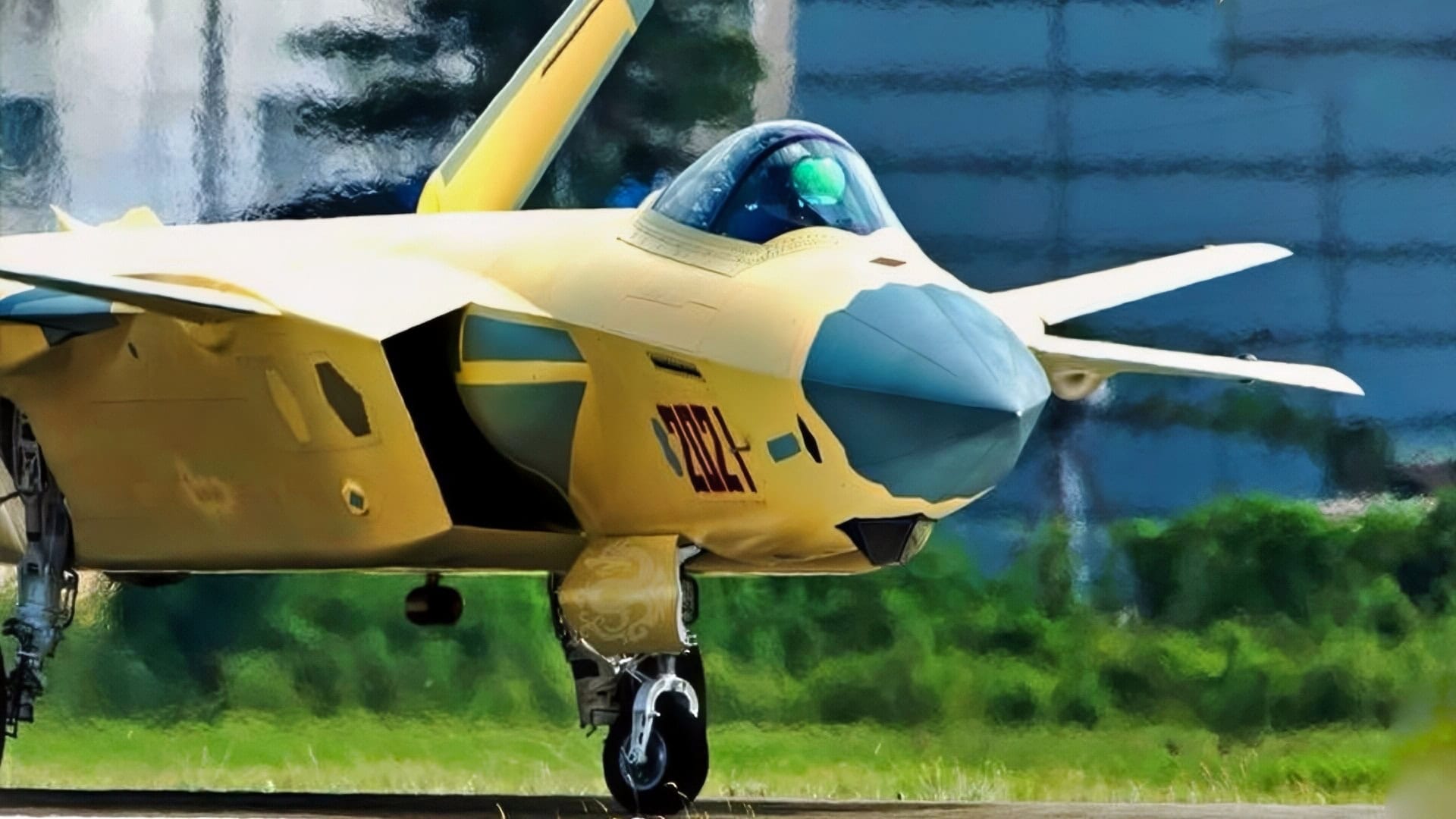
China is the only country besides America with two operational stealth fighters. The J-20 entered service in 2017. The J-35 joined in 2025. Neither has ever fired a shot in combat. The F-22, F-35, and even Russia’s Su-57 have combat records. China’s stealth fighters have immense potential — but potential and proven are two very different things.
The J-20 and J-35 Have 1 Key Weakness
China is currently the only nation in the world besides the U.S. to operate two stealth fighters simultaneously.
The Chengdu J-20 and the Shenyang J-35 are currently the two most advanced fighters across the entire PLA. Their merrits of these two aircraft have been a topic of debate among Western analysts for years now.
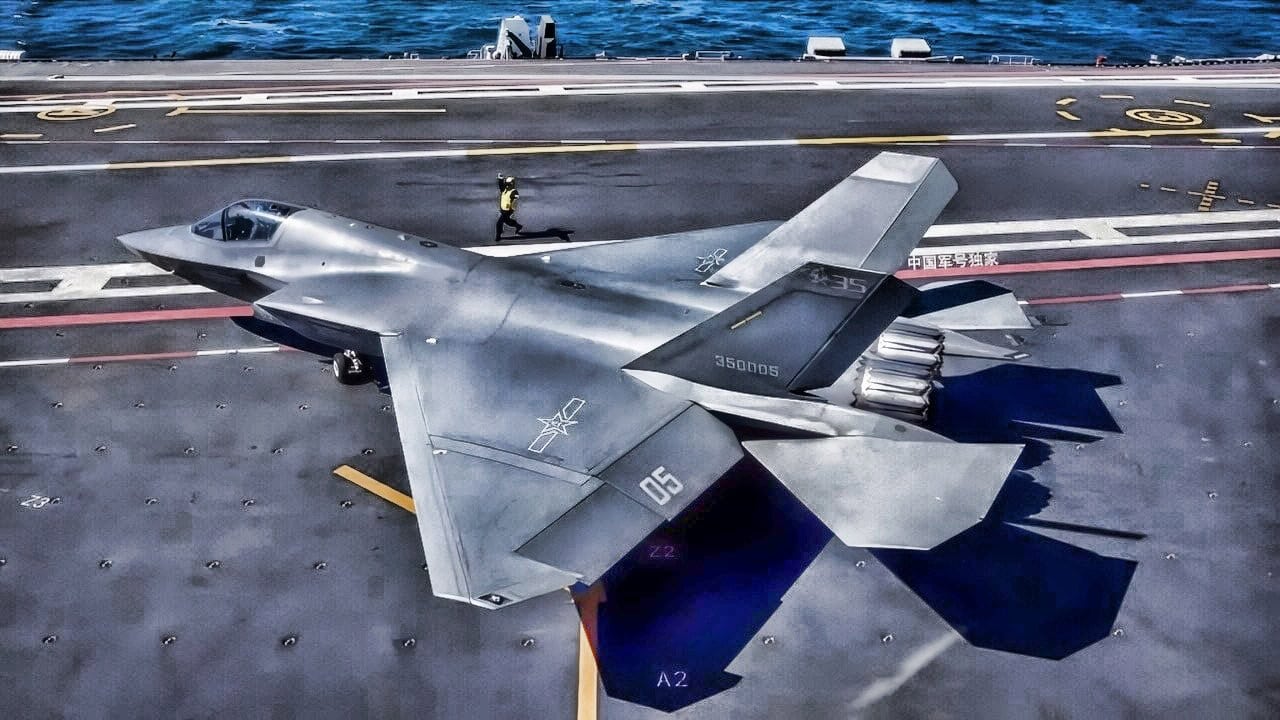
China J-35 Naval Stealth Fighter. Image Credit: PLAN.
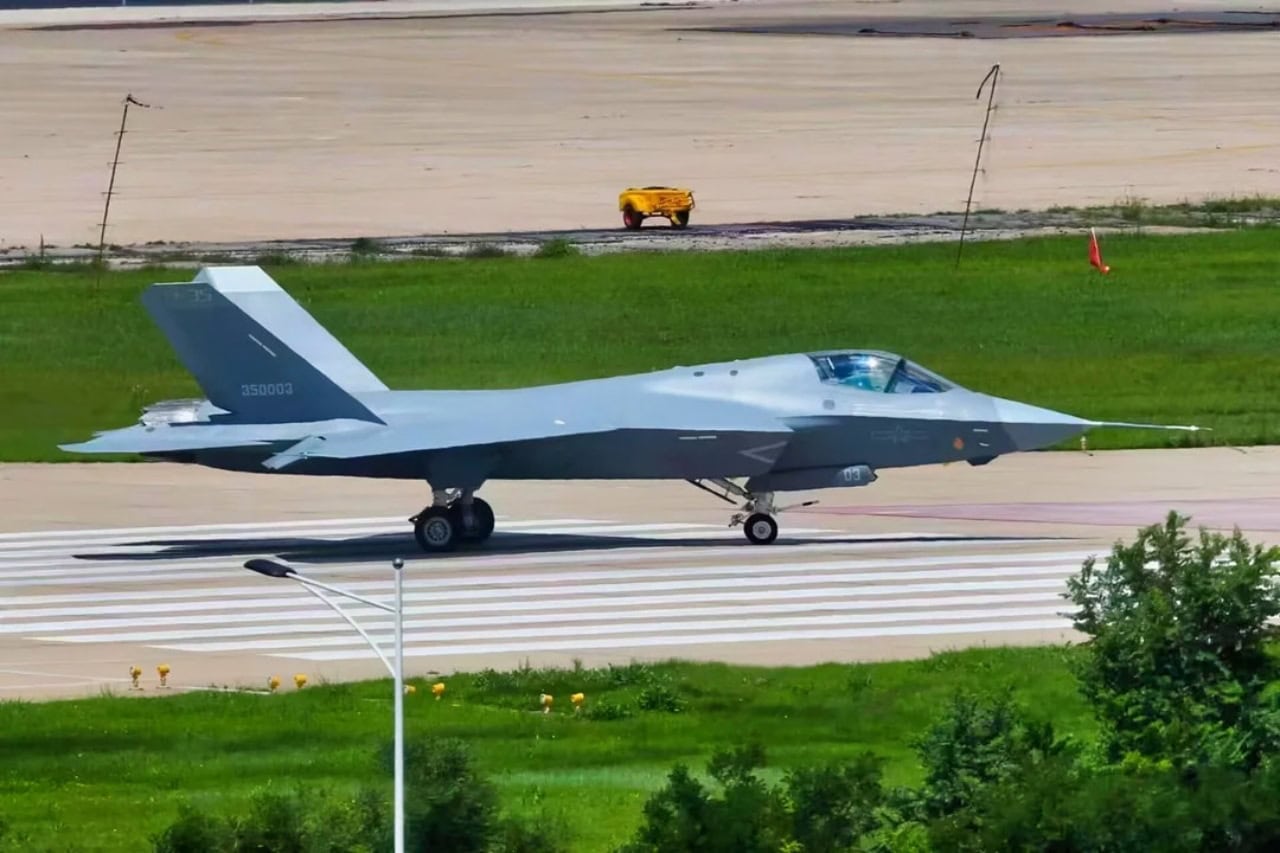
J-35 Fighter. Image Credit: Chinese Internet.
While the J-20 and the J-35 both have immense potential, neither aircraft has had any operational experience in its entire service life.
Both have strong potential, but they remain untested, their true capability remain unknown.
The Origins of the J‑20 “Mighty Dragon”
The J-20 emerged from the J-XX program in the 1990s after Chengdu’s “Project 718” was selected.
The first J‑20 prototype flew on January 11, 2011. Unlike earlier Chinese aircraft programs that had drawn heavily on foreign assistance or reverse‑engineered designs, the J‑20 was a largely indigenous effort, informed by China’s experience with the J-9 and J-10 programs.
After several years of extensive flight testing and refinement, the aircraft was publicly unveiled at the Zhuhai Airshow in 2016 and entered operational service with the PLAAF in March 2017. By doing so, China became the second country in the world to field an operational stealth fighter, a milestone that firmly cemented the PLAAF as a global leader in air power.
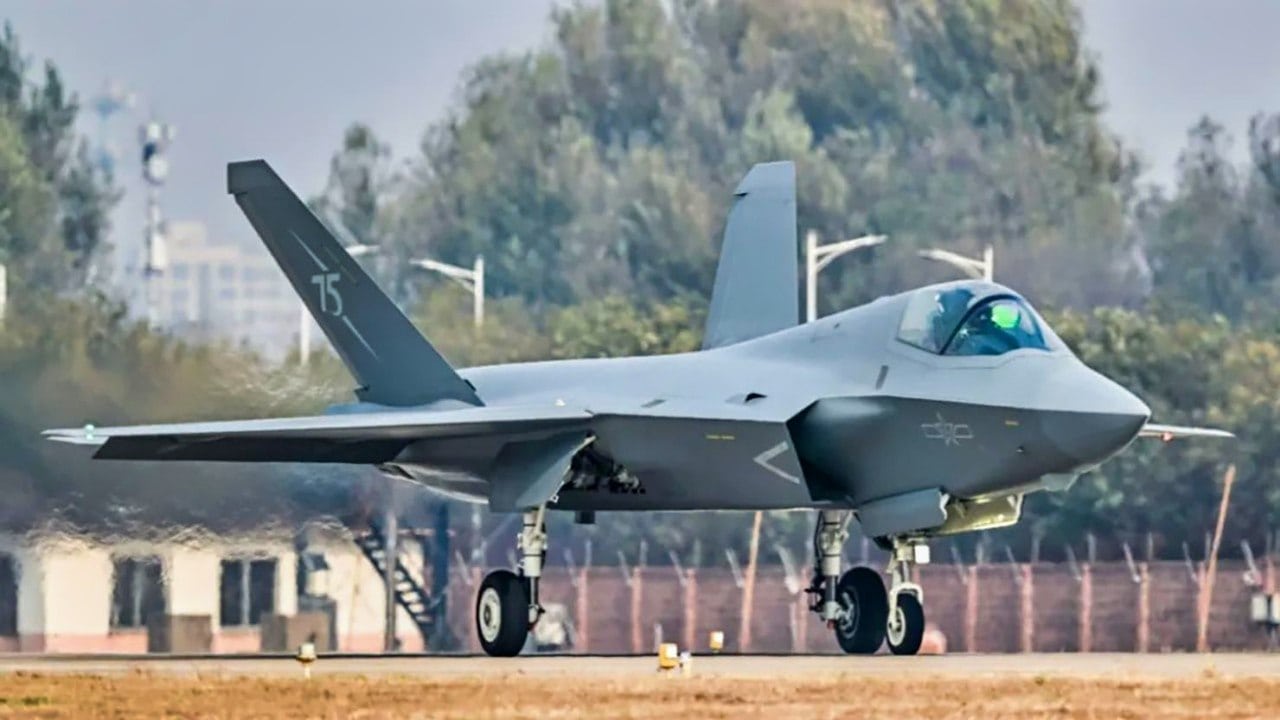
J-35A Fighter from China. Image Credit: Chinese Military
While many pointed out a number of similarities between the J-20 and the F-22, the two aircraft are very distinct in their design and roles.
The J-20 was designed as a large, long‑range air superiority aircraft optimized for operations across vast distances.
The aircraft uses a canard‑delta configuration, a blended fuselage, diverterless supersonic inlets, and extensive use of radar‑absorbent shaping to minimize its frontal radar cross-section as much as possible. The aircraft measures 21.2 meters in length with a wingspan of 13.01 meters, allowing it to carry more fuel internally and to house large weapons bays suitable for very long‑range air‑to‑air missiles.
Engines, Avionics, and the WS‑15 Breakthrough
One of the most persistent challenges facing the J‑20 program during its early years was propulsion. Initial production aircraft relied on Russian AL‑31F engines, followed by indigenous WS‑10C engines adapted from fourth‑generation platforms.
While these powerplants a necessary stopgap measure, they were limited in their thrust output, efficiency, and sustained supersonic performance. This changed with the eventual adoption of the WS‑15 turbofan, a clean‑sheet Chinese engine design intended specifically for fifth‑generation fighters.
By 2023, reports indicated that serial‑production J‑20B aircraft were flying with WS‑15 engines installed. The WS‑15 is believed to provide substantially better fuel efficiency, among other things.
These improvements also enabled sustained supercruise, enhanced sensor performance, and reduced infrared signature, all of which are critical for fifth‑generation combat effectiveness.
While precise performance figures remain classified, the integration of the WS‑15 marked an important step in the J-20 program, bringing it to full fifth-generation capacity.
The J‑35 and Its Unconventional Path to Service
In contrast to the centrally planned origins of the J‑20, the J‑35 was an unexpected gift for the PLAAF. Its predecessor, the FC‑31 “Gyrfalcon,” first flew in October 2012 as a privately funded demonstrator by Shenyang Aircraft Corporation.
At the time, the PLAAF had already committed to the J‑20, leaving the FC‑31 as an export-only aircraft for the international market. This all changed when the PLAN began expanding its ambitions for carrier aviation.
China’s early carriers relied on non‑stealthy fourth‑generation aircraft, limiting their survivability in high‑intensity conflicts. When China commissioned the Type 003 Fujian, the need for a carrier‑capable stealth fighter became increasingly apparent.
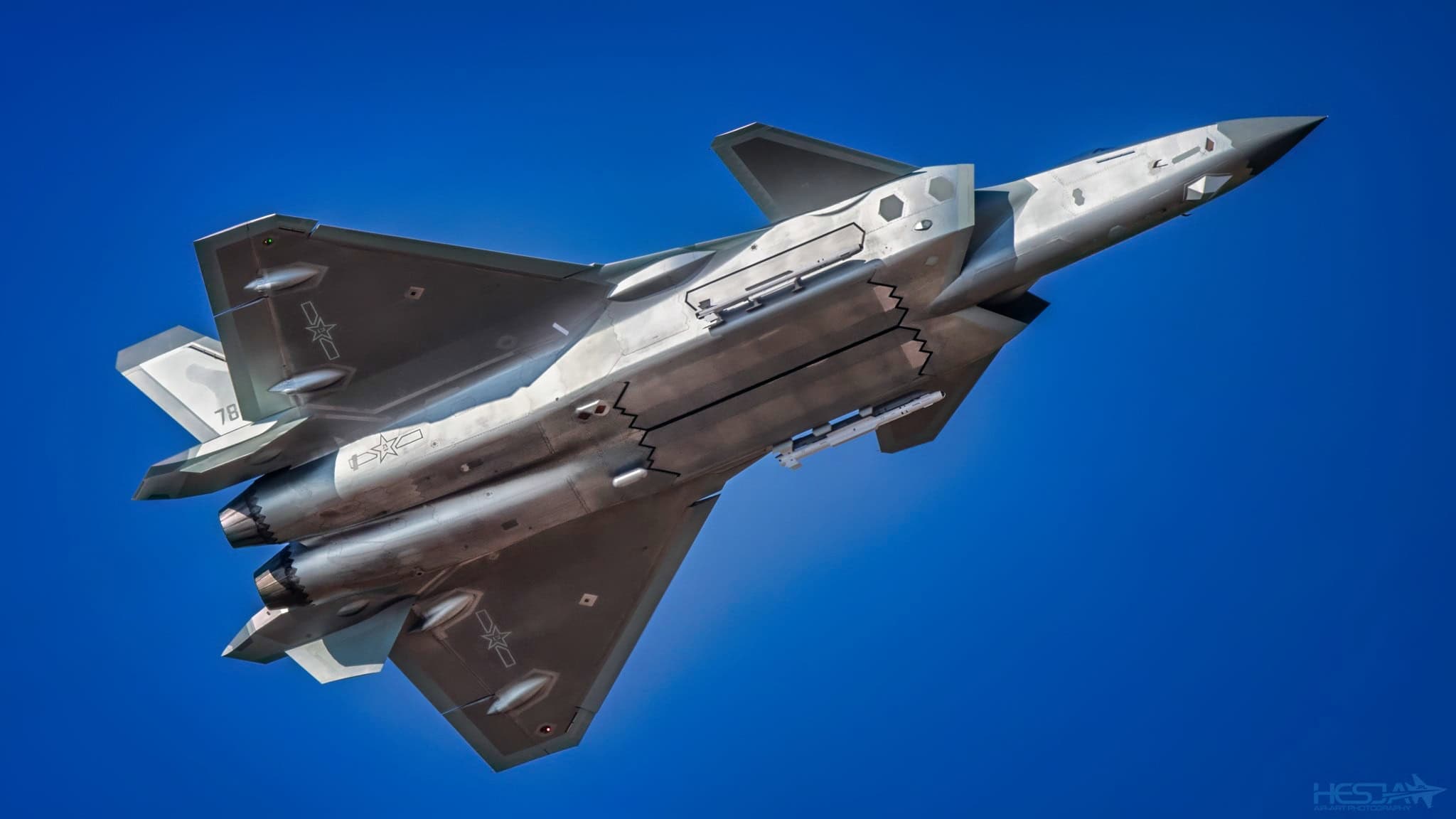
J-20 Fighter from China. Image Credit: Creative Commons.

J-20 Fighter. Image Credit: Chinese CCTV.
The FC‑31 design provided a foundation for such an aircraft, and Shenyang began extensive redesign work to navalize the platform.
The resulting aircraft, redesignated the J‑35, incorporated folding wings, reinforced landing gear, a catapult launch bar, and an arrestor hook. Its navalized prototype flew in October 2021, and further development led to both carrier‑based and land‑based variants.
By September 2025, Chinese state media confirmed that the J‑35 had officially entered service with both the PLA Naval Air Force and the PLAAF, marking China’s debut of a second operational fifth‑generation fighter type.
Massive Potential, but Untested
Many are quick to dismiss the stealth characteristics of both the J-20 and the J-35, but these claims are unfortunately made out of ignorance.
While the true stealth capabilities of both aircraft are classified, radar simulations show that the J-20 and J-35 are both very capable stealth fighters.
Even the canards on the J-20, which many thought would compromise its low-observability profile, are well integrated with sophisticated edge treatments.
Because the J-35 is still a relatively young aircraft, less is known about it, but its radar returns are estimated to be about the same, if not better, than those of the J-20. Neither matches the stealth qualities of an F-35, but both are well-designed stealth aircraft.
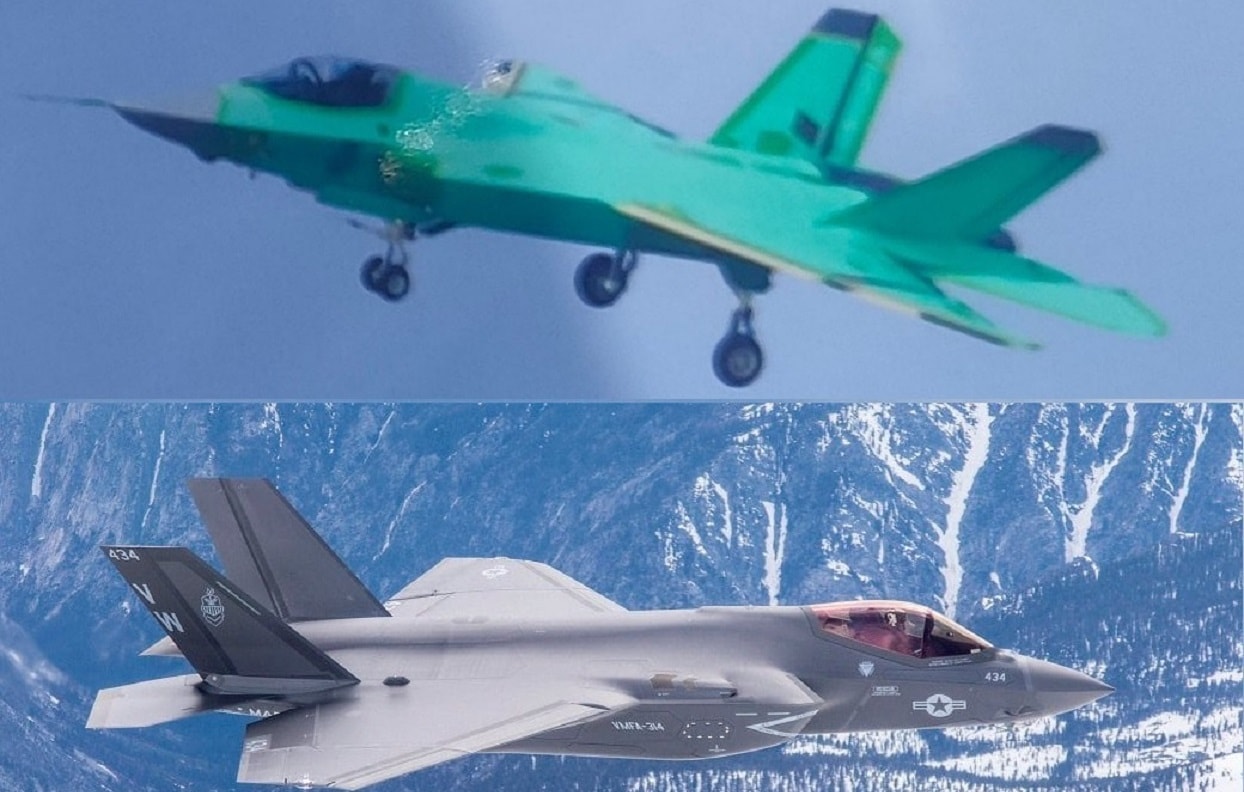
J-35 vs. F-35 Comparison. Image by Twitter User RupprechtDeino.
The biggest elephant in the room regarding the J-20 and the J-35 is their lack of operational experience. Every other operational stealth fighter in the world has had active combat experience of some sort.
The Americans have used the F-22 and F-35 in the Middle East on several occasions (though neither faced significant air defenses until Operation Epic Fury). Even the Russians have used the Su-57 in Ukraine on several occasions, if Russian and Ukrainian sources are to be believed. The J-20 and the J-35 have been used in combat training and military drills, but neither accurately simulates real combat conditions. China’s stealth fighters have a lot of potential, but they are, as of yet, unproven.
About the Author: Isaac Seitz
Isaac Seitz, a Defense Columnist, graduated from Patrick Henry College’s Strategic Intelligence and National Security program. He has also studied Russian at Middlebury Language Schools and has worked as an intelligence Analyst in the private sector.