The U.S. Navy and Air Force now operate hundreds of F-35s, which continue to prove combat-worthy and exceedingly deployable.
Not only can U.S. Navy carriers travel with roughly 50 – 60 F-35Cs if needed, but the Navy’s amphibious assault ships can themselves deploy with up to 20 F-35Bs.
The U.S. Air Force now operates hundreds of F-35As and is increasingly forward-deploying them at strategic allied locations worldwide.
The allied equation with the F-35 is equally relevant, as it amounts to nothing short of an F-35 “explosion” across the European continent.
Not only did Japan make a huge, multi-billion-dollar F-35 buy in recent years, but Lockheed Martin estimates there could be as many as 450 F-35s on the European continent by 2030.
In terms of pure “mass,” this is an extremely substantial number, particularly if the F-35 can sustain a tactical air combat advantage in terms of networking, sensing, and weaponry. As for China’s J-20, estimates can vary, yet large numbers of public media reports estimate the fleet at roughly 300 and growing fast.
5th-Generation “Mass”: F-35 vs J-20
There is little question that any great-power confrontation would require “mass” when it comes to 5th-generation aircraft, particularly given the expanse of the Pacific or the sheer size of Russia and Eastern Europe.
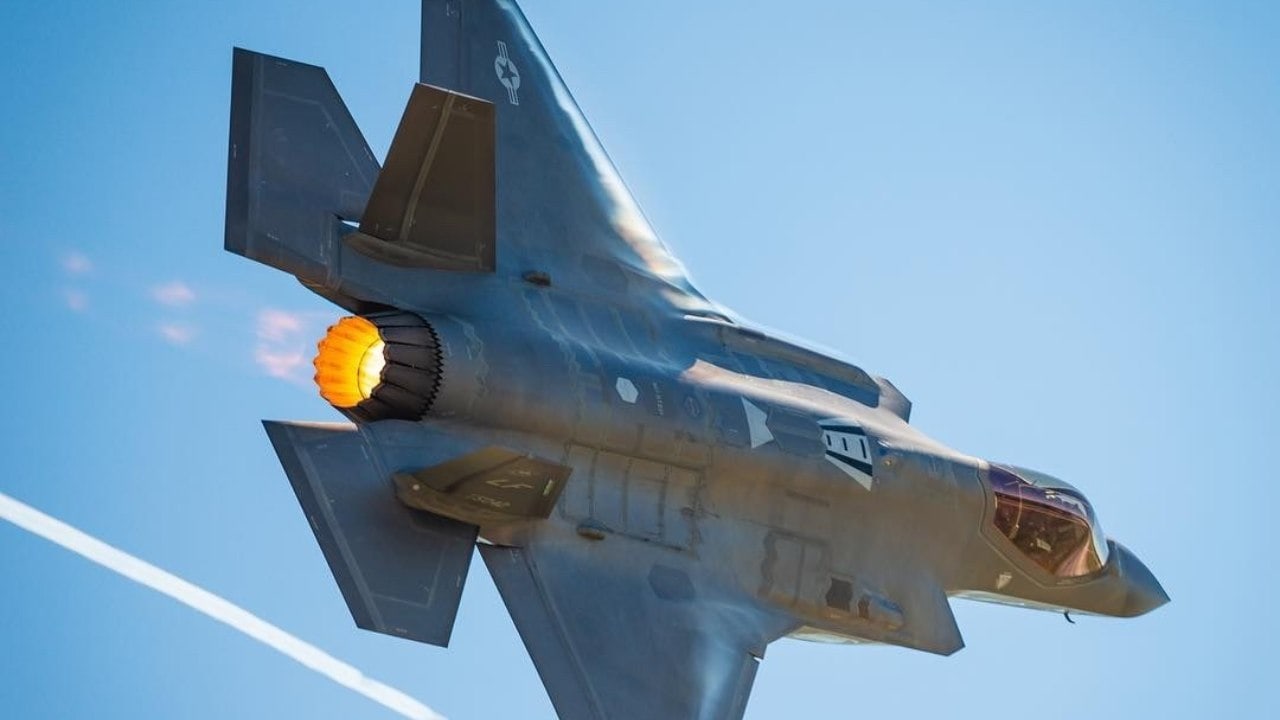
Capt. Andrew “Dojo” Olson, F-35 Demonstration Team commander and pilot performs a dedication pass in an F-35A Lightning II during the 2019 Wings Over Wayne Airshow April 27, 2019, at Seymour Johnson Air Force Base, North Carolina. The WOW Airshow marks the third public performance of the F-35 Demo Team’s new aerial demonstration during 2019 airshow season.
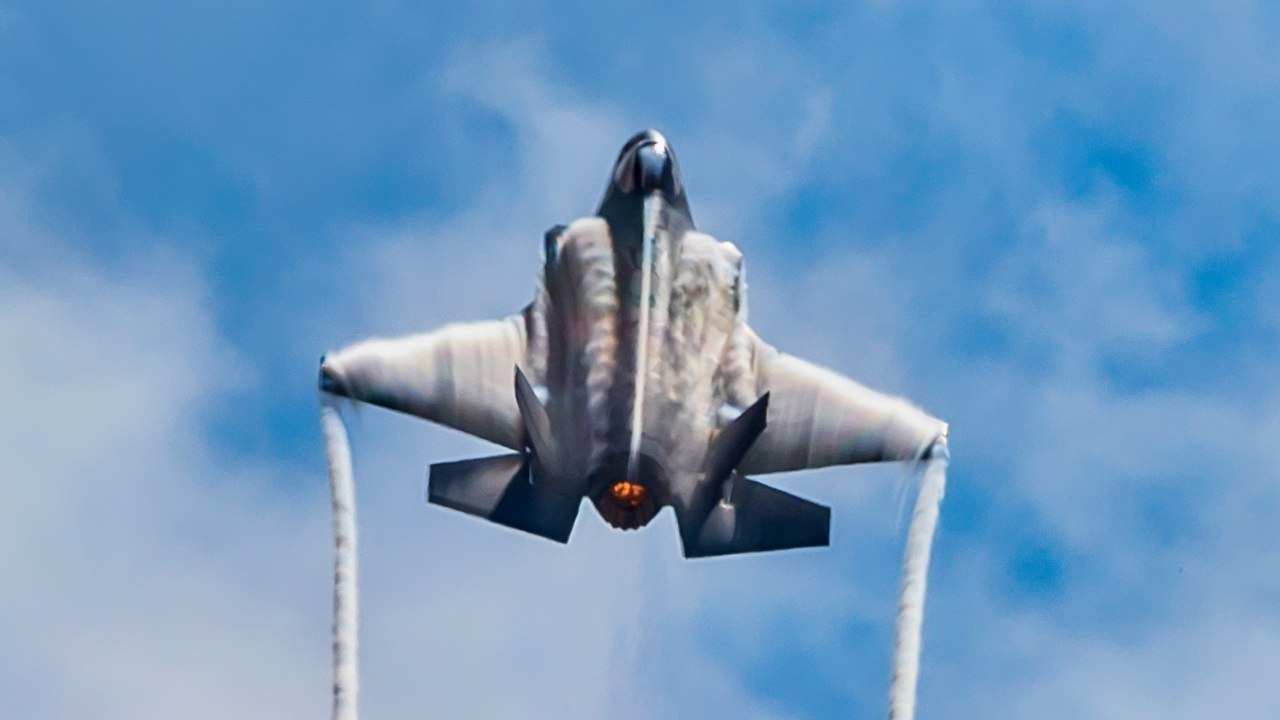
Capt. Andrew “Dojo” Olson, F-35 Demonstration Team pilot and commander performs aerial maneuvers during the Wings Over Houston Airshow Oct. 18, 2019, in Houston, Texas. The show featured performances from the U.S. Air Force Thunderbirds, Tora, Tora, Tora, and Oracle. (U.S. Air Force photo by Senior Airman Alexander Cook)
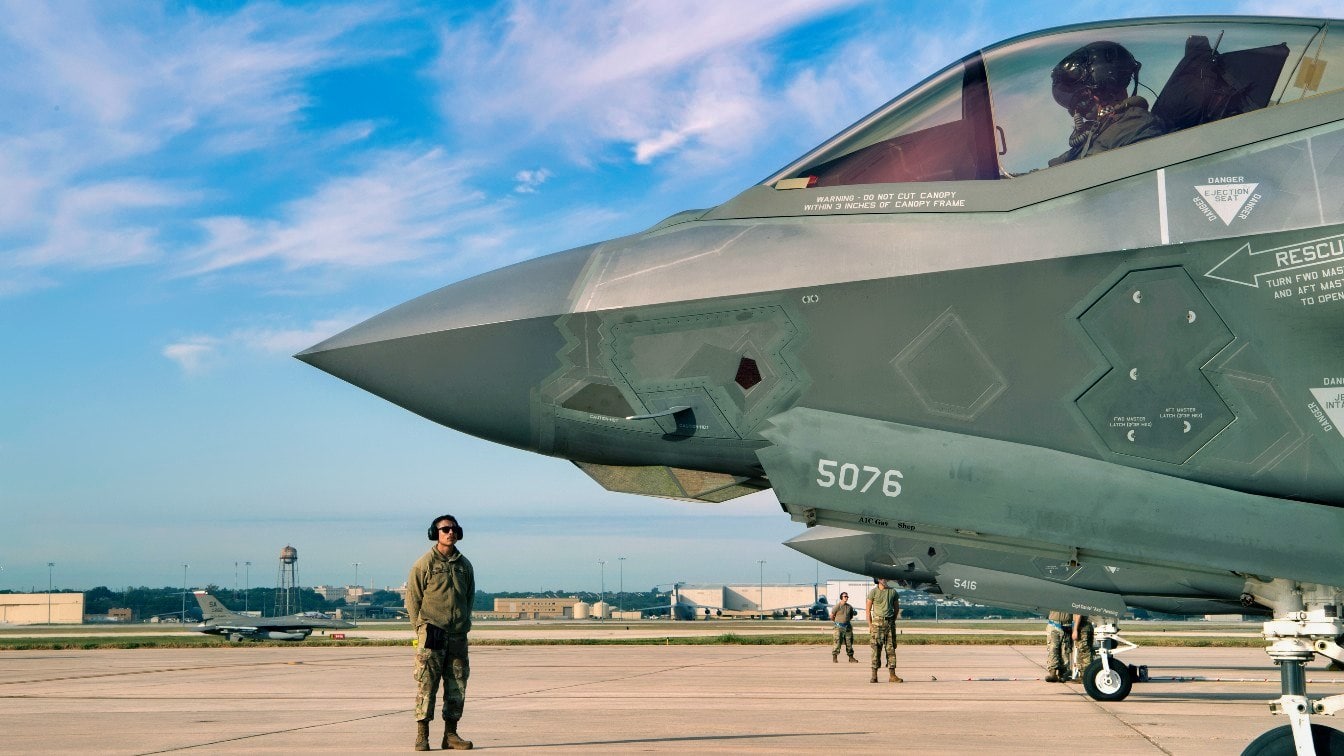
F-35s from the 62nd Fighter Squadron visit Joint Base San Antonio-Lackland, October 21, 2021. F-35 Lightning II aircraft traveled to JBSA-Lackland for a two week stay to train and fly with multiple different aircraft from the surrounding area to include the 149th Fighter Wing’s F-16 Vipers. (Air National Guard Photo by Staff Sgt. Ryan Mancuso)
Large, dispersed, yet networked formations of F-35s would be needed to “find” and “neutralize” advanced air defenses across a wide geographical envelope.
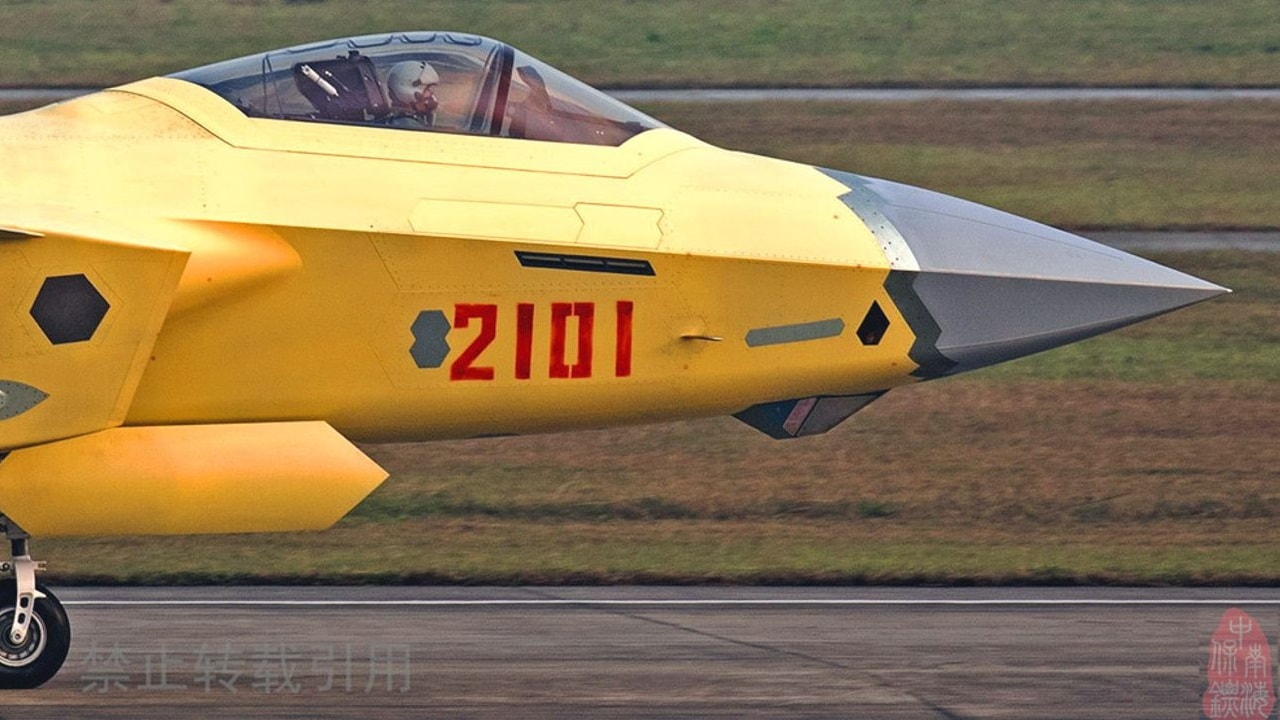
This strategic reality seems well-recognized by China, as the People’s Liberation Army Air Force (PLAAF) has been “massively” increasing production of its 5th-generation stealth J-20 Mighty Dragon, a still somewhat mysterious aircraft highly praised by Chinese engineers.
The platform has undergone a wide range of upgrades and adaptations in recent years, as the PLAAF not only replaced Russian engines with its own, domestically built WS-15 engine but also appears to have accelerated the production and delivery of the aircraft.
The exact extent to which the J-20 can rival an F-35 may be an open question, as it likely depends on lesser-known factors such as its speed, range, and the complexity of its sensing and computing.
The J-20’s external configuration appears stealthy, and it has two smaller, forward-mounted canards for added lift and stability, yet it is not as fast as a U.S. F-22.
With speeds listed at Mach 2.0, the J-20 would appear to be faster than an F-35’s Mach 1.6, yet slower than an F-22’s Mach 2.25.
J-20 AESA Radar
As a slightly larger aircraft, the J-20 can also operate in a bomb truck capacity.
The J-20 has a large nose radome, which researchers have suggested houses more long-range transmit/receive (T/R) modules.
There is a well-known direct correlation between the “range” of an AESA Radar and the sheer number of its T/R modules.
Should greater numbers of T/R modules be successfully and efficiently packaged into the J-20’s AESA Radar, the aircraft could operate with a longer “detection” range when compared with an F-35.
This suggests that the PLA may have envisioned its J-20 as a “counter-interventionist” long-range reconnaissance platform capable of forming a defensive perimeter around the Chinese coastline.
Accomplishing this, however, would require a large number of J-20 aircraft, and they would arguably need to rival the F-35 in sheer numbers and sensor-detection and targeting range.
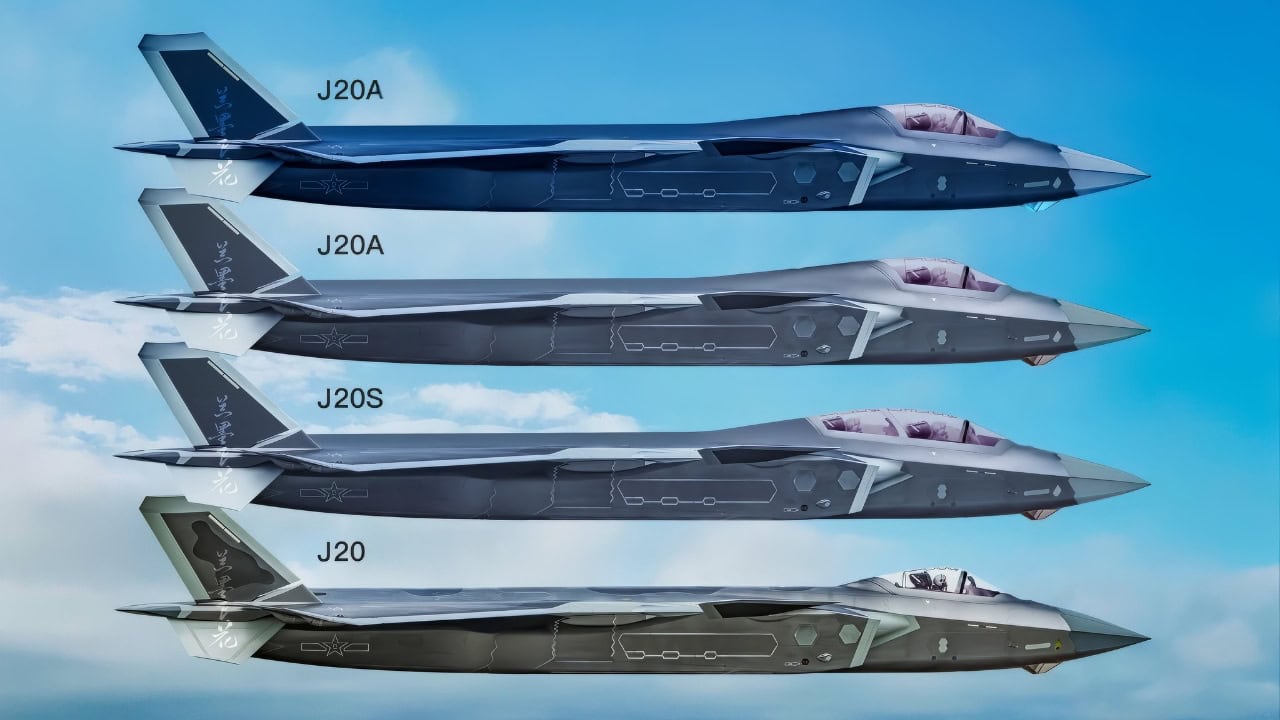
J-20 fighter diagram. Image Credit: Creative Commons.
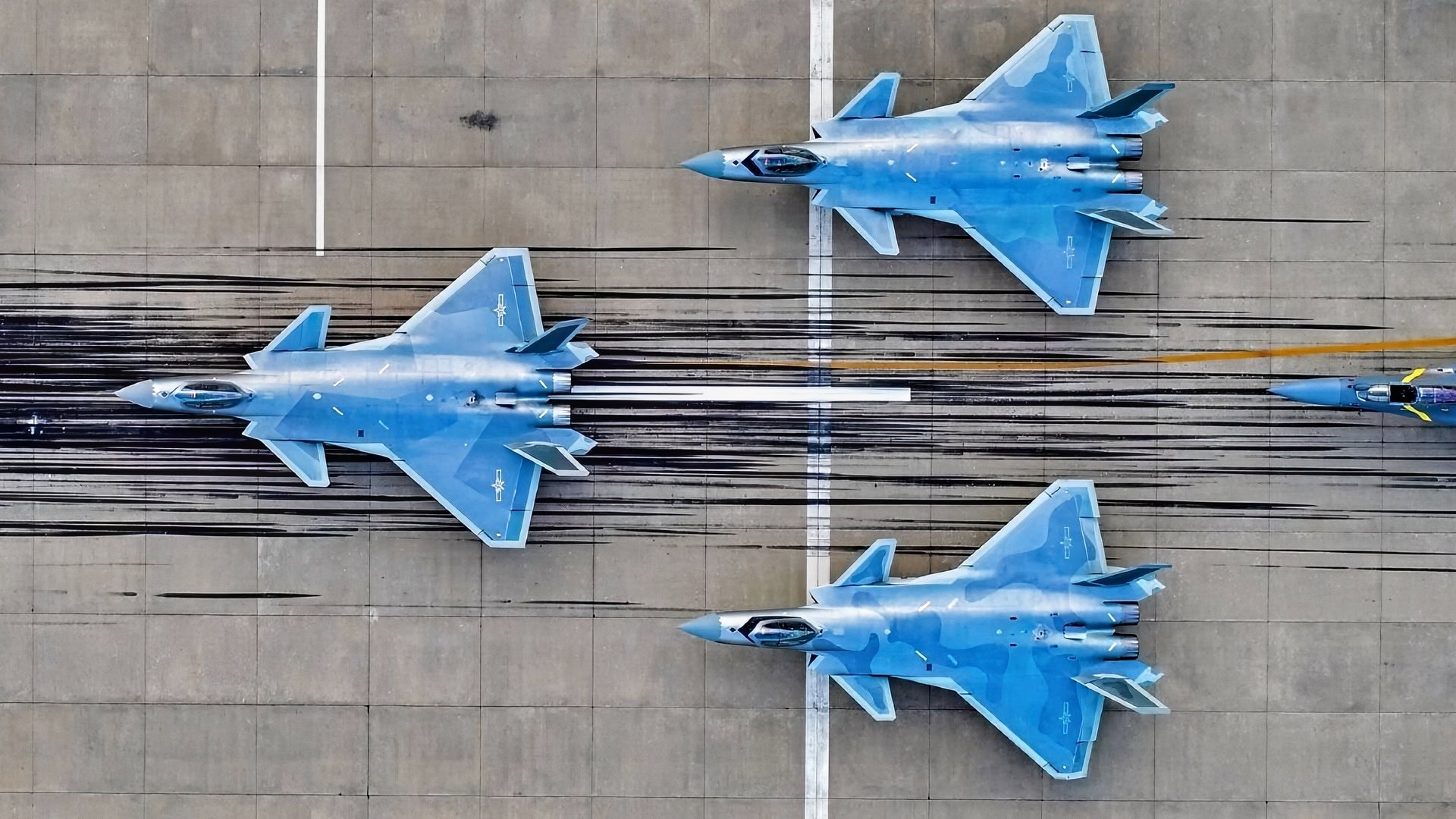
J-20S. Image Credit: Creative Commons.
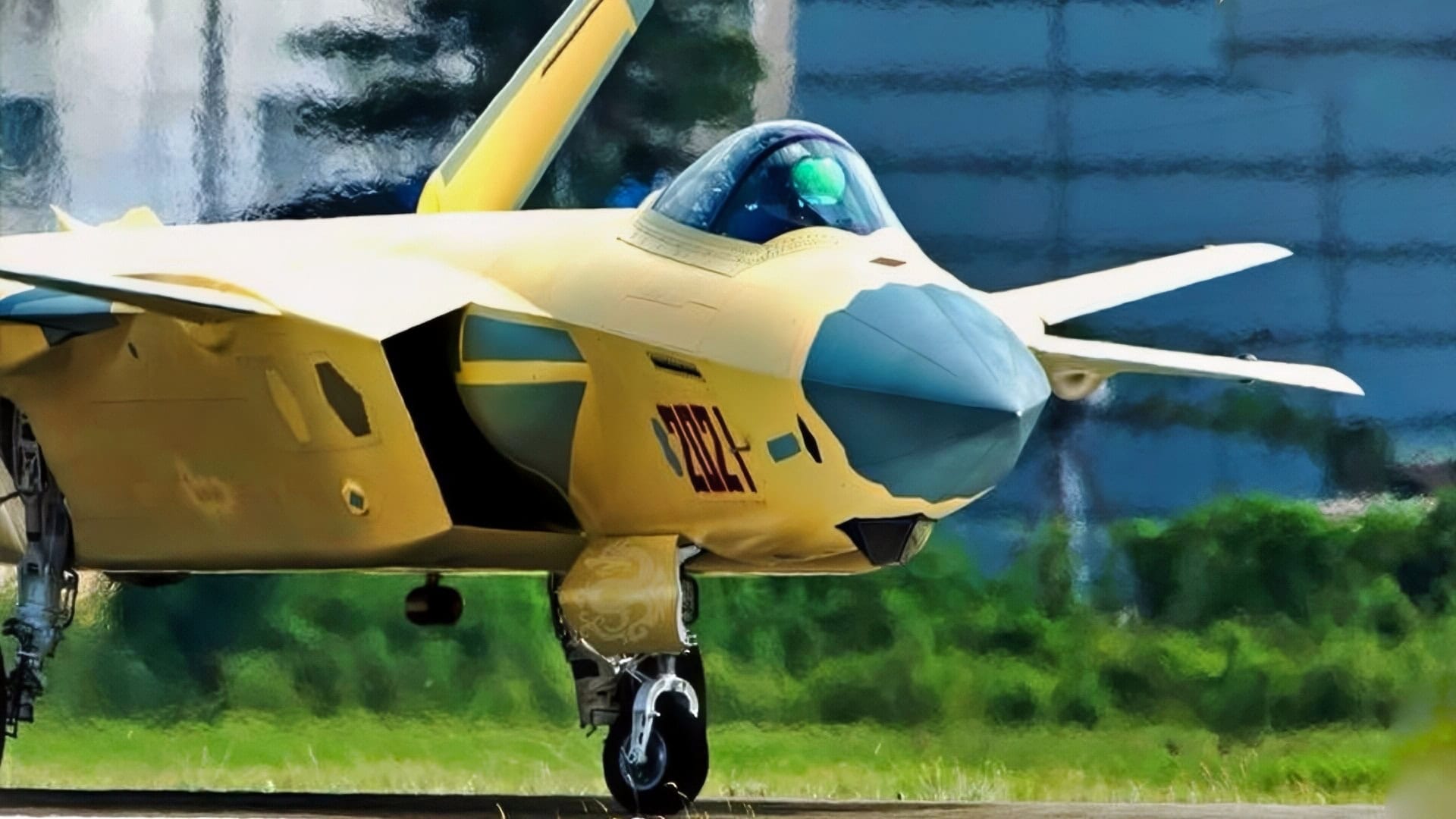
China’s J-20 Mighty Dragon in Yellow. Image Credit: Screenshot.
Even if a J-20 could conceivably “detect” or “see” an F-35, that does not mean it can “hit” an F-35 at stand-off ranges, given the range, targeting technology, and sensor fidelity built into the F-35.
Also, if the J-20 is unable to compete with a US F-35 in sensor range, targeting precision, and multi-role air dominance, then having more aircraft might not make as much of a difference.
About the Author: Kris Osborn
Kris Osborn is the President of Warrior Maven – Center for Military Modernization. Osborn previously served at the Pentagon as a highly qualified expert in the Office of the Assistant Secretary of the Army—Acquisition, Logistics & Technology. Osborn has also worked as an anchor and on-air military specialist at national TV networks. He has appeared as a guest military expert on Fox News, MSNBC, The Military Channel, and The History Channel. He also has a Master’s Degree in Comparative Literature from Columbia University.