Europe’s Answer to the F-35 Has 2-3 Weeks to Live — France and Germany Can’t Agree on Who Leads, and the Program Is About to Collapse
Europe’s flagship Future Combat Air System (FCAS) program has “two to three weeks” to resolve disputes, or call it quits.
The Franco-German-Spanish effort to build a sixth-generation fighter jet has been years in the making, and dysfunction now seems to be baked in.
Macron Keen to Save EU’s ‘Answer to the F-35’
Last month, POLITICO reported that France and Germany had settled on a last-ditch plan to salvage the initiative, with French President Emmanuel Macron stating that Paris and Berlin would attempt to bring Dassault and Airbus “closer together in the coming weeks.”
An unnamed German official claimed this mediation needed to be fruitful before Berlin’s forthcoming federal budget decisions.
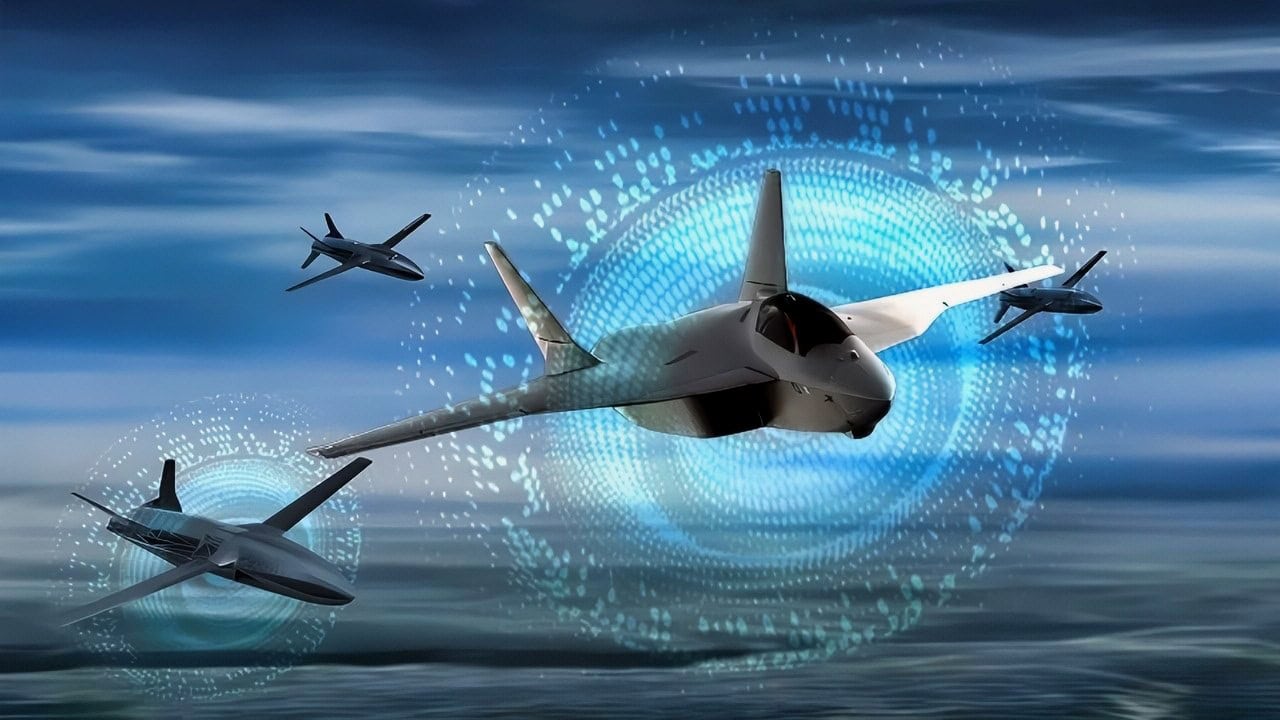
FCAS. Image Credit: Industry Handout.
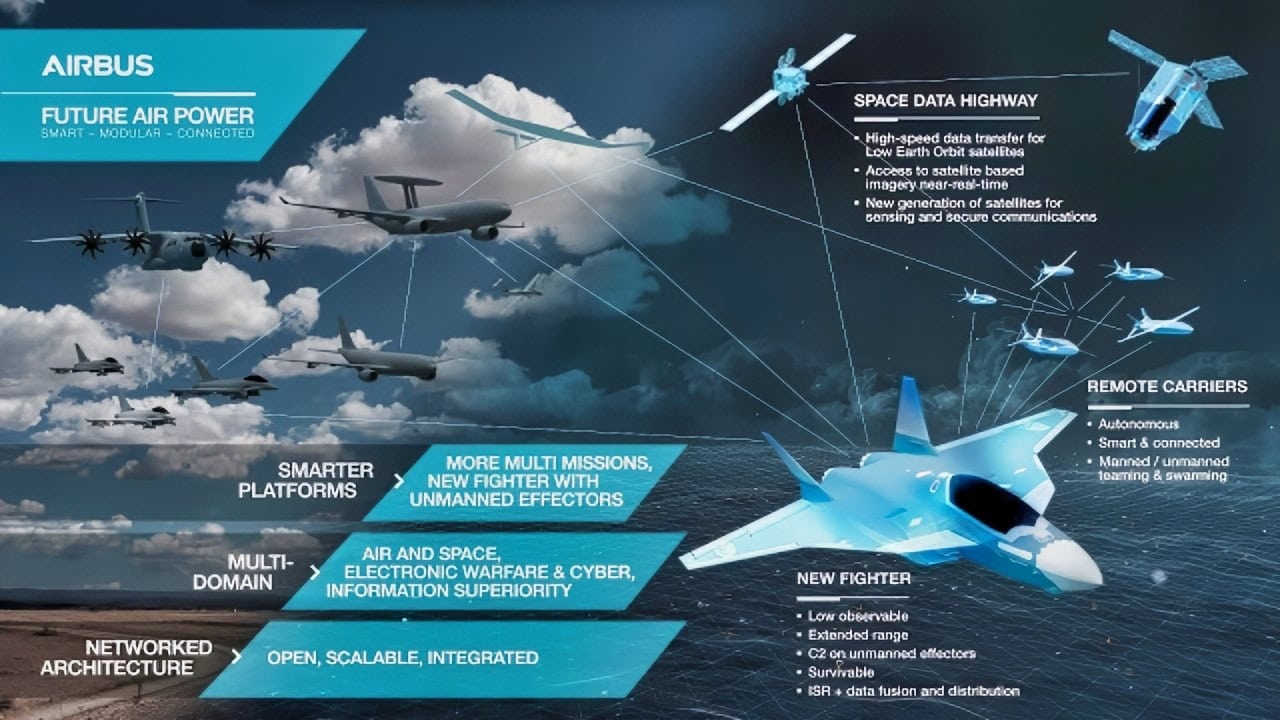
FCAS was intended as Europe’s answer to the U.S. F-35s: a next-generation fighter, backed up by drones and a so-called combat cloud.
The plan was for it to replace France’s Rafale and Germany’s Eurofighter by 2040.
It has also been the exact kind of route to European self-reliance many of its leaders have favored as relations with the U.S. continue to oscillate.
In practice, it has become a case study in why that ambition so often crashes into industrial nationalism.
‘2 to 3 Weeks to Save the Project’
France’s Dassault Aviation and Germany’s Airbus Defense and Space are locked in a furious dispute over who would oversee the jet component.
In early March, Dassault CEO Eric Trappier declared the project “dead” if Airbus refused to cooperate on his terms.
He argued that Dassault is best placed to lead the fighter jet, including supplier choices, while Airbus ought to retain autonomy over its assigned work.
Trappier’s more recent comments, cited by BFM Business on Sunday, suggest the tone has only hardened.
He said the parties would give themselves “two to three weeks” to try to reach a balance that would allow the program to continue.
In other words, if the bickering is not resolved by then, the project is effectively doomed.
Dassault obviously believes that if Europe wants a fighter jet designed efficiently, one company must be in charge, and France has the strongest claim because it has preserved the ability to build combat aircraft independently.
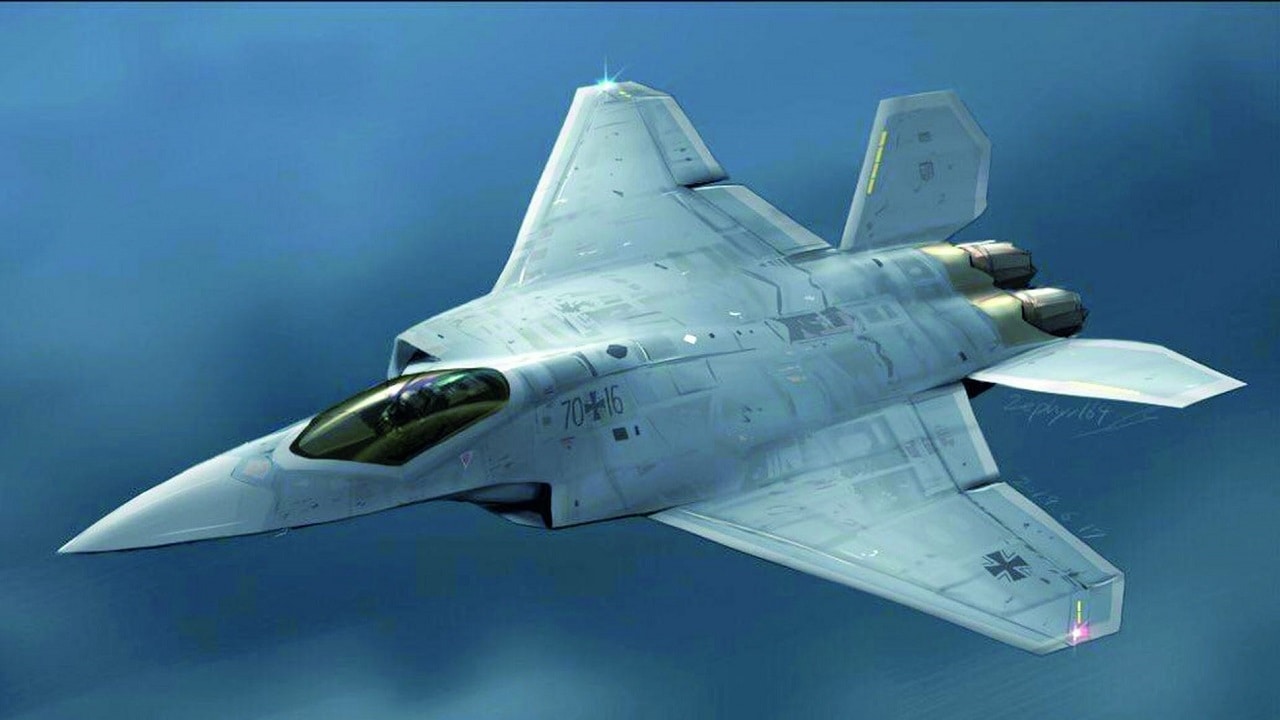
FCAS. Image Credit: Creative Commons.
Trappier has made that point with little delicacy, reminding audiences that France built the Rafale on its own and “knows how to do everything independently.” He has also highlighted the Eurofighter as an example of how not to efficiently run this type of project.
France and Germany’s Conflicting Priorities
Naturally, Trappier’s blunt tone has not made him the flavor of the month in Berlin or Paris, for that matter, but that does not mean he is wrong.
This initiative has been strained by both corporate rivalry and contrasting military requirements for years.
France wants a jet capable of operating from aircraft carriers and carrying nuclear weapons; Germany does not. Spain, which has a much weaker industrial capacity and likely cannot afford to import F-35s, is less relevant to the feud.
Is FCAS Fit For 2026?
When FCAS was launched in 2017 by Macron and Angela Merkel, it was sold as a landmark of European defense cooperation.
But Europe in 2026 is under more pressure, not less. Russia remains a central security threat.
Questions about the longevity of Europe’s reliance on the U.S. as a security partner are not about to vanish, but that does not mean Europe is adequately consolidating its capabilities as a result. But Europe already has a slew of fighter projects, including the Rafale, Eurofighter, and Gripen.
Then there is the British-Italian-Japanese Global Combat Air Programme (GCAP), which seems to be moving along at a faster pace. FCAS was meant to cut through that clutter and create something really collaborative, but it could end up creating wasteful overlap instead.
Diplomat Duo Appointed to Oversee FCAS ‘Divorce’
It is already obvious that some insiders are approaching the matter in such terms, with Reuters claiming that French and German officials reported that insiders anticipate France and Germany will ditch the idea of a jointly developed fighter while still collaborating on combat cloud technology.
Meanwhile, Berlin and Paris have each appointed external mediators to oversee continued negotiations or a full-on divorce.
One possible outcome, which the German side seemed keen on, would involve two separate jets linked by shared systems. Airbus chief Guillaume Faury has floated some version of that idea before, too. Macron, however, has continued to publicly oppose a two-fighter solution, which would, at the very least, be a huge PR failure.
Of course, there are two sides to this story. While Dassault is right that fighter development cannot be run by committee indefinitely, Airbus and the Germans are right that a program sold as European cooperation cannot simply become a French national project with junior partners attached.
If FCAS does indeed collapse, it will not only be because Dassault and Airbus could not get along, but it will be because European leaders seem much happier to make bold statements about “strategic autonomy” than they are to make any required compromises.
About the Author: Georgia Gilholy
Georgia Gilholy is a journalist based in the United Kingdom who has been published in Newsweek, The Times of Israel, and the Spectator. Gilholy writes about international politics, culture, and education. You can follow her on X: @llggeorgia.