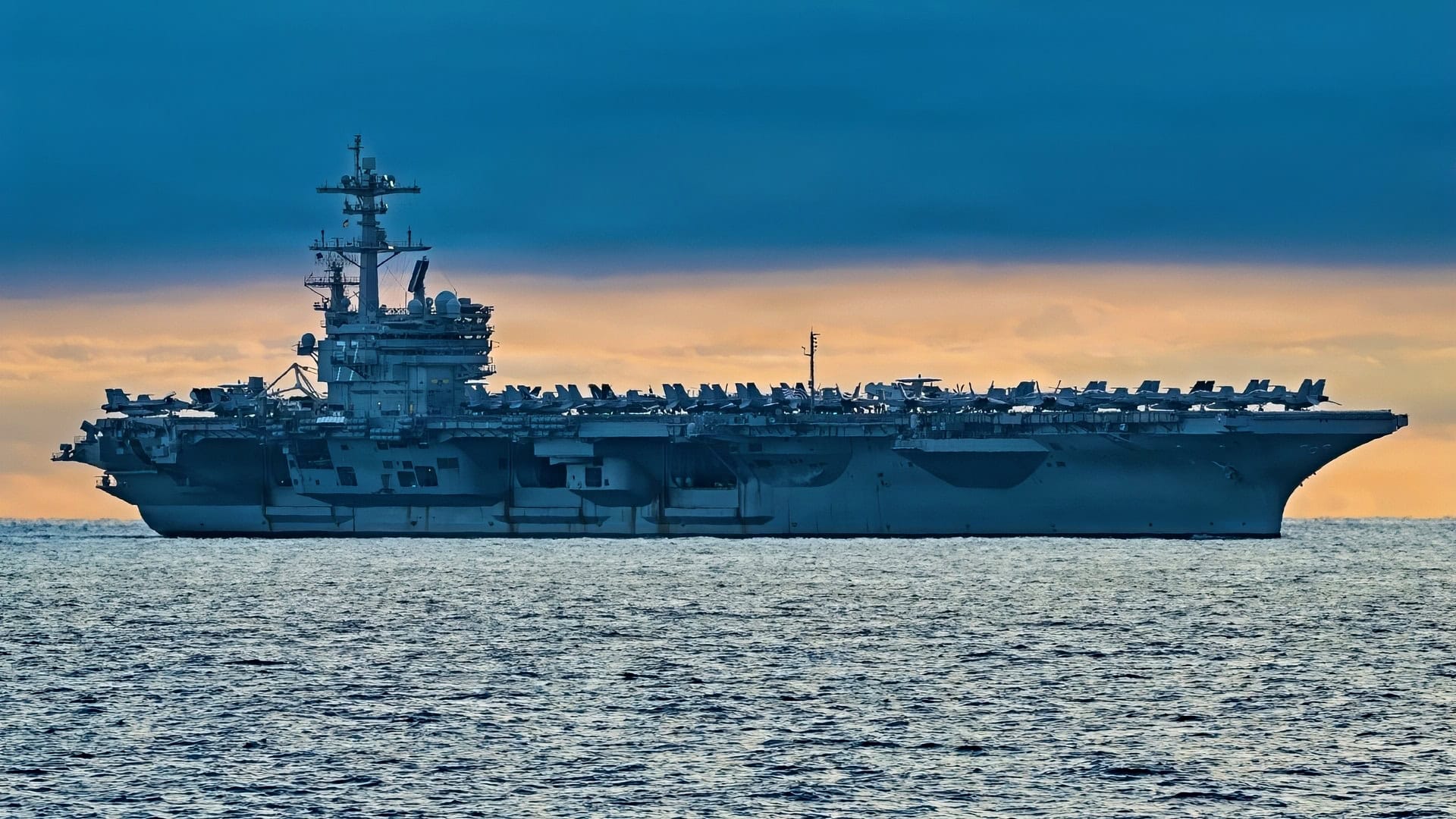
The USS George H.W. Bush is sailing around the entire continent of Africa to reach the Persian Gulf because the Red Sea is too dangerous to transit. That detour tells you more about the state of this war than anything said at a press conference. Nonetheless, the U.S. Navy’s Supercarriers are more powerful than ever before, but also sailing into a more dangerous world.
Aircraft Carriers Are Vulnerable
Aircraft Carrier strike groups are, of course, critical to deterrence, national image, and establishing forward presence, yet US Navy Aircraft Carrier Air Wings have also demonstrated unique and tactically substantial value in counter-drone and maritime missile defense operations.
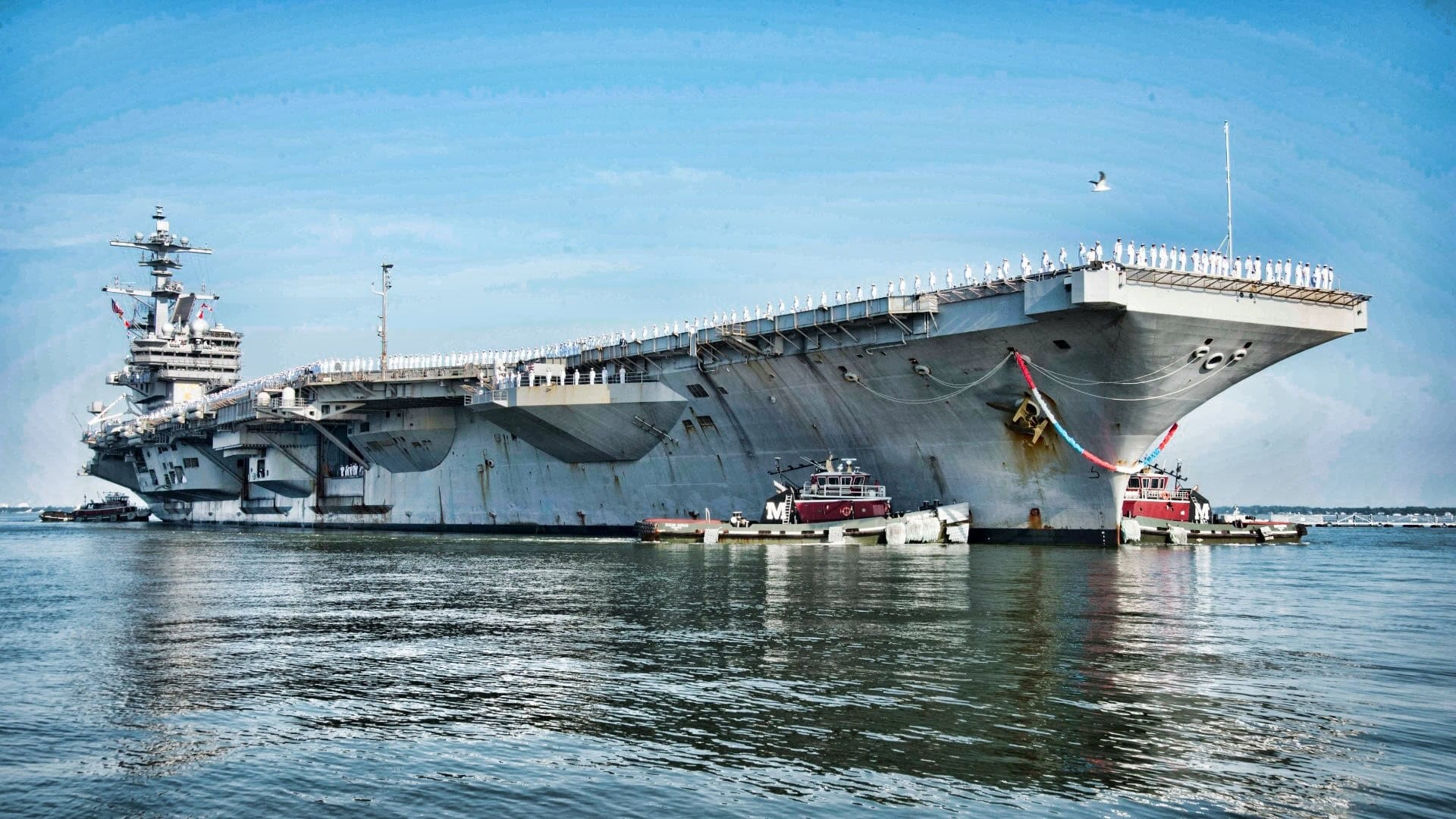
NORFOLK (Aug. 18, 2017) Tugboats guide the aircraft carrier USS George H.W. Bush (CVN 77) into port at Naval Station Norfolk (NSN). George H.W. Bush arrived at NSN with its carrier strike group following a seven-month deployment in support of maritime security operations and theater security cooperation efforts in the U.S. 5th and 6th Fleet areas of operation. (U.S. Navy photo by Mass Communication Specialist 2nd Class Patrick Ian Crimmins/Released)
This is quite likely a key reason the USS George H.W. Bush aircraft carrier is now traveling around the African continent, which appears to be a deployment in support of Operation Epic Fury.
The Wall Street Journal speculates that the decision to go “around” Africa to the Persian Gulf area was the result of a strategic decision to avoid the highly dangerous Red Sea passageway, where U.S. Navy ships are quite likely to be targeted.
Strait of Hormuz Threat and USS George H.W. Bush
Certainly, destroyers and cruisers operating in Carrier Strike Groups are well positioned with interceptors, threat detection radar, and various layered countermeasures such as lasers, EW, and deck-mounted guns, yet the US Navy’s Red Sea experience also showed that carrier-launched fighter jets could be essential to defensive counter-drone and counter cruise missile operations.
Not only can fighter jets provide a sensor layer or aerial node beyond the standard radar field of view available to surface ships to detect targets, but they also showed in the Red Sea that they could be in position to “take out,” “destroy,” or “intercept” Houthi drones and cruise missiles with air-to-air missiles.
This experience further showed that carriers could bring additional defensive maritime warfare combat maneuvers.
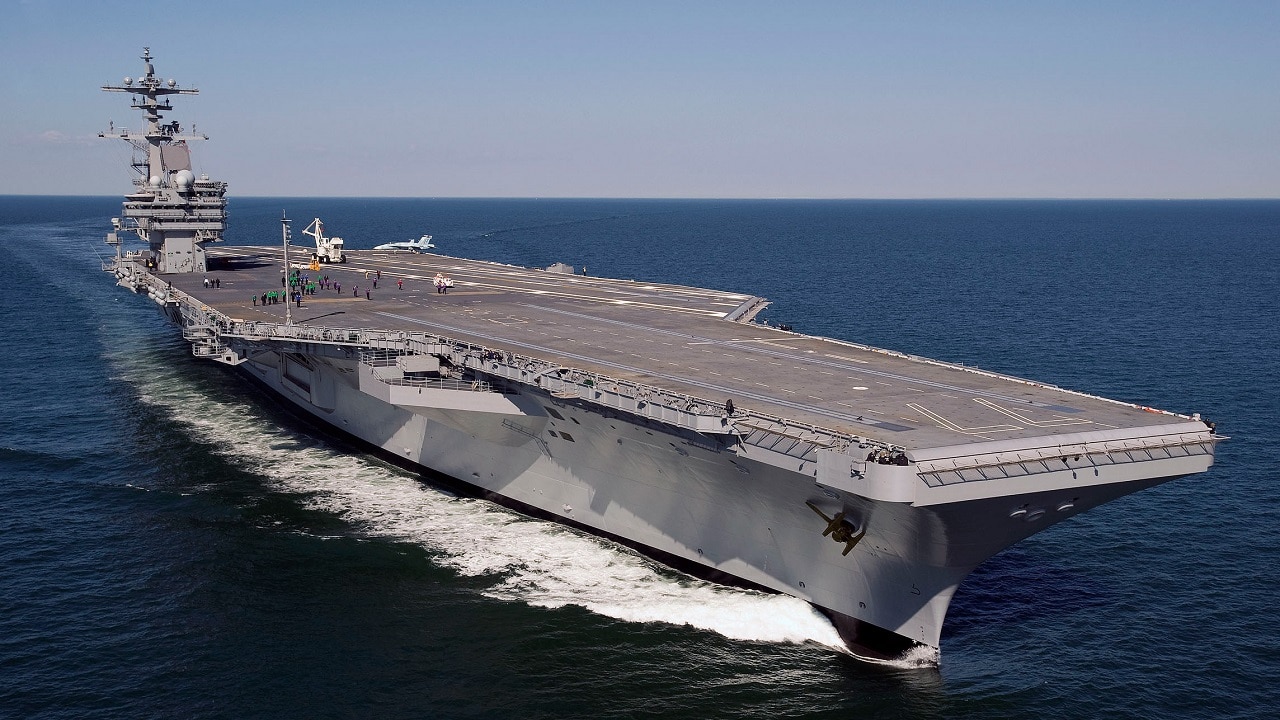
The aircraft carrier USS George H. W. Bush (CVN 77) on builder’s trials, 2/13/2009. The ship, named after the nation’s 41st president, is the 10th and final Nimitz-class, nuclear-powered carrier built at Northrop Grumman Shipbuilding-Newport News. Photo by John Whalen, Northrop Grumman Shipbuilding.
The commanding officer of Carrier Strike Group 2 from the Red Sea explained that, on one occasion, an F-18 Growler EW aircraft was able to detect, track, and “destroy” Houthi attack drones from the air.
Carrier-launched fighter jets are also known to be extremely valuable “targeting” assets in the counter-drone, counter-cruise missile defensive strategy, as they can be in position to “see” approaching or launching attacks from beyond the radar horizon reachable by surface ships
Aircraft Carrier USS George H.W. Bush Joins the Fight
The deployment of the USS George H.W. Bush adds additional credibility to the many reasons why the US Navy would be well-served to operate as many as 12 carriers across the globe at one time, as it seems entirely realistic that the US Navy could need to project power and launch massive air campaigns in several different global regions at one time.
Also, given their ability to transport 5th-generation F-35C stealth fighter jets into position in any contingency, carriers can help “mass” air attack anywhere in the world.
At the moment, the US enjoys a large-scale 5th-generation air superiority advantage, and a single carrier can transport as many as 50 F-35Cs to high-risk, dangerous forward areas.
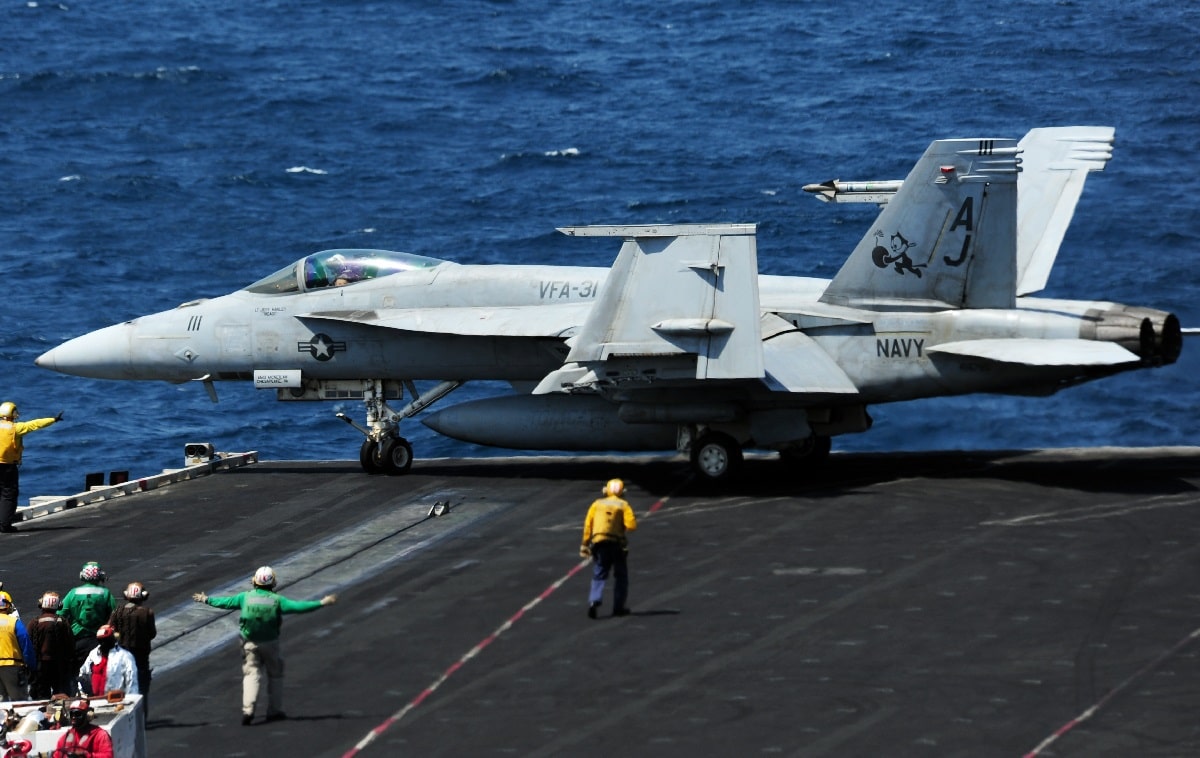
ARABIAN GULF (Sept. 11, 2014) Sailors direct an F/A-18E Super Hornet attached to the Tomcatters of Strike Fighter Squadron (VFA) 31 on the flight deck of the aircraft carrier USS George H.W. Bush (CVN 77). George H.W. Bush is supporting maritime security operations and theater security cooperation efforts in the U.S. 5th Fleet area of responsibility. (U.S. Navy photo by Mass Communication Specialist 3rd Class Joshua Card/Released) 140911-N-CZ979-008
Also, 12 carriers would enable the US Navy to surge its operational forward attack presence, as more carriers would be available for deployment.
At any given time, carriers will also need to return to port for maintenance or sustainment, and other carriers are unavailable due to mid-life refueling complex overhaul or RCOH.
The presence of yet another carrier brings additional pressure to bear, simply because it offers commanders more “options” to launch a continued “massive” attack.
It adds to the threat dynamic, particularly given the U.S. Navy’s experience with “dual-carrier” operations in the Pacific, as it could enable the U.S. to “scale” an air attack campaign if Iranian military attacks resume. Dual-carrier operations require extensive sortie and communications coordination between carriers, and the U.S. Navy has become adept at this through ongoing drills and operations in the Pacific in recent years.
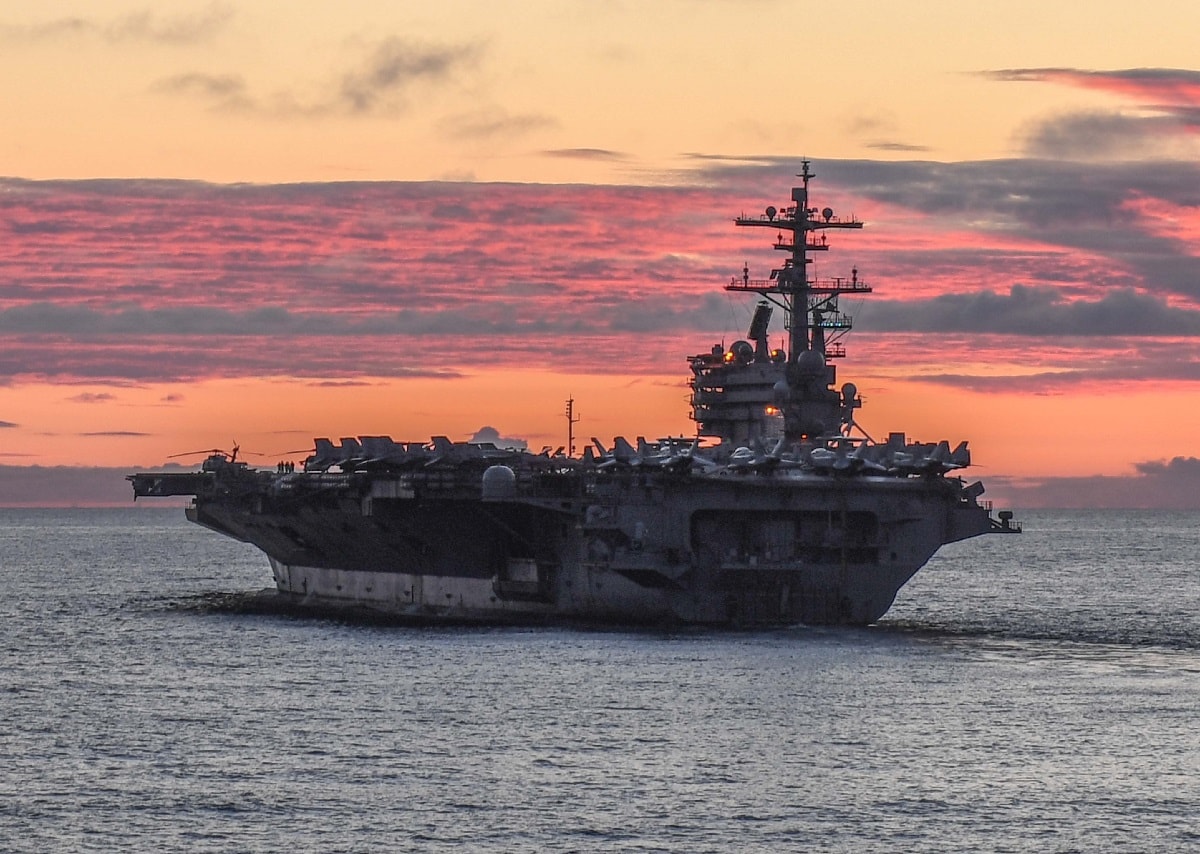
This can allow for a greatly expanded and sustained large-scale air attack campaign.
The U.S. certainly hopes to avoid a prolonged large-scale confrontation, yet the prospect or threat of yet another massive air-bombardment of Iran gives President Trump and Pentagon commanders more “options” and potential “leverage,” which has been the subject of much discussion.
About the Author: Kris Osborn
Kris Osborn is the Military Technology Editor of 19FortyFive. Osborn is also President of Warrior Maven – Center for Military Modernization. Osborn previously served at the Pentagon as a highly qualified expert in the Office of the Assistant Secretary of the Army—Acquisition, Logistics & Technology. Osborn has also worked as an anchor and on-air military specialist at national TV networks. He has appeared as a guest military expert on Fox News, MSNBC, The Military Channel, and The History Channel. He also has a Masters Degree in Comparative Literature from Columbia University.