
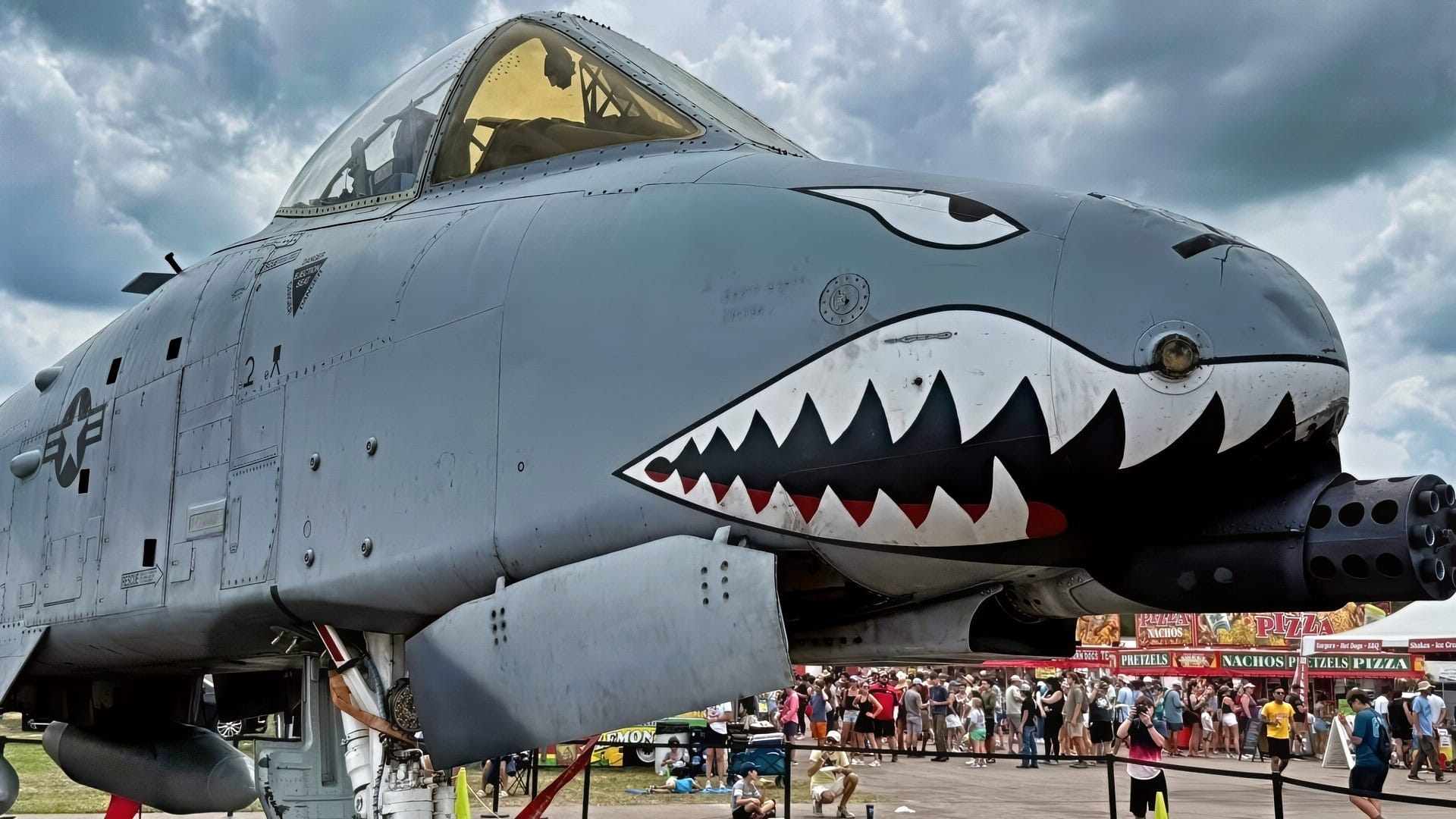
The Problem: Twenty-two U.S. National Guard adjutants general from every state operating Air National Guard fighter squadrons have sent a formal letter to Congressional Appropriations and Defense committee leadership urging procurement of 72 to 100 new fighter aircraft per year — dramatically above current planned rates — warning that the U.S. Air Force is now the “oldest, smallest, and least ready” force in the service’s 78-year history.
The National Guard Has a Fighter Plane Problem
A group of National Guard adjutants general from nearly two dozen states has written a letter to Congress, seeking a ramp-up in the number of fighter jets to be ordered per year.
The letter is dated April 1, although media coverage, including by Fox News, did not begin to appear until last week.
Peace Through Strength?
The National Guard letter is addressed to the chairs and ranking members of the Appropriations and Defense committees and subcommittees in both Houses of Congress.
“We write to express our unified and urgent concern regarding the United States Air Force’s current and future ability to meet the requirements of the 2026 National Defense Strategy (NDS), the letter begins. The authors go on to describe the current iteration of the Air Force as “the OLDEST, the SMALLEST and the LEAST READY in its 78-year history.”
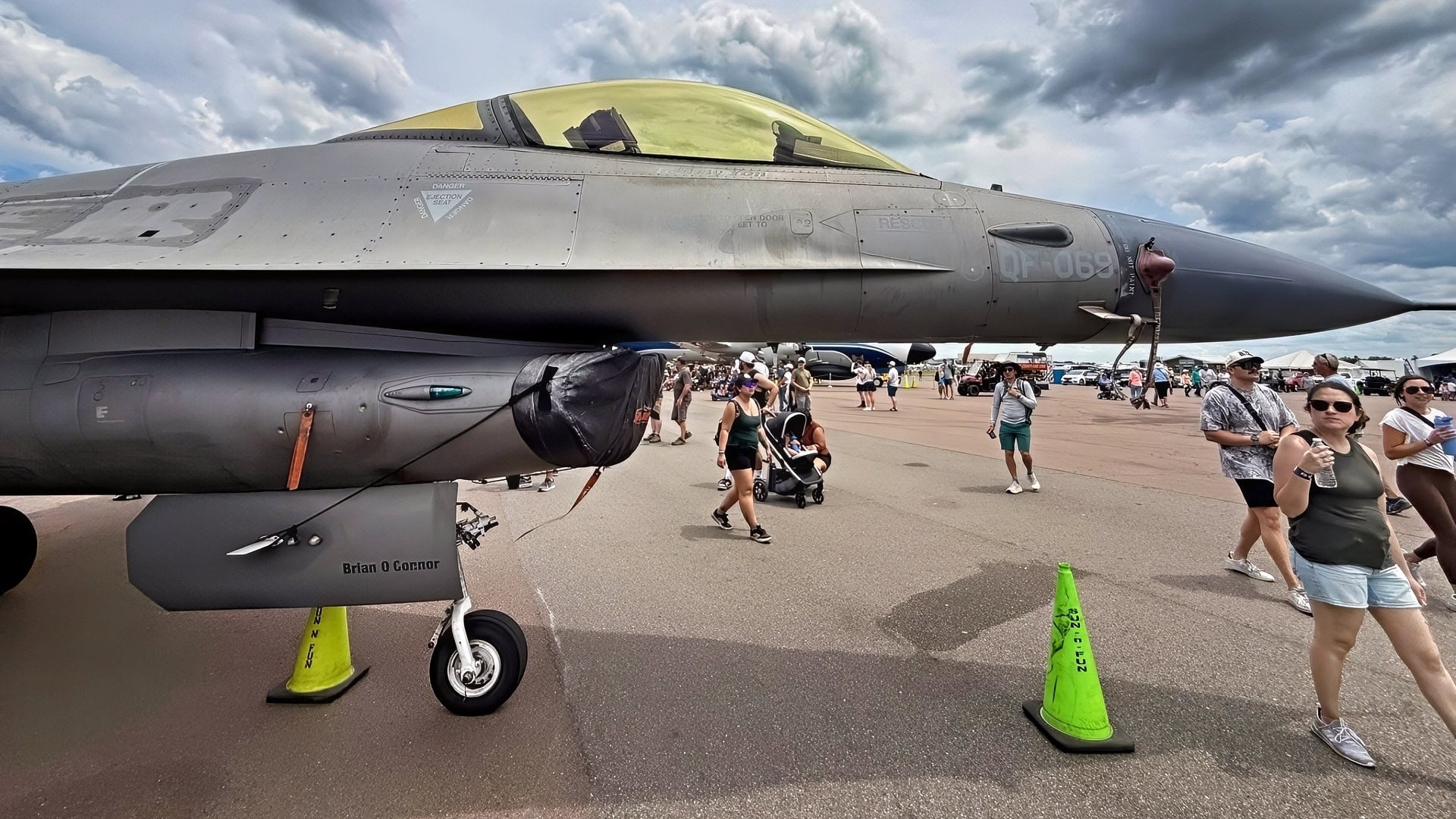
F-16 Fighter Lakeland Florida 19FortyFive.com Image. Taken on 4/19/2026.
“We must build a fighting force that WILL WIN,” the letter authors say.
That 2026 National Defense Strategy, released in January, laid out Defense Secretary Pete Hegseth’s vision for national defense. It was subtitled “Restoring Peace Through Strength For a New Golden Age of America.”
That strategy, per the National Guard letter, “requires a total Air Force indistinguishable between components in lethality and survivability.” Once again citing the National Defense Strategy, the Guard leaders call to “Supercharge the Defense Industrial Base” by procuring 72 new fighters per year, possibly as many as 100, across the F-35A Lightning II, F-22 Raptor, F-15EX Eagle II, and F-47 categories.
The call is for Congress to appropriate 48 F-35s and 24 F-15EXs annually, with a stretch goal of 72 F-35As and 36 F-15EXs each year.
“Current world events have once again demonstrated the irreplaceable and outsized proposition that the USAF brings to the Joint Force, as evidenced by Operation Epic Fury,” the letter said.
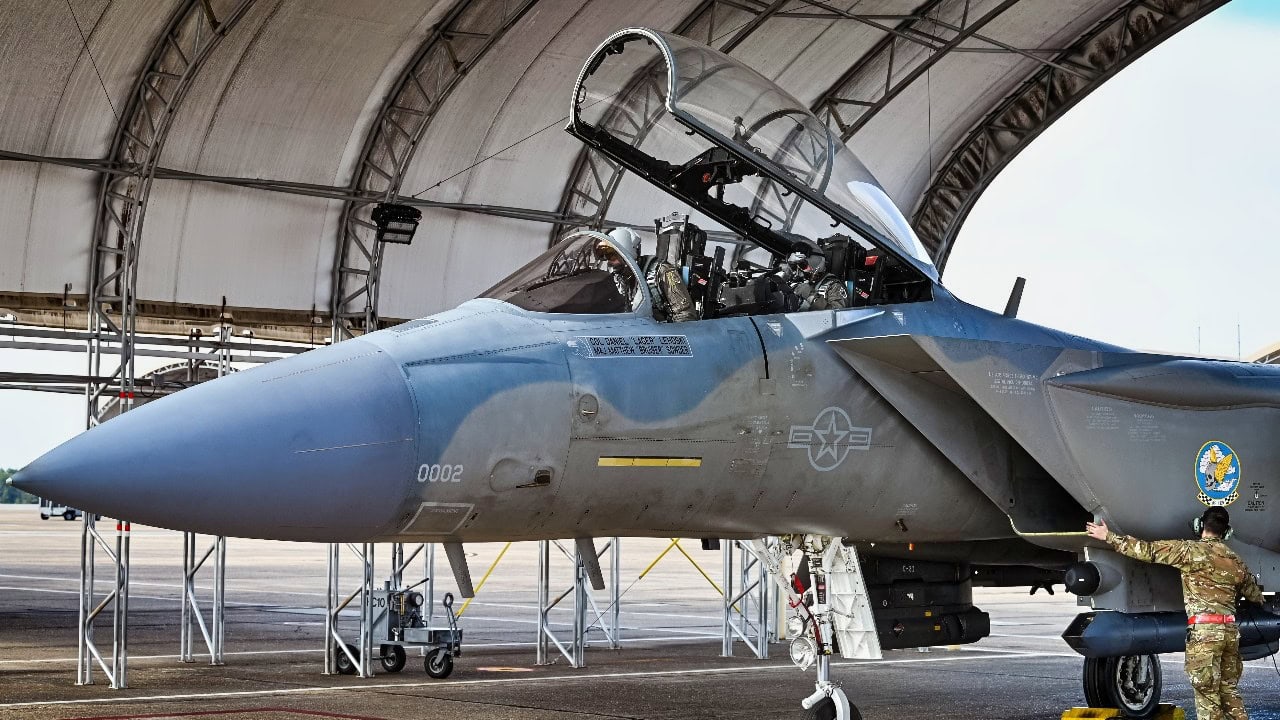
U.S. Air Force Maj. Aaron Eshkenazi, F-15EX Test Director for the 84th Test and Evaluation Squadron, performs preflight procedures for the F-15EX with Lt. Gen. Michael Koscheski, deputy commander of Air Combat Command, at Eglin Air Force Base, Florida, January 29, 2025. During his visit, Koscheski gained valuable insights from the 84th TES and 85th TES to help inform future decisions regarding the platform. The future F-15 fleet will complement 5th generation aircraft, bringing substantial additional capacity for over-sized long-range fires, sensors, and electronic warfare capabilities to defend critical locations in highly contested areas. (U.S. Air Force photo by 1st Lt. Rebecca Abordo)
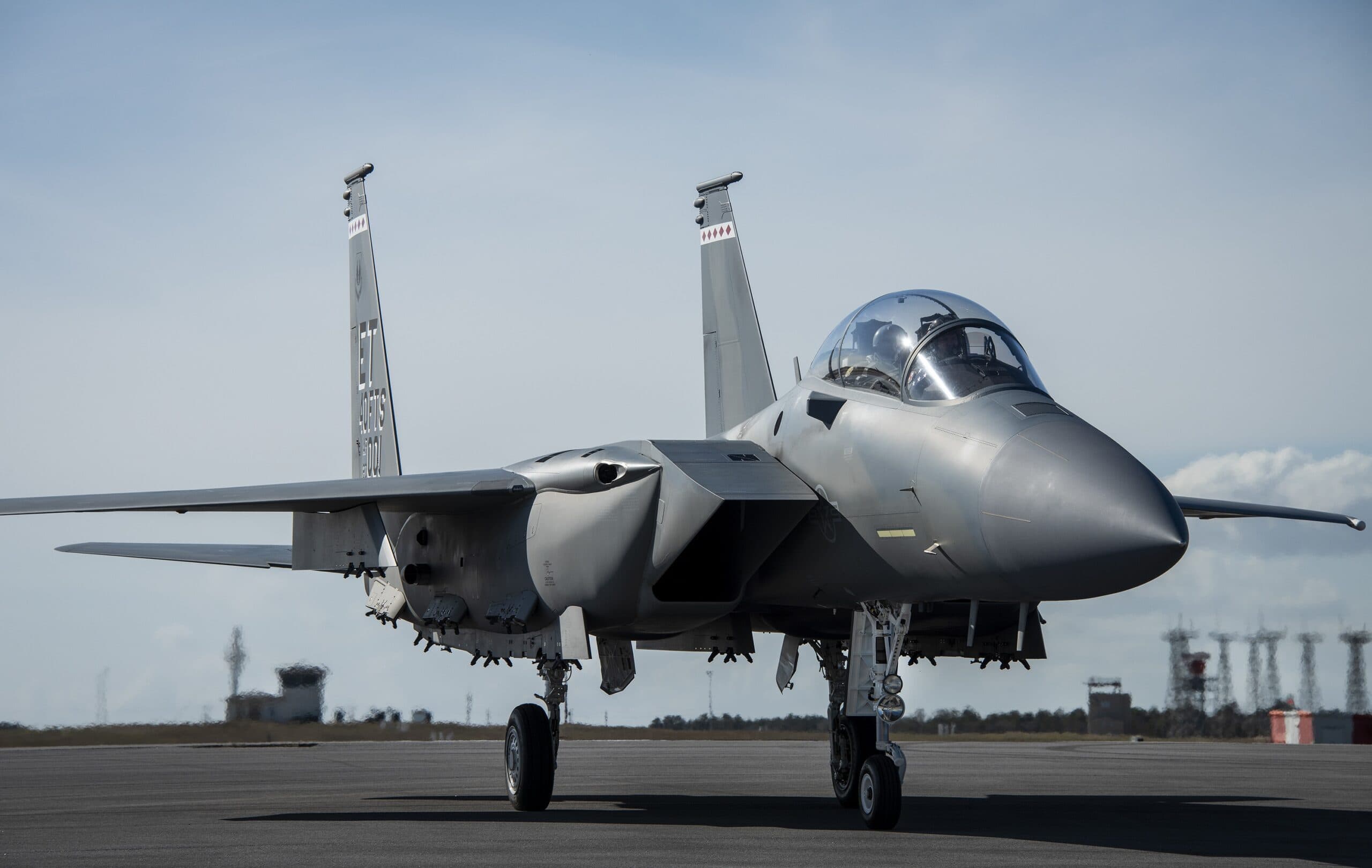
F-15EX Eagle II. Image Credit: Creative Commons.
Why the Ask?
In an interview with Air and Space Forces magazine, Brig. Gen. Shannon Smith, head of the Idaho Air National Guard, said that the 22 adjudcants general who signed the letter are from the states that have guard fighter units. Smith added that this is the first time all 22 have gotten together to write such a letter.
The signatories of the letter represent Alabama, Arizona, California, Colorado, Florida, Hawaii, Idaho, Indiana, Louisiana, Massachusetts, Missouri, New Jersey, Ohio, Oklahoma, Oregon, South Carolina, South Dakota, Texas, Vermont, and Wisconsin.
“What we’re trying to do with this is send a strong message from the two-star generals that command the National Guards in these states,” Smith told the publication.
The letter was to be followed by further communications with Congress.
“We all see the headlines of the amazing things our service men and women do,” Smith told Air and Space Forces. “We are burning these jets and the Airmen over time to support the joint force to accomplish the president’s goals with Epic Fury in this conflict with Iran.”
The publication noted that the last time the Air Force procured as many as 72 jets in one year was 1998, before the post-9/11 wars.
Per Fox News, the Air Force “asked Congress to procure 48 F-35s in 2024 and 42 in 2025. For F-15EXs, they asked for 24 in 2024 and 18 in 2025.”
“If we keep dabbling under 72, that isn’t winning, that is raising the water line,” Smith told Air and Space Forces. “If we don’t procure at a higher rate, all of these fighter squadrons will remain with ’70s-era fighters. Most of the money will go to keep them flying. In a few years, they’ll be struggling to be flyable, let alone be relevant.”
What Will Congress Do?
Last week, the White House asked Congress for a record amount of defense spending, of $1.5 trillion- a price tag that’s not expected to include the Iran war, which will be the subject of a supplemental budget ask.
As noted by The War Zone in a story about the National Guard letter, “the Fiscal Year 2027 budget request also includes funding for the purchase of 10 F-35Bs and 37 F-35Cs for the Marine Corps and the Navy, which is already a notable uptick in planned acquisitions.”
“At the same time, the F-35 program has faced worrisome delays in work on a new radar, as well as a host of other critical upgrades.”
According to an NPR report last week, Congress has some questions about how that record request for defense money will be spent.
Rep. Betsy McCollum (D-MN), the ranking Democrat on the House Defense Appropriations Committee and one of the recipients of the National Guard letter, told NPR last week that the defense appropriations request was “shocking.”
“That’s the only way we can do our job properly to do the oversight that we are tasked with. To be clear, the size of the request for defense spending is shocking,” the Congresswoman said.
It also should be noted that if, as expected, Republicans lose control of one or both houses of Congress this November, defense appropriations will almost certainly become a heavier lift for the Trump Administration. The NPR story also noted that the votes on defense appropriations will likely come later in the year and closer to the elections, forcing elected officials into a tough vote.
Meanwhile, as The War Zone noted, even if Congress were to go along with what the National Guard chiefs recommended, following the orders would be “far from easy.”
“Meeting the aim of 72 to 100 new fighters each year would demand a significant uptake in production capacity, which is already stretched. With that in mind, the Air National Guard projects it could still take 10 to 15 years to re-equip units now flying older fighters,” TWZ reported of the ask. “One option to re-equip Guard and Reserve units would be to cascade fighters down from the Active component, but Air National Guard chiefs warn against this, too, since it only pushes recapitalization with new fighters further down the line.”
About the Author: Stephen Silver
Stephen Silver is an award-winning journalist, essayist, and film critic, and contributor to the Philadelphia Inquirer, the Jewish Telegraphic Agency, Broad Street Review, and Splice Today. The co-founder of the Philadelphia Film Critics Circle, Stephen lives in suburban Philadelphia with his wife and two sons. For over a decade, Stephen has authored thousands of articles that focus on politics, national security, technology, and the economy. Follow him on X (formerly Twitter) at @StephenSilver, and subscribe to his Substack newsletter.