
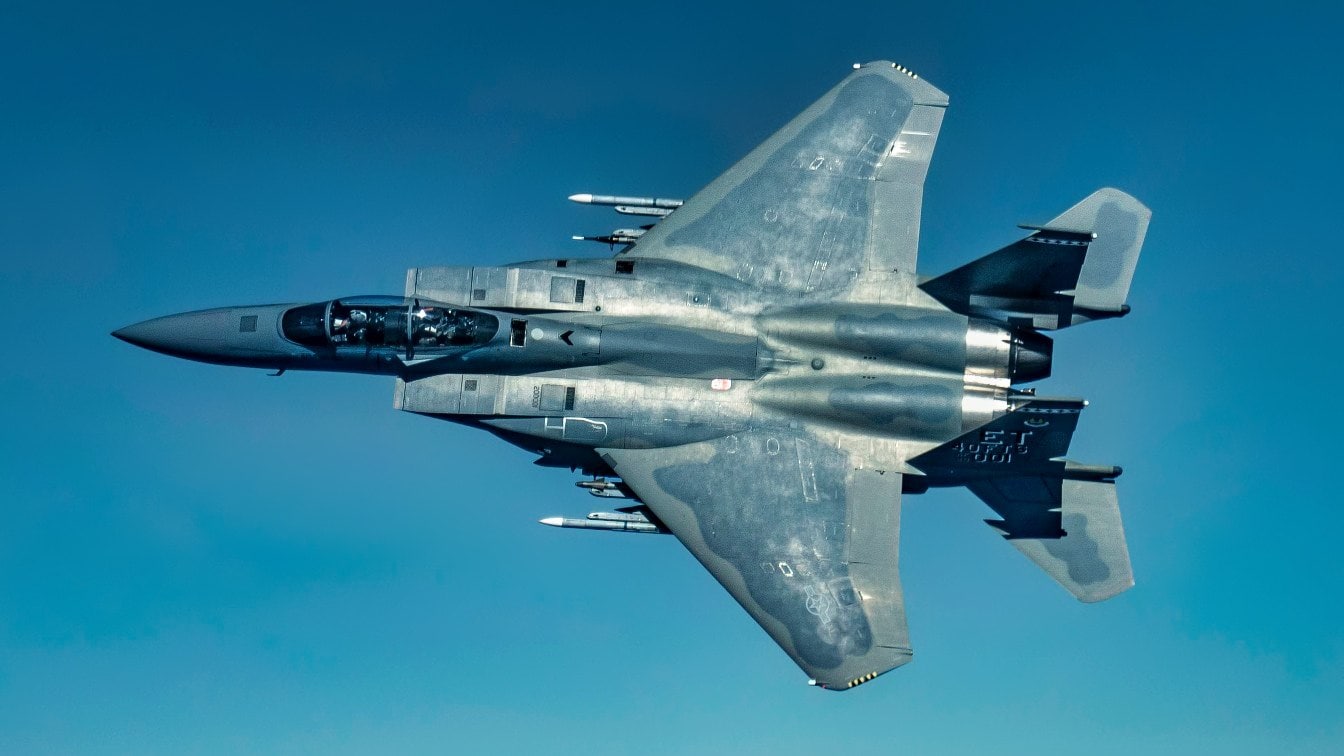
The F-15EX Eagle II Wasn’t Built for Operation Epic Fury — It Was Built to Replace an Aging Fleet Before the F-47 Arrives
The F-15EX Eagle II is the most advanced version of the F-15 ever built, a still-new $90 million multirole fighter. Yet, the EX hasn’t been used during Operation Epic Fury.
Why not?
In a high-intensity air campaign, you would expect the US to deploy its newest and most capable jets.
But instead, the US has relied on the F-15E, F-22, F-35, and B-2 while the F-15EX has remained sidelined.
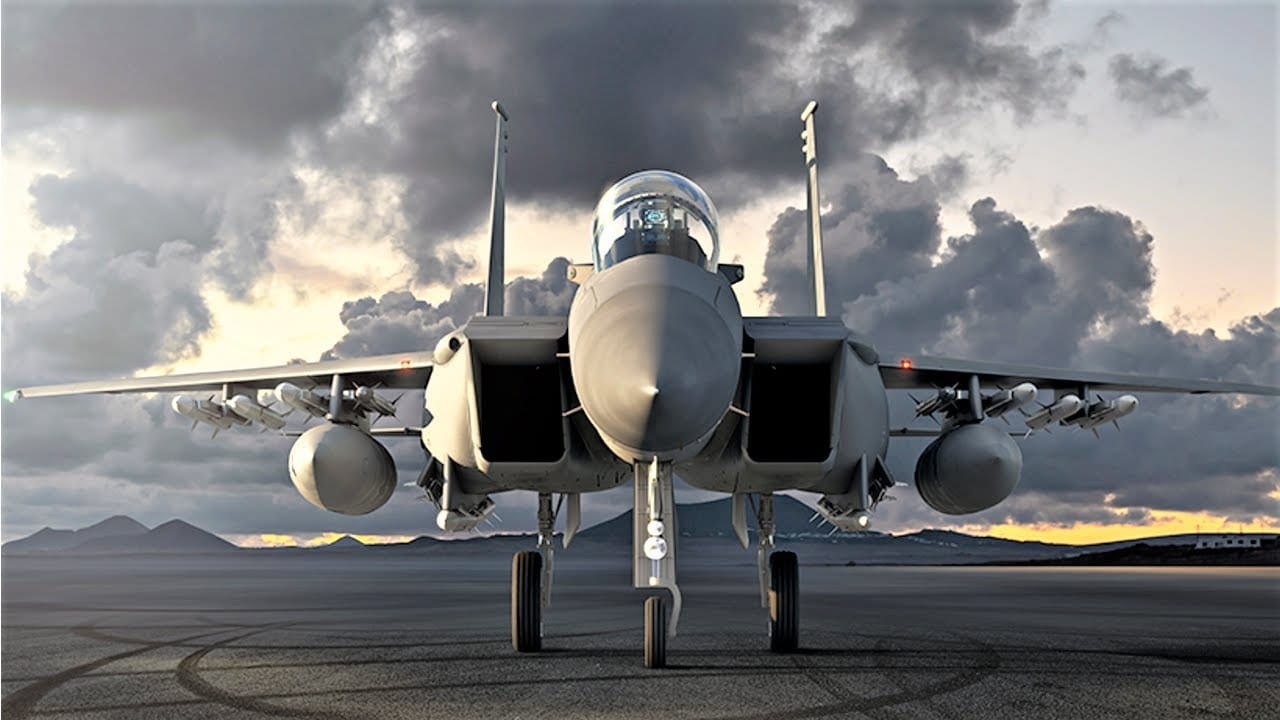
F-15EX Eagle II. Image Credit: Creative Commons.
The reason doesn’t relate to ability; the EX is capable. Instead, the reason relates to timing, numbers, and role.
The Simplest Answer
The simplest answer is that the US doesn’t have enough F-15EXs to deploy them.
As of April 2026, only 27 F-15EX aircraft have been delivered to the US Air Force.
This is too few to sustain combat rotations, absorb losses, and maintain combat readiness.
Right now, the F-15EX is used primarily for training units and homeland defense (ANG units), not frontline combat.
The low numbers are partly due to production issues.
Specifically, Boeing’s strike in 2025 significantly delayed output.
The result is that deployment timelines have been pushed back. And you can’t plan an air campaign around a fleet that barely exists.
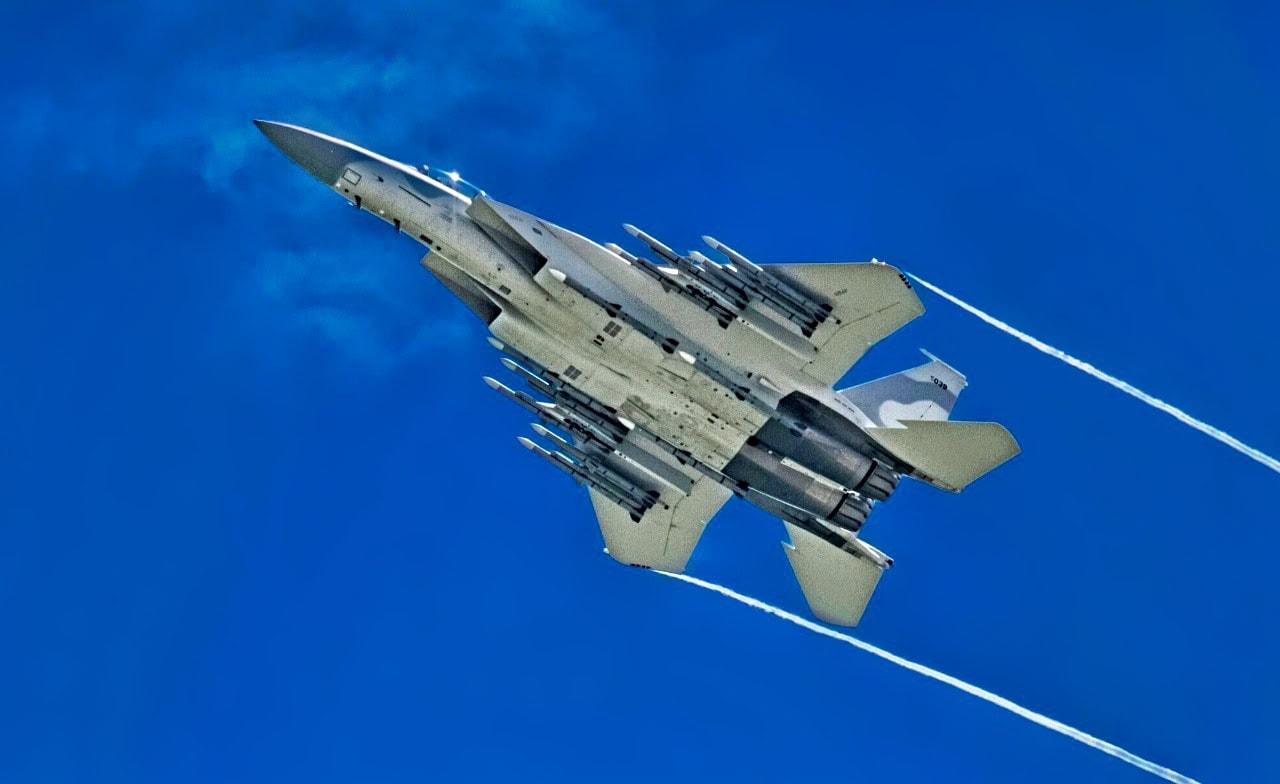
F-15EX Eagle II from U.S. Air Force
The Incumbent F-15
The F-15E Strike Eagle remains the backbone of CENTCOM operations.
With a large fleet of over 100 aircraft, the F-15E is already deployed, integrated, and long since combat-proven.
From an infrastructure perspective, the F-15E has significant advantages, including bases in Jordan and the Gulf region and a fully established logistics network.
And in war, existing infrastructure edges out theoretical capability.
What the F-15EX Eagle II is Built to Do
The F-15EX Eagle II is a 4.5-generation fighter that combines a legacy airframe with advanced avionics.
The key system is the EPAWSS, a digital electronic warfare suite that can detect and jam enemy radar while adapting in real time to offer a cognitive EW capability.
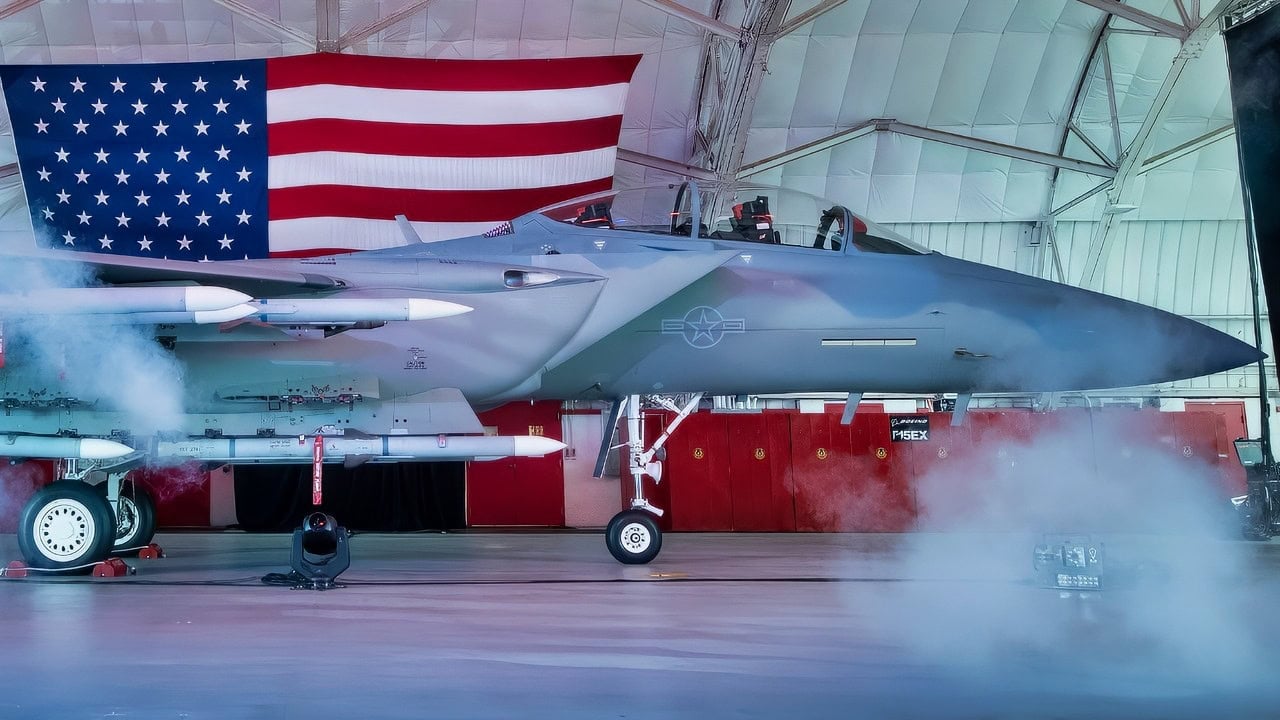
The Air Force’s newest fighter, the F-15EX Eagle II, was revealed and named during a ceremony April 7 at Eglin Air Force Base, Fla. The aircraft will be the first Air Force aircraft to be tested and fielded from beginning to end, through combined developmental and operational tests. (U.S. Air Force photo/Samuel King Jr.)
The F-15EX also has a remarkable payload capacity: 29,500 pounds of ordnance or 22 air-to-air missiles.
The EX payload dwarfs stealth-fighter payloads, which typically have to carry them internally to maintain a low radar cross section. So the F-15EX is not a first-in stealth platform for the opening days of conflict but a missile truck.
In modern air warfare, a stealth platform like the F-35 would find targets while the non-stealth F-15EX would stay back and launch large volumes of missiles.
This division of labor allows low-observable aircraft to take a forward position, while visible legacy fighters can stay safely removed in the rear with their high payloads. In Iran, which initially had heavy air defenses, stealth platforms were required to penetrate first.
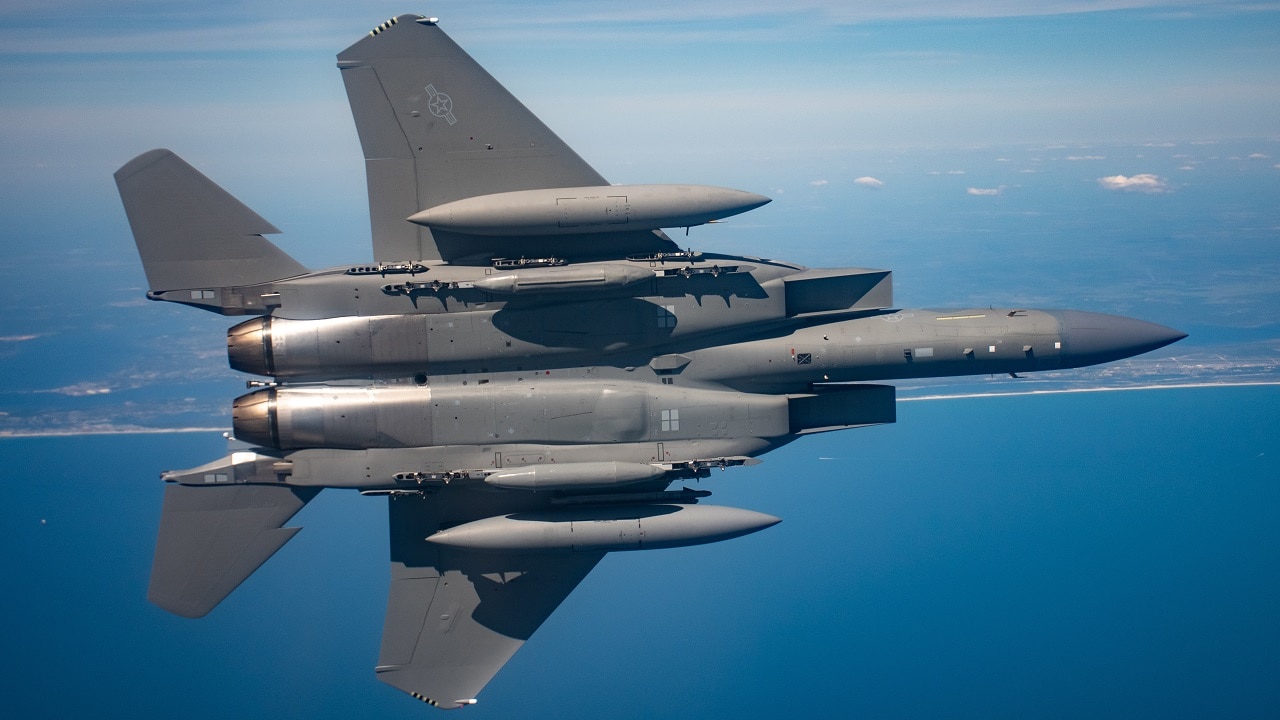
An F-15EX Eagle II from the 85th Test and Evaluation Squadron, 53rd Wing, takes flight for the first time out of Eglin Air Force Base, Fla., April 26, 2021, prior to departure for Northern Edge 2021. The F-15EX brings next-generation combat technology to a highly successful fighter airframe that is capable of projecting power across multiple domains for the Joint Force. (U.S Air Force photo by 1st Lt Savanah Bray)
The F-15EX was never going to be used as the tip of the spear, so to speak, but the jet could have been used in the second phase, once air superiority was established.
Maybe Next Time
The F-15EX is just entering service and has not been fully fielded yet; the timing just didn’t work for Epic Fury.
And instead of forcing a small, unproven fleet into action, the Air Force relied on the F-35 and B-2 for stealth penetration, and proven strike aircraft, like the F-15E and F-16, for volume strikes.
It wasn’t worth risking the F-15EX, a new and expensive platform, given the jet’s limited numbers.
Losing just one would have been politically and operationally costly, especially given the jet’s billing as a platform of the future.
Speaking of which, the F-15EX Eagle II hasn’t really been necessary for Epic Fury, and if deployed, would have been mostly redundant with the F-15E Strike Eagle.
That raises difficult questions, like, why do we need the F-15EX if it’s redundant with the proven Strike Eagle?
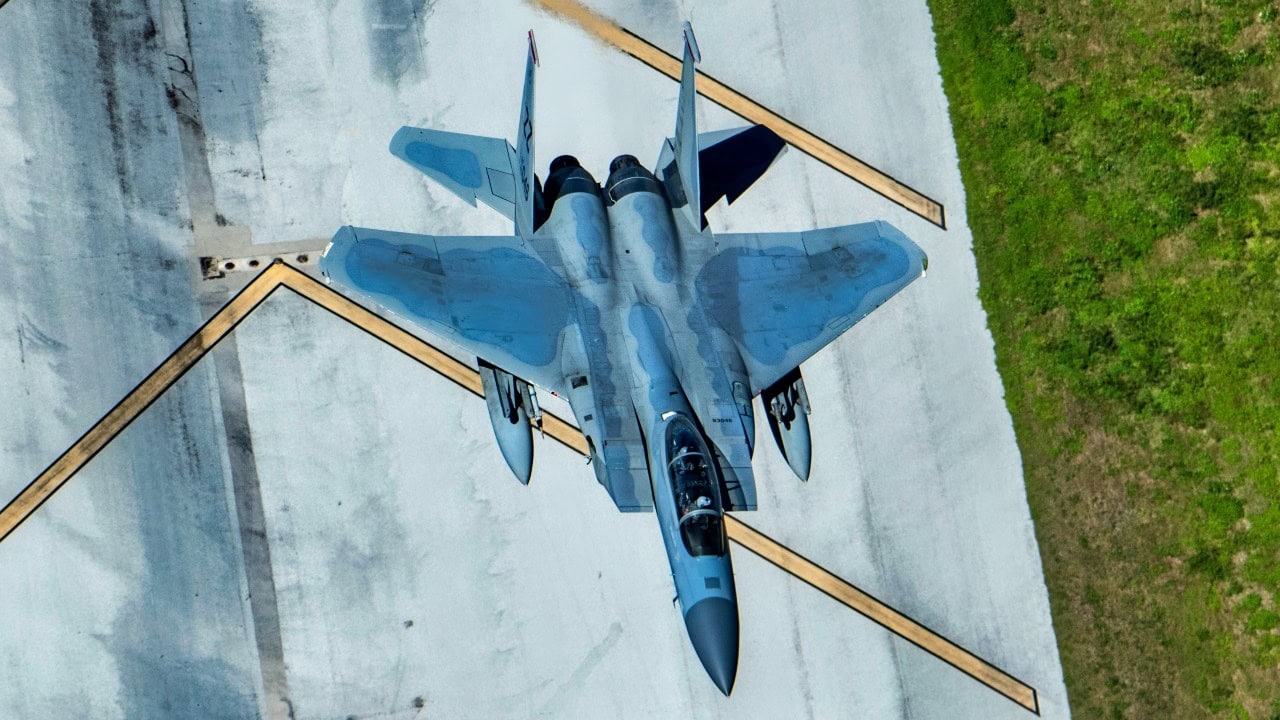
A U.S. Air Force F-15 Eagle II flies during a large show-of-force formation over Andersen Air Force Base, Guam, Mar. 6, 2019. CN19 is a long-standing exercise designed to enhance multilateral air operations amongst partner nations and includes humanitarian assistance and disaster relief airlift operations as well as large-force employment. Approximately 2,000 U.S. Airmen, Marines, and Sailors participated alongside approximately 800 RAAF and JASDF members during the exercise. (U.S. Air Force Photo by Senior Airman Xavier Navarro)
The answer lies in the future; the F-15EX Eagle II was built for future wars, to replace the aging F-15 fleet, which is reaching the limits of its service life, when structural fatigue becomes relevant, and when the maintenance burden spikes.
So while the EPAWSS and other upgrades make the F-15EX a more capable platform than the legacy F-15s, those capabilities weren’t really necessary for Epic Fury—and they weren’t really designed for today but for tomorrow, to ensure that the US would still have a workhorse F-15 fleet to supplement stealth platforms like the F-35 and the forthcoming F-47.
MORE – The ‘China Will Invade Taiwan’ Scenario Still Haunts My Dreams
About the Author: Harrison Kass
Harrison Kass is an attorney and journalist covering national security, technology, and politics. Previously, he was a political staffer and candidate, and a US Air Force pilot selectee. He holds a JD from the University of Oregon and a master’s in global journalism and international relations from NYU.