
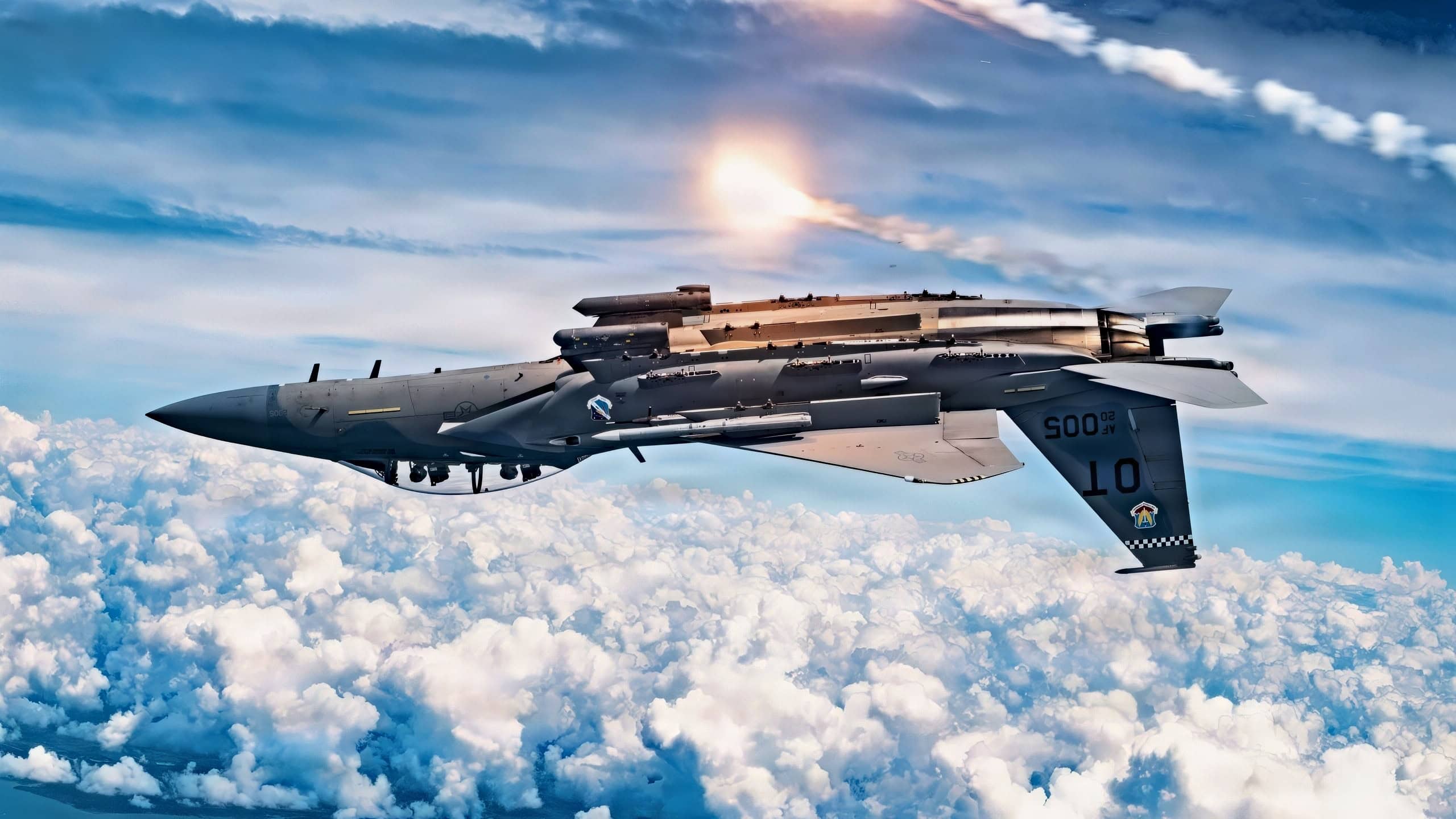
The F-15EX Eagle II is not a stealth fighter, nor a revolutionary concept. Yet, the new F-15 is one of the most important new aircraft in the USAF, built to fill a gap in firepower and capacity, and to enable stealth fighters to do what they do best.
F-15EX Eagle II Question: Why Not a Clean-Sheet Design?
The question has been posed: why, in the age of stealth, update a Cold War-era non-stealth fighter rather than build a clean-sheet stealth fighter?
The F-15EX was derived from the traditional F-15 lineage after receiving $5 billion in research and development funding from Saudi Arabia and Qatar. At the time, the USAF’s F-15C fleet was aging dangerously, with an average age of 38 years.
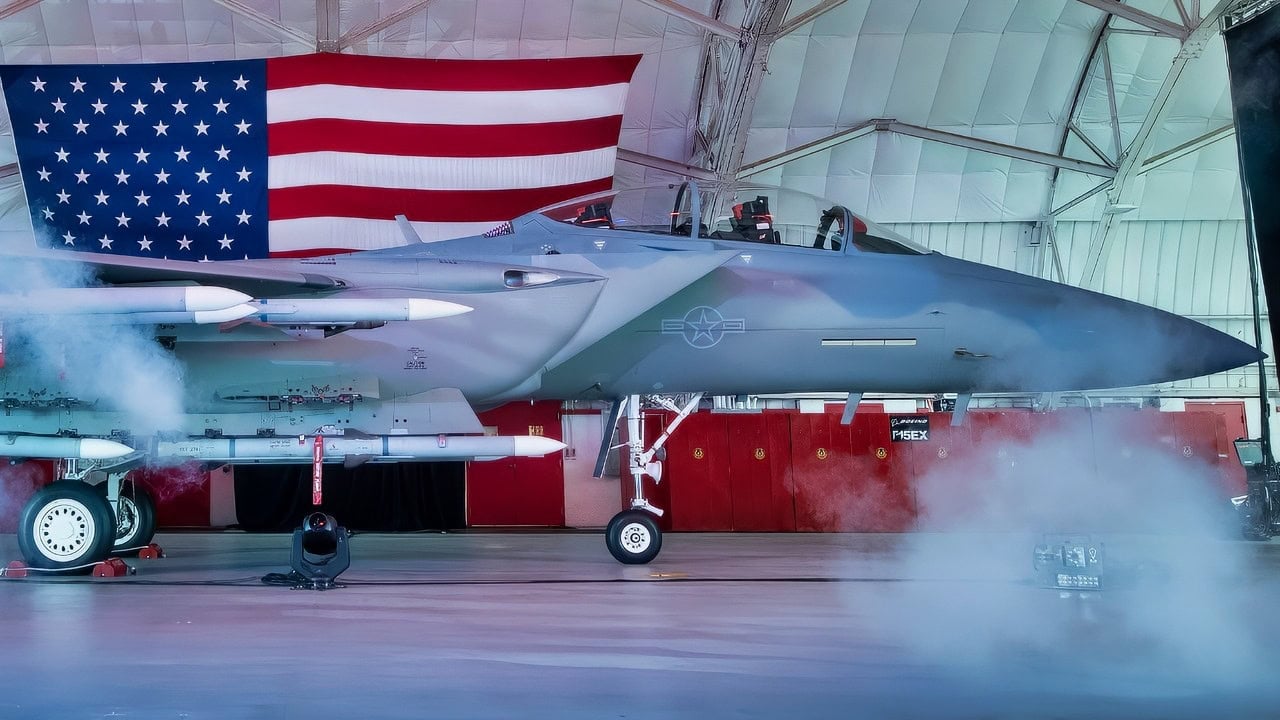
The Air Force’s newest fighter, the F-15EX Eagle II, was revealed and named during a ceremony April 7 at Eglin Air Force Base, Fla. The aircraft will be the first Air Force aircraft to be tested and fielded from beginning to end, through combined developmental and operational tests. (U.S. Air Force photo/Samuel King Jr.)
Many of the F-15Cs had exceeded their 9,000 flight hour cap. Meanwhile, the F-22 Raptor production line had been closed sooner than originally expected. The F-15EX was conceived as a fast, low-risk replacement, rather than a clean-sheet fighter.
Why? Because a new fighter could have taken a decade or two to develop from scratch and would have cost tens of billions of dollars.
The F-15EX Eagle II was derived from an existing and proven airframe, without the need for massive R&D investments.
The logistics were simpler, too, sharing 70 percent commonality with existing F-15s and drawing from an existing infrastructure of bases and tooling.
The pilot transition from the legacy F-15 to the F-15EX took weeks rather than the months or years it would have taken to learn a new, clean-sheet fighter. In short, the F-15EX provided the USAF with a fast, affordable fix.
Technical Overview of the F-15EX Eagle II
The F-15EX has a massive payload of 29,500 pounds and can carry 22 air-to-air missiles. In effect, the EX can serve as a missile truck, with the flexibility to carry hypersonic missiles and oversized munitions.
The EX is also quite fast, with a top speed of Mach 2.5, exceeding that of the F-35 (Mach 1.6) and the F-22 (Mach 2.25). One of the biggest upgrades to the EX is the addition of the EPAWSS system, which detects threats, jams radar, and adapts in real time.
So, despite not being a stealth platform, the F-15EX is built for survivability—albeit in more permissive environments —thanks to its payload, speed, and processing power.
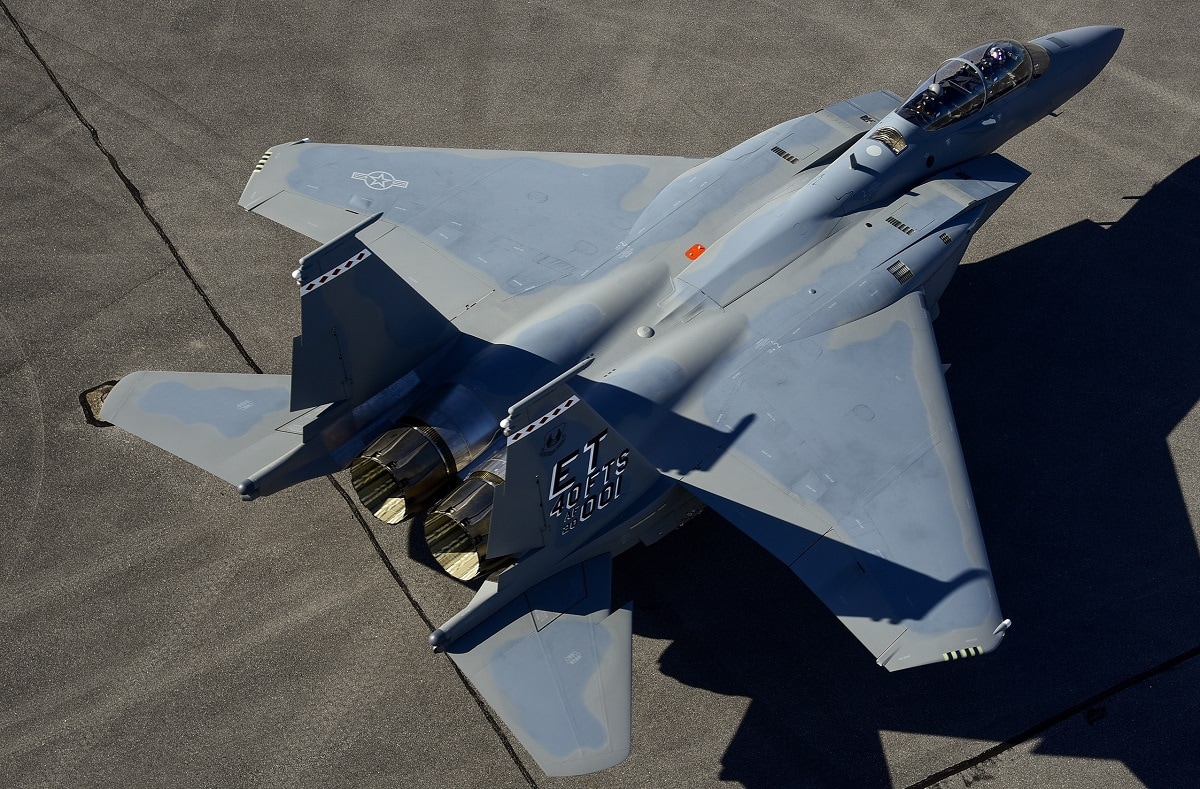
The F-15EX Eagle II, the Air Force’s newest fighter aircraft, arrives to Eglin Air Force Base, Florida March 11. The aircraft will be the first Air Force aircraft to be tested and fielded from beginning to end through combined developmental and operational tests. The 40th Flight Test Squadron and the 85th Test and Evaluation Squadron personnel are responsible for testing the aircraft. (U.S. Air Force photo/1st Lt. Karissa Rodriguez)
Tactics and Strategy
While stealth fighters are used to detect targets, the F-15EX, serving as a missile truck, launches weapons.
The separation of roles—with stealth fighters sensing and the EX offering volume fire—allows each system to play to its strengths.
The F-15EX specifically operates outside of dense air defenses, firing long-range missiles from stand-off range.
The massive missile load has the capacity to overwhelm enemies with volume, while the two-seat configuration allows for command and control, i.e., managing drones and coordinating formations. In effect, the F-15EX amplifies networked warfare.
With the USAF short on fighters, the EX fills an immediate gap while being cheaper to operate than stealth platforms.
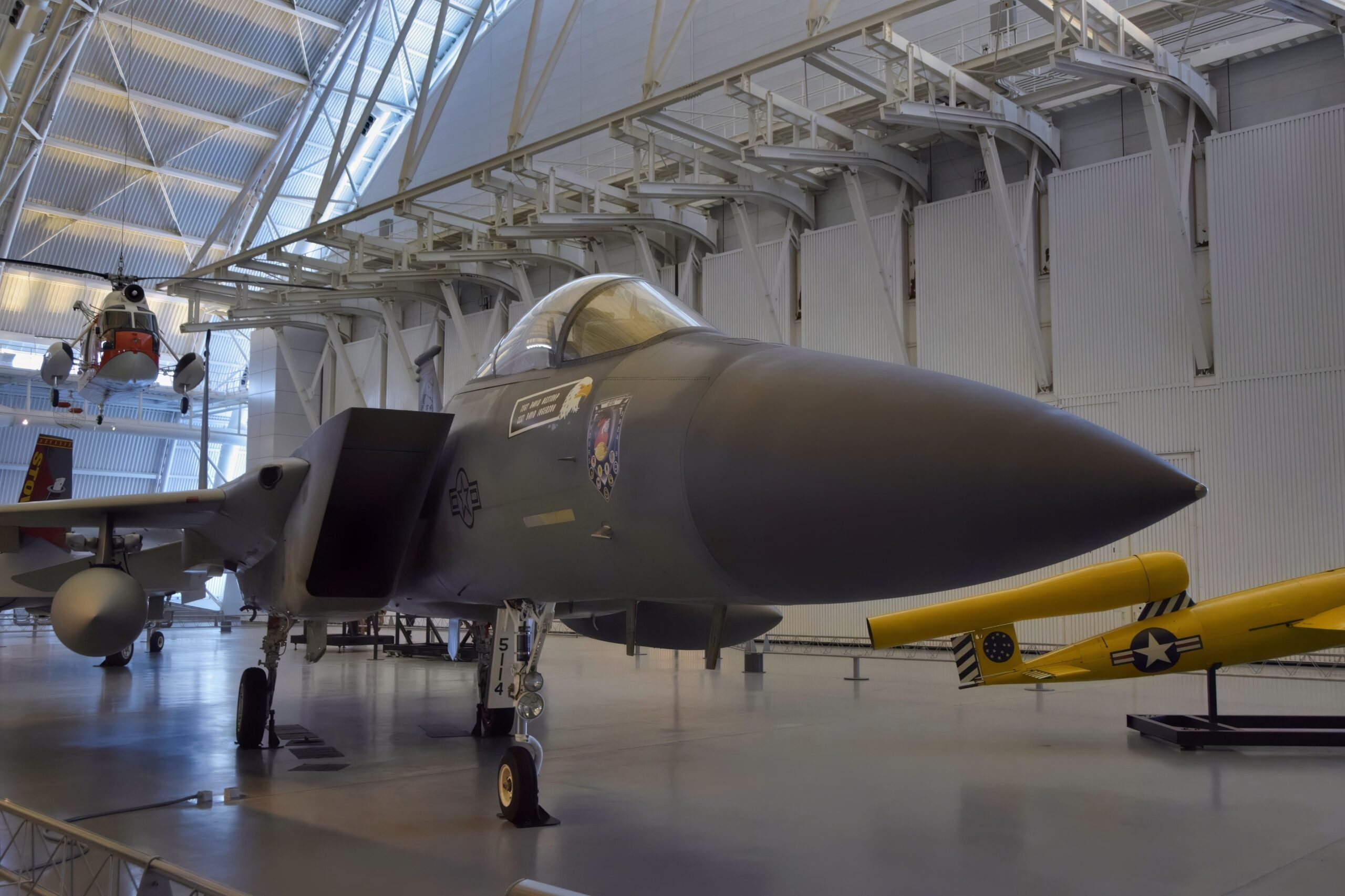
F-15C at the Smithsonian. 19FortyFive.com Image.
The presence of the EX allows the USAF to preserve F-35 and F-22 flight hours (which cost more) for moments when those platforms are truly needed.
And because stealth fighters must carry their weapons internally to maintain stealth performance, they cannot carry large next-gen weapons, such as hypersonics. The EX, however, can offer more firepower.
MORE – The SR-71 Blackbird Almost Flew Through Volcanic Ash. The Mach 3 Aircraft Would Have Been Destroyed
The EX is also particularly relevant for homeland defense and interception missions that do not require stealth. So, the EX solves multiple problems simultaneously.
Real-World Performance
The F-15EX Eagle II entered service in 2024 with the Oregon ANG. If you’ve ever been to Portland International Airport, you’ve likely seen EXs lined along the southern edge of the runway.
The ANG was an appropriate entry point for the platform, which will often be called upon to serve in a homeland defense role. With a mission-capable rate of 83 percent (high compared to the F-35’s 51 percent and the F-22’s 40 percent), the EX has proven a reliable platform.
This high reliability is a major advantage.
In the future, expect the EX to serve in a “high-low” mix with stealth platforms, pairing with the F-35 and NGAD for drone control and hypersonic delivery, as warfare continues to trend toward networked, distributed air combat.
F-15EX Eagle II: A Photo Essay Of An Amazing Fighter
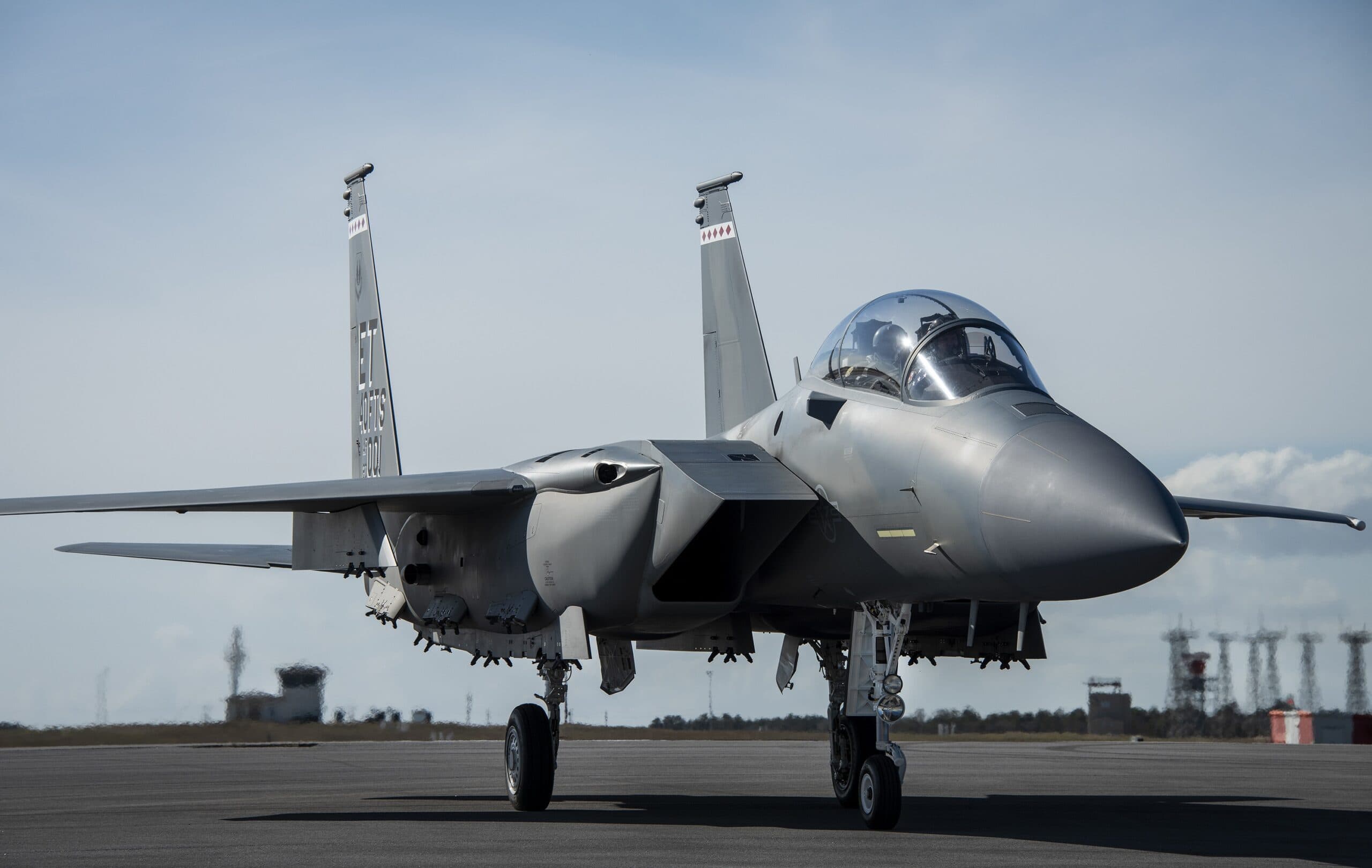
F-15EX Eagle II. Image Credit: Creative Commons.
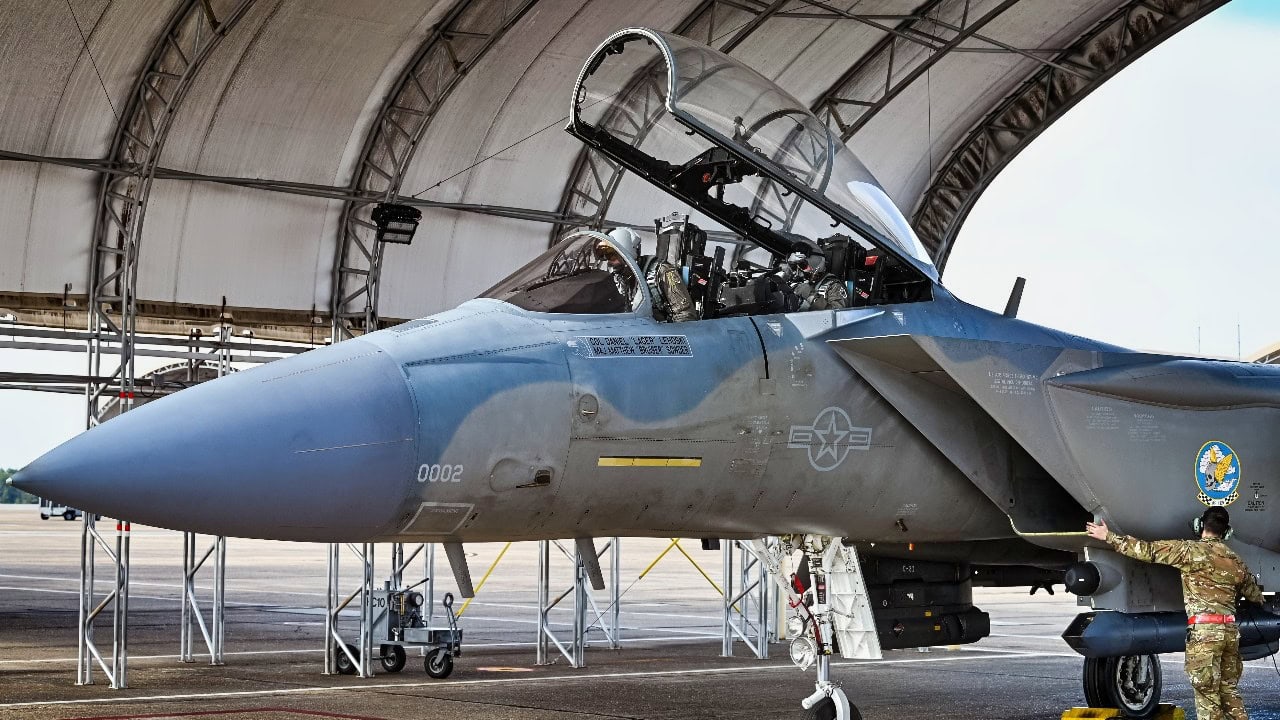
U.S. Air Force Maj. Aaron Eshkenazi, F-15EX Test Director for the 84th Test and Evaluation Squadron, performs preflight procedures for the F-15EX with Lt. Gen. Michael Koscheski, deputy commander of Air Combat Command, at Eglin Air Force Base, Florida, January 29, 2025. During his visit, Koscheski gained valuable insights from the 84th TES and 85th TES to help inform future decisions regarding the platform. The future F-15 fleet will complement 5th generation aircraft, bringing substantial additional capacity for over-sized long-range fires, sensors, and electronic warfare capabilities to defend critical locations in highly contested areas. (U.S. Air Force photo by 1st Lt. Rebecca Abordo)
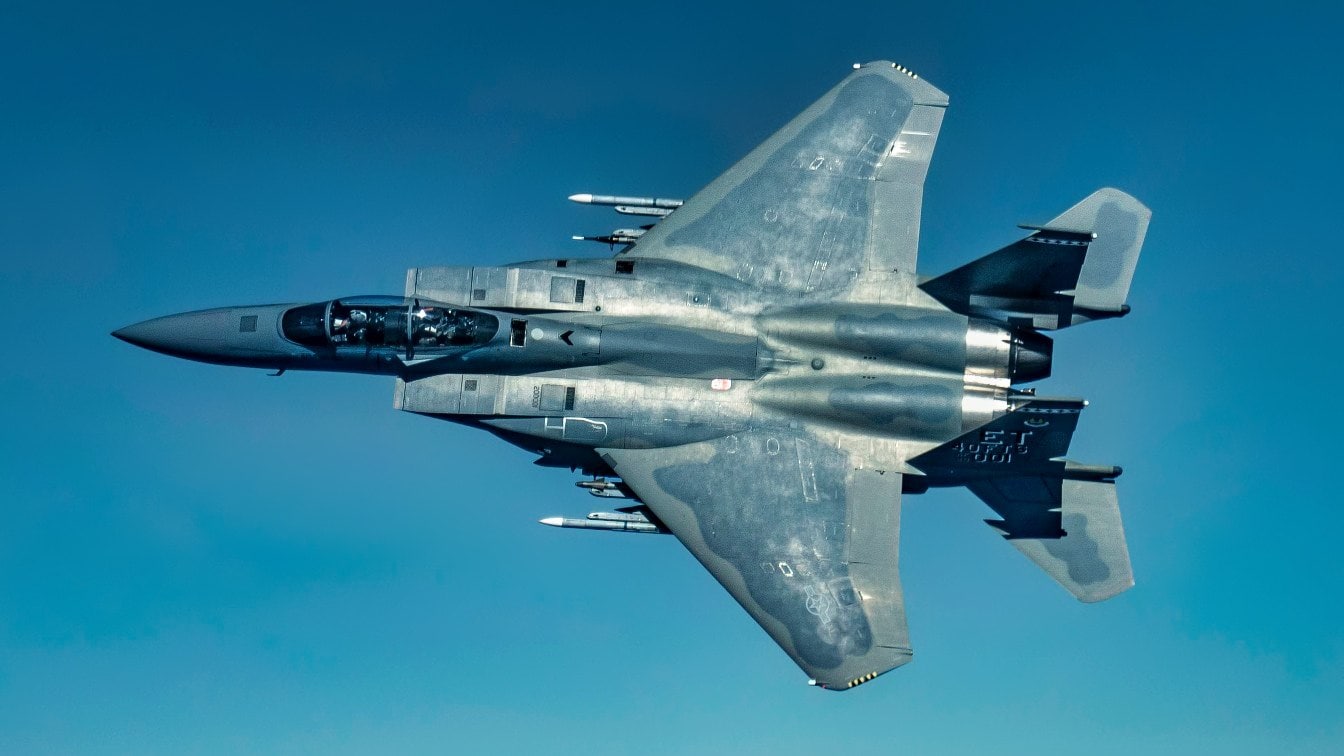
U.S. Air Force Lt. Col. Richard Turner, 40th Flight Test Squadron commander flies 40 FLTS Senior Enlisted Leader, MSgt Tristan McIntire during a test sortie in the F-15EX Eagle II over the Gulf of Mexico on Jun. 14, 2022. Assigned to the 96th Test Wing at Eglin Air Force Base, Fla., the F-15EX Eagle II is the Air Force’s newest 4th generation fighter being tested at the 40 FLTS. (U.S. Air Force photo by Tech. Sgt. John McRell)
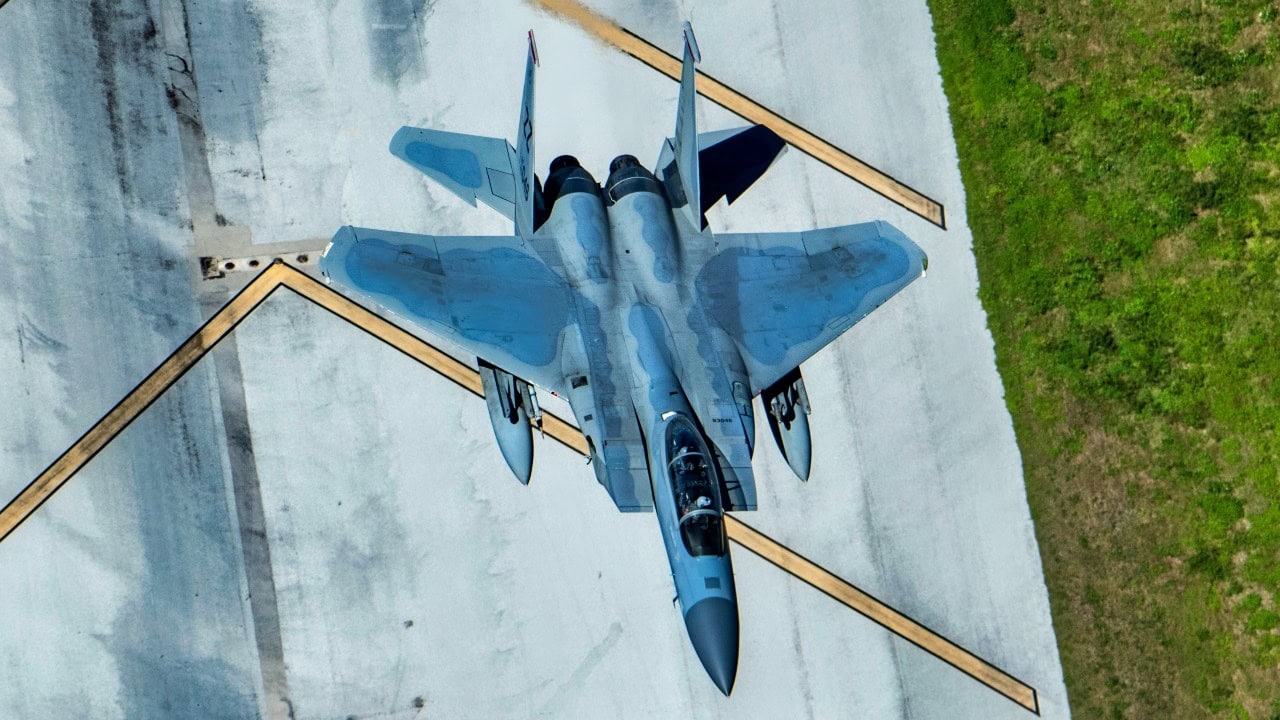
A U.S. Air Force F-15 Eagle II flies during a large show-of-force formation over Andersen Air Force Base, Guam, Mar. 6, 2019. CN19 is a long-standing exercise designed to enhance multilateral air operations amongst partner nations and includes humanitarian assistance and disaster relief airlift operations as well as large-force employment. Approximately 2,000 U.S. Airmen, Marines, and Sailors participated alongside approximately 800 RAAF and JASDF members during the exercise. (U.S. Air Force Photo by Senior Airman Xavier Navarro)
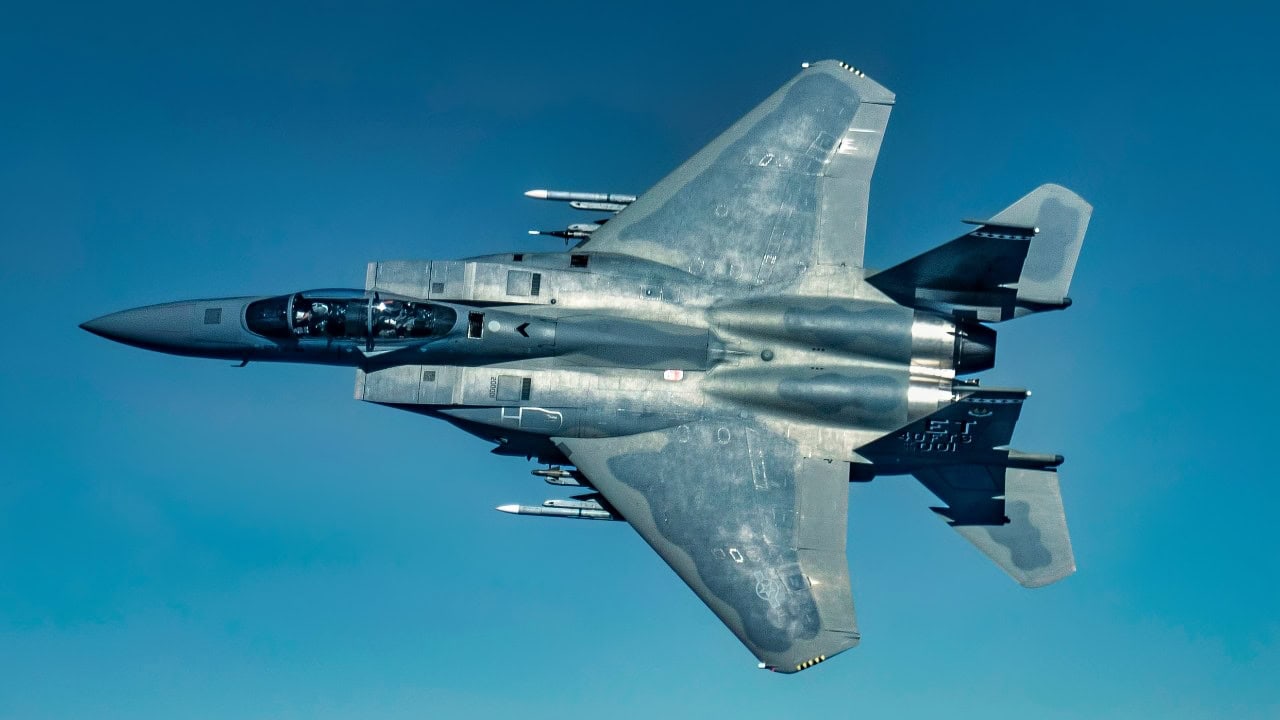
U.S. Air Force Lt. Col. Richard Turner, 40th Flight Test Squadron commander flies 40 FLTS Senior Enlisted Leader, MSgt Tristan McIntire during a test sortie in the F-15EX Eagle II over the Gulf of Mexico on Jun. 14, 2022. Assigned to the 96th Test Wing at Eglin Air Force Base, Fla., the F-15EX Eagle II is the Air Force’s newest 4th generation fighter being tested at the 40 FLTS. (U.S. Air Force photo by Tech. Sgt. John McRell)
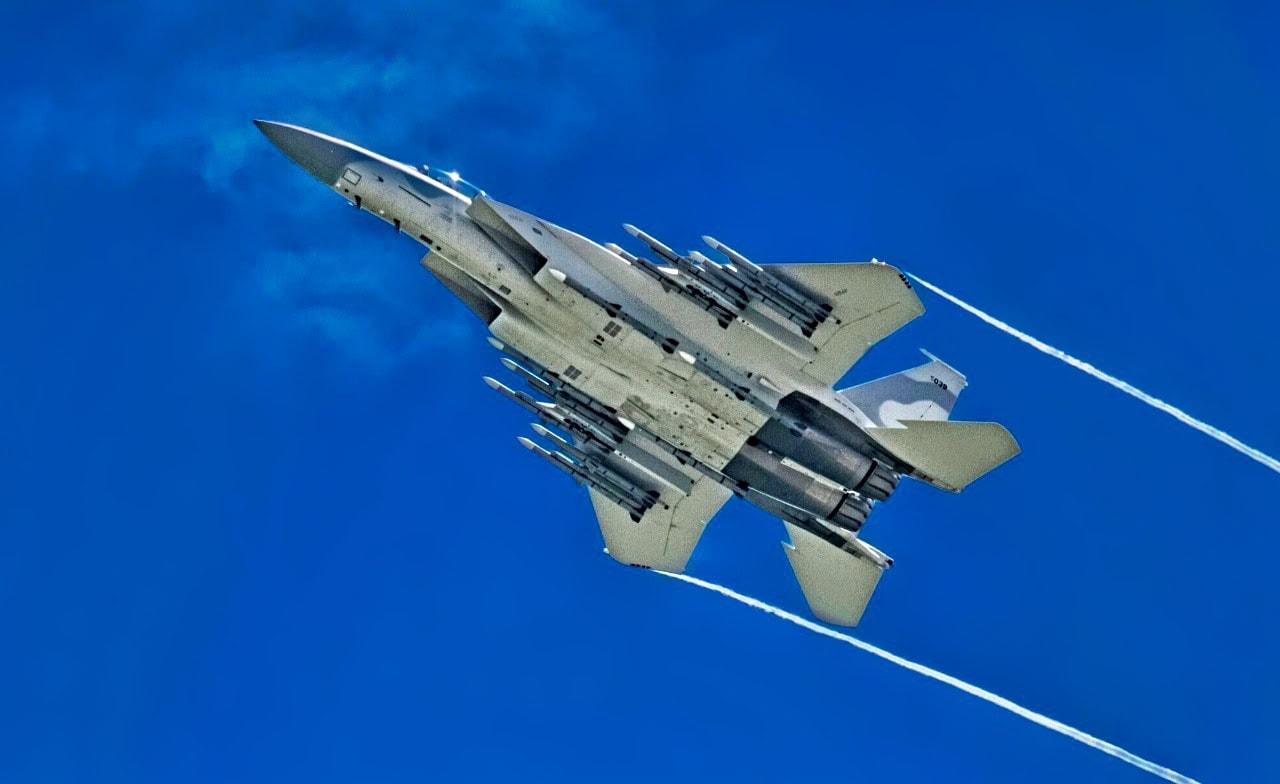
F-15EX Eagle II from U.S. Air Force
About the Author: Harrison Kass
Harrison Kass is a writer and attorney focused on national security, technology, and political culture. His work has appeared in City Journal, The Hill, Quillette, The Spectator, and The Cipher Brief. He holds a JD from the University of Oregon and a master’s in Global & Joint Program Studies from NYU. More at harrisonkass.com.