
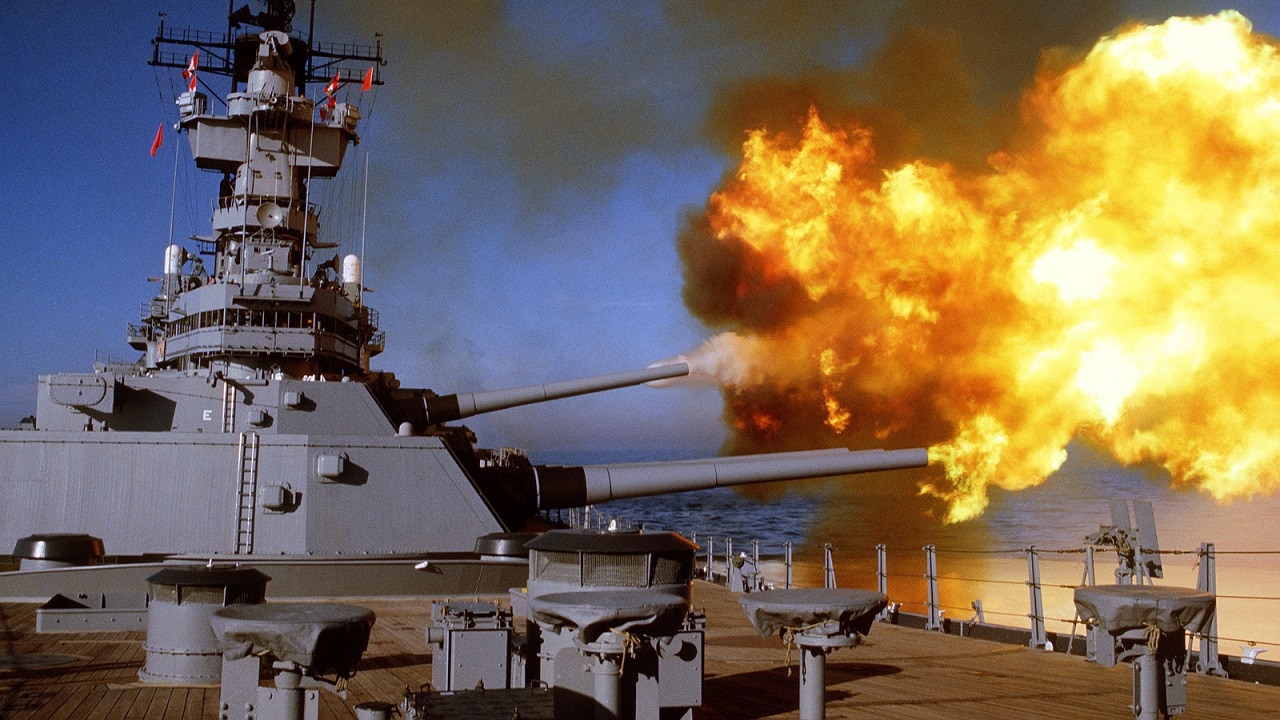
The battleship USS New Jersey (BB-62) has recently undergone a $10 million overhaul in US shipyards. But the big battleship isn’t being reactivated again.
She is being overhauled just to keep her in tip-top condition so she can continue to serve as a museum piece. Those big 16-inch guns would still wreak havoc on an enemy during a seaborne amphibious landing. But the big battlewagon is from a bygone era.
Lead ship of her class, USS Iowa (BB-61), was commissioned at New York Navy Yard, Brooklyn, New York, on February 22, 1943. Following the transport of President Franklin D. Roosevelt to and from the Casablanca Conference in French Morocco in January 1943, the battleship was transferred to the Pacific Fleet.
The Navy originally planned to build six Iowa-class warships, but ended up ordering only four, and all four entered service during World War II to help the Navy defeat the Axis Powers.
They were returned to service during the Korean War. And they were brought back again during the war in Vietnam. During her service in Vietnam, the battleship New Jersey’s guns were almost as active in a year as they were across World War II, the Korean War, and training cruises after the war.
The last action for the Iowa-Class Battleships was during the Gulf War against Iraq, in which they once more supported ground troops with naval fire. This time, they were also equipped with Tomahawk land attack cruise missiles.
The Battleship New Jersey, “The Big J”:
The battleship New Jersey (BB-62) has a storied history, having served in the Pacific Theater of World War II, the Korean War, the Vietnam War, the Lebanese Civil War, and the Persian Gulf War.
The New Jersey, affectionately known as “The Big J,” has the most battle stars of any US battleship in the Navy’s history. It was commissioned in May 1943, and the rest of that year was spent in the western Atlantic and Caribbean areas.
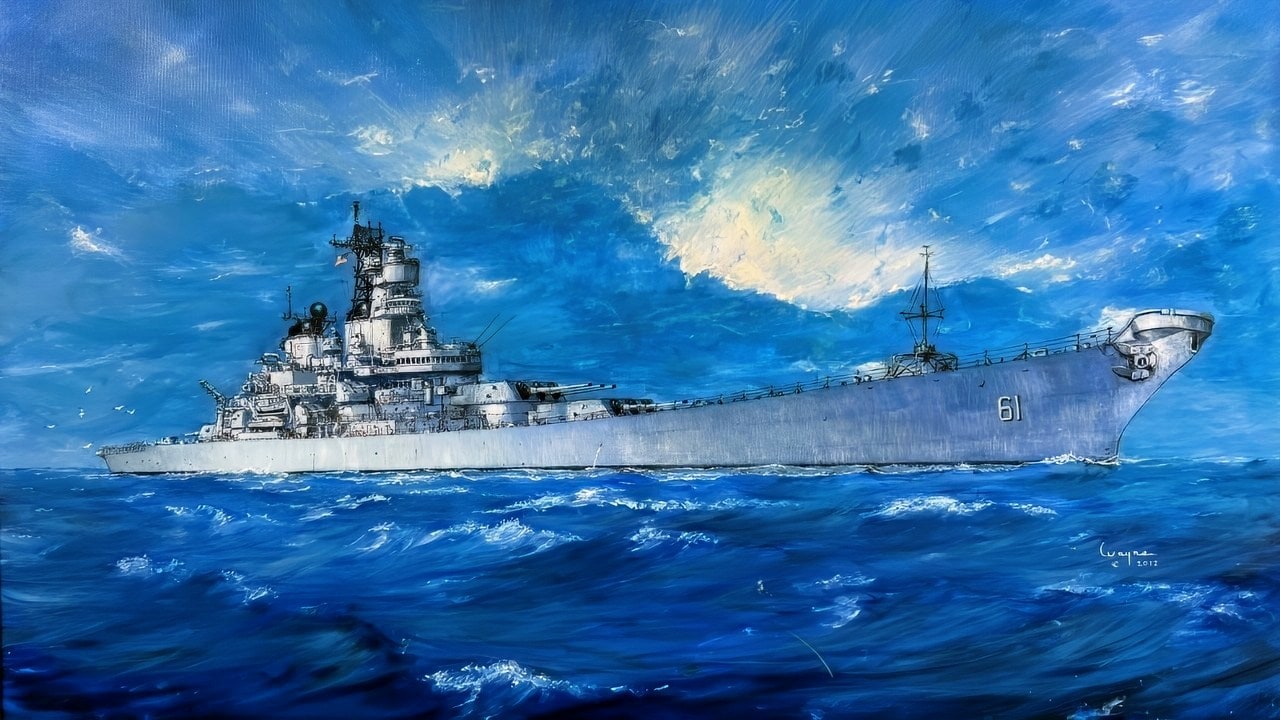
Image taken by Harry J. Kazianis aboard the USS Iowa on August 15, 2025. Image is of a painting of the USS Iowa of the Iowa-Class. USS New Jersey is also a Iowa-Class battleship.
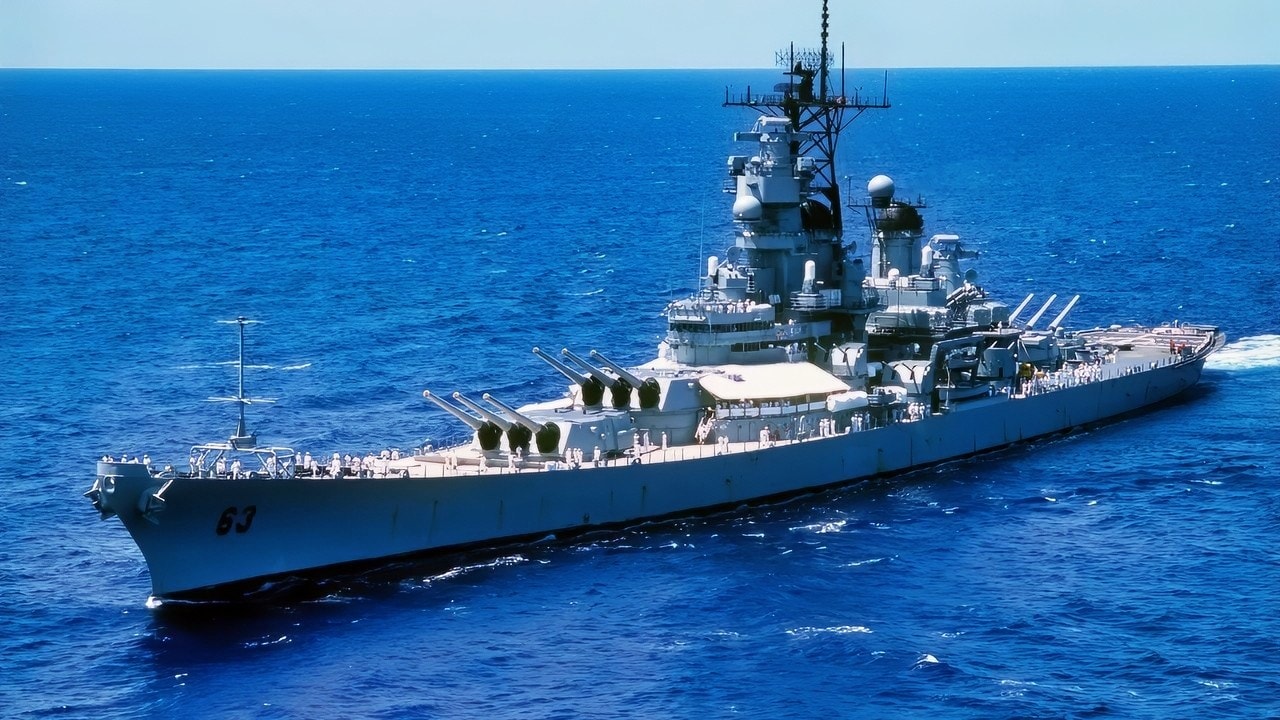
Iowa-Class Battleship Sailing. Image Credit: Creative Commons.
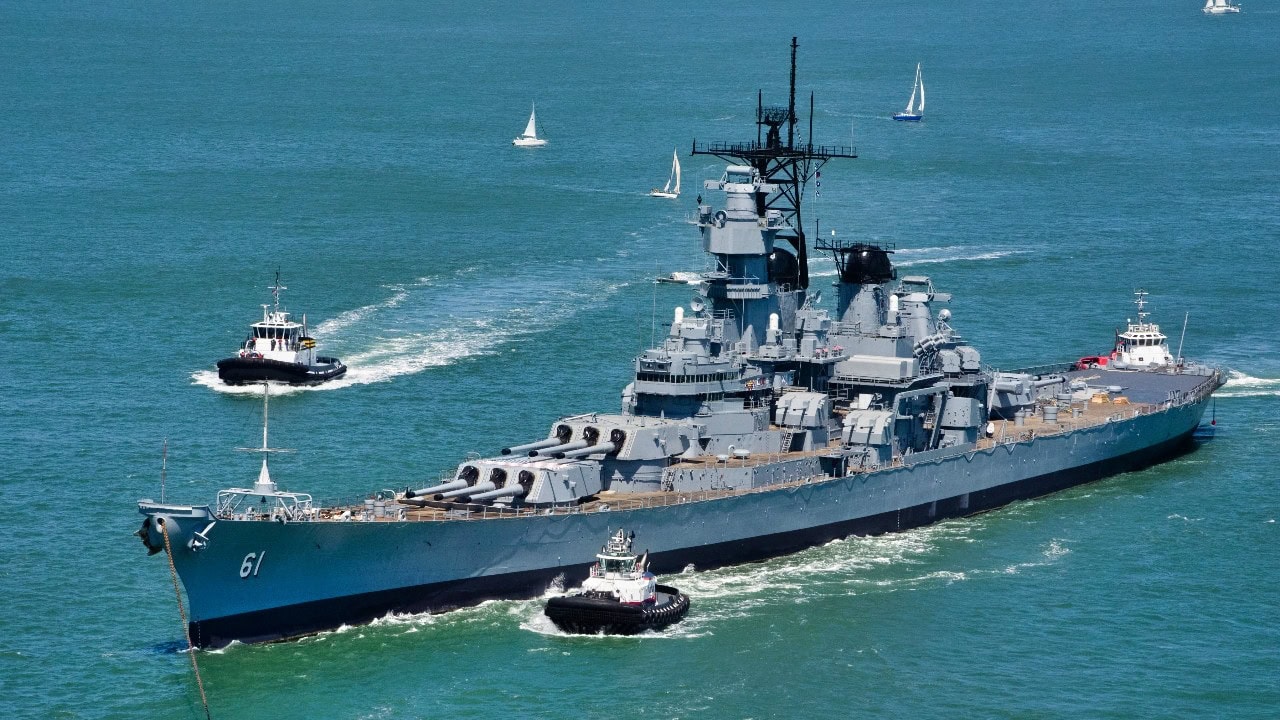
Iowa-Class Battleship Heading Into Port for U.S. Navy. Image Credit: Creative Commons.
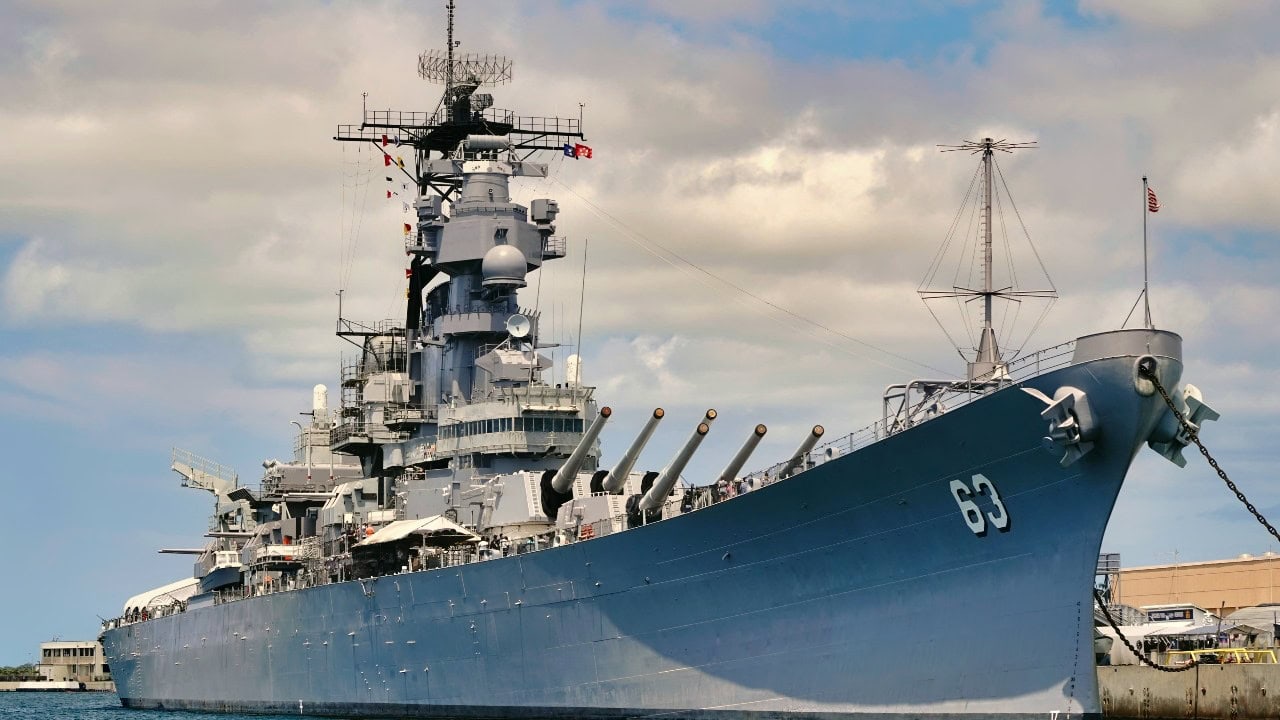
Iowa-Class Battleship at Port. Image Credit: Creative Commons.
The New Jersey went to the Pacific in early 1944 and conducted her first combat operations, supporting the invasion of the Marshall Islands. She was the Fifth Fleet flagship during the mid-February raid on the Japanese base at Truk, where she used her guns to sink one enemy ship and join in sinking another.
Throughout the rest of 1944, she participated in raids on Japanese-held islands, the Marianas invasion and Battle of the Philippine Sea, the Battle of Leyte Gulf, and operations against the Philippines. From August 1944, she was the flagship of Admiral William F. Halsey’s Third Fleet.
The “Big J” continued her Pacific combat operations into 1945, supporting the invasions of Iwo Jima and the Ryukyus. Following an overhaul, she again became the Fifth Fleet flagship during the final days of World War II and remained in the Far East until early 1946. In 1947, she went to the Atlantic and made a midshipmen’s training cruise to Europe before decommissioning in June 1948.
The big battleship didn’t have a long retirement, however, as she was brought back into the active rolls in November 1950 when the Korean War started. The big battleship had tours of duty off the coast of Korea in 1951 and 1953. After the armistice, she served in the Atlantic until 1957, when she was retired again.
The Battleship New Jersey In Vietnam:
Once again, the battleship USS New Jersey’s retirement was short-lived. It was the only battleship used in Vietnam. But she was pulled out of mothballs again in time to arrive in Vietnam in September 1968. There, she would patrol the Vietnamese coast until April 1969, when she was deactivated again.
However, while the big battlewagon was off the coast, its bank of nine 16-inch (407mm) guns, she could damage anything within 27 miles of the coastline. The North Vietnamese didn’t have much of a navy, so the New Jersey didn’t worry much about ships or shore gunfire.
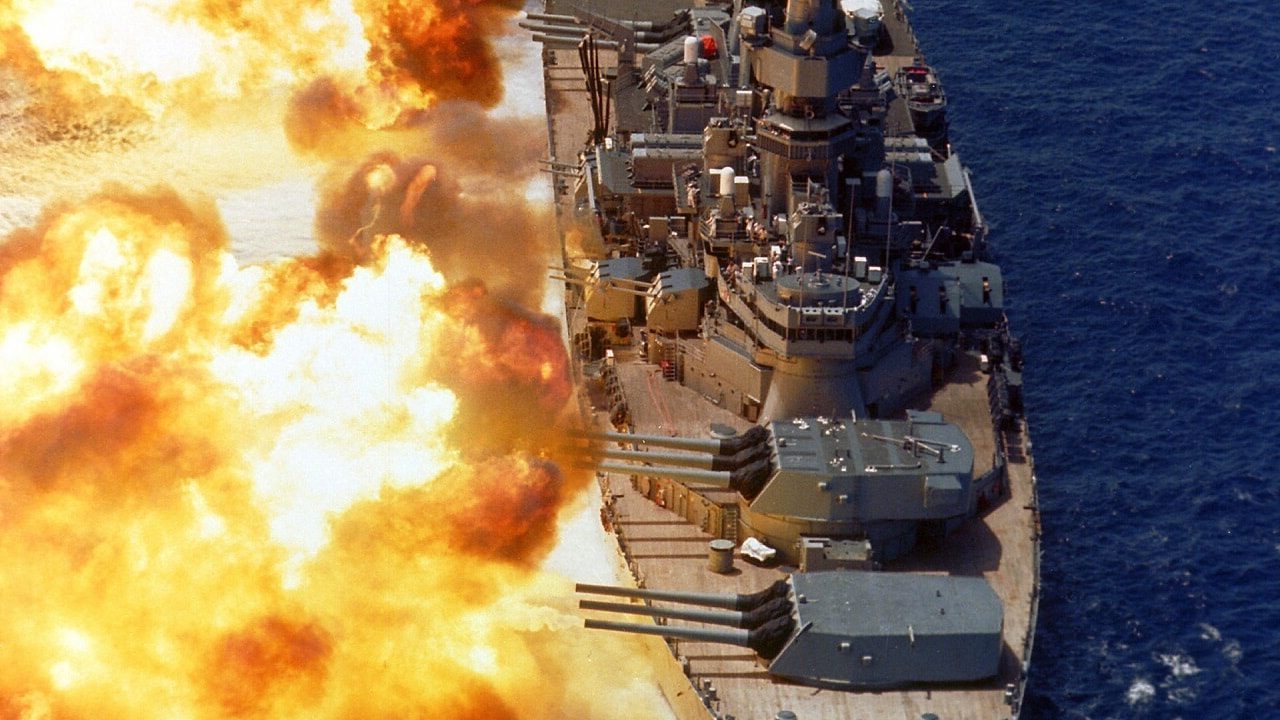
Iowa-class battleship firing off a broadside.
The battleship provided heavy, continuous, and highly accurate gunfire support for Marines and ground troops, often acting as a “lifeline” against enemy attacks. In November 1968, the ship destroyed over 180 structures and 50 bunkers near Quảng Ngãi, Vietnam.
While the war in Vietnam, Cambodia, and Laos was one that was fought in jungles and mountains by ground troops with air support, the Navy played a big role by having aircraft carriers offshore that could conduct airstrikes in North Vietnam and anywhere else.
However, for eight months between 1969 and 1970, the Army and Marines had offshore fire support from a big battleship. On February 23, 1969, the New Jersey fired 1500 rounds of 5-inch ammunition in a night of shore bombardment of North Vietnamese and Viet Cong positions.
One Vietnam veteran, Brendan Varley, was quoted on a Facebook post about New Jersey’s firepower.
“I was in Danang in 1968. I heard what sounded like a train going overhead. I asked, ‘What the hell is that?’ I was told it’s just ‘the New Jersey working out.”’
During her short tour in Vietnam, the total ordnance expended was nearly 12,000,000 pounds… total rounds fired were 5,866 16-Inch, and 14,891 five-inch. Main battery rounds expended during New Jersey’s deployment to Vietnam were only 1,500 rounds short of the total she fired in World War II, two tours in Korea, and several midshipman cruises.

Iowa-Class Battleship. Image: Creative Commons.
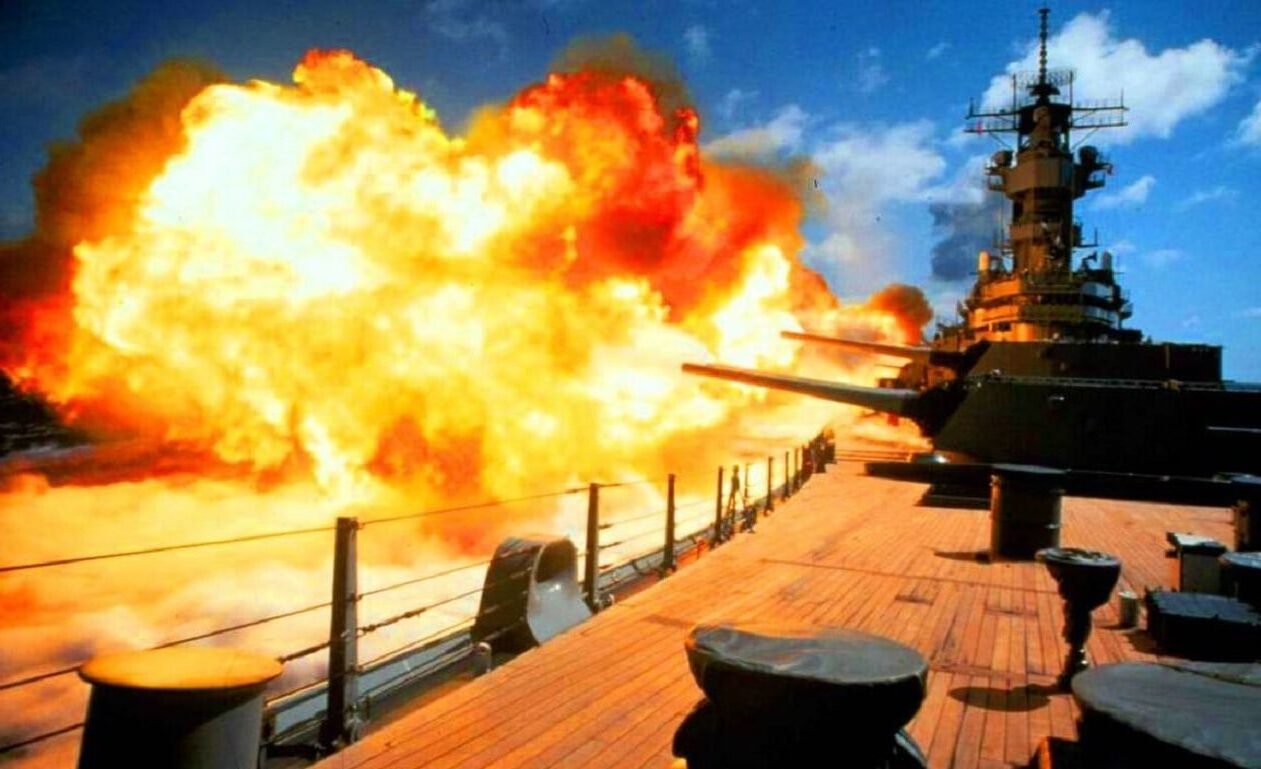
Image: Creative Commons.
The USS New Jersey received a Naval Unit Commendation for her service in Vietnam, and Presidential Unit Citations from the Republic of the Philippines and the Republic of Korea. The Guinness Book of World Records awarded USS New Jersey the title of the fastest battleship in history.
But the battleship wasn’t retired for long once again. When she was reactivated in 1982 for the Lebanon Civil War, the battleship had four twin 5″/38 caliber dual-purpose gun mounts removed. She was then outfitted with four Phalanx Close-In Weapon System (CIWS) mounts to protect against missiles and aircraft.
The Navy also installed eight Armored Box Launchers and four Quad Cell Launchers, designed to fire Tomahawk and Harpoon missiles on “The Big J”. She would fire her guns in Lebanon and finally during Desert Storm. Then she was retired for good. In all, the USS New Jersey, “The Big J,” had 21.5 years of active naval service, which was the most of any ship of the Iowa class.
In September 1999, the battleship New Jersey was towed from Bremerton, Washington, to the Philadelphia Shipyard, where she remains a floating museum. She attracts more than 80,000 visitors annually.
Preserving the USS Iowa (BB-61) And The USS New Jersey (BB-62):
The battleship USS Iowa (BB-61) and the USS New Jersey have undergone repairs. Both ship decks needed significant repair. With a huge teak deck, replacing her entire deck is not a small cost. A possible replacement decking made of synthetic material that looks like wood is being considered.
The ship also needs painting, corrosion control, and underwater hull preservation. The battleship USS Iowa has been repeatedly ranked one of the top five museums in Southern California.
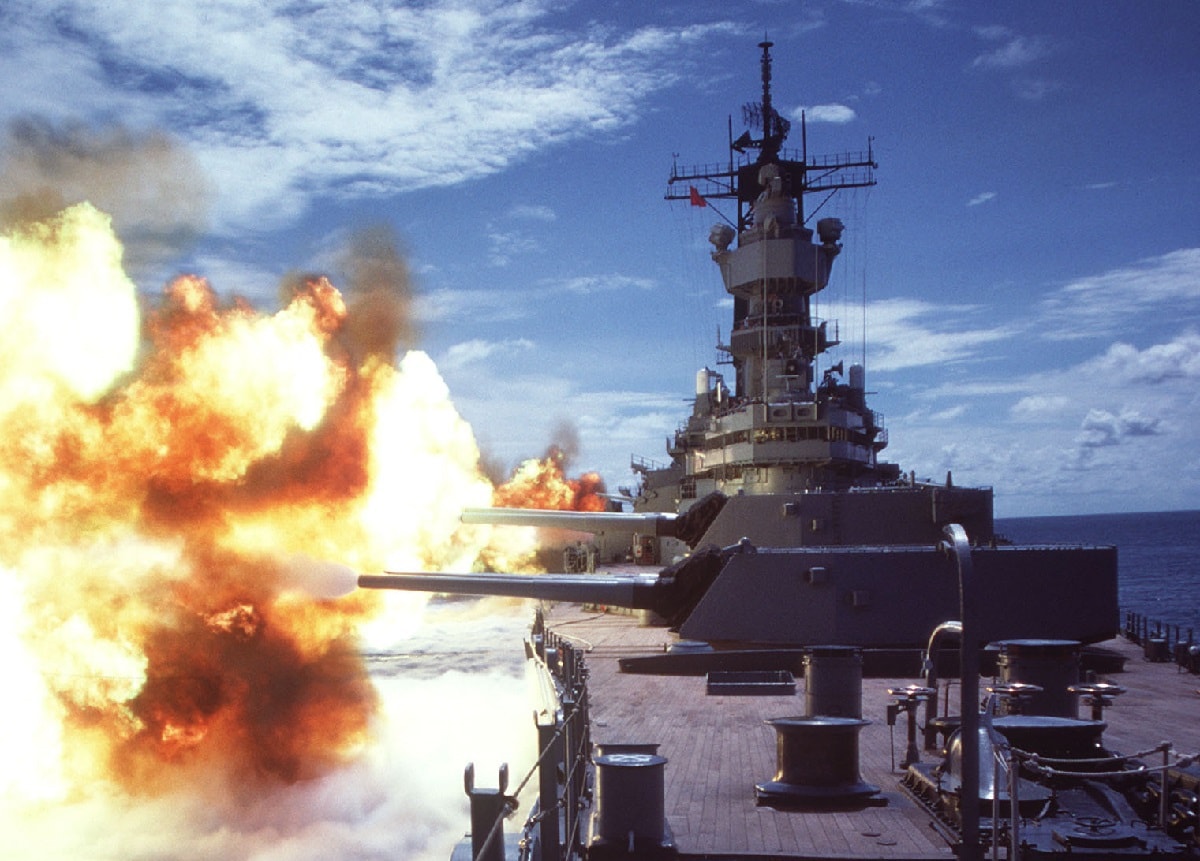
The battleship USS IOWA (BB 61) fires a broadside to starboard from its Mk 7 16-inch guns.
The New Jersey completed a major $10 million dry-docking and repair project in spring 2024 at the Philadelphia Naval Shipyard, returning home to Camden, NJ on June 20, 2024.
The 12-week overhaul included cleaning, sandblasting, and repainting the hull, replacing over 1,300 zinc anodes, and repairing 132 through-hull openings to ensure preservation.
But wouldn’t it be great to hear those 16-inch guns fire a broadside one more time?
About the author: Steve Balestrieri
Steve Balestrieri is a National Security Columnist. He served as a US Army Special Forces NCO and Warrant Officer. In addition to writing on defense, he covers the NFL for PatsFans.com and is a member of the Pro Football Writers of America (PFWA). His work has been regularly featured in many military publications.