
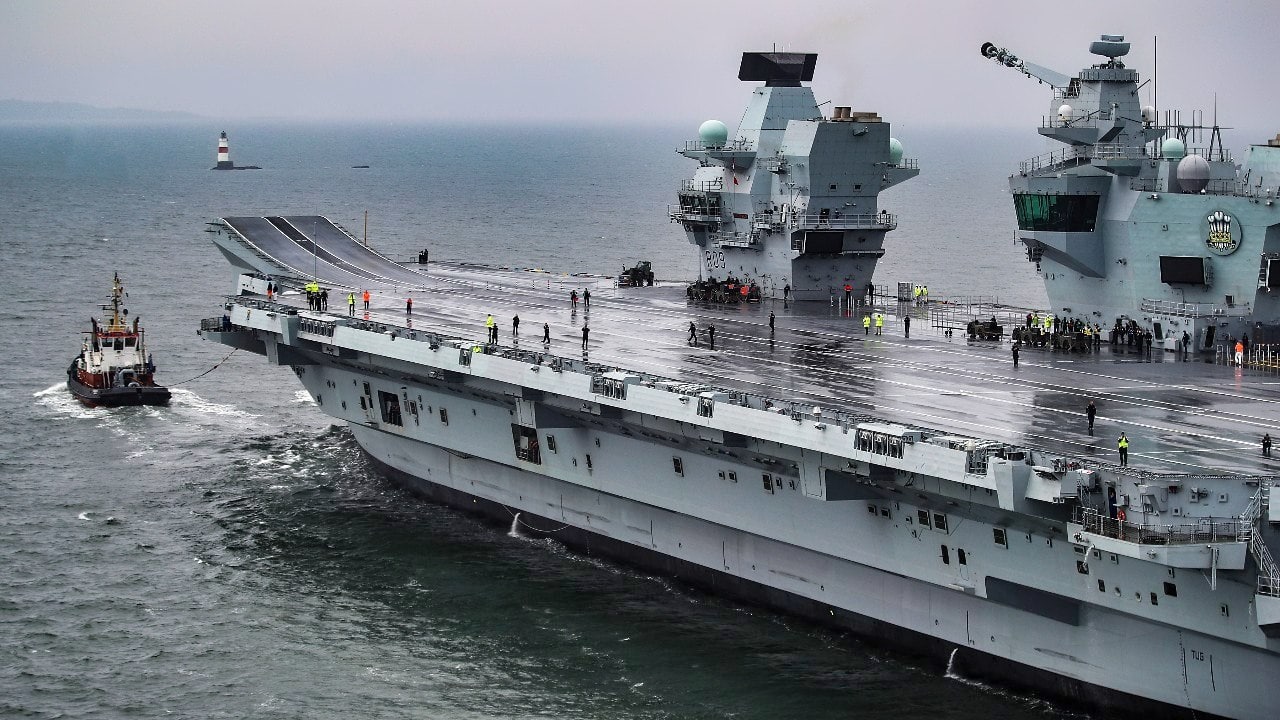
The British Royal Navy had high hopes for its two Queen Elizabeth-class aircraft carriers. They were supposed to have a global reach and help effectively extinguish hot spots worldwide. The carriers were to fly the British flag proudly and serve as a prestigious feather in the British military’s cap. It is a dangerous multi-polar world with threats from Russia, China, and Iran. The carriers were to counteract those belligerent countries. British carriers were designed to conduct freedom-of-navigation exercises, demonstrate resolve, increase deterrence, and support natural disaster relief.
Few of these missions have been executed. The Queen Elizabeth-class has been afflicted by more than five major problems. And it will be difficult for the United Kingdom to dig itself out of this hole.
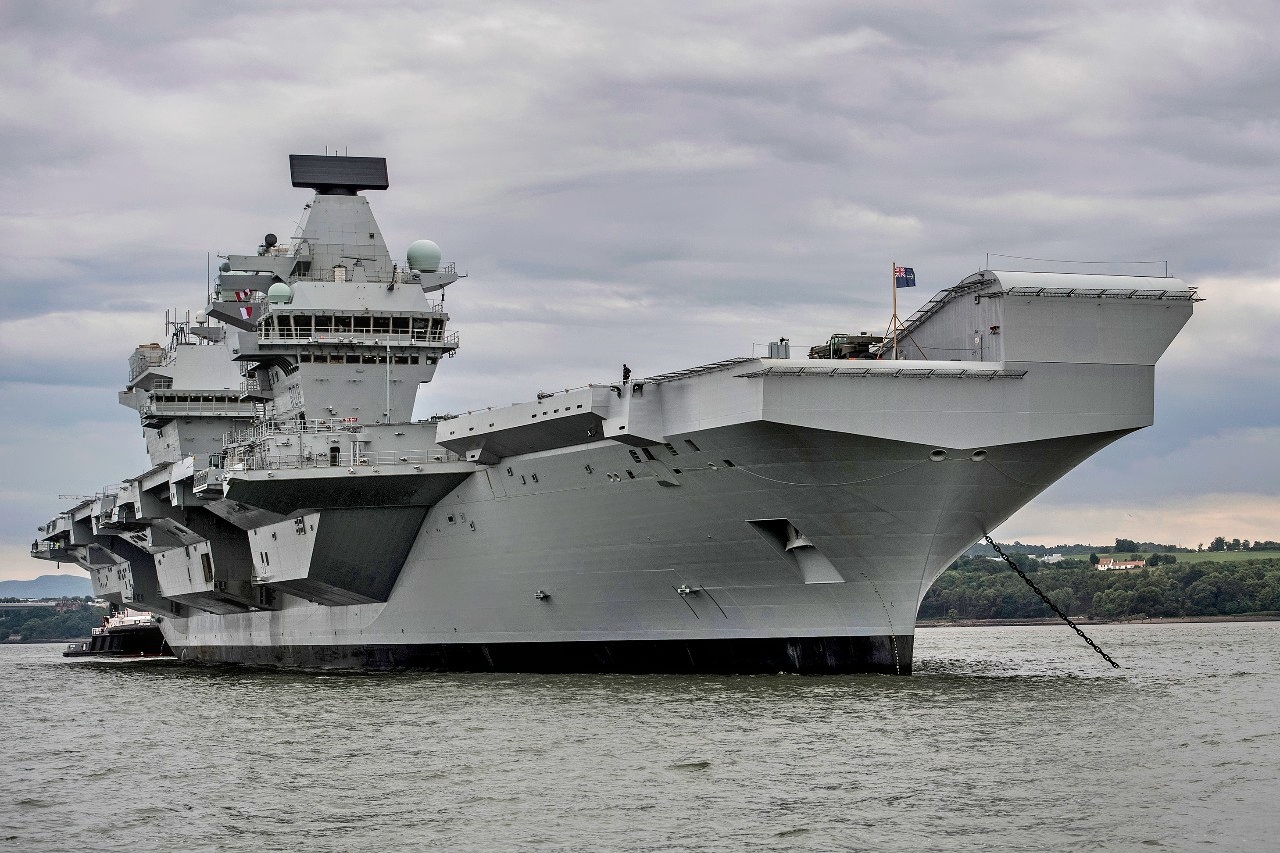
Pictured is HMS Queen Elizabeth under anchor awaiting low tide before departing at the start vital system tests off the coast of Scotland.
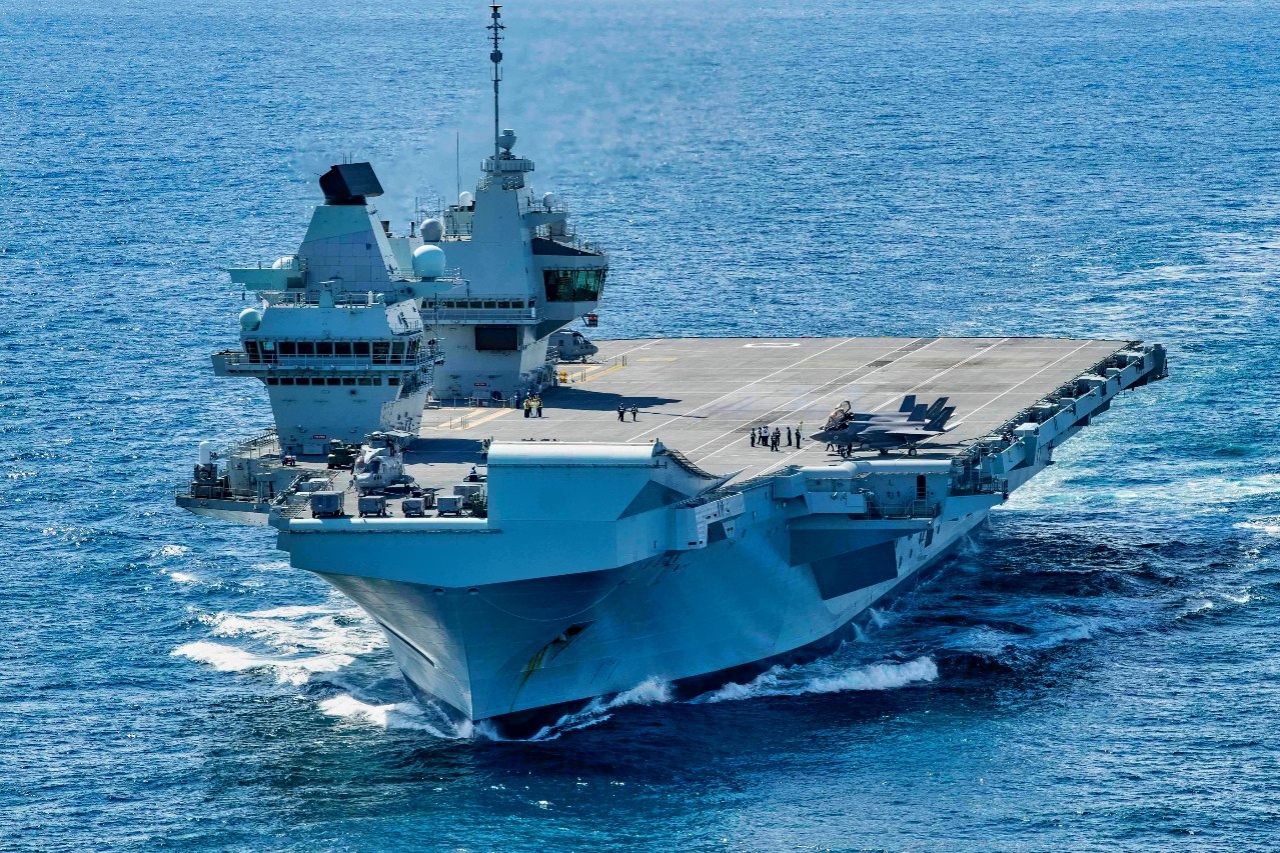
HMS Queen Elizabeth Aircraft Carrier. Image Credit: Royal Navy.
Are There Enough Escort Ships to Form Two Carrier Strike Groups?
First, the HMS Queen Elizabeth and the HMS Prince of Wales were designed for a Royal Navy that assumed it would have ample warships to create two formidable carrier strike groups.
Unfortunately, to afford the carriers, the Royal Navy had to mothball other ships and cancel programs for new vessel acquisition. The carriers were supposed to cost $2.7 billion each, but that burst upwards to $12 billion for both.
Moreover, they required foreign components, primarily from the United States, and there were cost overruns and schedule slips, doubling the cost from the original estimate.
The British had to make a strategic budgetary decision. They soon realized that to acquire both carriers, they would need to cut back on other ships to pay for the Queen Elizabeth-class. The Royal Navy chose to build the carriers despite the limited resources.
The Carriers Had Mechanical Problems
Then, after the difficult production period, the British military found many technical problems with the carriers. The ships had faulty propeller shaft couplings. The Royal Navy needed to sink money and worker effort into fixing the problems.
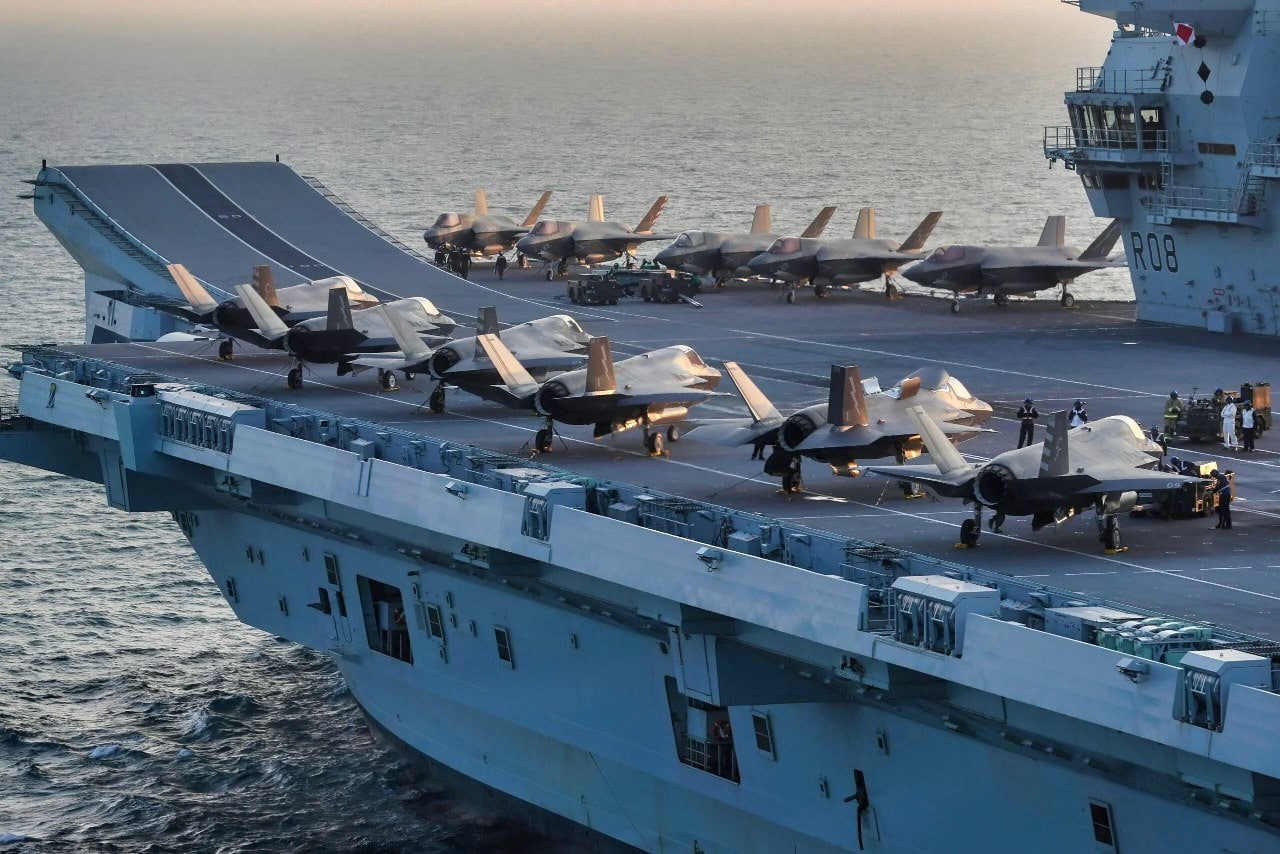
Queen Elizabeth-Class Aircraft Carrier Deck. Image Credit: Creative Commons.
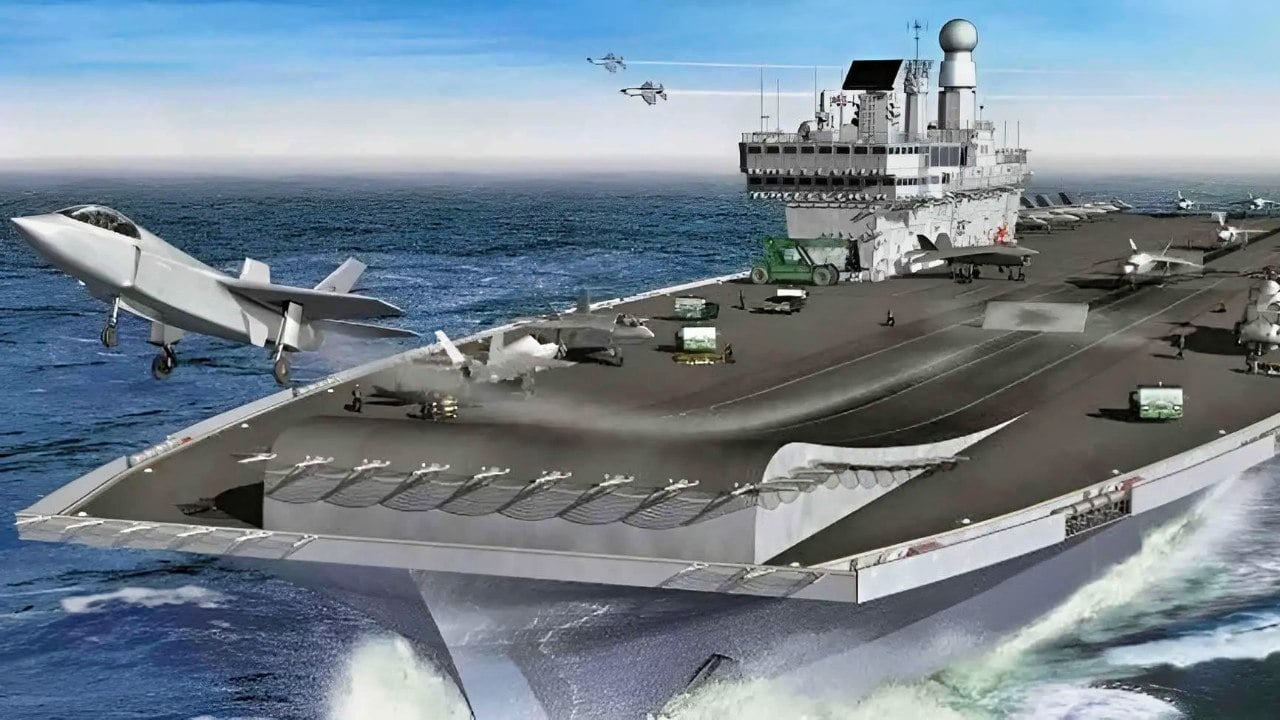
Queen Elizabeth-Class Aircraft Carrier Artist Rendering.
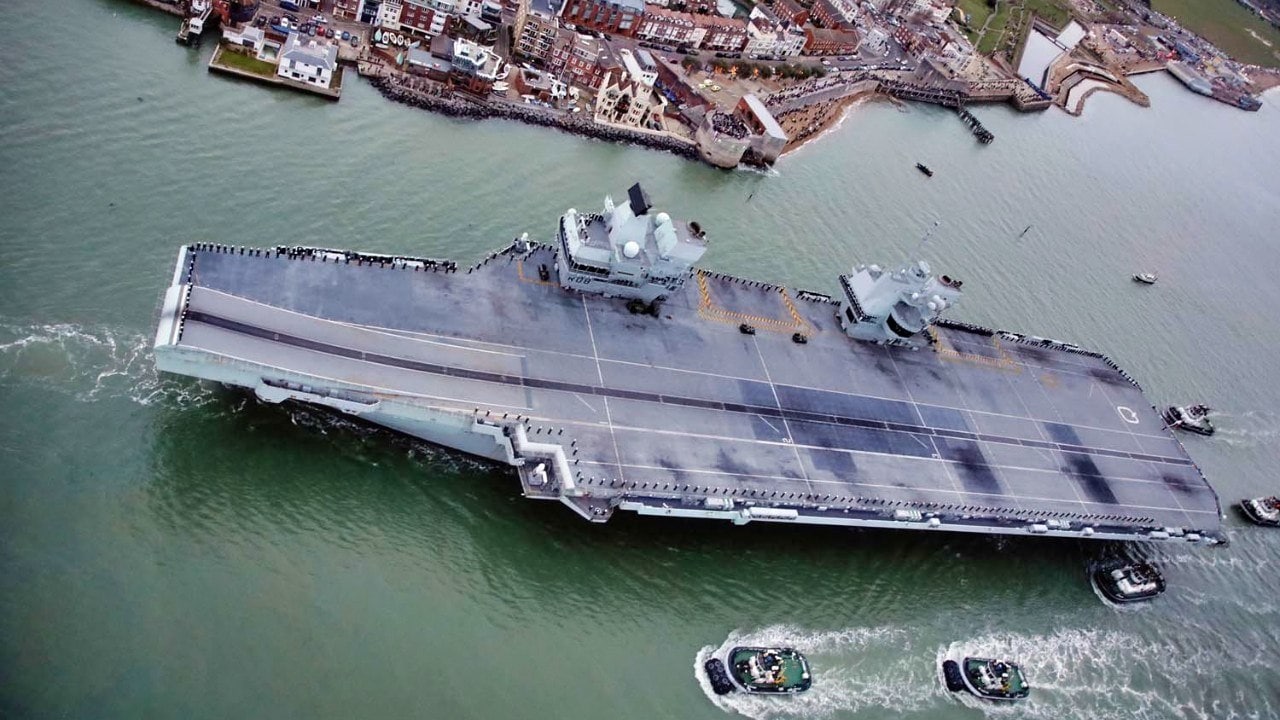
HMS Queen Elizabeth Aircraft Carrier. Image Credit: Royal Navy.
This was disappointing, led to negative media coverage, and prompted some Members of Parliament to wonder whether the carrier programs should be canceled.
Not Enough Fighter Jets
Next, there were also shortages of F-35B Lightning II fighter jets. The stealthy aircraft were hard to come by, and Britain initially wanted 74 F-35Bs, but only about half that number are operational. This defeats the purpose of having an aircraft carrier when the aviation wing is limited.
British aviators are qualified and expert at flying the F-35B, but would the low numbers allow them to fight a war with China that has several hundred stealth J-20 Mighty Dragons?
Shortage of Sailors to Populate the Carriers
A broader problem for the Royal Navy has been the recruitment and retention of sailors. Royal Navy personnel shrank by 4.1 percent from 2022 to 2023. That’s 1,640 fewer personnel than needed, and by 2025, only 27,820 personnel were trained.
Young British citizens are not looking to make the Navy a career. This is disappointing, since the maritime branch had been such a favorite in Britain’s history. The sun never set on the British Empire, and this required a huge navy.
There were hardly any boys pictured without sailor suits in the glory days of global domination. That national prestige factor for the navy has certainly been reduced in the United Kingdom.
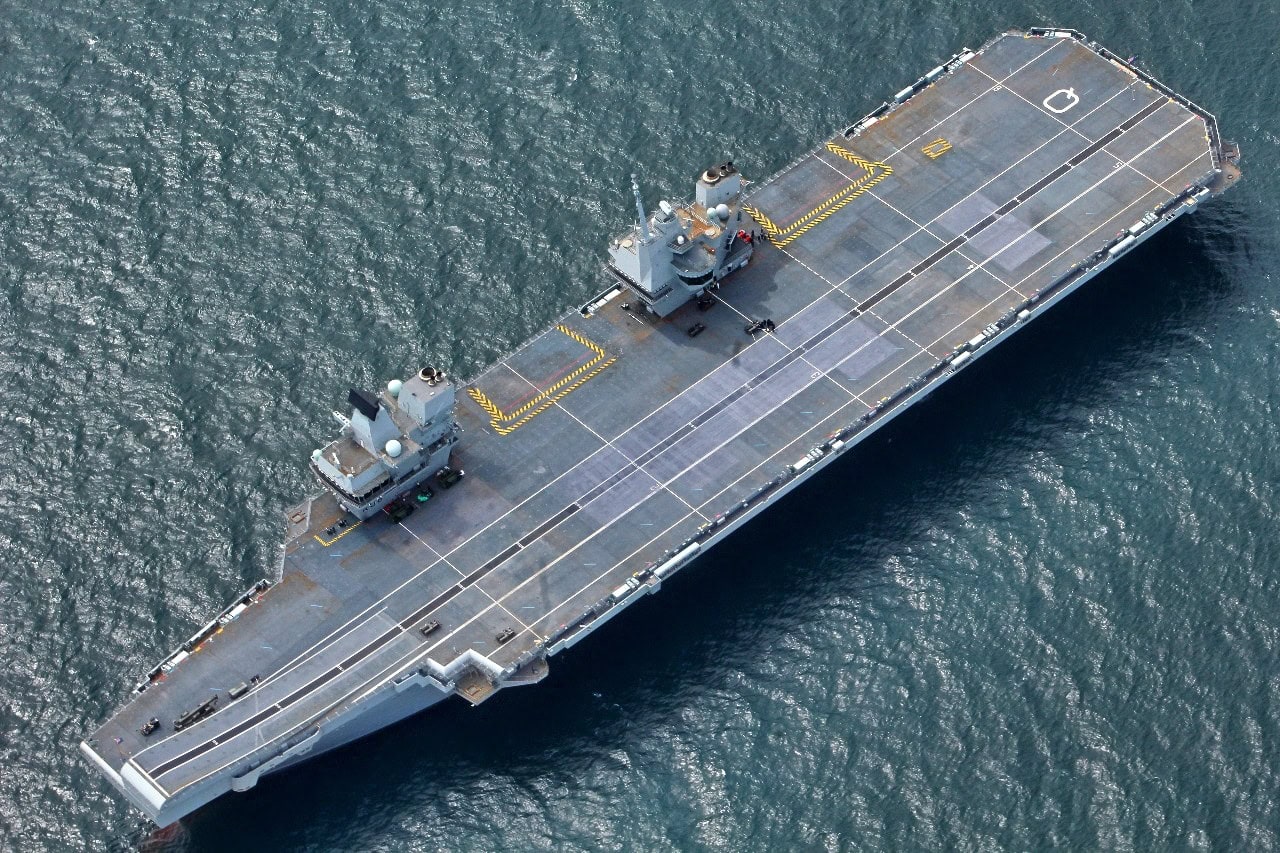
Pictured is an aerial view of HMS Queen Elizabeth as she conducts vital system tests off the coast of Scotland.
Where Is the Strategic Foresight?
Another issue is one of military strategy. Just what does the British armed forces want to accomplish with these carriers?
Britain has always desired to be a reliable NATO partner, but the technical and mechanical problems with the carriers have forced the Royal Navy to cancel exercises with the alliance.
Are These ‘Go to War’ Assets?
Should Britain have used the carriers to help the United States in its war against Iran? Prime Minister Keir Starmer, who has a subpar relationship with President Donald Trump, is not a willing participant. This conflict is seen as a U.S. problem and not one that affects Britain.
And even if Starmer had decided on a British assistance mission to the Persian Gulf, these carriers may not have been able to deploy with a strike group capable of making a difference.
The United Kingdom Is Not Leading NATO
If you are not going to use carriers, then what is the purpose of having them? Also, NATO is taking a longer look at China, and the alliance senses danger. The French have sent a carrier strike group to East Asia, showing the British that they are more capable at global reach to balance against an adversary. Britain is still conflicted about what it wants to accomplish with its carriers.
What About Building New Submarines Instead?
Another problem or missed opportunity would have been to forsake carriers and focus on building new submarines instead. Additional nuclear-powered Astute-class attack boats with the ability to strike with cruise missiles can still provide deterrence and global reach.
Perhaps the HMS Prince of Wales could have been canceled in favor of more submarines. That would have been a difficult decision, but it may have created more opportunities for the Royal Navy to deliver on its national security mission.
Unfocused British Citizenry
Finally, the British public should be blamed for taking its eye off the ball. The voters seem more focused on domestic concerns than on foreign policy and defense strategy.
People are divided on many political issues, and no political party seems to care that the military has atrophied while they debate and fight over domestic problems that have nothing to do with homeland security.
New Solutions Are Required
Fixing the carrier situation will require political will and support from the top of the government to remedy the problem. The HMS Queen Elizabeth and HMS Prince of Wales could be considered floating mistakes.
Perhaps the maintenance and repair issues can be mitigated. Strategic foresight must be improved. The F-35B issue needs to be resolved, and more sailors should be recruited.
Britain can solve this with a concerted effort among voters and those who lead them. The country needs to devise defense priorities and make an all-in decision on the carriers.
This situation can be saved, but it is a difficult problem to solve. The British can still maintain a navy that is the model for Europe, and aircraft carriers are one way to establish dominance over adversaries and answer the call when required. The United Kingdom just needs to get its military mojo back, and the two aircraft carriers can help re-establish itself as a naval power.
About the Author: Brent M. Eastwood
Author of now over 3,500 articles on defense issues, Brent M. Eastwood, PhD, is the author of Don’t Turn Your Back On the World: A Conservative Foreign Policy and Humans, Machines, and Data: Future Trends in Warfare, plus two other books. Brent was the founder and CEO of a tech firm that predicted world events using artificial intelligence. He served as a legislative fellow for US Senator Tim Scott and advised the senator on defense and foreign policy issues. He has taught at American University, George Washington University, and George Mason University. Brent is a former US Army Infantry officer. He can be followed on X @BMEastwood.