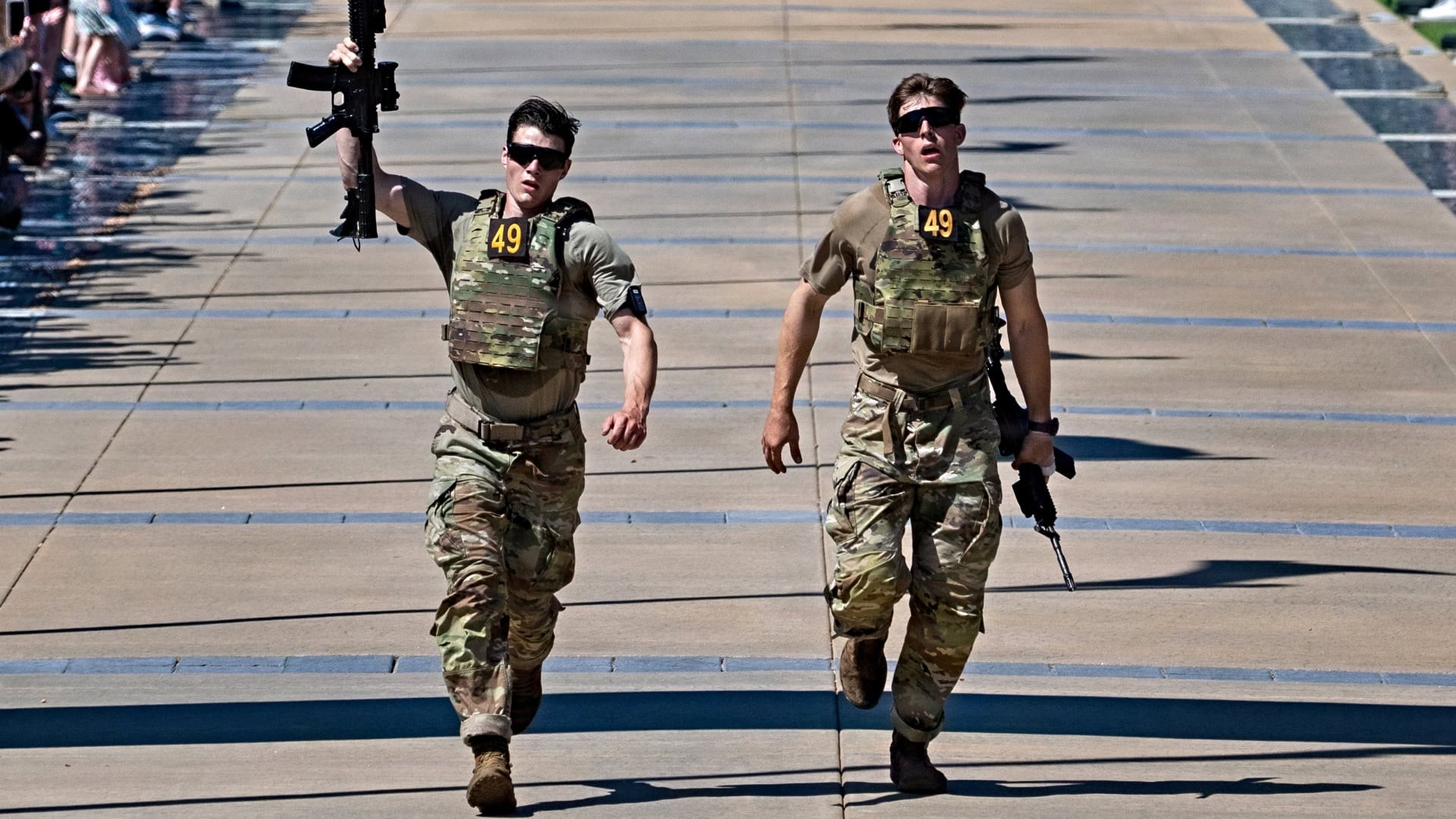
This year’s Best Ranger Competition marked a turning point in the race. That’s because the race, which many Army leaders feared was becoming the “Best Lieutenant Competition,” was won by two enlisted personnel–both from the elite 75th Ranger Regiment. Specialist Caleb Godbold and Sergeant Drew Schorsch secured victory in this year’s competition–continuing the 75th Ranger Regiment’s multi-year winning streak.
An Enlisted Victory That Changed the Narrative
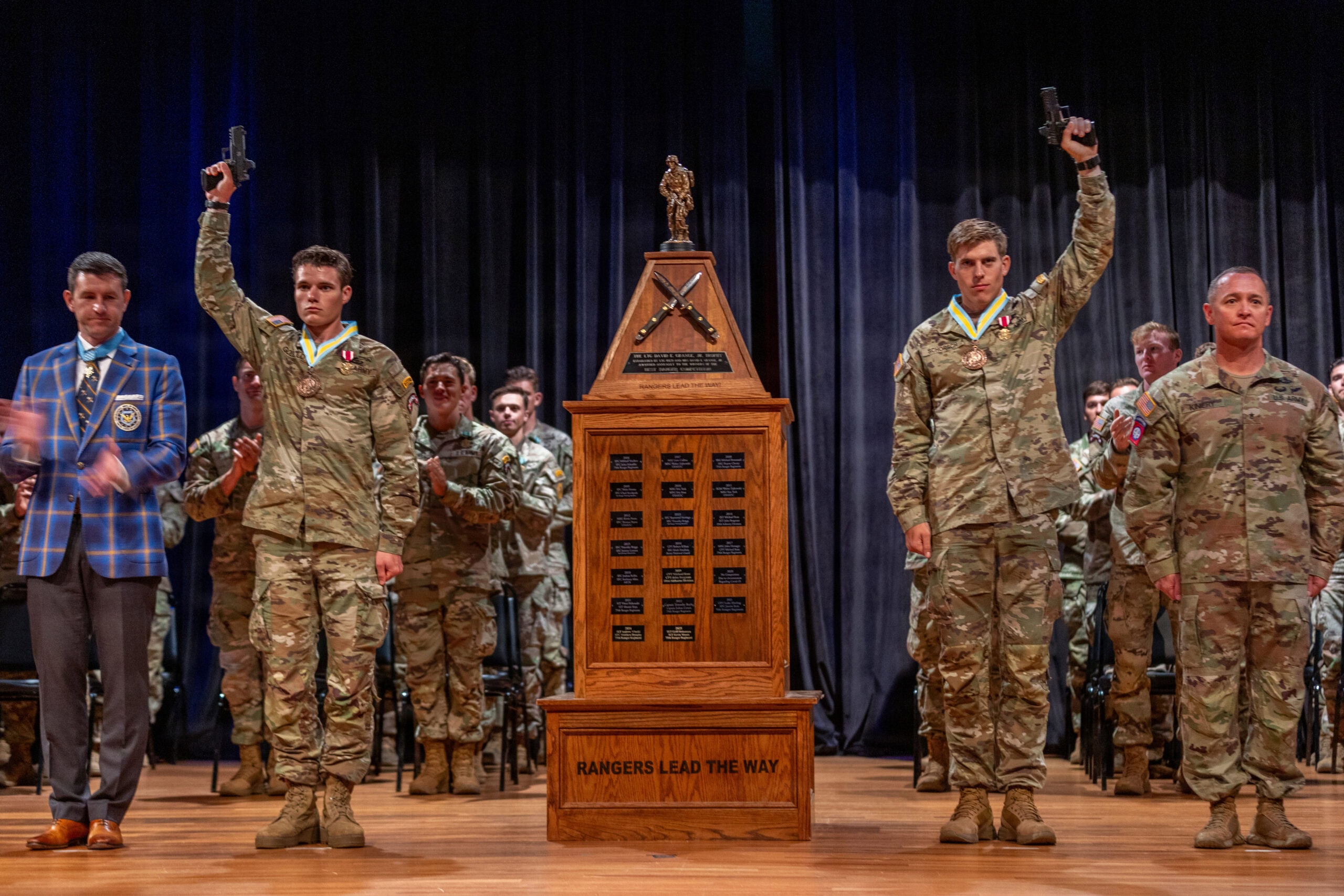
Medal of Honor Recipient Retired U. S. Army Sgt. Maj. Thomas “Patrick” Payne is the guest speaker at the 2026 Best Ranger Competition Awards Ceremony April 13, 2026, in Marshall Auditorium, on Fort Benning, Georgia. Sgt. Drew Schorsch and Spc. Caleb Godbold of team 49, representing the 75th Ranger Regiment, finished on top of the 61 teams that competed. (U.S. Army photo by Joey Rhodes II)
In fact, the pairing of enlisted servicemembers, a specialist and a sergeant, marked the first time in decades that a non-officer-heavy team took the prestigious title. That fact alone demonstrates that enlisted personnel of the United States Armed Forces remain the most dynamic and essential element of the force.
It should also give you great hope that the US military still retains some semblance of that which made it great: a strong non-commissioned officer corps.
The Best Ranger Competition is not for the faint of heart. While few would think anyone in the United States Armed Forces was faint of heart, certain challenges demand more of service members than what they might ordinarily be used to.
The Best Ranger Competition is one such event.
It is basically three days, more than 60 hours per day, of pure hell for the contestants. Around 60 two-person teams are participating from across the force. Contestants can expect little to no sleep (the winners got around 90 minutes total over those three 60-hour days). What’s more, contestants endured constant physical and mental stress. Indeed, the Army considers the Best Ranger Competition as its ultimate stress test for elite infantry.
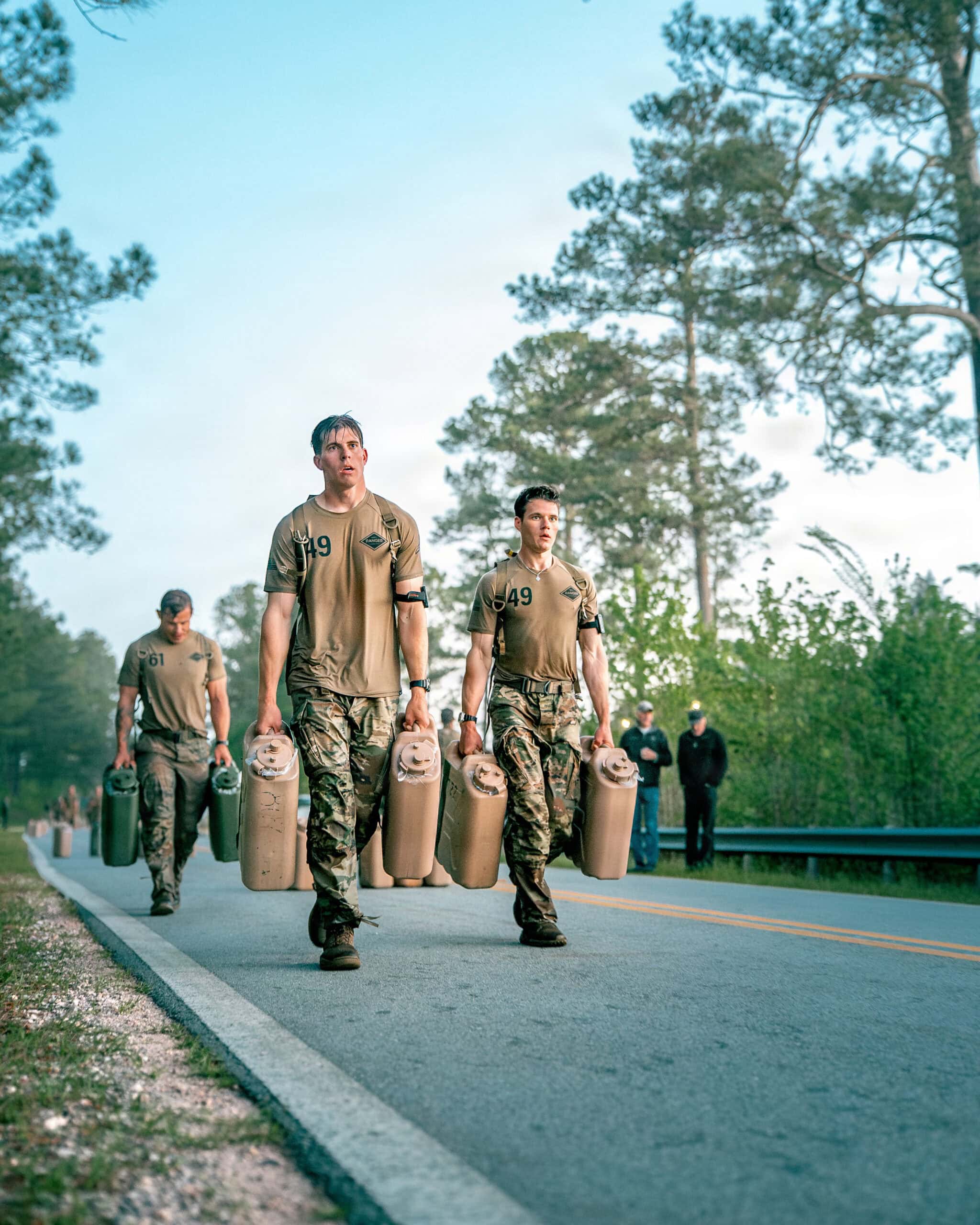
U.S. Army Spc. Caleb Godbold and Sgt. Drew Schorsch (Team 49), assigned to the 75th Ranger Regiment, running during the water carry event during the 42nd David E. Grange, Jr. Best Ranger Competition on Fort Benning, Georgia, April 10, 2026. The Best Ranger Competition, also unofficially known as the “Army Olympics”, is a grueling three-day event that pushes the Army’s toughest two-man teams to their absolute physical and mental limits in the ultimate test of endurance, skill, and true grit. (U.S. Army photo by Spc. Luke Sullivan)
A Gauntlet Designed to Break the Best
Competitors ran a gauntlet of mental and physical challenges, including long-distance runs, ruck marches, and strenuous obstacle courses. Once the contestants were sufficiently fatigued by the challenge’s events, they demonstrated their marksmanship. Then came the nighttime land navigation challenges.
Beyond that, the contestants had to demonstrate their best medical skills under pressure. They were then required to return to lethality by demonstrating proficiency across multiple weapons systems. Contestants participated in urban assault drills, too.
The event wasn’t over then.
Contestants had to demonstrate their ability to conduct rope climbs–including fast-roping from helicopters.
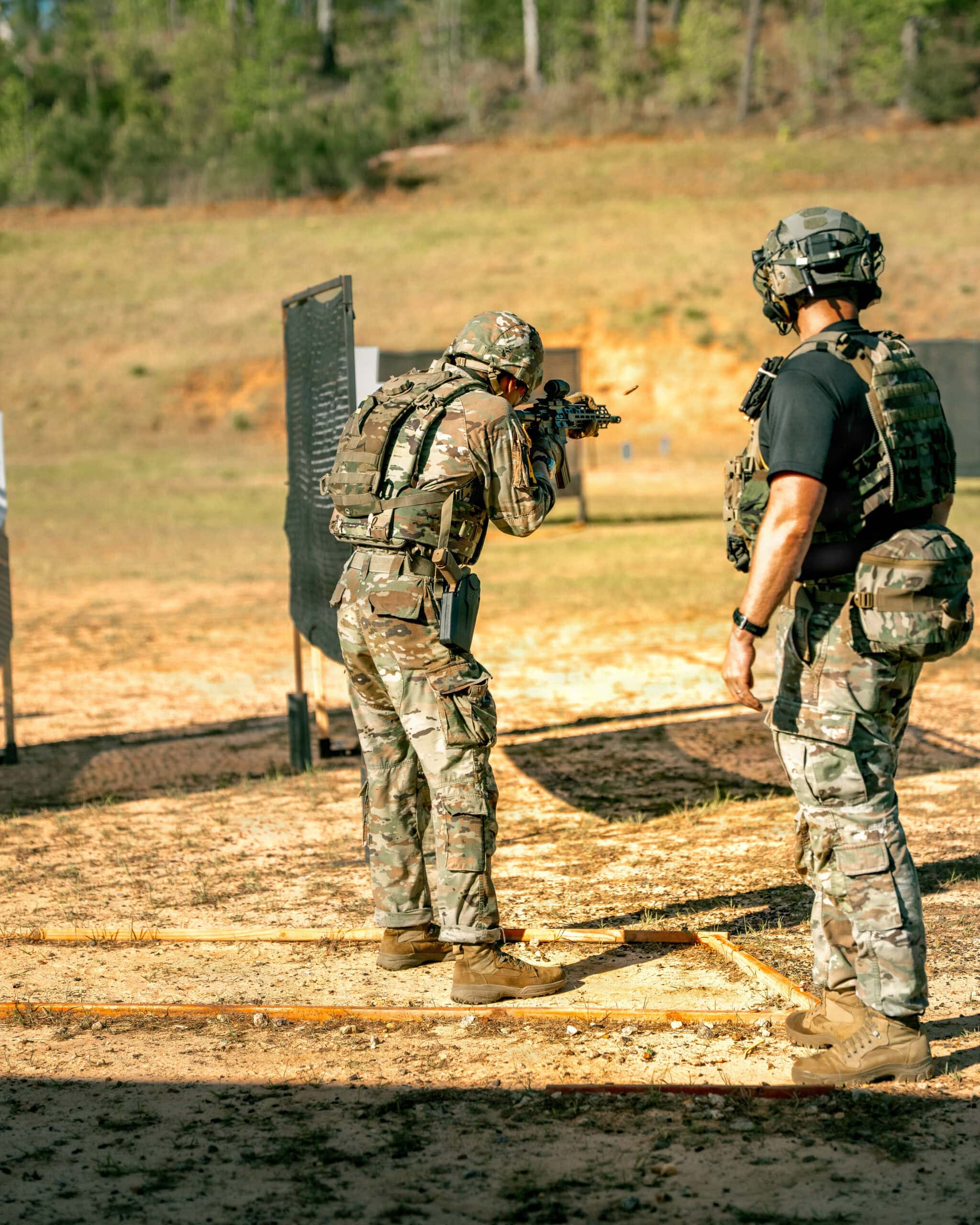
U.S. Army Spc. Caleb Godbold (Team 49), assigned to the 75th Ranger Regiment, engages a target during the 42nd David E. Grange, Jr. Best Ranger Competition on Fort Benning, Georgia, April 10, 2026. The Best Ranger Competition is a grueling three-day event that pushes the Army’s toughest two-man teams to their absolute physical and mental limits in the ultimate test of endurance, skill, and true grit. (U.S. Army photo by Spc. Luke Sullivan)
Drones, Robots, and the Changing Face of War
The most interesting addition to the contest, though, was the inclusion of robot and drone-related tasks. Bringing drones into the challenge was a clear acknowledgment by the Army of the fundamental changes underway on the modern battlefield. Namely, changes brought about by experiences in the Ukraine War.
In response to these real changes, the Army is increasingly testing cognitive performance under significant battlefield stress. Those new tasks, including robots, were not indicative of the warfighter’s capabilities and were obsolete. Instead, they showcased how machines and software were augmenting the warfighter.
What this year’s Best Ranger Competition demonstrated clearly was that the Army, having witnessed the rapid changes on the modern battlefield, wants to ensure that its warfighter enjoys cognitive dominance as well as physical strength.
Why Physical Strength Alone is No Longer Enough to Win Wars
Being physically elite simply is not enough today. One must have composure, be able to work on a team, and employ rapid problem-solving (even if, or especially if, one is fatigued and under stress).
The Best Ranger Competition signals the Army’s direction as it addresses the future of war. The fact that the 75th Ranger Regiment continues dominating the competition year after year tells you where the Army’s true edge resides. The 75th Ranger Regiment continues to set the standard for US light infantry.
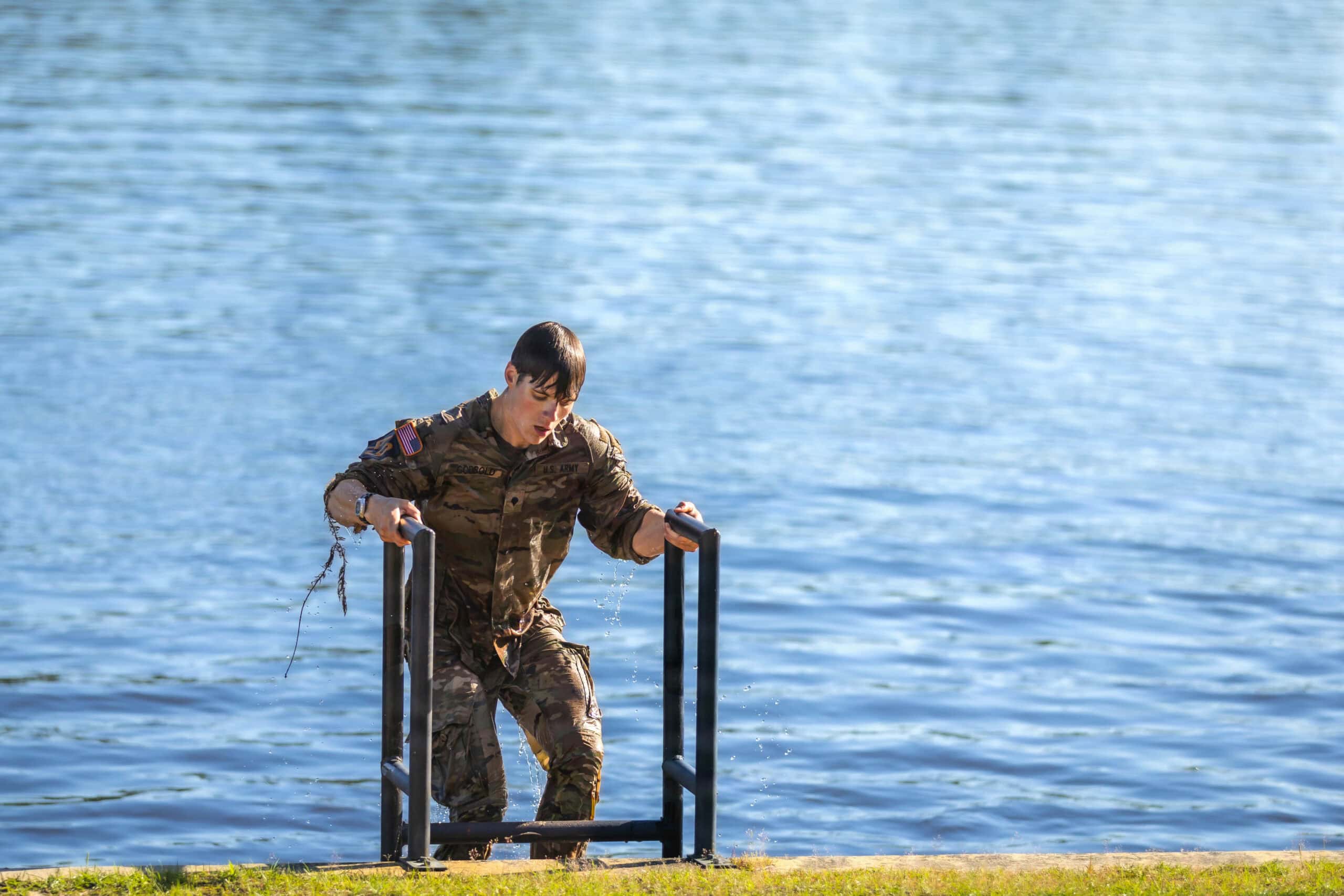
Spc Caleb Godbold with Team 49, representing the 75th Ranger Regiment, competes in the 2026 Best Ranger Competition during the Helocast and CWST events, April 12, 2026 at Victory Pond, on Fort Benning, Georgia. (U.S. Army photo by Capt. Stephanie Snyder)
It is one of the few green chutes in the US military for adapting to the fast pace and rapid change of modern warfare. But it also highlights a serious problem. Namely, that there are a handful of elite units and cadres who understand where modern combat is evolving (and are making the necessary adaptations now). At the same time, the wider force remains blissfully ignorant of those changes and mired in methods and technologies of yesteryear.
The Enduring Truth: Warfighters Still Win Wars
But the Best Ranger Competition this year proved something more foundational. That is the ineffable truth that warfighters win wars. Despite all the tech at their disposal, sleep deprivation, physical punishment, sustained operations, and the ability to make rapid decisions in a diminished or degraded environment, these remain the core of combat.
Therefore, the Best Ranger Competition is a snapshot of what elements of the US military are most prepared for the next major war…and how the rest of the force must catch up.
There are three things the 2026 Best Ranger Competition demonstrates: the 75th Ranger Regiment still dominates America’s ground combat elite; modern warfare demands brains under pressure, not just muscle; and the US military is quietly evolving toward hybrid warfighters who are part athlete, part tactician, part systems operator.
About the Author: Brandon J. Weichert
Brandon J. Weichert is the Senior National Security Editor at 19FortyFive.com. Recently, Weichert became the editor of the “NatSec Guy” section at Emerald.TV. He was previously the senior national security editor at The National Interest. Weichert is the host of The National Security Hour on iHeartRadio, where he discusses national security policy every Wednesday at 8 pm Eastern. He hosts a companion show on Rumble entitled “National Security Talk.” Weichert consults regularly with various government institutions and private organizations on geopolitical issues. His writings have appeared in numerous publications, among them Popular Mechanics, National Review, MSN, and The American Spectator. And his books include Winning Space: How America Remains a Superpower, Biohacked: China’s Race to Control Life, and The Shadow War: Iran’s Quest for Supremacy. Weichert’s newest book, A Disaster of Our Own Making: How the West Lost Ukraine, is available for purchase wherever books are sold. He can be followed via Twitter/X @WeTheBrandon.