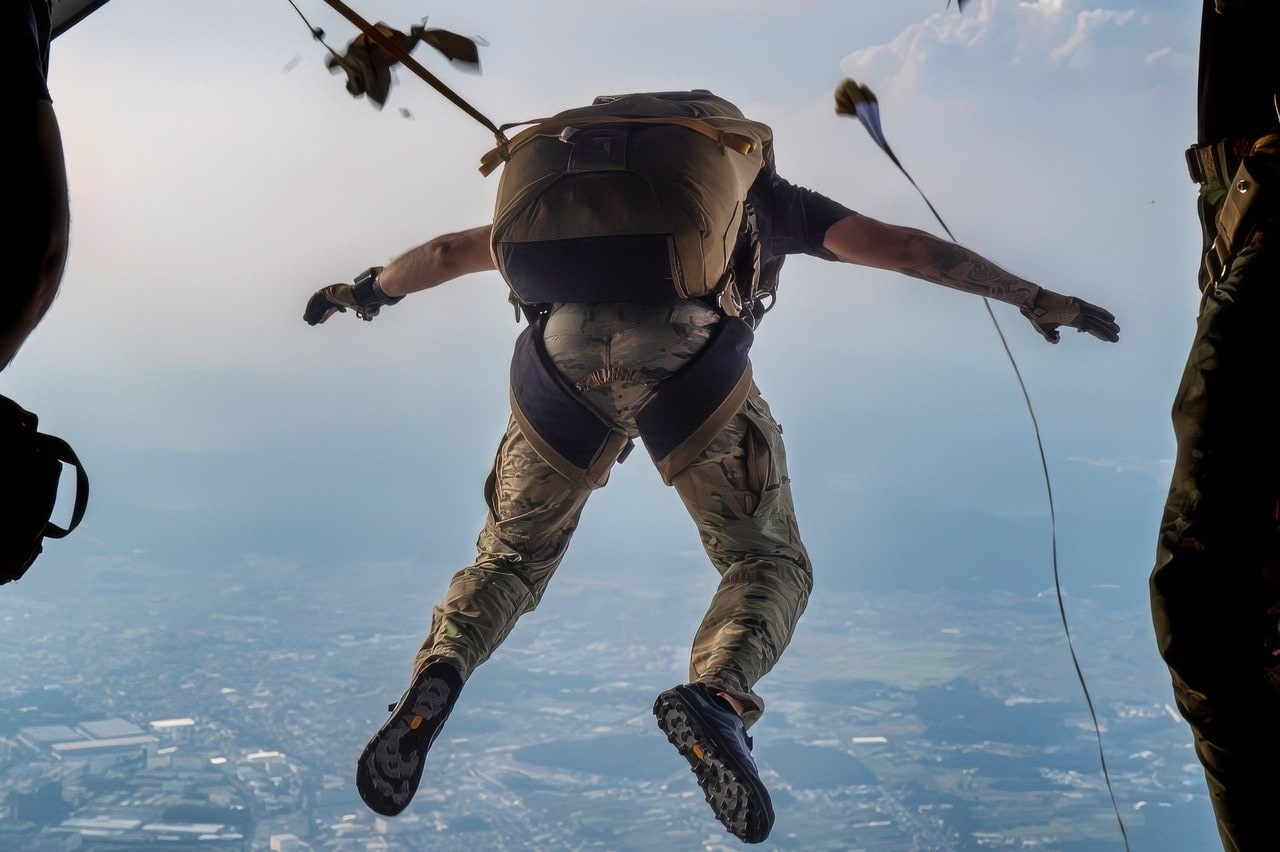
Summary and Key Points: U.S. and allied airborne training in northern Japan ran into an unusual problem this month: bears. Reconnaissance Marines parachuting in ahead of an Alaska-based Army battalion’s jump reported four separate bear encounters at the Ojojibara Maneuver Area in Miyagi Prefecture.
-Troops carried bear spray, while a response team used spray and even fireworks to push the animals away.
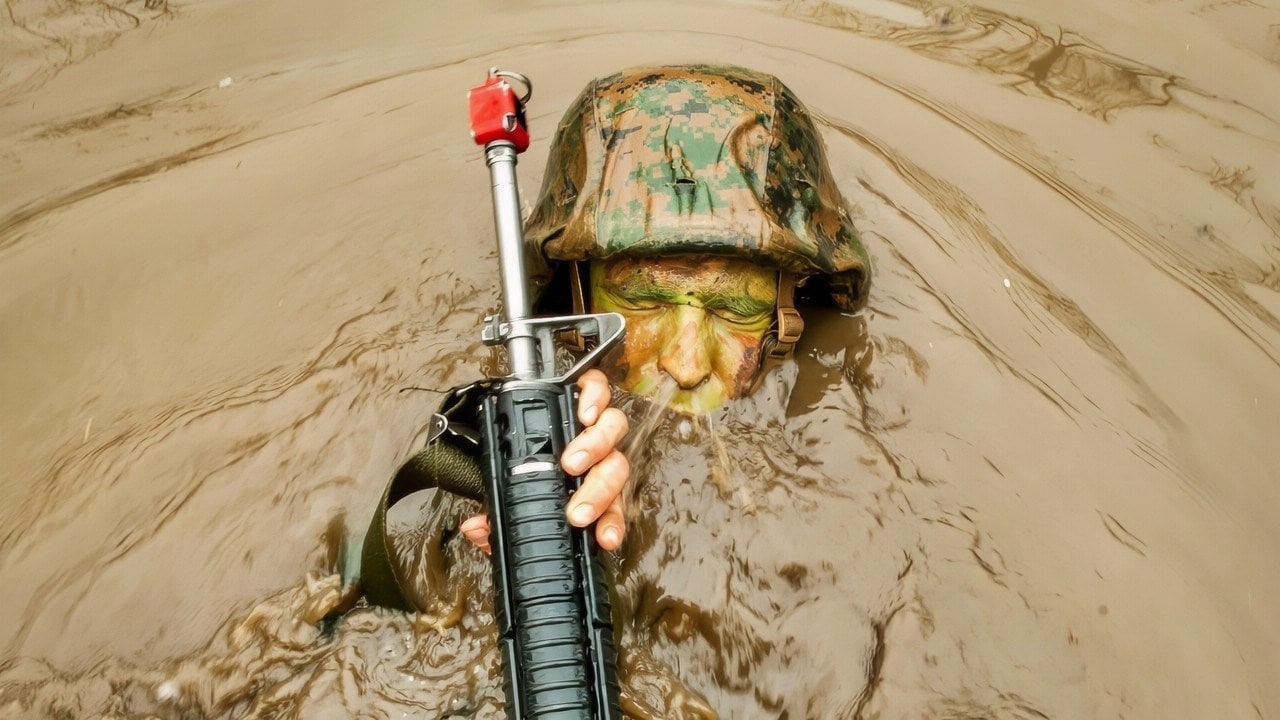
A candidates assigned to Delta Company, Officer Candidates Class-221, breaks the surface of the murky water of ‘The Quigley’ at Brown Field, Marine Corps Base Quantico, Va., on March 15, 2016. The mission of Officer Candidates School (OCS) is to “educate and train officer candidates in Marine Corps knowledge and skills within a controlled, challenging, and chaotic environment in order to evaluate and screen individuals for the leadership, moral, mental, and physical qualities required for commissioning as a Marine Corps officer.” (U.S. Marine Corps Photo by Cpl. Patrick H. Owens/Released)
-The incidents unfolded during a busy stretch of multinational drills, with U.S. and Japanese aircraft supporting a large paratrooper drop and follow-on cold-weather training in Hokkaido during the North Wind exercise.
-Rising bear encounters in Japan add to the challenge.
Bears Disrupt U.S. Paratrooper Training In Japan—Bear Spray And Fireworks Deployed
Parachute training is never guaranteed to go smoothly, but U.S. and allied forces training over northern Japan this month found themselves working around an unexpected hazard: bears.
The Stars and Stripes blog reported that reconnaissance Marines parachuting in before an Alaska-based Army battalion’s jump at the Ojojibara Maneuver Area in Miyagi Prefecture had four separate bear encounters. Lt. Col. Cody Grimm, commander of the 11th Airborne Division’s 3rd Battalion, 509th Parachute Infantry Regiment, said the Marines carried bear spray, with a response team also using spray and even fireworks to drive the animals off.
The incident occurred amid ongoing airborne drills across the East Asian country.
The US battalion, based at Alaska’s snowy Joint Base Elmendorf-Richardson, carried out jumps in Narashino and Ojojibara on Japan’s largest island of Honshu. They later pushed north to Hokkaido for cold-weather training.
Ojojibara has been a focus of extensive multinational airborne training, including a January 17 operation that marked the first Japan Ground Self-Defense Force-hosted multinational airborne exercise on Japanese soil.
Four U.S. Air Force C-130J aircraft from Yokota supported a drop of roughly 130 U.S. Army paratroopers, while Japan’s Air Self-Defense Force contributed a Kawasaki C-2 and C-130H aircraft to move paratroopers from Japan’s 1st Airborne Brigade.
At least U.S. Marines can rest assured that they are not the only ones getting into hairy encounters as of late. Indeed, Japanese authorities report that bear encounters have been on the rise due to food shortages, rural depopulation, and reduced hunting.
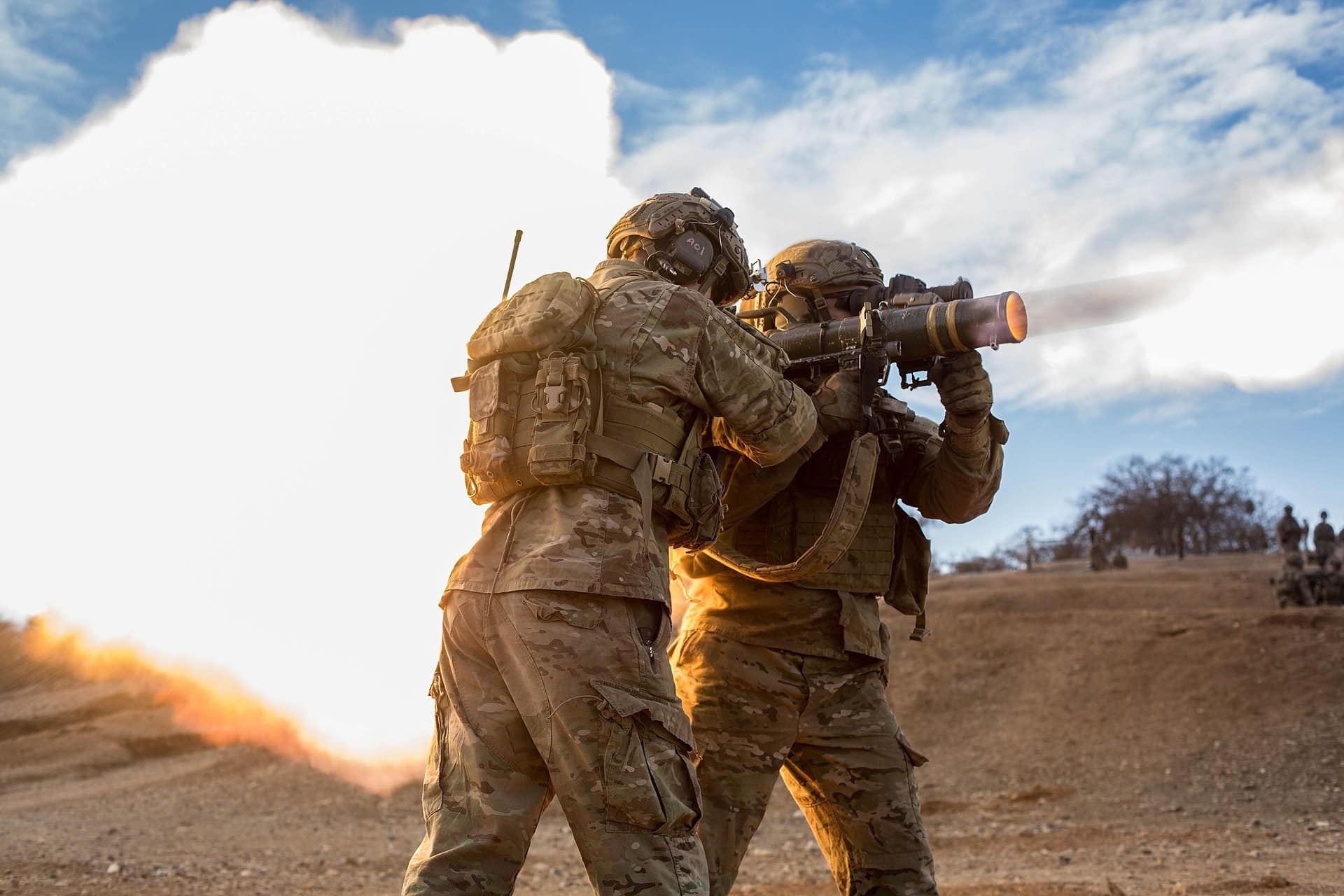
U.S. Army Rangers assigned to 2nd Battalion, 75th Ranger Regiment, fire off a AT-4 at a range on Camp Roberts, Calif., Jan 26, 2014. Rangers use a multitude of weaponry during their annual tactical training. (U.S. Army photo by Pfc. Rashene Mincy/ Not Reviewed)
Japanese government figures recorded 13 bear-related fatalities and 200 or more injuries during the current fiscal year. Japanese soldiers trained in bear habitats are instructed to avoid and non-lethally deter the bears.
In Hokkaido, where the large breed of Brown Bears lives, is where U.S. forces will take part in the 33rd annual North Wind exercise running from January 20 through February 3, alongside Japan’s Northern Army and a Canadian platoon.
The US and Japan are deeply intertwined military partners, with 50,000 to 60,000 American troops stationed in Japan at any given time. This latest drill comes amid rising tensions with China, particularly over Taiwan.
The island nation in the South China Sea has been colonised by both Japanese and Chinese powers throughout history. Beijing’s ruling Chinese Communist Party has never had any sovereignty over the island, and it has operated independently since 1949.
After Japanese Prime Minister Sanae Takaichi claimed, last November, that Tokyo could intervene if China attempted to invade Taiwan, Beijing and Japan have been embroiled in a bitter diplomatic dispute over the matter.
In such tense times, Tokyo is sure to welcome more military cooperation from Washington.
About the Author: Georgia Gilholy
Georgia Gilholy is a journalist based in the United Kingdom who has been published in Newsweek, The Times of Israel, and the Spectator. Gilholy writes about international politics, culture, and education. You can follow her on X:@llggeorgia.