
Japan Begins Sea Trials of 100-Kilowatt Laser Weapon
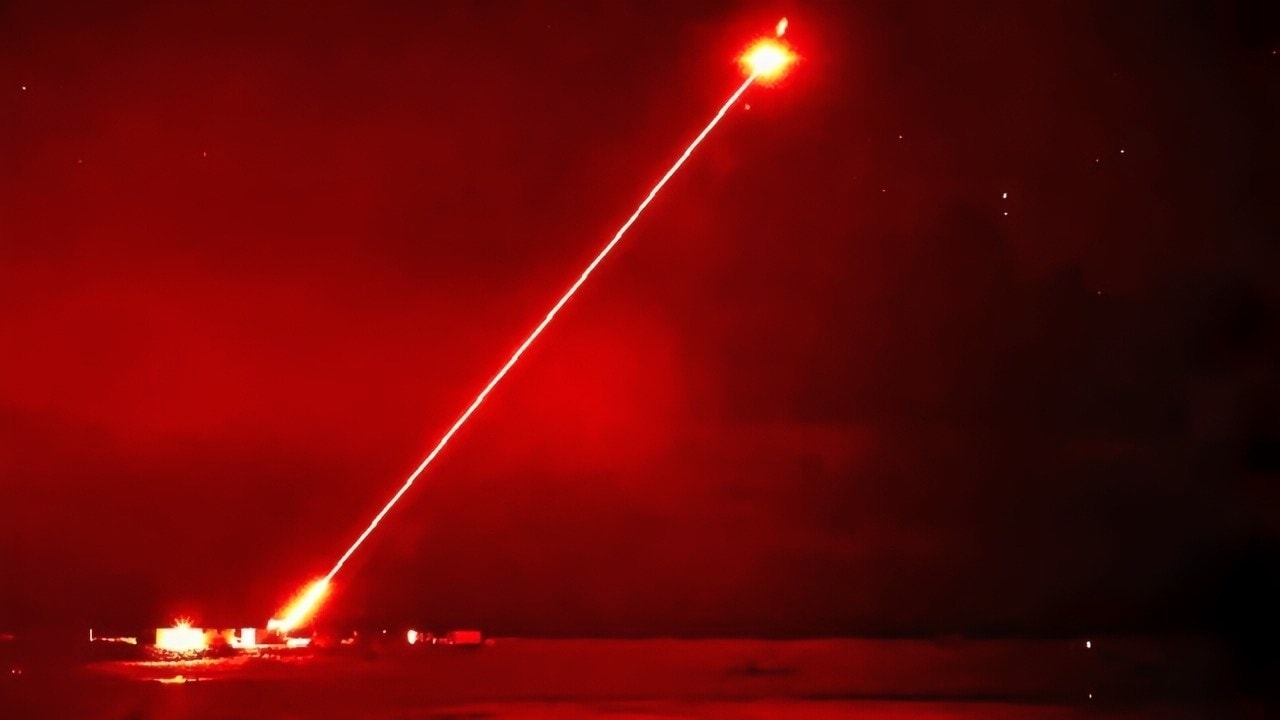
Japan has begun sea trials of a new laser weapon designed to shoot down drones and damage targets without using missiles, shells, or any kind of physical ammunition. The news is a significant step forward for the country’s efforts to defend its naval vessels against new and emerging airborne threats like drones, and for wider global efforts to field new defensive technologies.
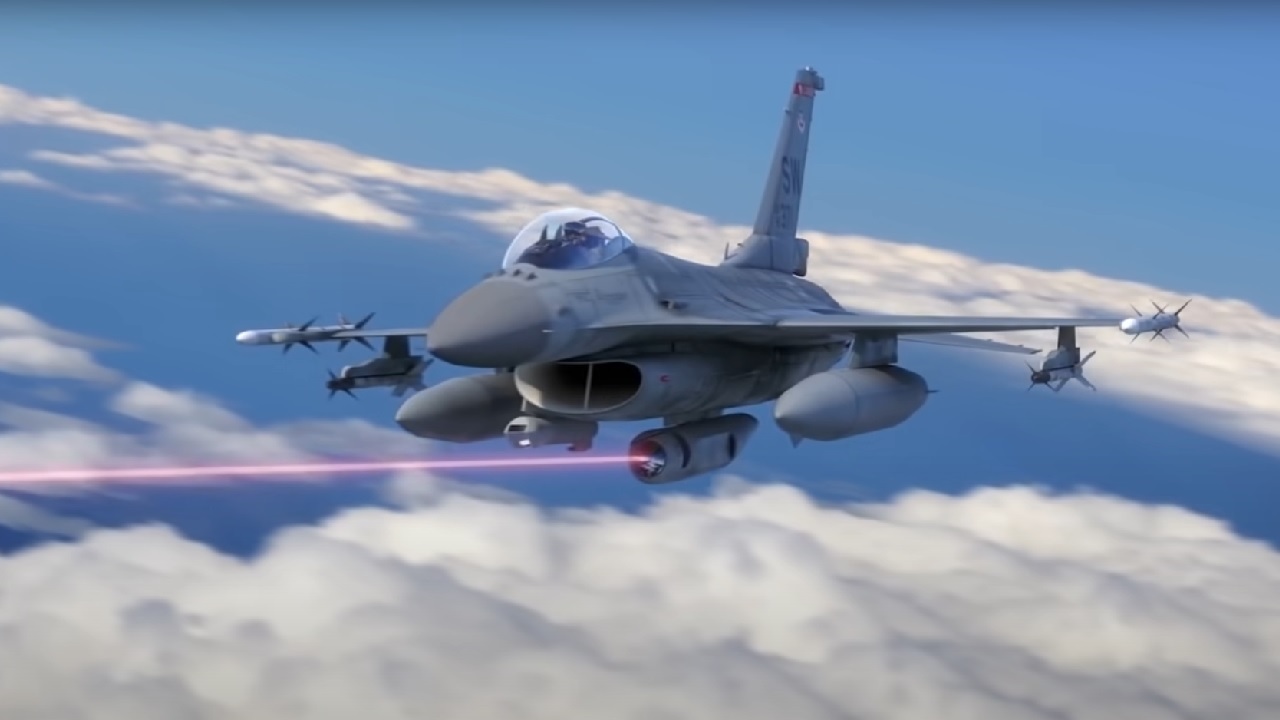
Lockheed Martin demo video of laser system. Image Credit: Lockheed Martin video screenshot.
The system, a 100-kilowatt-class laser developed under Japan’s defense research program, is being tested aboard a Japan Maritime Self-Defense Force (JMSDF) ship to evaluate its performance in real maritime conditions.
The weapon uses a concentrated beam of energy to heat targets, which travels at the speed of light and therefore reaches them instantly. Once in contact with its target, the beam can disable or destroy small drones in mid-air and burn through metal surfaces without causing an explosion.
Japanese defense officials and engineers have said the system is intended primarily as a counter-drone measure, developed in response to the rapid proliferation of cheap, small unmanned aerial vehicles increasingly used for surveillance and attacks.
Unlike traditional naval air defense systems, which rely on costly missiles or rapid-fire guns using limited ammunition, the laser can continue firing as long as the ship can generate electrical power.
That feature has attracted substantial and growing international attention, as navies around the world struggle with the cost and practicality of defending ships against large numbers of low-cost aerial threats.

(May 21, 2020) The amphibious transport dock ship USS Portland (LPD 27) successfully tests a Solid State Laser – Technology Maturation Laser Weapon System Demonstrator (LWSD) Mark 2 MOD 0.The SSL-TM program builds upon the Office of Naval Research’s previous directed-energy developments, like the Laser Weapon System (LaWS), which was successfully tested at-sea aboard the Afloat Forward Staging Base (Interim) USS Ponce (ASB(I)) 15 in 2014. (U.S. Navy photo/Released)

211214-M-HB658-1322 GULF OF ADEN (Dec. 14, 2021) Amphibious transport dock ship USS Portland (LPD 27) conducts a high-energy laser weapon system demonstration on a static surface training target, Dec. 14, while sailing in the Gulf of Aden. During the demonstration, the Solid State Laser – Technology Maturation Laser Weapons System Demonstrator Mark 2 MOD 0 aboard Portland successfully engaged the training target. The photograph was captured utilizing a short wave infrared lens and optical filter. (U.S. Marine Corps photo by Staff Sgt. Donald Holbert)

211214-N-VQ947-1142 GULF OF ADEN (Dec. 14, 2021) — Amphibious transport dock ship USS Portland (LPD 27) conducts a high-energy laser weapon system demonstration on a static surface training target, Dec. 14, while sailing in the Gulf of Aden. During the demonstration, the Solid State Laser – Technology Maturation Laser Weapons System Demonstrator Mark 2 MOD 0 aboard Portland successfully engaged the training target. The photograph was captured utilizing a short wave infrared lens and optical filter. (U.S. Navy photo illustration by Mass Communication Specialist 2nd Class Devin Kates)
Japan’s trials are not unique; however, the country is among a small group of militaries actively testing high-power laser weapons for operational use.
From Research to Sea Trials
Japan has been working on high-power laser weapons for some time. Research into directed-energy systems has been underway since at least 2010 via the country’s Defense Acquisition, Technology & Logistics Agency (ATLA), which oversees military research and development for the Ministry of Defense.
Early studies focused on whether lasers could reliably damage or destroy small airborne targets such as drones and mortar rounds without the need for explosive interceptors.
By the late 2010s, ATLA had begun publicly demonstrating ground-based laser systems capable of tracking and damaging small drones during controlled tests. Those early systems operated at much lower power levels than today’s 100-kilowatt class weapon, but they helped establish the basic technologies required to make the weapons work, including precision tracking and thermal control.
The rapid global spread of drones, particularly inexpensive models that can be launched quickly and in large numbers, has heightened the program’s urgency. Conflicts in the Middle East and Ukraine have shown that small unmanned aircraft can now easily overwhelm traditional air defenses, forcing the military to expend expensive missiles on targets that may cost only a few thousand dollars each.
That problem, and the cost that comes with it, has been repeatedly cited as a key reason by Japanese officials – and other global military leaders – for pursuing laser weapon technologies.
Moving the system from land to sea, however, poses additional challenges. Ships must first generate and manage enormous amounts of electrical power to ensure the weapon is ready for use. At the same time, the beam must be kept straight – a difficult feat on a ship that is constantly moving with the water.
The mounting of the new system on the JMSDF test ship Asuka, therefore, allows engineers to study how these challenges play out in real-world operations.
What the Laser Can Do
Japan’s 100-kilowatt laser offers several advantages over traditional ship-based defenses. Each shot costs only the electricity required to fire it, making it far cheaper per engagement than missiles or gun ammunition.
The laser enables rapid retargeting, allowing a ship to engage multiple drones in quick succession without reloading. These qualities make it particularly attractive for defending against swarm attacks, where dozens of drones may approach simultaneously. And, in time, it’s clear that these technologies could be applied across additional missions and replace much of the legwork currently done by traditional ammunition.
However, the system obviously has limitations. Beyond the stability issue, which will likely be solved by a combination of hardware, software, and artificial intelligence, lasers still require a direct line of sight to their targets and are often affected by environmental conditions such as heavy rain, fog, or sea spray.
Lasers are also less effective against larger, faster, or heavily armored targets – meaning that they cannot yet replace missiles or guns entirely. For now, Japan sees the laser as a complementary layer of defense rather than a standalone solution.
Recent testing has also focused on sustained firing and system endurance, with engineers examining how long the laser can operate continuously at sea and how quickly it can switch between targets – factors that will ultimately determine whether it is practical for frontline deployment, or indeed how long it takes for the technology to be refined sufficiently to reach that milestone.
About the Author:
Jack Buckby is a British researcher and analyst specialising in defence and national security, based in New York. His work focuses on military capability, procurement, and strategic competition, producing and editing analysis for policy and defence audiences. He brings extensive editorial experience, with a career output spanning over 1,000 articles at 19FortyFive and National Security Journal, and has previously authored books and papers on extremism and deradicalisation.