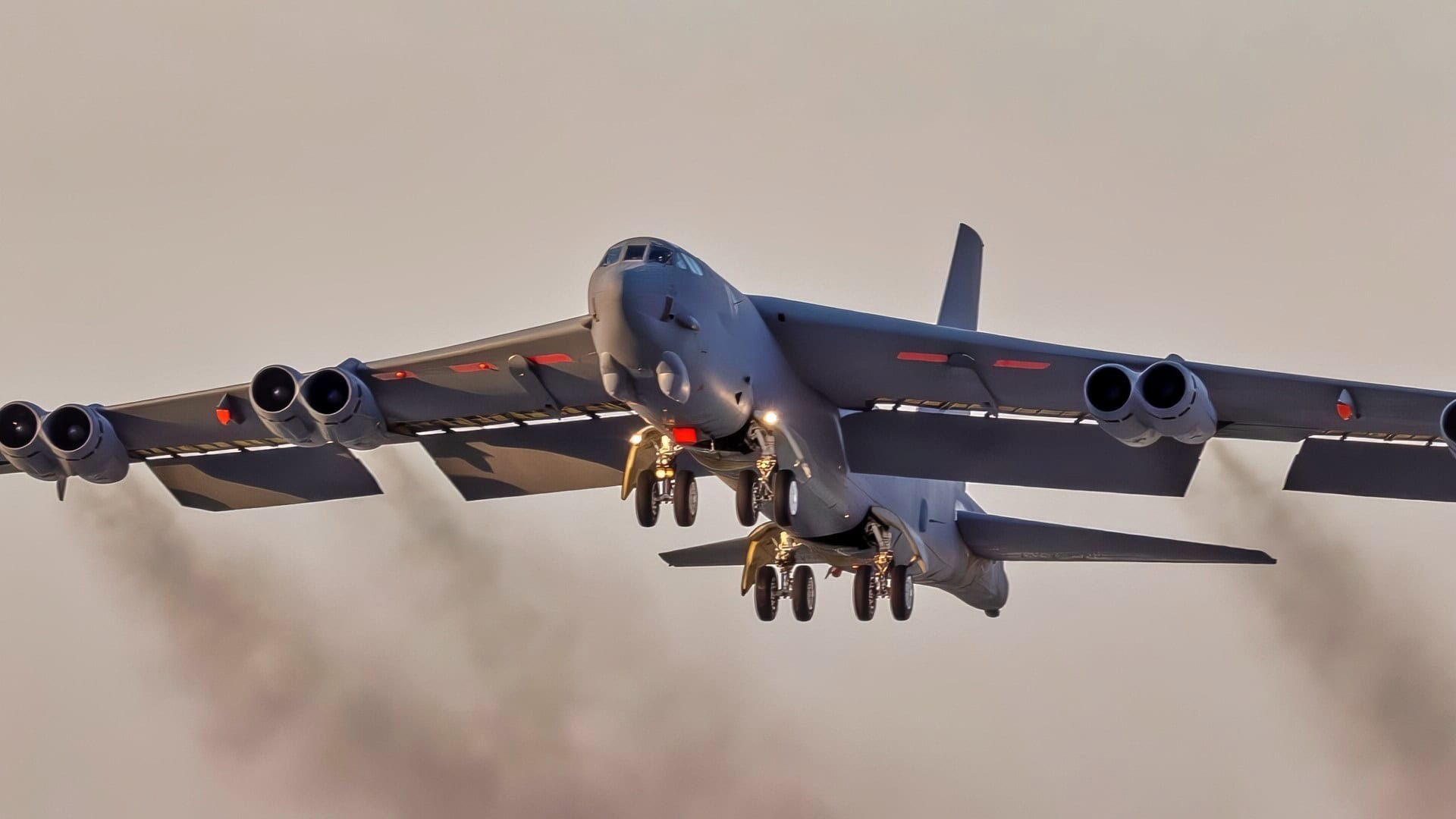
As the very large, non-stealthy yet classic and highly revered B-52 remains aflight into a modern combat era with extensive upgrades, many are likely to wonder how such a large target would operate in a potential great-power engagement between the U.S. and China. While the B-52 has proven extremely effective against Iran, would the large, upgraded aircraft be useful or even relevant in an environment where the U.S. did not achieve air superiority?
The primary threat to the B-52 would be China’s deployment of long-range surface-to-air missile (SAM) systems, particularly the HQ-9 and its more advanced variants. These systems are designed to engage aircraft at ranges exceeding 200 kilometers and can track multiple targets simultaneously.
Therefore, China’s air defense strategy is designed to share time-sensitive targeting information across vast distances in real time, allowing Chinese forces to track and engage targets more efficiently.
In this environment, a detected B-52 would not face a single threat but a coordinated response involving multiple systems.
For example, long-range radars could detect the aircraft and cue SAM batteries, while fighter jets are scrambled to intercept, creating overlapping layers of defense that are difficult to evade.
Up Against Intelligencized Warfare: B-52 Bomber Problems
The People’s Liberation Army’s (PLA) well-known, fast-evolving network and command-and-control would further compound the threat to the B-52.
China’s growing ability to connect radars with fighter jets, missile batteries, surface ships, and ground combat systems is often referred to by the Pentagon as “intelligencized” warfare.
China’s intelligenceized multi-domain, data sharing, and targeting could be understood in terms of an effort to replicate the Pentagon’s nascent but highly successful multi-domain command and control effort known as Joint All Domain Command and Control (JADC2), a networking system through which otherwise disparate or incompatible pools of data can be integrated, analyzed, and effectively disseminated in real time across domains.
With any comparable networking and targeting system, the PLA could potentially put the old B-52 at risk from the air.
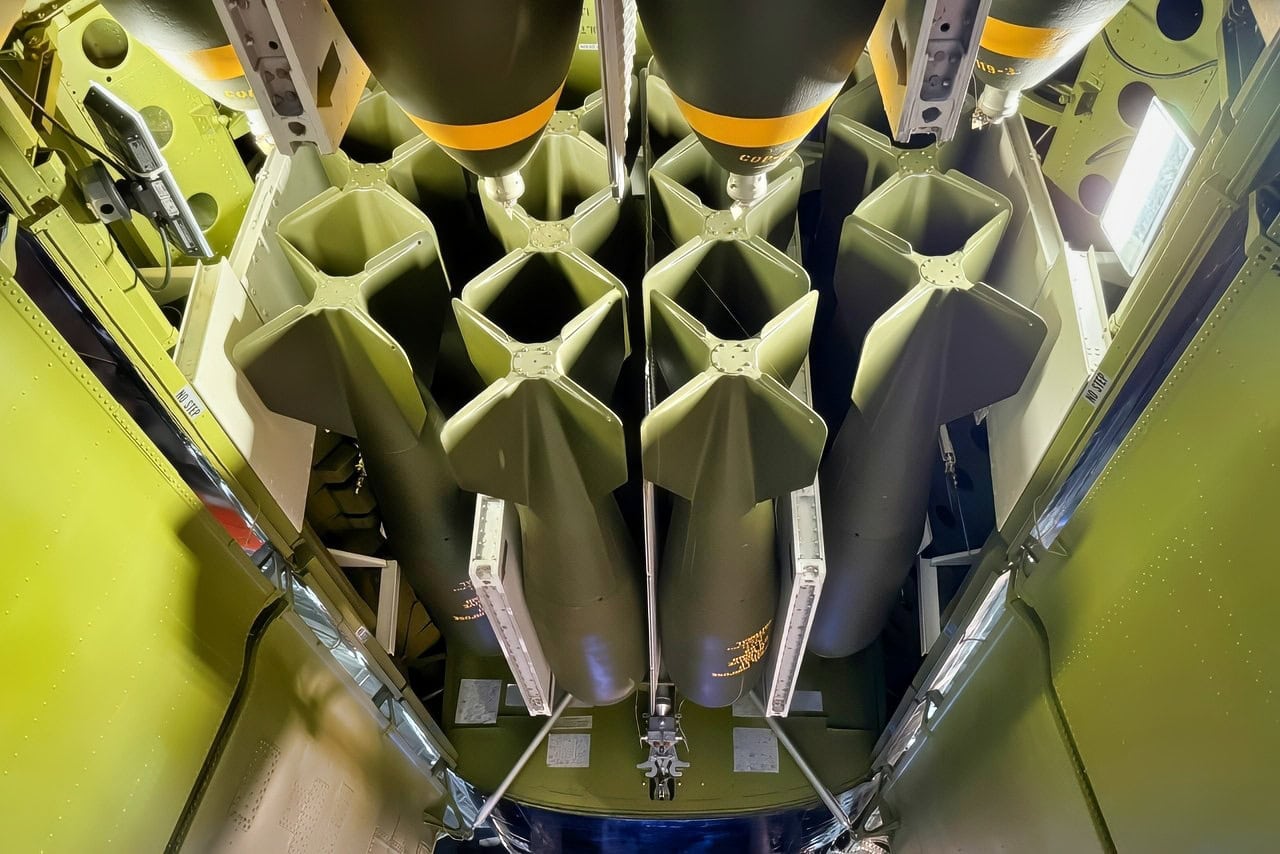
B-52 bombs. Image Credit: 19FortyFive.com Taken at the National Museum of the Air Force.
China’s modern fighter aircraft, such as the J-20 and J-16, are equipped with advanced sensors and long-range air-to-air missiles, such as the PL-15. These missiles are specifically designed to target high-value assets such as bombers and support aircraft.
With ranges exceeding 200 kilometers, they could allow Chinese fighters to engage the B-52 from a distance, often before the bomber can respond effectively.
B-52 Still Effective in China Fight
While the B-52 would clearly be vulnerable in a closer-in, contested fight against modern HQ-9 Chinese air defenses, the platform has evolved with new technologies and concepts of operation sufficient to ensure the bomber remains relevant and extremely useful in a great-power warfare contingency.
The most significant element of this pertains to simple stand-off range, meaning the distance from which the B-52 can hold targets at risk of destruction or precision strikes.
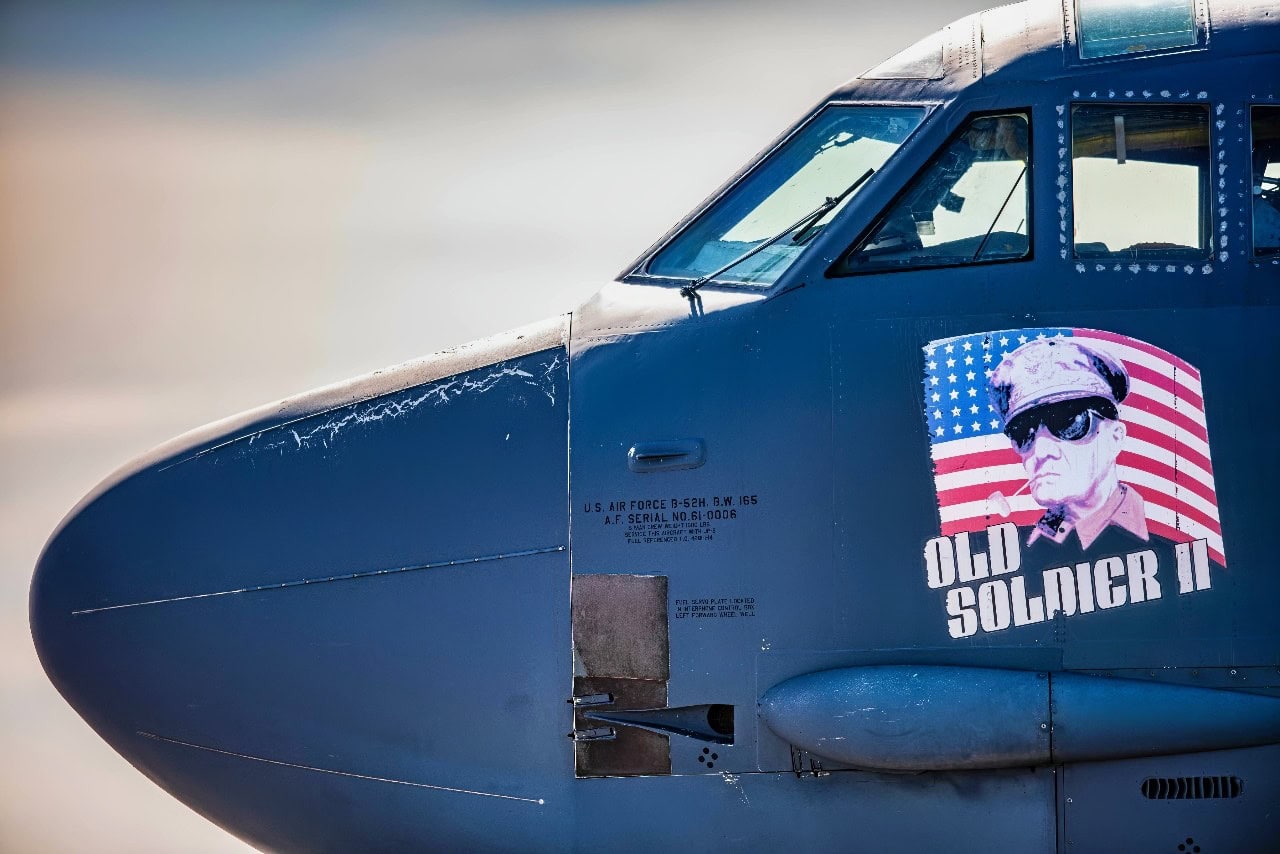
A U.S. Air Force B-52H Stratofortress assigned to the 96th Bomb Squadron, Barksdale Air Force Base, Louisiana, sits on the flightline during exercise Prairie Vigilance 25-1 at Minot Air Force Base, North Dakota, April 12, 2025. For more than 60 years, the B-52 has been the backbone of the strategic bomber force of the United States. As a routine training mission, PV 25-1 enhances the safety, security, and reliability of the bomber leg of the U.S. nuclear triad. (U.S. Air Force photo by Senior Airman Kyle Wilson)
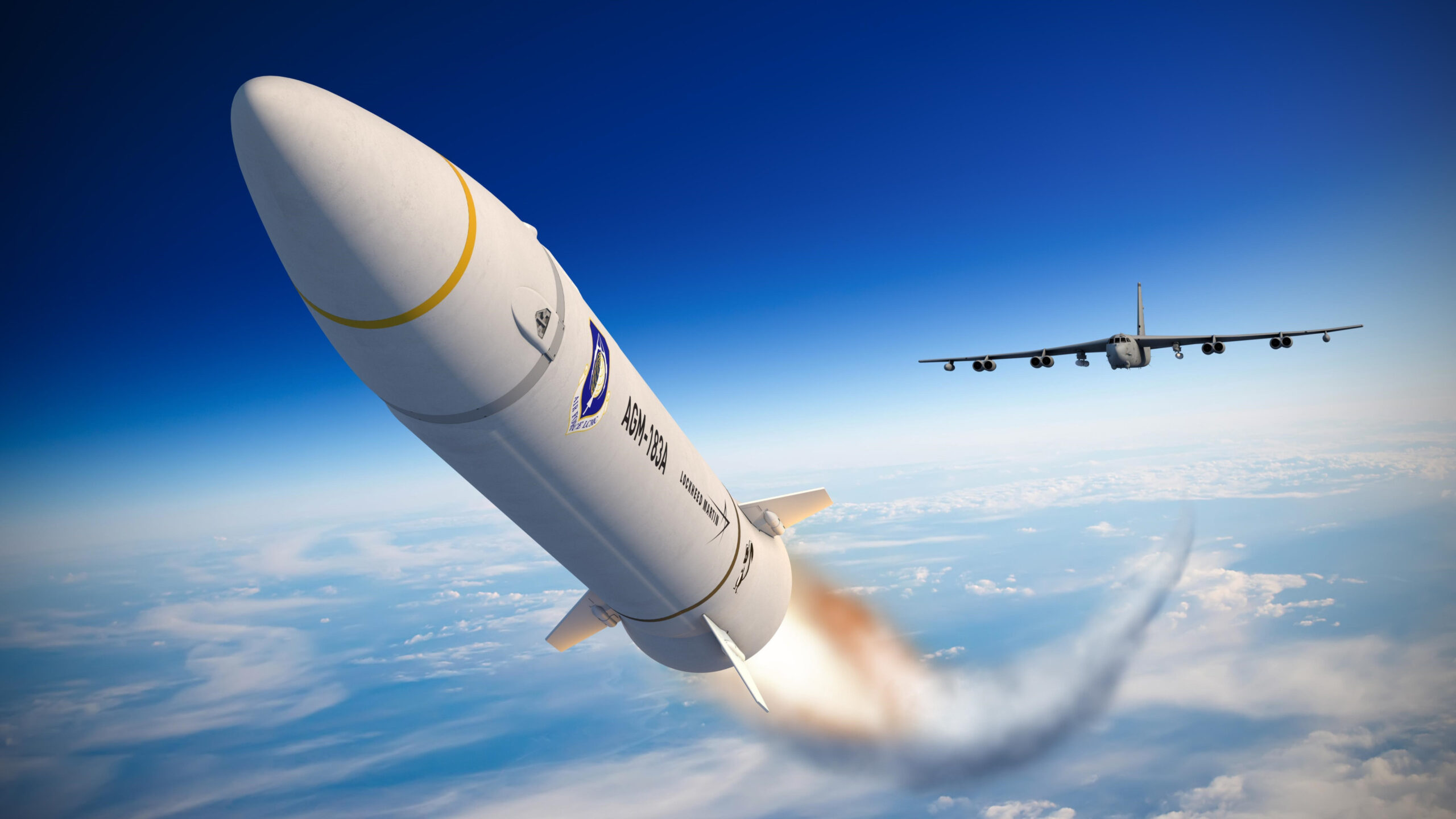
Hypersonic Missiles fired from B-52. Image Credit: Creative Commons.
The airplane has, for years, been armed with longer-range munitions such as the Air-Launched Cruise Missile and its anticipated replacement, the now-emerging Long Range Stand-Off weapon.
As a nuclear-capable, dual-use long-range cruise missile, the LRSO can pinpoint targets from ranges out to at least 1,500 miles, distances hundreds of miles beyond the roughly 200km reach of Chinese HQ-9 air defenses.
This means that, by 2030, the massively upgraded B-52 will be able to hold sensitive targets at risk from safe ranges and use speed, targeting, and a stealthy configuration to avoid interception.
Drone-launching B-52
Yet another critical reason why the B-52 will be positioned to greatly contribute to a potential large-scale war with China can be understood with the single word “drones.”
For years now, the Air Force and Pentagon weapons developers have been developing and testing large numbers of air-launched drones designed, if needed, to operate in swarms.
Of course, this makes them harder to intercept but also enables the large non-stealthy platform to blanket areas with ISR, test or jam enemy air defenses, or even operate as explosives themselves when directed by a human.
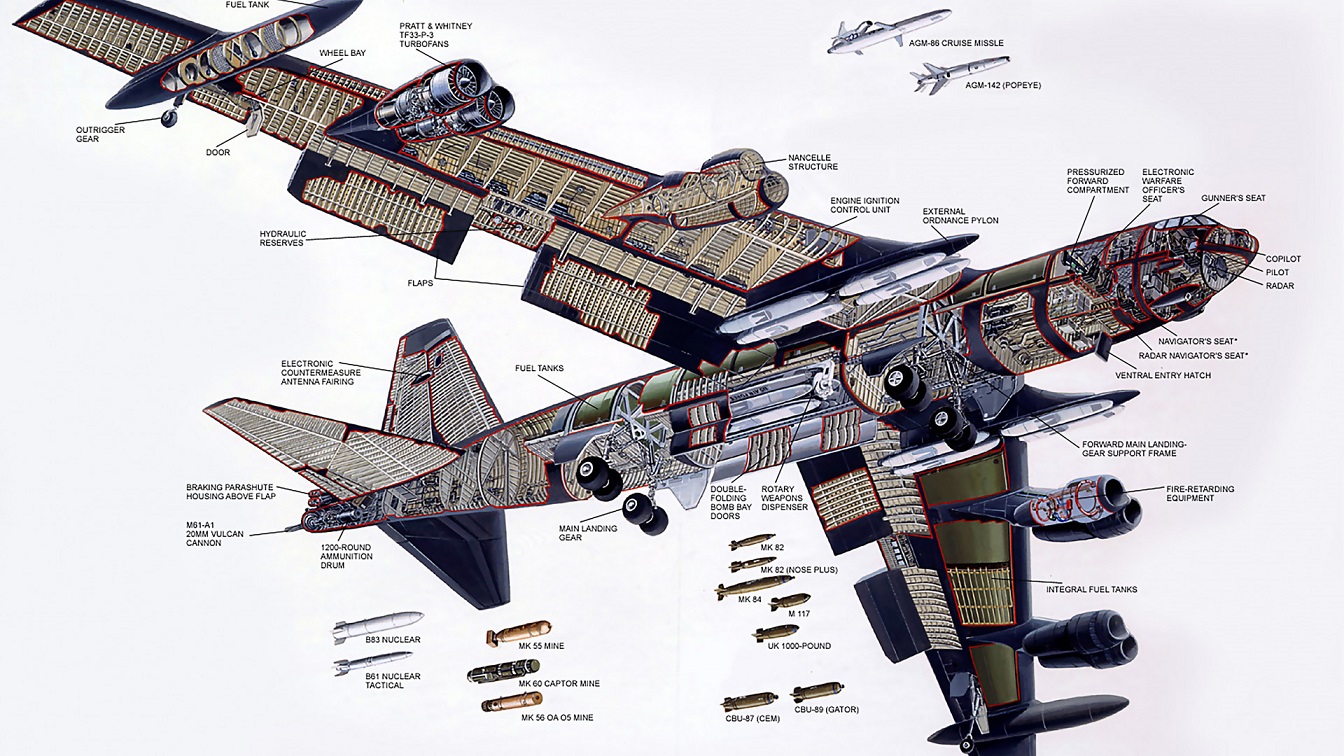
B-52 bomber. Image Credit: Creative Commons.
Following years of experimentation and progress in launching small drones from the B-52, the Air Force is now exploring the realms of “recoverable drones” and “air-launched hypersonic drones,” areas advancing rapidly and taken quite seriously by the Pentagon.
The size of the B-52 also favors arming the bomber with lasers, as it offers the highly sought-after Size, Weight, Space, and Power to accommodate the need for mobile, storable, expeditionary power to fire lasers.
All of these technological possibilities introduce new Concepts of Operation, so while the B-52 would unquestionably suffer potentially unexpected amounts of incoming enemy fire, the aircraft could potentially exact a significant combat effect from ranges beyond where air defenses and air-to-ground weapons can strike.
This is what makes stand-off range so important for the B-52 in a China-warfare kind of contingency, as the aircraft’s core mission has shifted from what was typically thought of as a “stand-in” bomb truck able to decimate or carpet-bomb enemy targets with unguided rounds into a drone-launching, cruise-missile-firing airplane.
This expands the aircraft’s concept or mission envelope, which has evolved considerably since the B-52’s performance.
About the Author: Kris Osborn
Kris Osborn is the Military Technology Editor of 19FortyFive. Osborn is also President of Warrior Maven – Center for Military Modernization. Osborn previously served at the Pentagon as a highly qualified expert in the Office of the Assistant Secretary of the Army—Acquisition, Logistics & Technology. Osborn has also worked as an anchor and on-air military specialist at national TV networks. He has appeared as a guest military expert on Fox News, MSNBC, The Military Channel, and The History Channel. He also has a Masters Degree in Comparative Literature from Columbia University