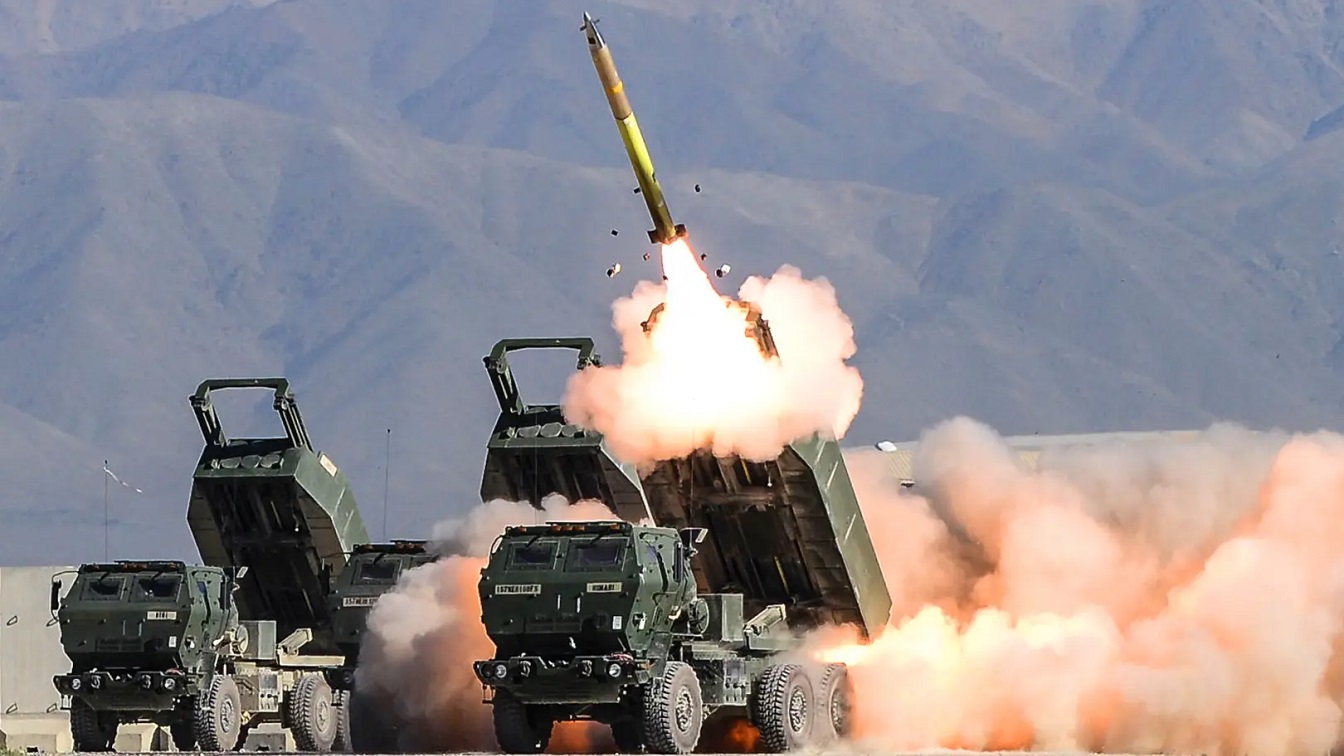
The 2027 budget request for the United States Army seeks to greatly expand the supply of one of the Army’s newest precision weapons: the Precision Strike Missile, or PrSM. The Army began fielding the weapon in 2023. Still, it made its first combat debut last month as part of the United States’ ongoing campaign against Iran, the joint Israeli-American Operation Epic Fury.
The budget request, however, has not yet been approved. Should it be seen favorably in Congress, however, the U.S. Army would purchase 1,134 PrSM missiles at a total cost of around $1.9 billion, for a price per unit of $1.7 million. Boasting a range in excess of 499 kilometers, or more than 310 miles, PrSM weapons are a significant expansion to the United States Army’s ground-based fires. Once realized, the order will quadruple PrSM procurement.
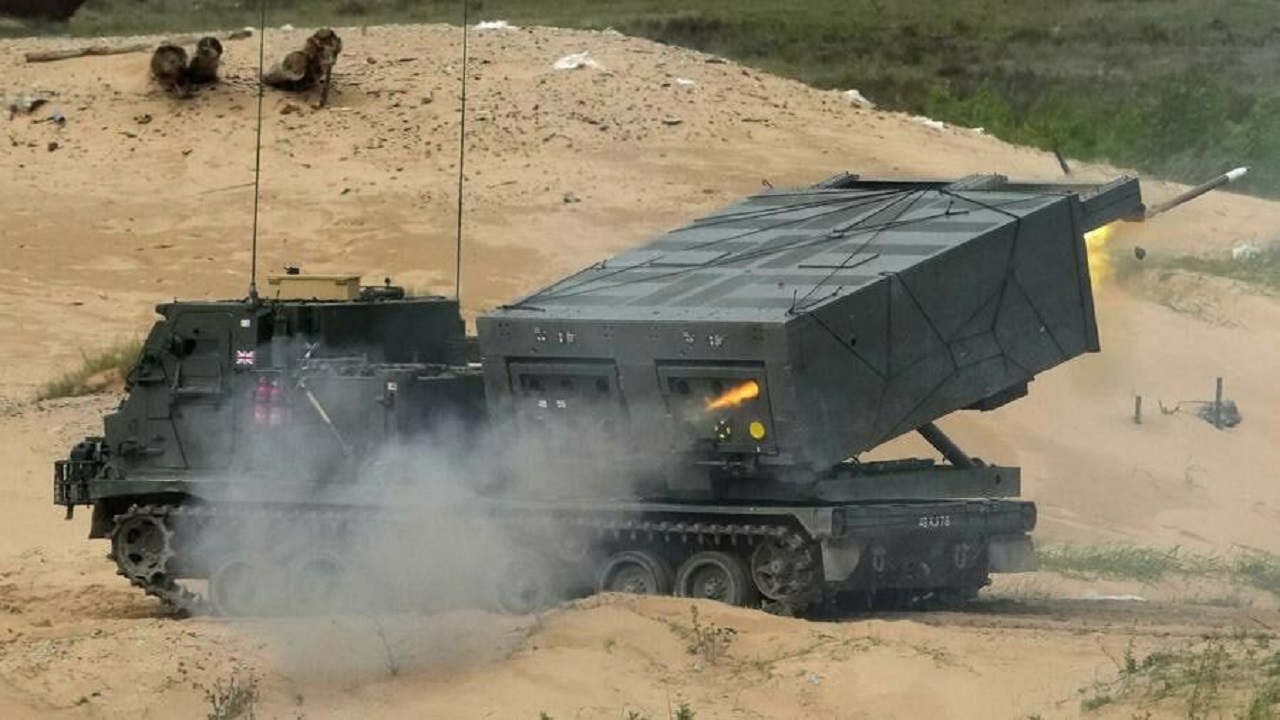
HIMARS. Image Credit: British Army.
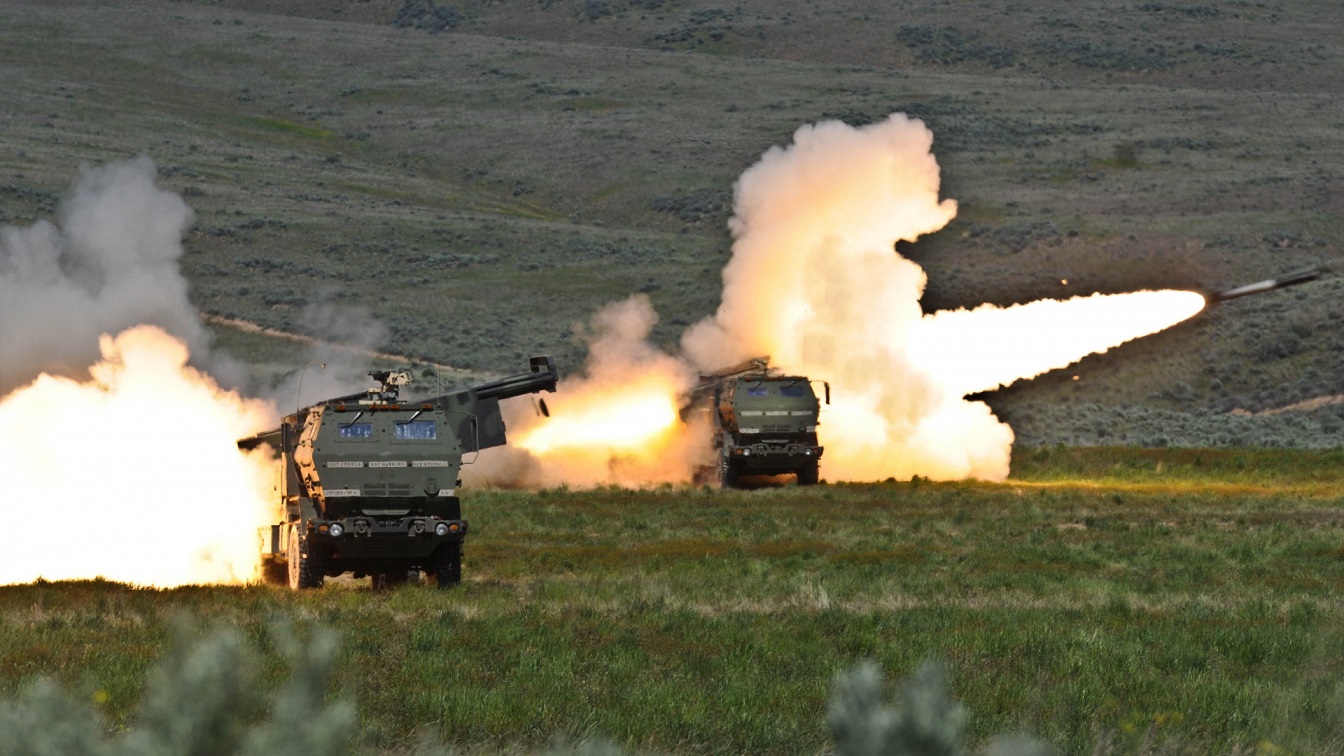
HIMARS. Image Credit: U.S. Military.
The surface-to-surface missiles are fired from shelled HIMARS mobile launchers or tracked MLRS M270 launchers, and are containerized in much the same way other HIMARS-compatible munitions are.
However, given the PrSM’s strategic nature, PrSM containers are outwardly identical to other HIMARS weapons packages, which are typically mated to HIMARS launchers in packs of six — a move that disguises and conceals the long-range munition from being immediately identified by adversary forces.
Expanded Production
Late last month, the Department of Defense struck an agreement with Lockheed Martin, the defense prime behind the Precision Strike Missile, awarding the company nearly $5 billion to expand production.
“Lockheed Martin is moving swiftly to accelerate delivery of critical munitions with a new framework agreement signed with the Department of War (DoW) to increase production of Precision Strike Missile (PrSM) rapidly,” Lockheed Martin explained in a press release outlining the terms of the contract. “Under this new agreement, PrSM production will quadruple, building on a previous $4.94 billion contract award from the U.S. Army last year.”
Not Just Weapons, but Warships too
Defense policy wonks, old hands within the Pentagon, and the hyper-online Twitterati class have rung alarm bells for years about the precarious state of the American defense industrial base.
Though Operation Epic Fury has laid bare just how low stockpiles of highly effective and capable munitions have become, the poor state of production is not limited to just weaponry.
America’s two warship builders, Huntington Ingalls Industries and Newport News, have struggled to meet production quotas, too.
With several classes of submarine currently in production — the Virginia-class as well as the upcoming Columbia-class — and other obligations looming on the horizon, including the submarines that must be built as part of the AUKUS submarine framework agreement with Australia and the United Kingdom, the pressure is on to build and build fast.
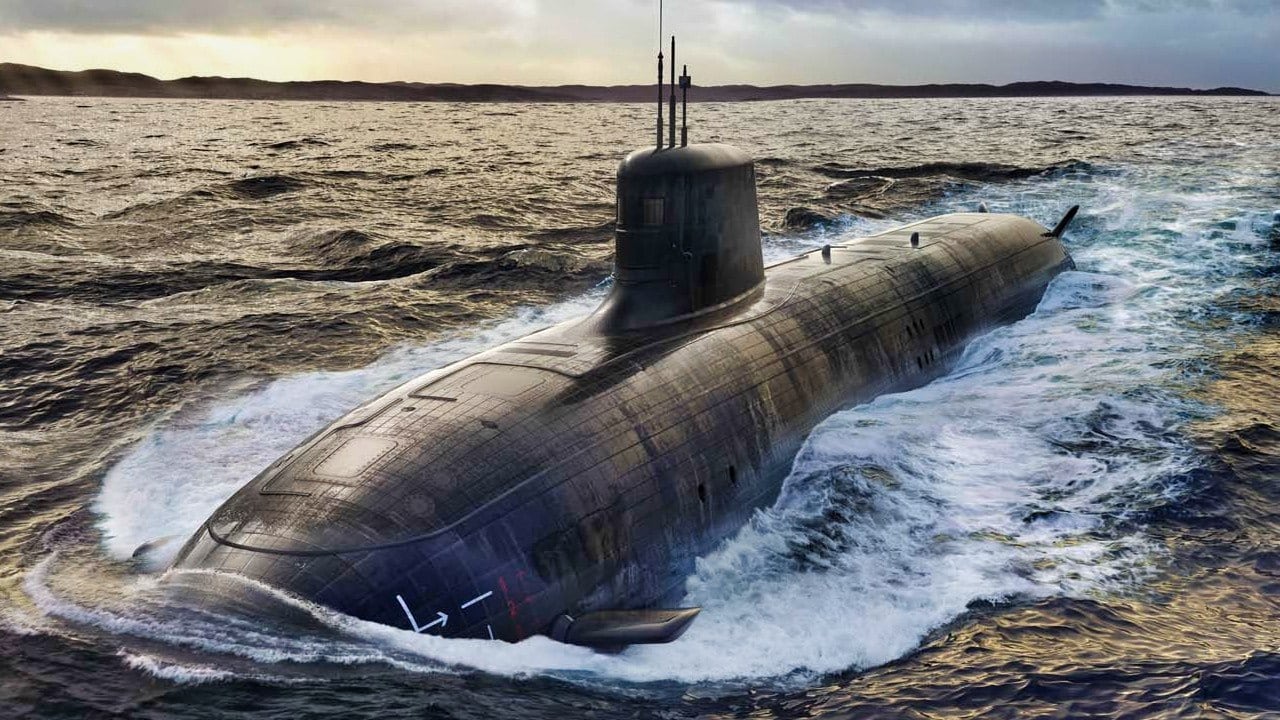
SSN-AUKUS Submarine. Image is Creative Commons Artist Rendering.
The production trend has been shared by other firms that also manufacture exquisite, precise munitions.
Expanding Production Elsewhere
Operation Epic Fury has also laid bare just how quickly the United States is burning through its stockpiles of other long-range precision munitions, too.
Reporting by The Washington Post revealed that American Navy vessels fired more than 850 Tomahawk cruise missiles at targets throughout Iran, making the operation the largest one-time expenditure of Tomahawk missiles in history.
The Department of Defense struck a similar expanded production agreement with RTX, the defense prime that manufactures Tomahawks. “As global demand for these precision munitions continues to grow, these up-to-seven-year agreements establish frameworks to build on the company’s previous investments to expand production,” RTX explained in an announcement detailing the terms of the order.
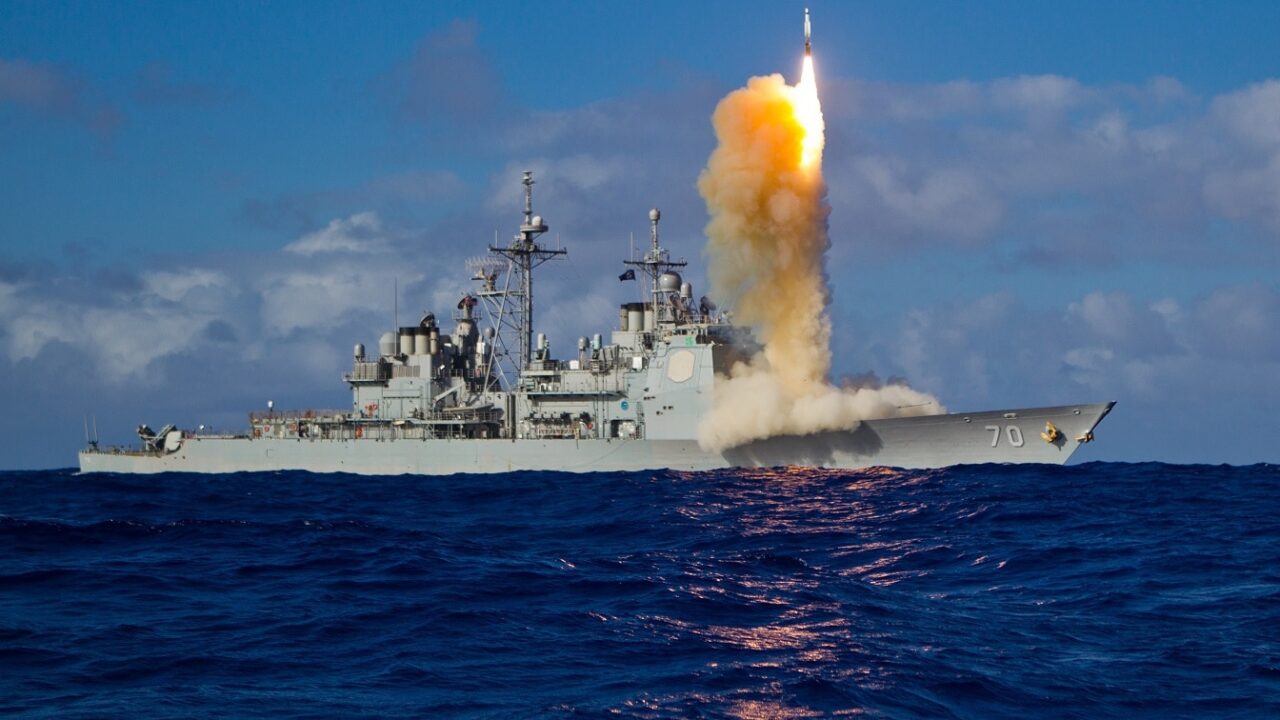
A Standard Missile-3 (SM-3) Block 1B interceptor missile is launched from the guided-missile cruiser USS Lake Erie (CG 70) during a Missile Defense Agency and U.S. Navy test in the mid-Pacific. The SM-3 Block 1B successfully intercepted a target missile that had been launched from the Pacific Missile Range Facility at Barking Sands in Kauai, Hawaii. Lake Erie detected and tracked the target with its on board AN/SPY-1 radar. The event was the third consecutive successful intercept test of the SM-3 Block IB missile. (U.S. Navy photo/Released)
“Under the frameworks announced today, RTX will increase annual production of Tomahawks to more than 1,000, AMRAAMs to at least 1,900, and SM-6 to more than 500. RTX will also increase production of SM-3 IIA and accelerate SM-3 IB production. Many of these munitions will grow 2 to 4 times their existing production rates.”
Estimates of the United States’ Tomahawk stockpile place the number of munitions at around 3,000.
This number is almost certainly sufficient to meet the challenge of the ongoing war in Iran. Should other conflicts elsewhere in the world erupt, however, the risk of an acute Tomahawk shortage is a serious consideration.
Allies in Need
But increasing the manufacture of Tomahawks won’t be simple, nor fast.
Prized for its long, approximately 1,000-mile range and advanced navigation, the Tomahawk is a mainstay of the United States Navy.
In the event of a conflict in the Indo-Pacific, the United States Navy would rely heavily on missiles, as would some of the United States’ allies in and around the Pacific.
Bloomberg reports that the delivery timeline for an order Japan placed for 400 Tomahawks is likely in jeopardy, as replenishing American stocks of the missile will take precedence. Missiles destined for Tokyo were to be delivered in full by March 2028.
That date will slip, but it is unclear by how many months or years Japan’s Tomahawk order will be delayed.
About the Author: Caleb Larson
Caleb Larson is an American multiformat journalist based in Berlin, Germany. His work covers the intersection of conflict and society, focusing on American foreign policy and European security. He has reported from Germany, Russia, and the United States. Most recently, he covered the war in Ukraine, reporting extensively on the war’s shifting battle lines in Donbas and writing about its civilian and humanitarian toll. Previously, he worked as a Defense Reporter for POLITICO Europe. You can follow his latest work on X.