
Summary and Key Points: On March 12, 2026, Lockheed Martin successfully conducted the first flight test of the Precision Strike Missile (PrSM) Increment 2, marking a breakthrough in the U.S. Army’s long-range fires program.
-Launched from a HIMARS platform, the missile traveled approximately 217 miles, demonstrating a new multi-mode seeker capable of tracking moving land and maritime threats.

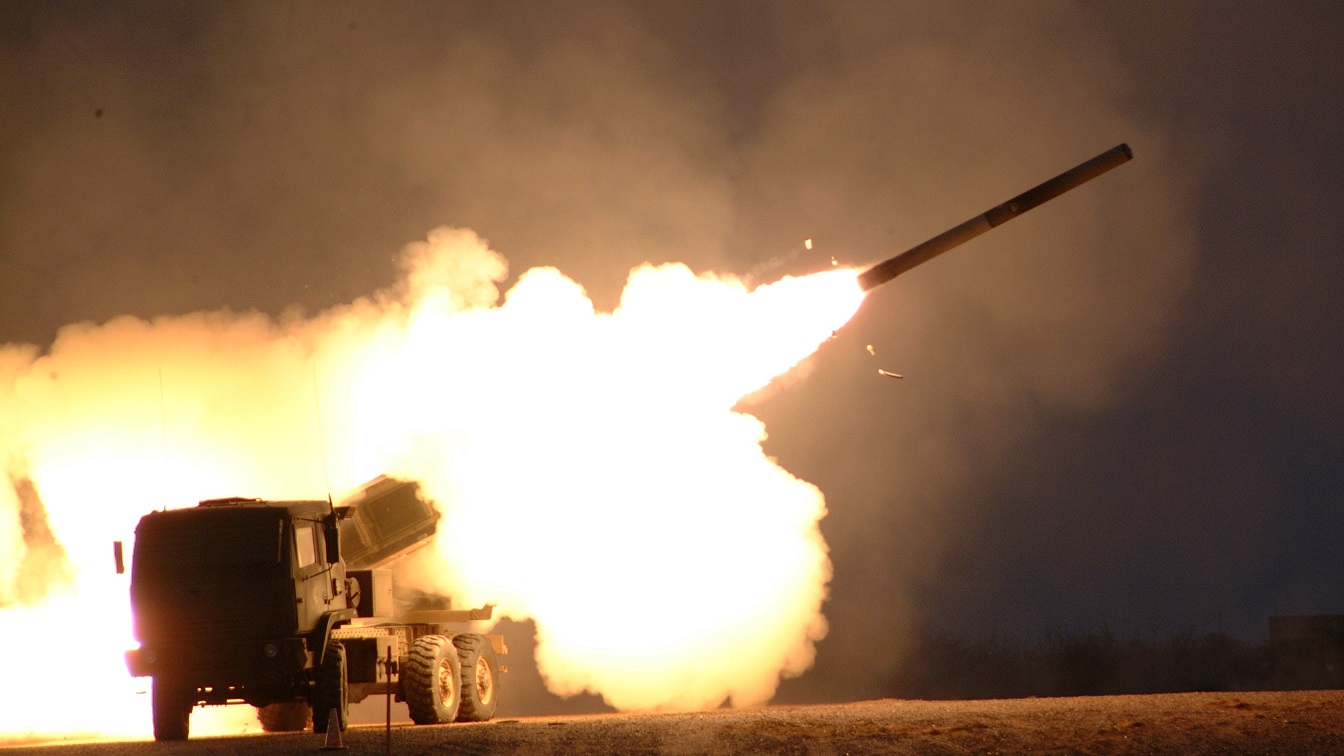
HIMARS. Image Credit: U.S. Military.
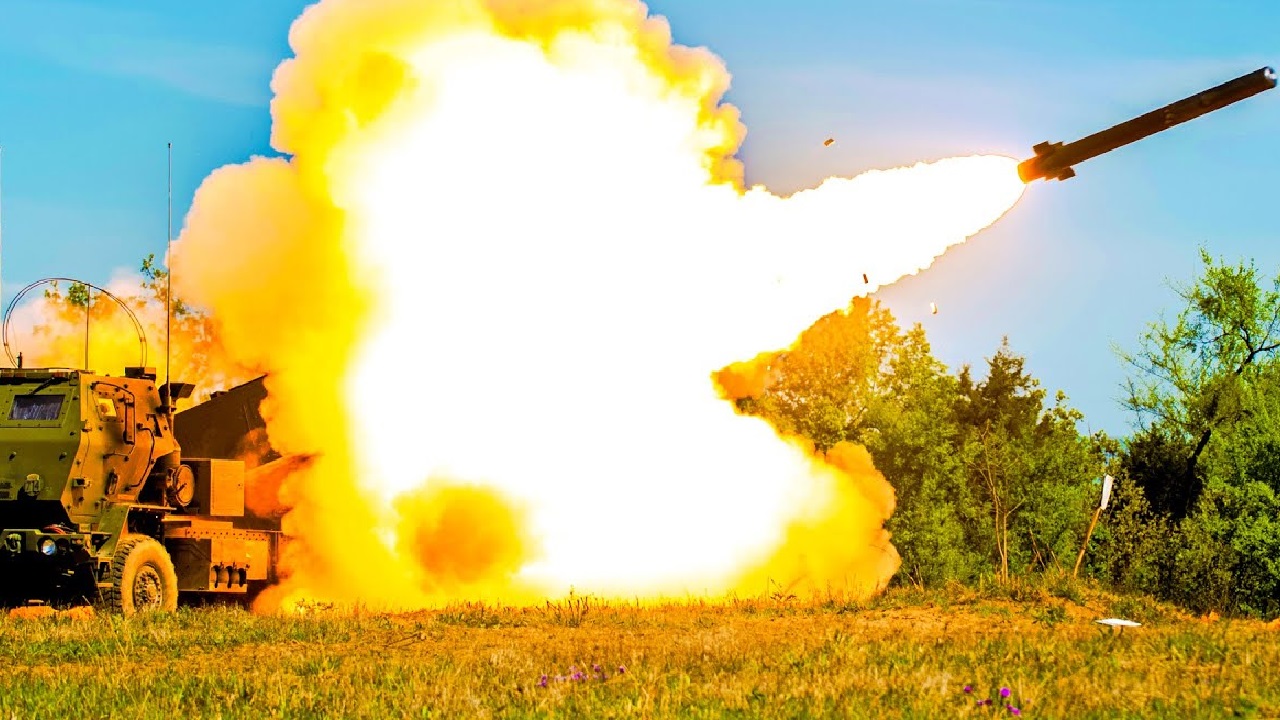
HIMARS Attack. Image Credit: Creative Commons.
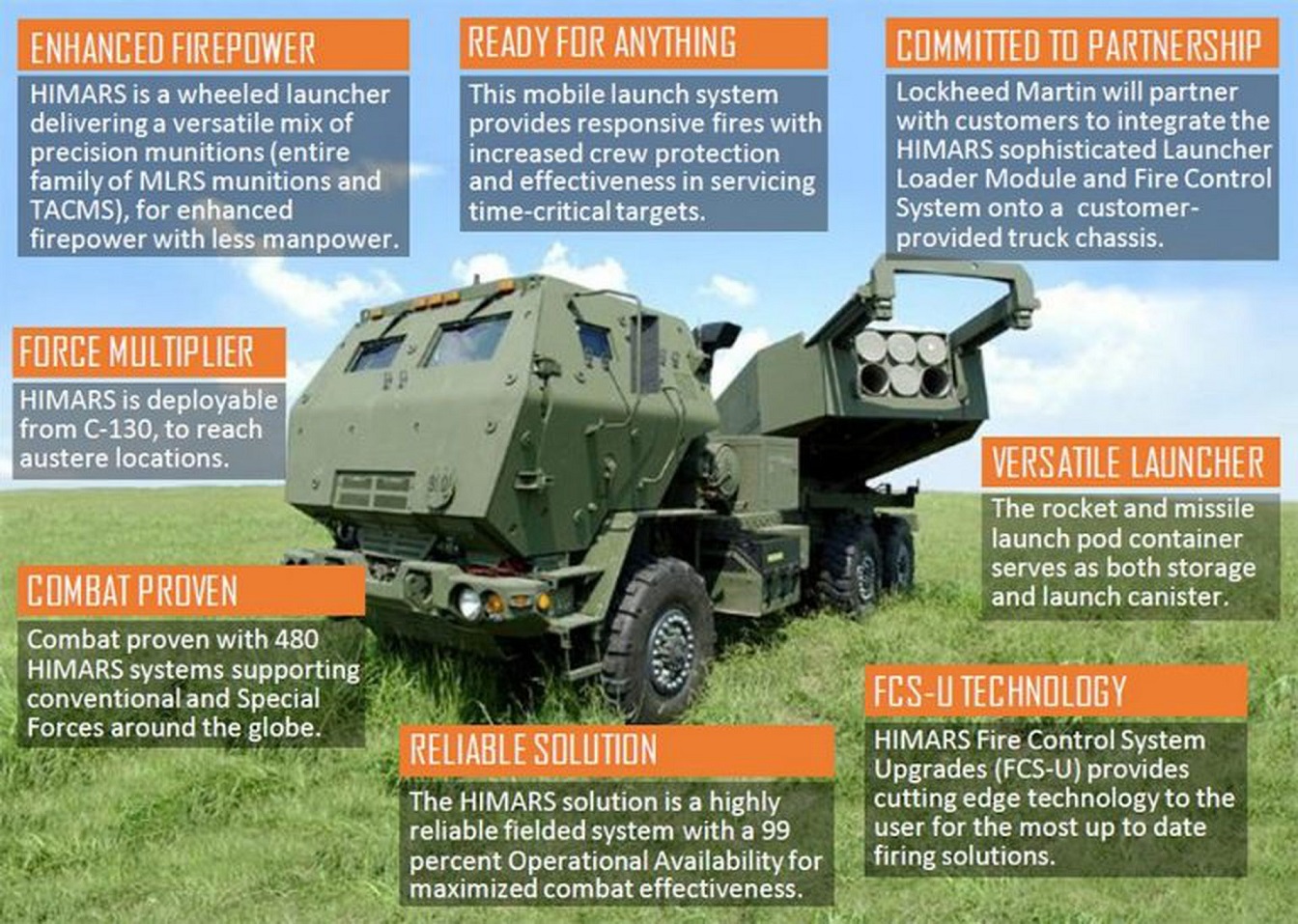
HIMARS graphic from Lockheed Martin.
-With a range exceeding 499 kilometers, the PrSM is already seeing combat deployment in Operation Epic Fury against Iranian targets.
-This “prism” of modern artillery signals a doctrinal shift, providing the Army with precision-strike capacity previously reserved for expensive cruise missiles.
The Army’s Ship-Killer: Lockheed Martin Tests PrSM Increment 2 for Moving Targets
Lockheed Martin is one of the most prestigious aerospace and defense firms in the world, and it owes much of that reputation to the warplanes built by its legendary Skunk Works division.
Among Skunk Works’ many famous warplanes are the P-38 Lightning, the U-2 spy plane, the F-104 Starfighter, the SR-71 Blackbird, and, of course, the stealth fighters: the F-117 Nighthawk, F-22 Raptor, and F-35 Lightning II.
The primary beneficiary of this output has been the U.S. Air Force, although the F-35 also has Marine Corps– and Navy-specific variants.
However, Lockheed Martin is not a one-trick pony. One reason the company continues to survive and prosper is its flexibility and versatility.
The firm builds more than its fair share of weapons for all of the sister services, and one leading example is the Precision Strike Missile (PrSM; pronounced like “prism”) made for the U.S. Army. Lockheed Martin’s engineers are now working on an upgrade for this missile.
PrSM Basics
Some basic background on the PrSM is in order.
As per the manufacturer’s official product info page:
“The Precision Strike Missile (PrSM) is our next-generation, long-range precision-strike missile designed for the U.S. Army. This new surface-to-surface weapon system will deliver enhanced capabilities to attack, neutralize, suppress, and destroy targets using missile-delivered indirect fires out to 499+ kilometers. PrSM provides the Joint Force Commander with increased range, lethality, survivability, and missile loadout. These enhanced capabilities are critical to the successful execution of fires in support of combined Joint All-Domain Operations.”
The PrSM is compatible with both the Multiple Launch Rocket System (MLRS) M270 and the High Mobility Artillery Rocket System (HIMARS) platforms.
These are battle-tested launchers, with the latter proving itself to be especially effective for Ukraine in its fight against Vladimir Putin’s Russian invasion forces.

HIMARS Training: Credit – Wisconsin National Guard / Sgt. Sean Huolihan. Wisconsin National Guard / Sgt. Sean Huolihan

M142 HIMARS. Image Credit: Creative Commons.
Development on the missile began in 2016, with prototype test flights commencing in 2020. Wielded in two rounds per launch pod, the PrSM measures 13 feet in length and 17 inches in diameter.
The Scoop
That latest development regarding the PrSM comes to us courtesy of Interesting Engineering’s Sujita Sinha:
“On March 12, 2026, Lockheed Martin successfully completed the first flight test of the Precision Strike Missile (PrSM) Increment 2. The trial marked a key milestone for the U.S. Army’s long-range fires modernization program. … During the test, the missile demonstrated its new targeting technology and ability to engage moving maritime threats, expanding the Army’s precision-strike capabilities.”
The launch platform was a HIMARS, and the missile traveled roughly 217 miles while performing all planned functions, including deploying protective covers and gathering detailed performance data.
Significance
Increment 2 of the PrSM introduces an advanced multi-mode seeker-guidance system that enables the missile to track and engage moving, time-sensitive targets.
According to Carolyn Orzechowski, Lockheed Martin’s vice president of Precision Fires Launchers and Missiles, “With Increment 2, PrSM delivers the long-range capability the Army asked for to defeat moving land and maritime threats. … Our focused investment and accelerated delivery demonstrate our unwavering commitment to the Army customer.”
Gaylia Campbell, vice president and general manager of Lockheed Martin Tactical Missiles, added: “Lockheed Martin is investing in advanced development and digital engineering to accelerate the fielding of PrSM Increment 2. … By leveraging modular design, agile processes, and close collaboration with the Army and our supplier network, we’re moving quickly to deliver this enhanced capability to the warfighter faster without compromising performance or reliability.”
The Way Forward
Now comes Increment 2’s technology maturation phase.
A preliminary design review is underway, and additional flight tests are scheduled later in 2026 as the missile moves closer to full operational capability.
Meanwhile, the current PrSM has seen combat as part of U.S. Central Command’s strikes on Iranian military targets.
As noted by Global Defence Corp, “The debut matters less as a ‘new weapon headline’ than as a doctrinal signal: the Army is now contributing prompt, theater-scale precision strike at ranges that previously demanded air or naval cruise missile capacity, and doing so from launchers designed to displace minutes after firing.”
About the Author: Christian D. Orr
Christian D. Orr is a Senior Defense Editor. He is a former Air Force Security Forces officer, Federal law enforcement officer, and private military contractor (with assignments worked in Iraq, the United Arab Emirates, Kosovo, Japan, Germany, and the Pentagon). Chris holds a B.A. in International Relations from the University of Southern California (USC) and an M.A. in Intelligence Studies (with a concentration in Terrorism Studies) from American Military University (AMU). He is also the author of the newly published book “Five Decades of a Fabulous Firearm: Celebrating the 50th Anniversary of the Beretta 92 Pistol Series.”