
The U.S. Army Expanded the Reenlistment Window From 90 Days to 2 Years for Soldiers Deployed in Operation Epic Fury
The U.S. Army announced on Friday, April 3, 2026, that soldiers deployed in support of Operation Epic Fury can now reenlist up to two years before their expiration term of service, marking a significant shift in personnel policy as the war with Iran enters its second month.
The change was detailed in an official Army release and confirmed in a statement to Task & Purpose by Army spokesman Maj. Travis Shaw, who said the move is intended to maximize retention and ensure deployed personnel can access financial incentives while deployed.
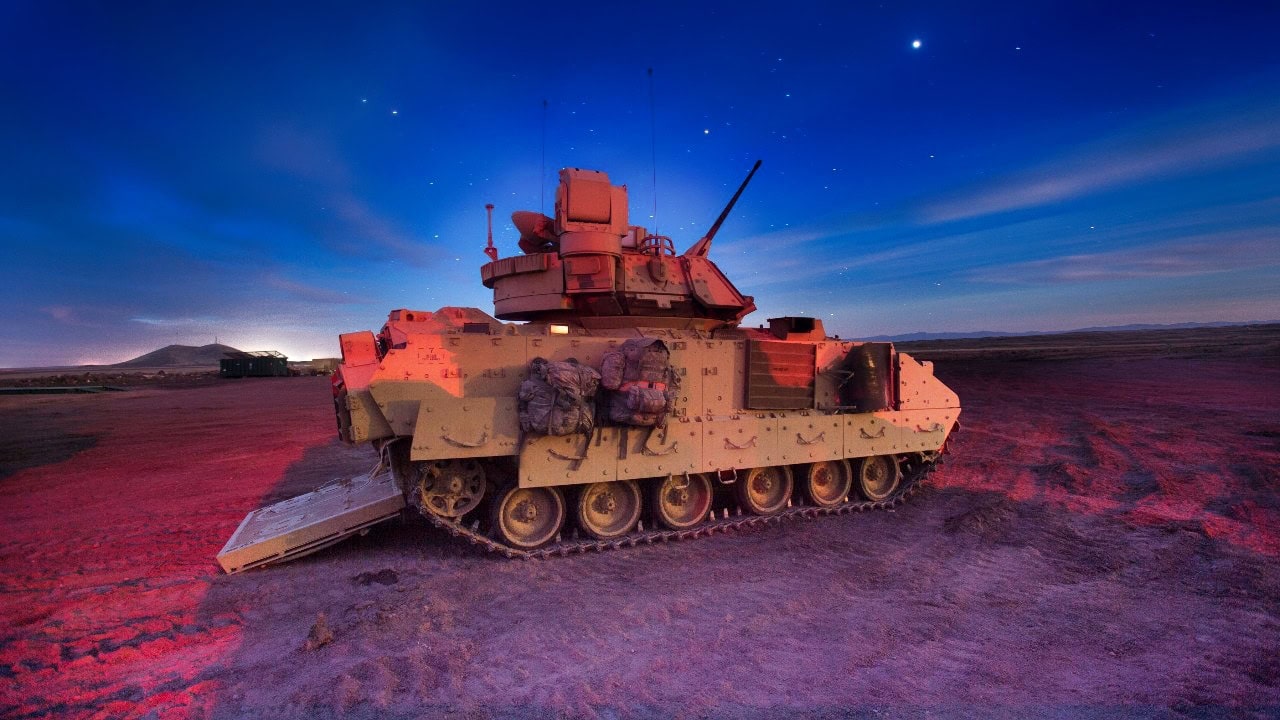
Engineers with the 116th Brigade Engineer Battalion conduct M2A3 Bradley fighting vehicle gunnery qualification on March 27, 2018, Orchard Combat Training Center, south of Boise, Idaho. Combat engineers with the 116th BEB trained through gunnery table XII, evaluating their ability to execute collective platoon-level tasks in a tactical live-fire environment; including integrating dismounted soldiers with their assigned BFV. (U.S. Army National Guard photo by 1LT Robert Barney)
The decision marks a clear reversal from the recent Army retention policy.
What the U.S. Army Actually Announced
According to the Army’s April 3 release, the policy change applies specifically to soldiers deployed in support of Operation Epic Fury and allows them to reenlist as early as 24 months before their expiration term of service (ETS), significantly expanding the window to secure a new contract.
“These soldiers will retain access to all reenlistment options and incentives for which they are qualified at the time of reenlistment, and career counselors will be positioned within the area of responsibility to provide further retention support and guidance to all eligible personnel,” the official press release explains.
The change allows soldiers already deployed to lock in bonuses and other incentives without waiting until the final months of their contracts. Effectively, it provides the Army with some certainty, knowing which personnel will be retained at a time when forces are under strain, rather than waiting until soldiers return home.
The U.S. Army also confirmed that soldiers deployed as part of the operation will receive additional benefits tied to their service. These include authorization to wear Shoulder Sleeve Insignia for Military Operations in Hostile Conditions – commonly known as combat patches – as well as eligibility for Imminent Danger Pay or Hostile Fire Pay, depending on location.
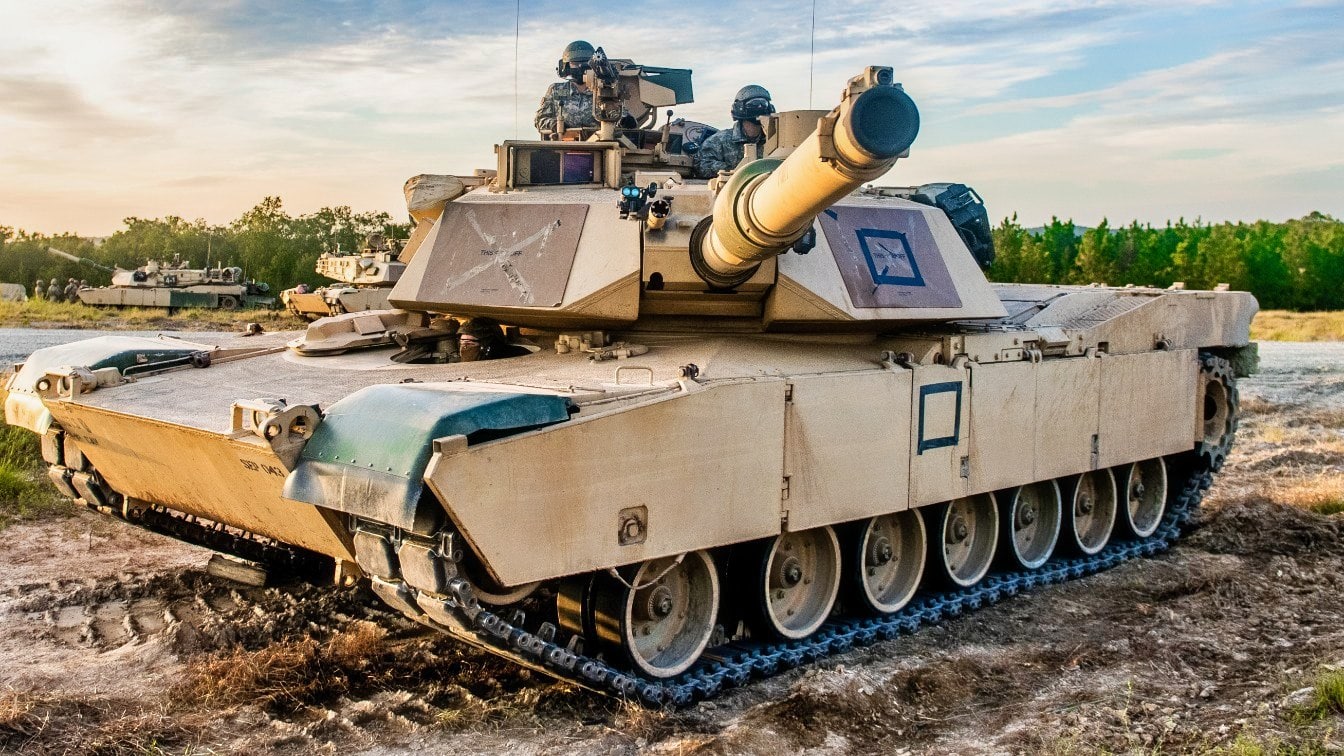
FORT BENNING, Ga. – Students in Armor Basic Officer Leader Course Class 20-005 conduct a platoon situational training exercise, Sept. 22, 2020, at Good Hope Maneuver Training Area on Harmony Church. Students train as both an attacking force and a defending force using the U.S. Army’s M1 Abrams Main Battle Tank. (U.S. Army photo by Patrick A. Albright, Maneuver Center of Excellence and Fort Benning Public Affairs)
Those payments are capped at $225 per month and are often tax-exempt when earned in designated combat zones.
Career counselors are also being positioned within the operational theater, allowing soldiers to make reenlistment decisions while deployed rather than waiting to return to a home station.
A Reversal Of Recent Retention Policy
The decision is a departure from the Army’s more recent approach to reenlistment. In 2025, the service narrowed its reenlistment window, requiring soldiers to commit to a new contract at least 90 days before their ETS date. That policy itself was already a tightening of previous rules, which had allowed soldiers up to 12 months after their ETS to reenlist.
The rationale for those earlier changes was that recruitment and retention numbers were stabilizing, and the Army sought to impose greater predictability on personnel planning by limiting when reenlistment decisions could be made.
The April 3 policy effectively reverses that logic for deployed troops. Instead of restricting reenlistment to a narrow window, the Army is now expanding it by up to 2 years for soldiers engaged in active operations.

Sgt. Jamie Ortiz, an Army Signal Support System Specialist from the 542nd Military Police Company takes a break after finishing the 2-mile run portion of the Expert Soldier Badge qualification. The ESB is a portion of the Combined Brigade Best Squad Competition here in McCrady Training Center, South Carolina. The 200th Military Police Command will select the top performers to compete at the 2023 U.S. Army Reserve Best Squad Competition.
In his statement, Maj. Travis Shaw made it clear that the expanded window will allow eligible personnel to access monetary bonuses that might otherwise be unavailable if they waited until later in their contracts.
The news, therefore, suggests that the Army is prioritizing the immediate retention of experienced personnel. And, it reflects the fact that policies designed outside of wartime often prove inadequate once operational demands increase.
The Size of the U.S. Army Today
The United States maintains one of the largest standing military forces in the world, with approximately 2.11 million personnel across all branches as of late 2025.
Of those, around 1.34 million are active-duty service members, while roughly 770,000 serve as reserves, including in the National Guard.
Within that total, the U.S. Army remains the largest individual service. As of 2026, it fields approximately 454,000 active-duty soldiers, a figure that has modestly increased in recent budget cycles following years of contraction.
Those figures, however, don’t fully account for how many troops are immediately available for deployment. The Army operates a layered force in which active-duty soldiers form the core of day-to-day operations and serve as the primary pool for overseas deployments. Alongside them are the Army Reserve and Army National Guard, which together account for hundreds of thousands of additional personnel who can be mobilized when required but are not continuously deployed.
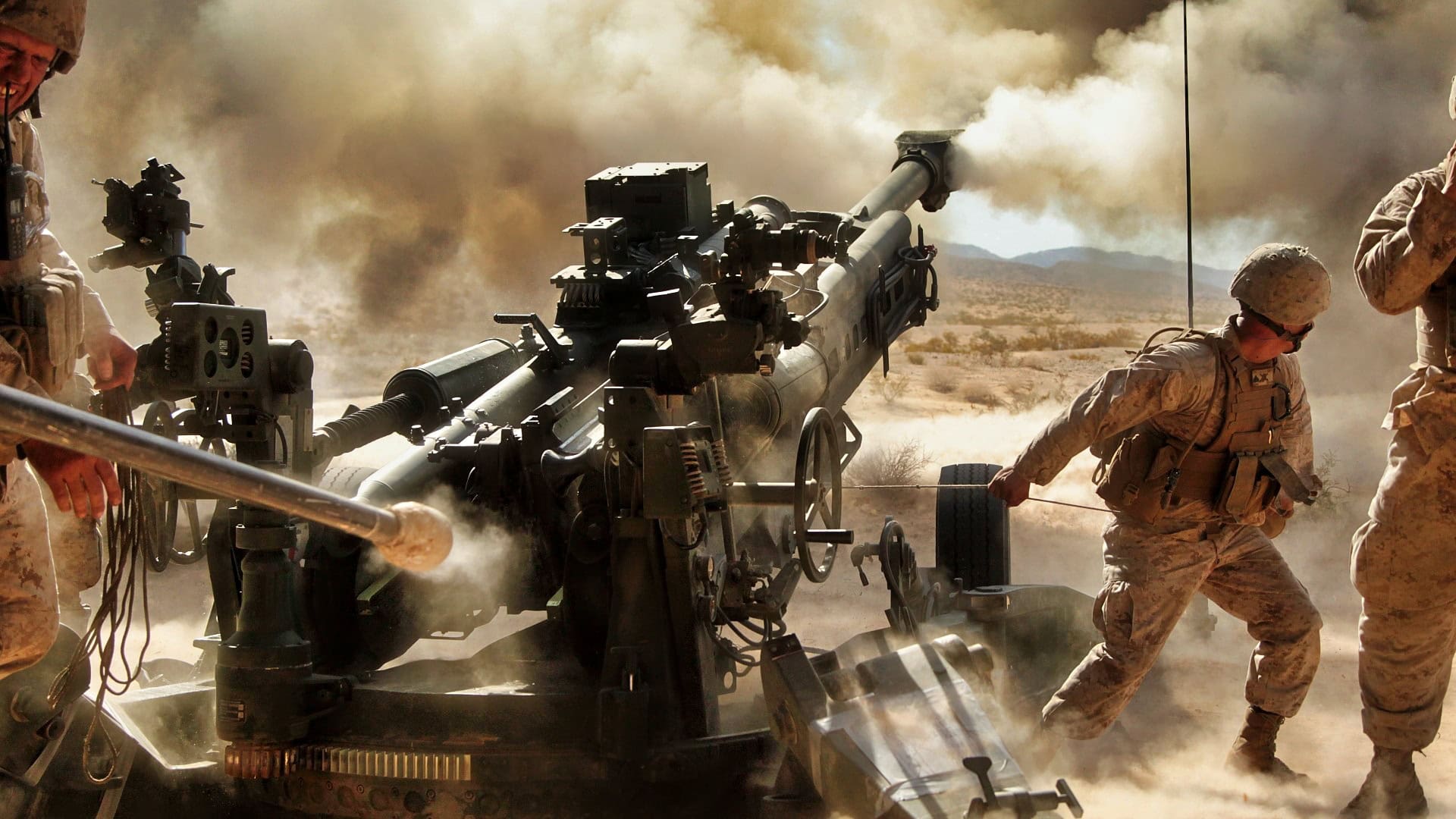
Marines with Battery N, 5th Battalion, 14th Marine Regiment, fire an M777 A2 howitzer during a series of integrated firing exercises at the Combat Center’s Quakenbush Training Area April 26, 2013. (Official USMC photo by Cpl. William J. Jackson/Released)
Differences between these types of soldiers extend beyond their immediate availability. Active-duty forces are trained, equipped, and assigned to operational units that can deploy on relatively short notice.
Reserve components, by contrast, are designed to augment that force during sustained operations, but require mobilization orders and, in many cases, additional training cycles before deployment. Even within the active-duty force, not all personnel are deployable at any given time.
A significant portion of the Army is tied up in training pipelines, administrative roles, institutional assignments, or recovery cycles following previous deployments.
The result is that the pool of troops available for immediate operational use is considerably smaller than the Army’s total strength.
How Many Troops Are Committed to Iran
Recent figures suggest approximately 170,000 U.S. troops are stationed overseas across all theaters, representing about 13 percent of the active-duty force. That figure includes long-standing deployments in Europe and the Indo-Pacific, meaning the number of personnel available for additional commitments in the Middle East is already constrained.
Nonetheless, thousands of troops have already been used to reinforce the American presence in the Middle East as operations against Iran have intensified.
Reports indicate that thousands of soldiers from units such as the 82nd Airborne Division have been deployed to the Middle East, alongside Army air defense elements tasked with protecting American bases and infrastructure.
Those deployments, however, are only one part of a much larger force package. Naval forces have also been expanded significantly since the start of operations. Carrier strike groups operating in the region, including USS Gerald R. Ford (CVN-78), bring thousands of sailors and aviators. A single carrier strike group typically includes more than 5,000 personnel, including the air wing and escort ships, meaning even a limited increase in naval presence adds substantial manpower to the theater.
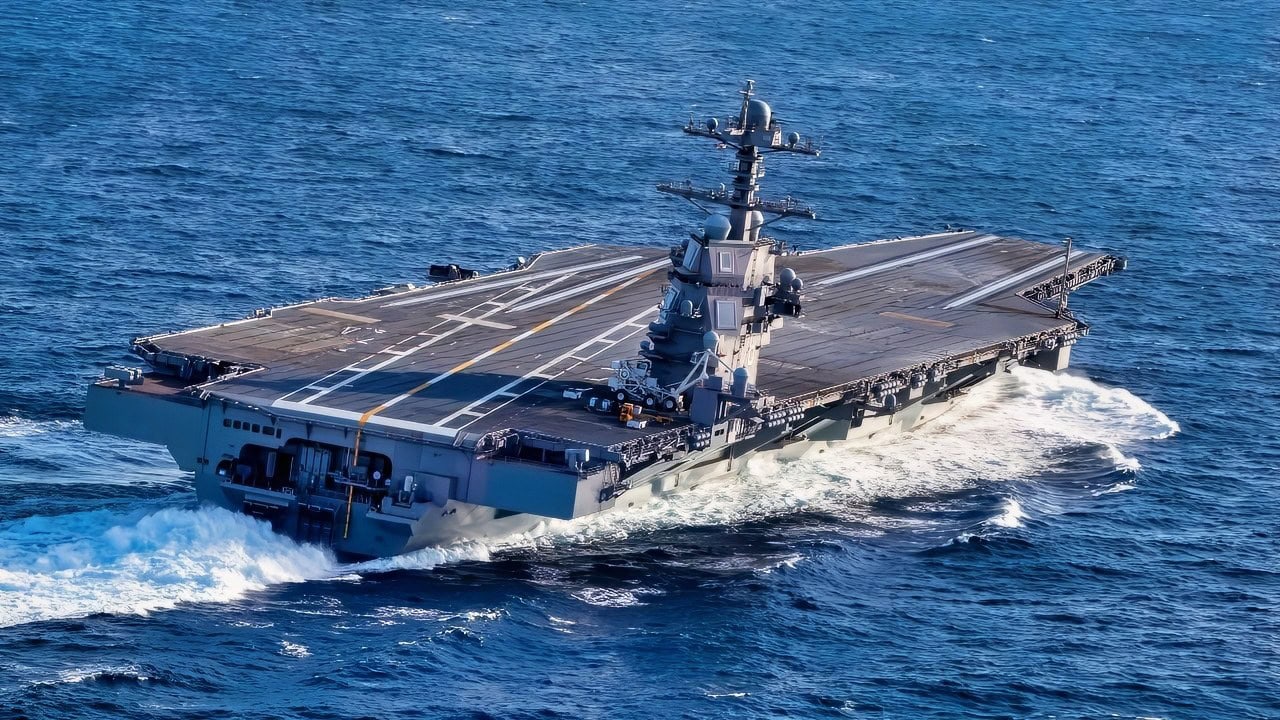
ATLANTIC OCEAN (Oct. 29, 2019) USS Gerald R. Ford (CVN 78) conducts high-speed turns in the Atlantic Ocean. Ford is at sea conducting sea trials following the in port portion of its 15 month post-shakedown availability. (U.S. Navy photo by Mass Communication Specialist 3rd Class Connor Loessin)
The U.S. Air Force has also surged assets into the region to support both strike operations and defensive missions.
Fighter squadrons, aerial refueling aircraft, and supporting ground crews have been deployed to bases across the Gulf, with each deployed wing or expeditionary unit typically requiring hundreds to thousands of personnel to sustain operations.
Marine Corps service members have also been positioned in the region as part of amphibious ready groups and crisis response forces, adding additional infantry and aviation capability to the overall force posture.
These units are designed to respond quickly when required.
While official numbers have not been released, the deployments suggest that Operation Epic Fury is drawing on a force that could number in the tens of thousands.
The U.S. Army’s decision to expand reenlistment eligibility is, therefore, about ensuring that a force already committed across multiple domains can be sustained without disruption as operations continue and other contingencies remain on the horizon.

Sgt. Jonathan Shue, noncommissioned officer-in-charge, machine shop, Marine Aviation Logistics Squadron 36, Marine Aircraft Group 36, 1st Marine Aircraft Wing, III Marine Expeditionary Force, fires on a secondary target after bayoneting the first here May 15 during the 2011 Australian Army Skill at Arms Meeting. The week-long meeting pit military representatives from partner nations in competition in a series of grueling combat marksmanship events. Represented nations include Canada, France (French Forces New Caledonia), Indonesia, Timor Leste, Brunei, Netherlands, U.S., Papua New Guinea, New Zealand, Singapore, Malaysia, Thailand as well as a contingent of Japanese observers. (U.S. Marine Corps Photo by Lance Cpl. Mark W. Stroud/Released)
About the Author: Jack Buckby
Jack Buckby is a British researcher and analyst specializing in defense and national security, based in New York. His work focuses on military capability, procurement, and strategic competition, producing and editing analysis for policy and defense audiences. He brings extensive editorial experience, with a career output spanning over 1,000 articles at 19FortyFive and National Security Journal, and has previously authored books and papers on extremism and deradicalization.