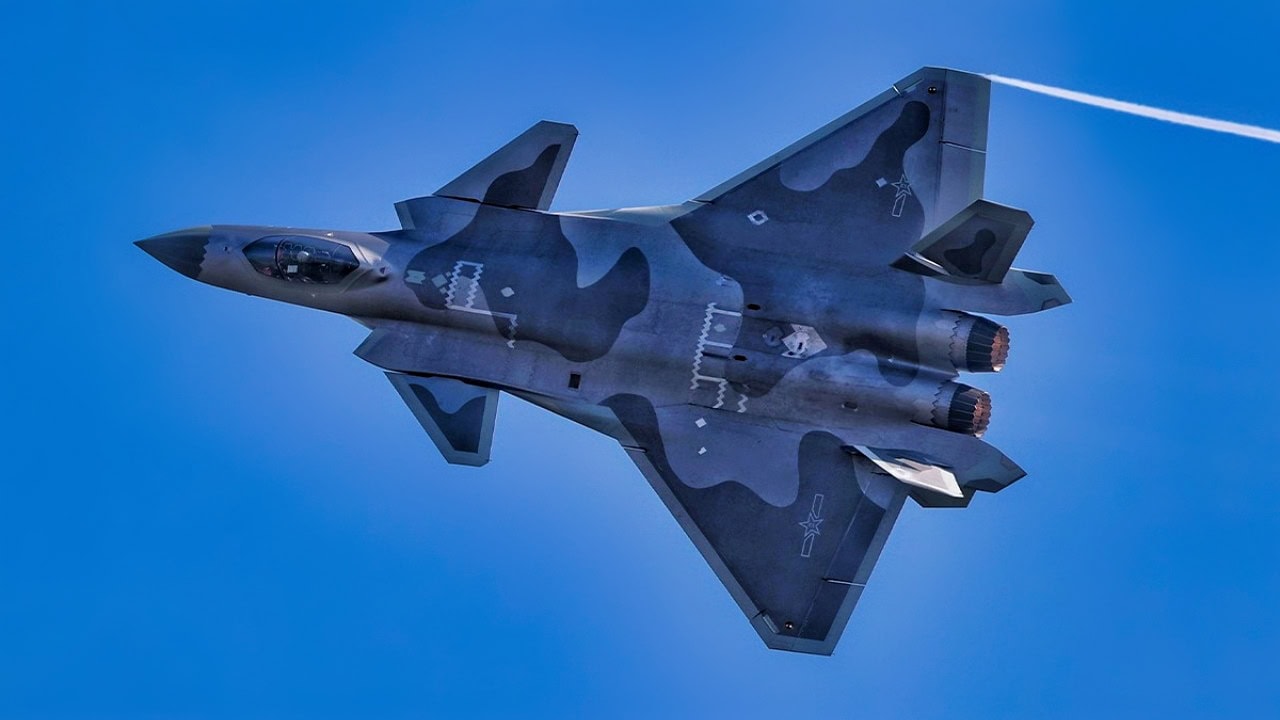
Summary and Key Points: National security editor Brandon J. Weichert warns that the Trump administration’s Operation Epic Fury in Iran is creating a strategic vacuum in the Indo-Pacific.
-While the U.S. and Israel report 15,000 successful strikes, the rapid exhaustion of Tomahawk stockpiles and the ongoing blockade of the Strait of Hormuz signal “terminal decline” to Beijing.
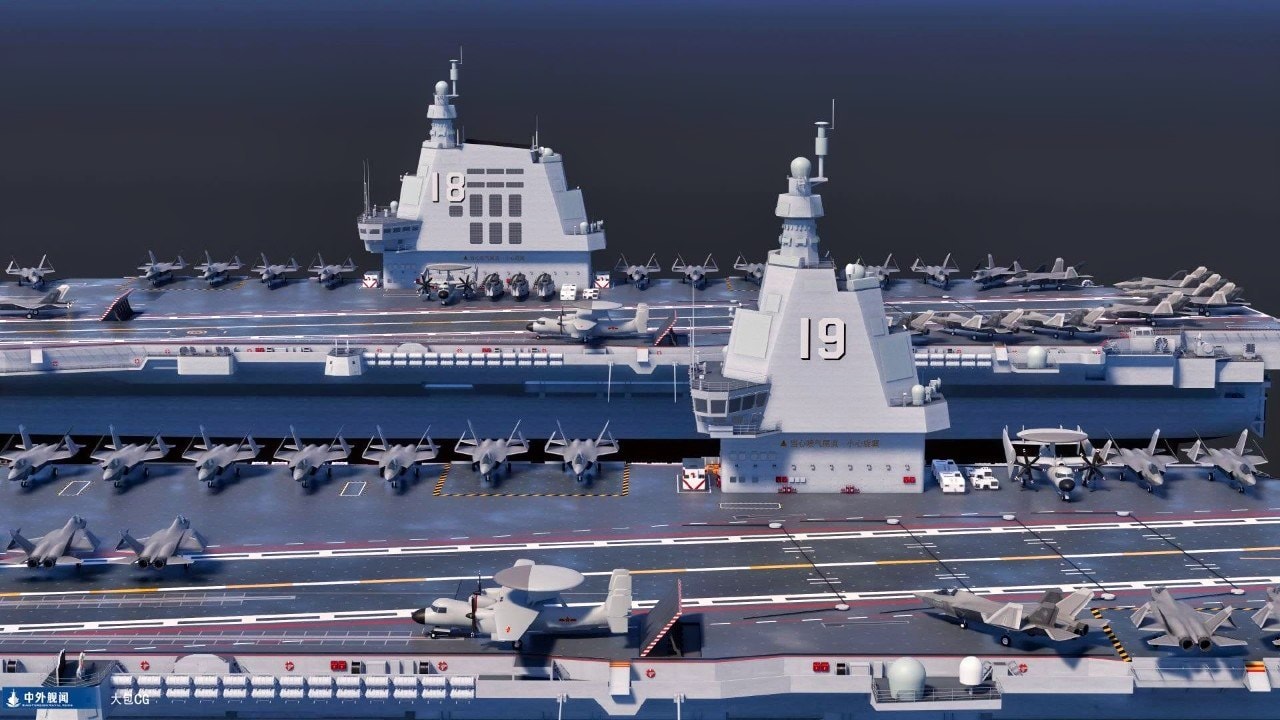
China Aircraft Carrier Models. Image Credit: Creative Commons.
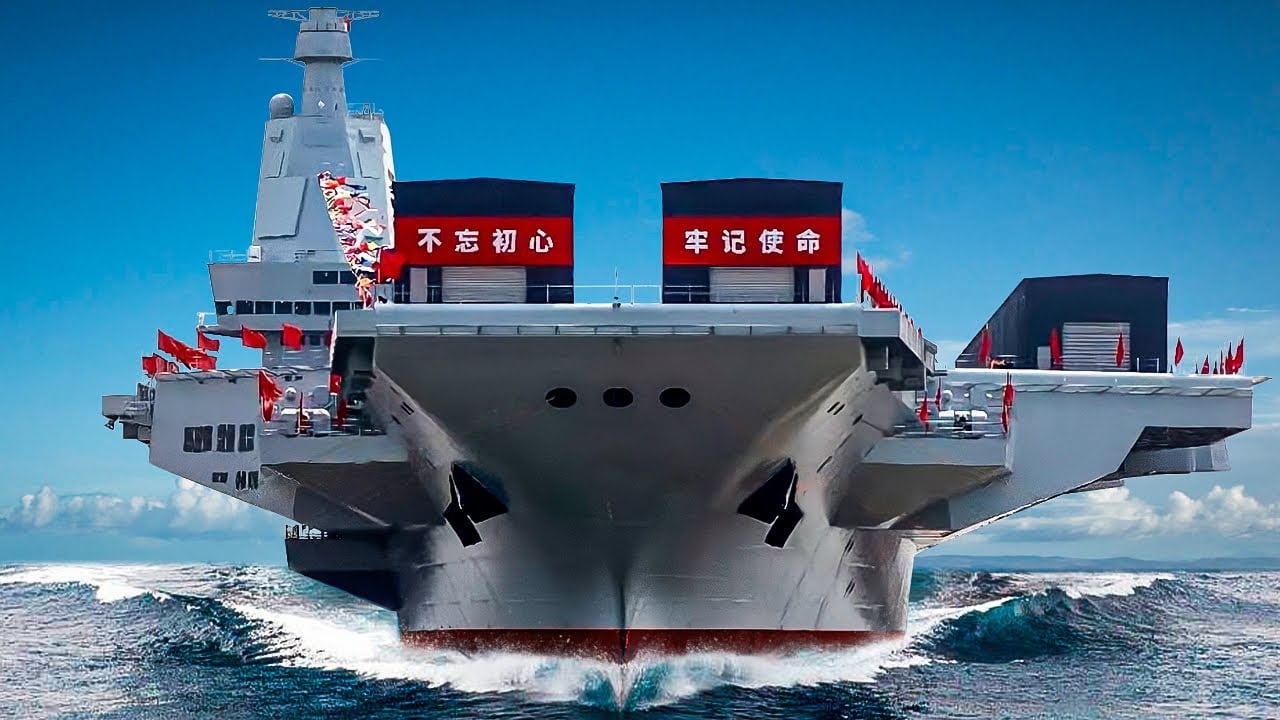
China Aircraft Carrier. Image Credit: YouTube Screenshot.
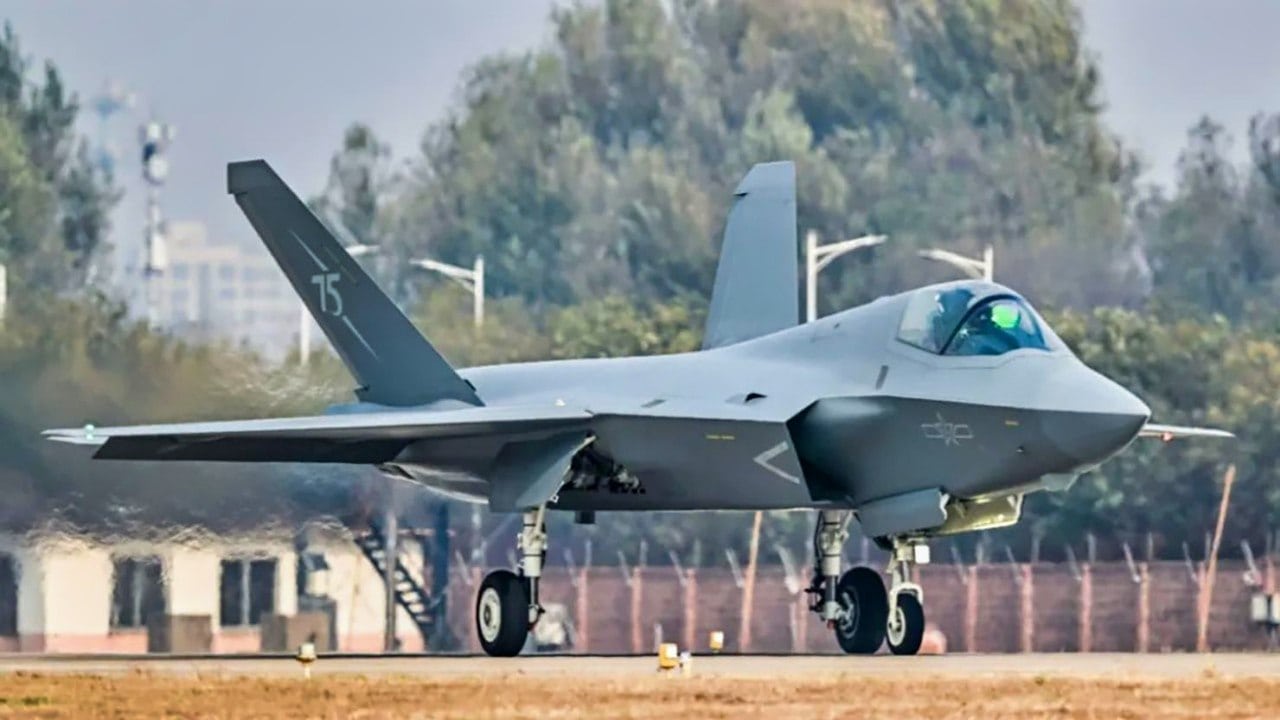
J-35A Fighter from China. Image Credit: Chinese Military
-Weichert argues that President Xi Jinping may exploit this “use-it-or-lose-it” window to impose a blockade on Taiwan or target Japan with drone swarms.
-With the U.S. Navy avoiding ASBM range, China is learning to leverage regional geography to collapse the American economy via TSMC disruptions.
The Taiwan Window: Why Operation Epic Fury in Iran Could Trigger a 2026 Indo-Pacific Crisis
The United States government keeps pounding its chest and proudly announcing how many targets it has hit in the Islamic Republic of Iran since initiating hostilities, along with Israel, on February 28. Undoubtedly, the number of targets hit, the amount of senior Iranian leaders killed or incapacitated, and the degradation of Iran’s overall regime have been significant.
Washington is Winning Battles but Losing the War
But the Americans have a stated strategic objective of toppling the regime. And that is unlikely to occur, no matter how many things the United States and Israeli air forces blow up in Iran.
As the war extends beyond the few days the Trump administration had planned, the entire situation turns on its head for the United States. There’s a run on critical stockpiles.
The United States Navy is refusing to deploy warships for escort duty through the blocked Strait of Hormuz, a key waterway through which 20 percent of all global trade (including vital energy and agricultural goods) flows. It is keeping America’s vaunted aircraft carriers well outside the range of Iran’s anti-ship ballistic missile (ASBM) force.
The Hormuz Blockade is Draining America’s Strength
The longer the blockade lasts, the graver the damage is to the global economy—and the United States’ already tenuous economy. With each passing iteration of this war, America’s rivals, not just in Tehran but around the world, especially in Beijing, learn key lessons.
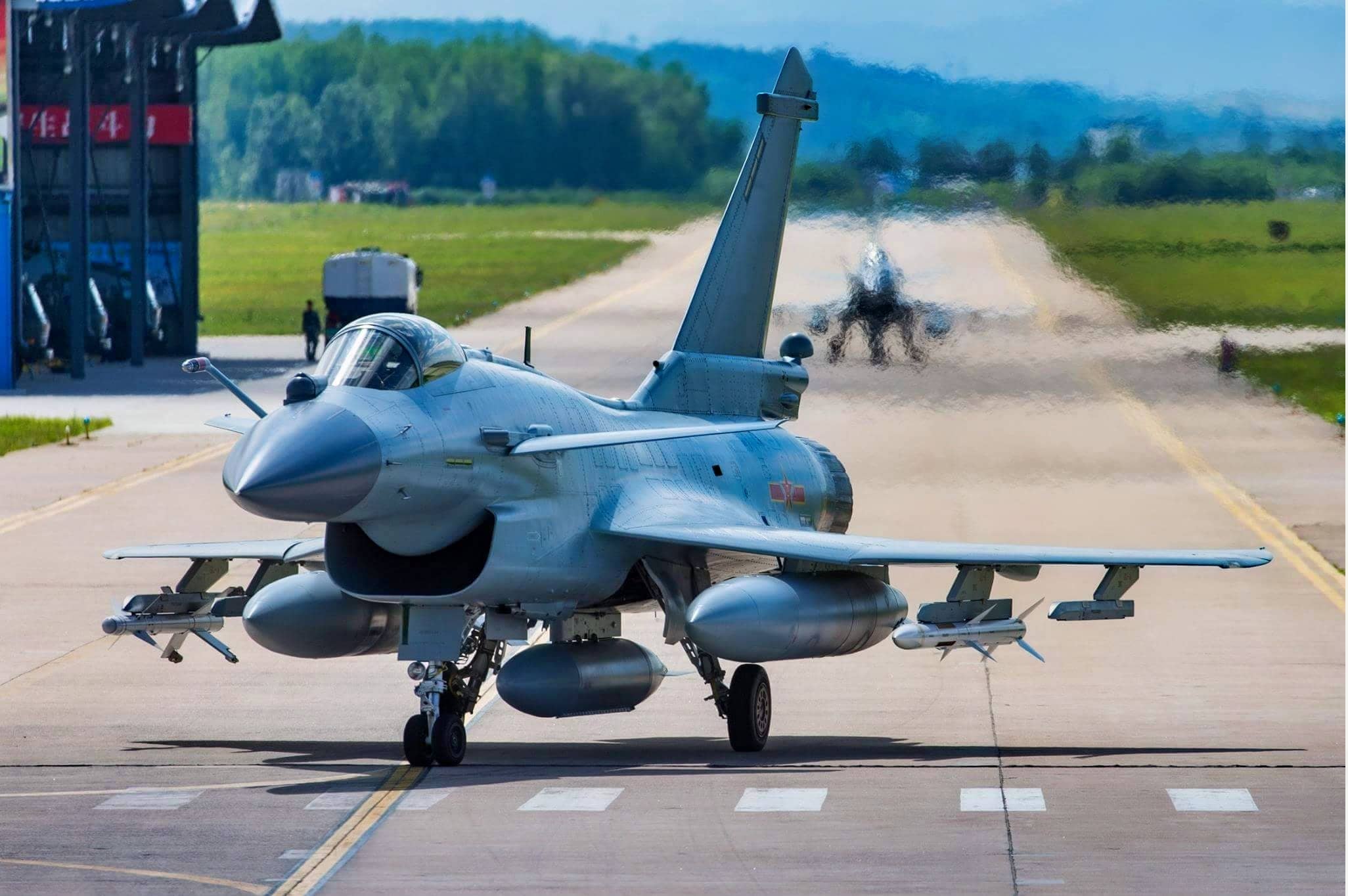
J-10C Fighter from China. Image Credit: Creative Commons.
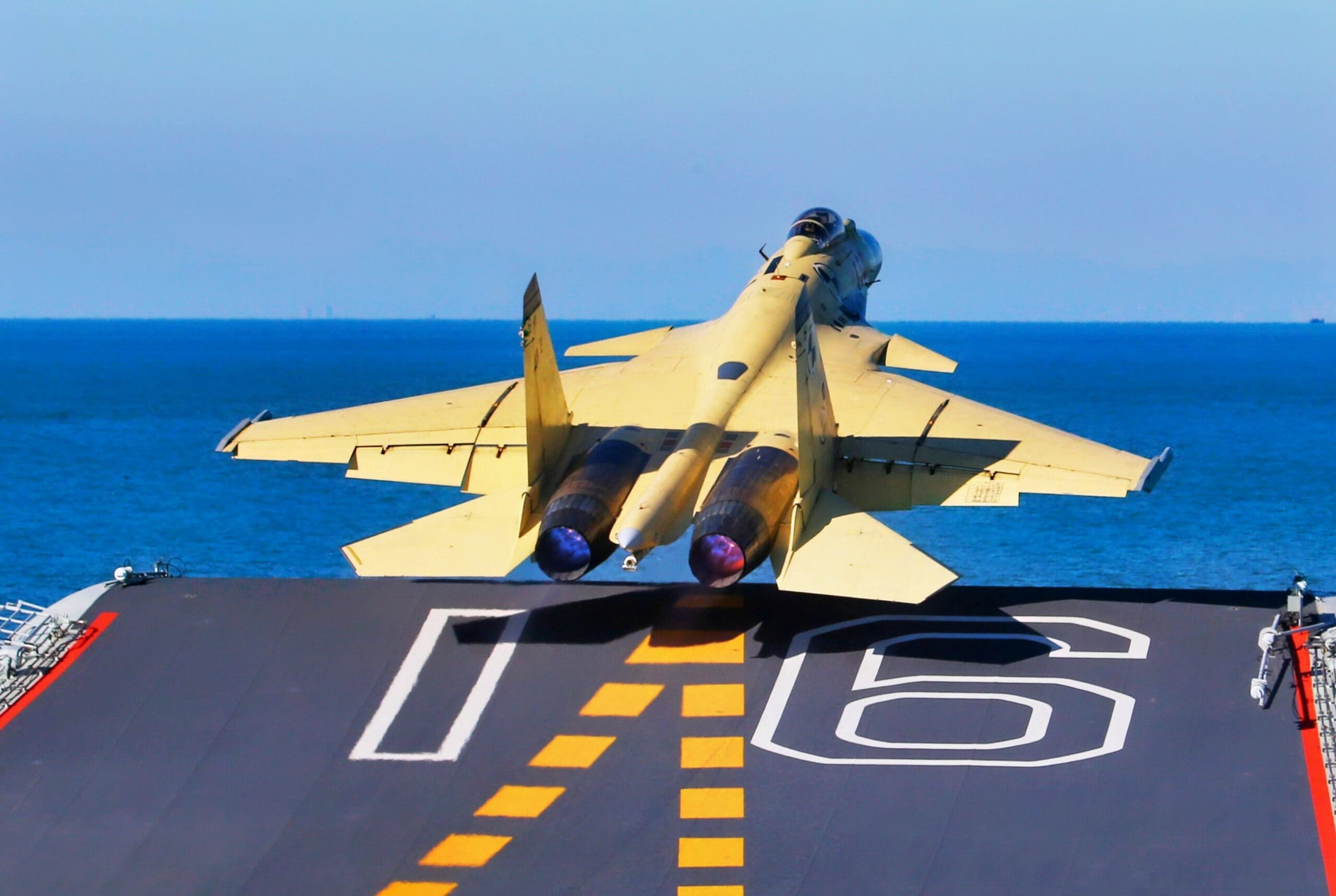
J-15 Fighter from China. Image Credit: Creative Commons.
In fact, there is ample evidence proving that China is feeding important wartime signals intelligence, providing essential financial support, and continues giving diplomatic succor to the besieged Islamic Republic.
These lessons learned, coupled with the fact that America’s critical weapons stockpiles are drastically depleted, are solidifying the belief among China’s elite that the United States is an empire in terminal decline. With that assumption in mind, the People’s Republic of China (PRC) is increasingly tempted to execute offensive military operations against its neighbors.
Beijing is Studying Every Move the US Makes
And Beijing has watched the Iranian experience against the US Navy and applied those important lessons to whatever it may do next (soon) in the Indo-Pacific.
The likeliest area of attack by China would be Taiwan.
Already, Chinese forces have amassed around Taiwan in what seems to be a mock invasion play. They’ve been doing this for years. Given the depleting US stockpiles in the Indo-Pacific, and the fact that Washington does not have a stomach for a wider—longer—war outside the Middle East, China just might believe that the time is now for them to impose an onerous blockade on Taiwan, strangle the current democratic government there either through a blockade and/or invasion, all while the US military is totally bogged down elsewhere indefinitely.
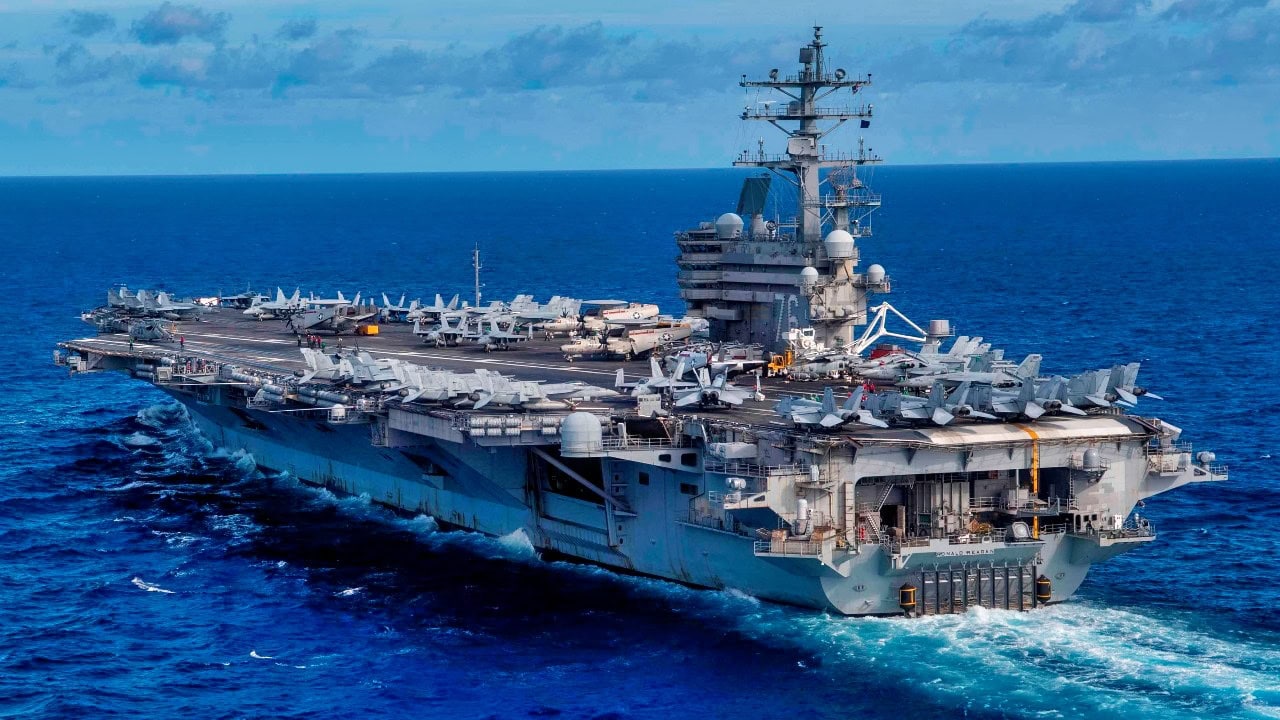
SOUTH CHINA SEA (June 16, 2021) The Navy’s only forward-deployed aircraft carrier USS Ronald Reagan (CVN 76) transits the South China Sea. Reagan is part of Task Force 70/Carrier Strike Group 5, conducting underway operations in support of a free and open Indo-Pacific. (U.S. Navy Photo by Mass Communication Specialist 1st Class Rawad Madanat)
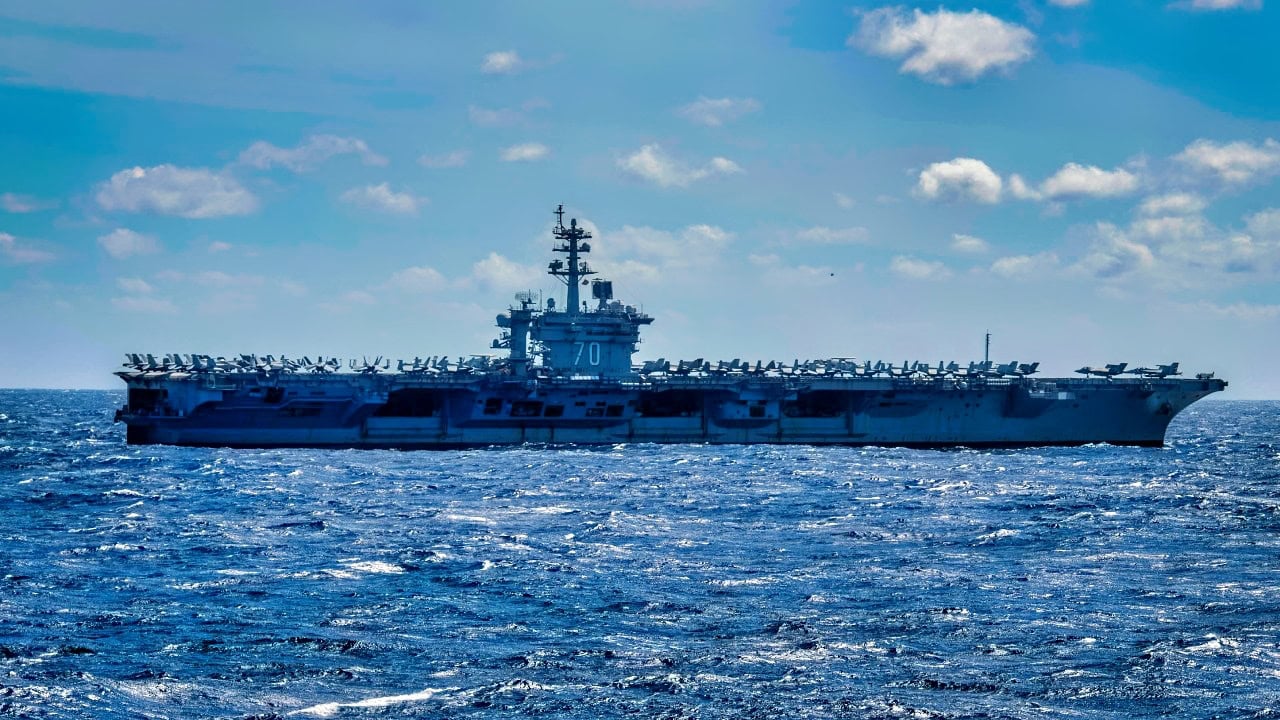
SOUTH CHINA SEA (Jan. 17, 2025) – The Nimitz-class aircraft carrier USS Carl Vinson (CVN 70) transits the South China Sea during a Maritime Cooperative Activity with the Philippine Navy, Jan. 17, 2025. The U.S. and Philippines work together as allies, enhancing the interoperability of maritime forces and supporting their shared goal of a free and open Indo-Pacific. Carrier Strike Group ONE, is underway conducting routine operations in the U.S. 7th Fleet area of operations. (U.S. Navy photo by Mass Communication Specialist 3rd Class Brianna Walker)
It should be noted that Chinese scholars in the United States are divided on this point. My colleague, Brendan O’Reilly, author of Everybody is Wrong About China: The Myths and Realities of Sino-US Competition, is of the mind that, as the famous meme says, “China does nothing. And still wins.”
In other words, Beijing has always favored stability over chaos. While they enjoy seeing America mired in its own Mideast mess, they see little reason to overcommit to a dangerous military operation against Taiwan themselves. Especially since there is a natural desire among at least part of the Taiwanese population for more open and stable relations with the Mainland.
Plus, most Chinese view the Taiwanese as fellow Chinese, and few want to send their children to fight what would undoubtedly be a brutal war.
China May Believe the Moment to Take Taiwan Is Now
Nevertheless, we must acknowledge that at least some of Trump’s recent moves have indirectly damaged China’s economy at a time when China needs total economic prosperity.
Already, Beijing has told its people to expect lower economic growth for the first time since the 1990s. There have been political shakeups at the highest levels of the Communist Party of China (CPC) that have reinforced President Xi Jinping’s control but also indicate that not everything is as rosy as the Chinese elite would have the world believe.
China may be adopting a “use-it-or-lose-it” mentality toward acquiring Taiwan. And if that is the case, Washington should recognize that the hammer might be falling much sooner than anticipated—and that the US military will be unable to do anything but watch in horror.
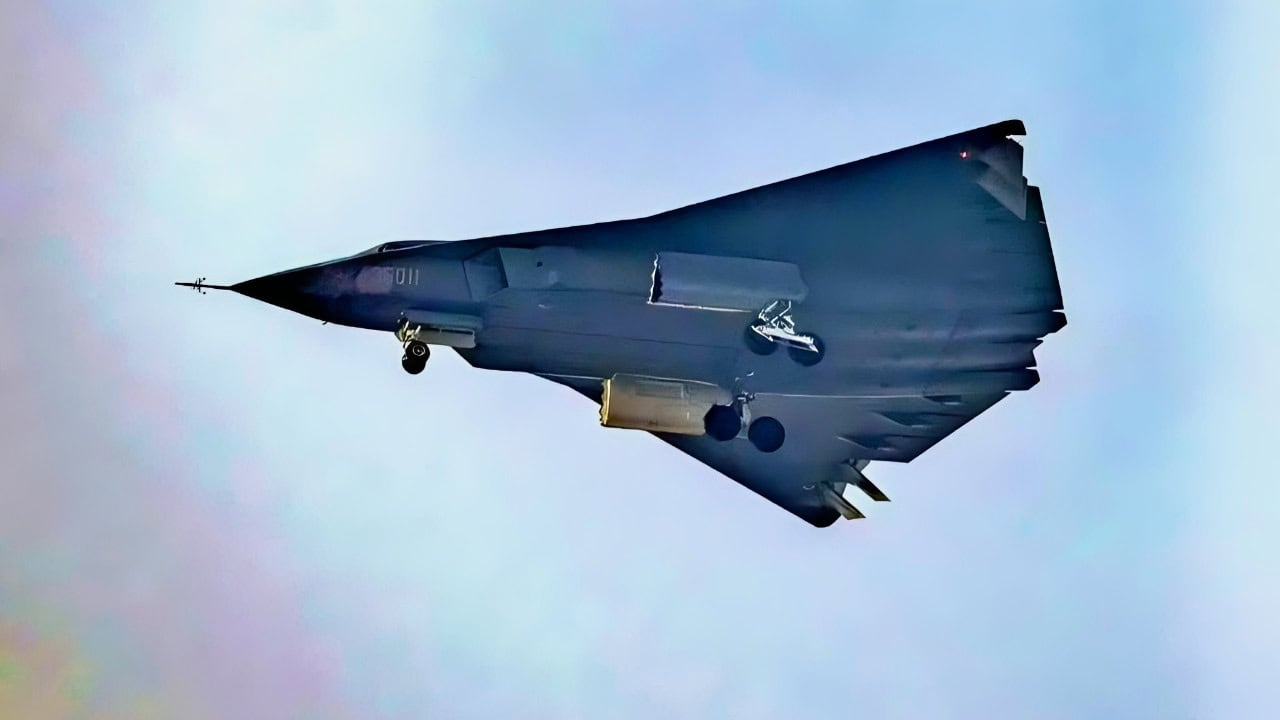
J-36 Fighter from China. Image Credit: X Screenshot.
Watching their Iranian allies in the Strait of Hormuz, Beijing is learning that if it can squeeze the Taiwan Strait, a key transit node for most of the world’s high-end computer chips (produced by Taiwan Semiconductor Manufacturing Company), it could effectively collapse the American economy.
That, too, would have negative consequences for China’s overall economy at a time when its leaders are unlikely to look to roil their domestic position any further than it already has been rattled.
Still, Taiwan seems like too tempting a target to ignore. Xi might throw the dice, given how depleted the American military juggernaut is right now.
The Indo-Pacific is Ripe for Pressure—from Taiwan to Japan
There are other areas where China could squeeze the collapsing American superpower in the Indo-Pacific. Beijing has been at odds with the Philippines over dominance in the South China Sea (SCS), and it has been contesting Japan’s claims in the East China Sea.
In fact, as Japan desperately seeks to rearm, Beijing has already highlighted its ability—and willingness—to decimate Japan with long-range ballistic missiles. Here again is an invaluable lesson that China has learned from Iran in the ongoing Iran War.
Ballistic missiles, hypersonic weapons, and drone swarms fired in sustained waves against a geographical neighbor—especially a smaller neighbor, like Japan—can have devastating consequences.
Japan Might Soon Be in the Crosshairs, Too
While the Japanese Self-Defense Forces are more than capable of waging war, and the Chinese are aware of those advanced capabilities despite the passive-sounding title Tokyo has given their Armed Forces, the Japanese are unlikely to withstand the kind of long-term missile barrage that the Chinese could subject them to…any more than countries like Bahrain, Qatar, or even Saudi Arabia can withstand Iran’s missile barrages.
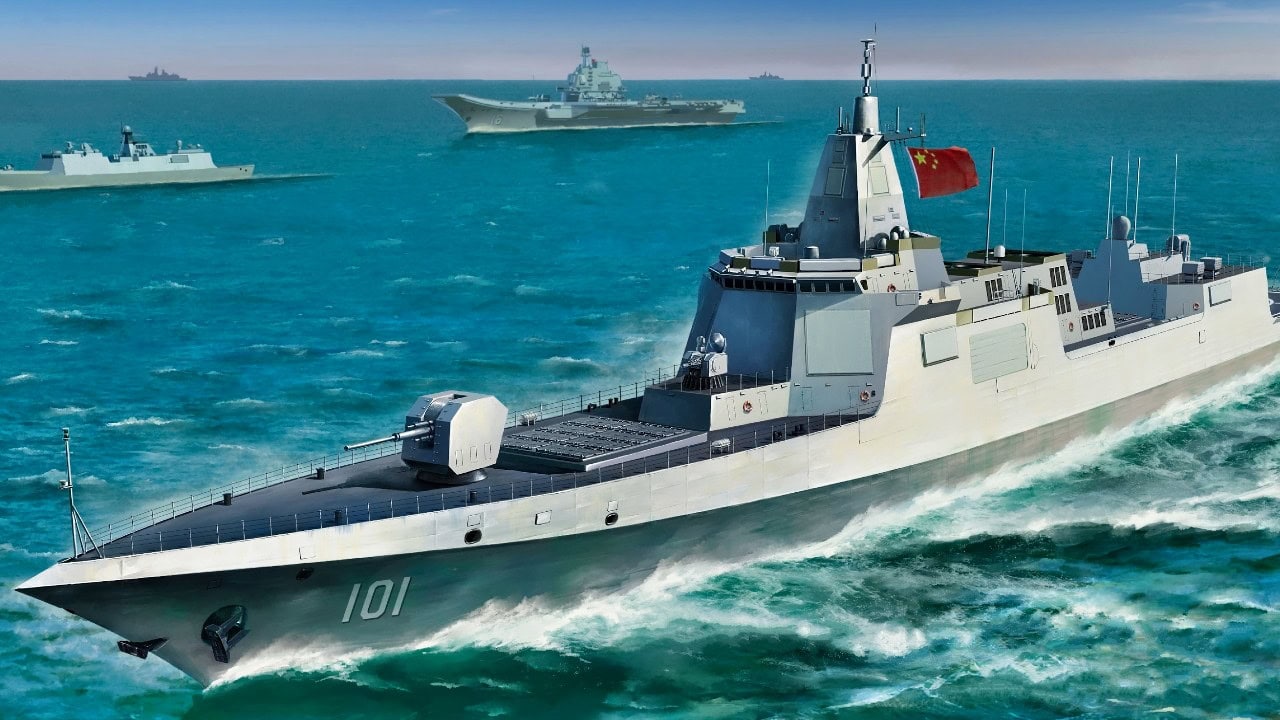
Chinese Navy Warship Created by Artist. Image Credit: Creative Commons.
Anyway, all this is even being considered because of the second-and third-order effects from the irresponsible US war in Iran.
China has studied, helped along, and prepared its forces based on lessons from the Iran War. It’s going to get bleaker for the United States strategically in the Indo-Pacific unless President Trump can find an off-ramp to this most dangerous war with Iran.
About the Author: Brandon J. Weichert
Brandon J. Weichert is the Senior National Security Editor at 19FortyFive.com. Recently, Weichert became the editor of the “NatSec Guy” section at Emerald.TV. He was previously the senior national security editor at The National Interest. Weichert is the host of The National Security Hour on iHeartRadio, where he discusses national security policy every Wednesday at 8 pm Eastern. He hosts a companion show on Rumble entitled “National Security Talk.” Weichert consults regularly with various government institutions and private organizations on geopolitical issues. His writings have appeared in numerous publications, among them Popular Mechanics, National Review, MSN, and The American Spectator. And his books include Winning Space: How America Remains a Superpower, Biohacked: China’s Race to Control Life, and The Shadow War: Iran’s Quest for Supremacy. Weichert’s newest book, A Disaster of Our Own Making: How the West Lost Ukraine, is available for purchase wherever books are sold. He can be followed via Twitter/X @WeTheBrandon.