
Summary and Key Points: International relations expert Dr. Andrew Latham evaluates the potential political outcomes of the 2026 U.S.-Iran war.
-As of March 13, 2026, Latham argues that while the Islamic Republic’s survival is unpalatable, its collapse could trigger a catastrophic fragmentation of authority.
-This report analyzes the risk of an IRGC-led nationalist security state and the even more volatile prospect of a “leaderless Iran,” where control over ballistic missiles, drone programs, and nuclear infrastructure becomes contested.
-Latham concludes that a “shattered Iran” would force immediate, high-risk external interventions to prevent the proliferation of its most lethal capabilities.
The Strategic Paradox: Why a Shattered Iran Could Be More Dangerous Than the Islamic Republic
Wars have a habit of producing results that the people who start them never quite intended. Clausewitz wrote about this two centuries ago, warning that once fighting begins, events develop a momentum of their own. Political leaders may think they know where a war is headed. The war itself often has other ideas.
Something akin to that danger hangs over the war with Iran. When the fighting finally stops—and all wars do stop eventually—the first question analysts will ask will sound straightforward enough: did the Islamic Republic survive, or did the regime collapse under the strain of military defeat?
It is a natural way to frame the issue. For more than four decades, the Islamic Republic has pursued nuclear capabilities, deployed ballistic missiles, and armed proxy networks to a degree that has unsettled nearly every government in the region. If the regime were to fall as a result of the war, many observers would instinctively treat that outcome as a strategic victory.
But wars often produce consequences no one planned for at the outset. The most important question after the shooting stops may not be whether the regime survives.
It may be whether the Iranian state itself survives.
The “Bad” Outcome: The Regime Survives
The first possible outcome is unpleasant but manageable. The Islamic Republic, damaged by war but still holding the reins of the country’s political institutions and security forces, remains the governing authority in Tehran.
That scenario would frustrate those who see the conflict as an opportunity to overturn the regime altogether. Yet from a strategic perspective, it is also the most familiar landscape. The United States, Israel, and the Arab states of the Gulf have spent decades dealing with a hostile Iranian government.
Over time, they have relied on a mix of deterrence, sanctions, intelligence cooperation, and the occasional burst of military pressure to keep Tehran’s ambitions within certain limits.
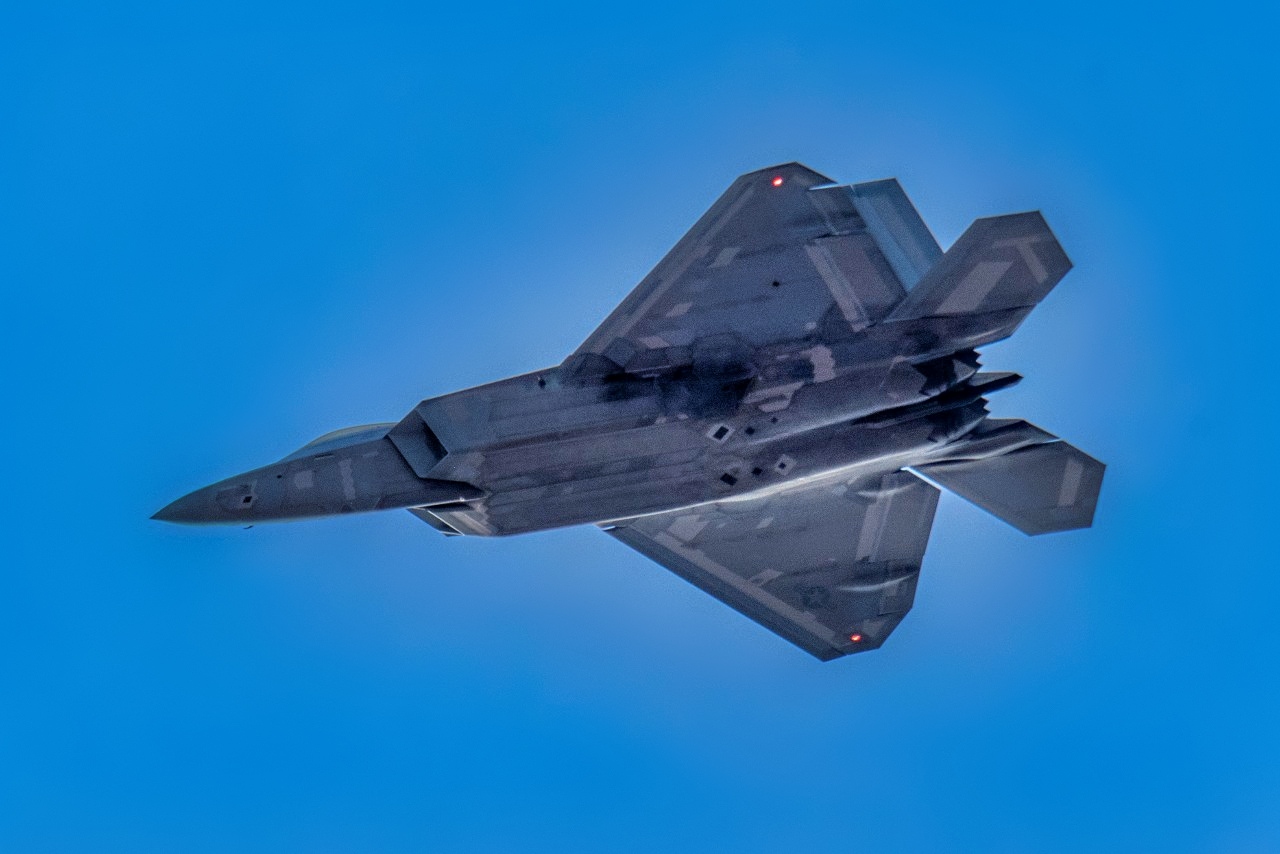
A U.S. Air Force F-22 Raptor assigned to the 3rd Wing conducts aerial practices at Joint Base Elmendorf-Richardson, Alaska, March 28. The F-22 is an American twin-engine, all-weather, supersonic stealth fighter aircraft and provides power projection across the Indo-Pacific region. (U.S. Air Force photo by Airman 1st Class Tala Hunt)
None of those tools is elegant, and no one pretends otherwise. They function because Iran remains a state with recognizable leadership structures and chains of command. Even ideological regimes, as history repeatedly reminds us, still worry about survival.
States can be deterred. That simple reality has shaped Middle Eastern strategy for more than a generation.
A Worse Outcome: A Revolutionary Guard State
The second possibility is more complicated. The clerical leadership collapses or loses its grip on power, but authority does not disappear entirely. Instead, it consolidates in the hands of another institution, most plausibly the Islamic Revolutionary Guard Corps.
That outcome is not nearly as far-fetched as it might sound. Over the past three decades, the Revolutionary Guard has grown into one of the most powerful organizations inside Iran’s political system. It commands elite military units, oversees large portions of the defense industry, and maintains close relationships with proxy groups operating across the Middle East.
In moments of national crisis, institutions that already possess coercive power tend to move quickly, and the Guard could step into the vacuum and impose a form of military rule meant to stabilize the country after the shock of war.

F-22 Raptor Fighter. Image Credit: Creative Commons.
Such a development would not produce the democratic transformation that some Western policymakers quietly hope for. Iran might instead evolve into something closer to a nationalist security state. The ideological language of clerical rule may fade with time, but the country’s strategic capabilities remain very much intact.
From the perspective of regional politics, that outcome might actually sharpen the rivalry rather than blunt it. A Guard-dominated government would still command Iran’s missile forces, maintain ties with regional militias, and continue pursuing influence across the Middle East. And, as a military dictatorship, it might well adopt an even more belligerent strategic posture than its predecessor.
Yet even this scenario rests on an assumption that is easy to overlook. It assumes that some institution remains capable of holding the country together.
History offers plenty of reasons to question that assumption.
The Truly Dangerous Outcome: A Leaderless Iran
The most troubling possibility lies beyond either of those outcomes. If the war ends with no clear successor and no institution capable of consolidating authority, Iran could enter a prolonged power struggle.
Large states rarely collapse neatly. Authority fragments and rival factions begin maneuvering for advantage. At the same time, political movements in major cities push for influence, and elements of the security apparatus compete to determine who actually commands the armed forces.
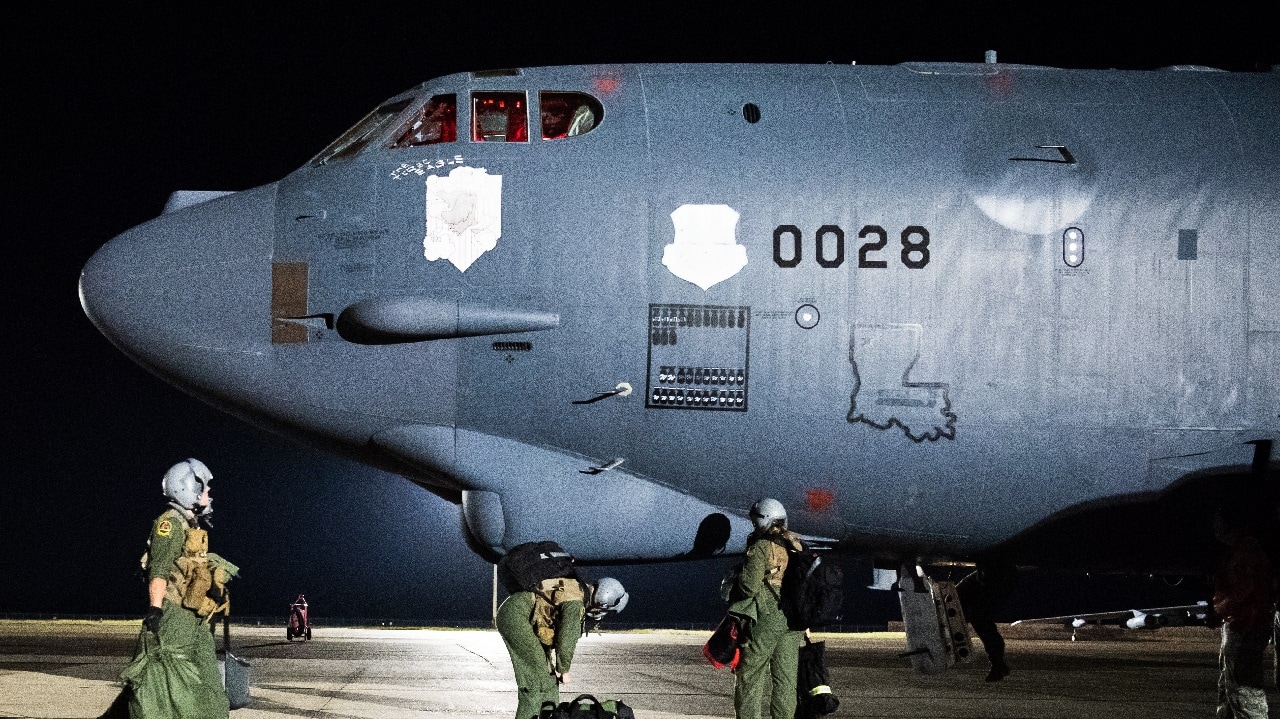
Airmen from the 96th Bomb Sqaudron load gear onto a B-52H Stratofortress at Barksdale Air Force Base, La., Oct. 13, 2020. The crew took part in a NATO crossover exercise designed to increase interoperability with NATO mission partners. (U.S. Air Force photo by Airman 1st Class Jacob B. Wrightsman)
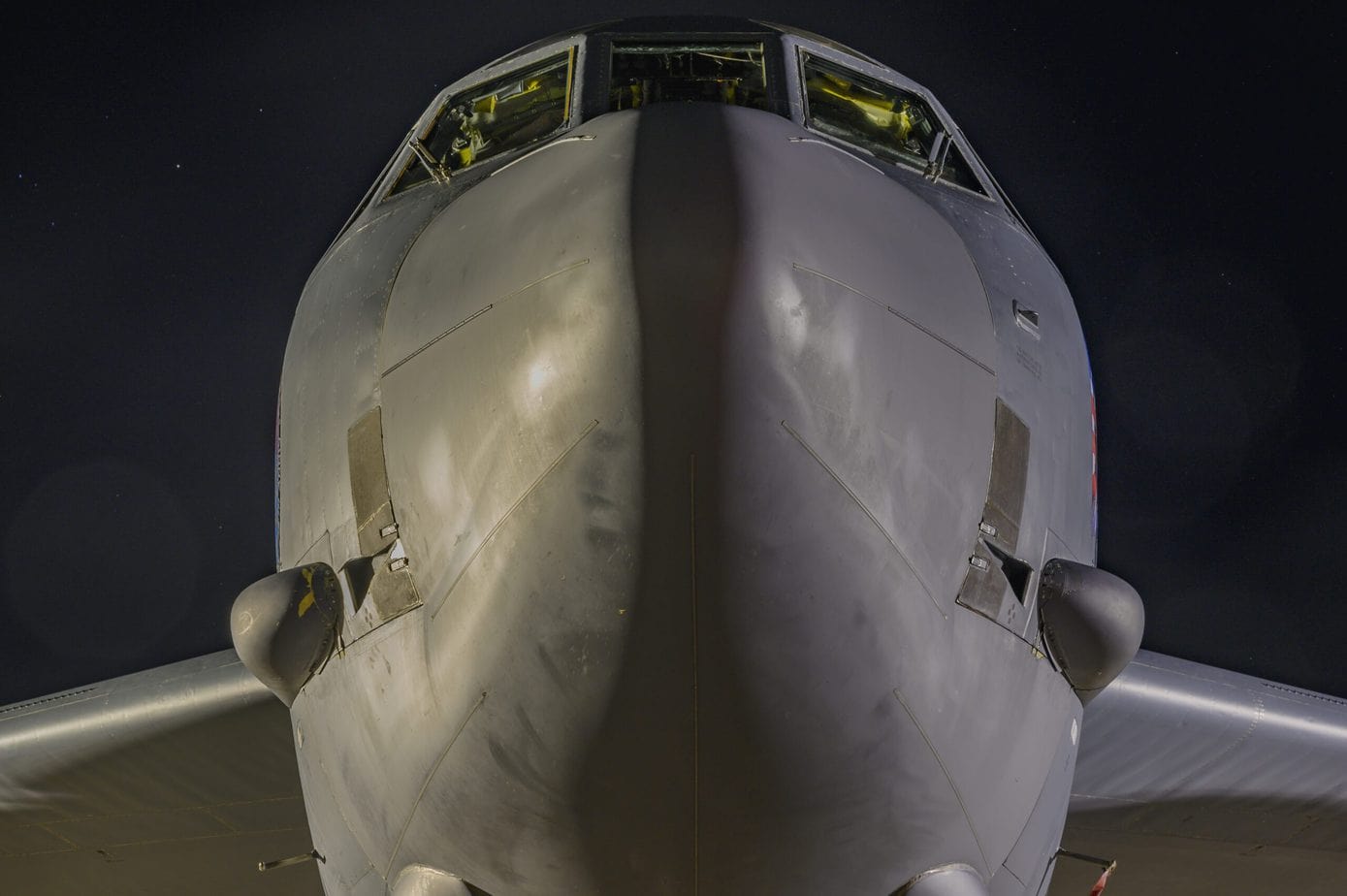
A U.S. Air Force B-52 Stratofortress assigned to Barksdale Air Force Base, La., is prepared for a Mark-82 munitions load, in support of a Bomber Task Force deployment, Feb. 1, 2020, at Andersen Air Force Base, Guam. The bomber deployment underscores the U.S. military’s commitment to regional security and demonstrates a unique ability to rapidly deploy on short notice. (U.S. Air Force photo by Senior Airman Jacob M. Thompson)
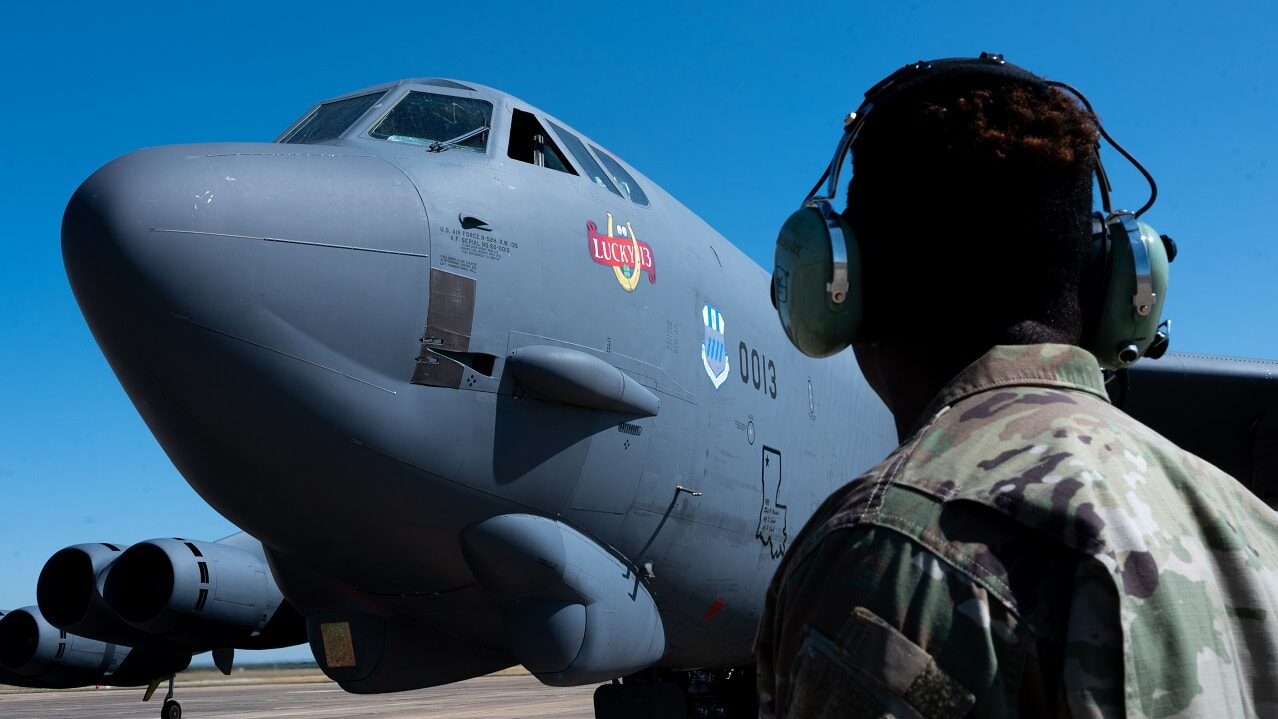
A U.S. Air Force maintainer conducts a visual inspection of a B-52H Stratofortress at Morón Air Base, Spain in support of Bomber Task Force 21-3, May 24, 2021. Strategic bomber missions enhance the readiness and training necessary to respond to any potential crisis or challenge across the globe. (U.S. Air Force photo by Staff Sgt. Jason Allred)
Iran also contains several internal fault lines that could widen under those conditions. Rival networks inside the security services might struggle to assert control over national institutions. Political activists could attempt to steer the country toward a new constitutional order. Regions on the country’s periphery—particularly those with strong ethnic identities—might see an opportunity to assert greater autonomy.
External actors would also become involved. The Middle East has never been a region in which neighboring powers remain passive when large states begin to unravel.
Once that begins to happen, the strategic problem facing the region changes fundamentally. The issue would no longer be how to deter Iran’s government.
The challenge would be how to prevent the fragmentation of one of the Middle East’s largest and most heavily armed states.
Iran possesses extensive missile forces, advanced drone capabilities, and nuclear infrastructure that have been the focus of international concern for decades. If authority over those capabilities becomes contested, outside powers could face immediate pressure to intervene to secure or neutralize them.
That is the moment when the war’s most dangerous phase could begin.
The Strategic Paradox
At first glance, the survival of the Islamic Republic is the least attractive outcome of the war. Many observers assume that if the regime falls, the region will finally be rid of a government that has spent decades building proxy networks, threatening its neighbors, and pushing against the limits of international pressure. The problem, as history keeps reminding us, is that the collapse of a regime does not automatically produce something stable in its place.
In international politics, the disappearance of authority often creates dangers of its own, particularly in large states where military institutions and strategic capabilities do not simply vanish when the leadership above them fractures.
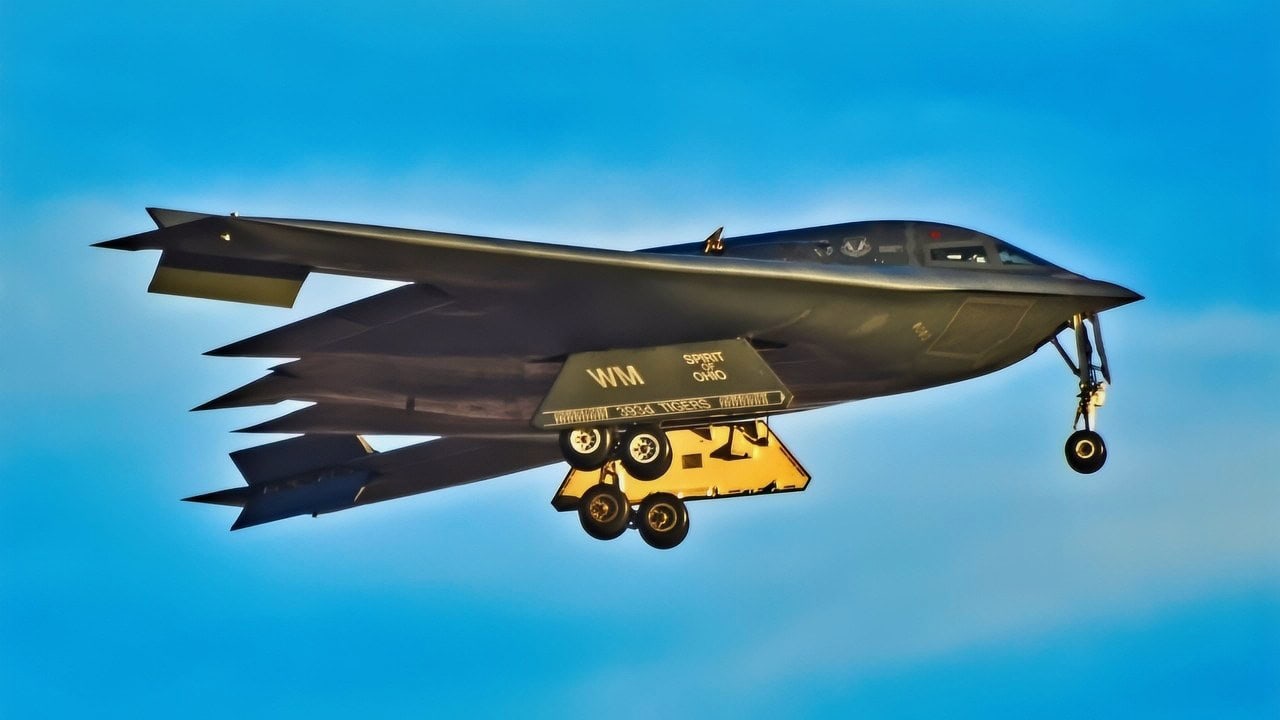
B-2A Spirit Stealth Bomber. Image Credit: Creative Commons.
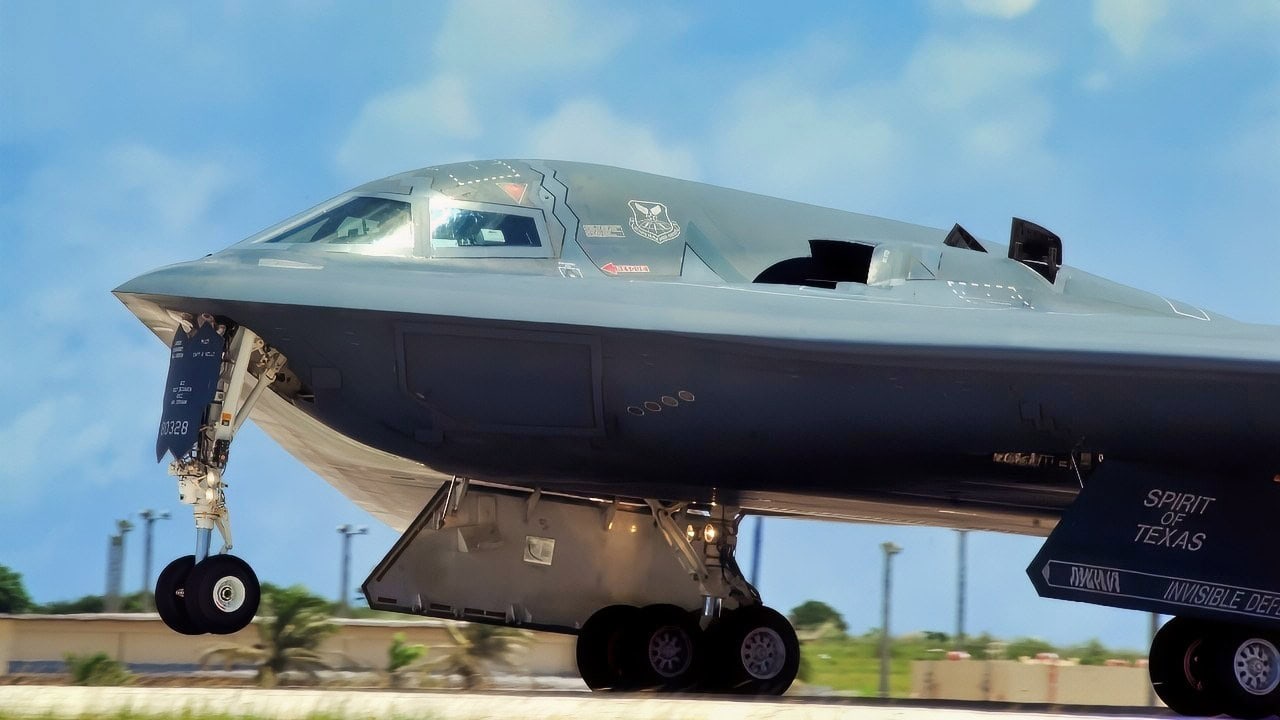
A U.S. Air Force B -2 Spirit aircraft deployed from Whiteman Air Force Base, Mo., launches from the runway at Andersen Air Force Base, Guam, Aug. 12, 2016. With its subsonic speeds and its nearly 7,000 mile unrefueled range, the B-2 Spirit is capable of bringing massive firepower, in a short time, anywhere on the globe through the most challenging defenses. (U.S. Air force photo by Senior Airman Jovan Banks)
For decades, the United States and its regional partners have dealt with a hostile but recognizable Iranian state. Deterrence, intelligence cooperation, sanctions, and periodic military pressure have all been built around that reality. The arrangement has never been comfortable, and few people would describe it as stable in any deep sense, but it has imposed a certain structure on the rivalry.
A fractured Iran would look very different. The country’s missile forces, drone programs, and nuclear infrastructure would still exist, yet the authority controlling them might not. Rival factions inside the security apparatus could struggle to secure those assets while political movements in major cities—and regional actors beyond Iran’s borders—try to shape the outcome of the country’s internal crisis.
At that point, the strategic problem shifts fundamentally. The issue is no longer how to deter a hostile government. The problem becomes how to prevent the fragmentation of one of the Middle East’s largest and most heavily armed states while some of its most dangerous capabilities sit in the middle of a political struggle whose outcome no one can predict.
A defeated Iran might still be manageable.
A shattered Iran might not be.
About the Author: Dr. Andrew Latham
Andrew Latham is a non-resident fellow at Defense Priorities and a professor of international relations and political theory at Macalester College in Saint Paul, MN. You can follow him on X: @aakatham.