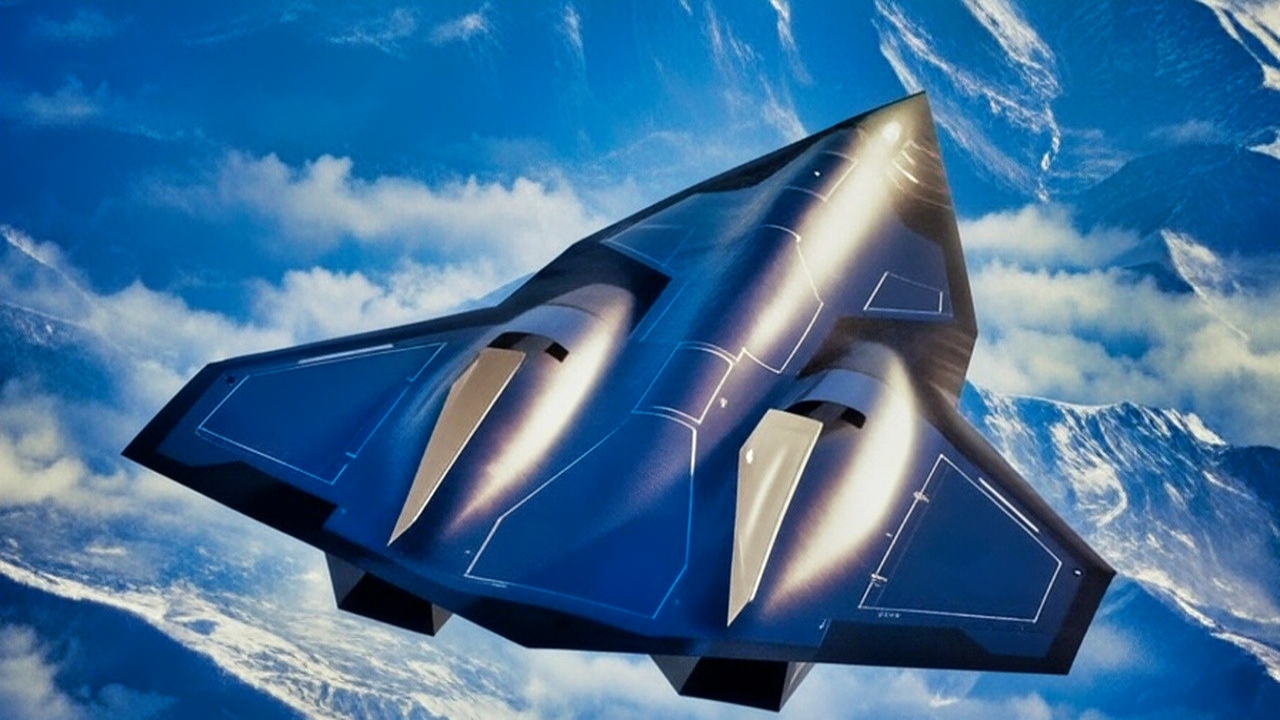
When Lockheed Martin unveiled the SR-72 concept in 2013, the roadmap suggested the system would be operational by 2030, with benchmarks including 2017, when a demonstrator was first discussed publicly, and the early 2020s, when the system would be tested.
By 2025, there would be a demonstrator flying, with the bird operational by 2030.
Despite the initial timeline suggesting a 2025 demonstration, the lack of leaked flight photos or official acknowledgment underscores significant delays and technical hurdles in the SR-72 program.
So, if the program is supposedly approaching operational status, there has been no indication that it has met any of the benchmarks. That’s abnormal, even for a highly classified system like the proposed SR-72.
Engine Problems?
The challenge of creating a new Turbine-Based Combined Cycle (TBCC) system highlights the project’s technical difficulty, inspiring respect for the engineering effort involved.
What that means is the SR-72 possesses a normal turbine engine for takeoff. Once in flight, though, the system transitions to a ramjet and then to a scramjet–all while accelerating to Mach 5–and beyond!
That’s not a normal transition for an aircraft (even a military plane).
And for this new system to work well, the Air Force will need not only to develop the new engine but also to consistently demonstrate that the engine works reliably and that the overall system is reliable.
Lockheed Martin, the company developing the Son of Blackbird, has identified the TBCC as the plane’s primary system. Without this engine, the SR-72 doesn’t work.
Yet transitioning from a normal turbine to a ramjet to a scramjet is an onerous task.
Having it in a combat plane would require so much testing and time that there would likely be significant complications with this engine.
And those complications might be responsible for the alleged delays the SR-72 is experiencing.
Hypersonics Have Become Much Harder Than People Expected
The SR-72 is part of a growing area of interest for US military engineers: hypersonic technology.
This is a technology that both the Russians and Chinese–even the Iranians–have mastered (in terms of missiles).
The Americans, meanwhile, have struggled to develop their own hypersonic weapons.
And if the US is struggling with hypersonic weapons, the SR-72, which is essentially a hypersonic plane, is likely having difficulty as well.
Just look at the other hypersonic systems that the Americans have struggled to develop.
The ARRW, HAWC, HACM, and other systems have all suffered through delays, redesigns, or cancellations.
Even building a Mach 6 missile has proven difficult. Now the Air Force wants a reusable Mach 6 aircraft. This system has not yet taken wing because, in my assessment, it is too complex.
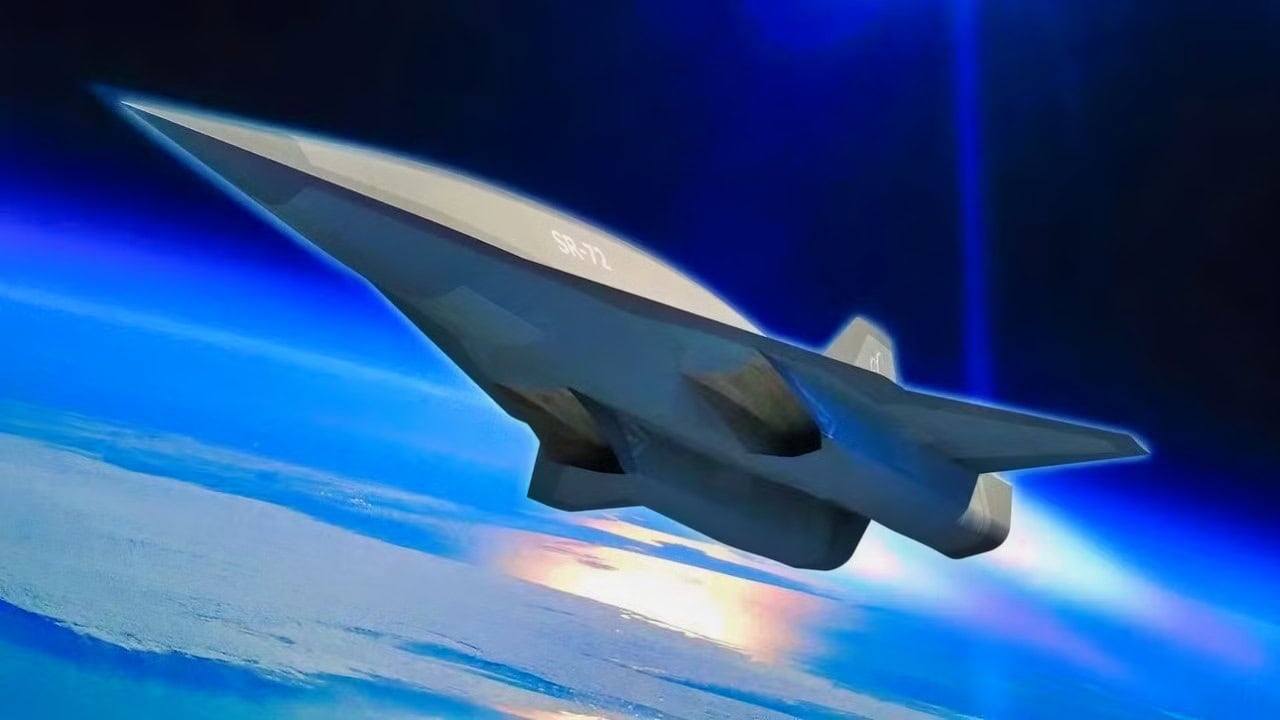
SR-72 Darkstar. Image Credit: Lockheed Martin.
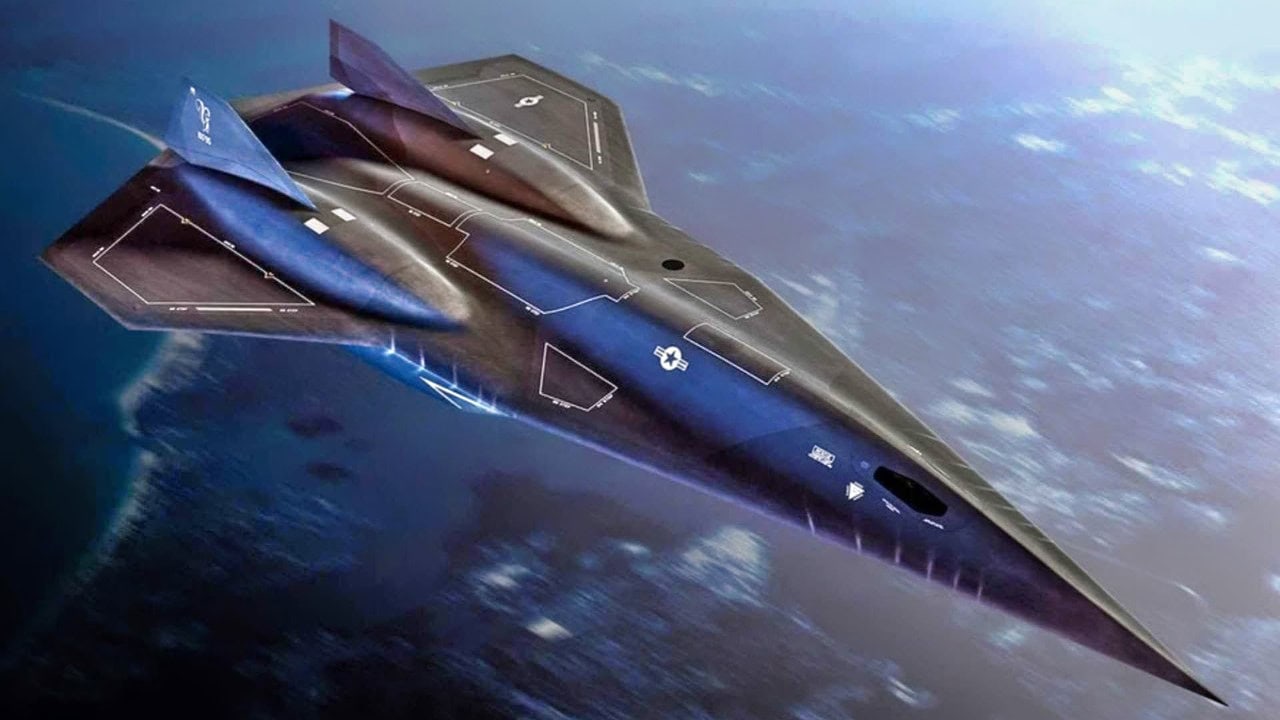
SR-72. Image Credit: Creative Commons.
Think about it: you’re dealing with temperatures above 2,000 degrees Fahrenheit. At those speeds and heat, the aircraft experiences what’s known as “thermal expansion.”
Then there’s the need to manage the powerful inlets for the engines while in flight–all while enduring the communications blackout (five minutes of terror) that hypersonic weapons cause, due to a plasma shield that forms around a craft while traveling at hypersonic speeds.
There’s also the issue of fuel cooling and the overarching issue of structural fatigue from repeated hypersonic flight.
So, given the overall crisis in the US defense industrial base’s inability to meet current, let alone increased, demands, the notion is that the original timeline for the SR-72 is likely significantly delayed.
Even if it manages to take wing soon, mass production of this advanced bird will likely be an onerous and time-consuming process, considering how complex (and expensive) it is.
Aerospace Challenges: The Mission May Have Changed for SR-72
There’s the added issue that the mission for which the SR-72 was originally designed has changed. Back in 2013, the US still enjoyed overwhelming air dominance.
The Air Force could rely on relatively permissive environments.
The assumption at the time of the SR-72’s creation was that satellites were vulnerable, so stealth was becoming less effective, and speed was king.
But today, the Air Force has many other intelligence, surveillance, and reconnaissance (ISR) options, like cheaper classified stealth drones, high-altitude UAVs, proliferated satellite constellations, and AI-enabled sensor fusion.
Rather than risking a billion-dollar hypersonic aircraft over China, commanders may launch dozens of satellites or stealth drones, meaning the original business case for the SR-72 is much weaker than it appeared a decade ago.
Concluding Thoughts
Given the overarching problems of the defense industrial base, the complications America has faced in developing hypersonic weapons in general, and the changing nature of warfare, it is likely that the system is not flying because the engines are more problematic than originally conceived.
You know that a delay is likely because the Air Force has not acknowledged a prototype, and there have been no leaks suggesting a Mach 6 demonstrator is routinely airborne.
The SR-72, for all intents and purposes, is merely a concept that has yet to take flight. And it is a concept that is far behind its original schedule.
Indeed, the Son of Blackbird might not ever come to fruition because of those complications.
About the Author: Brandon J. Weichert
Brandon J. Weichert is the Senior National Security Editor at 19FortyFive.com. He also manages The Weichert Brief on Substack. Weichert also hosts “National Security Talk” on Rumble. He is the author of four bestselling national security books, the most recent of which is A Disaster of Our Own Making: How the West Lost Ukraine (Encounter Books). Follow him via Twitter/X @WeTheBrandon.