
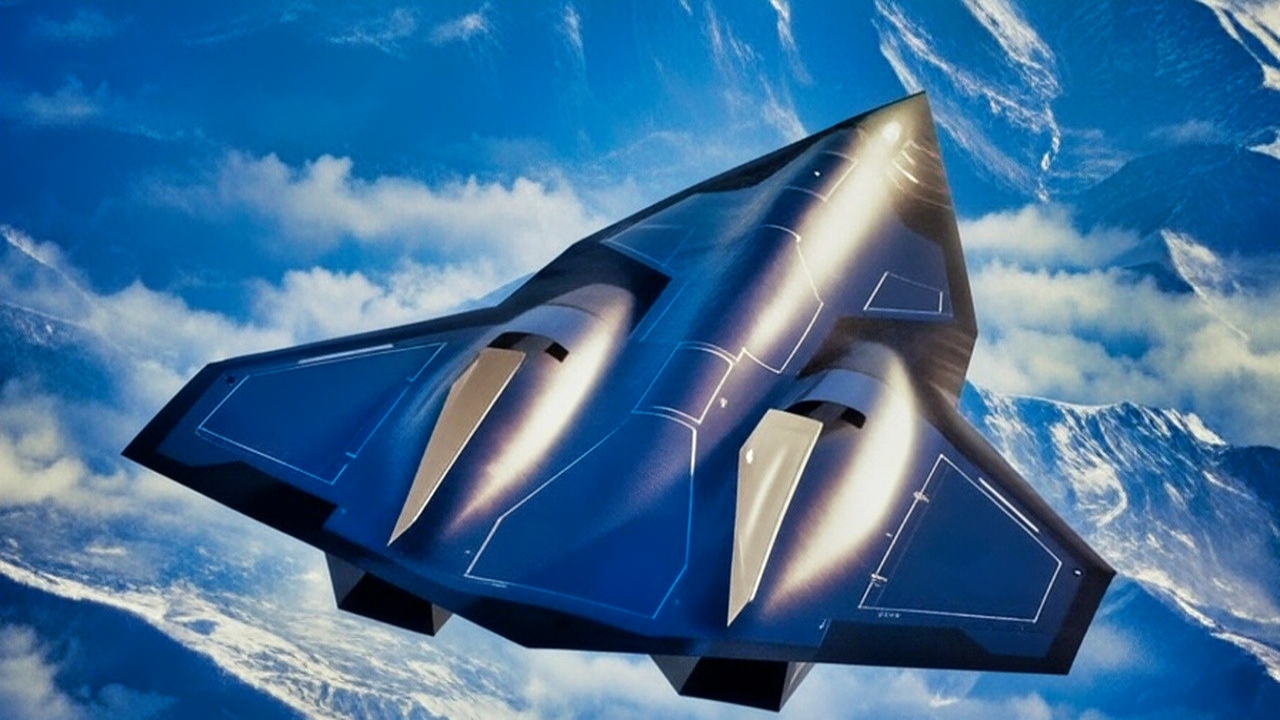
Summary and Key Points: Defense analyst Jack Buckby evaluates the status of the Lockheed Martin SR-72, the conceptual hypersonic successor to the SR-71 Blackbird.
-Envisioned as a Mach 6-capable platform for ISR and strike missions, the SR-72 relies on a TBCC engine combining traditional turbines with scramjets.
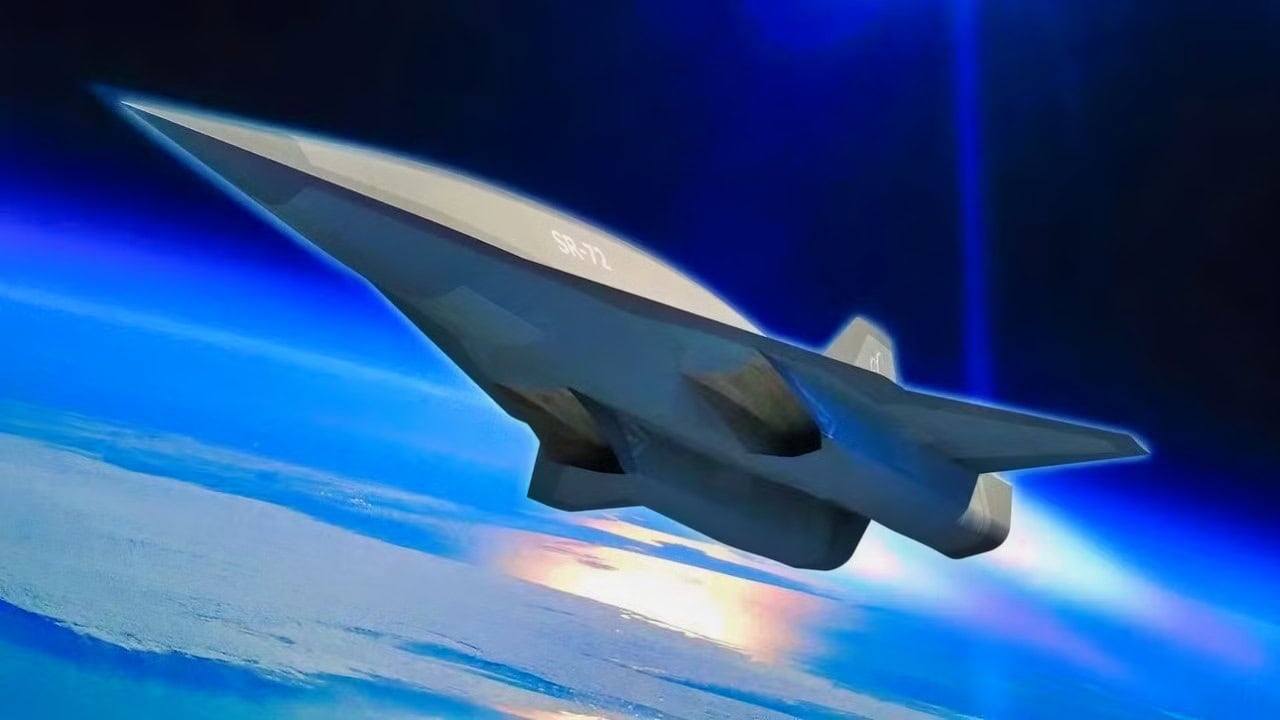
SR-72 Darkstar. Image Credit: Lockheed Martin.
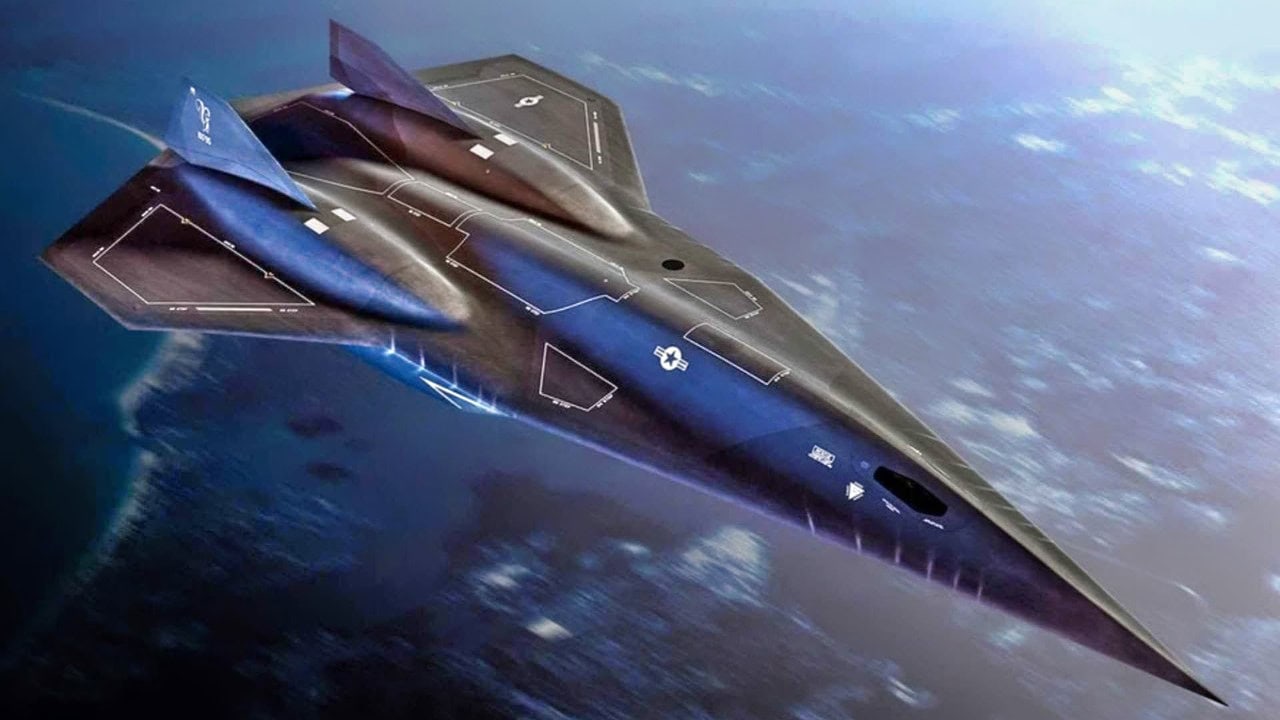
SR-72. Image Credit: Creative Commons.
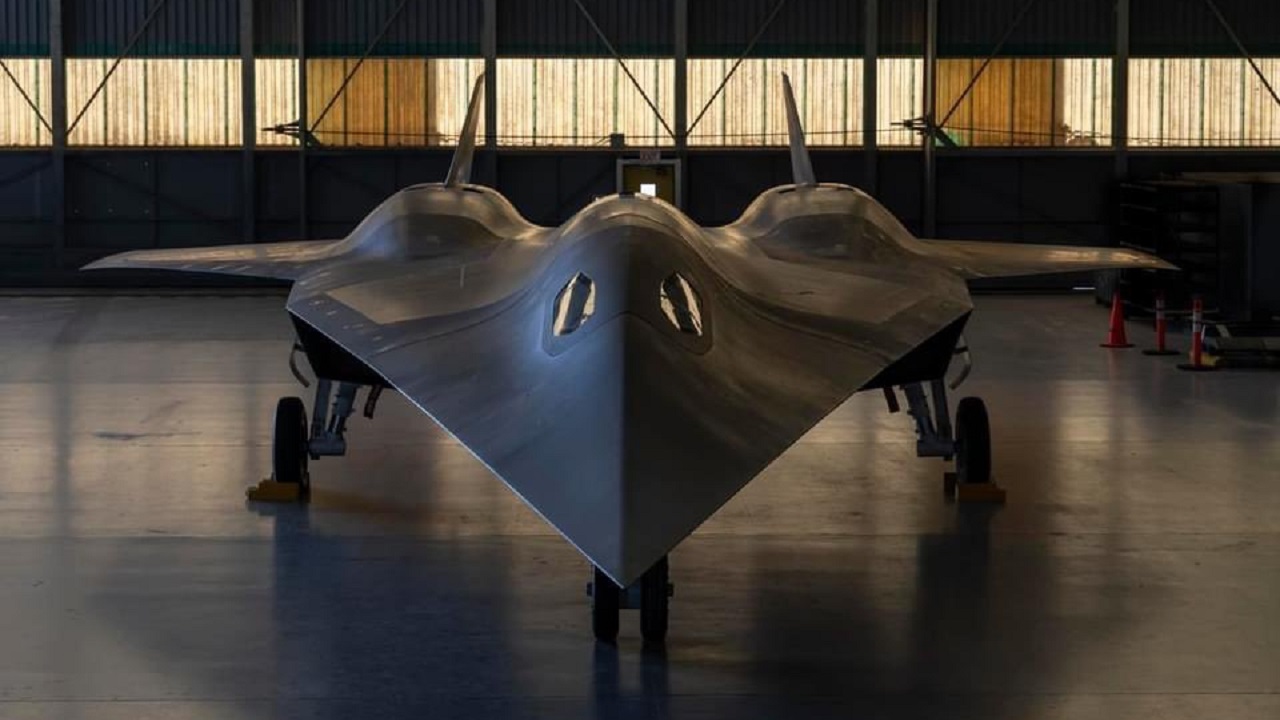
SR-72. Image Credit: Lockheed Martin.
-This report analyzes the program’s history since its 2013 reveal, including the 2018 denials by Orlando Carvalho and Jack O’Banion’s additive manufacturing insights.
-Buckby explores the 2026 lack of prototype data and concludes that the “mid-2020s” demonstrator window is narrowing as the Pentagon prioritizes general hypersonic research.
In 1 Word: Mystery
The Son of Blackbird Paradox: Why the Mach 6 SR-72 Remains a Pentagon Mystery in 2026
More than a decade after it was first publicly discussed, the Lockheed Martin SR-72 remains one of the most intriguing – and mysterious – aircraft concepts being explored by the Pentagon.
Often described as the “Son of Blackbird,” the aircraft is intended to honor the legacy of the Cold War-era SR-71 reconnaissance aircraft while also developing new performance technologies that could enable sustained hypersonic speeds.
The SR-72 has been described as a potential Mach 6 platform capable of conducting intelligence, surveillance, reconnaissance, and possibly strike missions at speeds exceeding 4,000 mph.
Despite the excitement surrounding the concept when it first appeared in the early 2010s, updates on the project have been rare since. Lockheed Martin has periodically suggested that development is progressing, but the Pentagon has never formally acknowledged the existence of an operational program.
That long silence obviously raises questions about whether the SR-72 program exists, whether it is still in progress, and whether it has perhaps stalled. Whatever the case, the idea behind the aircraft – a hypersonic platform capable of outrunning air defenses – remains highly relevant as the United States confronts increasingly capable adversaries and evolving battlefields from the Middle East to the Indo-Pacific.
The Origins of the “Son of Blackbird”
The SR-72 concept first appeared publicly in 2013 when Lockheed Martin’s Skunk Works division revealed plans for a hypersonic successor to the legendary SR-71 Blackbird reconnaissance aircraft. The original SR-71, introduced during the Cold War, could fly above Mach 3 at altitudes of roughly 80,000 feet, allowing it to outrun most Soviet air defenses.
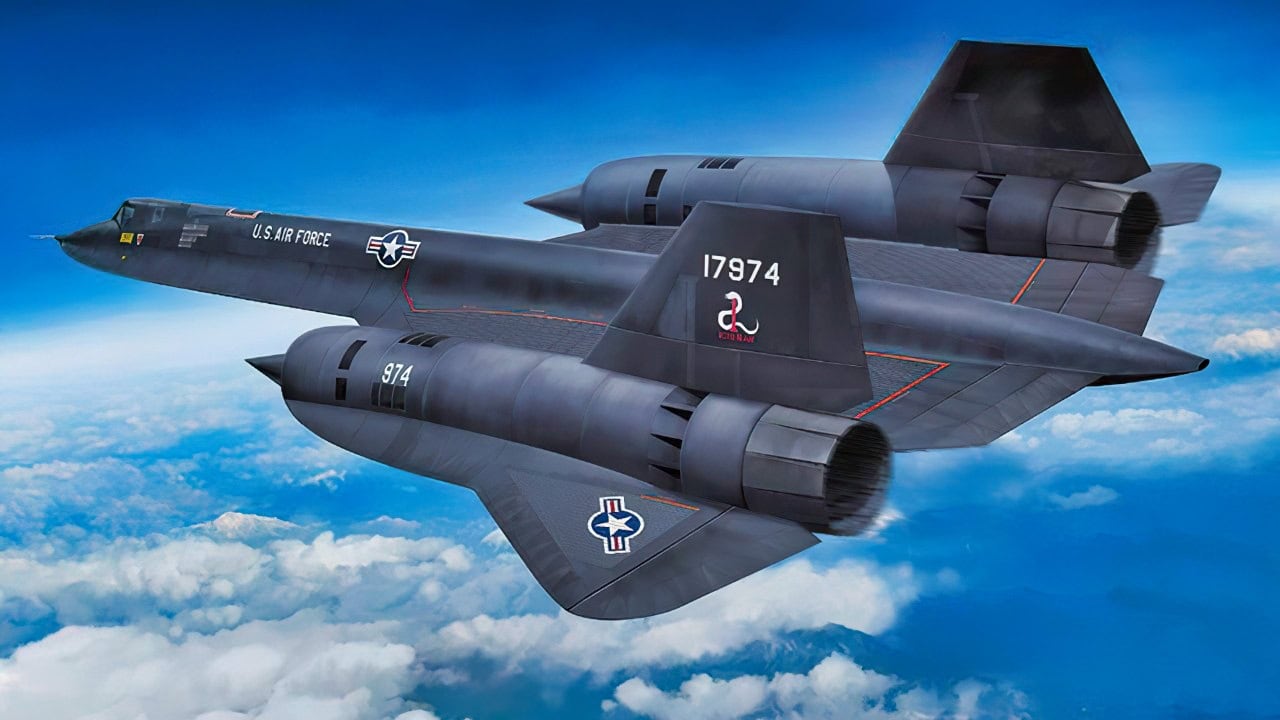
SR-71 Blackbird. Image Credit: Creative Commons.
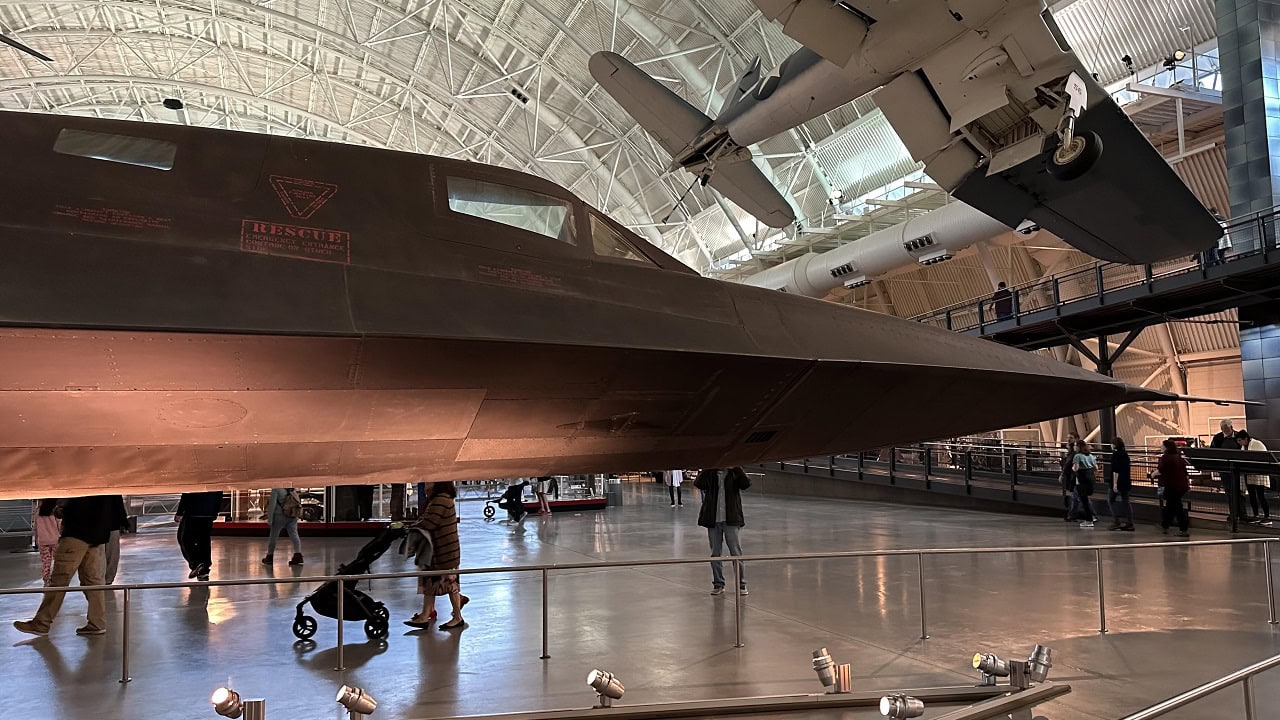
SR-71. SR-71 photo taken at the National Air and Space Museum. Taken by 19FortyFive on 10/1/2022.
Lockheed’s proposed successor was intended to be significantly more ambitious than that design. Instead of Mach 3, the SR-72 would aim for speeds above Mach 6 – twice as fast as the astoundingly quick Blackbird – while maintaining the ability to take off from a conventional runway rather than being launched by an air-based platform.
To achieve such incredible speeds, engineers envisioned a propulsion system combining traditional turbine engines with scramjet technology, known as a turbine-based combined-cycle engine. That kind of arrangement would, in theory, allow the aircraft to accelerate normally at lower speeds before transitioning to hypersonic flight. Early concept discussions reportedly suggested that a demonstrator could fly sometime in the mid-2020s and that an operational platform might appear around 2030.
Those timelines generated enormous interest in the project, not just in aerospace circles but in national media, and set expectations that the world could soon see the fastest aircraft ever built. But in 2026, no such aircraft had appeared.
What We Know Today
With no publicly announced prototype flight, there are obviously questions about the project’s status. The absence of updates is now a defining feature of the program: nobody knows if it’s real or not.
Lockheed Martin executives have occasionally spoken about hypersonic aircraft development over the years, but concrete details have been scarce. At times, company officials have even downplayed reports that a specific SR-72 aircraft was actively under construction. In early 2018, when speculation about the SR-72 began to escalate, then-Executive Vice President of Lockheed Martin Aeronautics, Orlando Carvalho, publicly pushed back against reports that the company had already built the aircraft. Carvalho told reporters that no SR-72 aircraft had been produced, directly contradicting the speculation in the aerospace press at the time.
He also attempted to move the conversation away from a specific aircraft program and toward general hypersonic research, explaining that Lockheed Martin was primarily focused on developing enabling technologies rather than building a finished operational platform.
“I can tell you unequivocally that it has not been built,” Carvalho said at the time.
Just weeks before Carvalho’s comments, Jack O’Banion, Lockheed Martin’s Vice President of Strategy and Customer Requirements at Skunkworks, gave a presentation at the AIAA SciTech Forum. In that talk, O’Banion discussed advances in manufacturing and propulsion that could make the SR-72 feasible, including additive manufacturing to build cooling systems directly into hypersonic engines. His comments made it sound as though the aircraft was moving closer to reality.
The two comments, made only weeks apart, only further confused matters; one executive hinted that the SR-72 was real, and the other firmly stated it was not.
Silence Ever Since
Since those 2018 comments, the public record has been extremely quiet, which in itself may be the most telling signal about the SR-72’s status. No official prototype rollout has been announced, there have been no confirmed flight tests, and the U.S. Air Force has never formally listed the aircraft among its active or planned programs. At the same time, Lockheed Martin has continued to speak fairly broadly about hypersonic aircraft research. Skunk Works officials have, however, periodically suggested that enabling technologies – particularly propulsion and high-temperature materials – are advancing. In 2022 and 2023, company representatives again referenced work on high-speed aircraft concepts capable of hypersonic speeds, though they avoided confirming the existence of a specific platform, the SR-72.
It is, therefore, impossible to say where the Son of Blackbird is – but given the silence and the firm 2018 denial, it could well be the case that Lockheed Martin is looking at new technologies that could enable the kind of capabilities originally envisioned for the aircraft. But as it’s only 2026, there’s another year or two before the “mid 2020s” deadline is officially passed.
About the Author: Jack Buckby
Jack Buckby is a British researcher and analyst specialising in defence and national security, based in New York. His work focuses on military capability, procurement, and strategic competition, producing and editing analysis for policy and defence audiences. He brings extensive editorial experience, with a career output spanning over 1,000 articles at 19FortyFive and National Security Journal, and has previously authored books and papers on extremism and deradicalisation.