

Summary and Key Points: During Cold War quick-reaction scrambles, Sweden’s JA-37 Viggen crews hunted U.S. and Soviet aircraft near Swedish airspace. And they surely gave the SR-71 Blackbird a run for their money.
-On the SR-71’s weekly “Baltic Express” run, controllers used data tracking to time a 180-degree head-on intercept: sprint from about 8,000 meters, then a gentle pull-up to near 18,500–20,000 meters while accelerating toward Mach 2.
-Pilot Per-Olof Eldh says the tactic produced immediate radar locks and simulated missile shots with closing speeds around Mach 4.5–5.0.
-The window was so tight that a slight SR-71 maneuver could spoil the solution, and Swedish rules discouraged climbs above 16,000 meters without pressure suits.
-Countermeasures sometimes complicated lock-ons, but crews adapted—and contrails occasionally made the Blackbird visible.
Sweden Locked Radar on the SR-71 at Mach 3—And Did It Five Times
Here is a little-known story about the SR-71 Blackbird that may shock you. The vaunted SR-71 was once caught on radar by a Swedish fighter jet a handful of times during the Cold War. If the SR-71 was flying at MACH 3, how did this happen?
The SR-71 can also fly at a top altitude of nearly 85,000 feet, so this must have been some great derring-do by Swedish aviators.
What Were the Swedes Up To?
First, let me share some information about Swedish aerial tactics toward the end of the Cold War, when both the United States and the Soviet Union were jockeying for aerial supremacy. The Swedish air force wanted to ensure these countries did not fly their aircraft over its airspace.
Their aviators frequently conducted air patrols to intercept any straying American or Soviet fighter jets and spy planes.
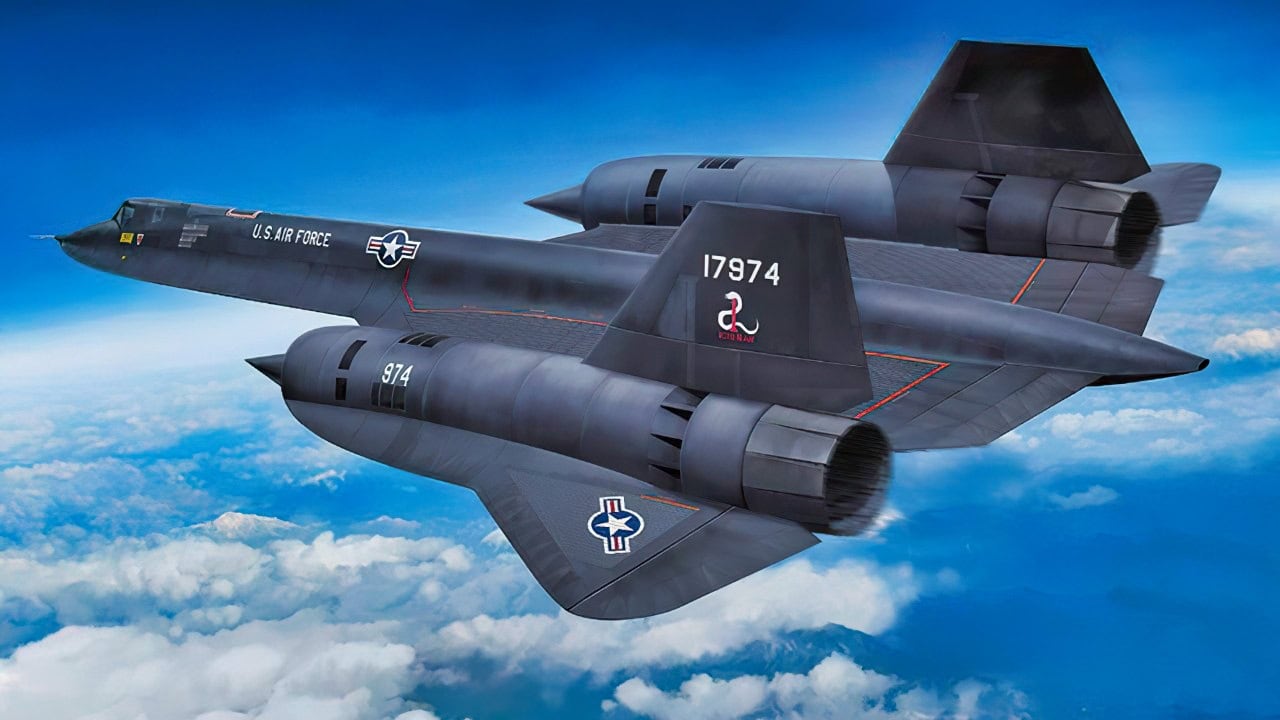
SR-71 Blackbird. Image Credit: Creative Commons.

SR-71. SR-71 photo taken at the National Air and Space Museum. Taken by 19FortyFive on 10/1/2022.
The ‘Fighting Viggen‘ Was the Answer for Quick Reaction Duties
JA-37 Jaktviggen or “fighter Viggen” pilots were busy flying interceptor missions in the 1980s. They usually scrambled at least once a week, and sometimes even once a day. They called these Quick Reaction Alert (QRQ) operations. The Swedes may have done as many as 400 to 500 QRA missions a year.
SR-71′ Baltic Express’ Was No Milk Run
These missions typically occurred when aircraft from American, Soviet, or Warsaw Pact nations encroached on Swedish airspace over the Baltic Sea or the Gulf of Bothnia. The U.S. Air Force loved to take this route during SR-71 spy missions. This was known as the “Baltic Express” run.
Blackbird Book Is Hot to Trot
Our friends at the Aviation Geek Club read a book called Lockheed Blackbird: Beyond the Secret Mission by Paul F. Crickmore. I need to get my hands on this well-reviewed epic because it has some untold stories about the SR-71.
Crickmore related an account by Rolf Jonsson, a retired Swedish air force flight controller. Jonsson said the SR-71 flew close to Sweden about once a week. This was a challenge for Johnson’s fly boys due to the SR-71’s high speed and altitude.
Use the Frontal Attack Technique
“When the SR-71 first began operating in Europe, our air force was equipped with the Saab J-35F Draken, and although intercept attempts were made, the aircraft’s performance wasn’t up to the task. However, one point was clear — the method that offered the greatest opportunity of success was a frontal attack, with both aircraft exactly on a 180° divergent heading — assuming, of course, that the SR-71 didn’t turn! Other very important factors to try to determine when planning an intercept were the high altitude air temperature and the SR-71 altitude,” Jonsson recalled.
The Viggen Was Full of Gusto
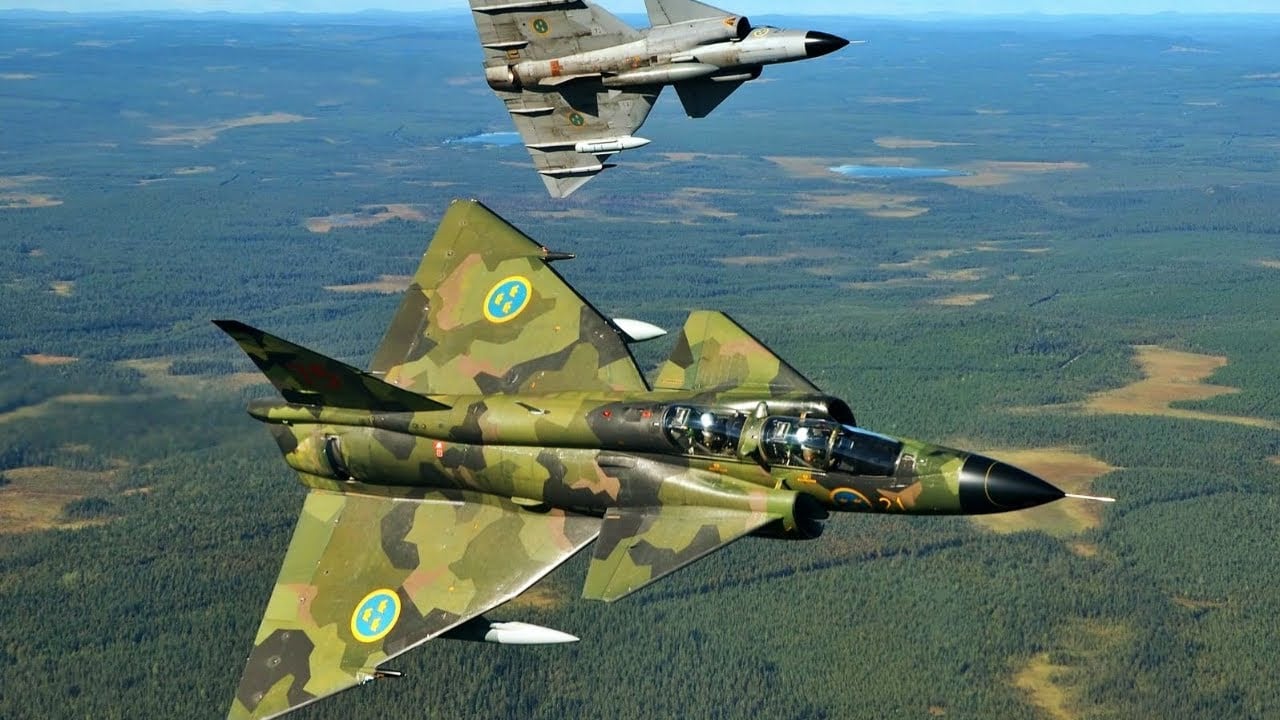
Saab 37 Viggen. Image Credit: Creative Commons.
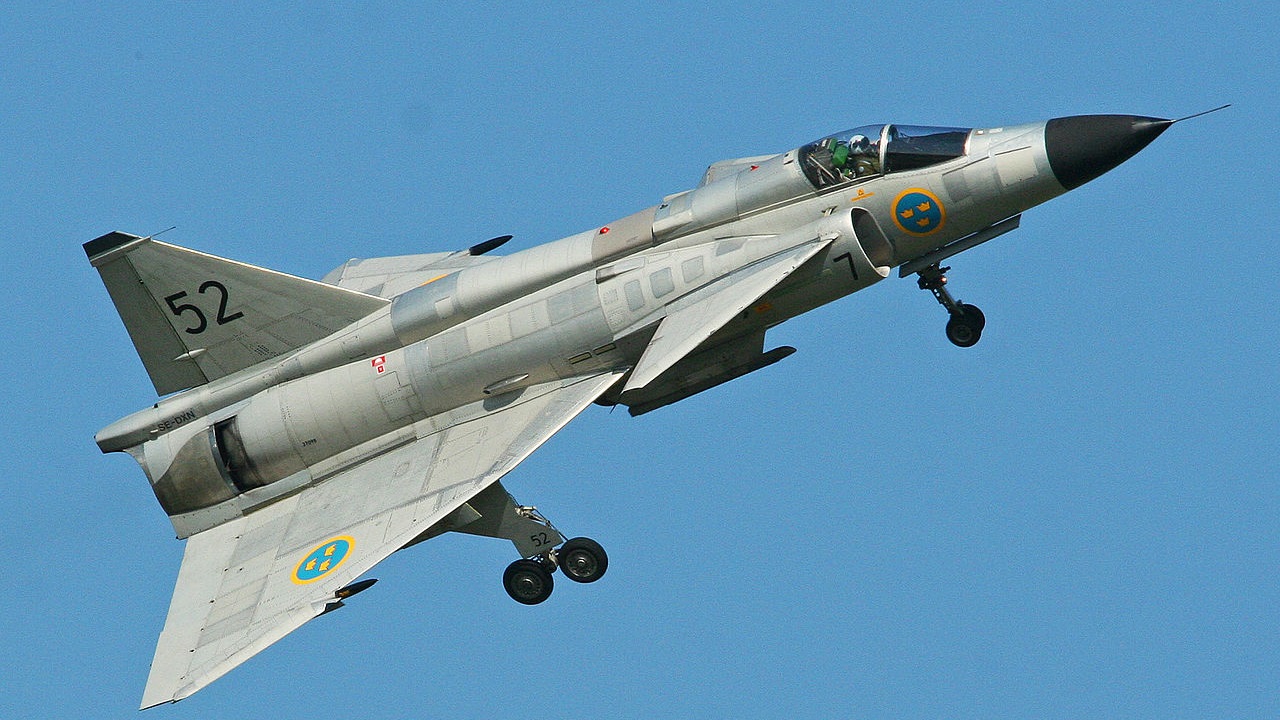
Making its first UK Airshow appearance, this amazing Saab 37 Viggen is operated by the Swedish AF Heritage Flight in genuine F7 markings. Seen during its solo routine. c/n 37-098. 2013 Waddington Airshow. 6-7-2013
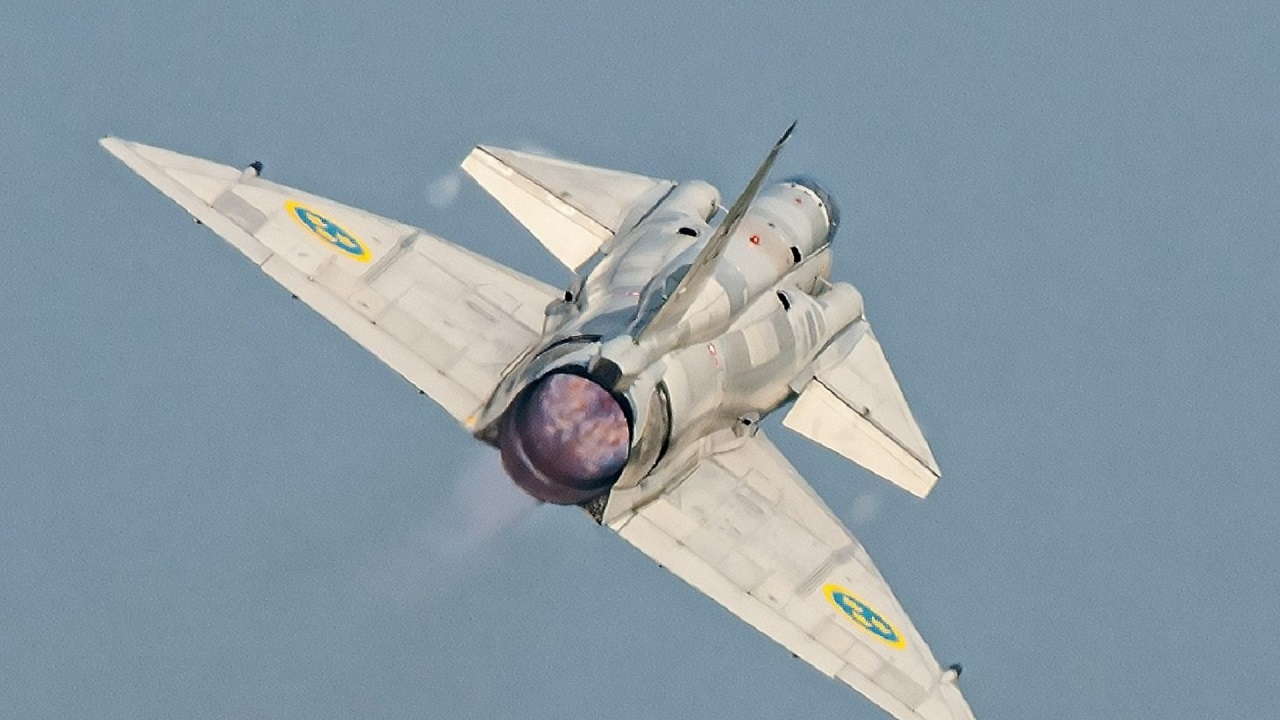
Saab 37 Viggen. Image Credit: Creative Commons.
The JA-37 Viggen had the right stuff – a great mixture of performance, speed, and maneuverability that would make pilots happy they were at the controls. The aviators had an excellent rapport with ground controllers like Jonsson. The Viggen drivers were full of gusto and had high morale. But would they be able to even spot the SR-71 at that high speed and altitude?
Radar Lock Against the SR-71 May Actually Work
“For everything to work, the pilot needed to reach the speed and altitude that corresponded with information derived from the data tracker system in the Air Operator Centre (AOC). This data determined exactly where and when the pilot needed to initiate a pull-up from cruising altitude to acquire a radar contact. If the pilot failed to lock his radar on the first time, that was it, the opportunity was gone — at least for another week. On some occasions, our pilots had difficulty locking on because the SR-71 crew activated their defensive countermeasures, but pilots soon learned how to avoid triggering them. Also, an electronic counter-countermeasures system was built into the JA-37,” Jonsson explained.
This is getting exciting. The Swedes had figured out a plan of attack to achieve radar lock, and they were ready for a little gamesmanship with the American pilots. Maybe the U.S. Air Force was overconfident about the esteemed Blackbird.
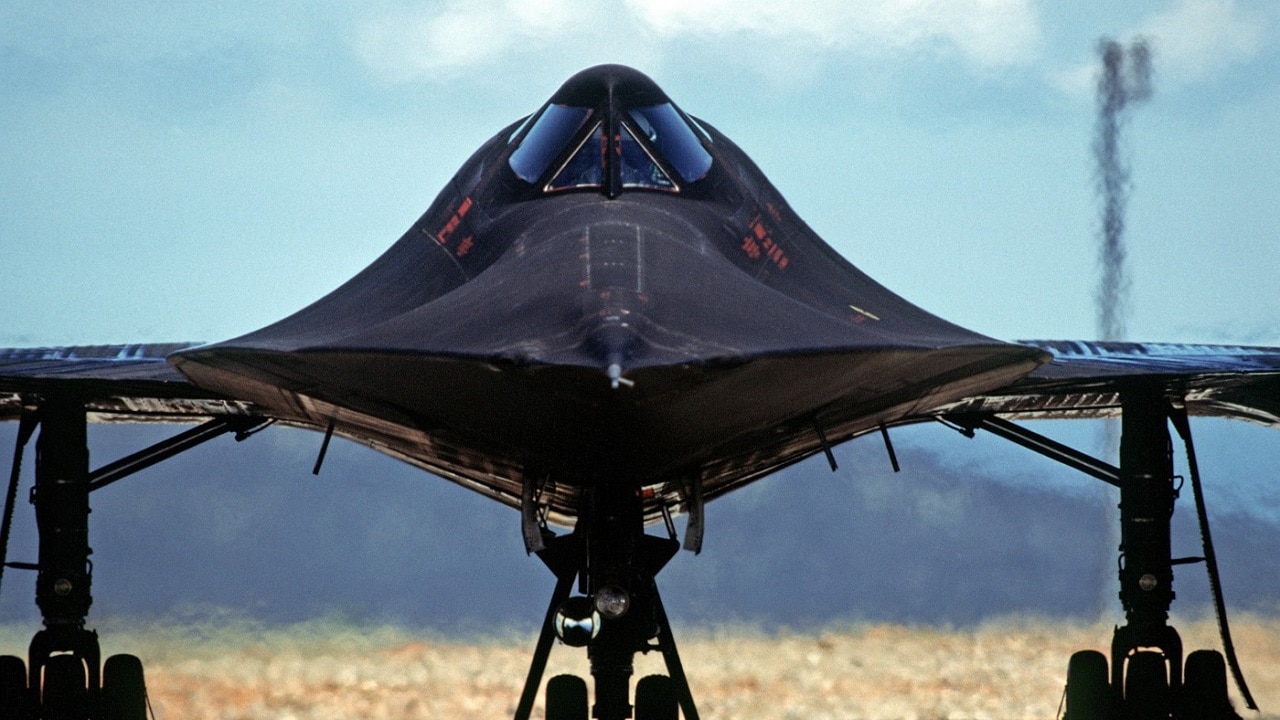
SR-71 Spy Plane. Image Credit: Creative Commons.
Don’t Go Above the Regulated Altitude
“The intercept window was incredibly tight, and all the SR-71 pilot needed to do during the fighter’s final climb phase was maneuver just slightly, and the intercept solution changed and failed. One of the main problems facing our Viggen pilots was that a rule in their Orders for Safe Flights prohibited flight above 16,000m without a full-pressure suit. These weren’t available, so our pilots needed to be careful, or their divisional commanders would ground them,” Jonnson said.
Enter One Gutsy Pilot
Crickmore also interviewed a Viggen pilot, Per-Olof Eldh, who intercepted SR-71s and maintained radar lock. Eldh was one certified hotshot.
“When I conducted the first Swedish Air Force intercept of an SR-71, the target had completed its north-bound pass of the Soviet coastline, and had turned west, south of the Finnish island of Aland, and was tracking south of a heading that would take it between Gotland and Öland. The datalink from the fighter controller was on, and I lined up for a head-on attack with a target angle of 180°. From my altitude of 8.000m, I accelerated to Mach 1.35 then pulled up, very gently, continuing to accelerate to between Mach 1.7 and Mach 2.0, topping out at between 18.500 and 20.000m. All the target data was on my map display, including radar detection of the target at maximum range, which then locked on immediately afterwards. I simulated missile launches – the closing velocity was very high, between Mach 4.5 and 5.0; the SR-71 was flying at Mach 2.98 and 21.500m, Eldh said (probably with bated breath).
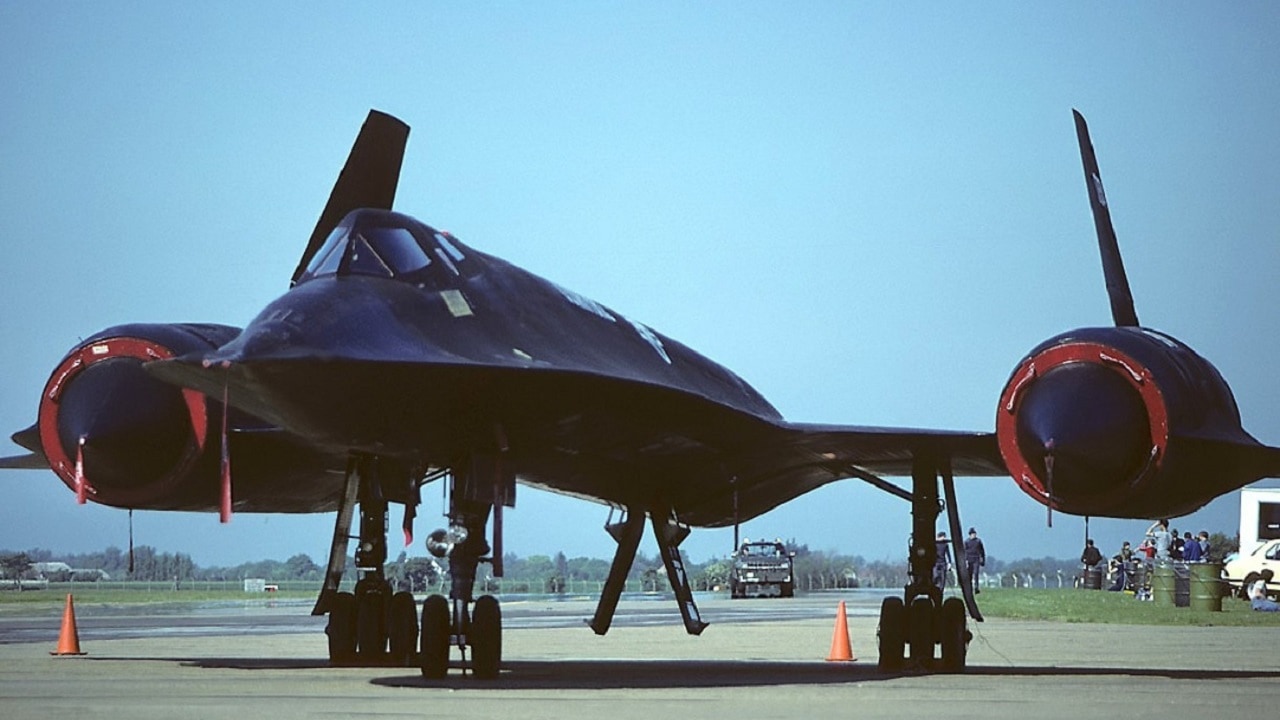
Image of SR-71 Spy Plane. Image Credit: Creative Commons.
“In total I have five hot intercepts against the SR-71 to my credit. All can be described as successful. I was visual three times; on a couple of occasions, the SR-71 was contrailing, which was very useful because you could do a visual check to ensure you ended up in the right spot!”
Sweden is now part of NATO, and their best pilots fly the JAS 39 Gripen-E for air policing. We can only hope that the home team has been inspired by this story, which has probably been passed down for years. Give ample credit to the Swedish flight controllers and the brave pilot Eldh. This is one experience the Americans don’t really want out in the open: an ultra-fast spy plane that’s usually impossible to detect on radar or visually. So chalk up a few wins for Sweden over the Baltic Express. There are not many pilots who could match the outright flying ability of the Swedes in the 1980s.
About the Author: Brent M. Eastwood
Author of now over 3,000 articles on defense issues, Brent M. Eastwood, PhD is the author of Don’t Turn Your Back On the World: a Conservative Foreign Policy and Humans, Machines, and Data: Future Trends in Warfare plus two other books. Brent was the founder and CEO of a tech firm that predicted world events using artificial intelligence. He served as a legislative fellow for US Senator Tim Scott and advised the senator on defense and foreign policy issues. He has taught at American University, George Washington University, and George Mason University. Brent is a former US Army Infantry officer. He can be followed on X @BMEastwood.