
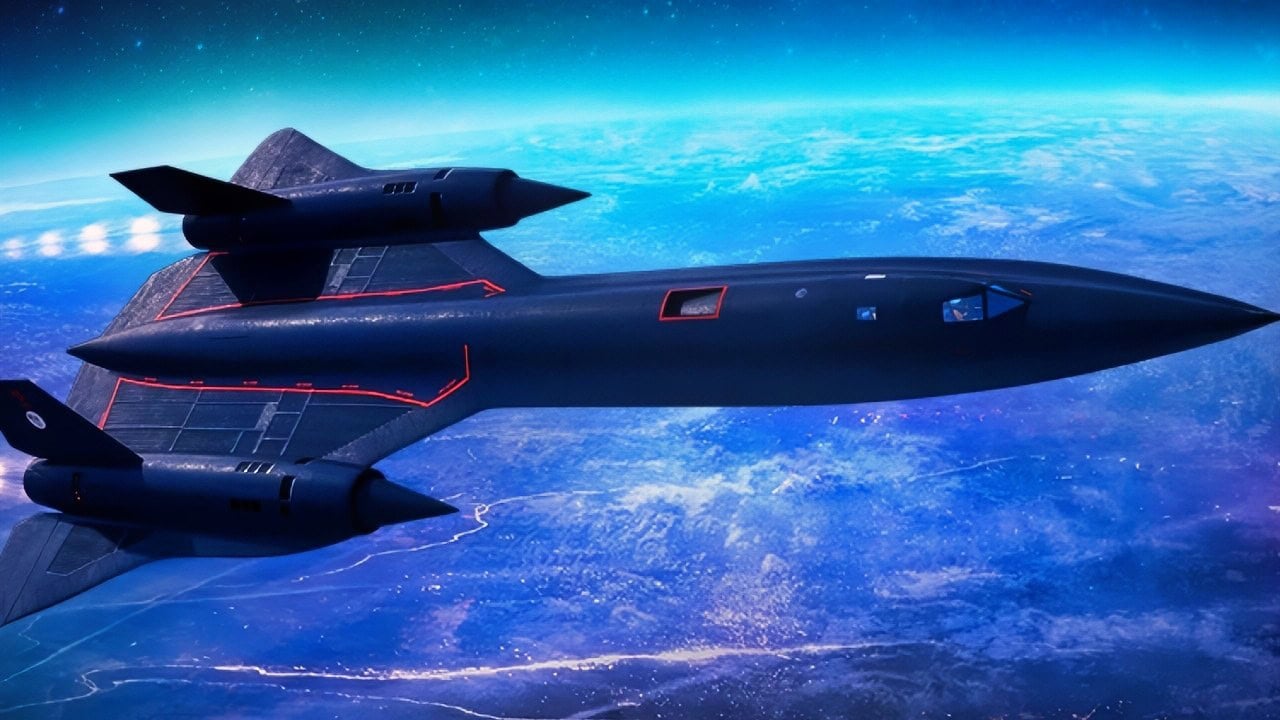
Summary and Key Points: Brent M. Eastwood, PhD, a defense expert and former Army Infantry officer, recounts the miraculous survival of Lockheed test pilot Bill Weaver.
-While flying at Mach 3.18 and 79,000 feet, Weaver’s SR-71 Blackbird suffered a catastrophic “inlet unstart,” leading to the total disintegration of the airframe.

SR-71 Blackbird Photo from Dr. Brent Eastwood at the Smithsonian. 19FortyFive.com Original Image.
-This 19FortyFive report explores how Weaver survived the supersonic breakup without ever triggering his ejection seat, crediting his pressurized “mini-space suit” and emergency oxygen system.
-The analysis evaluates the aerodynamic failures of trim drag and aft center of gravity (CG) that forced the Air Force to rewrite its flight evaluation metrics.
The “Mini-Space Suit” Savior: Why Bill Weaver is the Only Man to Survive an SR-71 Failure at Mach 3.2
Let’s say you are flying at MACH 3 in an SR-71 Blackbird. This could be an entertaining dream for some or a sweaty and feverish nightmare for others. It is difficult to imagine just how fast three times the speed of sound is. That’s 2,300 miles per hour.
At speeds that high, you can barely move the controls in the airplane. All is going according to plan, but then the worst happens, and it’s time to bail out. You hope the ejection goes well and the parachute opens. But what if all goes wrong as the airplane disintegrates? You could be a goner.
What’s the Rest of the Real-life Account?
This was no dream or nightmare for one SR-71 pilot. This sequence of events really happened to Lockheed test pilot Bill Weaver on January 25, 1966. His Blackbird was blazing through the sky at MACH 3.18 when his SR-71 had a catastrophic failure. This is his story.
The Flight Started Off Fine
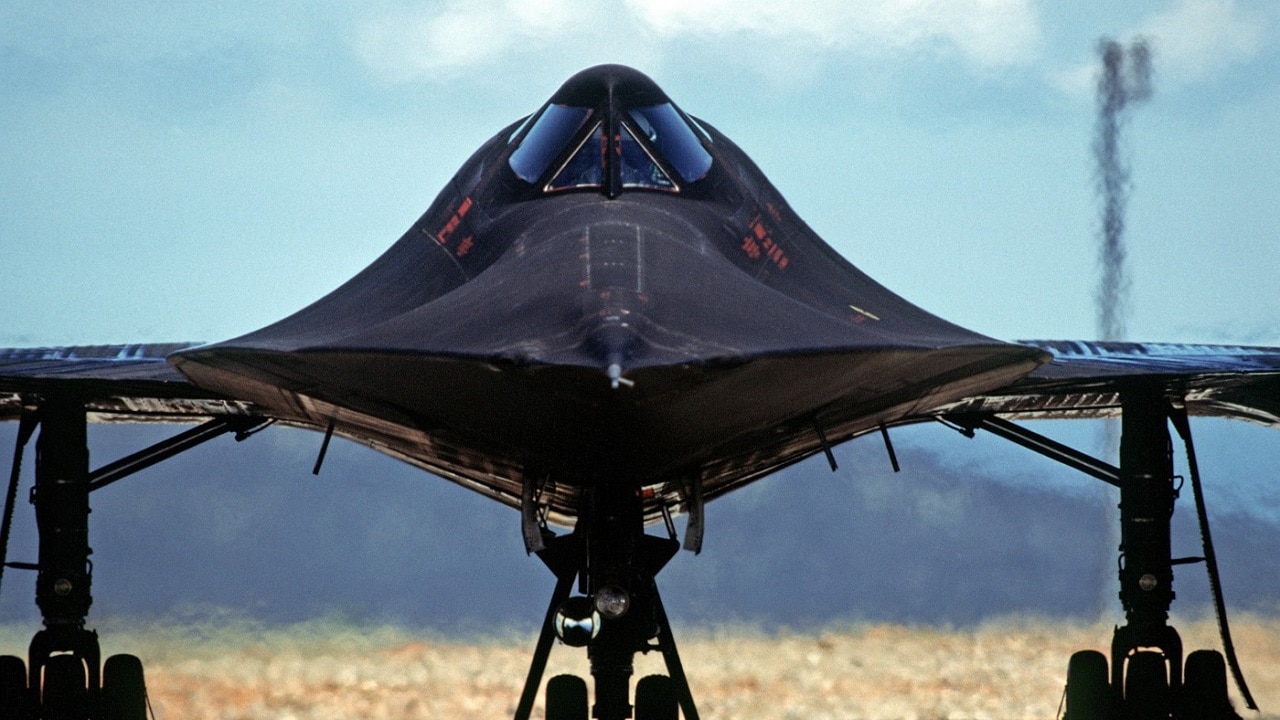
SR-71 Spy Plane. Image Credit: Creative Commons.

SR-71 Spy Plane. Image Credit: Creative Commons.
Weaver was flying at an astonishing 79,000 feet. It was a routine flight, though, and all systems were functioning properly. The test pilot was experienced and confident in the SR-71. Yes, it could be finicky at such high speeds, but the spy bird was one amazing feat of design and engineering.
Then It Was Time to Gather Flight Data
He had an evaluation duty to perform. He needed to collect data on how this kind of high speed and altitude could affect an airframe. What level of heat could it handle, and would the controls freeze up under those conditions? The airplane’s reconnaissance systems also needed to be checked closely. This was the main mission after all, and everything having to do with recon was hugely important. Plus, Weaver had to know about the accuracy of the navigation. This airplane was going to fly through some dangerous airspace, so the ground crew needed to track it closely, and nobody wanted it to go off course.
The airplane also had a high level of trim drag, and this concerned the designers and technicians. Would the SR-71 be able to account for those downsides? The aft center of gravity (CG) could be compromised. Longitudinal stability could be negatively affected. Then the test flight was needed to determine whether the airplane could actually withstand a breakup at over MACH 3.
This Test Was One for the Ages
Weaver was pushing hard – beyond what other test pilots had tried to do with the Blackbird. This took extreme courage and the right stuff to push it faster and higher than earlier flights. The slightest mistake could damage the airplane and kill Weaver.
What Happens At MACH 3?
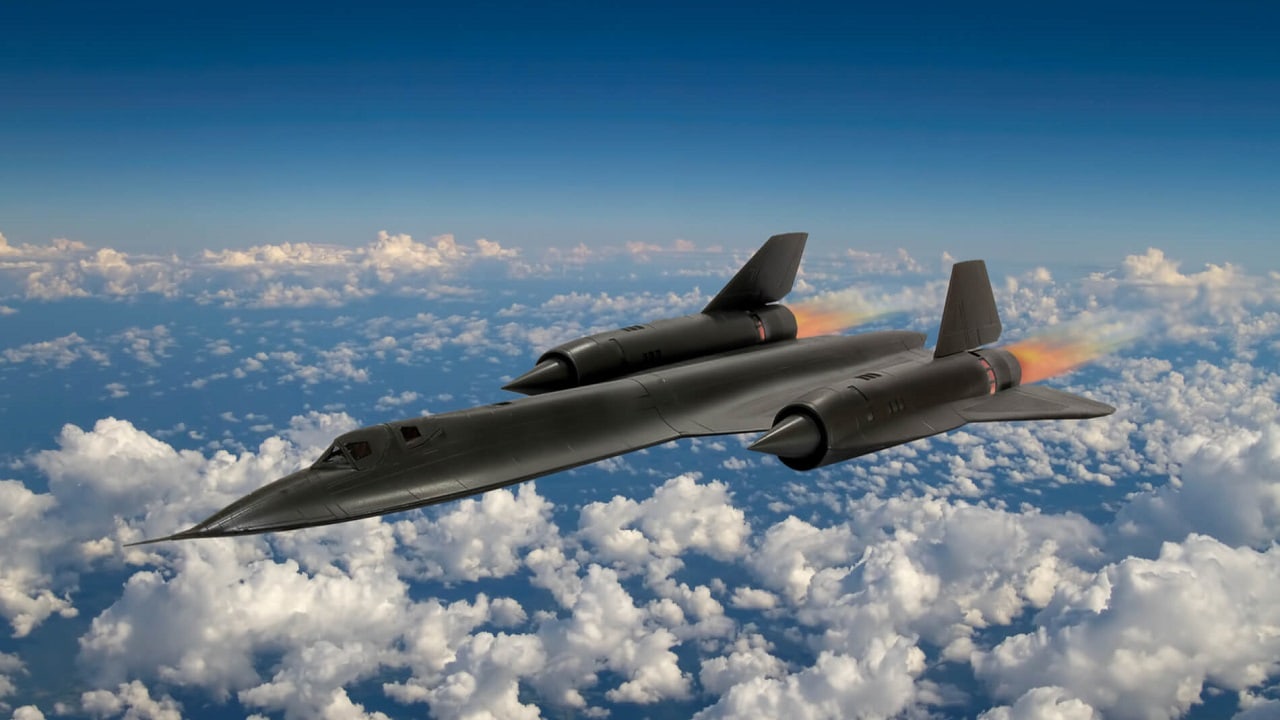
SR-71 Spy Plane. Image Credit: Creative Commons.
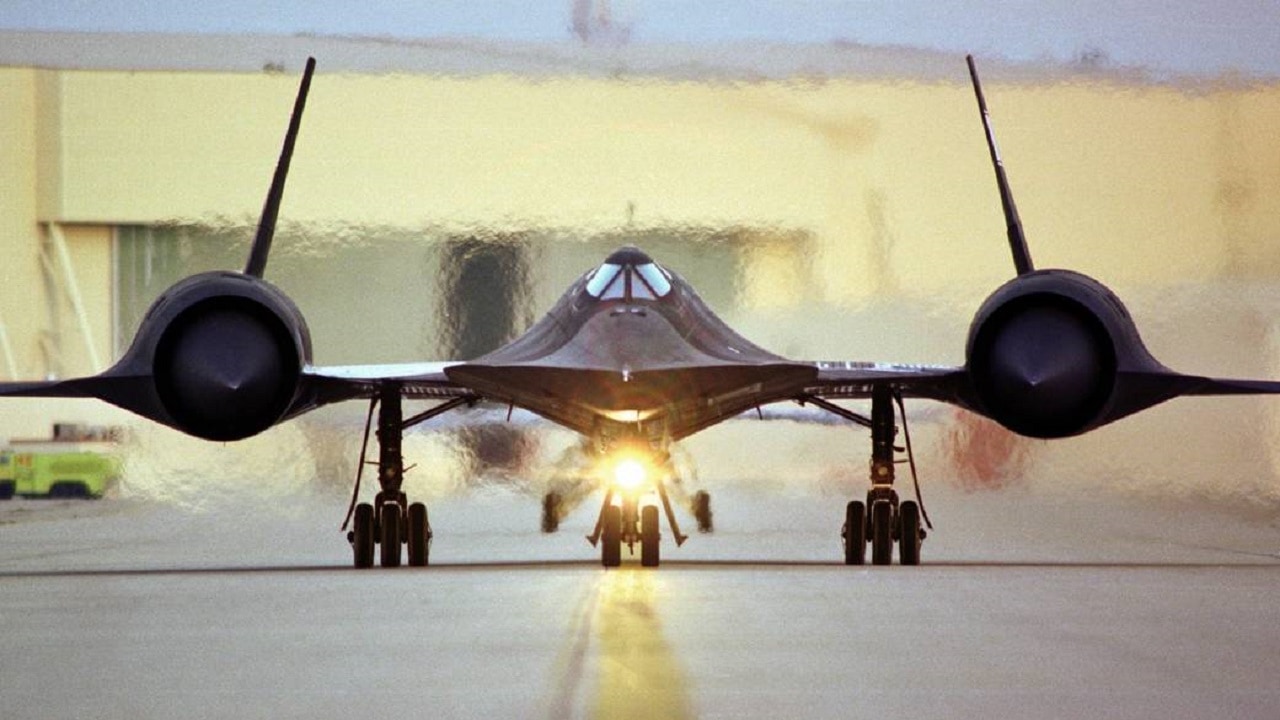
SR-71 Blackbird. Image Credit: Creative Commons.
One of the difficult aspects of SR-71 flight is the need for precise inlet shock control. When flying at MACH 3, “air must be slowed from supersonic to subsonic before entering the engine,” as my colleague Harrison Kass has described.
“This was achieved via a translating center-body spike, forward bypass doors, and automatic shock positioning. Failure would lead to an inlet unstart, where shock was expelled forward, and the aircraft would experience a sudden thrust loss, violent yaw, and a ‘train wreck’ sensation,” Kass explained.
Red Lights Flashed
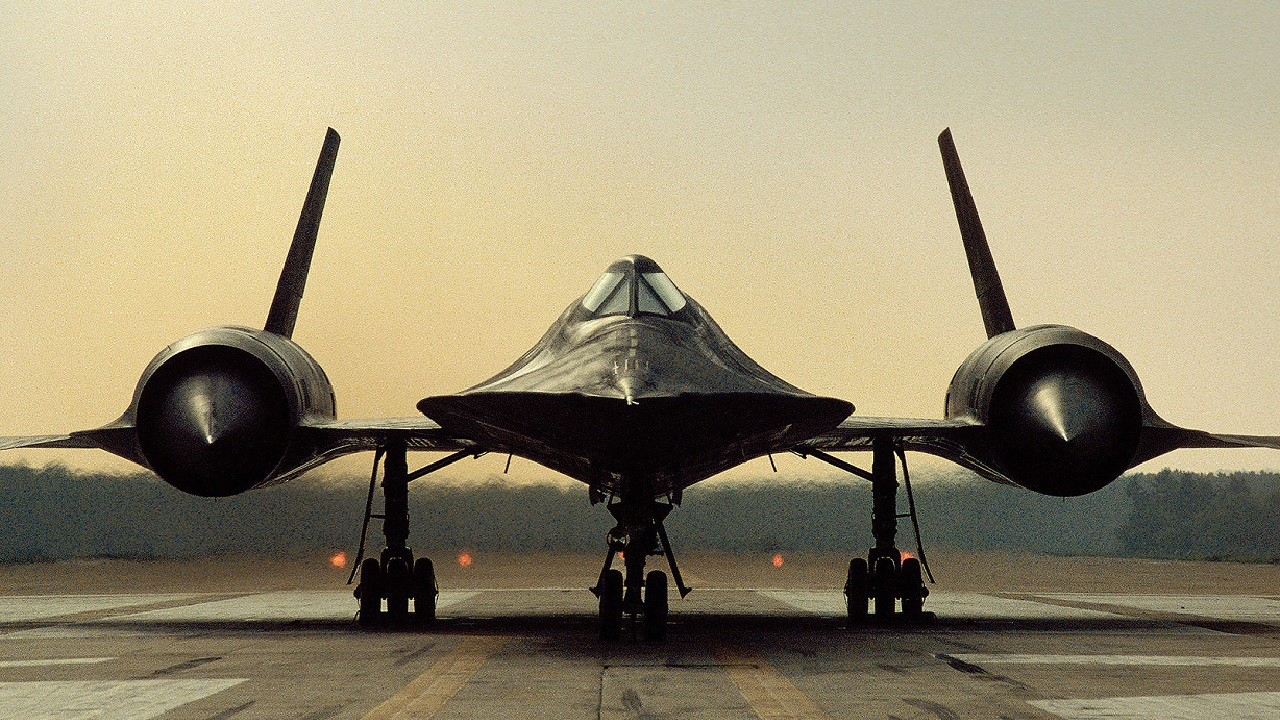
SR-71 Spy Plane. Image Credit: Creative Commons.

SR-71 Blackbird. Image Credit: Creative Commons.
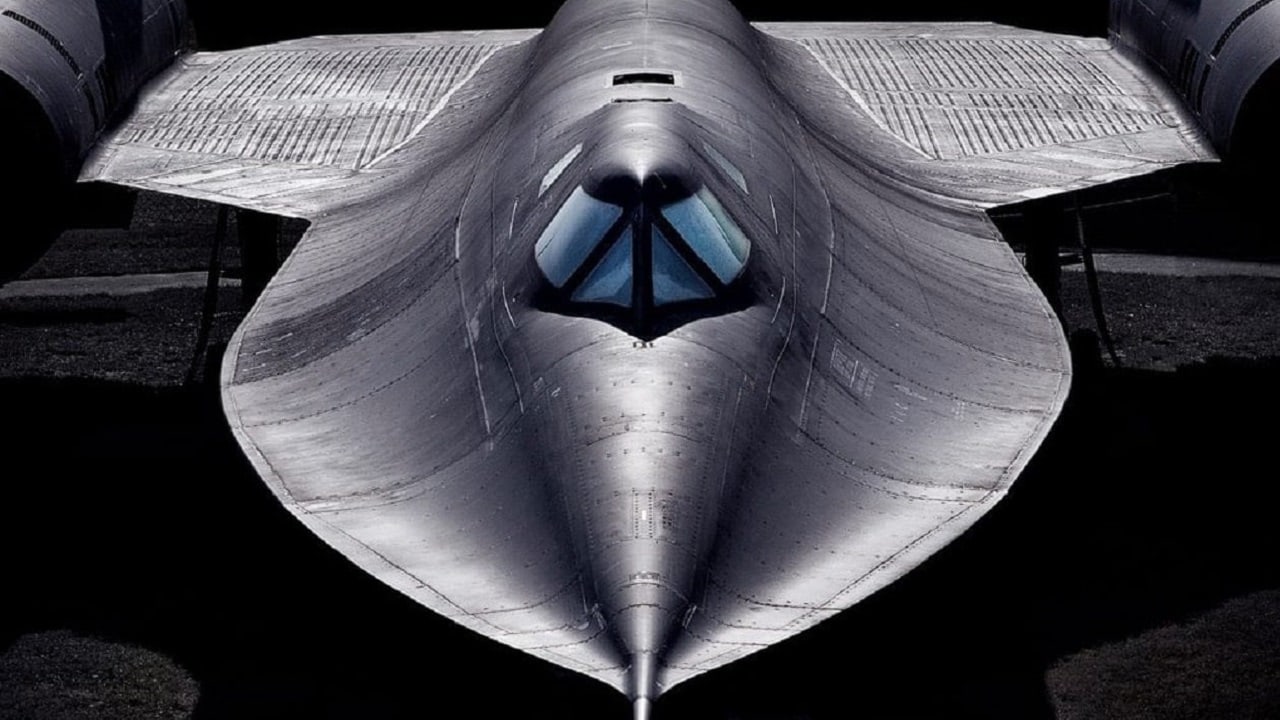
SR-71 Blackbird Spy Plane. Image Credit: Creative Commons.
Weaver had a problem. There was an issue with the automatic system for the right inlet. He tried to bank at 35-degrees. Then he became alarmed. The airplane rolled to the right, and the nose climbed. Weaver’s heart dropped. This could lead to the airplane’s ultimate failure. The controls were not working properly.
The Airplane Was Behaving Poorly
There was just too much speed and altitude. Aft CG was hurting. The SR-71 was no longer stable. That was too much for the airframe, and the entire fuselage began disintegrating. “Oh my God,” Weaver thought. This was worse than he expected.
The Facts of Life at MACH 3
Physics took its toll on the airplane. Positive and negative G-force was rearing their heads. First, the nose went. Then the worst happened. Weaver’s seat belt was torn apart. The nightmare began as the test pilot was sent into the air, and he had not even engaged the egress-and-ejection system.
The Saving Grace
Weaver was somehow still alive because the seat itself did not eject. It’s a good thing he had a pressurized suit, because the pilot somehow survived on the oxygen provided by it. Weaver’s life was saved because he had on a “mini-space suit” as Kass described.
Now he had to descend safely. The first stabilizing parachute opened. That was good. Then the main parachute deployed at 15,000 feet. Not all was well. His oxygen line was damaged, and he blacked out. He woke up later, but he couldn’t see well.
The Story’s Not Over
What about the co-pilot? Jim Zwayer also bailed out. Weaver could barely see his friend’s parachute. Then another miracle happened. The main pilot had drifted down over New Mexico. There was a man flying a helicopter in the vicinity, and he saw Weaver descend and hit the ground. The fortunate test pilot was rescued quickly in another miracle.
The Air Force Breathed a Sigh of Relief
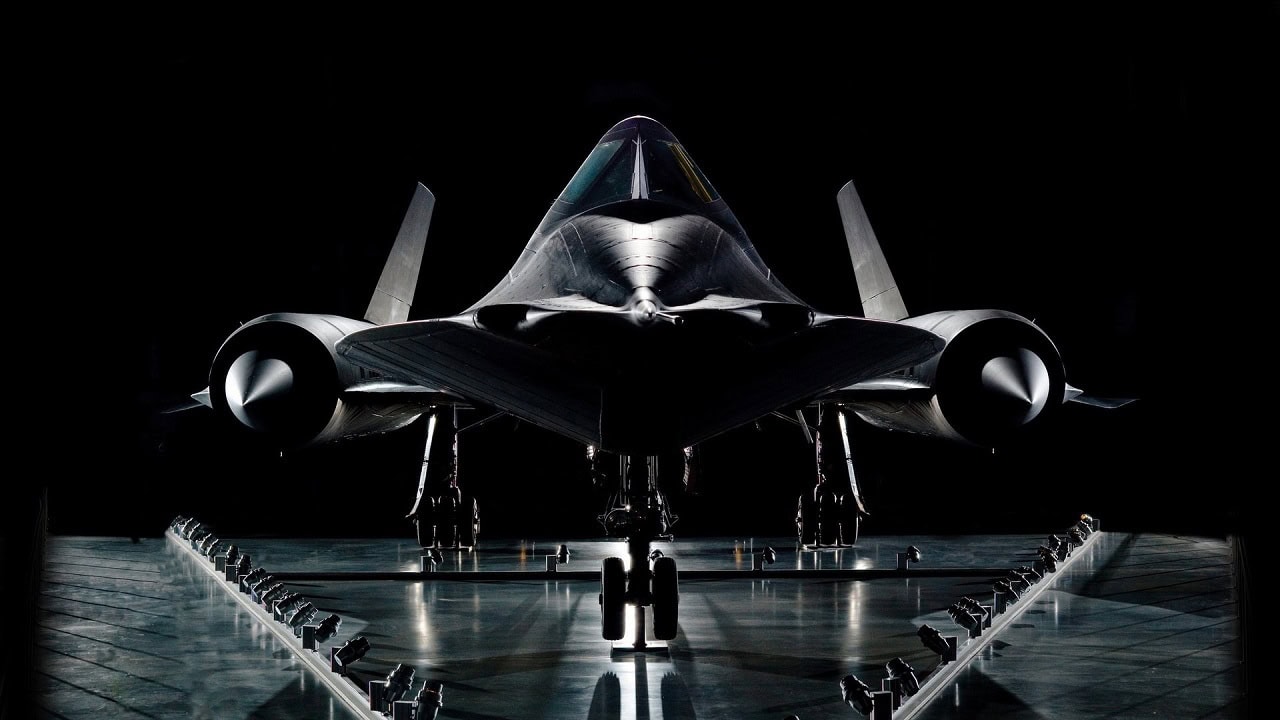
SR-71 Blackbird Artist Rendering. Image Credit: Creative Commons.
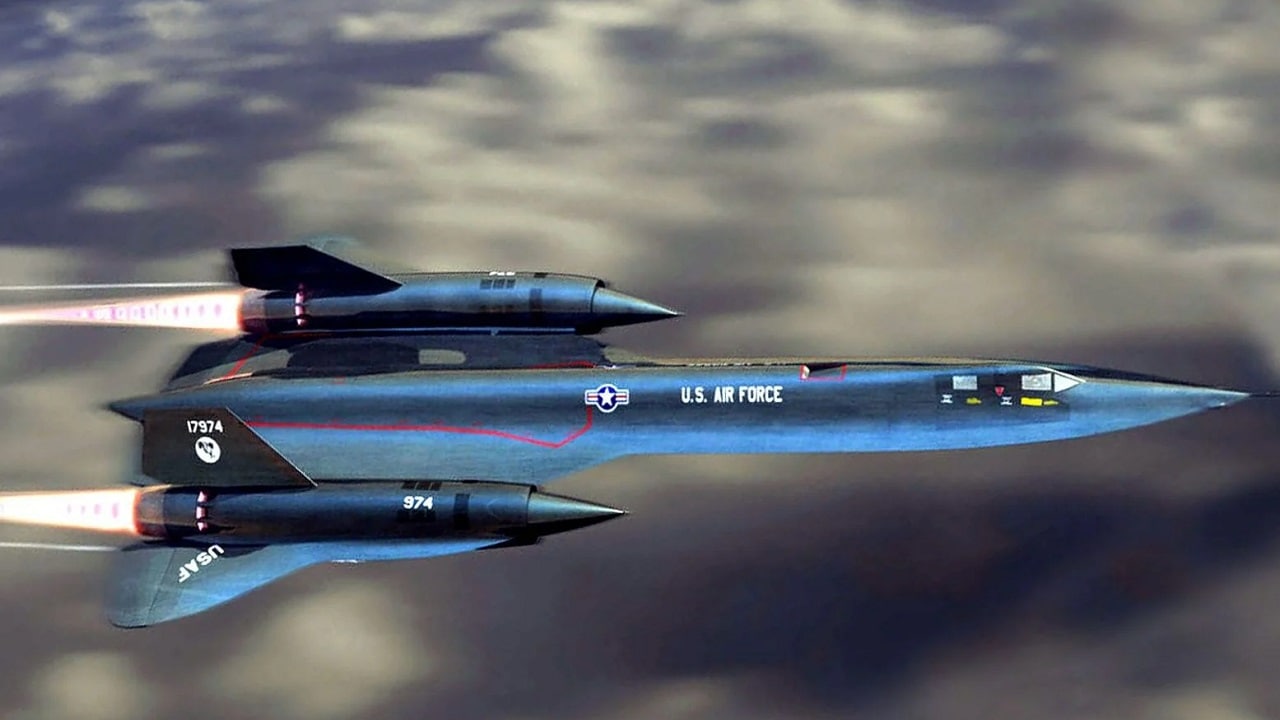
SR-71 Spy Plane. Image Credit: Creative Commons.
After that harrowing experience, the Air Force adjusted its evaluation metrics. No longer would it have pilots fly at extreme aft CG. Trim drag was tested differently, and aerodynamic calculations were used instead. The technicians fixed the inlet control system.
Weaver and Zwayer thanked their lucky stars and reported that the pressurized suits and parachutes worked well enough to save them. The SR-71 program leaders breathed a sigh of relief. Nobody wanted dead crewmen on their watch.
This would go down as both a nightmare and a dream, and gave the test pilots something to remember for the rest of their lives.
About the Author: Brent M. Eastwood
Author of now over 3,000 articles on defense issues, Brent M. Eastwood, PhD is the author of Don’t Turn Your Back On the World: a Conservative Foreign Policy and Humans, Machines, and Data: Future Trends in Warfare plus two other books. Brent was the founder and CEO of a tech firm that predicted world events using artificial intelligence. He served as a legislative fellow for US Senator Tim Scott and advised the senator on defense and foreign policy issues. He has taught at American University, George Washington University, and George Mason University. Brent is a former US Army Infantry officer. He can be followed on X @BMEastwood.