Multiple news outlets and a prestigious think tank report that China is helping Iran reconstitute its heavily damaged missile program. If the reports are true, this development is of great concern to the Pentagon.
“Western media reported that China has sent multiple shipments of missile fuel precursors to Iran since the start of the war,” according to the Institute for the Study of War. According to other reports, Iran is having some success digging out its underground missile bunkers and returning them to operation.
While this is a concern for Operation Epic Fury, which is currently suspended by a ceasefire, the Institute for the Study of War is careful to point out that extracting and re-establishing launchers and missiles does not instantly translate into capability.
“Iran may be re-establishing access to their launchers hours after strikes, but these launchers are components of a larger system that has been degraded. Reported fear and lack of coordination across some Iranian forces means that medium-range missile systems are still functioning sub-optimally,” the Institute writes.
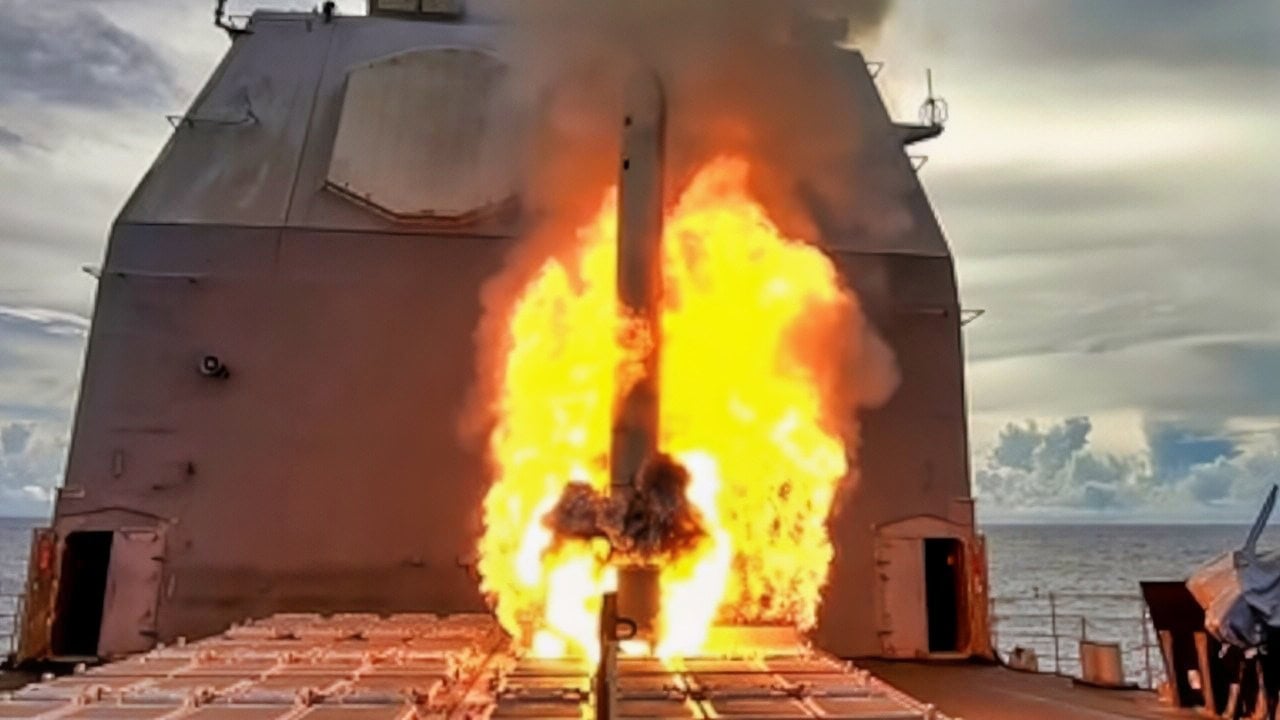
Tomahawk Missile Firing U.S. Navy Photo
Launching missiles is one part of a multifaceted process that relies on numerous support elements, as well as weaponry itself, the Institute for the Study of War posits, while also pointing out that the U.S.-Israeli air campaign targeted combat support elements such as research and industrial facilities.
Iran’s integrated missile attack capacity has likely been severely degraded, but the Islamic Revolutionary Guard Corps is believed to retain an operational drone and missile attack capability.
Chinese Motive on Missiles and Iran?
If the Chinese are in fact helping Iran re-establish damaged capabilities, that could greatly intensify U.S.-China tensions.
Those have already tightened in recent years due to Chinese threats to Taiwan and the growing U.S. military footprint in the Pacific.
China has an incentive to complicate the U.S. application of military power—undercutting the Americans would aid China’s own rise as a dominant global power—but the Chinese motivation also could be driven by pure economics. China relies heavily on oil from the Strait of Hormuz, and there is extensive reporting on Beijing’s involvement in creating the current two-week ceasefire.
Chinese officials have been communicating with Pakistani and U.S. officials in an effort to defuse further escalation and pause plans for greater attacks by the Pentagon. The Chinese may simply wish to ensure their oil supply is not further obstructed by ongoing combat.
Long-term Iran Threat
Perhaps of greatest concern, the prospect of Chinese involvement significantly affects the long-term threat equation—China could accelerate Iran’s rearmament. Much depends on Iran’s approach to Israel and the West moving forward.
If the regime—especially hardline elements of the IRGC—maintains the hostility toward the West that has marked Iran for decades, then future Iranian leaders are likely to rearm with a commensurately hostile intent.
Iran’s missile capabilities may have been set back significantly, but if hardline anti-American and anti-Israel Iranian leaders remain in place, the future threat could be even greater than the current threat is.
It’s unlikely that the regime will have a “change of heart” and seek to reconcile with the West, just because it now has new leaders—so Tehran rearming with Chinese help unequivocally amplifies the long-term threat.
The even bigger question relates to U.S.-China relations. If Chinese support for Iran is confirmed, it may create a precarious situation between Washington and Beijing. What kind of escalation might occur?
What complications between the United States and China could such reports generate?
That remains unanswered, but it seems unlikely that China will formally announce any major, long-term military support for Iran—especially if its oil supply remains stable.
About the Author: Kris Osborn
Kris Osborn is the President of Warrior Maven – Center for Military Modernization. Osborn previously served at the Pentagon as a highly qualified expert in the Office of the Assistant Secretary of the Army—Acquisition, Logistics & Technology. Osborn has also worked as an anchor and on-air military specialist at national TV networks. He has appeared as a guest military expert on Fox News, MSNBC, The Military Channel, and The History Channel. He also has a Masters Degree in Comparative Literature from Columbia University