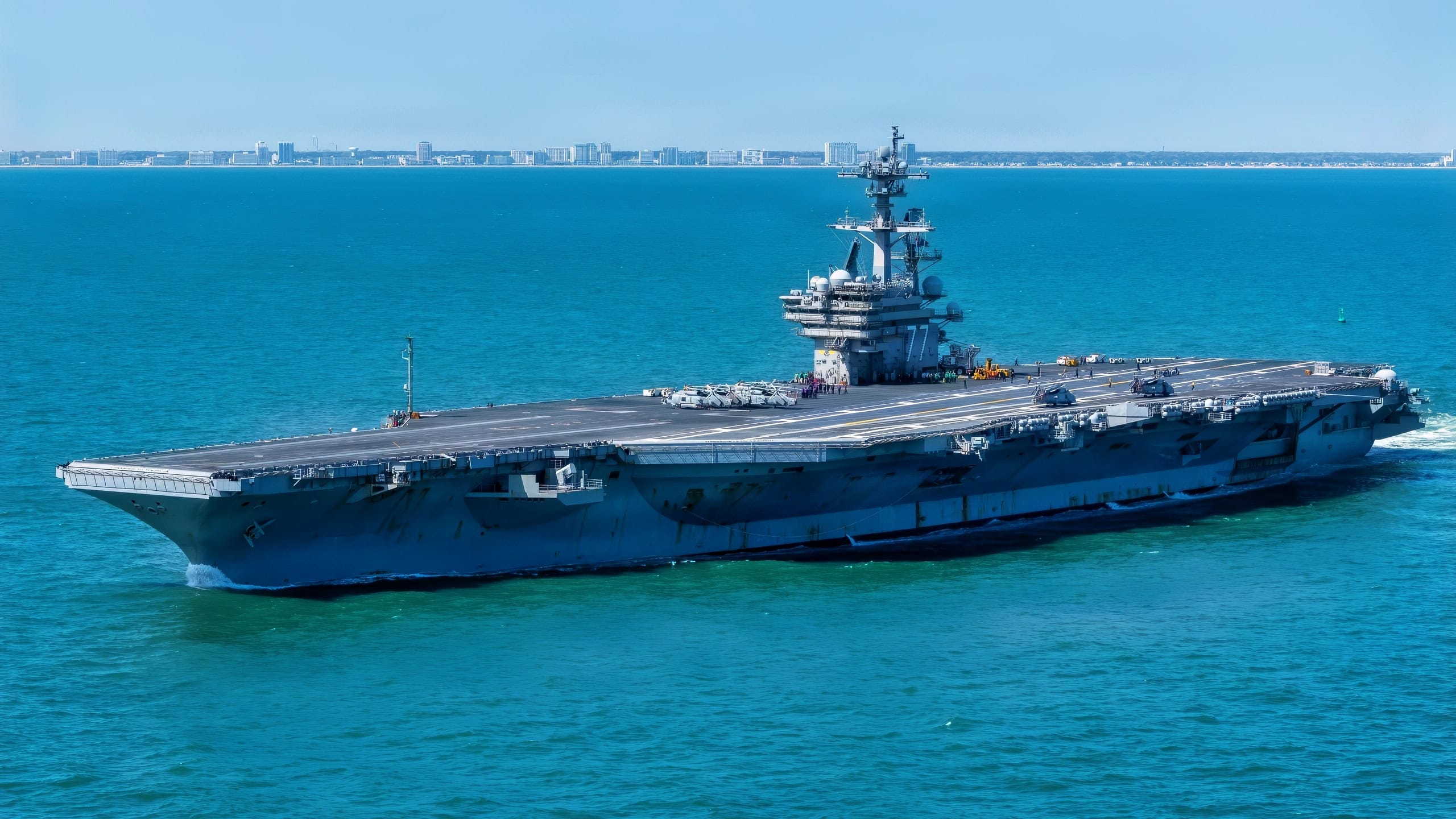
The U.S. Navy’s Shipyard Crisis May Lead to Its Defeat in War: Aircraft Carriers Prove It
Few experts who have tracked the decline of naval shipbuilding and repair capacity will be surprised by a report from the Government Accountability Office (GAO). The department released a damning analysis that found US naval shipbuilding programs are consistently over budget, behind schedule, and plagued by mid-build design changes.
These problems are widespread and deep-rooted.
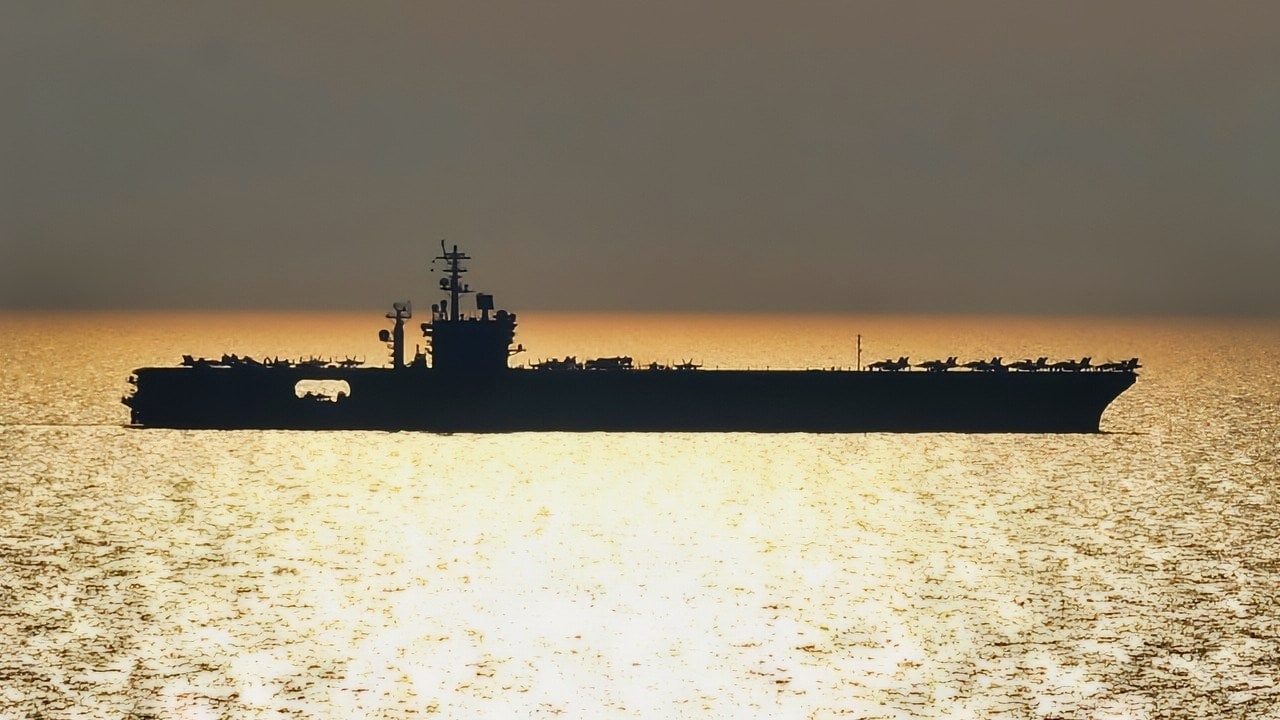
(Oct. 17, 2017) The aircraft carrier USS Nimitz (CVN 68) transits the Arabian Gulf, Oct 17, 2017. Nimitz is deployed in the U.S. 5th Fleet area of operations in support of Operation Inherent Resolve. While in this region, the ship and strike group are conducting maritime security operations to reassure allies and partners, preserve freedom of navigation, and maintain the free flow of commerce. (U.S. Navy photo by Mass Communication Specialist Seaman David Claypool/Released)
Shipyard Crisis at Epidemic Levels
They indicate an overall decline in America’s industrial capacity that has yet to be fully tackled and reversed. If these broader trends continue, the United States Navy will find it difficult to deploy the ships and systems needed to fulfill its ever-growing global mission set.
Not only is the naval shipyard industrial base declining, but there are also severe skilled labor shortages at those shipyards. Meanwhile, the supply chain supporting America’s shipyards is extremely fragile.
What’s more, there are too few shipyards to maintain America’s fleet and build new ships. Essentially, there’s only a single shipyard across the United States capable of constructing aircraft carriers and performing a proper overhaul of their nuclear systems.
RMC Global reported that the current state of disrepair in America’s naval shipyards prevents a wartime surge in production. The group confirmed the GAO’s findings that repair capacity is just as strained as construction at America’s aging naval shipyards.
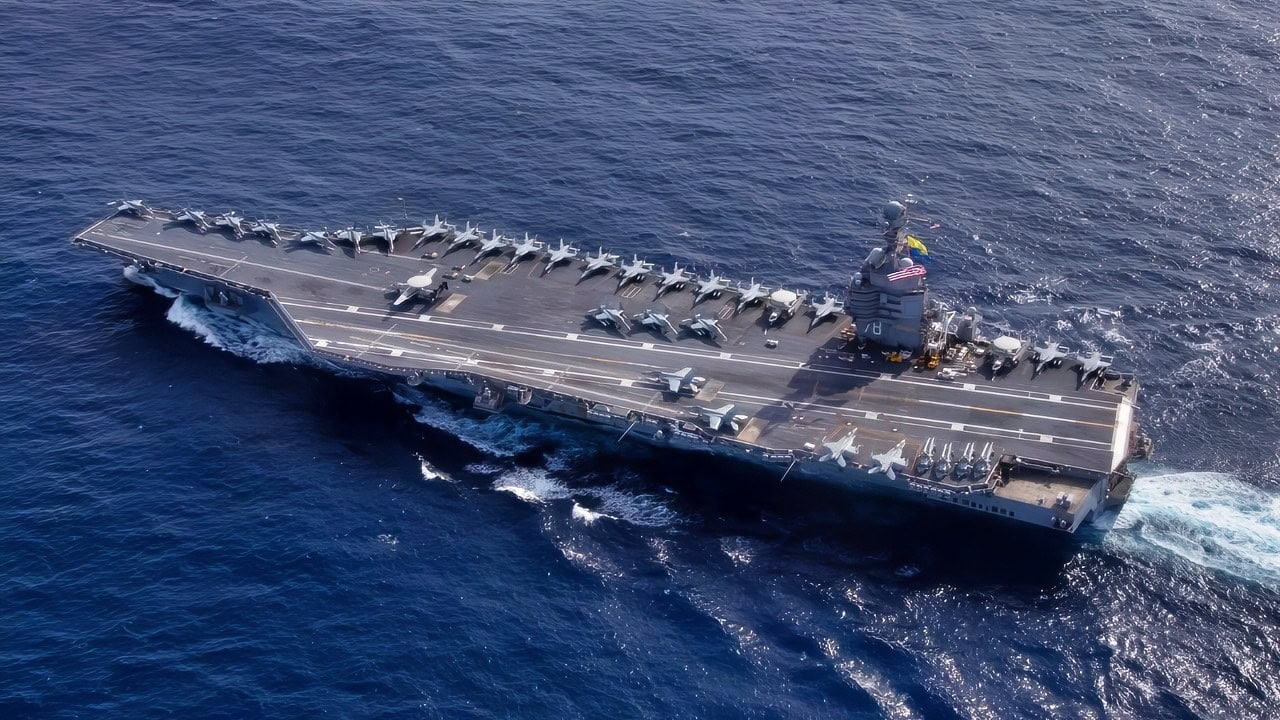
The first-in-class aircraft carrier USS Gerald R. Ford (CVN 78) steams in the Atlantic Ocean, Nov. 7, 2022. Exercise Silent Wolverine is a U.S.-led, combined training exercise that tests Ford-class aircraft carrier capabilities through integrated high-end naval warfare scenarios alongside participating allies in the Eastern Atlantic Ocean. The Gerald R. Ford Carrier Strike Group is conducting their first deployment in the U.S. Naval Forces Europe area of operations. (U.S. Navy photo by Mass Communication Specialist 3rd Class Jacob Mattingly)
So, the crisis facing America’s fleet isn’t just about the inability to ramp up production of new ships; it also involves maintaining the ships and submarines the Navy already has, which adds more strain on the fleet during a major geopolitical crisis.
Maintenance Crisis Informs US Navy Deployment Strategy
Due to a shortfall at the naval shipyard, the Navy is constantly reshuffling carrier deployments in a desperate effort to cover hotspots around the globe. At the same time, ships sit idle in the yards awaiting long-overdue maintenance.
This creates significant gaps in presence, overworking both the ships’ crews and the already stretched laborers at the naval shipyards, and forces the Navy to reduce maintenance windows.
Consequently, this decision only worsens the maintenance issues with the Navy’s warships and submarines.
You’ve seen this happen recently with the newest US Navy aircraft carrier, the USS Gerald R. Ford. That massive ship was at sea for nearly 300 days, one of the Navy’s longest deployments for an aircraft carrier in its history. Despite being new, that great ship has experienced a range of problems caused by its extended deployment.

MQ-25 Boeing Drone U.S. Navy Aircraft Carriers. Image Credit: Boeing.
And those issues played out publicly, embarrassing the US military as it stumbled into a major regional war against Iran in the Middle East.
The Ford isn’t the only US Navy ship struggling through extended deployments. In fact, such deployments have become the norm.
These deployments subject ships to high operational tempos despite unresolved maintenance issues. As a result, these prolonged, high-tempo deployments cause even more damage to a ship already in need of repairs.
Yet, the Navy continues to push these overwhelmed ships and crews into service because it has no other choice.
There are too few ships available at any given time to meet the Navy’s global operational demands. This creates a perfect storm, as evidenced by the recent embarrassing saga of the Gerald R. Ford in the Middle East.
How the Ford Fire & Sewage Crisis Showcase the Decline in US Naval Shipyards
Although rumors abound about the true causes of the sewage crisis on the Gerald R. Ford and the laundry fire that charred and damaged much of the ship, especially the crew berthing areas, the fact remains that the basic functionality of US Navy warships is being compromised.
This is due to increased demand for ships and crews, as well as the fact that ships today take too long to build and often end up waiting in line at America’s sluggish naval shipyards.
Regarding the Ford, we are told that the ship was press-ganged into service due to the US Navy’s carrier shortage.
This led to immature systems being forced to handle the load before they were ready, which worsened reliability issues during the high operational tempo of the past year, ultimately degrading overall crew quality of life and undermining war readiness.
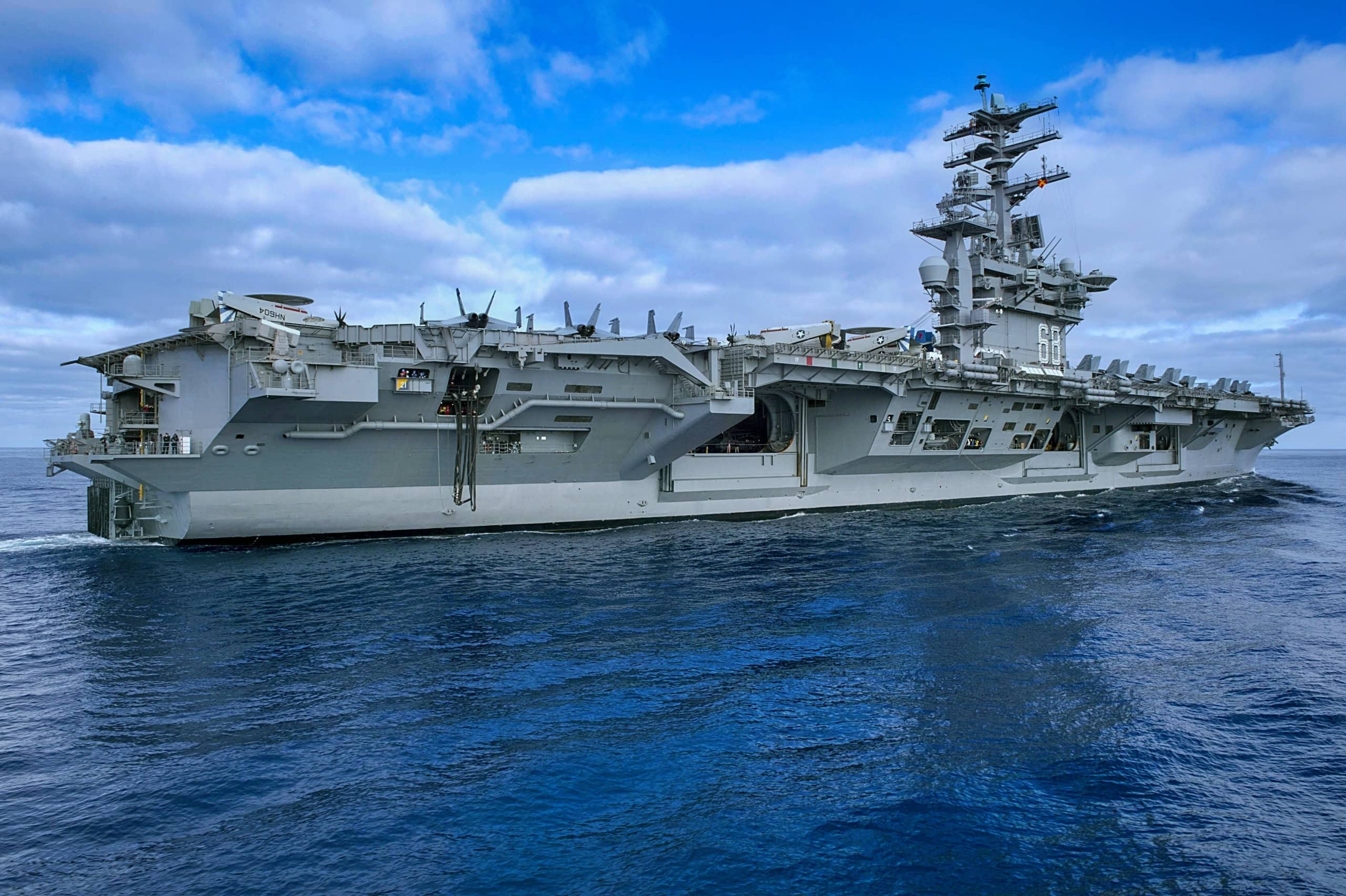
USS Nimitz Aircraft Carrier. Image Credit: Creative Commons.
The Navy knew this about the Ford long before they deployed her. Still, due to the backlog at the shipyards, the Navy pushed the new Gerald R. Ford to its limits, not because the maritime branch wanted to, but because they had no choice at all.
Even today, after a brief port visit in Croatia, it is believed that the USS Gerald R. Ford is once again underway and redeploying to the Middle East. As one naval expert told me on background, “there’s no way [the Ford] is fully repaired from its damage.”
11 Carriers on Paper. Barely Four in Reality
But the Navy has no choice but to keep her in the fight because of America’s broken naval shipyards.
Yes, the Navy has the world’s largest fleet of aircraft carriers.
A congressional law requires the Navy to keep 11 of these carriers ready at all times.
However, only a small number of these costly ships are deployable at any given moment. Extended maintenance, delayed overhauls, and unexpected repairs are the main challenges for these warships.
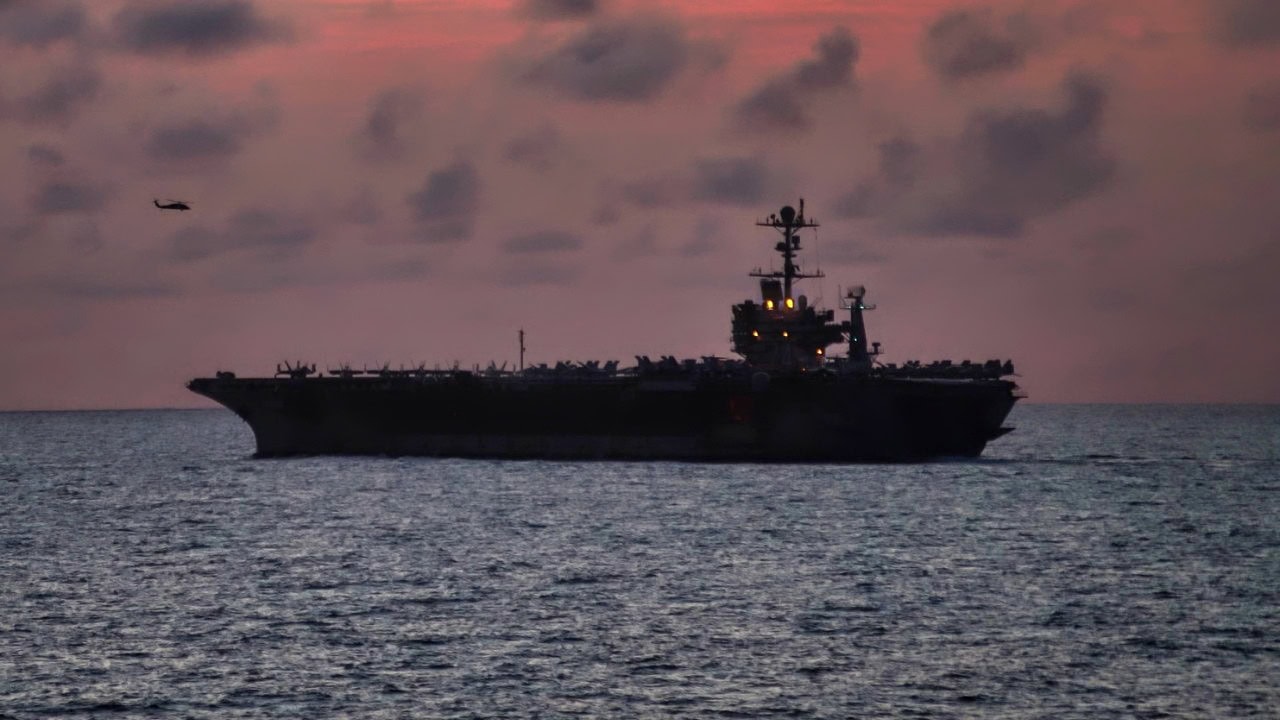
USS John C. Stennis Aircraft Carrier. Image Credit: Creative Commons.
As a result, the Navy may have many ships listed, but they rarely deploy enough to sea at once.
Now, the Navy is facing a fleet crisis. Decades of post-Cold War downsizing and neglect have created a perfect storm in America’s logistics, shipbuilding, and maintenance capabilities, all of which have negatively affected its deployment strategy.
In today’s missile-heavy, high-tempo warzones like the Middle East, America’s shrinking stockpiles of missiles and interceptors are just the tip of the iceberg regarding threats to the Navy.
Platform availability might falter first if the operational tempo remains at its current level or, Heaven forbid, rises in the coming weeks.
About the Author: Brandon J. Weichert
Brandon J. Weichert is the Senior National Security Editor at 19FortyFive.com. Recently, Weichert became the editor of the “NatSec Guy” section at Emerald.TV. He was previously the senior national security editor at The National Interest. Weichert is the host of The National Security Hour on iHeartRadio, where he discusses national security policy every Wednesday at 8 pm Eastern. He hosts a companion show on Rumble entitled “National Security Talk.” Weichert consults regularly with various government institutions and private organizations on geopolitical issues. His writings have appeared in numerous publications, among them Popular Mechanics, National Review, MSN, and The American Spectator. And his books include Winning Space: How America Remains a Superpower, Biohacked: China’s Race to Control Life, and The Shadow War: Iran’s Quest for Supremacy. Weichert’s newest book, A Disaster of Our Own Making: How the West Lost Ukraine, is available for purchase wherever books are sold. He can be followed via Twitter/X @WeTheBrandon.