
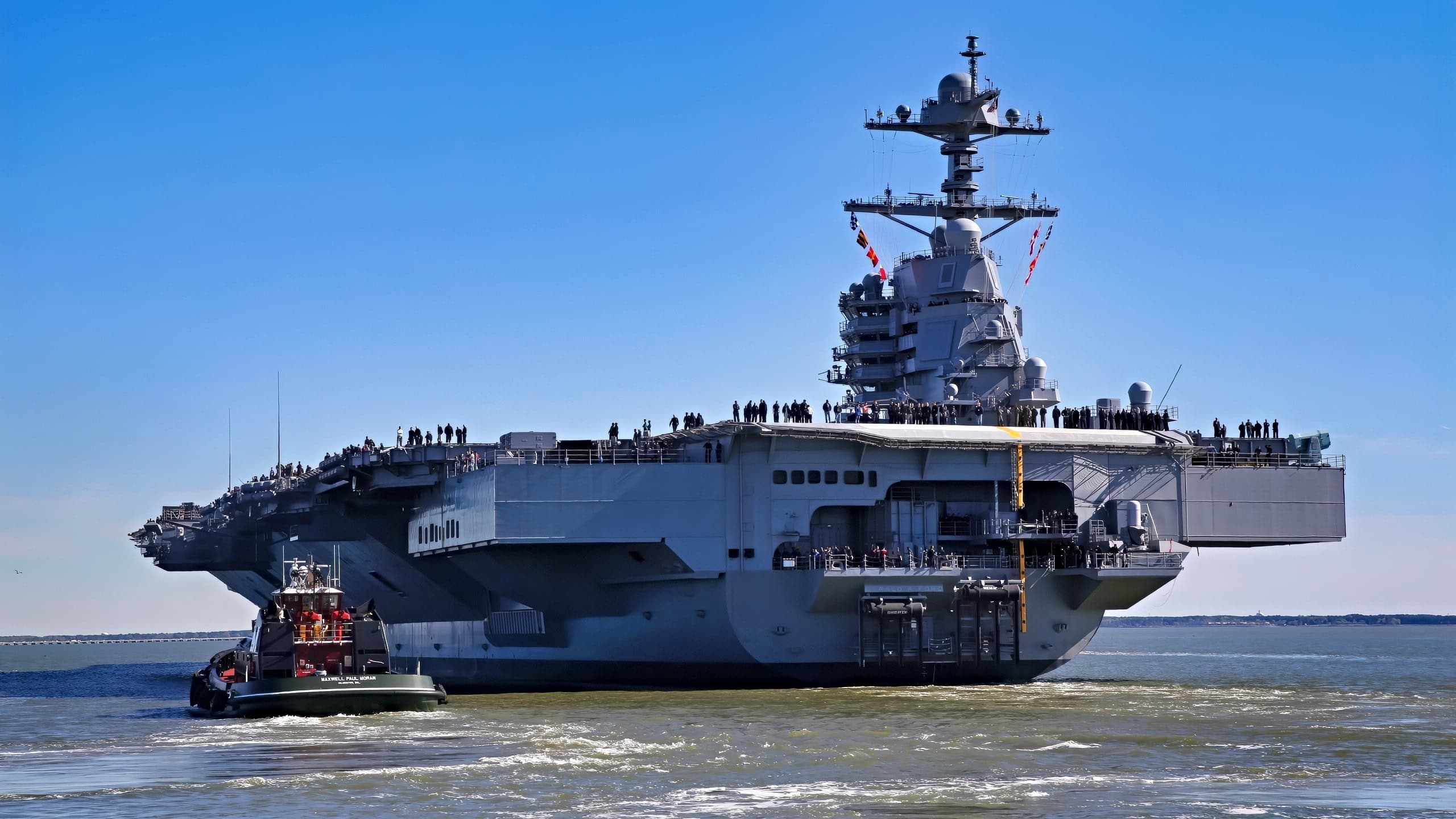
After talks collapsed between Iran and the United States, U.S. President Donald Trump ordered a blockade of Iranian ports and shipping. U.S. Central Command subsequently clarified that the blockade would apply only to Iranian ships or to ships bound for Iranian ports. Trump was bombastic, posting: “If any of these ships come anywhere close to our BLOCKADE, they will be immediately ELIMINATED, using the same system of kill that we use against the drug dealers on boats at Sea. It is quick and brutal.”
However, implementing a tight blockade will be a multi-week prospect.
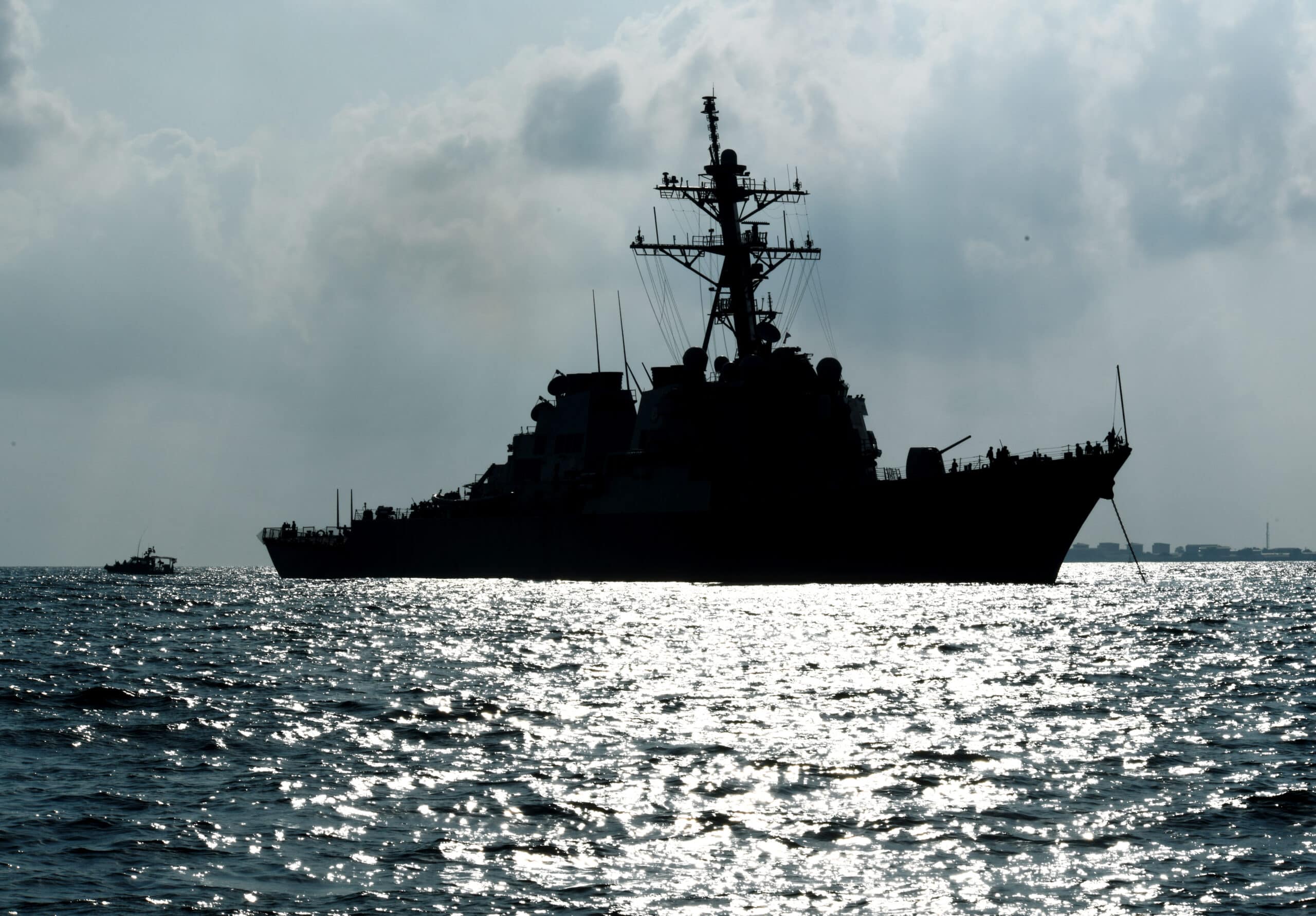
GULF OF TADJOURA (Mar. 13, 2021) USS Laboon (DDG 58), an Arleigh Burke class guided missile destroyer, is anchored in the Gulf of Tadjoura while Camp Lemonnier’s Expeditionary Medical Facility (EMF) team embarked the ship to
administer COVID 19 vaccines to the crew. (U.S. Navy photo by Mass
Communication Specialist 1st Class Randi Brown)
The focus of the blockade is the Persian Gulf and Strait of Hormuz.
After all, that is the area through which Iran exports most of its oil—especially to China and India—and imports the gasoline it requires to keep its vehicles moving and oil extraction flowing. Blockading or even occupying Iran’s Persian Gulf ports has precedent, and those ports are fewer and farther between than many outsiders realize. Iran has always been unique.
While most populations across the Middle East settled alongside rivers or the coast, Iranian cities formed on the interior plateau; Iran’s top 13 cities by population are all interior cities. The largest port city, Bandar Abbas, clocks in at Iran’s 14th largest, with just over half a million people.
Along the Persian Gulf, the U.S. Navy and Marine Corps would need to blockade or disrupt traffic through Bandar Abbas, Bushehr, and Abadan; and then perhaps ten smaller towns: from north to south, Bandar-e Deylam, Bandar-e Genaveh, Bandar-e Deyyer, Bandar-e Kangan, Bandar Siraf, Gav Bandi, Bandar-e Charak, Bandar-e Lengeh, Qeshm, and Bandar Sirik.
The United States and Israel have already knocked many facilities offline in these areas. In addition, the Islamic Republic has built up ports outside the Strait of Hormuz, in both Jask and Chabahar. Jask is home to Iran’s submarine base and has been hit hard. Chabahar is farther afield and lacks the infrastructure to ship sufficient trade inland.
To shut down these ports—both their on-load and offload capability, as well as their fuel storage facilities—would not be difficult.
The problem Trump will face in isolating Iran and preventing trade in fuel and weapons will not be in the Persian Gulf, but rather the Caspian Sea. The Caspian is more a lake than a true sea. Its water is brackish and about one-third as salty as ocean water.
It is more than four times the size of Lake Superior; five countries share its shore. Iran has major ports and a naval base on the Caspian Sea. Russia’s and Iran’s navies have long coordinated. In July 2019, for example, Iranian Navy Chief Hossein Khanzadi attended Russian Navy Day festivities in St. Petersburg.

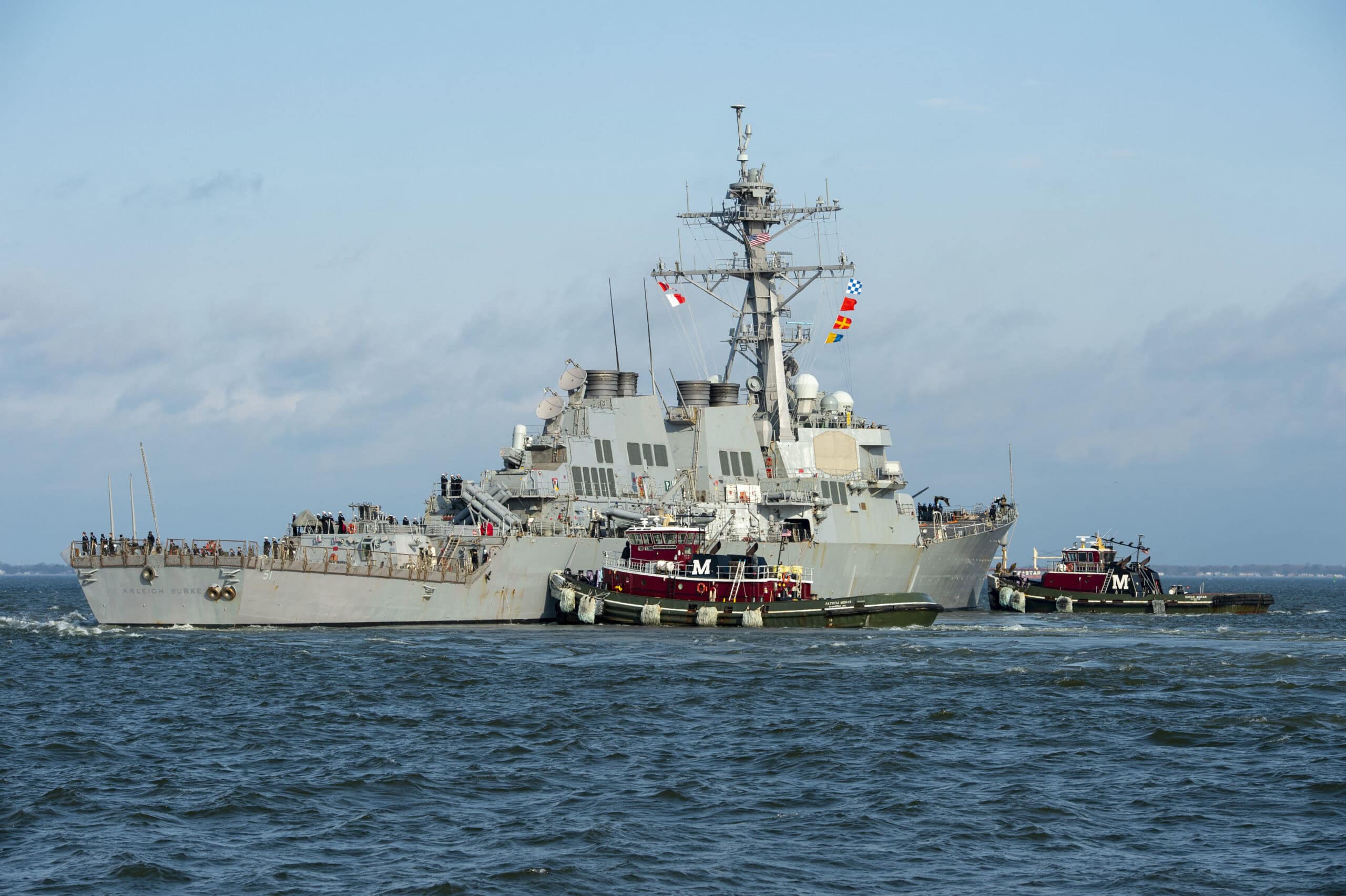
NORFOLK (Mar. 26, 2021) – A tugboat assists the guided-missile destroyer USS Arleigh Burke (DDG 51) in getting underway Mar. 26. Arleigh Burke will replace USS Donald Cook (DDG 75) as one of four forward deployed naval forces (FDNF) located in Spain. Arleigh Burke will join USS Ross (DDG 71), USS Roosevelt (DDG 80), and USS Porter (DDG 78) as the newest member of FDNF Rota. (U.S. Navy photo by Mass Communication Specialist 2nd Class Kris R. Lindstrom)
While the Islamic Republic has had operational difficulties in the Caspian Sea, Bandar Anzali and Chalus remain hubs through which Iran could receive shipments from Russia. Bandar Anzali is a more traditional port, while Chalus is home to an Islamic Revolutionary Guard Corps base that has previously hosted wanted al Qaeda operatives under close guard.
Iran also benefits from gas swaps with Azerbaijan, a country that often positions itself at the vanguard of the anti-Iran alliance but, like Turkey, plays a double game.
Trump’s blockade is wise, but to close the Caspian loophole and the possibility that Russia might ship weaponry or gasoline to Iran, the United States must do two things. The first is to use U.S. air dominance to declare that any ship entering Iran’s territorial waters in the Caspian will be sunk.
While Russia might challenge such a blockade, the United States can flip the script on Iran by mining the waters off Bandar Anzali, much like President Ronald Reagan once did in Nicaragua.
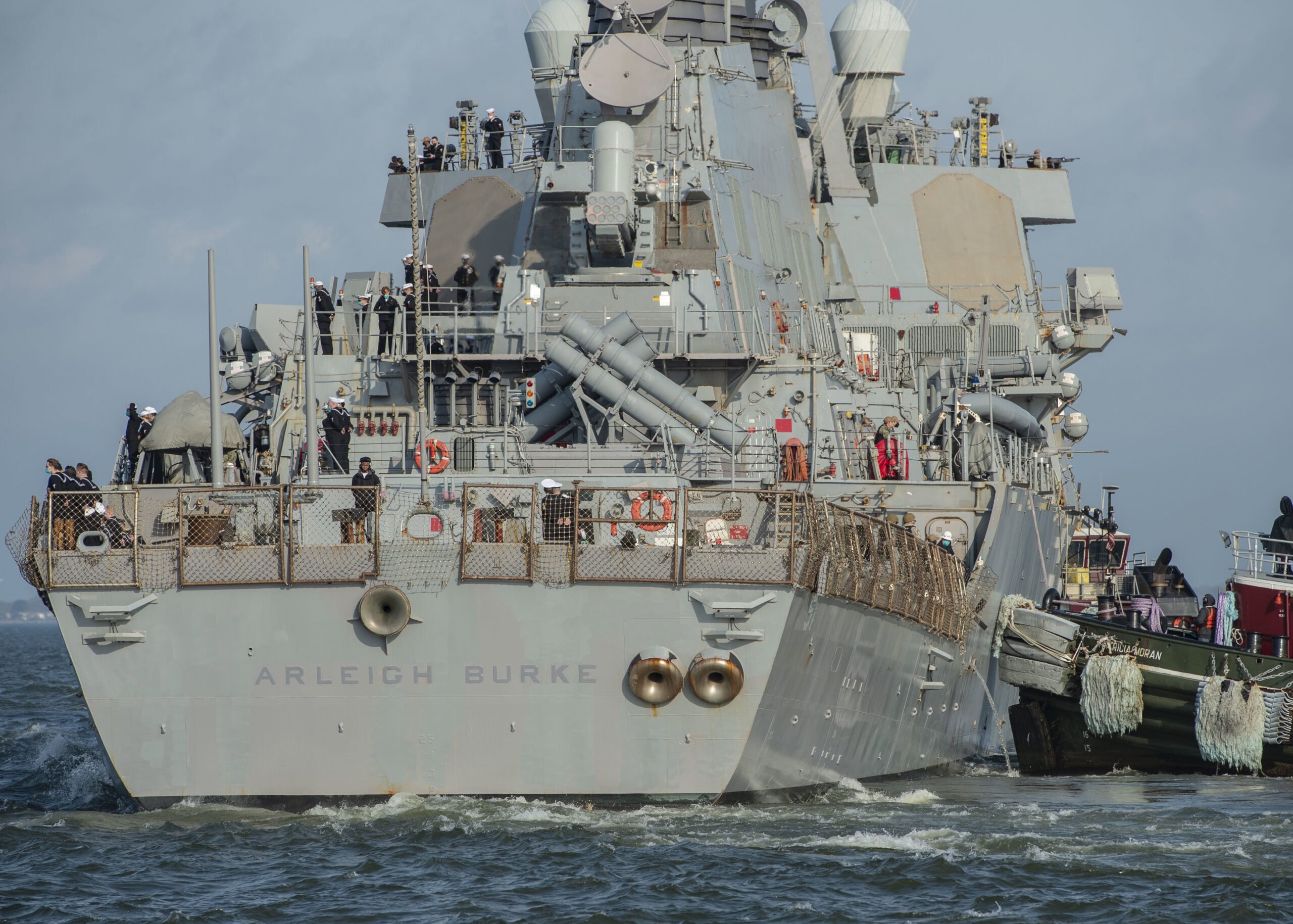
NORFOLK (Mar. 26, 2021) – A tugboat assists the guided-missile destroyer USS Arleigh Burke (DDG 51) in getting underway Mar. 26. Arleigh Burke will replace USS Donald Cook (DDG 75) as one of four forward deployed naval forces (FDNF) located in Spain. Arleigh Burke will join USS Ross (DDG 71), USS Roosevelt (DDG 80), and USS Porter (DDG 78) as the newest member of FDNF Rota. (U.S. Navy photo by Mass Communication Specialist 2nd Class Kris R. Lindstrom)
Second, the United States should target truck traffic crossing the mountain pass from Chalus, which is separated from Iran’s interior by mountains that range from 13,000 to 16,000 feet.
Finally, Trump must tell Azerbaijani President Ilham Aliyev that he cannot have it both ways: Being anti-Iran means more than rhetorically posturing against the regime.
About the Author: Dr. Michael Rubin
Michael Rubin is a senior fellow at the American Enterprise Institute and director of policy analysis at the Middle East Forum. The opinions and views expressed are his own. A former Pentagon official, Dr. Rubin has lived in post-revolution Iran, Yemen, and both pre- and postwar Iraq. He also spent time with the Taliban before 9/11. For more than a decade, he taught classes at sea on the Horn of Africa and the Middle East, covering conflicts, culture, and terrorism to deployed U.S. Navy and Marine units. The views expressed are the author’s own.