U.S. Aircraft Carriers Must Stay Beyond Visual Range to Survive China’s Anti-Ship Ballistic Missiles — That Reduces Their Fighter Wings’ Effectiveness
The People’s Liberation Army Navy (PLAN) of China now has a significantly larger navy than the United States Navy (by ship count).
While headlines focus on hull numbers, that metric alone is not enough to understand what the United States is facing.
Quantity in modern warfare is undoubtedly the key feature of most combat operations, but what matters even more than raw numbers is where, how, and under what conditions those quantitatively superior forces are deployed.
The “Bigger Navy” Narrative is Too Simple
China’s primary naval strategy is to project power in waters near its territory.
That is why the PLAN has focused on surpassing the United States and its allies in the First Island Chain (the region from the Kamchatka Peninsula through Japan and Taiwan down to the Philippines).
China has also concentrated on contesting the Indian Navy for control of the Indian Ocean — all while building the capability to project power into the Second Island Chain and, eventually, to reach into the distant Third Island Chain (which includes Hawaii).
For now, though, the plan is to focus heavily on using their large navy and the overwhelming number of missiles, drones, and hypersonic weapons to dominate the First Island Chain and keep the American military away long enough for China to establish full control over the region.
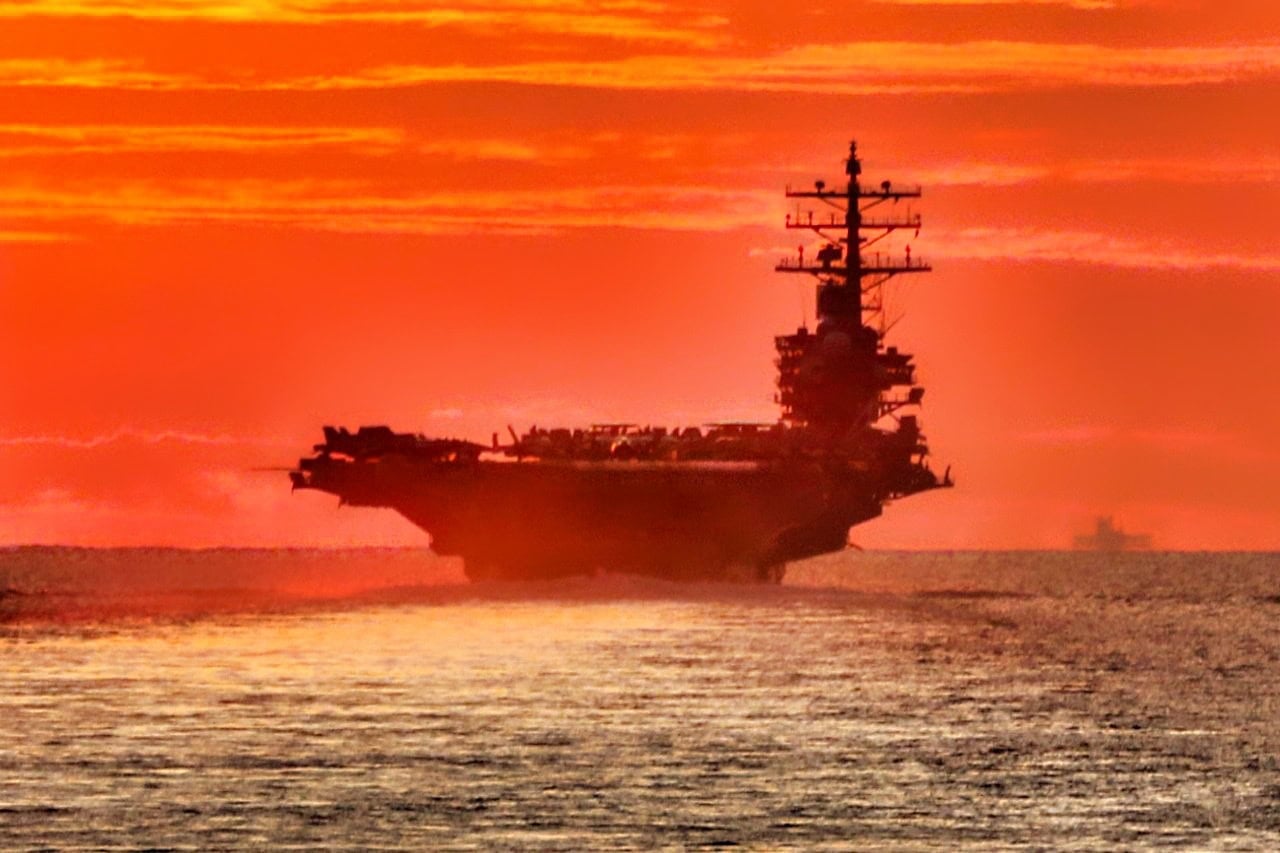
STRAIT OF MALACCA (June 18, 2021) As seen from the Ticonderoga-class guided-missile cruiser USS Shiloh (CG 67), the Navy’s only forward-deployed aircraft carrier USS Ronald Reagan (CVN 76) transits the Strait of Malacca with the Arleigh Burke-class guided missile destroyer USS Halsey (DDG 97). The ships are part of Task Force 70/Carrier Strike Group 5, conducting underway operations in support of a free and open Indo-Pacific. (U.S. Navy Photo by Mass Communication Specialist 1st Class Rawad Madanat)
Any conflict with China will occur within the First Island Chain, meaning that the proximity of the conflict to Chinese shores, their overwhelming missile arsenal, and their larger navy favor China.
Geography is China’s Greatest Weapon
While the US military must project power across thousands of miles and rely on sometimes-unreliable allies to support its efforts in the distant Indo-Pacific region, China can leverage its home-field advantage.
Especially as China’s anti-ship ballistic missiles (ASBMs) and cruise missiles are redefining sea control in favor of China within the First Island Chain.
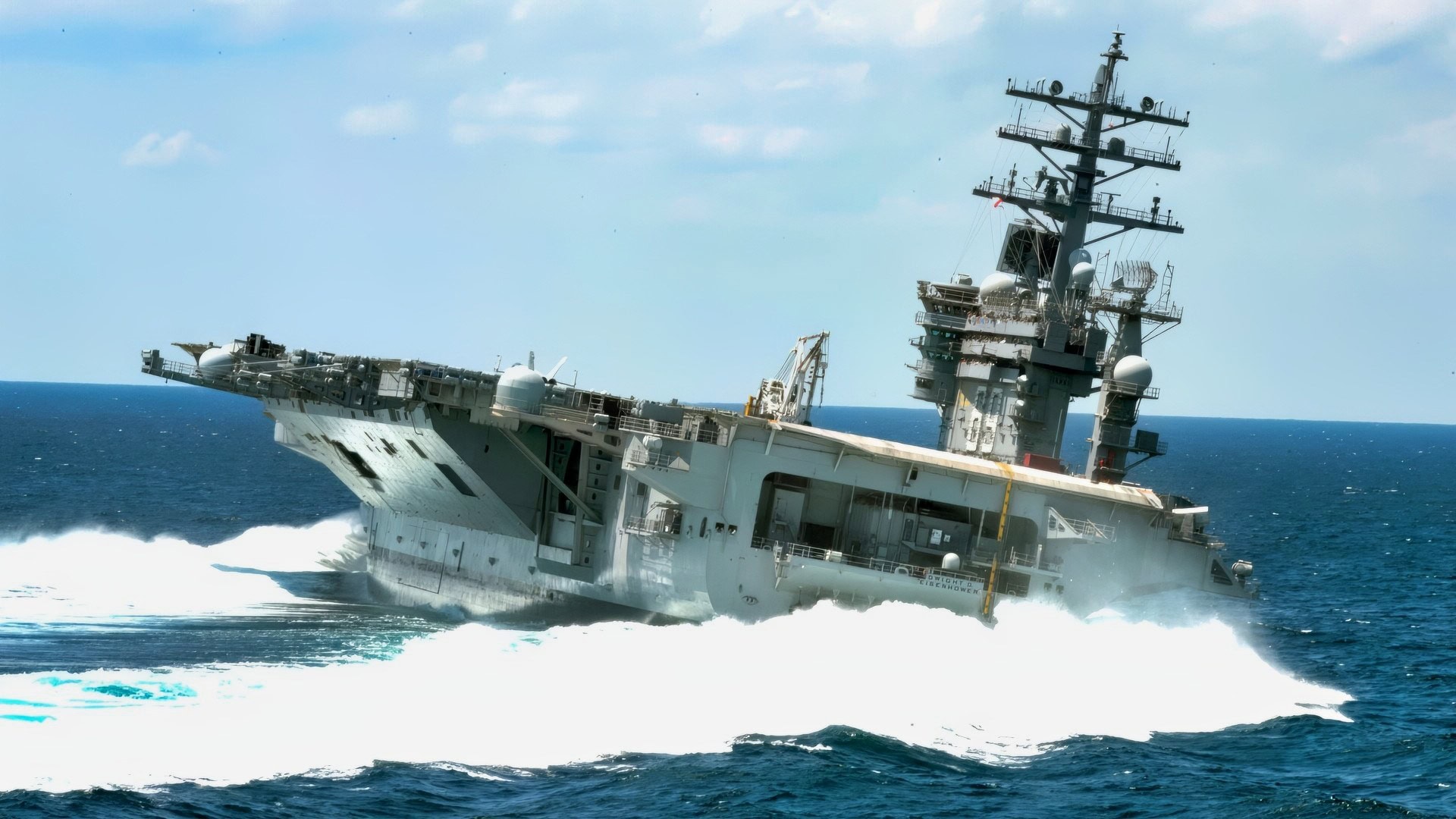
The primary way the United States projects power against China is through its aircraft carrier fleet. These ships are built to bring American airpower near enemy shores and deliver massive destruction to distant targets.
Sadly, China’s large missile and drone fleet makes American carriers more vulnerable than ever.
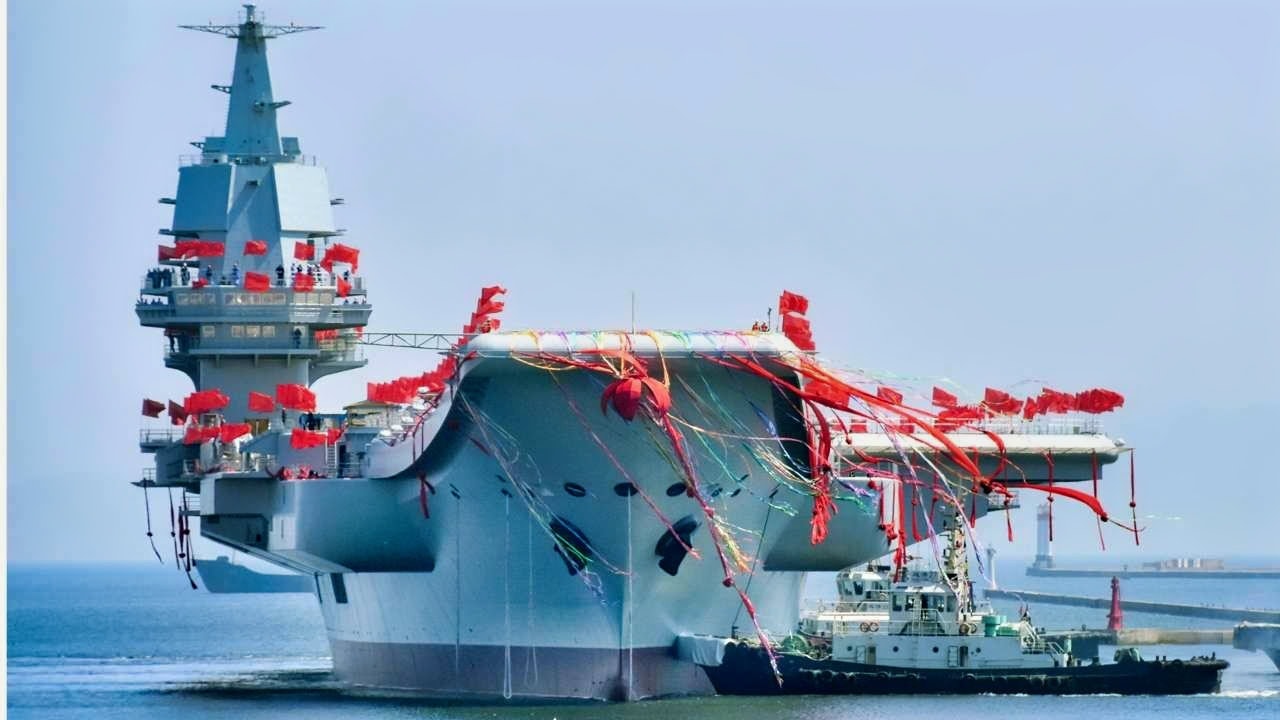
Shandong Aircraft Carrier. Image Credit: Creative Commons.
To improve their defenses against these threats, the Americans are likely to keep their carriers well beyond visual range (BVR). While this might protect the carrier, it also raises the risk that the carrier’s fighter wing will be less effective in combat, as they will burn through fuel faster to reach targets farther away.
Missiles, Not Ships, are Changing Naval Warfare
Essentially, massed fires and precision strikes favor the Chinese defenders in such a scenario, where they operate closer to their home waters. More importantly, the Chinese PLAN fights under the protective cover of land-based missiles, aircraft, and ISR networks.
The Americans stay over the horizon, at the edge of their operational range, thereby reducing their combat effectiveness, while China has free rein within the First Island Chain to assert its will.
Meanwhile, the reason America’s navy is much smaller than China’s lies in the defense industrial base supporting the US Navy. American shipyards are outdated, too few in number, overburdened, and understaffed.
In fact, much of the infrastructure supporting the US Navy’s shipyards in the United States (the few that remain) has not been updated since World War II.
On the other hand, China’s modern, automated (augmented by advanced artificial intelligence) production vastly outpaces the United States’. Repair, replacement, and surge capacity heavily favor Beijing in any extended conflict with the U.S.
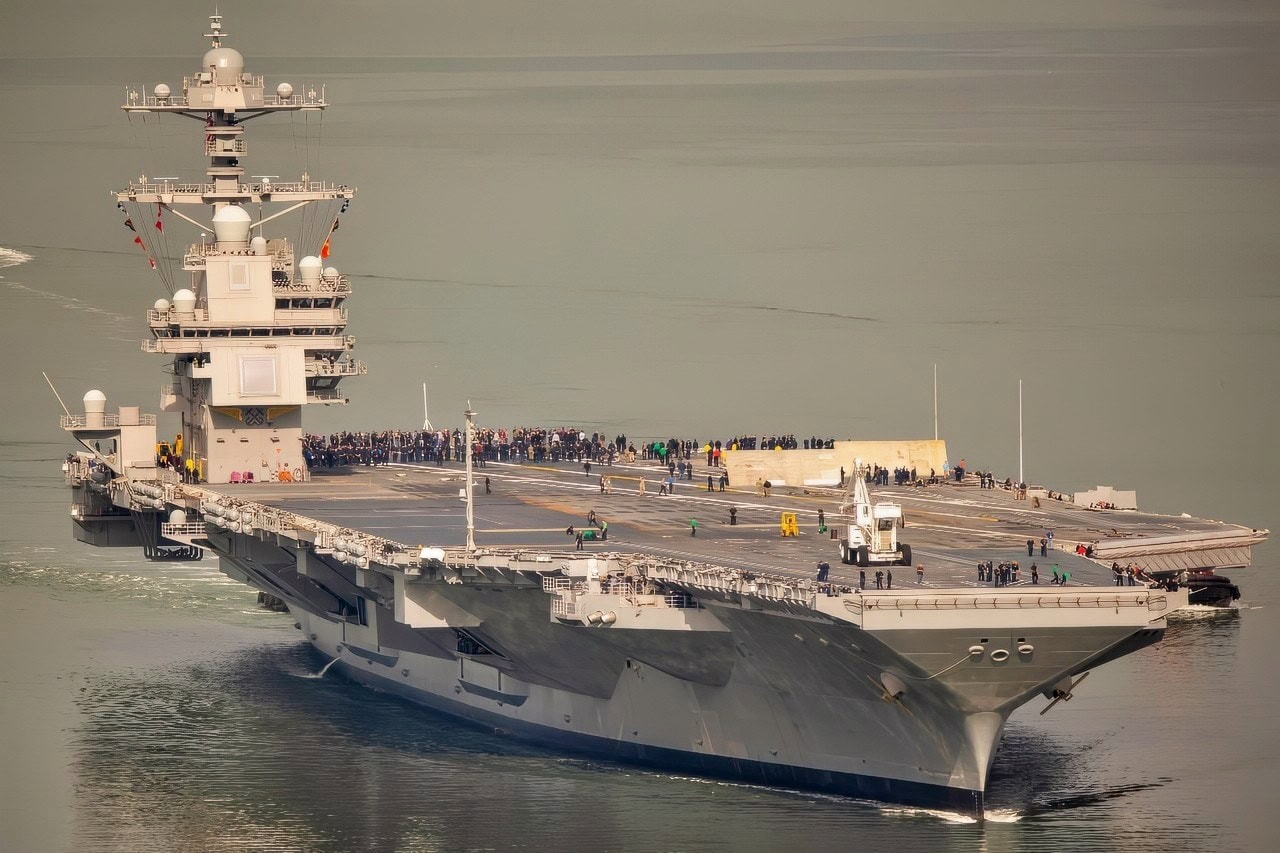
NEWPORT NEWS, Va. (Oct. 25, 2019) USS Gerald R. Ford (CVN 78) gets underway for the first time since beginning its post-shakedown availability July 2018. Ford is currently conducting sea trials, a comprehensive test of the ship’s systems and technologies. (U.S. Navy photo by Mass Communication Specialist 3rd Class Connor Loessin)
The bottom line is that the United States cannot easily rebuild combat power after losses.
Then there are the clear doctrinal differences between the United States Navy and China’s PLAN.
The US Navy is built for global power projection and blue-water dominance. China’s fleet, on the other hand, is designed for regional denial and saturation warfare. So, China’s PLAN has smaller ships, missile boats, and distributed systems specifically made to complicate US planning.
The Fleet Mix Problem
Yes, the United States still dominates the seas globally. But that matters less today than it did in the 1990s and early 2000s. China is making a move for regional dominance, not global naval supremacy. Once they achieve regional dominance, however, Beijing will likely seek to control the world’s oceans. But those days remain far off. The current issue is about regional hegemony, which China is on the path to achieving.
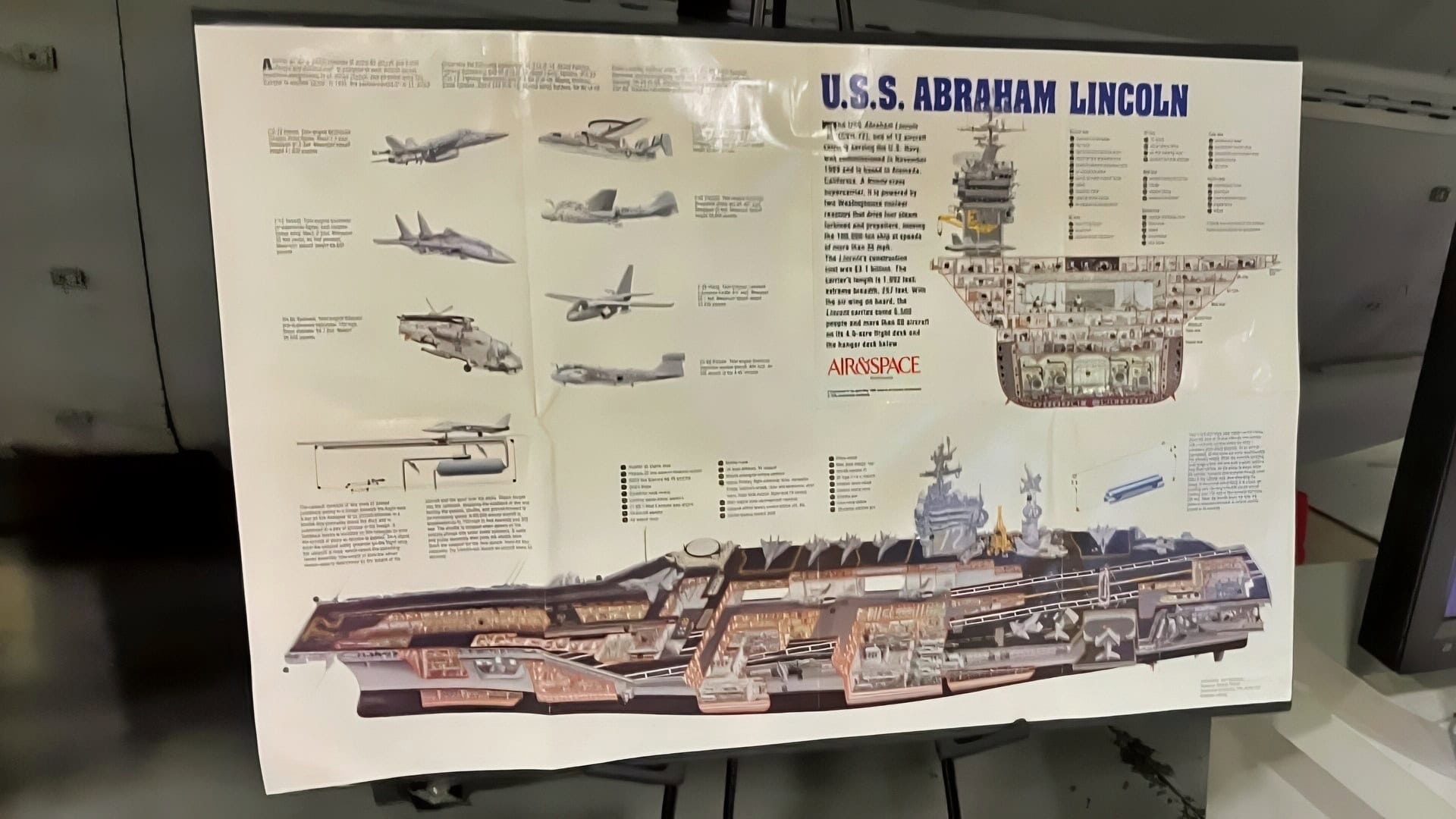
Aviation Museum of Kentucky USS Abraham Lincoln Carrier Photo. 19FortyFive.com Image.
Since wars unfold in specific theaters with their own unique challenges, global averages are not very meaningful. In the Western Pacific, the balance has been shifting in China’s favor for years. The fact that they now have a larger navy is not something to dismiss.
America’s quantitative supremacy over the PLAN has disappeared. More importantly, the qualitative advantages are diminishing today as China enhances its own naval capabilities for the modern era.
The Real Crisis: Time, Distance, and Capacity
Technology alone cannot overcome geography and industrial disparities.
Therefore, the danger is not just China’s fleet size. The real concern is China’s ability to fight closer to home with more ships, more missiles, and expanded production. America’s challenge isn’t simply catching up to China in numbers.
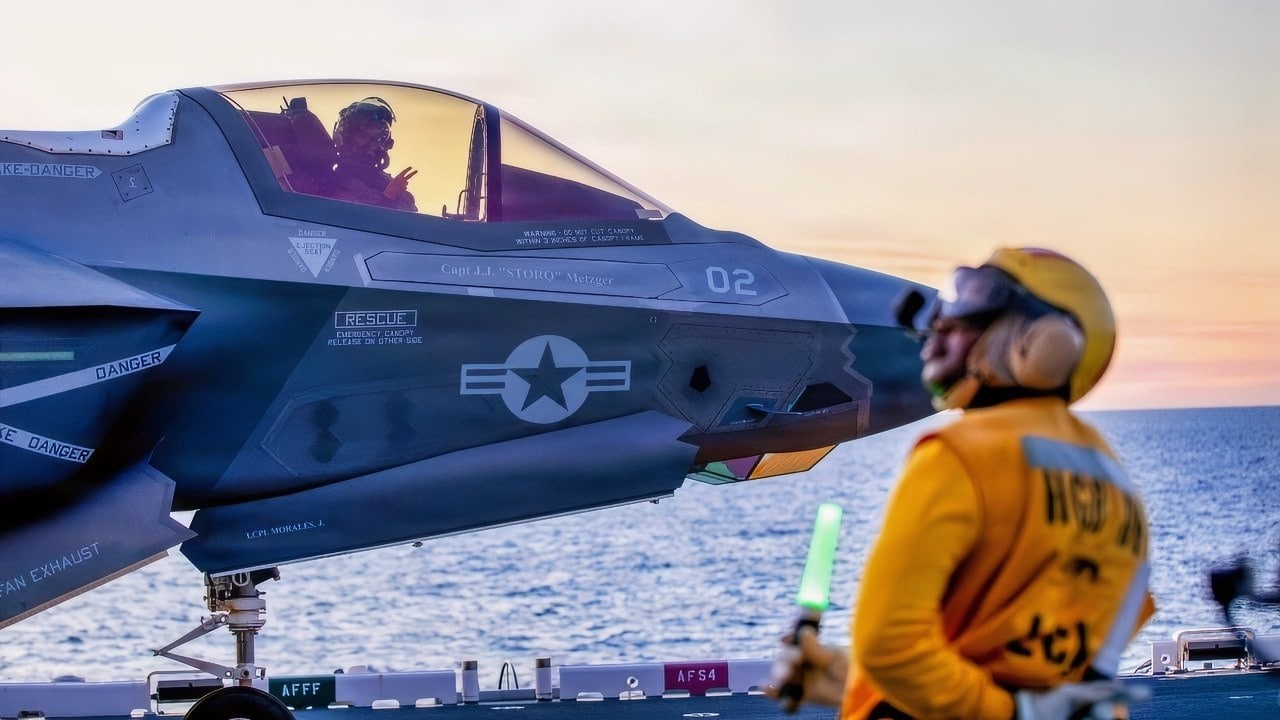
Chief Aviation Boatswain’s Mate (Handling) Stephane Togue, assigned to Wasp-class amphibious assault ship USS Makin Island (LHD 8), prepares to signal an F-35B Lightning II, attached to Marine Fighter Attack Squadron 211, for takeoff, Dec. 4, 2025. Makin Island is currently underway conducting routine operations in the U.S. 3rd Fleet. (Photo by Mass Communication Specialist Seaman Abraham Ramirez)
That’s not feasible, given the limitations of America’s defense industrial base. The true challenge is ensuring the US Navy can survive the initial moments of any conflict on China’s turf.
About the Author: Brandon J. Weichert
Brandon J. Weichert is the Senior National Security Editor at 19FortyFive.com. Recently, Weichert became the editor of the “NatSec Guy” section at Emerald. TV. He was previously the senior national security editor at The National Interest. Weichert is the host of The National Security Hour on iHeartRadio, where he discusses national security policy every Wednesday at 8 pm Eastern. He hosts a companion show on Rumble entitled “National Security Talk.” Weichert consults regularly with various government institutions and private organizations on geopolitical issues. His writings have appeared in numerous publications, among them Popular Mechanics, National Review, MSN, and The American Spectator. And his books include Winning Space: How America Remains a Superpower, Biohacked: China’s Race to Control Life, and The Shadow War: Iran’s Quest for Supremacy. Weichert’s newest book, A Disaster of Our Own Making: How the West Lost Ukraine, is available for purchase wherever books are sold. He can be followed via Twitter/X @WeTheBrandon.