
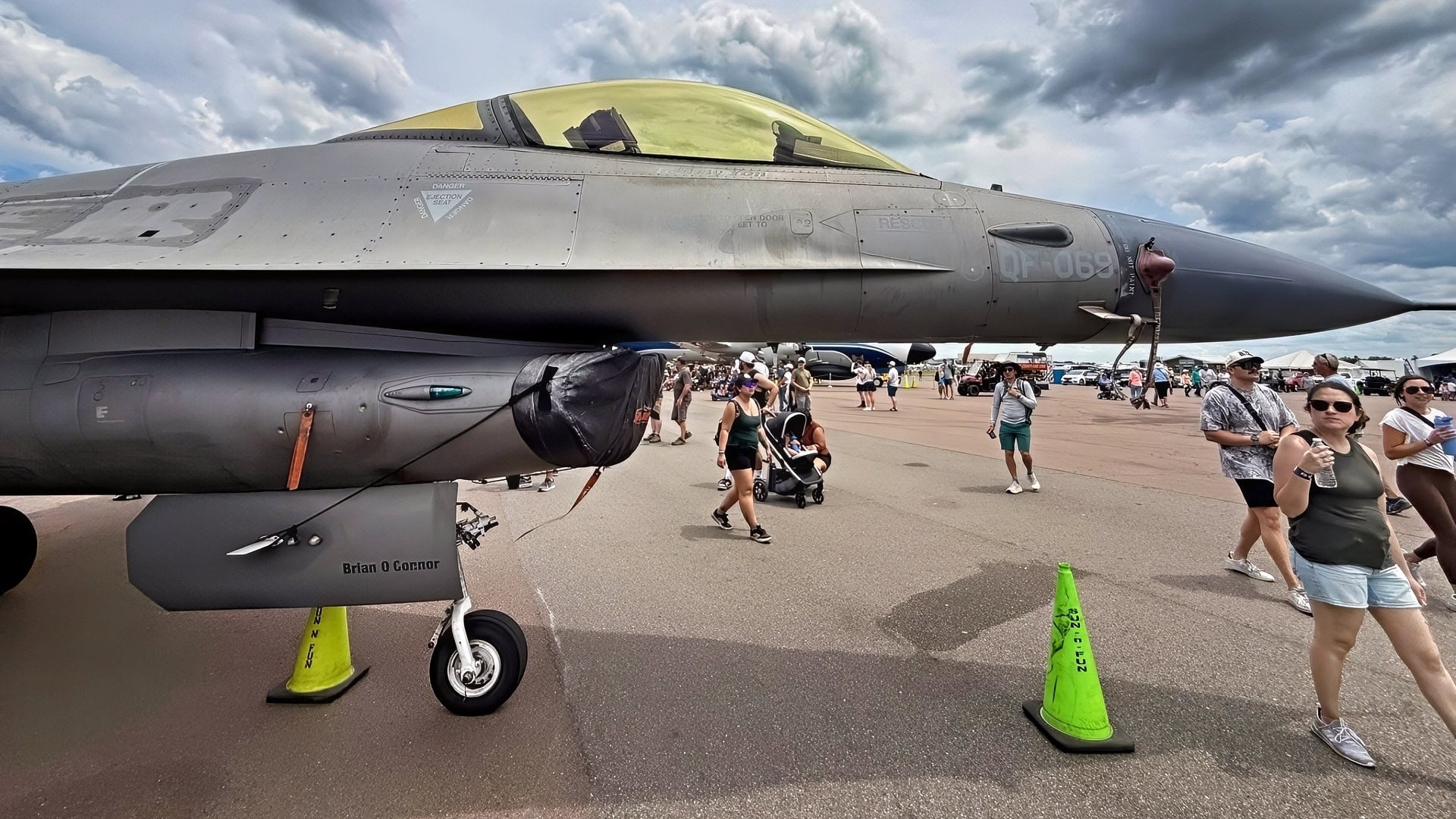
German authorities have launched a criminal investigation after three US Air Force F-16 pilots were targeted by high-powered lasers.
The incidents occurred on December 2nd and December 9th near Spangdahlem Air Base in Germany.
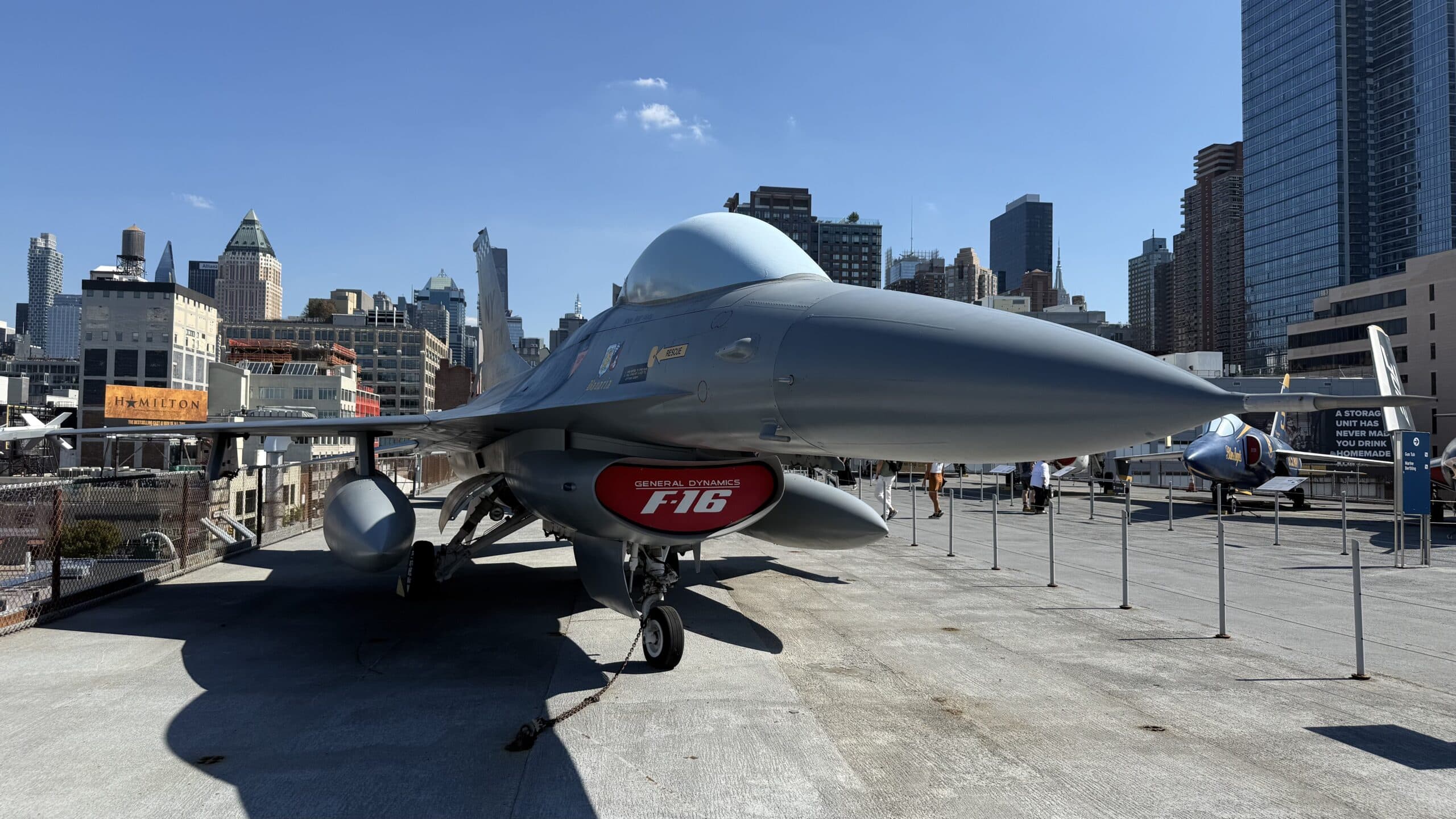
F-16 On Flight Deck of USS Intrepid. 19FortyFive.com Image.
F-16 On Flight Deck of USS Intrepid. 19FortyFive.com Image.
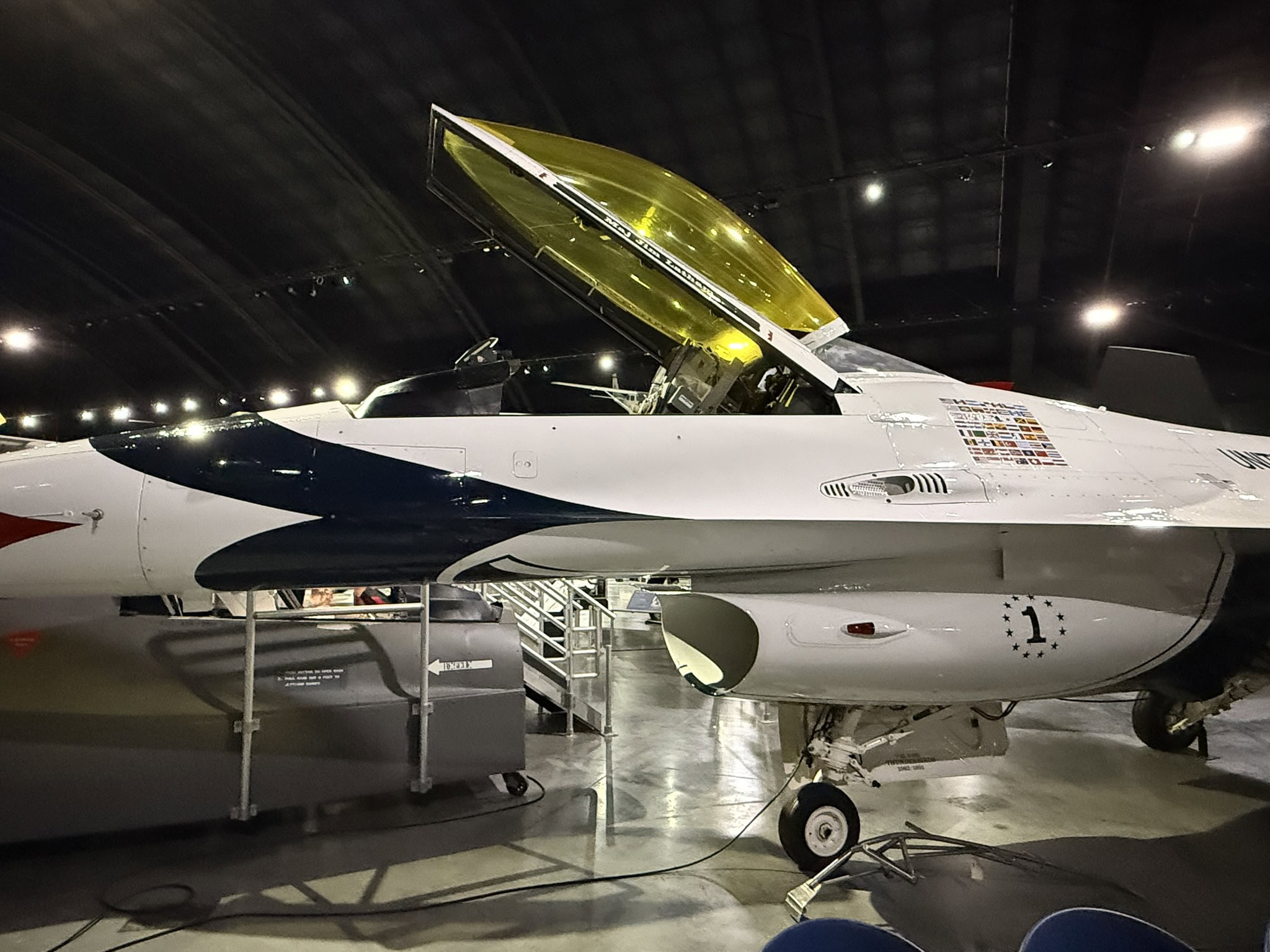
F-16 Fighter. 19FortyFive.com Image from the National Museum of the U.S. Air Force.
The strikes all occurred during nighttime landing approaches—one of the most dangerous phases of flight.
All the pilots landed safely, but investigators are treating the incidents seriously as aviation safety threats. What may have been just a prank can pose real risks to pilots operating aircraft at night.
My Personal Experience: I Had My Own Laser Incident In the Sky
I was involved in a red-beam laser strike once, years ago, flying a Cessna over Vancouver, Washington, at night.
It may be a child in their bedroom, but we treated the incident seriously and reported the laser to the tower at Portland International.
The incidents in Germany were obviously more significant, as they were concentrated, involved multiple military aircraft, and involved a powerful blue laser.
The three incidents occurred between 8:00 and 8:30 PM, several kilometers outside the Spangdahlem perimeter near the Trier region.
The aircraft involved were US Air Force F-16 Fighting Falcons, whose pilots described a powerful blue laser beam; the repeated targeting pattern suggests possible deliberate tracking.
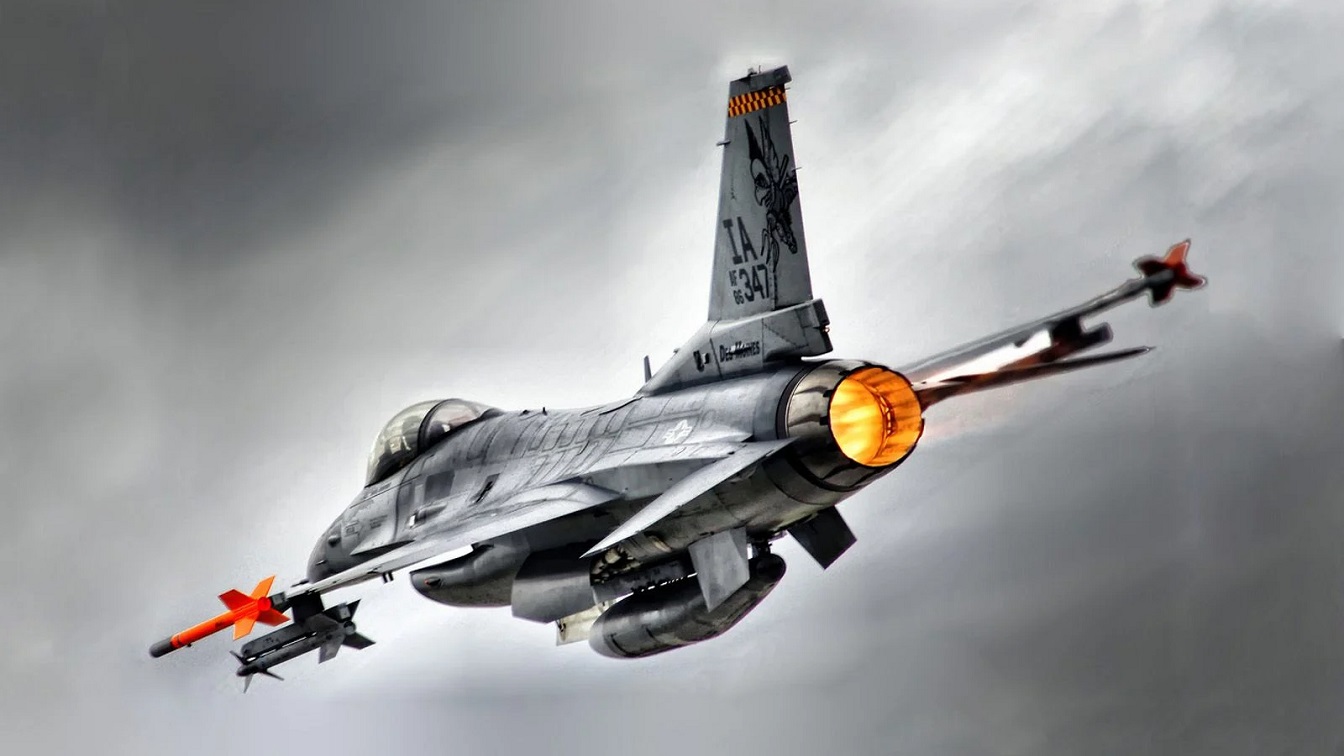
F-16 fighter. Image Credit: Creative Commons.
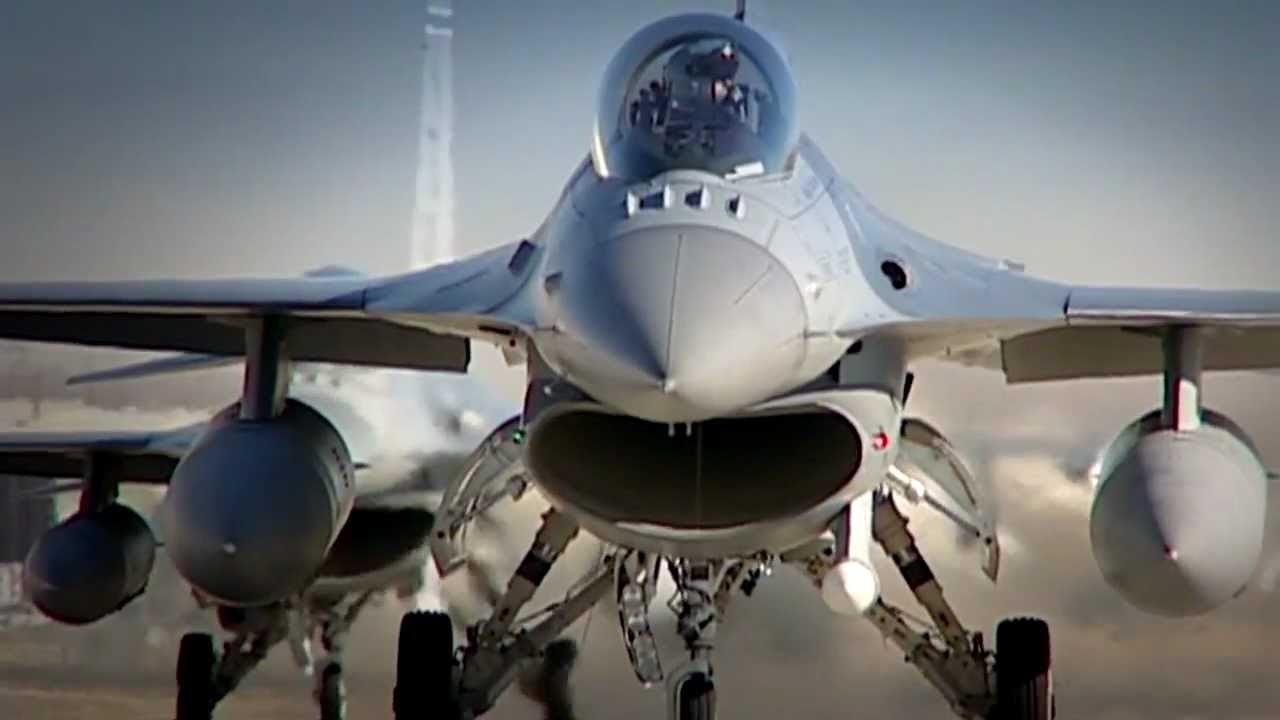
F-16 Viper. Image Credit: Lockheed Martin.
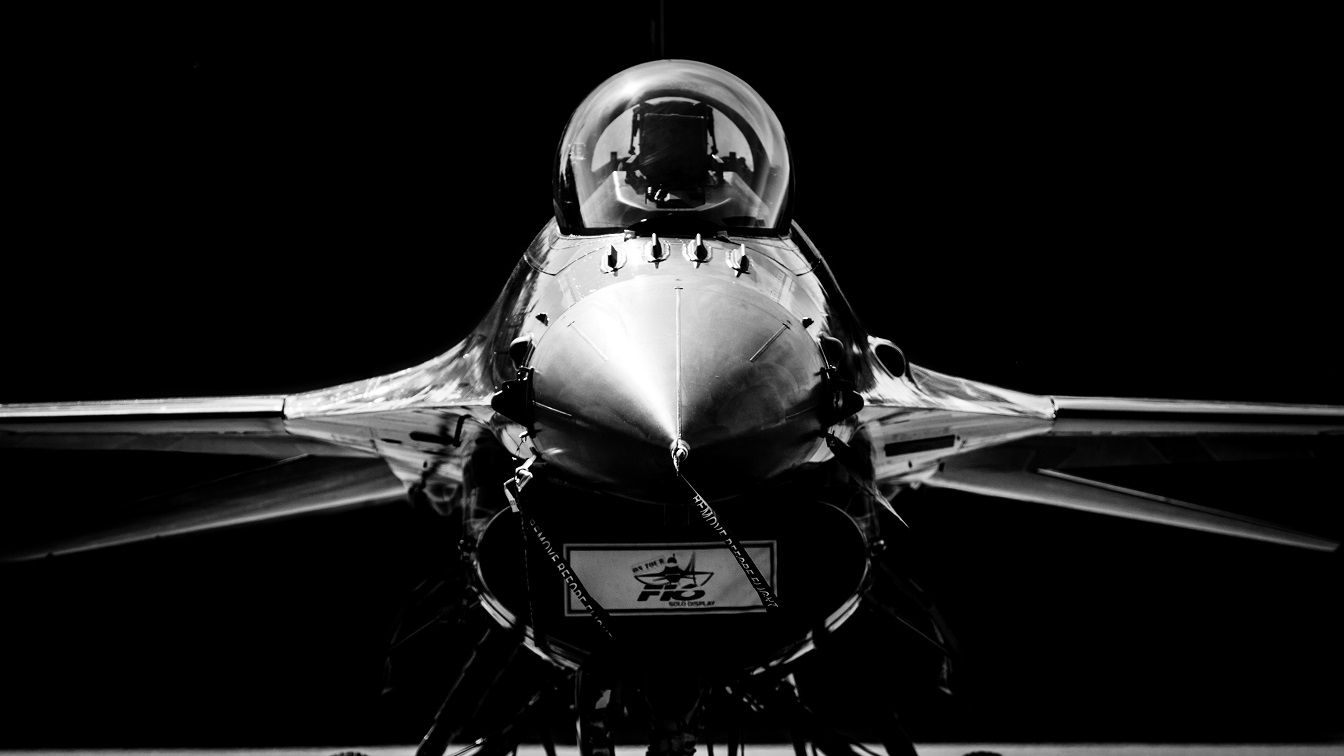
F-16. Image Credit: Creative Commons.
Investigators are now trying to determine whether the incidents were reckless behavior or coordinated, deliberate targeting.
Why Lasers Are Dangerous
High-powered lasers can cause flash blindness, retinal injury, and spatial disorientation—a problem for a pilot wrangling a supersonic aircraft.
The pilots in Germany were struck during final approach, as they transitioned from instrument flight to visual runway alignment.
The timing was hazardous; human eyes are highly sensitive in the dark, and a sudden burst of light can overwhelm retinal adaptation.
Laser beams also diverge and expand over long distances, something known as the “watermelon effect,” which can flood a cockpit with blue light.
This is a problem: reflections can bounce off the canopy, instruments, and HUD glass, making it especially disorienting.
A laser aimed from miles away can effectively fill a cockpit with blinding light during a landing.
Not the Blue Laser
The most common laser pointers are red or green.
But blue lasers are generally higher-energy systems with more specialized hardware.
Blue and green wavelengths are particularly hazardous to the retina because the eye focuses short wavelengths efficiently, concentrating energy directly on retinal tissue. Potential effects include temporary blindness, retinal burns, afterimages, and disruption of depth perception.
So blue lasers are not merely brighter—they can be significantly more damaging to human vision.
The Investigation
The Trier Criminal Investigation Department and Rheinland-Pfalz police are leading the investigation into the incident.
To assist, the USAF is sharing pilot telemetry and suspected GPS source locations. F-16s are capable of dropping GPS markers during an illumination event, which should be of use.
Otherwise, the police are relying on telecom and cell tower analysis, camera footage review, community canvassing, and supply chain tracing—that is, laser purchases. Investigators will also conduct a technical analysis of the wavelength, beam divergence, and probable hardware class. In sum, the investigation resembles a sophisticated aviation-security probe, not a routine nuisance complaint.
The Legal Side
The German criminal classification involved is “Dangerous Interference with Air Traffic,” which carries a possible penalty of 6 months to 10 years in prison. The key prosecutorial challenge will be proving intent; investigators must show that the suspect deliberately tracked the aircraft, not just accidentally hit them. But Germany treats laser interference with aircraft as a major public safety felony.
Strategic Implications
Of course, there are broader concerns related to the incident.
There has been an increase in laser incidents targeting NATO aircraft. The reasons remain unclear; however, it could be reckless civilians, anti-NATO activism, or coordinated harassment.
The problem is exacerbated by the layout of modern cockpits, which rely heavily on visual displays and require night adaptation. Even non-lethal harassment, like a laser strike, can degrade flight safety—especially during approach and landing.
Notably, cheap consumer or industrial technology can interfere with advanced aircraft operations—another modern example of cheap asymmetries disrupting sophisticated military systems.
The broader lesson is that aviation vulnerabilities do not require missiles or cyberattacks, but can be exploited by a simple laser pointer.
About the Author: Harrison Kass
Harrison Kass is a writer and attorney focused on national security, technology, and political culture. His work has appeared in City Journal, The Hill, Quillette, The Spectator, and The Cipher Brief. He holds a JD from the University of Oregon and a master’s in Global & Joint Program Studies from NYU. More at harrisonkass.com.