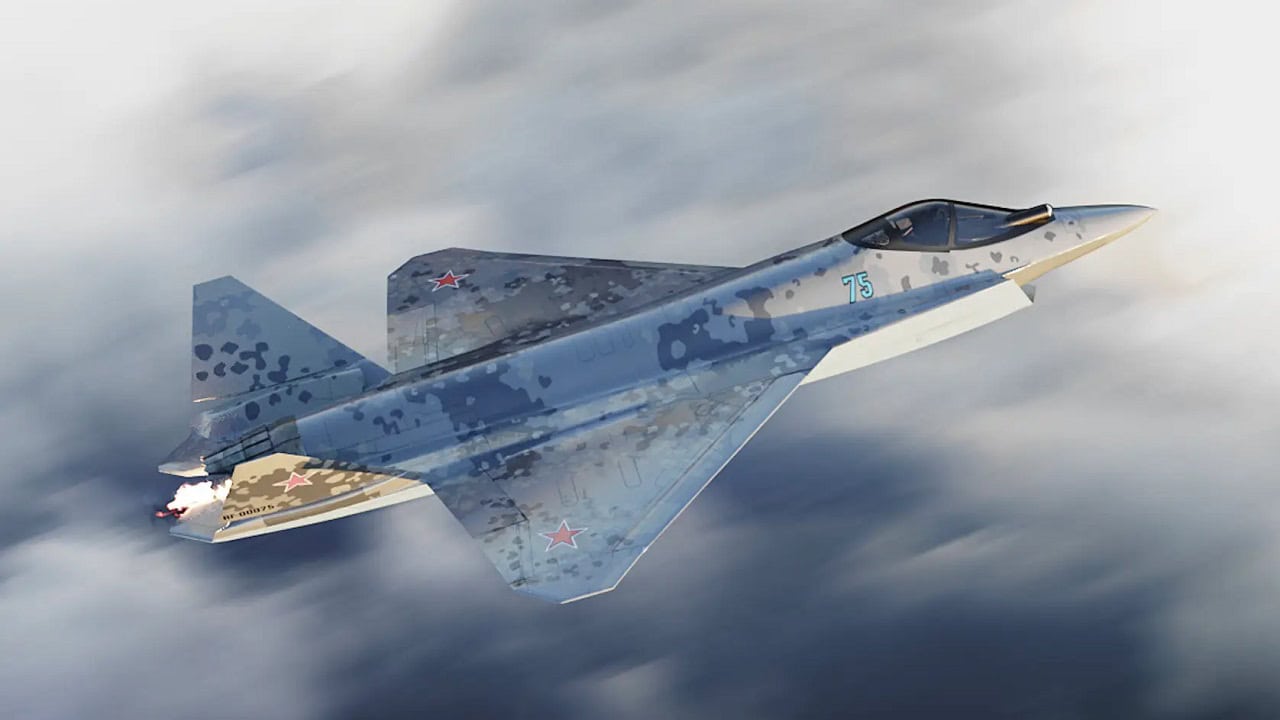
Russia designed the Su-75 Checkmate, a single-engine 5th-generation stealth fighter, to rival the U.S. Lockheed Martin F-35. Russia has built 0 operational Su-75 Checkmate units. The Russian Su-75 Checkmate has essentially disappeared after its flashy arrival on the global stealth fighter scene. The Su-75 has an F-35-like maximum takeoff weight of approximately 26,000 pounds.
Russia’s Su-75 vs. the F-35: Who Wins?
Years after its “flashy” arrival upon the global 5th-generation stealth fighter jet scene, the once highly praised Russian Su-75 Checkmate seems to be fading into a mist of uncertainty, if not simple “non-existence.”
What happened to a jet that seemed like a fast, stealthy Russian effort to rival the West’s F-35 network?
Despite the emergence of an F-35-like single-engine design and a stealthy, rounded blended wing-body, little to no detail on the Su-75’s actual sensing, targeting, or computing capabilities was discussed or analyzed.
Apart from “renderings” of its external configuration, very little actual technological detail emerged in a substantial way.
Specifications for the aircraft include a digital cockpit, a 1,500-mile range, an internal weapons bay, and a maximum speed of Mach 1.8.
These attributes, if true, might indicate the possibility of a capable 5th-generation stealthy jet faster and potentially more maneuverable than an F-35.
Why then, did the aircraft essentially “disappear?”
Su-75 vs. F-35?
The idea is to “mass” produce an exportable, lower-cost 5th-generation stealth fighter for Russian allies or customers interested in a multi-national 5th-generation network of jets to “mass” attack across formations.
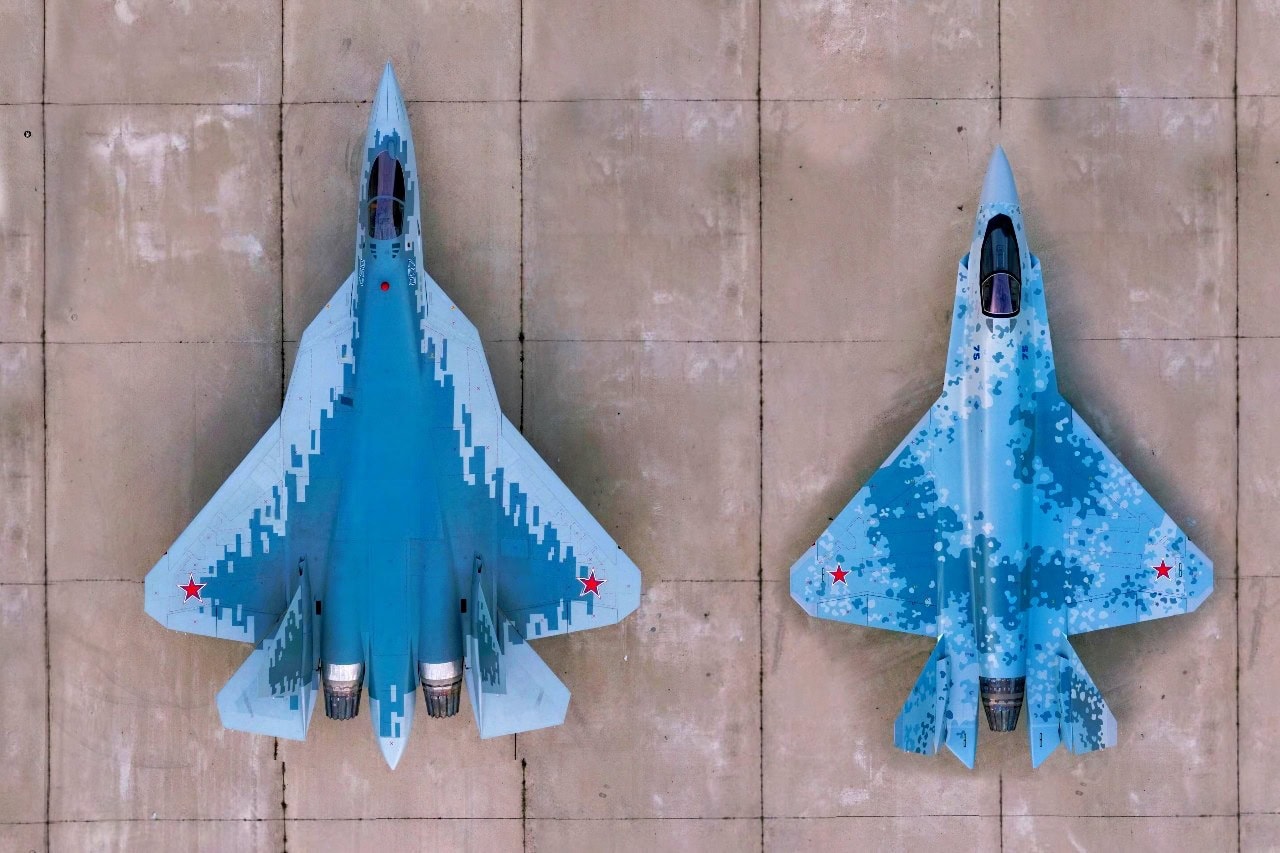
Su-57 Felon and Su-75 Fighters From Russia. Image Credit: Creative Commons.
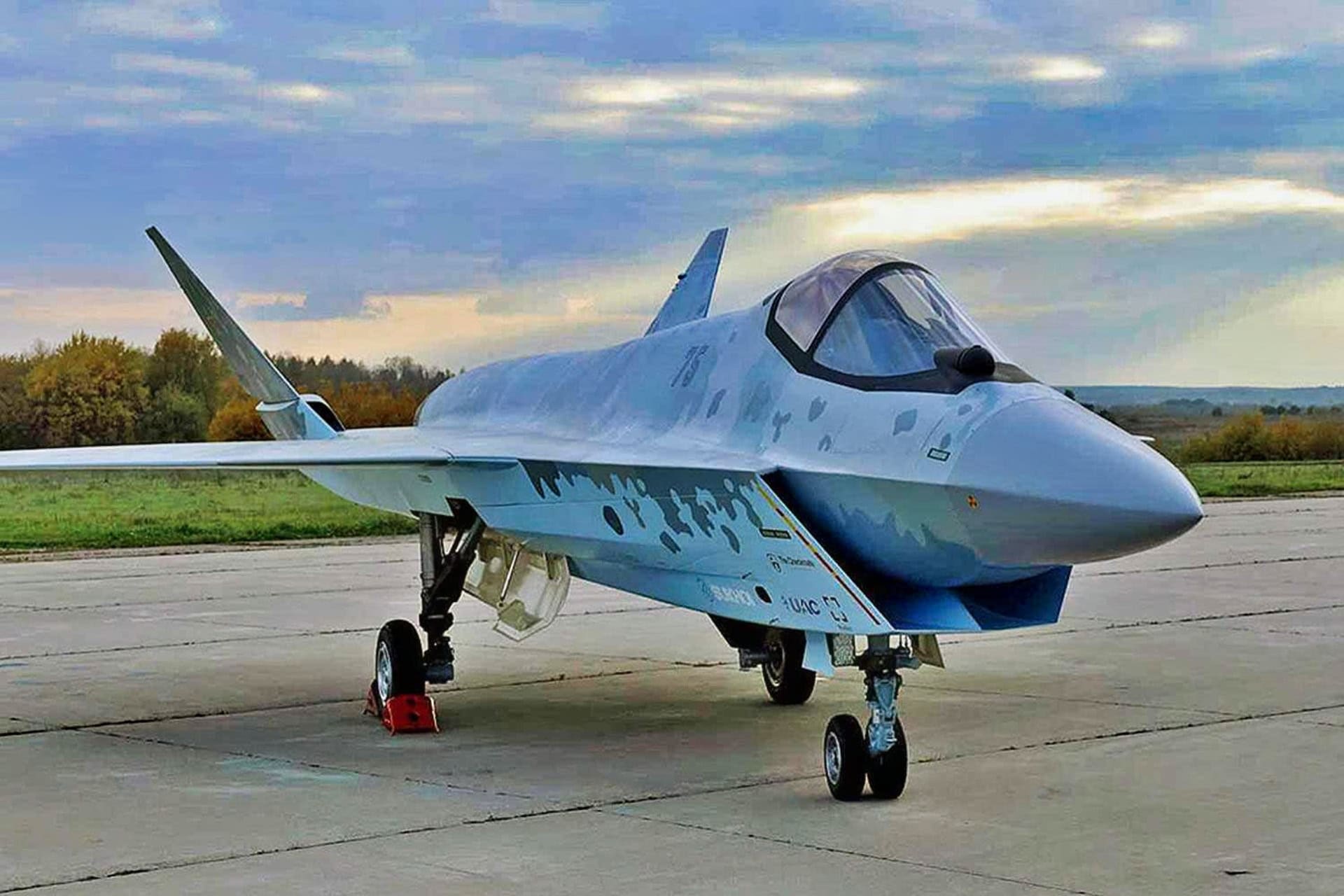
Su-75 Checkmate Russia Stealth Fighter. Image Credit: UAC.
There are reasons to “pause” at this possibility, given Russia’s production challenges and the massive deficit the Su-75 would operate with in relation to NATO. There are already hundreds of F-35s spread across more than 18 countries worldwide, and estimates from Lockheed Martin suggest there will be at least 600 F-35s on the European continent by 2030.
Russia is known for its fighter-jet production and budget problems, as evidenced by its floundering fleet of Su-57s. Russia has been planning to build hundreds of Su-57s for years, but has never been able to put together an actual “force” or formation of Su-57s, so it seems unlikely that things would be any different with the Su-75.
Even if Russia could mass-produce Su-75s, something for which there is little to no actual evidence, it would take Russia years to build an international allied 5th-gen fighter force capable of matching the F-35.
Furthermore, it seems unlikely that the Su-75 would operate with an F-35-like multi-national datalink. All F-35s can seamlessly exchange targeting and intelligence data across combat formations using a common Multi-Function Advanced DataLink (MADL).
Could allied “checkmate” Su-75 countries operate with a similar secure command-and-control, multinational networking technology?
Is It Really Stealthy?
External configuration is but one element of stealth technology, meaning it can reduce radar signature by virtue of having few protruding structures or sharp angles, which are more likely to generate a radar return signal.
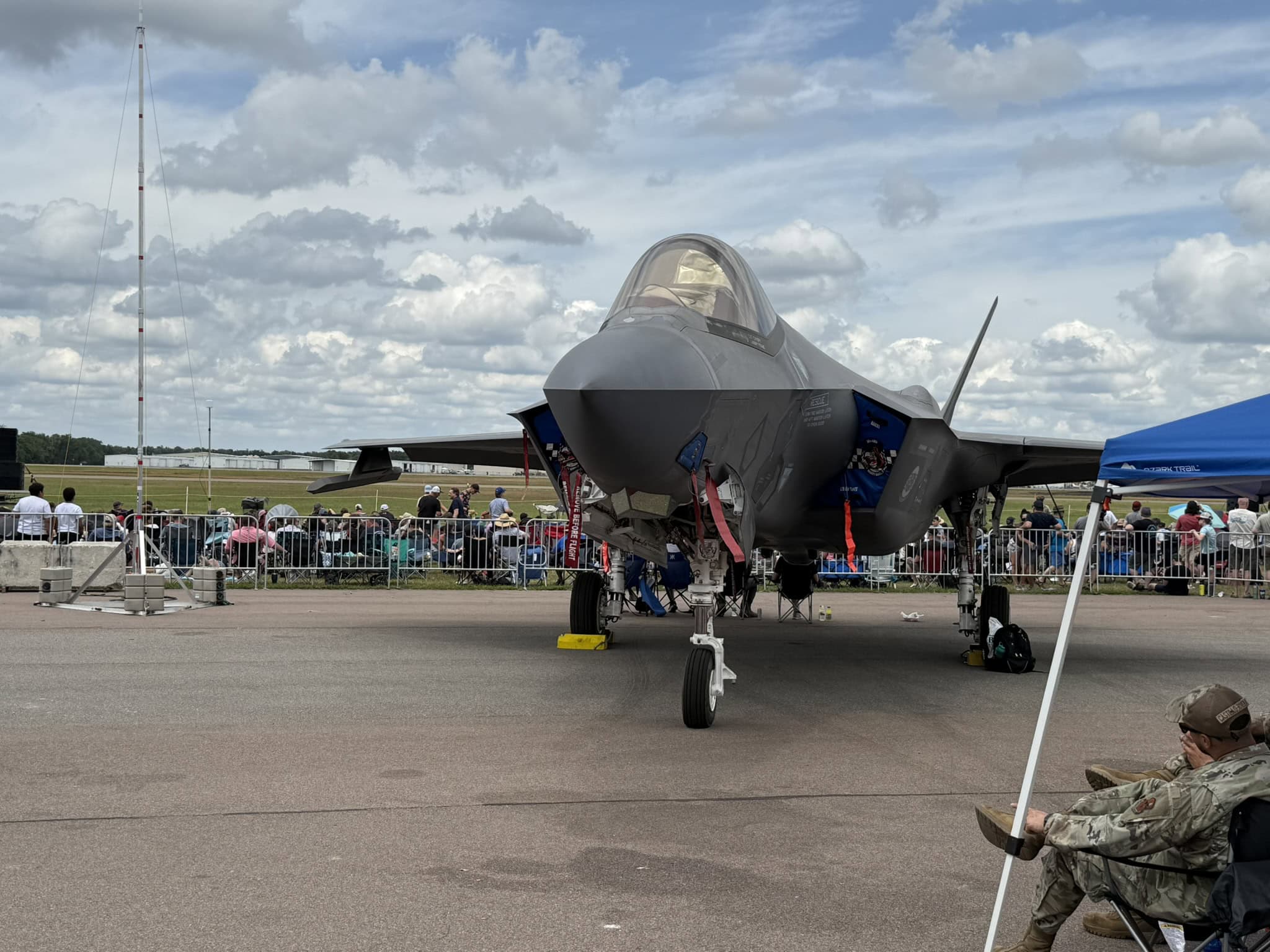
F-35C. 19FortyFive.com original image from Lakeland, Florida Airshow on 4/19/2026.
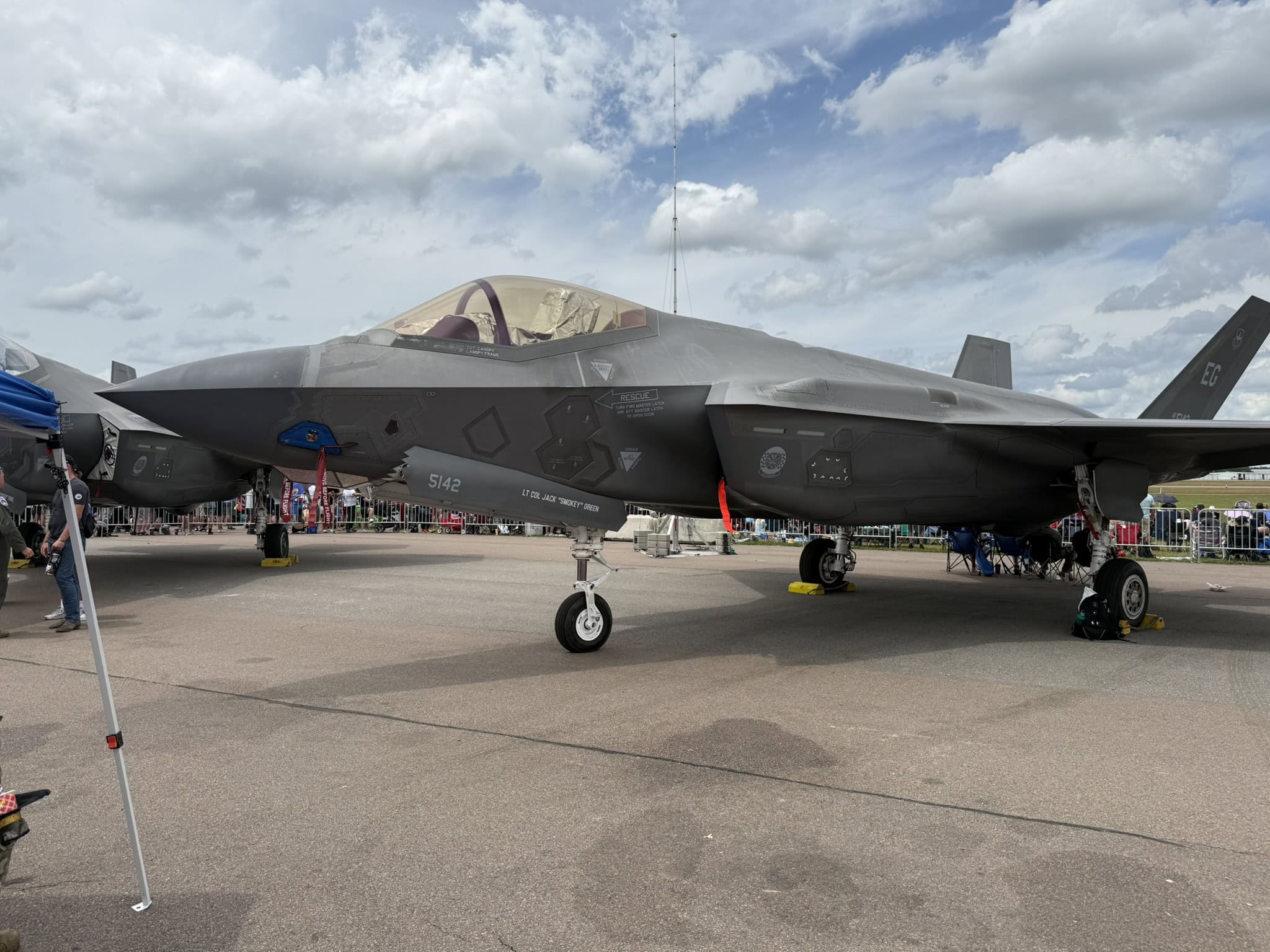
F-35 fighter. Image Credit: 19FortyFive.com taken by Harry J. Kazianis. Original Photo.
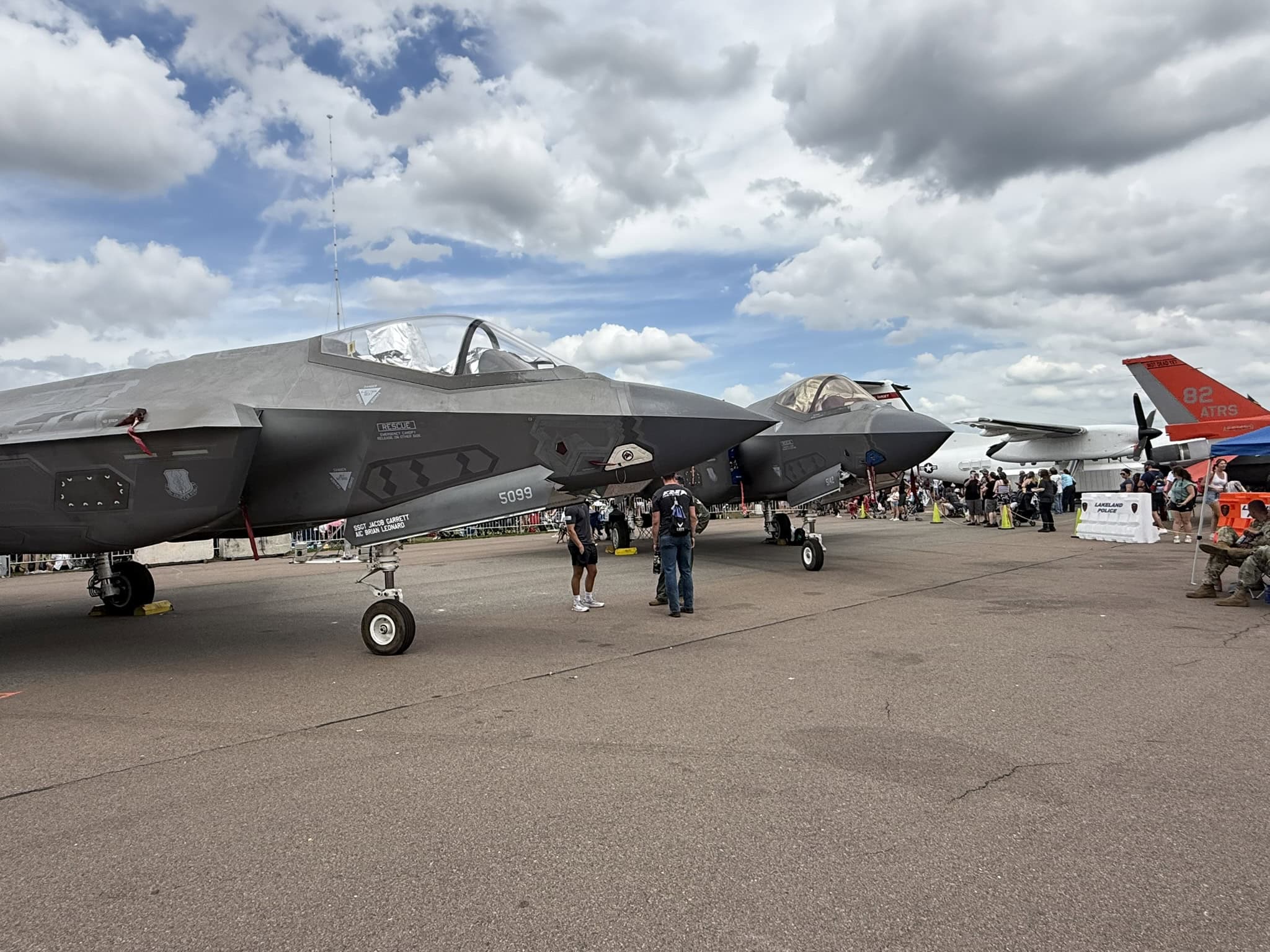
F-35 fighters. Image Credit: 19FortyFive.com taken by Harry J. Kazianis. Original Photo.
However, while it can help direct airflow for vectoring and greatly reduce radar cross section, the external configuration is but one element of a stealth configuration. Does it have radar-absorbent materials?
How is it bolted and seam-welded in terms of connected, joined elements of the fuselage? Of equal importance are questions about its thermal signature.
The back end is hard to see in the available photos, though the aircraft does certainly have an internally buried engine, likely optimized for low heat emissions.
The Su-75 does appear to have an internal weapons bay, yet the quantity and composition of its arsenal, as well as its max payload weight, are not likely to compete with an F-35. Available specs for the Su-75 say it has an F-35-like maximum takeoff weight of 26,000 pounds, speeds up to Mach 1.8, and advanced Infrared Search and Track targeting technology.
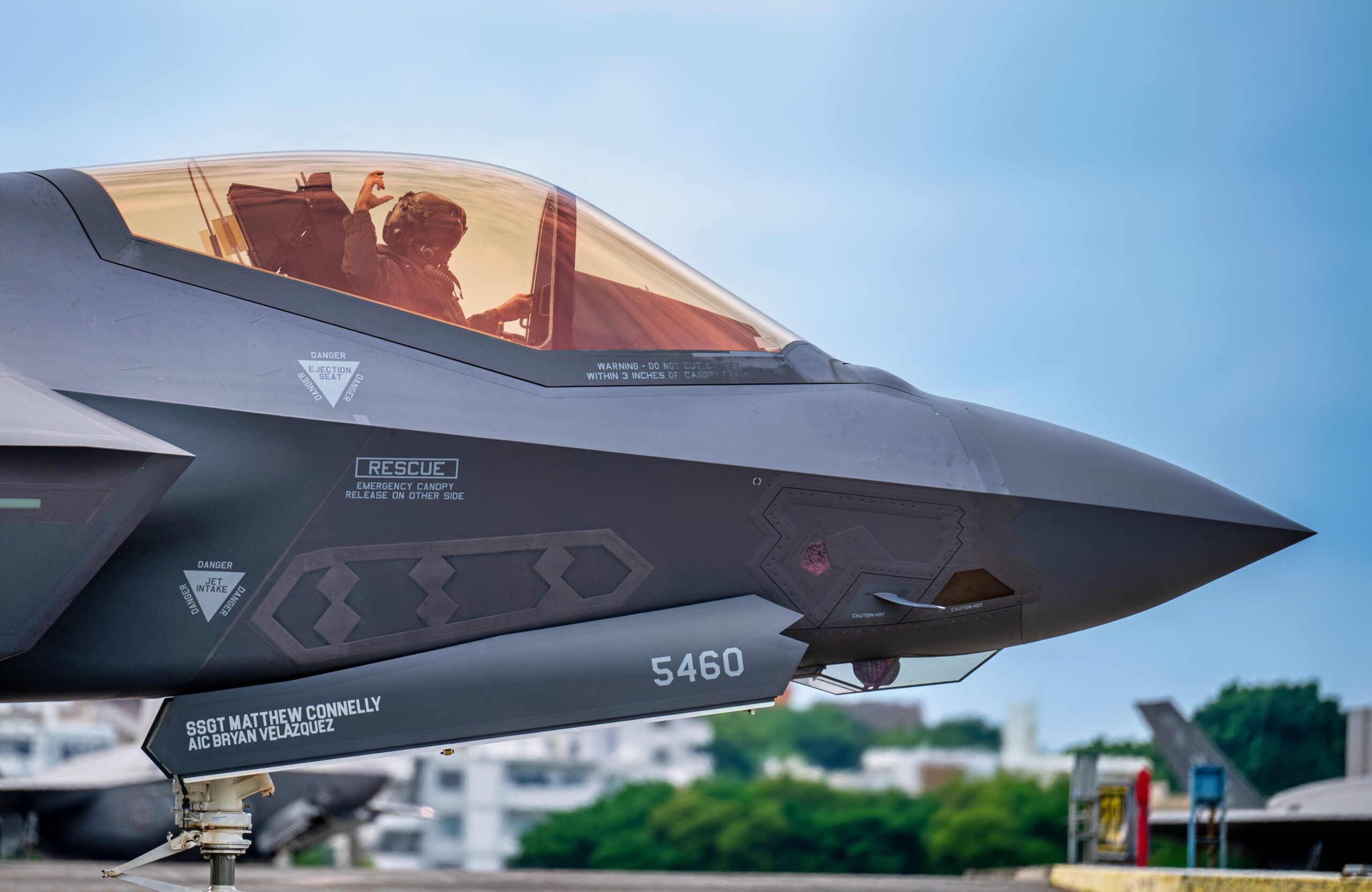
A U.S. Air Force F-35A Lightning II pilot assigned to the 355th Expeditionary Fighter Squadron taxis on the flightline at Marine Corps Air Station Futenma, Japan, during a routine 18th Wing readiness exercise at Kadena Air Base, Japan, May 6, 2025. The U.S. Air Force continues to work on its ability to meet new challenges in dynamic environments. In line with this direction, U.S. Pacific Air Forces is constantly evaluating and validating new warfighting concepts. (U.S. Air Force photo by Senior Airman Catherine Daniel)
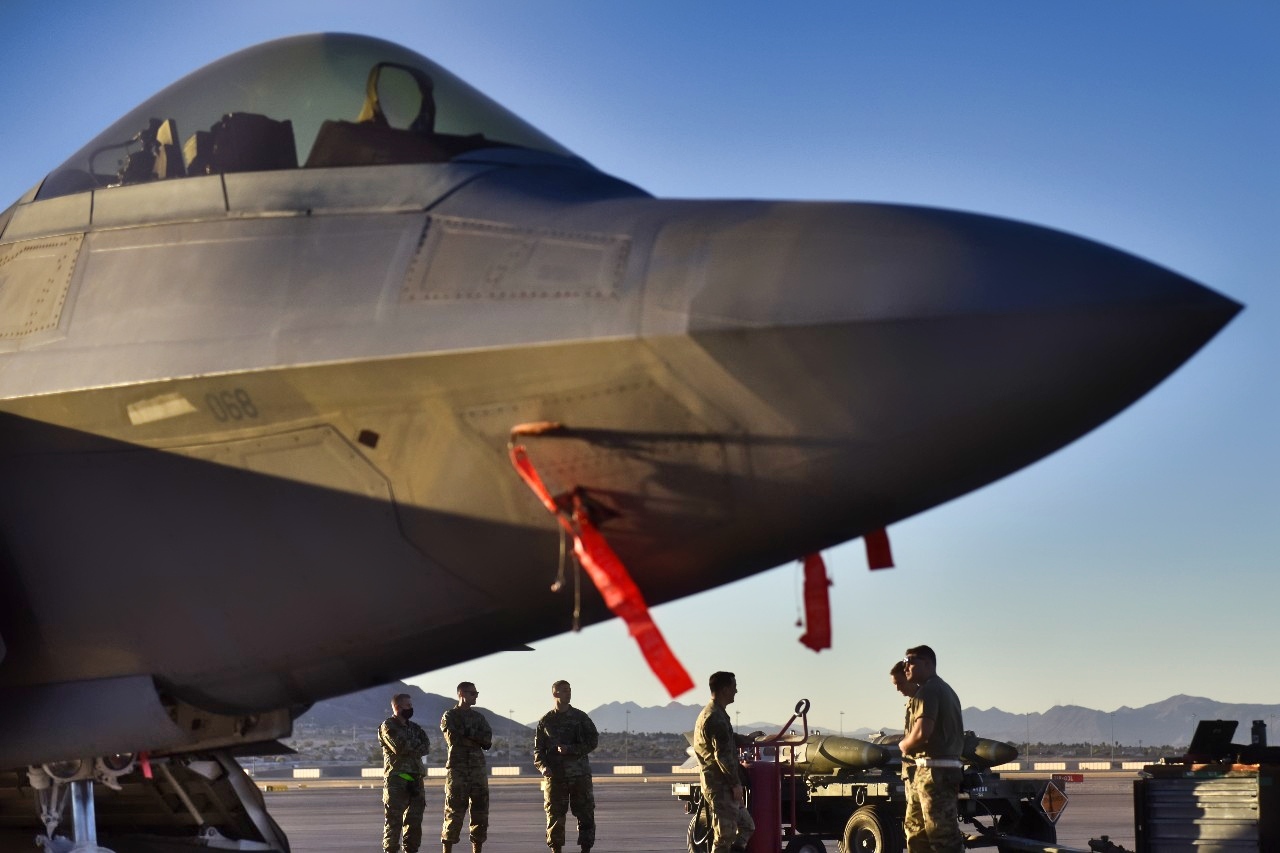
Airmen from the 757th Aircraft Maintenance Squadron talk about their execution plan next to an F-35 Lightning prior to the start of weapons load crew competition at Nellis Air Force Base, Nevada, Oct. 16, 2020. Throughout the year weapons crews are put to the test of safely loading and unloading ordinance to their respective aircraft in front of their peers while being timed. At the end of the year, the winners from each event are pitted against each other to see which team is the best. (U.S. Air Force photo by Tech. Sgt. Alexandre Montes)
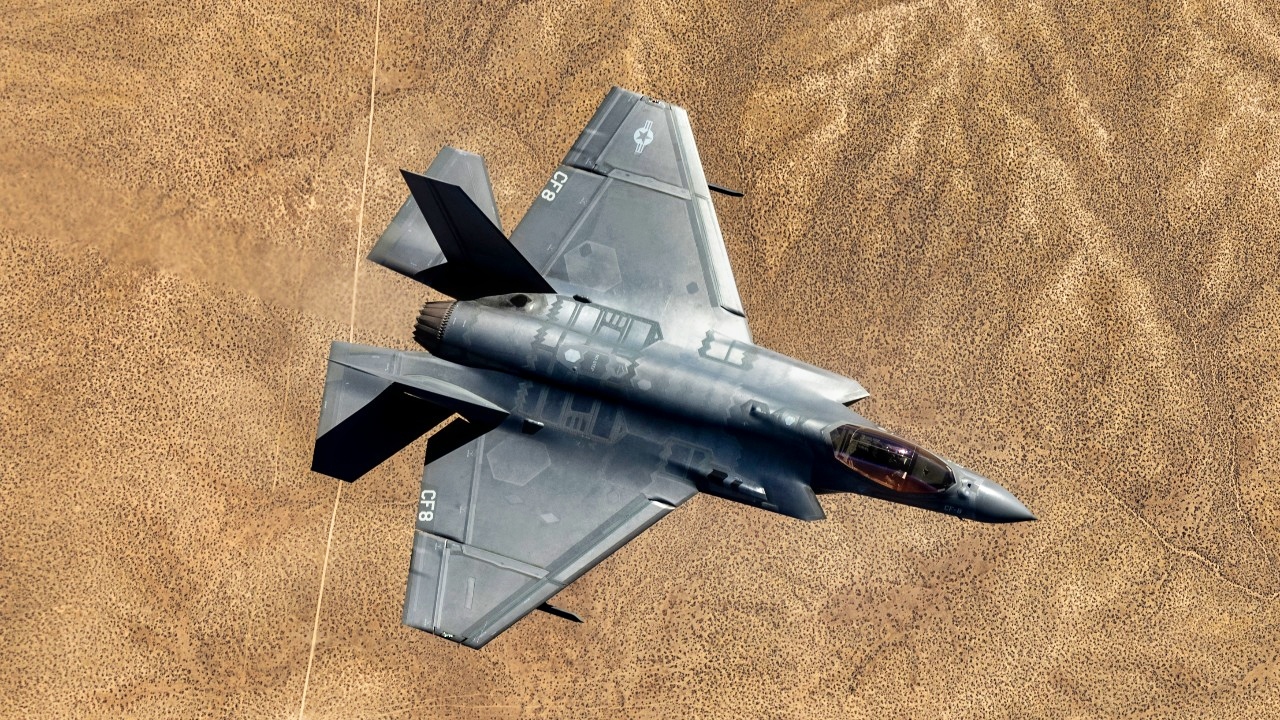
Maj. Nicholas Helmer conducts a mission over the Mojave Desert on October 8, 2024. The F-35C aircraft is assigned to the 461st Flight Test Squadron, F-35 Integrated Test Force at Edwards Air Force Base, California. The aircraft’s dual markings of United States Navy Air Test and Evaluation Squadron Nine (VX-9) and 461st FLTS represents the joint mission of the Integrated Test Force. The F-35 ITF includes people and aircraft from the United States Air Force, United States Navy, United States Marine Corps, foreign partners, Air Force Reserve Command 370th FLTS, and the Air Force Operational Test and Evaluation Center’s 31st TES. (Courtesy Photo, Lockheed Martin Edwards Team)
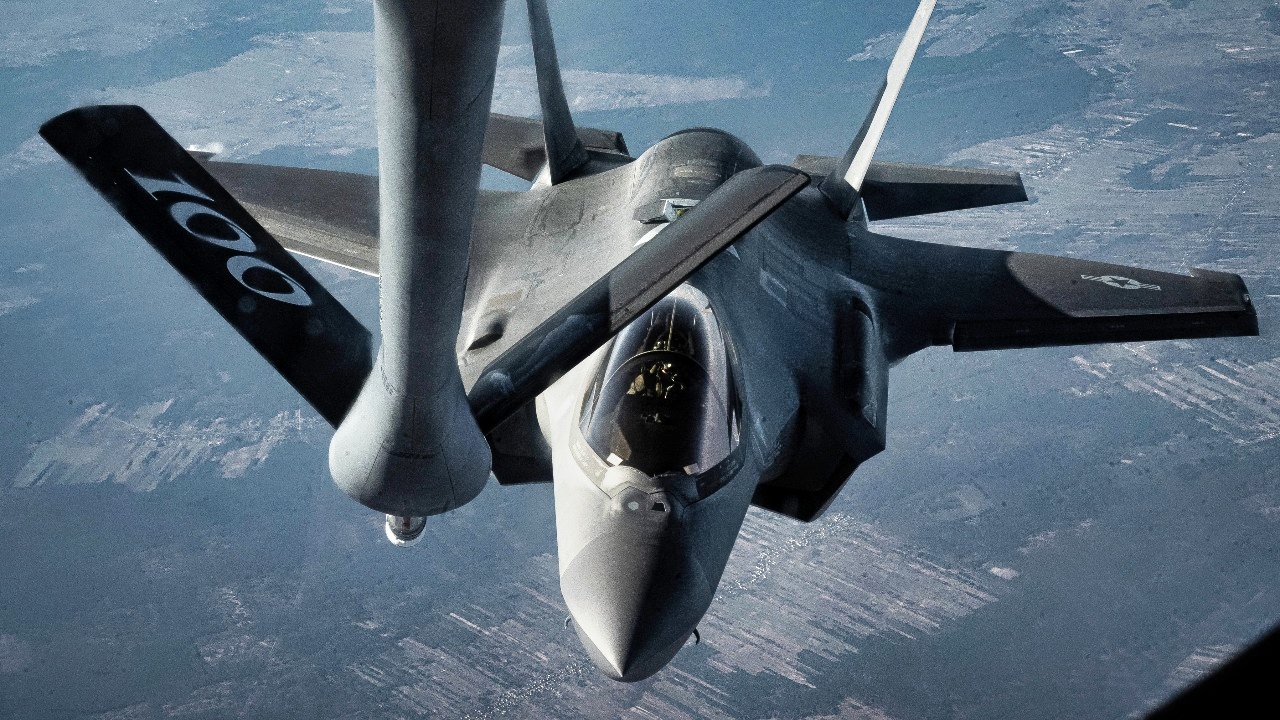
The 388th Fighter Wing’s F-35 Lightning II fifth-generation fighter prepares to receive fuel from a U.S. Air Force Boeing KC-135 Stratotanker attached to the 100th Air Refueling Wing in Eastern European airspace, Feb. 28, 2022. The KC-135 platform is key to enabling U.S. Air Forces in Europe – Air Forces Africa to project credible air power and air operations in concert with NATO allies and partners. (U.S. Air Force photo by Airman 1st Class Edgar Grimaldo)
An operative question here clearly relates to the range, accuracy, and resolution of its sensing, as the aircraft is unlikely to rival the sensing capacity of the F-35, an aircraft which has shown in wargames to be capable of “seeing” and “destroying” groups of 4th-gen aircraft from ranges where it cannot itself be detected.
If one of the aircraft were far superior to the other in terms of targeting range, weapons reach, guidance, computing, and EW, actual numbers of aircraft might not be as crucial.
However, should they be in any way comparable, the force with larger numbers will be more likely to win a war of attrition, outlast the other, and cover wide areas of combat space that an opponent could not defend.
About the Author: Kris Osborn
Kris Osborn is the Military Technology Editor of 19FortyFive. Osborn is also President of Warrior Maven – Center for Military Modernization. Osborn previously served at the Pentagon as a highly qualified expert in the Office of the Assistant Secretary of the Army—Acquisition, Logistics & Technology. Osborn has also worked as an anchor and on-air military specialist at national TV networks. He has appeared as a guest military expert on Fox News, MSNBC, The Military Channel, and The History Channel. He also has a Master’s Degree in Comparative Literature from Columbia University