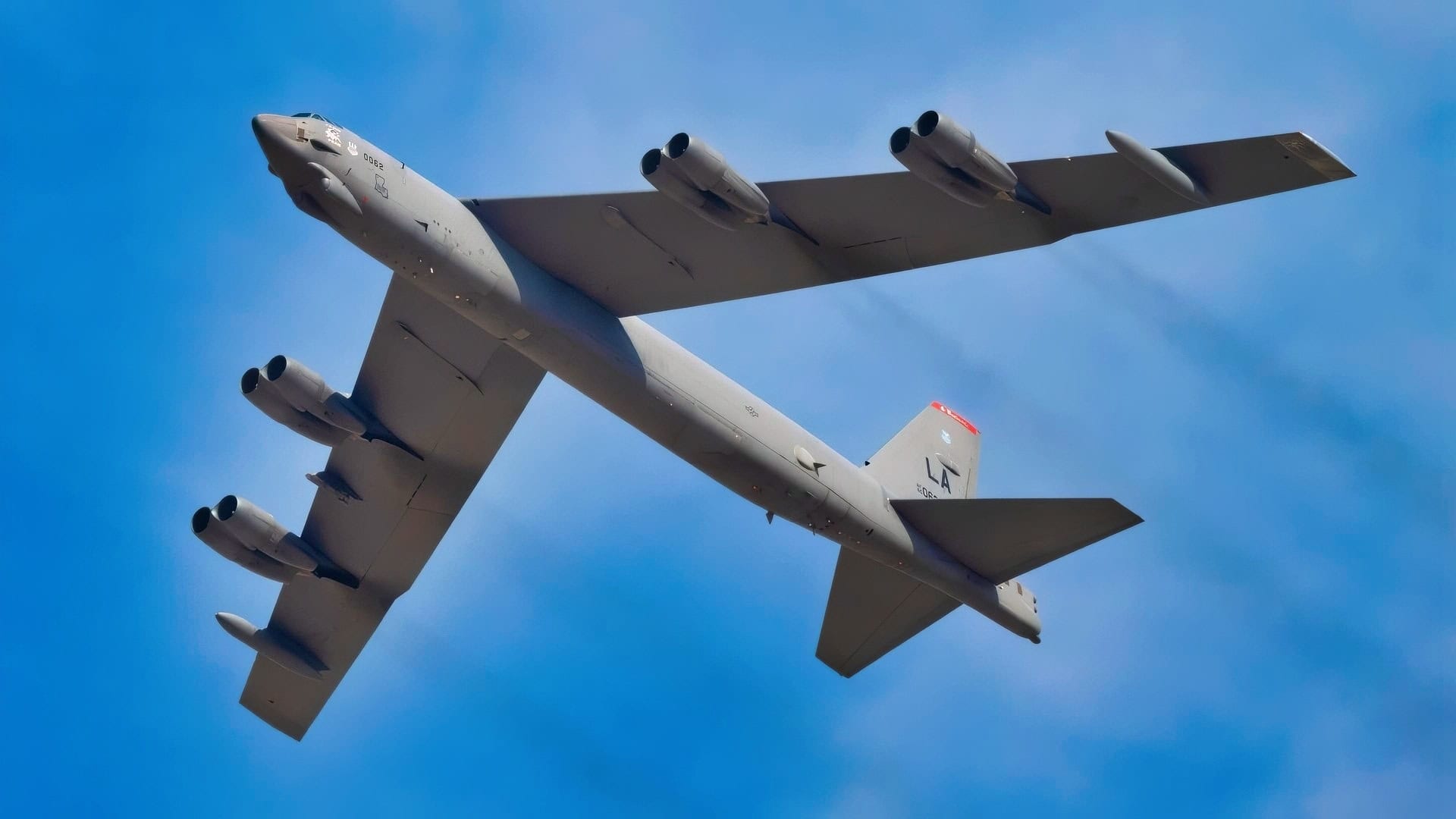
A U.S. Air Force B-52G Stratofortress strategic bomber crashed near Goldsboro, North Carolina, in 1961 — dropping 2 Mark 39 Mod Two hydrogen bombs over rural farmland. Each hydrogen bomb had a nuclear yield of approximately 4 megatons — about 250 times more powerful than the atomic bomb dropped on Hiroshima. The B-52G was flying Operation Chrome Dome — a continuous airborne nuclear alert mission.
A B-52 Bomber Almost Did the Unthinkable
The Cold War defined the last half of the twentieth century for much of the world. In that conflict, the two nuclear-armed superpowers danced around a nuclear knife-edge for decades. It was a miracle, and a stroke of true statesmanship on both sides of the dividing line, that prevented the Cold War from turning hot into a nuclear third world war.
The Cold War’s Most Terrifying Calls
There were instances, some well-known, like the Cuban Missile Crisis or even Chornobyl, where the nuclear technology humanity developed almost destroyed human life.
But there were some truly mortifying incidents involving nuclear technology that are less well known (but could have nonetheless been catastrophic for human life). One of those incidents was the 1961 Goldsboro B-52 crash. Indeed, some have dubbed that crash one of the most important “Broken Arrow” incidents of the height of the Cold War. That’s because the Goldsboro B-52 crash highlighted how fragile early nuclear command-and-control (C2) systems truly were.
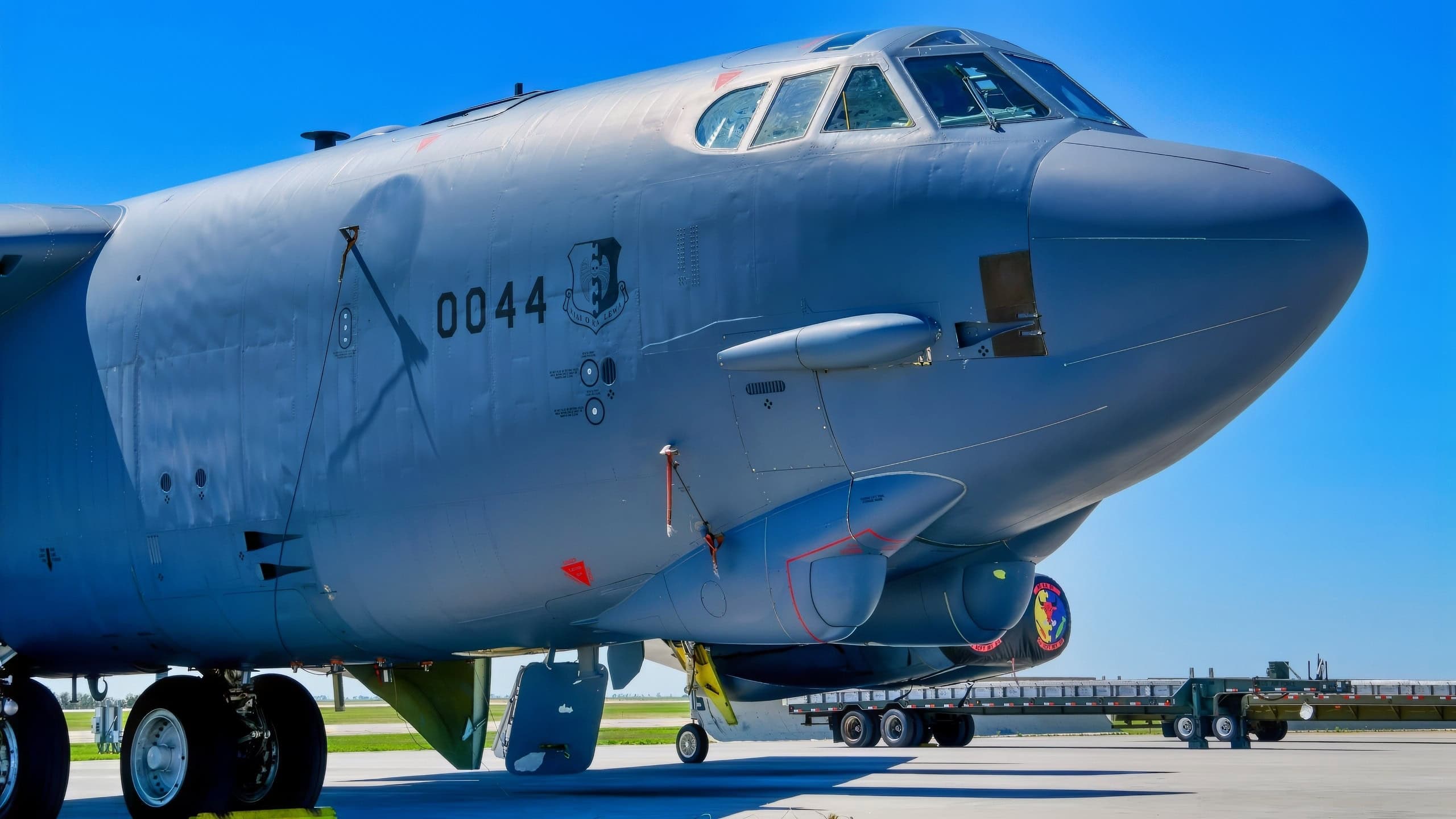
A B-52H Stratofortress sit parked on the flight line at Minot Air Force Base, North Dakota, Aug. 8, 2022. The B-52 is capable of dropping or launching gravity bombs, cluster bombs, precision-guided missiles and joint direct attack munitions. (U.S. Air Force photo by Airman Alysa Knott)
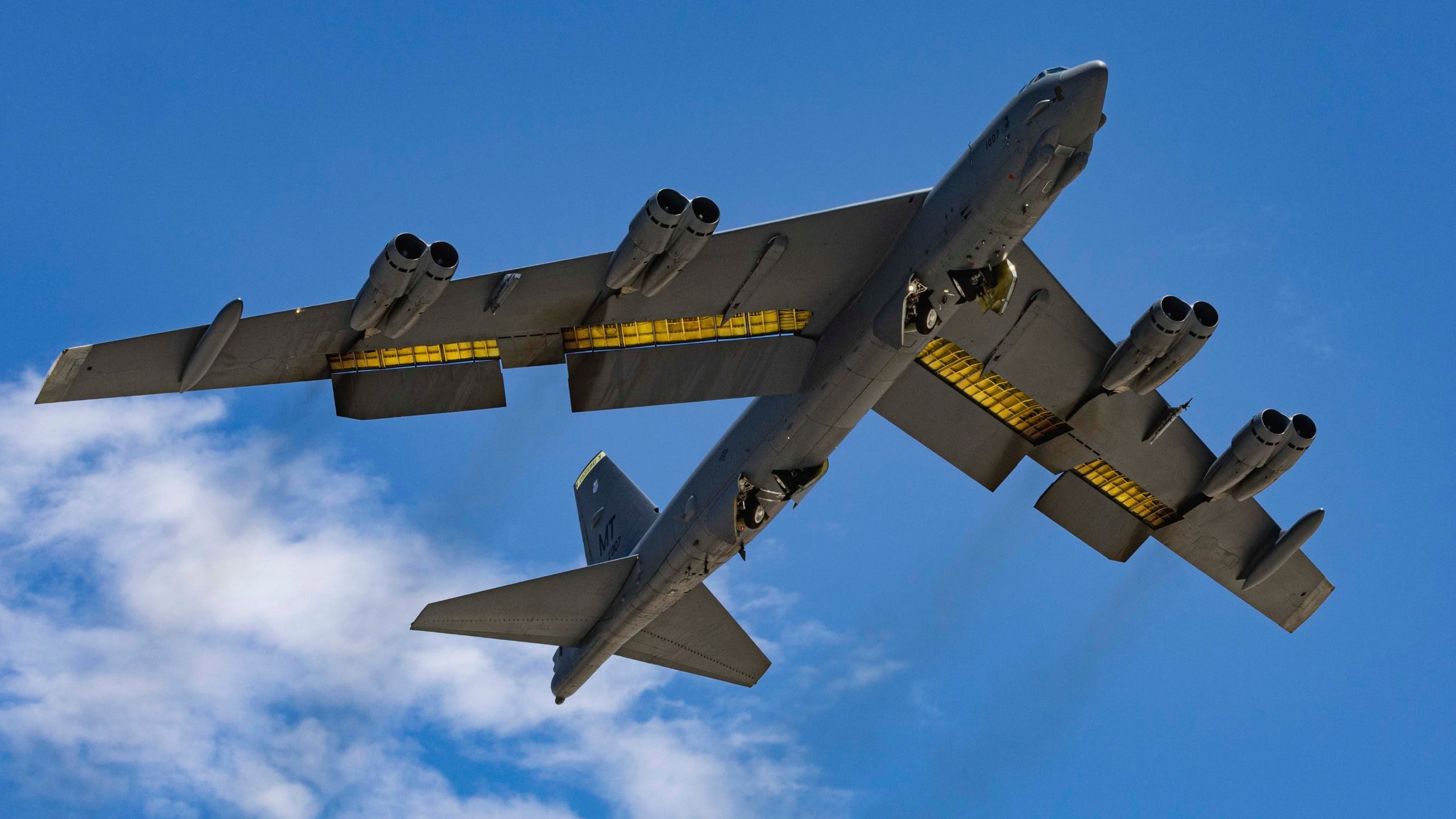
A B-52 Stratofortress assigned to the 69th Bomb Squadron, Minot Air Force Base, North Dakota, flies during Red Flag-Nellis 22-3 at Nellis Air Force Base, Nevada, July 18, 2022. RF-N 22-3 provides realistic combat training that saves lives while increasing combat effectiveness. (U.S. Air Force photo by Airman 1st Class Makenna Gott)
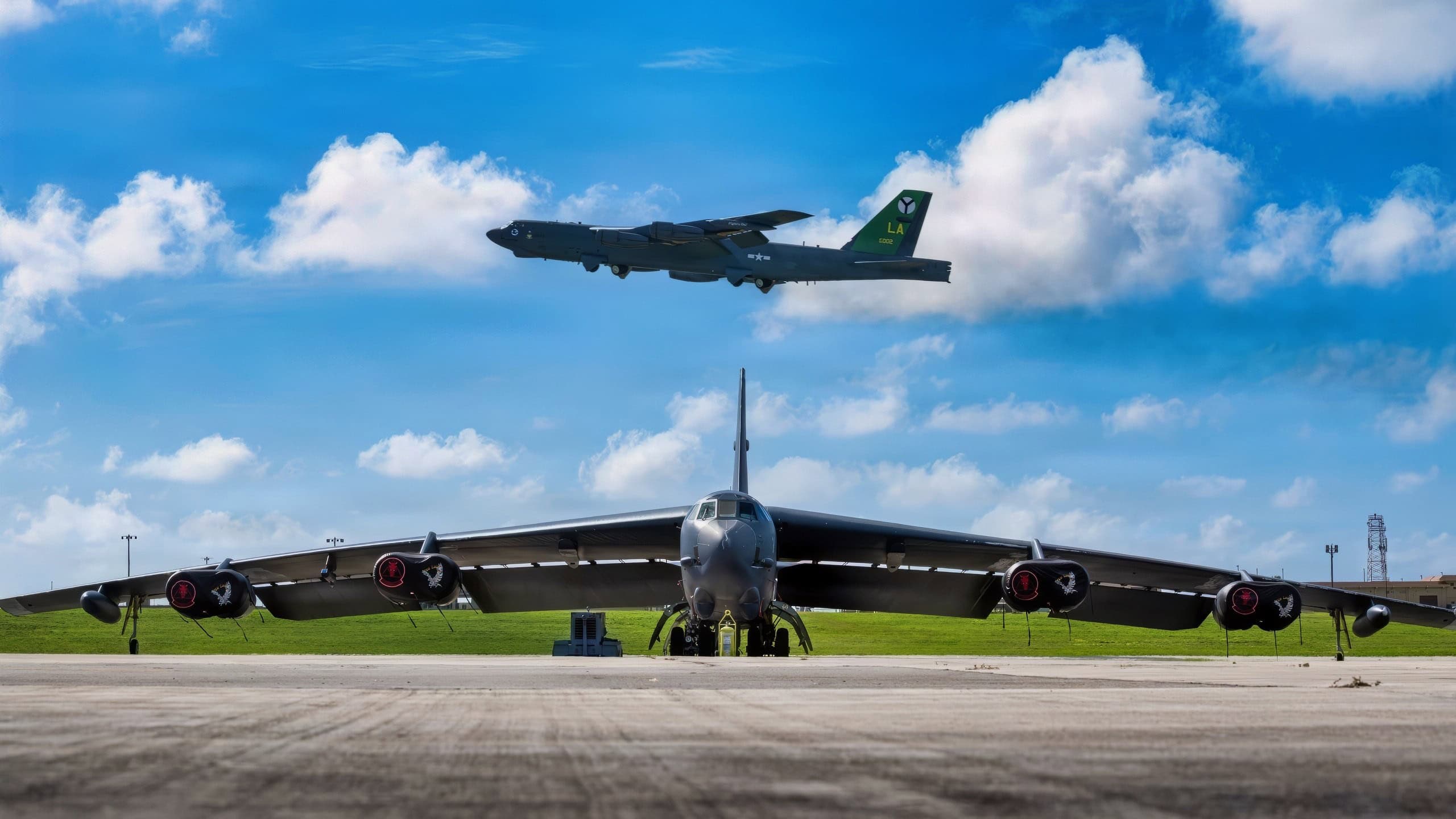
The 2nd Bomb Wing flagship B-52H Stratofortress flies over another B-52H parked on the flightline at Andersen Air Force Base, Guam, Feb. 10, 2026.Andersen Air Force Base, Guam, Feb. 10, 2026. The B-52 is a long-range, strategic bomber, and its presence demonstrates the United States’ ability to project power and respond to crises anywhere in the world. (U.S. Air Force photo by Airman 1st Class Devyn Taylor)
Operation Chrome Dome and the Doomsday Logic of SAC
On the night of January 23-24, 1961, a B-52G Stratofortress nuclear-capable, long-range bomber assigned to Strategic Air Command (SAC) was flying a continuous airborne nuclear alert mission known as Operation Chrome Dome.
During the height of the Cold War, SAC kept nuclear-armed bombers in the air 24/7.
The idea was that if the USSR launched a surprise nuclear attack against the United States, the US military would have enough nuclear-capable bombers airborne to survive that initial first strike by Soviet nuclear forces long enough for those American bombers to retaliate against Soviet targets.
Disaster Over Goldsboro
Situated near Goldsboro, North Carolina, Seymour Johnson Air Force Base was one of the primary facilities supporting SAC long-range nuclear bomber operations.
During a midair refueling procedure, the crew of one of the B-52Gs participating in Operation Chrome Dome over Goldsboro, North Carolina, detected a critical fuel leak in the right wing of their craft. Nearly 5,400 gallons of fuel were leaking per hour.
The Air Force crew of the stricken B-52G attempted to return to the nearby base. But the critically wounded bird began to fall apart midair. As the pilots descended to around 9,000 feet, desperately trying to keep their bird aloft long enough to safely land the damaged craft at Seymour Johnson AFB, the B-52G completely disintegrated. Eight crew members were originally on board the plane. Five survived, three perished in the crash.
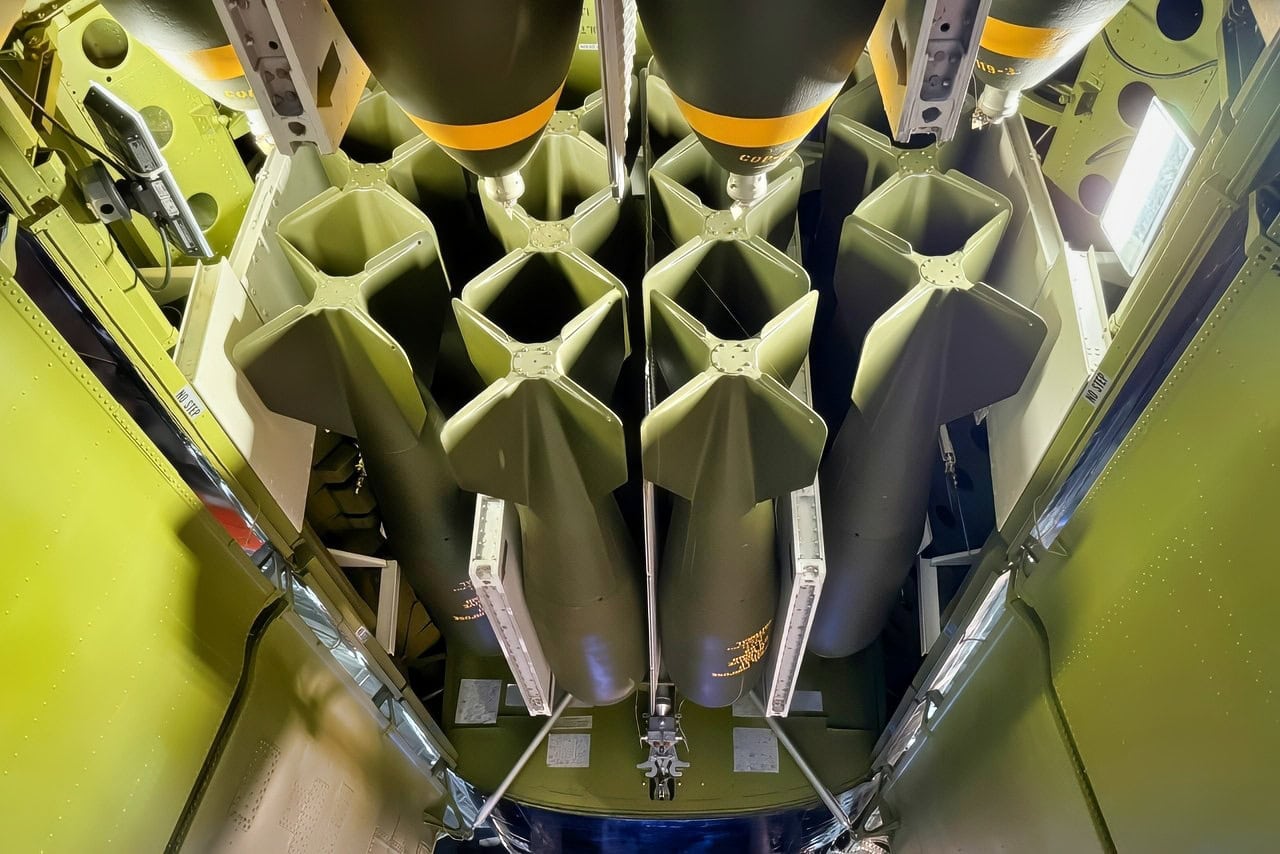
B-52 bombs. Image Credit: 19FortyFive.com Taken at the National Museum of the Air Force.
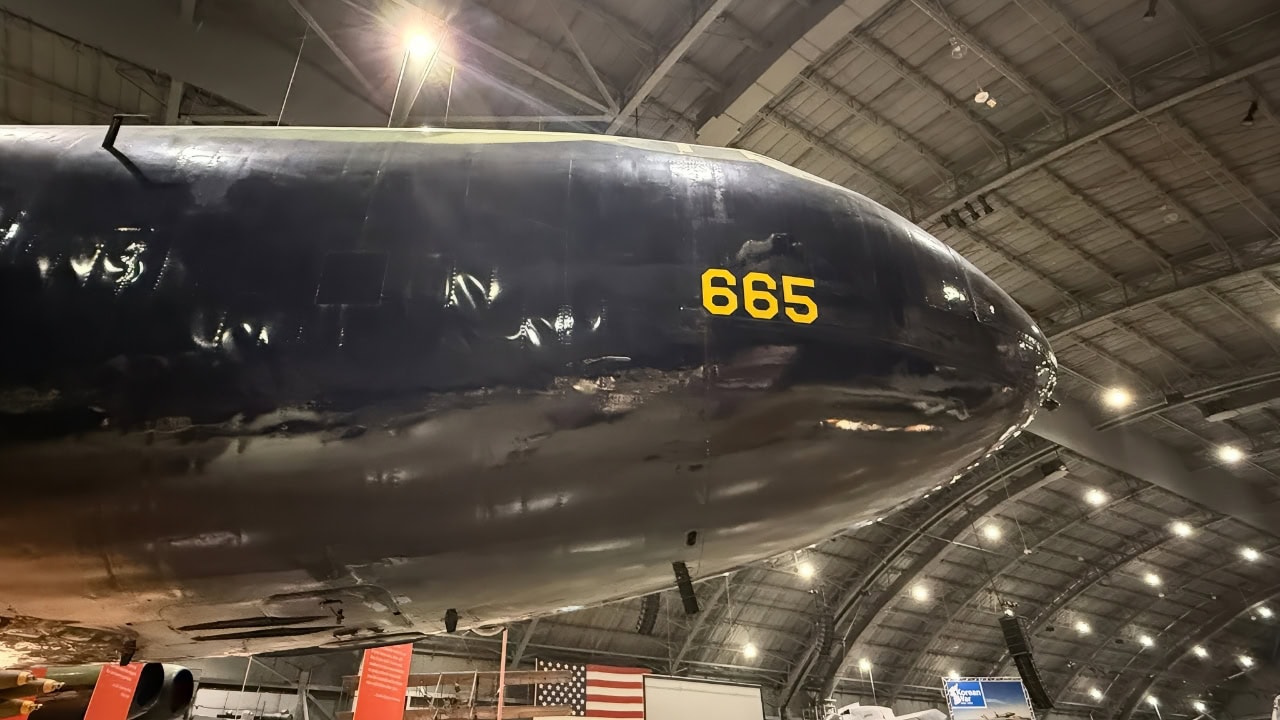
B-52 Bomber. Image Credit: 19FortyFive.com Taken at the National Museum of the Air Force.
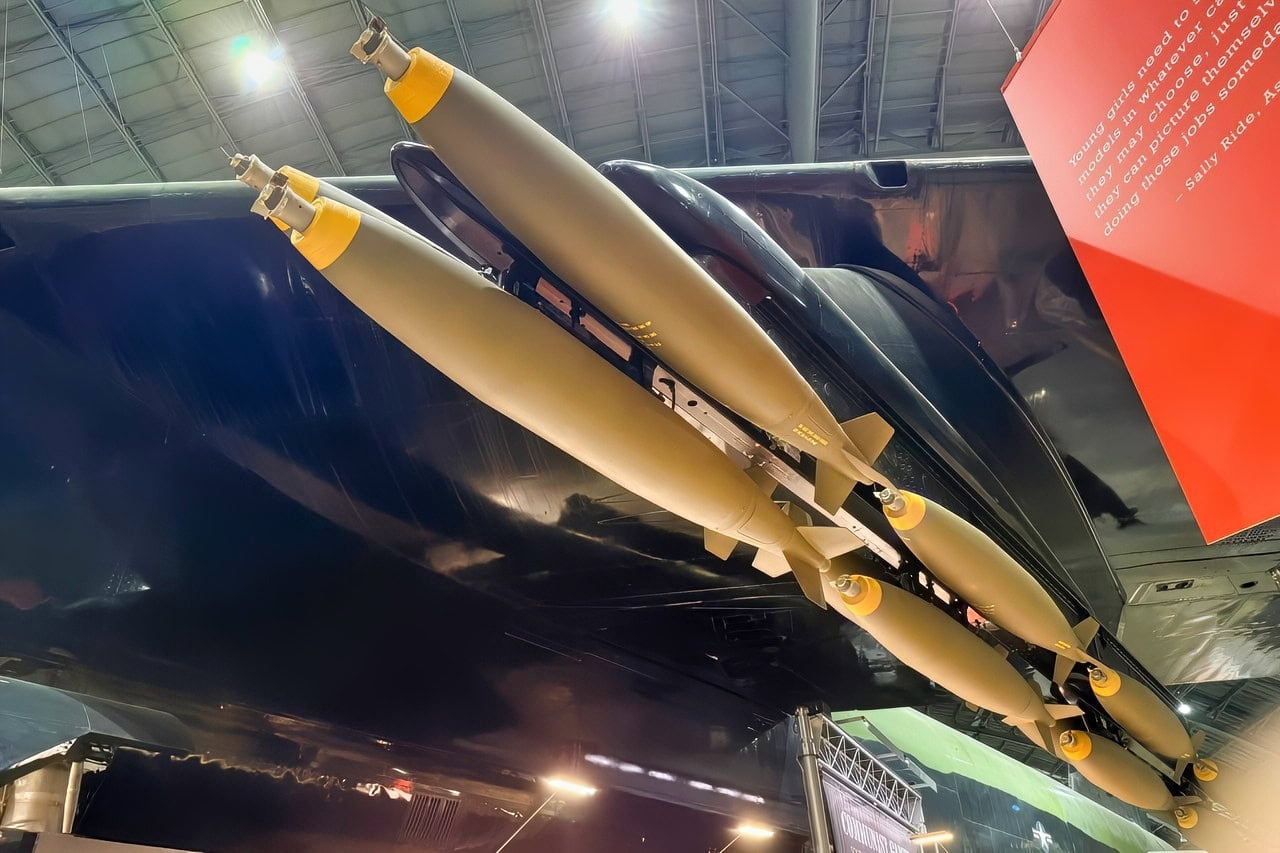
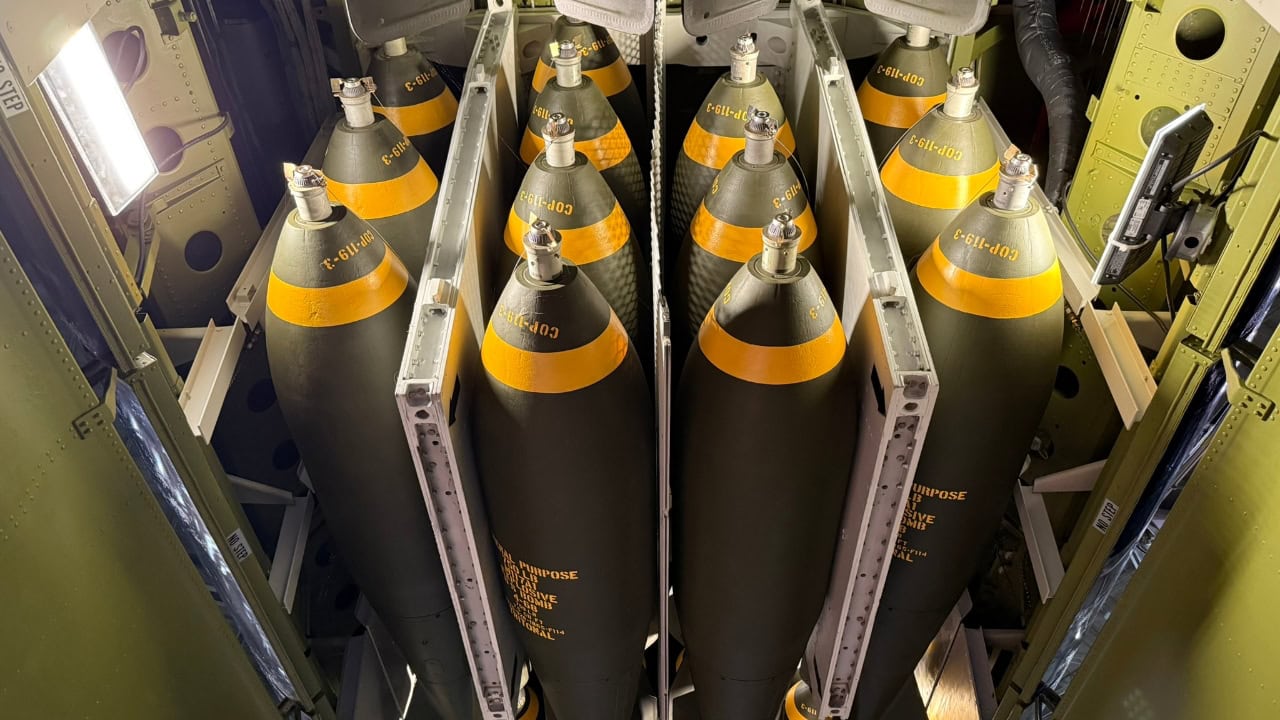
B-52 bombs. Image Credit: 19FortyFive.com Taken at the National Museum of the Air Force.
More ominously, though, there were two live Mark 39 Mod Two hydrogen bombs in the plane’s massive bomb bay that fell onto farmland below as the plane disintegrated mid-flight. Each of those bombs carried a nuclear yield of around four megatons. As a primer, the atomic bomb dropped on Hiroshima was around only 15 kilotons. In other words, the Goldsboro bomb was about 250 times more powerful than the bomb dropped over Hiroshima!
Had either of those bombs detonated in Goldsboro, they’d have obliterated much of eastern North Carolina, spewing lethal radioactive fallout across the US Eastern Seaboard.
The Bomb That Nearly Detonated
Here’s the disturbing part.
One of those two Mark 39 Mod Two hydrogen bombs fell from the disintegrating bomber over rural North Carolina. A parachute guided the roughly four megaton bomb to the ground. Later declassified investigations of the incident in eastern North Carolina determined that the weapon in question went through almost its entire arming sequence as it fell to the Earth below.
Nuclear historian Alex Wellerstein highlights how the fall that triggered the bomb in question was activated. That’s because it proceeded through the activation process. The fall prompted the bomb’s parachute to deploy, activating its power and initiating the timer and the bomb’s trigger sequencing, followed by other key internal arming procedures.
These bombs, while nowhere near as advanced as the nuclear weapons developed later in the Cold War, did have certain safety mechanisms to prevent inadvertent detonation. Yet, all but one of those safety mechanisms failed during the crash.
As journalist Eric Schlosser stated in his book on nuclear weapons development, Command and Control, “One simple, dynamo-technology, low voltage switch stood between the United States and a major catastrophe.”
Goldsboro Shattered America’s Nuclear Safety Assumptions
The Goldsboro incident broke many assumptions about the safety of America’s nuclear weapons. Before this accident in 1961, most US policymakers assumed the country’s nuclear weapons were safe, thanks to multiple, redundant safeguards that would have made accidental detonation impossible.
But the incident over Goldsboro showed that, under extreme mechanical duress, major electrical surges, total aircraft breakup, and similar emergency conditions, those safety features would fail because the weapon would assume it was being launched in wartime (rather than experiencing a peacetime mishap).
In modern nuclear weapons, there are layers of environmental sensing devices and coded locks to ensure a similar mishap doesn’t recur. Designers have included insensitive high explosives to ensure that a bomb falling from a crashing plane doesn’t automatically detonate, as the bomb that fell from the B-52G almost did.
The Second Hydrogen Bomb Was Never Fully Recovered From That Night
As for the second nuclear bomb that fell from the sky that night in January 1961?
Well, recovery crews failed to recover the bomb fully. Only pieces of the bomb, such as uranium components, tritium reservoirs, and some other hardware, were discovered at the crash site. Other important parts of the weapon, though, were never retrieved. Many North Carolinians to this day believe that parts of the second thermonuclear weapon remain buried at the crash site because excavation became too dangerous and impractical.
Over time, the US government purchased easements over portions of the land to prevent future disturbances.
But the rumor mill has been in overdrive since the 1960s. There is talk about buried nuclear material still at the site, hidden radioactive contamination from leaky, unsecured parts of the second bomb, and conspiracies about lost hydrogen bombs in the leafy foothills of eastern North Carolina.
How Close Did America Come to Nuking Itself?
Modern nuclear weapons experts still debate how close the world really came to nuclear catastrophe over Goldsboro in 1961. These experts claim that the weapon still requires the successful operation of additional internal physics systems. Plus, there is some argument about whether the final stages of the nuclear weapons in question would have functioned properly, given the horrific nature of the crash.
Nevertheless, that first bomb advanced much farther through its firing sequence than anyone was comfortable publicly admitting for decades. That second bomb, too, has left potential radioactive bits buried deep underground. Let’s hope no one ever excavates at or near the crash site.
Curtis LeMay, SAC, and the Dangers of Constant Nuclear Readiness
The Goldsboro incident also forced a review of how infamous US Air Force Gen. Curtis LeMay ran SAC. Under his command, SAC maintained 24/7 rotations of nuclear-armed long-range bombers. LeMay deployed the clearly sensitive nuclear weapons of the era on these planes. Crews were operating under constant psychological pressure, meaning that the risk of one or all of them snapping under the pressure–or misinterpreting a crisis–was high, too.
Throughout the 1950s and 1960s, the US experienced multiple “Broken Arrow” incidents that involved crashes, fires, lost bombs, accidental drops, and contaminated recovery sites. Goldsboro rose above those other incidents because it involved a weapon progressing toward full detonation.
A Nuclear Nightmare That Still Haunts
Nuclear warfare policymakers assume that America’s nuclear deterrence rests upon tightly controlled and technologically reliable failsafes. Cold War era nuclear stability, though, depended on a combination of human judgment, mechanical luck, incomplete technology, and sheer probability. Goldbsboro did force a major review of US nuclear weapons policies.
Nevertheless, the Goldsboro incident was one of the most frightening moments in America’s dangerous history of nuclear weapons development and deployment. Given that there likely remain critical active parts from the second hydrogen bomb at the crash site, it could become one of the most enduring nuclear incidents from the Cold War.
About the Author: Brandon J. Weichert
Brandon J. Weichert is the Senior National Security Editor at 19FortyFive.com. Recently, Weichert became the editor of the “NatSec Guy” section at Emerald. TV. He was previously the senior national security editor at The National Interest. Weichert hosts The National Security Hour on iHeartRadio, where he discusses national security policy every Wednesday at 8 p.m. Eastern. He hosts a companion show on Rumble entitled “National Security Talk.” Weichert consults regularly with various government institutions and private organizations on geopolitical issues. His writings have appeared in numerous publications, among them Popular Mechanics, National Review, MSN, and The American Spectator. And his books include Winning Space: How America Remains a Superpower, Biohacked: China’s Race to Control Life, and The Shadow War: Iran’s Quest for Supremacy. Weichert’s newest book, A Disaster of Our Own Making: How the West Lost Ukraine, is available for purchase at any bookstore. Follow him via Twitter/X @WeTheBrandon.