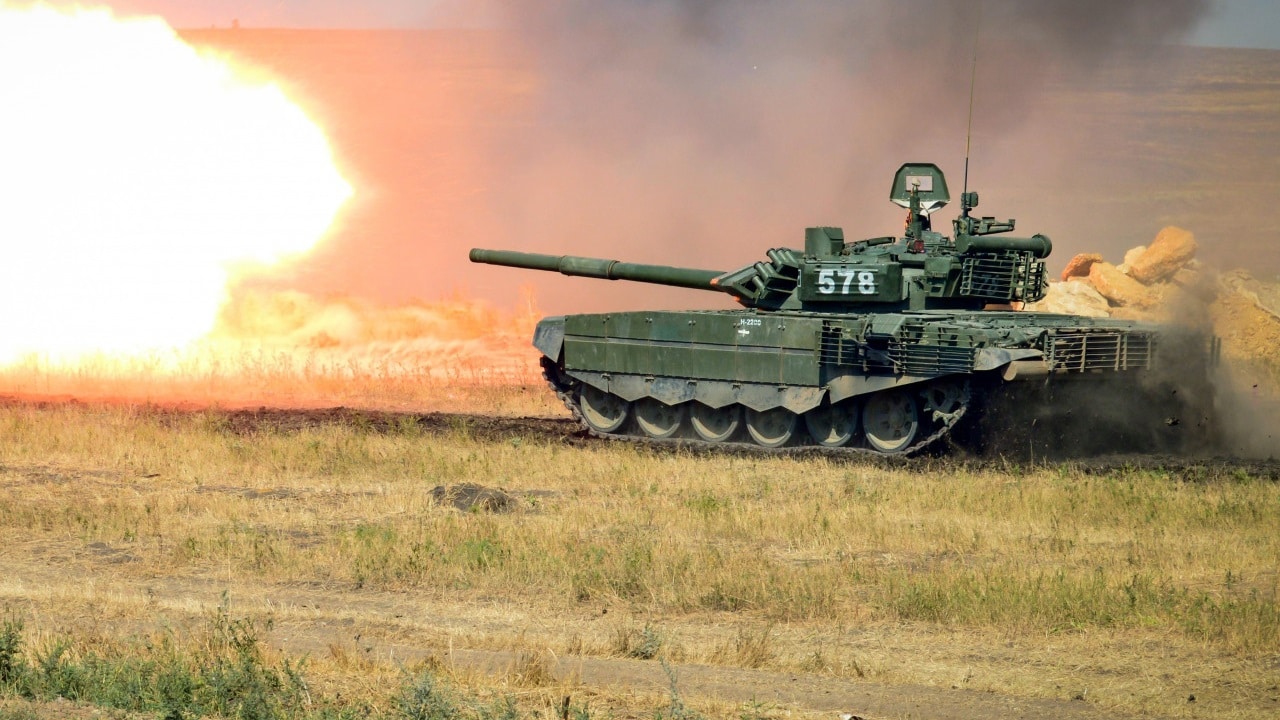
The war in Ukraine has shown the world what the next round of warfare will look like. It is not highly technological. Nor is it a war based on fast maneuver. It’s an industrial-scale, long-duration war of attrition.
Under these conditions, the most exquisite weapons systems have proven to be the least useful.
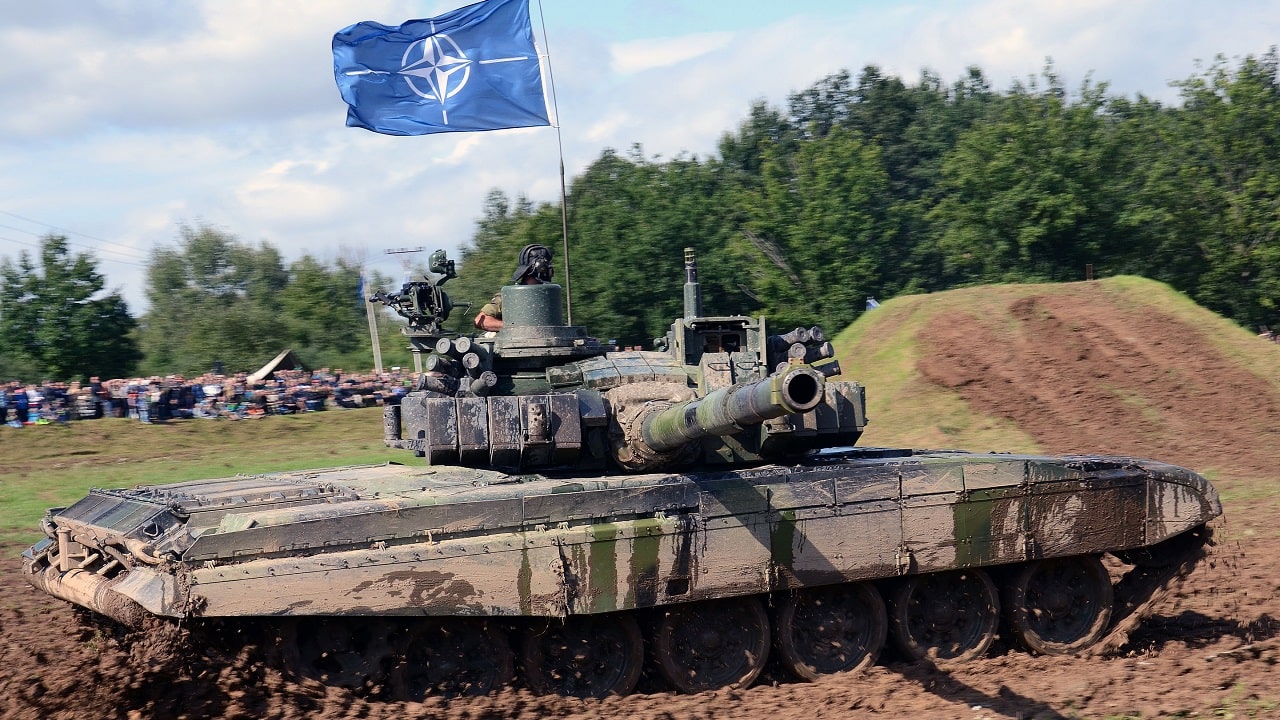
T-72 Tank. Image Credit: Creative Commons.
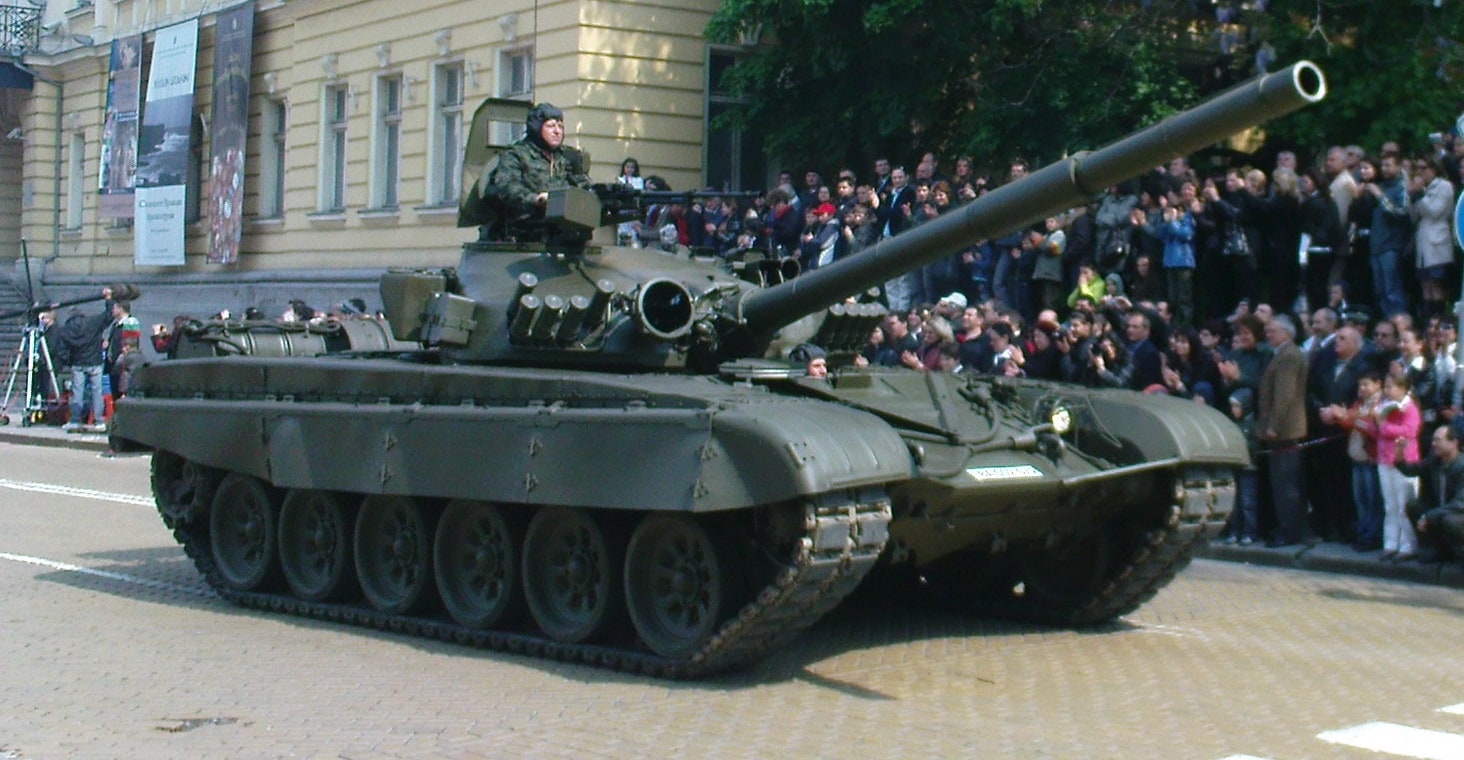
T-72M2 tank on Army day parade in Sofia.
In the Ukraine War, tank warfare has been fundamentally changed from the way it should have been fought into a new format–one that disfavors advanced main battle tanks (MBTs) and instead favors older systems, like the rugged Soviet-era T-72 MBT.
No, the T-72 is not the most advanced in the world. Russia’s old Soviet-era T-72 MBT is the most useful tank in the world. That has been proven repeatedly in Ukraine.
In a war in which drones, mines, artillery, loitering munitions, and attrition all dominate the battlefield, survivability increasingly comes from being replaceable–of being able to suffer massive losses, which the T-72 has–rather than being invulnerable.
The Soviets created the T-72 during the Cold War as a mass-produced, affordable alternative to the more sophisticated T-64.
Soviet designers deliberately emphasized mass production in designing this MBT.
To be easily mass-produced, the T-72 required simplicity of design, ease of repair, and affordability, whilst retaining acceptable battlefield performance.
Remember, back in the days when the Soviets were designing the T-72s, the world assumed that at some point very soon, a nuclear third world war for mastery over the Fulda Gap in Europe would erupt.
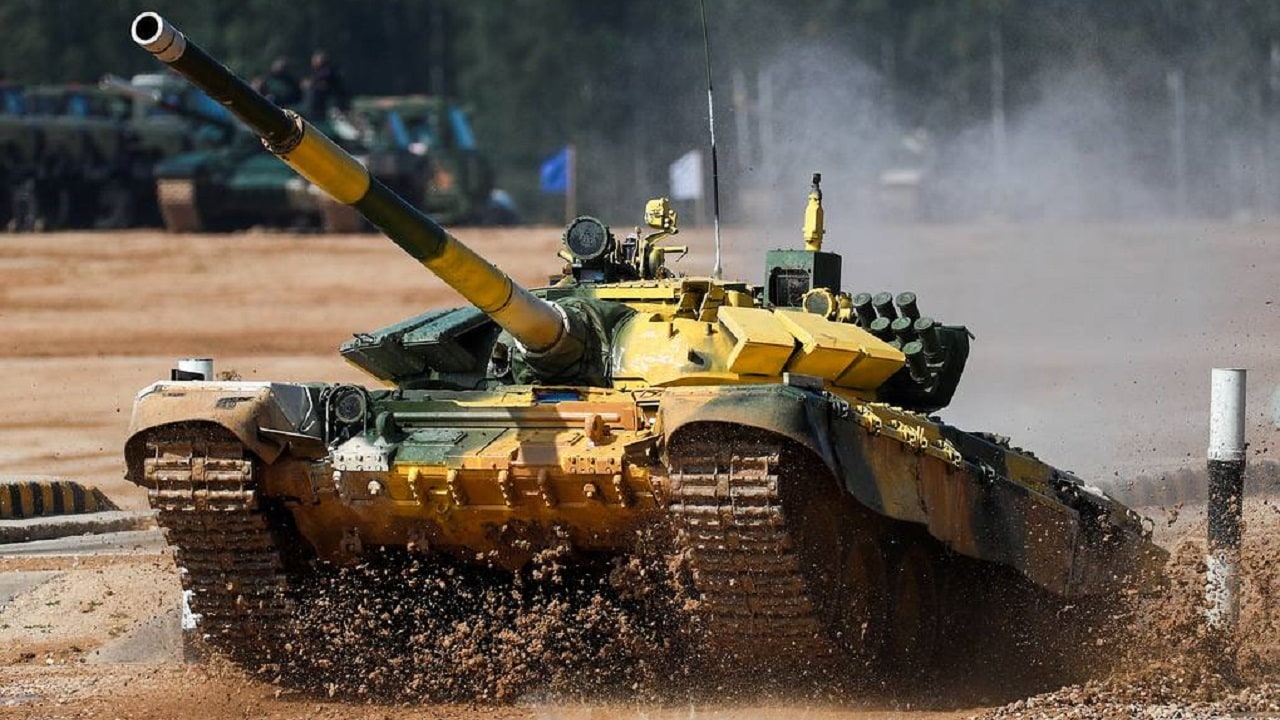
Russian T-72 tank. Image Credit: Creative Commons.
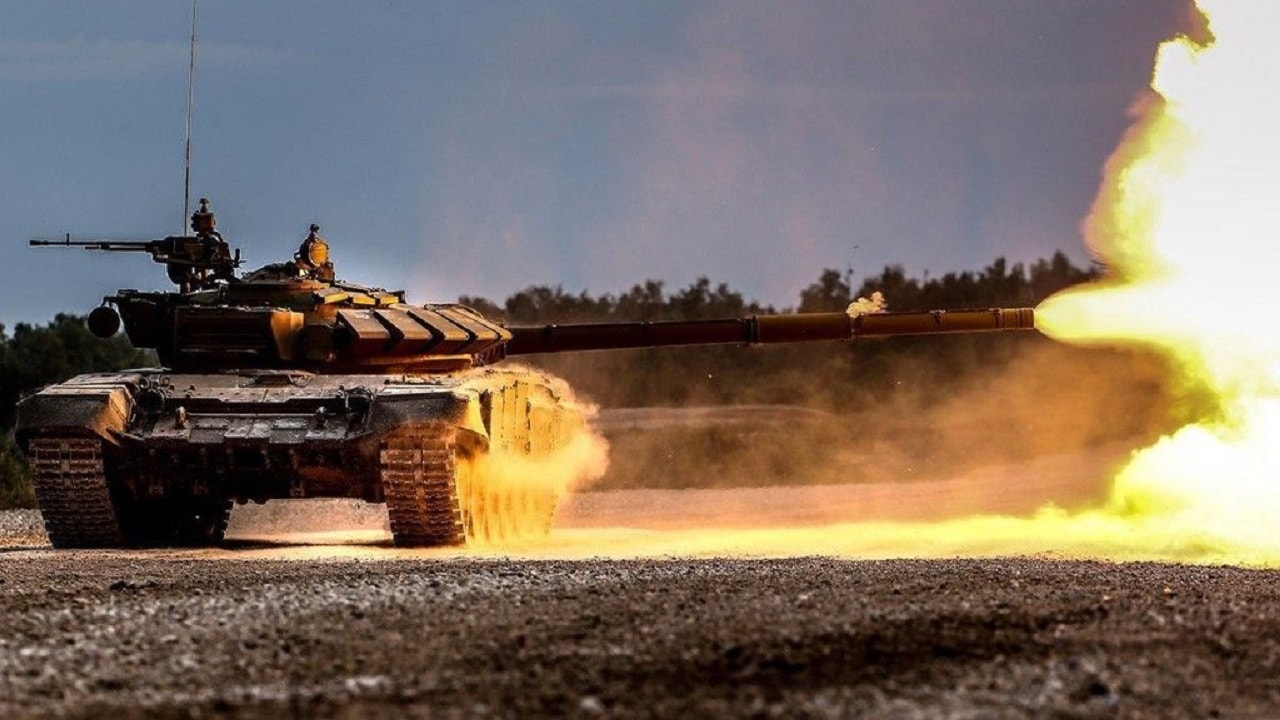
Russian T-72 tank. Image Credit: Creative Commons.
Under those conditions, then, the Red Army did not need the most sophisticated system. They just needed something that could punch through the din of armor amidst a radioactive battlefield.
Luckily, that nuclear third-world war never came out of the Cold War.
There’s little doubt that Soviet-era weapons and platforms continue to sell globally in large quantities because they are affordable and effective.
The T-72, despite its high loss rate in Ukraine–notably at the start of the war, when both Russia and Ukraine were adapting to the new realities of modern warfare–has more than proven itself, especially when compared against any other MBT operating on the battlefield for either side.
How’s that for ironic?
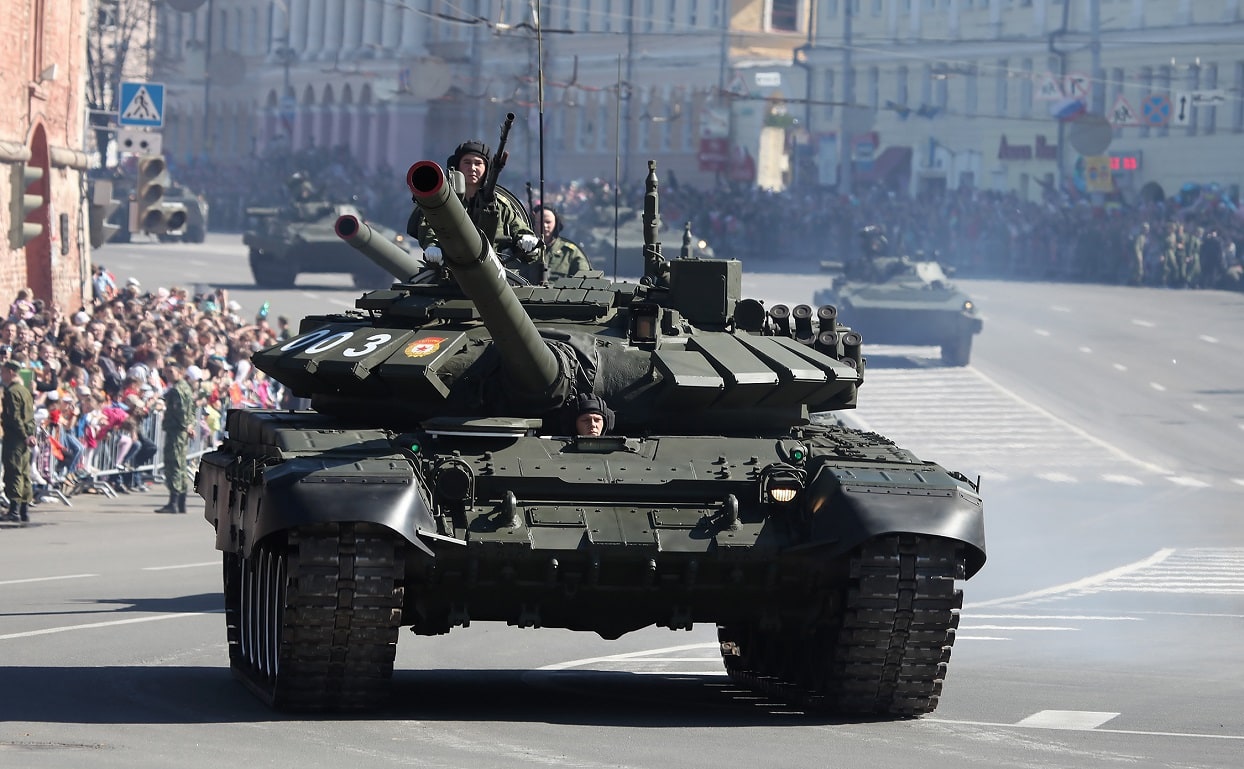
Image Credit: Vitaly Kuzmin/Creative Commons.
An MBT meant to fight the Cold War in Europe once it became hot has proven its worth three decades after the Cold War ended, and it is now being used, at least in part, against the same NATO systems the T-72 was originally designed to fight.
After all, NATO has been pouring countless numbers of its systems into the waiting arms of the desperate Ukrainians, and the T-72 has held its own.
Why the T-72 Keeps Showing Up Everywhere
The T-72 may be the most successful tank program ever built. The Soviets produced roughly 25,000 units, making it one of the most widely used tanks in history.
It has served in dozens of countries and fought in every major conflict since the 1970s.
Because so many exist, spare parts are abundant, crews know how to operate these systems, the repair infrastructure is well-established, and modernization programs are affordable.
That’s a major advantage for any power waging a prolonged, industrial-scale war of attrition with a long front, as in the Ukraine War.
The Ukraine War’s Lesson
Because Ukraine has become an attritional battlefield, rather than a war of maneuver, the old Western assumption (inherited from the Second World War) is that a better tank equals a more survivable tank. Since February 2022, those assumptions haven’t panned out.
The better tank is the one that doesn’t cost a fortune when it’s lost in battle and can be easily replaced tomorrow, preferably by many more units.
Russian forces have continued to rely heavily on upgraded T-72 variants, even though they possess newer T-90s and the much-hyped T-14 Armata.
The T-14 is too expensive to replace in large numbers and so complex that, if the Russians lost one of these tanks in battle to the Ukrainians, it’d represent a grave national security concern for Moscow due to the technological innovations behind its creation.
So, Russia prefers using its older systems that are easy to replace, simple to repair and use, and easy to lose (since they’re so old).
Russia correctly assesses that quantity matters more than exquisite technology in this war.
T-72 Has Some Real Strengths
The T-72 is smaller than Western tanks.
That gives it real advantages in a war where the enemy maintains persistent surveillance of the battlefield.
T-72s tend to be harder to detect, easier to conceal, and much easier to transport (as the seemingly endless trains carrying T-72s almost daily from Russia’s vast industrial base in the Russian Far East toward the Ukraine Front show).
What’s more, the T-72 possesses a powerful 125mm smoothbore gun capable of firing.
This weapon can fire APFSDS (armor-piercing fin-stabilized) rounds, HEAT (high-explosive anti-tank) rounds, high-explosive rounds, and even some guided missiles.
And the autoloader allows for a high rate of sustained fire while in combat (so long as that autoloader doesn’t get damaged).
Easy Logistics
A destroyed US M1 Abrams or German-made Leopard-2 MBT is expensive to replace. A destroyed T-72 is easily repaired, cannibalized, and replaced from storage.
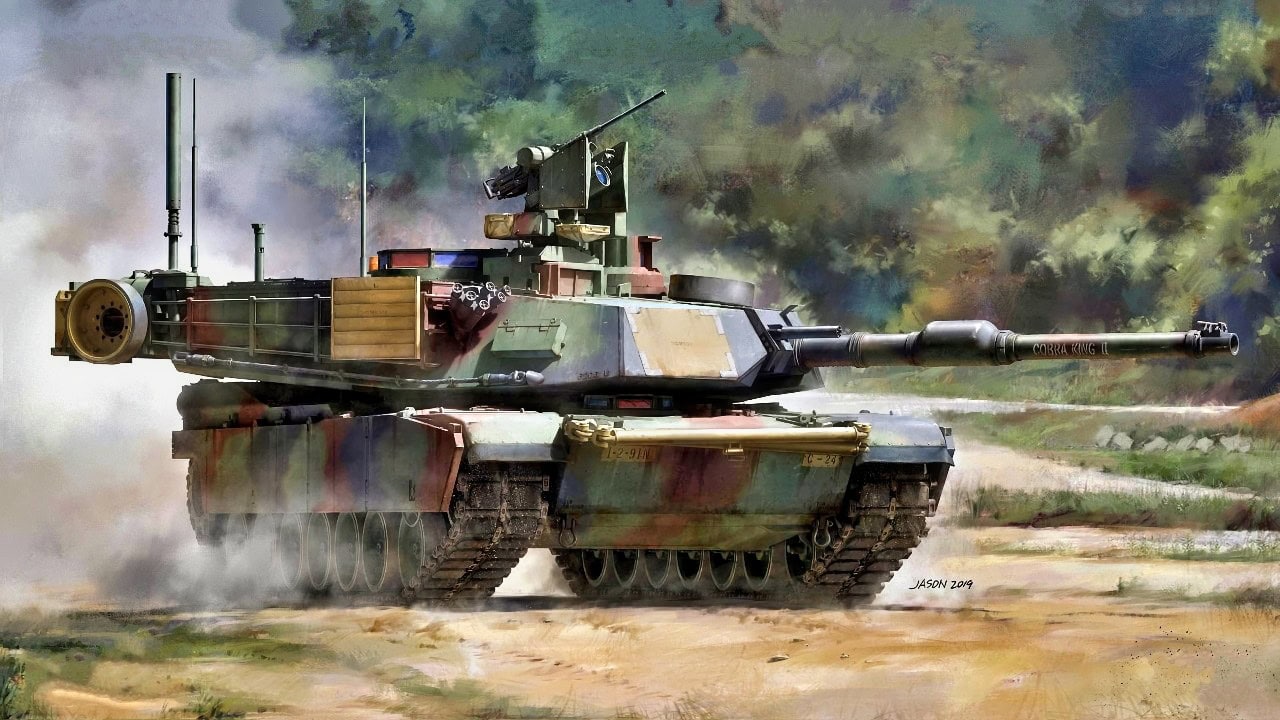
M1 Abrams Tank. Image Credit: Creative Commons.
Again, this is probably the T-72’s greatest advantage, not only in the Ukraine War but in any future conflict.
There are, however, some real vulnerabilities and weaknesses with the T-72.
Crew Survivability
In classic Soviet fashion, the crew’s lives did not really factor into the T-72’s design. The autoloader stores ammunition beneath the turret.
So, when the enemy rounds penetrate the tank turret in battle, the tank can experience a catastrophic ammunition explosion.
In other words, the “Jack-in-the-Box” effect occurs where the turret literally blows off the top of the tank when that ammunition storage gets hit.
Vulnerability to Drones
Like every tank in Ukraine, the T-72 is susceptible to drone attack. No MBT currently fighting on either side in the war was meant to resist drones.
In this conflict, top-attack drones and loitering munitions have defined the experience for all MBTs.
Since these tanks are old and relatively cheap, they can withstand a high attrition rate, and the force will remain combat-effective through sheer quantity.
Older Electronics
While newer T-72s are in use today, many older ones are, too. Those older variants have inferior thermal sights and fire-control systems and lack effective situational awareness compared to modern Western tanks.
Industrial Strength
None of that really matters. Why? Because the front has not really changed in Ukraine’s favor since 2022.
Yes, the Russians were pushed back from their early war gains toward Kyiv. But since 2023, the front has remained mostly unchanged.
The Russians control the strategic center of the Russian-speaking portions of Eastern Ukraine. They have a firm grip on Crimea.
Barring some radical change in the war, Russia is unlikely to lose any of these regions in any military engagement that might yet happen.
And that’s partly because of the industrial scale that Russia has in terms of key weapons systems, like the T-72. Russia has thousands of these systems available.
The West lacks sufficient numbers of Abrams, Leopard-2s, Challenger-2s, and other systems that Ukraine needs to hold off the Russians.
Modern warfare, therefore, doesn’t care about whose tank is technologically superior. It prizes the tank that is cheaply and easily built, repaired, and replaced the fastest.
Right now, that distinction belongs to the T-72, making the T-72 the best tank in existence right now.
About the Author: Brandon J. Weichert
Brandon J. Weichert is the Senior National Security Editor at 19FortyFive.com. He also manages The Weichert Brief on Substack. Weichert also hosts “National Security Talk” on Rumble. He is the author of four bestselling national security books, the most recent of which is A Disaster of Our Own Making: How the West Lost Ukraine (Encounter Books). Follow him via Twitter/X @WeTheBrandon.