
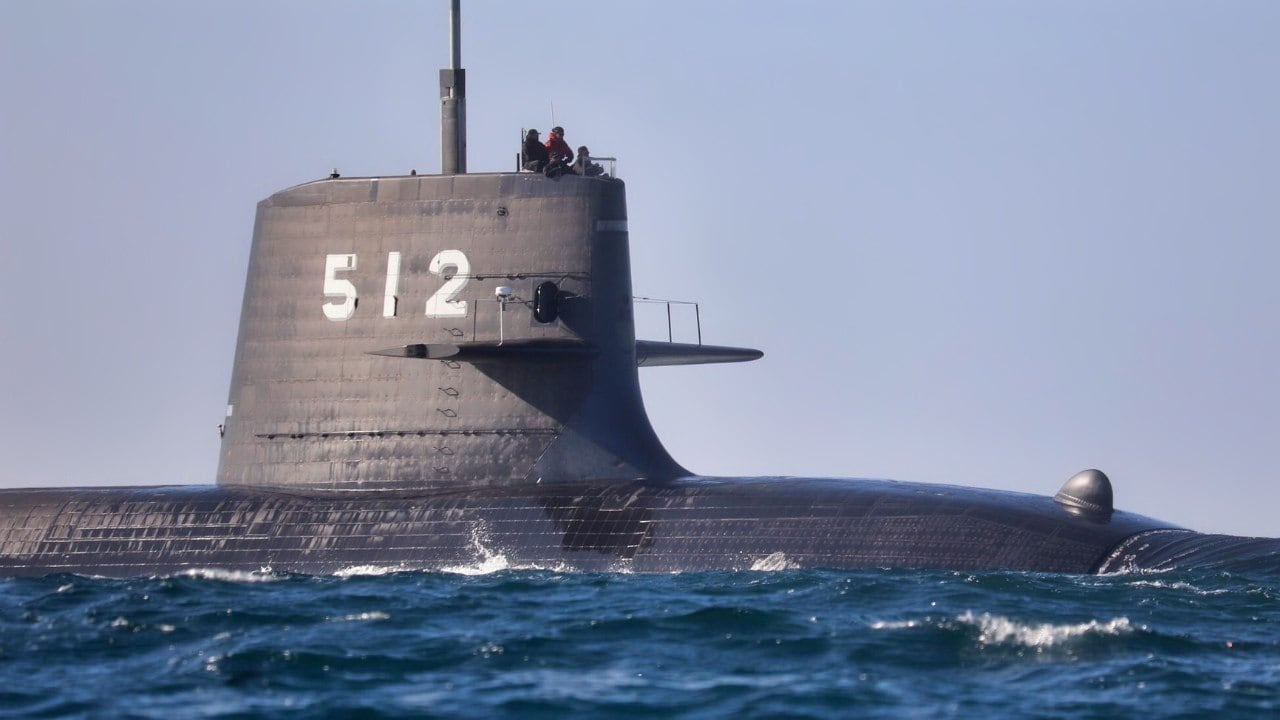
Japan’s Soryu-Class Submarines Were AIP Hunters With A Lithium-Ion Twist: Japan’s Soryu-class submarines look at first like a straightforward air-independent propulsion success story. The Japan Maritime Self-Defense Force built 12 large diesel-electric attack submarines, gave the first 10 boats Stirling engines for greater underwater endurance, and used them to strengthen Japan’s undersea defense posture in the waters around the home islands.
The class became more interesting at the end. The final two boats, Oryu and Toryu, moved away from the original Stirling AIP arrangement and adopted lithium-ion batteries. That made Soryu more than one of Japan’s best conventional submarine classes. It served as a bridge between traditional AIP submarines and Japan’s newer lithium-ion Taigei class.
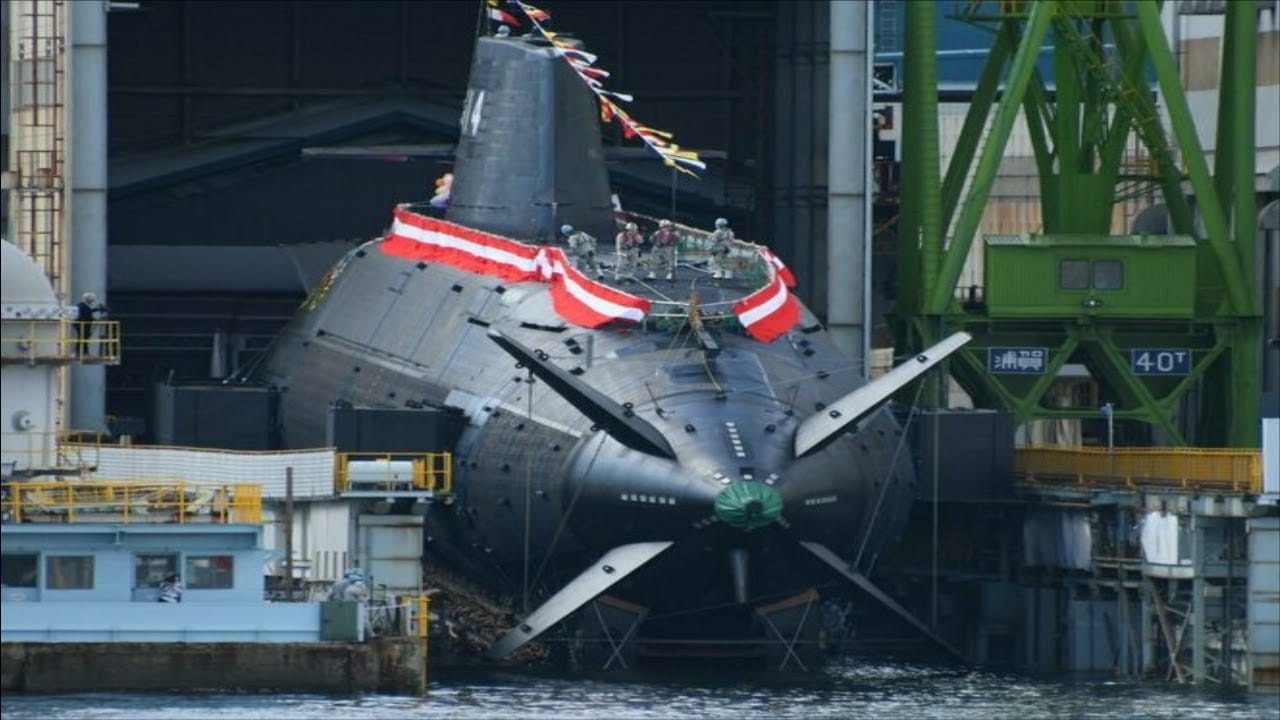
Taigei-Class Submarine. Image Credit: Creative Commons.
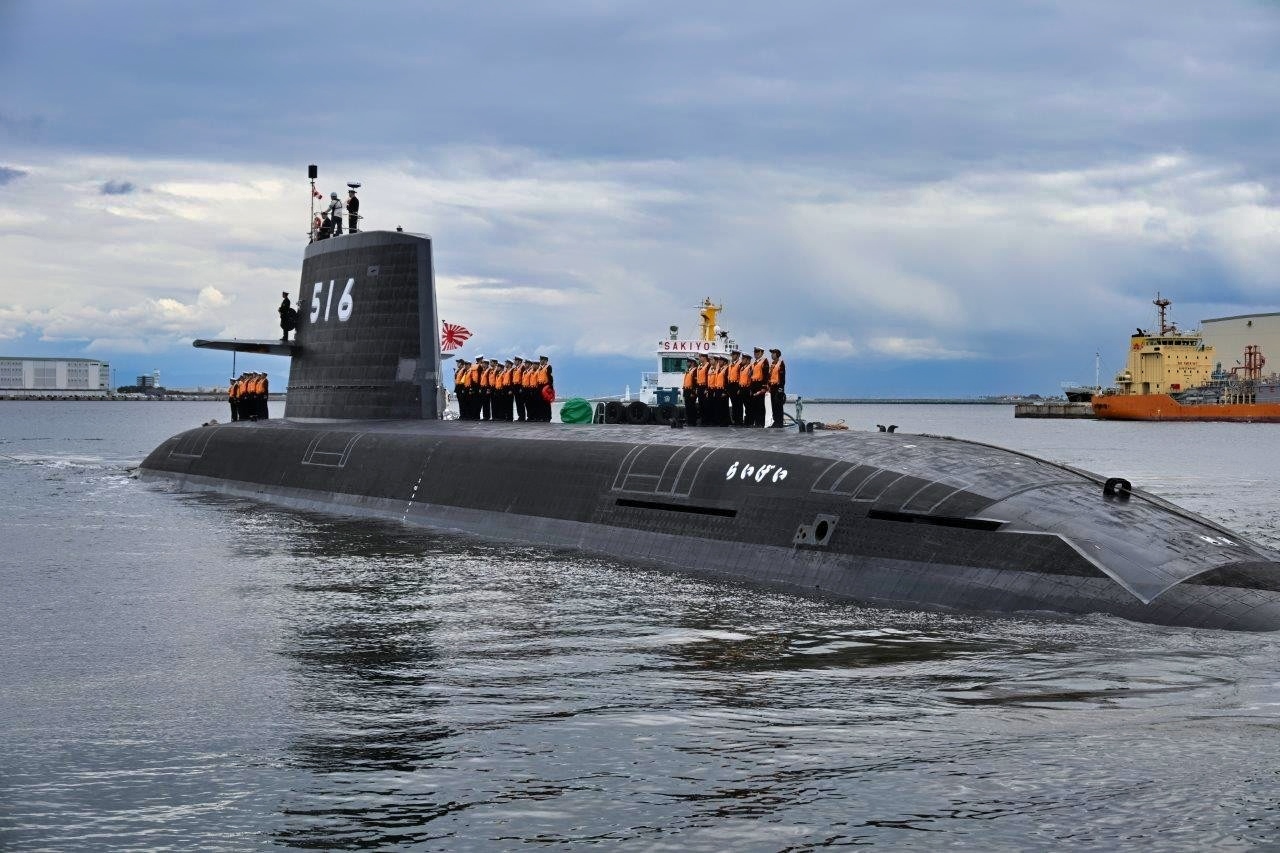
Taigei-Class Submarine. Image Credit: Creative Commons/JSDF.
That transition matters because Japan does not operate nuclear-powered attack submarines. It has instead built one of the world’s most capable conventional submarine forces around quiet diesel-electric boats, demanding geography, and steady technological improvement. The Soryu class sits at the center of that story.
Japan Built The Soryu-Class Submarine For The First Island Chain
Japan’s submarine force is shaped by geography. The Maritime Self-Defense Force has to monitor the waters connecting the Sea of Japan, the East China Sea, the Philippine Sea, and the broader Western Pacific. Chinese naval growth, Russian activity, North Korean threats, and the defense of Japan’s southwestern islands all make undersea surveillance and sea-control missions central to Tokyo’s defense planning.
A conventional submarine force fits that mission. Diesel-electric submarines do not have the global endurance of nuclear-powered submarines, but they can be extremely quiet on battery power and effective in regional waters. Japan’s requirement is not to send attack submarines across the world for months at a time. It is to make nearby seas dangerous for hostile surface ships and submarines, while protecting Japanese sea lanes and supporting the U.S.-Japan alliance.
The JMSDF’s official Soryu-class page lists the class as a 2,950-ton standard-displacement submarine, 84 meters long, with a beam of 9.1 meters, a crew of about 65, and an underwater speed of about 20 knots. It also lists two diesel engines, four Stirling engines, and one propulsion motor for the class. Those specifications appear on the JMSDF’s Soryu-class page.
That size made Soryu a major step in Japan’s post-Cold War submarine development. It was larger than the earlier Oyashio class and built around endurance, quietness, automation, surveillance, and maneuverability. It gave Japan a submarine better suited to persistent patrols in contested regional waters.
The Soryu-Class Used Stirling AIP To Stay Hidden Longer
The first 10 Soryu-class boats used Stirling air-independent propulsion. AIP matters because it reduces the need for a diesel-electric submarine to snorkel and recharge batteries as often. Every time a submarine comes up to snorkel depth, it risks detection. Reducing that exposure improves survivability.
Kawasaki Heavy Industries described the 10th Soryu-class submarine, Shoryu, as using a high-strength steel pressure hull, an X-rudder, Stirling engines for increased underwater endurance, automated systems, high-performance sonar, increased stealth capabilities, and enhanced safety measures. Kawasaki’s Shoryu delivery notice also listed two Kawasaki diesel engines, four Kawasaki Kockums Stirling engines, one electric propulsion motor, a single propeller, and underwater launch tubes.

Taigei-Class. Image Credit – Creative Commons.
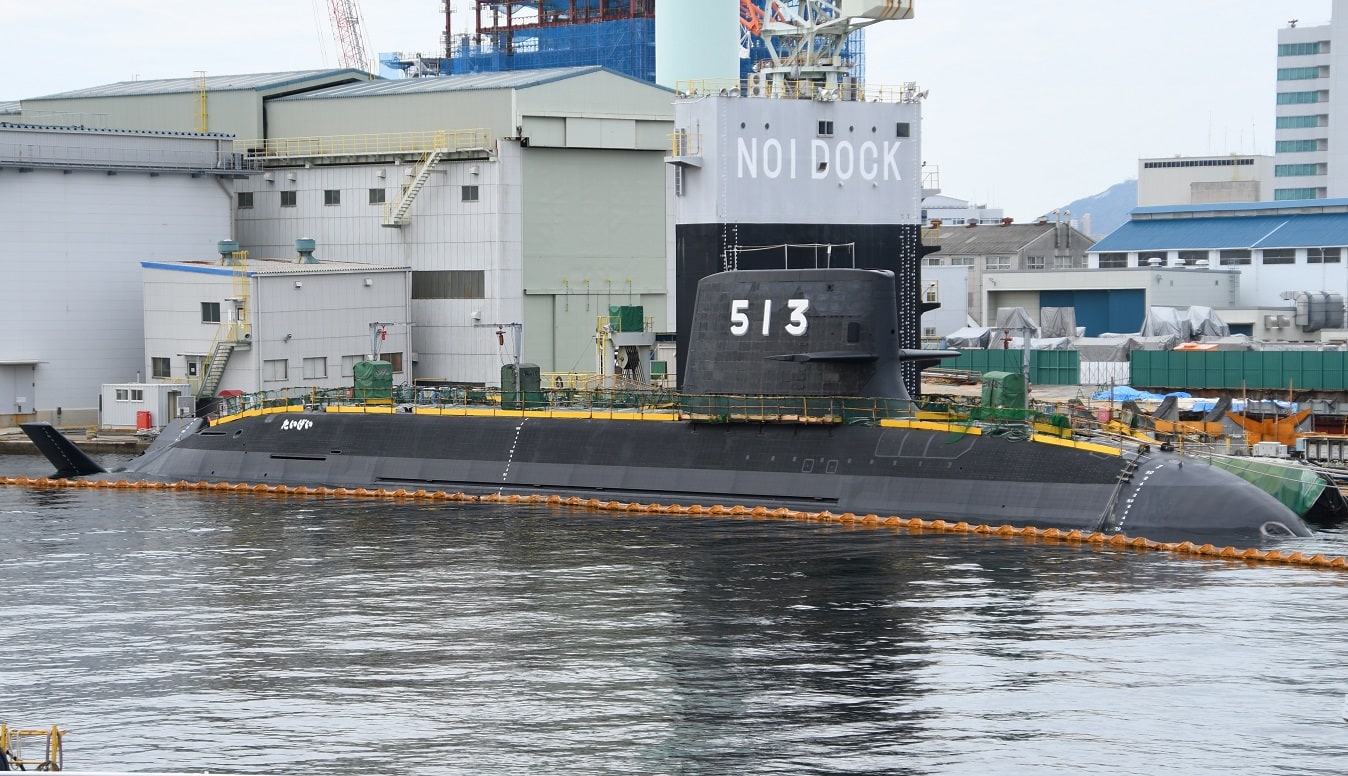
Taigei-class. Image Credit: Creative Commons.

Image: Creative Commons.
That description shows the real value of the class. Soryu was not just about AIP. It combined a large conventional hull with quiet operation, improved sensors, automation, and a maneuvering arrangement useful in littoral and regional waters. The X-rudder helped with maneuverability. The sonar suite and quieting features supported the surveillance and attack missions that matter most for a submarine force operating near Japan.
The Soryu boats gave Japan a mature AIP submarine at a time when diesel-electric designs were becoming more capable worldwide. For countries that do not operate nuclear submarines, AIP offers a way to extend underwater endurance and complicate an opponent’s anti-submarine warfare.
JS Oryu Changed The Soryu-Class Story
The class changed direction with the 11th boat. Japan’s Ministry of Defense said JS Oryu was commissioned on March 5, 2020, assigned to the JMSDF Kure District, and featured lithium-ion batteries. Compared with conventional Soryu-class submarines, MOD said the lithium-ion batteries provided significantly improved underwater duration and speed. The ministry included that statement in Japan Defense Focus No. 123, under its Oryu commissioning coverage.
That was a major shift. The first 10 Soryu boats used Stirling engines. Oryu used lithium-ion batteries instead. Toryu, the 12th and final boat, followed the same path. Naval News reported in 2021 that Toryu was the second lithium-ion Soryu-class boat and the final submarine of the class produced for the JMSDF. Its Toryu commissioning account said the boat was built by Kawasaki and joined the fleet in March 2021.
Lithium-ion batteries bring a different logic. They can store more energy than traditional lead-acid batteries and support stronger underwater performance, though they also require careful safety management. For a submarine, the appeal is clear: more battery capacity means more time operating underwater on electric power and more tactical flexibility before snorkeling becomes necessary.
Oryu therefore changed the meaning of the Soryu class. The class began as Japan’s first major AIP submarine line. It ended as the testbed for the battery technology that would define the next class.
Taigei Took The Soryu-Class Lesson Further
The Taigei-class shows how Japan built on the Soryu experience. Naval News reported in March 2026 that the JMSDF commissioned the fifth Taigei-class submarine, Chogei, and noted that all Taigei-class boats are equipped with lithium-ion batteries in place of lead-acid batteries, as are the final two Soryu-class boats, Oryu and Toryu. The same Taigei report described the class as slightly larger than Soryu and said Japan had additional boats under construction.
That progression matters because it turns the final Soryu boats into more than late-class variants. Oryu and Toryu showed the JMSDF moving toward a battery-centered conventional submarine model. Taigei then made that choice the standard for the follow-on class.
NTI’s Japan submarine profile describes the broader force in similar terms. It says Japan possesses 12 Soryu-class diesel-electric attack submarines, notes that Oryu and Toryu are equipped with lithium-ion batteries, and says the new Taigei class uses lithium-ion batteries to increase underwater endurance and stealth. NTI’s Japan submarine capability profile also links Japan’s submarine modernization to the changing security situation in East Asia.
The point is not that lithium-ion batteries make conventional submarines equivalent to nuclear submarines. They do not. Nuclear submarines still have unmatched endurance and sustained high-speed mobility. However, Japan does not need to copy the U.S. Navy’s nuclear submarine model to create a serious undersea problem in the Western Pacific. It needs quiet submarines that can operate effectively in the waters that matter most to Japan.
The Soryu-Class Submarine Matters Because Japan Needs Quiet Regional Power
Japan’s Soryu class fits into a broader strategic pattern. Tokyo has expanded and modernized its submarine force because the regional maritime environment has changed. China’s navy has grown larger and more active. Russian naval forces remain present in the region. North Korea continues to develop missiles and other military capabilities. Japan’s southwestern island chain has become more important in discussions of a Taiwan crisis or a Western Pacific contingency.
Submarines are especially useful in that environment because they impose uncertainty. A surface fleet can be tracked by satellites, aircraft, and sensors more easily than a quiet submarine operating below the surface. A conventional submarine near a chokepoint can force an adversary to devote ships, aircraft, helicopters, patrol aircraft, sensors, and time to anti-submarine warfare.
The Soryu class gave the JMSDF a submarine capable of that mission. The early boats used AIP to improve underwater endurance. The final boats brought lithium-ion batteries into operational service. The class also kept Japan’s submarine industrial base moving, with Mitsubishi Heavy Industries and Kawasaki Heavy Industries continuing to build advanced boats in a steady production rhythm.
That industrial point matters. A submarine force depends on more than hulls in the water. It requires design experience, trained shipyard workers, battery and propulsion suppliers, combat-system integration, sonar development, maintenance capacity, and crews trained for demanding undersea operations. The Soryu class helped maintain that ecosystem before Taigei took the next step.
Japan’s Soryu-Class Was A Transition Class With Strategic Value
The Soryu class should not be remembered only as an AIP submarine. That label captures the first part of the story, but not the whole one. The class began with Stirling engines and ended with lithium-ion batteries. That makes it one of the more important conventional submarine classes of the past two decades.
For Japan, the class delivered a larger, more capable fleet of diesel-electric attack submarines. For the wider submarine world, it showed how a navy without nuclear-powered attack submarines could keep pushing conventional submarine endurance, quietness, and underwater performance.
The final two Soryu boats also gave Japan a practical bridge into the Taigei era. Oryu and Toryu were not side notes. They marked the point at which Japan shifted from AIP as the central endurance solution to lithium-ion batteries as the next path.
The Soryu-class gave Japan a world-class conventional submarine force for the First Island Chain. Its last boats showed where that force was going next.
About the Author: Harry J. Kazianis
Harry J. Kazianis (@Grecianformula) was the former Senior Director of National Security Affairs at the Center for the National Interest (CFTNI), a foreign policy think tank founded by Richard Nixon based in Washington, DC. Harry has over a decade of experience in think tanks and national security publishing. His ideas have been published in the NY Times, The Washington Post, The Wall Street Journal, CNN, and many other outlets worldwide. He has held positions at CSIS, the Heritage Foundation, the University of Nottingham, and several other institutions related to national security research and studies. He is the former Executive Editor of the National Interest and the Diplomat. He holds a Master’s degree focusing on international affairs from Harvard University.

