
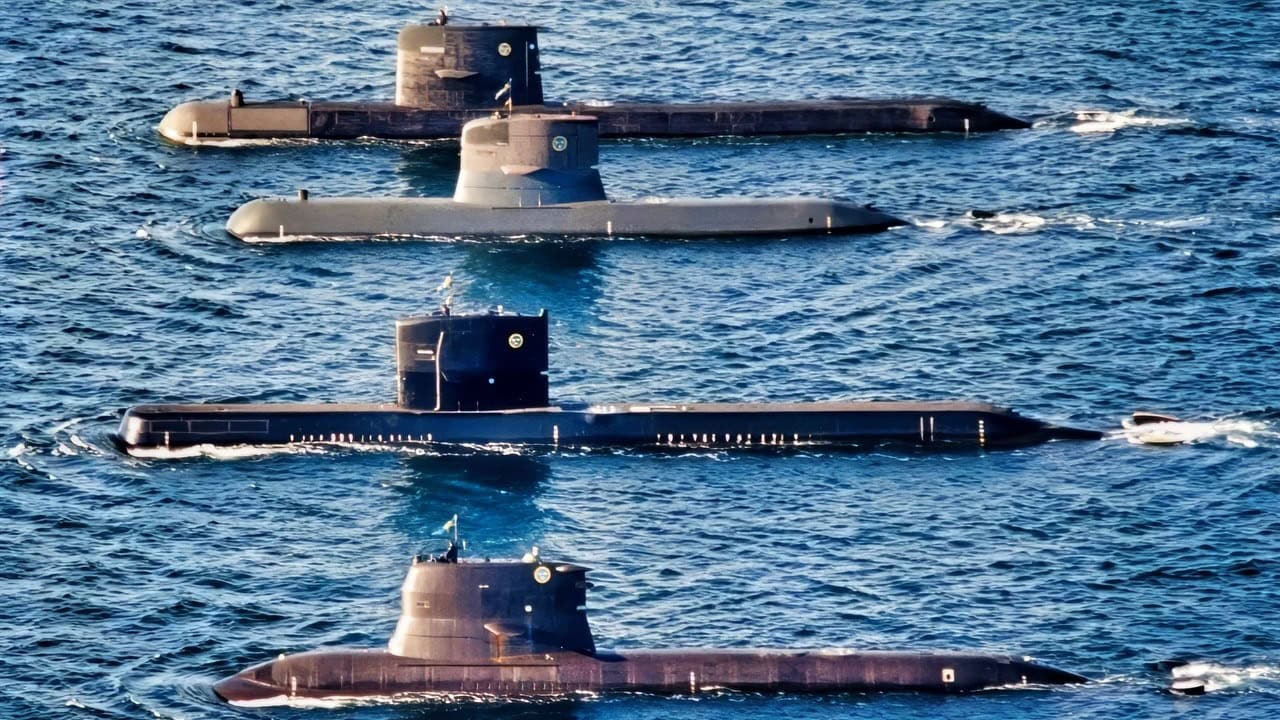
Sweden’s Gotland-Class Submarine Proved Small AIP Boats Could Terrify Big Navies: Sweden built the Gotland-class submarine for the Baltic Sea, not for global power projection. That distinction is the key to understanding why the class became so important.
The Gotland boats are small compared with nuclear-powered attack submarines. They do not have the sustained high speed, global endurance, or deep-ocean reach of a U.S. Navy Virginia-class submarine or a Royal Navy Astute-class submarine. They were built for a different kind of naval problem: shallow, crowded, noisy regional waters where a quiet conventional submarine can be extremely hard to find.
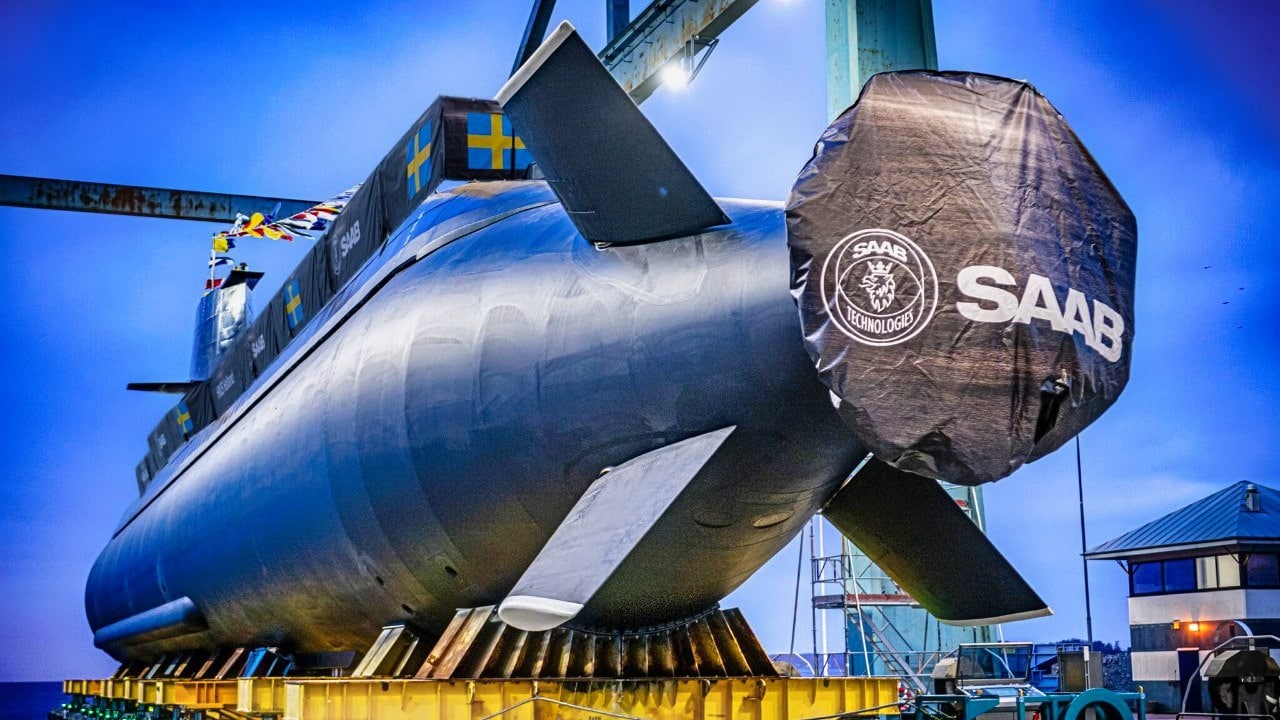
Gotland-Class. Image Credit: Saab.
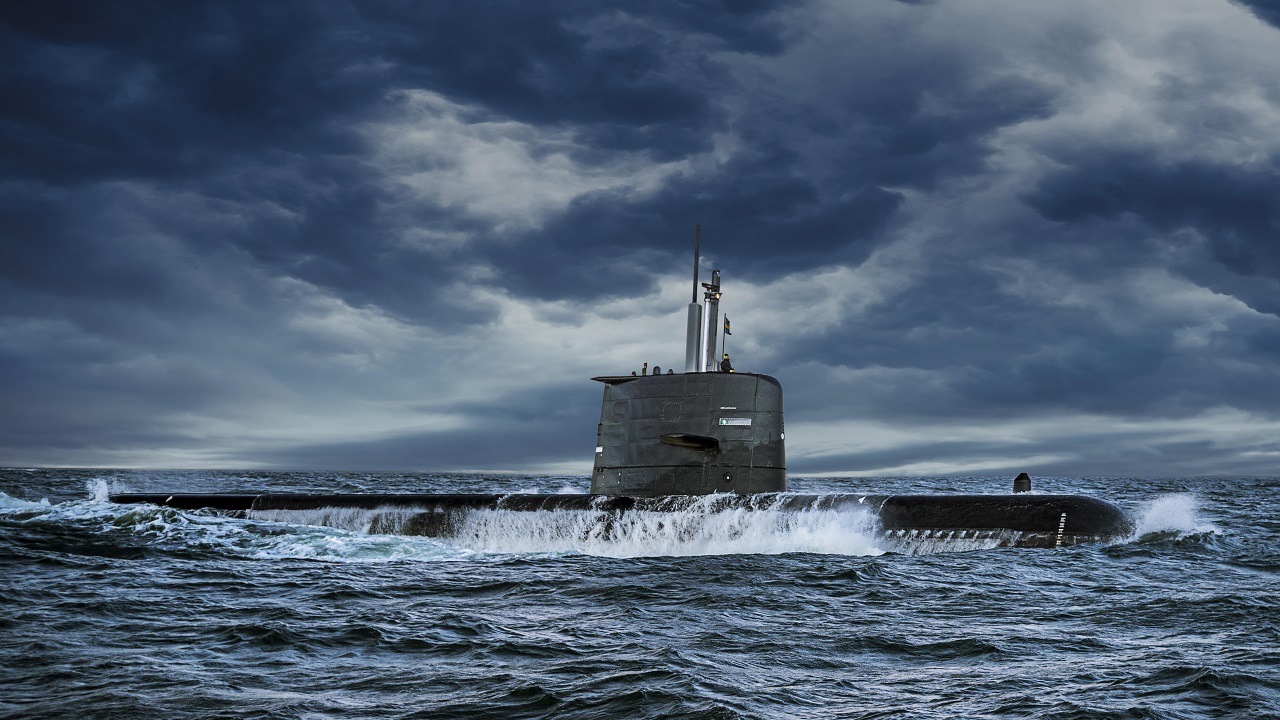
Gotland-Class. Image Credit: Saab.
That design choice gave Sweden one of the most important non-nuclear submarine classes of the modern era. The Gotland class helped prove the value of air-independent propulsion, became famous after U.S. Navy training work, and remains relevant because Sweden has modernized all three boats while it waits for the next-generation A26/Blekinge submarines.
As of June 30, 2026, the Gotland story also has a new Baltic hook. Saab has signed a 47 billion Swedish crown contract with Poland for three A26-type submarines, including weapons, training, and support, according to Reuters. The deal connects Sweden’s undersea design tradition to the future of NATO submarine power in the Baltic Sea.
Sweden Built The Gotland-Class Submarine For The Baltic Sea
The Gotland class has three boats: HMS Gotland, HMS Uppland, and HMS Halland. U.S. Naval Institute Proceedings says the boats were ordered in 1990, construction began in 1992 at Kockums in Malmö, Gotland was commissioned in 1996, and Uppland and Halland joined the Swedish fleet in 1997. The same USNI Proceedings account describes the class as the first operational submarine class in the world to feature an air-independent propulsion system.
That matters because Sweden’s undersea problem is shaped by geography. The Baltic Sea is shallow, constrained, and strategically crowded. It sits near Russian forces in Kaliningrad and St. Petersburg, near NATO members and partners, and near critical undersea infrastructure. A submarine operating in that environment does not need nuclear endurance to be dangerous. It needs stealth, patience, local knowledge, and the ability to stay submerged long enough to complicate an adversary’s plans.
Sweden’s submarine force was built around those realities. NTI’s Sweden submarine profile says Sweden possesses three Gotland-class diesel-electric attack submarines, each about 60.4 meters long and 6.2 meters wide, with submerged speed up to about 20 knots. The NTI profile also notes four 533mm and two 400mm torpedo tubes for the class.
The class is small by nuclear-submarine standards, but that is part of the point. A smaller conventional submarine can operate effectively in littoral waters, use local geography to its advantage, and create a difficult anti-submarine warfare problem for a much larger navy.
Gotland-Class AIP Changed The Conventional Submarine Problem
The Gotland class became famous for bringing Stirling air-independent propulsion into operational submarine service. AIP does not make a diesel-electric submarine equal to a nuclear submarine. Nuclear boats still dominate in sustained underwater speed and long-range endurance. However, AIP gives a conventional submarine something extremely valuable: more submerged time without snorkeling.
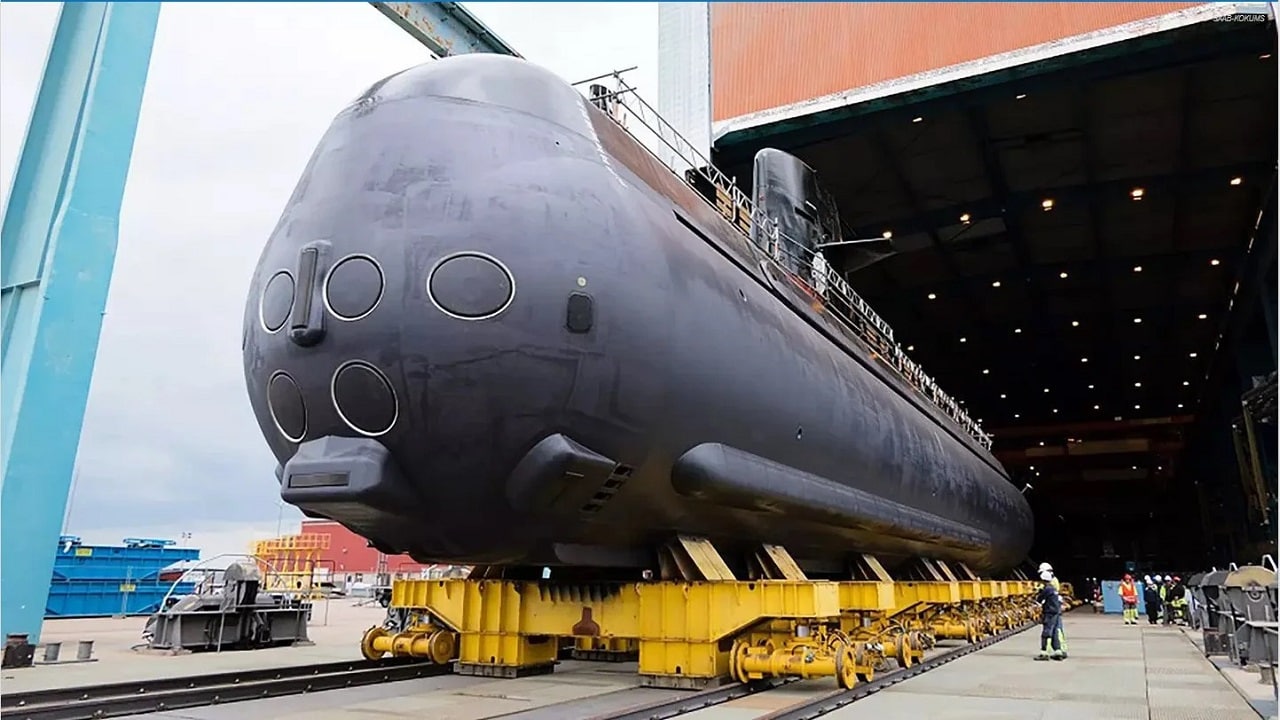
Gotland-Class. Image Credit: Creative Commons.
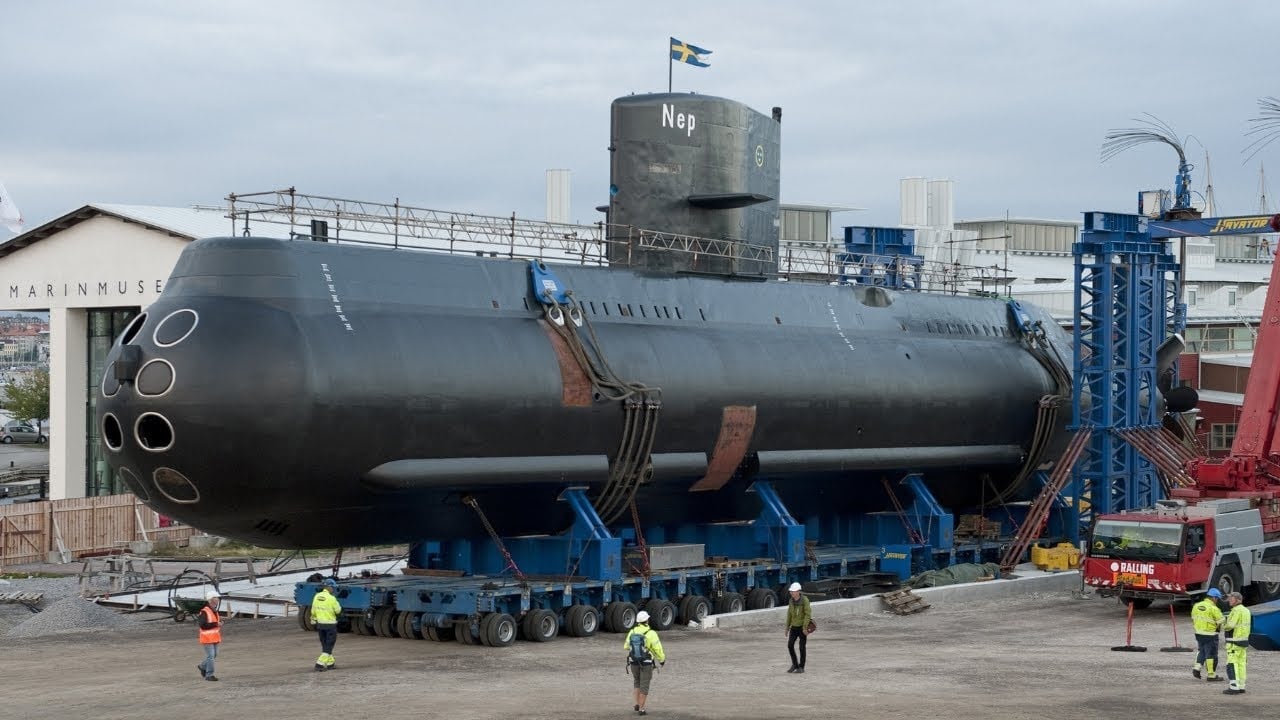
Gotland-class submarine. Image Credit: Creative Commons.
Snorkeling creates risk. A diesel-electric submarine that has to raise a mast or run its diesel engines closer to the surface gives an adversary more opportunities to detect it. AIP reduces that exposure by allowing the submarine to generate power underwater without relying on ambient air, unlike a conventional diesel recharge cycle.
Saab explains the operational logic clearly. Its submarine material says Stirling air-independent propulsion enables submarines to operate underwater for several weeks without surfacing, while ordinary diesel-electric submarines generally need to surface or snorkel after a few days. Saab describes that advantage in its AIP submarine material.
The Stirling engine also has a noise advantage. Saab has described the engine as quiet and vibration-free, limiting the vibrations that reach the hull and making the submarine difficult to find. Saab laid out that point in a company story on quiet submarine technology.
That is the Gotland lesson in plain terms. The class did not need nuclear propulsion to matter. It needed sufficient underwater endurance and quietness to operate within a regional battlespace where every hostile ship, helicopter, patrol aircraft, and sonar system would have to account for the possibility that a Swedish submarine was nearby.
HMS Gotland Became Famous After U.S. Navy Exercises
The Gotland class became known far outside Sweden because of U.S. Navy training work in the mid-2000s. HMS Gotland operated with the U.S. Navy under a lease arrangement and became a case study in how difficult it could be to detect and counter a quiet AIP submarine.
That story is often retold in exaggerated form. The crude version says Gotland proved aircraft carriers were obsolete. That is not the right lesson. Carrier strike groups remain among the most powerful military formations in the world. The useful lesson is narrower and more serious: a quiet conventional submarine operating in favorable conditions can force even a large and sophisticated navy to work hard.
The U.S. Navy took that problem seriously because it had to. Anti-submarine warfare is not theoretical. Surface ships, aircraft, helicopters, submarines, sensors, and crews have to find a target designed to avoid detection. Gotland gave the U.S. Navy a realistic training opponent that did not behave like a nuclear-powered submarine and did not create the same acoustic problem.
For Sweden, the exercises validated the class’s basic design logic. A small AIP submarine designed for shallow regional waters could remain relevant in the training environment of a global navy. That is why Gotland remains one of the most cited conventional-submarine examples in modern naval writing.
Sweden Modernized HMS Gotland And HMS Uppland
Sweden did not treat the Gotland class as a finished story of the 1990s. Saab began a major midlife modernization to keep the boats operational and integrate systems tied to Sweden’s next-generation submarine program.
HMS Gotland began sea trials in October 2018 after a comprehensive mid-life upgrade at Saab’s shipyard in Karlskrona. Saab said the work was intended to ensure Gotland’s operational service to Sweden beyond 2025. The company announced the sea-trial milestone in its Gotland upgrade release.
That upgrade mattered because it was not a simple overhaul. Saab said the modernization included work connected to future submarine technologies. The first upgraded boat therefore became part of Sweden’s transition path toward the A26/Blekinge class.
HMS Uppland followed. In December 2020, Saab said it had delivered the second Gotland-class submarine to the Swedish Defense Materiel Administration after a mid-life upgrade. The company’s Uppland delivery notice said the modernization included more than 50 new systems and that over 20 of them would be used in the next generation of submarines.
That is an important industrial point. Sweden used the Gotland upgrades to keep existing boats relevant and to reduce risk in the next submarine class. A small navy with a serious submarine tradition cannot afford to let design, production, upgrade, and integration skills fade between generations.
HMS Halland Completed The Gotland-Class Mid-Life Upgrade
The third boat, HMS Halland, closed the modernization cycle. Saab signed a contract with the Swedish Defense Materiel Administration in 2022 for a mid-life upgrade of Halland, including an overhaul and combat-system upgrade. Saab said the order value was 1.1 billion Swedish crowns in its Halland contract notice.
In February 2025, Saab launched Halland after the comprehensive upgrade at Karlskrona. Saab said Halland was the third and final Gotland-class submarine to undergo the mid-life upgrade, with new technologies and systems of the same type planned for the future Blekinge-class submarines. That update appears in Saab’s Halland launch release.
That means all three Gotland-class boats have now completed the modernization process. The class is older, but it has remained relevant through upgrades to sensors, combat systems, communications, and platform systems. In a small submarine force, that matters. Losing one boat to obsolescence or extended unavailability has a larger impact than it would in a much bigger navy.
The upgrade history also reveals how Sweden approaches submarine production. Existing boats, future boats, industry, and fleet readiness are linked. The Gotland class is not simply being kept alive until replacement. It is helping carry systems and experience into the A26/Blekinge program.
The Gotland-Class Points Toward The A26 Blekinge Submarine
The A26/Blekinge class is the next step in Sweden’s submarine story. Reuters reported in November 2025 that Sweden’s A26 submarines are designed for the Baltic Sea, powered by Stirling engines, and intended to remain submerged for weeks. The same Reuters explainer described the boats as about 66 meters long and noted a multi-mission portal at the bow for tasks including seabed warfare, infrastructure protection, unmanned vehicles, divers, torpedoes, mines, and special forces.
That is a direct evolution of Sweden’s regional submarine logic. The A26 is not designed as a nuclear-submarine substitute. It is a modern conventional submarine shaped for Baltic conditions, with stealth, AIP, intelligence gathering, surveillance, special operations support, and seabed-related missions in mind.
Poland’s June 2026 order makes that evolution more important. Poland has been trying to rebuild its submarine force under the Orka program, and the Saab contract provides Warsaw with a path to three modern A26-type submarines. Reuters reported that final deliveries are scheduled for 2038 and that the contract includes weapons, training, and support.
The order is also a strategic signal. Poland and Sweden sit on the same Baltic security problem from different sides. After Sweden joined NATO in March 2024, Swedish submarine expertise became part of the alliance’s undersea posture in a more direct way. NATO’s own announcement says Sweden became the alliance’s 32nd member on March 7, 2024.
The Gotland class therefore sits behind a current NATO story. Sweden’s older AIP boats proved the concept. The upgraded boats preserve the capability. A26/Blekinge carries it forward, and Poland’s order spreads that design logic deeper into the Baltic defense network.
Why Gotland-Class Submarines Still Matter For NATO
The Gotland class still matters because the Baltic Sea rewards the kind of submarine Sweden has built for decades. The water is shallow, busy, and difficult for anti-submarine warfare. Civilian traffic, coastal geography, bottom conditions, and short distances all complicate detection. A quiet submarine operating there can force an adversary to slow down, search harder, and protect ships, ports, chokepoints, and undersea infrastructure.
That is especially relevant after Russia’s full-scale invasion of Ukraine and Sweden’s entry into NATO. The Baltic Sea is now bordered largely by NATO members, but that does not make it a simple operating environment. Russia retains military assets in the region, and the protection of ports, cables, pipelines, sea lanes, and reinforcement routes remains a serious concern for the Allies.
AIP submarines are useful in that setting because they create uncertainty. A hostile surface force must assume that a Swedish submarine could be lurking in waters where detection is difficult and reaction time is short. That uncertainty can shape operations before any torpedo is fired.
The Gotland class also serves as a warning to larger navies outside the Baltic. Not every submarine threat will look like a nuclear-powered attack submarine. Many countries operate conventional boats that are quiet, locally optimized, and difficult to find close to home. A navy that prepares only for deep-ocean nuclear-submarine competition can miss the danger of a small diesel-electric submarine positioned in the right place.
Sweden’s Gotland-Class Was A Small Submarine With A Large Lesson
The Gotland class deserves its reputation, but the lesson should be stated carefully. It did not make nuclear submarines obsolete. It did not prove that carrier strike groups cannot survive. It did not turn a small navy into a global naval power.
The class proved something more precise. A well-designed AIP submarine, operated by a navy that understands its local waters, can impose a serious problem on much larger forces. That is the value Sweden built into Gotland, Uppland, and Halland.
The mid-life upgrades keep that value alive while Sweden moves into the A26/Blekinge era. Poland’s 2026 A26 order shows that the same design tradition now matters beyond Sweden’s own fleet. In the Baltic, quiet conventional submarines remain one of the most efficient ways to make the sea harder for an adversary to use.
Sweden built Gotland for regional defense. The class became a global example because it showed how dangerous a small AIP submarine can be when geography, technology, and training line up.
About the Author: Harry J. Kazianis
Harry J. Kazianis (@Grecianformula) was the former Senior Director of National Security Affairs at the Center for the National Interest (CFTNI), a foreign policy think tank founded by Richard Nixon based in Washington, DC. Harry has over a decade of experience in think tanks and national security publishing. His ideas have been published in the NY Times, The Washington Post, The Wall Street Journal, CNN, and many other outlets worldwide. He has held positions at CSIS, the Heritage Foundation, the University of Nottingham, and several other institutions related to national security research and studies. He is the former Executive Editor of the National Interest and the Diplomat. He holds a Master’s degree focusing on international affairs from Harvard University.

