The Cold War continues to be one of the most insane times in human history for high-tech, utterly frightening, doomsday weapons. Indeed, the very concept of a doomsday weapon dates exclusively to that time.
Some of those weapons made it into the arsenals of the two nuclear-armed superpowers, the Soviet Union and the United States. Other weapons concepts were so frightening that even the countries that developed those systems decided against fully developing and deploying those nightmarish doomsday weapons.
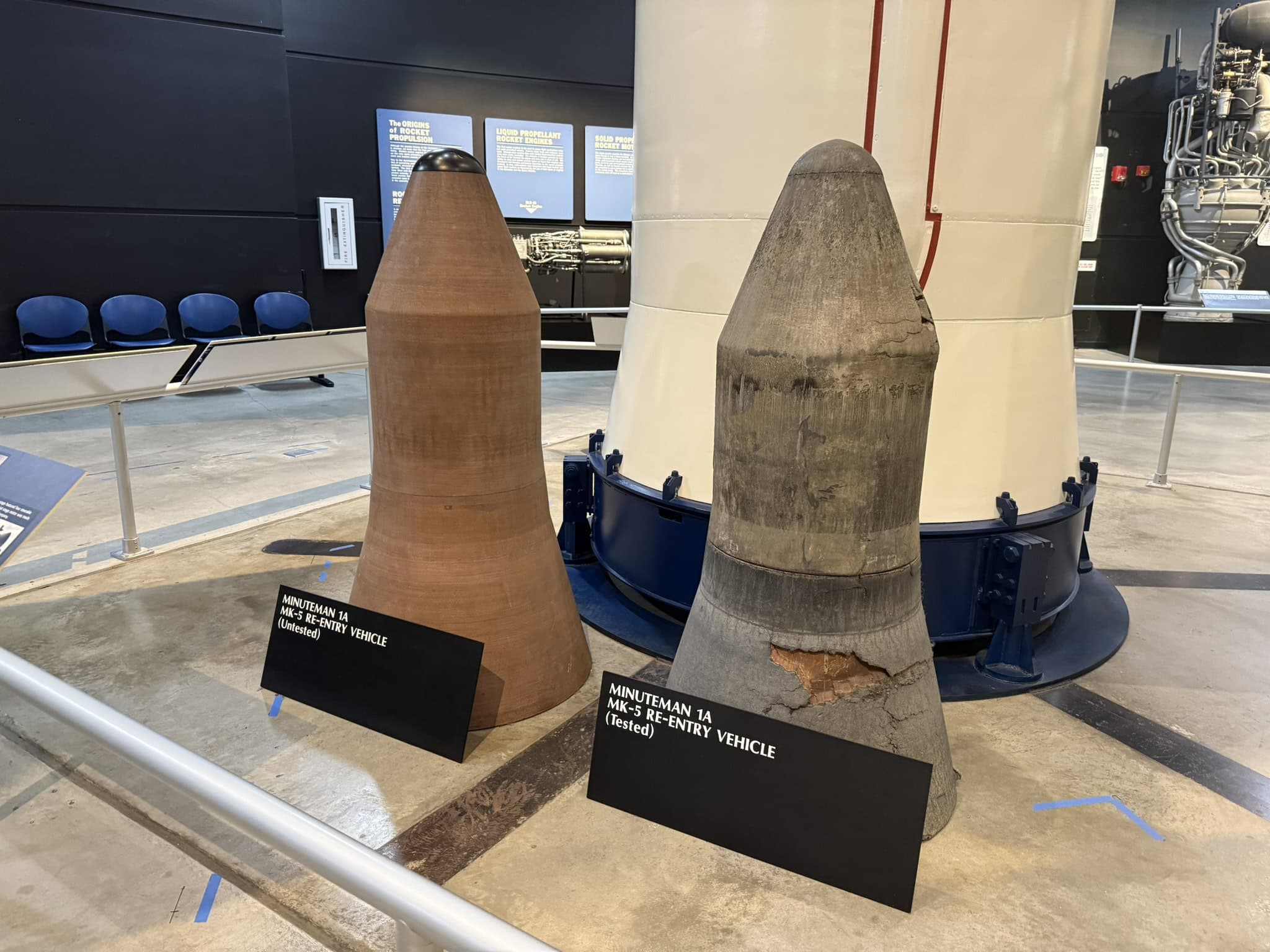
Cold War Rockets and Missiles. Image by Harry J. Kazianis Take at the National Museum of the U.S. Air Force.
America’s Supersonic Low-Altitude Missile (SLAM), Project Pluto, was one such system.
SLAM was a nuclear ramjet missile developed by American military thinkers in the 1950s. Back then, US planners worried that Soviet air defenses would eventually become good enough to stunt the power projection that American bombers–specifically, nuclear-armed long-range bombers–posed to them. So, the Americans wanted something unstoppable.
Hence, the SLAM.
Rather than carrying fuel as a normal missile does, Project Pluto envisioned a weapon that would carry a small nuclear reactor.
Air entering the front of the missile would pass directly through the reactor core, become superheated, and blast out the back to generate thrust. Because the reactor provided the energy, the missile would have an effectively unlimited range.
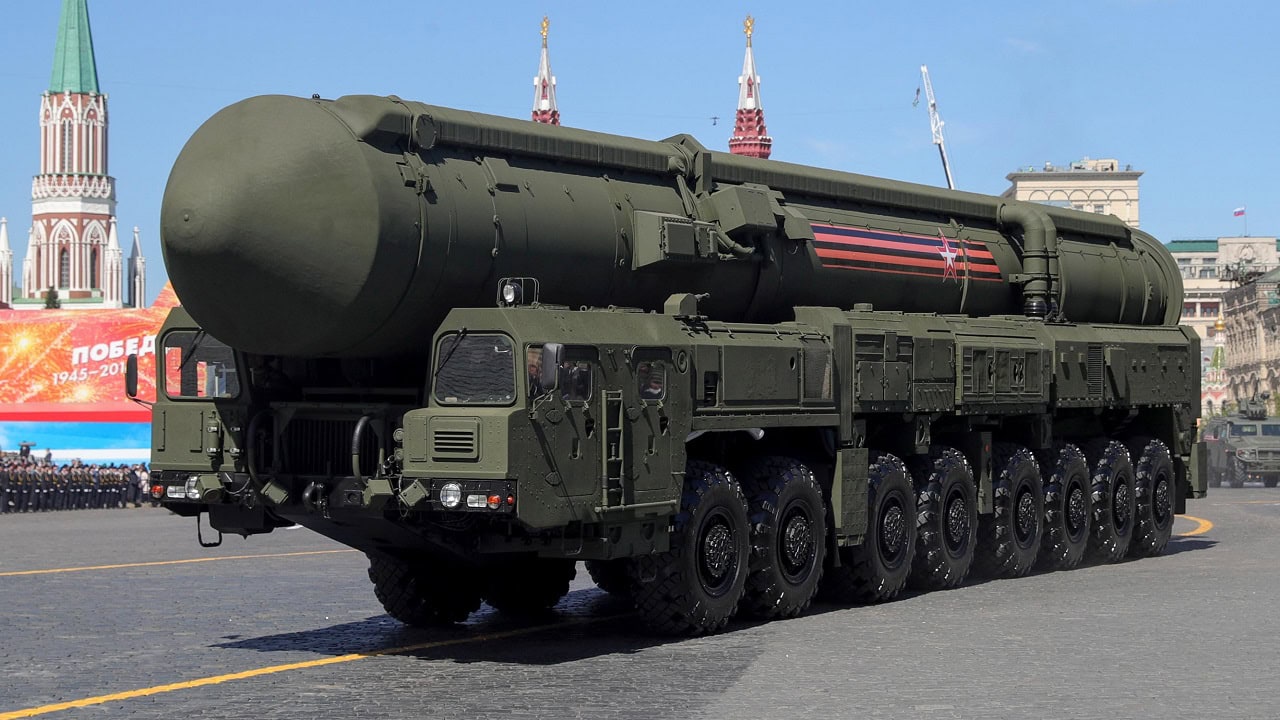
MAY 9, 2018: An RS-24 Yars mobile intercontinental ballistic missile system rolls down Moscow’s Red Square during a Victory Day military parade marking the 73rd anniversary of the victory over Nazi Germany in the 1941-1945 Great Patriotic War, the Eastern Front of World War II. Sergei Bobylev/TASS.
The Air Force and the Atomic Energy Commission (AEC) invested years of work in the project. Engineers built and successfully tested nuclear ramjet reactors in Nevada. The Tory-IIA and later the much larger Tory-IIC demonstrated that the concept was technically feasible.
By May 1964, the Tory-IIC was operating at peak power. In other words, the Americans had proven that a nuclear-powered cruise missile could, indeed, work. As the kids today might say, this weapon is pure “nightmare fuel.”
The Flying Crowbar
Not only was the weapon simple, but military planners adored this system because Soviet defenses couldn’t really stop it. The weapon foreshadowed today’s very dangerous hypersonic weapons by flying unpredictably, making missile defense nearly impossible. SLAM flew at low altitudes and high speeds beneath much of the enemy’s radar coverage, too.
What’s more, this weapon did not require a manned crew to operate as bombers did, reducing the risk to American fliers. Unlike conventional missiles, the weapon did not suffer from fuel limitations because it was nuclear-powered. In effect, SLAM could cross oceans, circle continents, approach targets from unexpected directions, and remain airborne for extended periods before attacking.
That sounds a bit like Russia’s fabled 9M730 Burevestnik (codenamed “Skyfall” by NATO) missile, which has haunted NATO defenders and American strategists for years.
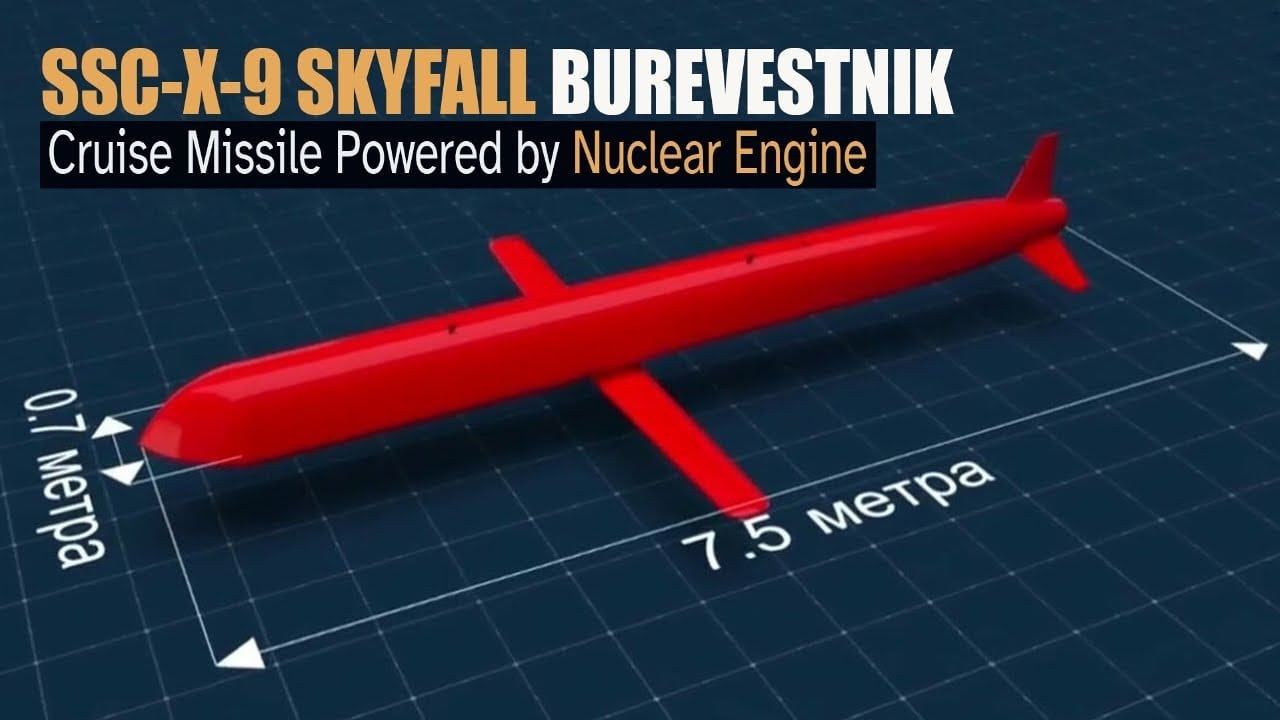
Skyfall Cruise Missile. Image Credit: Creative Commons.
Anyway, the really horrifying part of the SLAM system was that it wasn’t supposed to carry just one thermonuclear weapon. Designs envisioned multiple hydrogen bombs that could be dropped sequentially across the Soviet Union. So, the weapon could enter Soviet airspace, destroy city after city, and then complete its doomsday mission.
The Missile Was a Nightmare Machine Even Before Detonating
A normal missile becomes dangerous when it explodes. Project Pluto was dangerous simply because it existed. Consider this: the reactor powering the missile had no shielding. If it did, the shielding would have made the missile too heavy to fly. Therefore, the missile spewed radioactive exhaust along its flight path.
Every mile that fell within its apocalyptic flightpath would become a killing field of radioactive waste.
That’s why some critics referred to this as the most terrifying weapon ever made. In fact, a fleet of these missiles could wander over enemy territory, dumping radioactive contamination everywhere long before dropping its thermonuclear payloads.
Technical Problems? What Technical Problems?
Project Pluto’s engineers accomplished their insane mission. They proved that a nuclear ramjet worked. These engineers built the reactors that powered these ghastly weapons. They generated enormous power levels. SLAM was, without a doubt, an engineering masterpiece. But once military planners analyzed the weapon and its use in war, they raised some uncomfortable questions about the system.
For example, how does one test a weapon that sprays everything around it with radiation the moment it’s launched? Or, what would happen if this weapon crashed over friendly territory? The potential for grave unintended consequences with this weapon rapidly shifted it from the “doomsday” deterrent to a sheer act of lunacy (and a little arrogance on the part of the 1950s-era US military engineers, who believed that everything could, and should, have been nuclear).
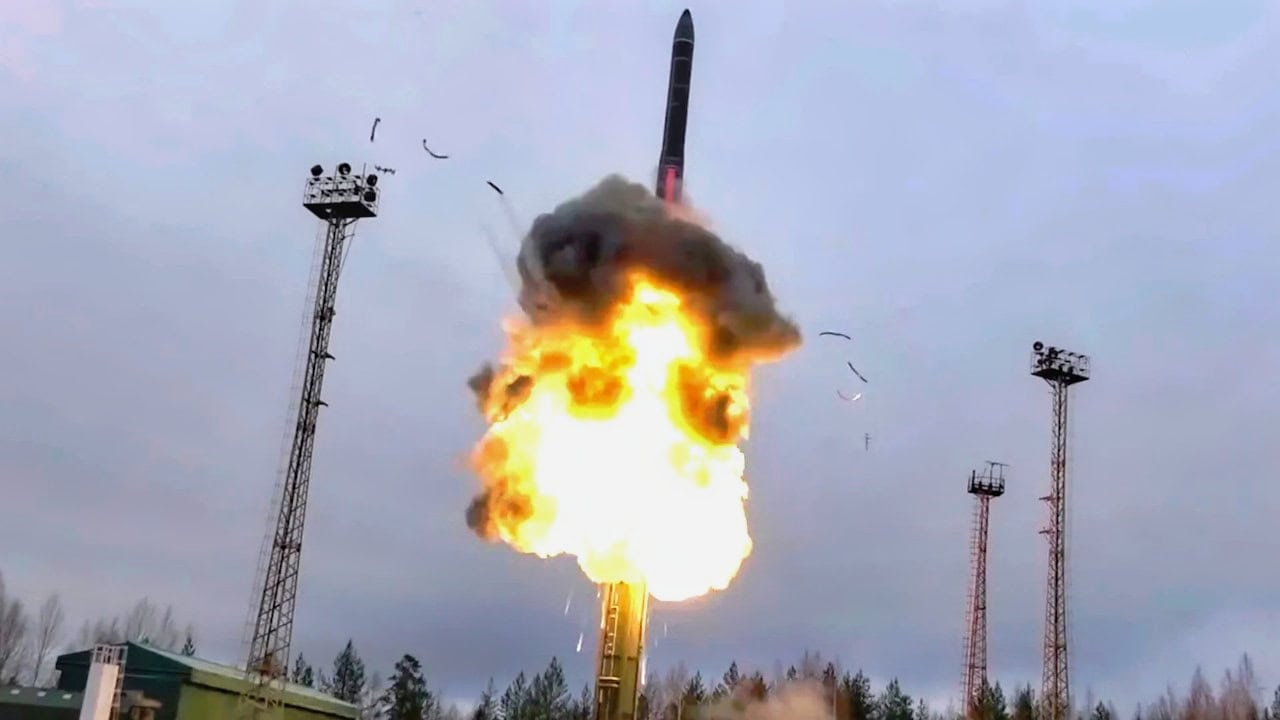
Oreshnik ICBM from Russia. Image Credit: Creative Commons.
America Scared Itself
By 1964, another problem emerged. ICBMs were getting technically better. The Pentagon started reassessing the need for Project Pluto. At the same time, policymakers realized that SLAM was so dangerous that its strategic value did not justify the project’s cost or the risk of unintended consequences.
On July 1, 1964, the military canceled Project Pluto. It was the most successful failure in the history of America’s Cold War doomsday projects. Indeed, it was so effective that the weapons designers scared themselves into canceling the project.
About the Author: Brandon J. Weichert
Brandon J. Weichert is the Senior National Security Editor at 19FortyFive.com. He also manages The Weichert Brief on Substack. Weichert also hosts “National Security Talk” on Rumble. He is the author of four bestselling national security books, the most recent of which is A Disaster of Our Own Making: How the West Lost Ukraine (Encounter Books). Follow him via Twitter/X @WeTheBrandon.