
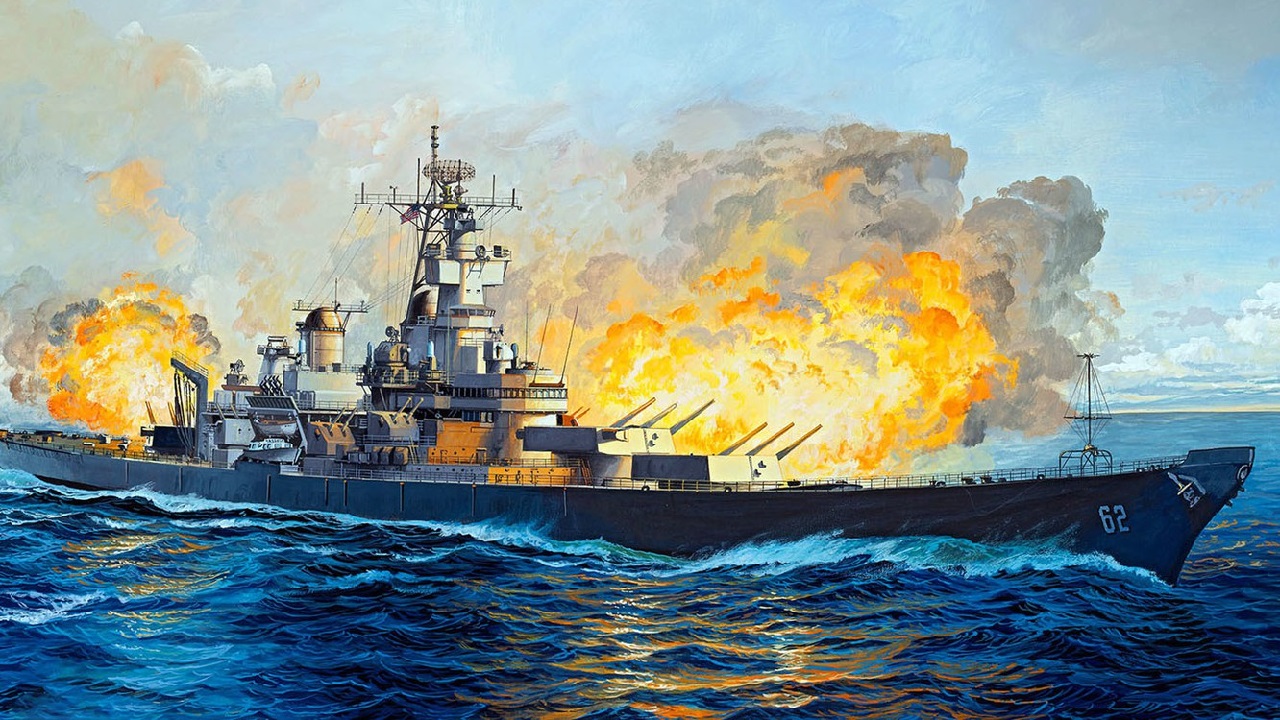
In the 1950s, America’s Battleships Carried Hiroshima-Sized Nuclear Shells for Their 16-Inch Guns. The Navy Never Admitted It — But a Historian Says They Went to Sea: For six years at the height of the Cold War, the U.S. Navy kept a stockpile of 50 nuclear artillery shells built for exactly one weapon: the 16-inch guns of the Iowa-class battleships. Each carried a yield in the range of the Hiroshima bomb. Three battleships were quietly modified to store them, ten shells apiece. To this day, the Navy has never confirmed whether a single one ever left the pier — but the historical record says they did, and the story of the “Katie” shells remains one of the strangest chapters in the atomic age.
The Biggest Nuclear Gun Ever Built
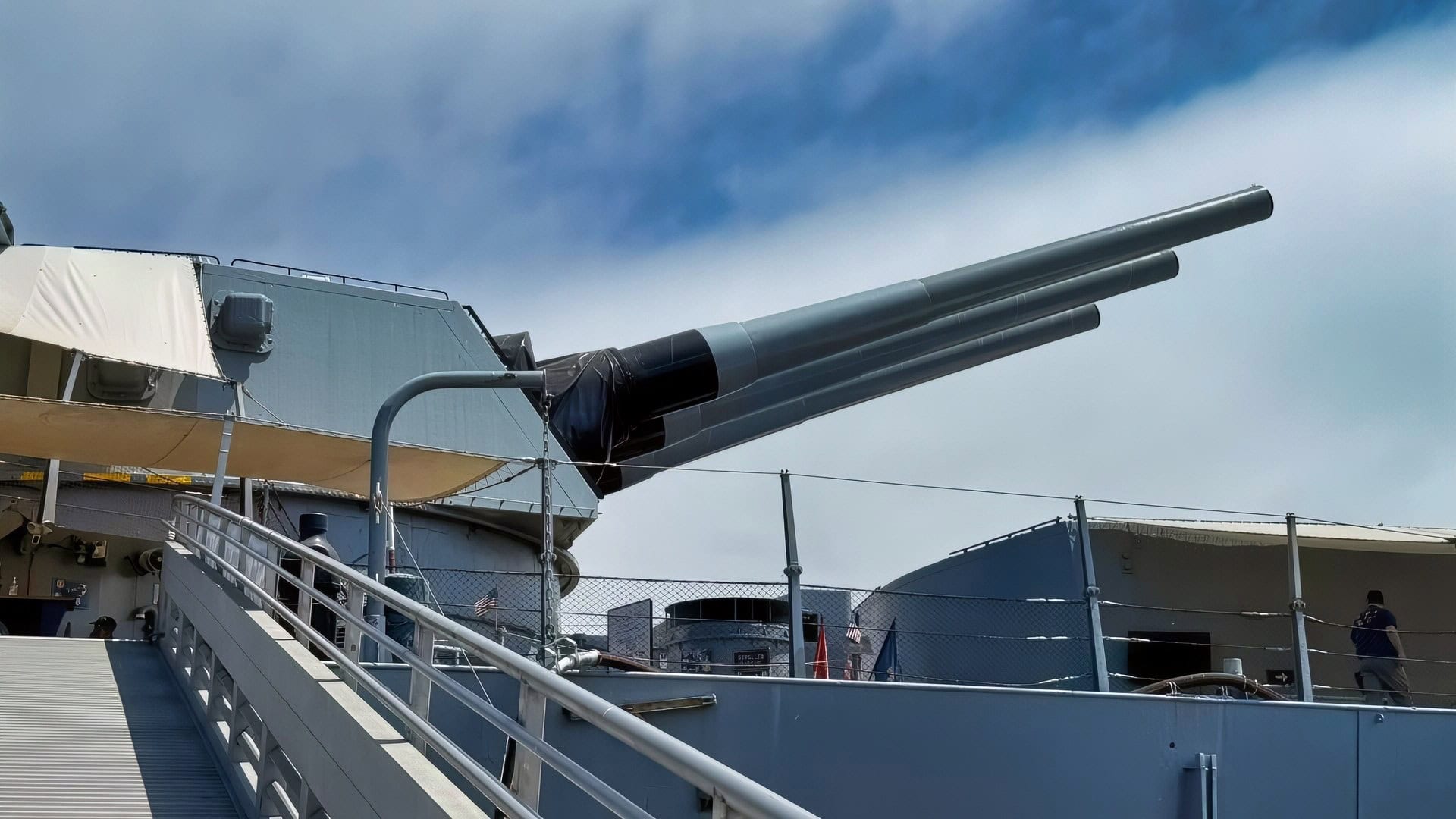
Iowa-Class 16-Inch Gun August 2025 19FortyFive Image. Taken by Harry J. Kazianis.
The Katie was born of the 1950s nuclear arms race inside the Pentagon as much as the one with Moscow. The Air Force had bombers, the submarine force was going nuclear, and the Army had fielded the Mk 9: the world’s first artillery-fired atomic projectile, famously test-fired from the 280mm “Atomic Annie” cannon in 1953. The surface Navy wanted its own seat at the atomic table, and it owned the biggest guns in the world. The Army’s shell design, nicknamed Katie from the abbreviation for kiloton, was adopted by the Navy for its 16-inch Mark 7 rifles as the W23. Development began in 1952, and the first service projectile was delivered in October 1956, with about 50 eventually produced. Each was 16 inches across, 64 inches long, weighed somewhere between 1,500 and 1,900 pounds, depending on the reference, and carried a gun-type fission device, the same simple mechanism as the Hiroshima bomb, with a yield of 15 to 20 kilotons. Little Boy was 15. Packing that into an artillery shell was a genuine engineering feat: as the naval history site Naval Gazing has detailed, the device had to withstand thousands of Gs of firing acceleration while spinning at 10,000 rpm or more. The result made the Iowas’ guns the largest nuclear artillery ever fielded, firing the only nuclear shell ever built for a naval gun, accurate in any weather at a time when the jets and early missiles that carried America’s other atomic weapons could be grounded by a storm. A full nine-gun broadside would have put roughly 180 kilotons in the air at once.
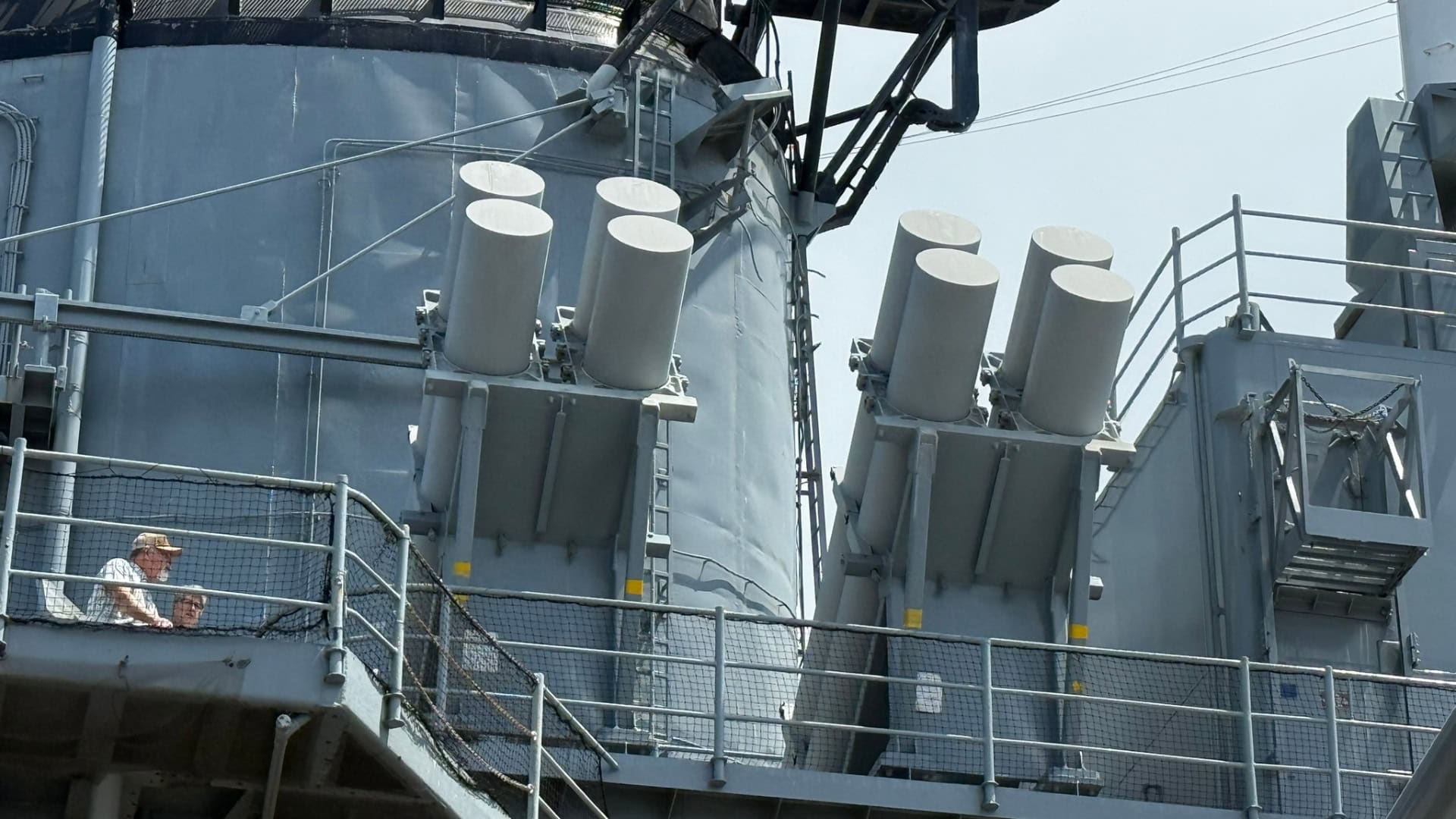
U.S. Navy Iowa-Class Battleship Missile Launchers 19FortyFive.com Image
Three Ships, Ten Shells Each
The battleships themselves needed almost nothing. The guns required no modification at all; the work went into the magazines. USS Iowa, USS New Jersey, and USS Wisconsin each received an alteration to the Turret II magazine, creating a secure storage space sized for ten nuclear shells and nine Mark 24 practice rounds. USS Missouri, already in mothballs by 1955, was never touched. The exact nature of the modifications has never been published, though the era’s practice, as Naval Gazing notes, made it likely that the nuclear components were stored separately under round-the-clock Marine guard and assembled only by specially trained crewmen. Wisconsin fired one of the practice shells in a 1957 test — the closest any Katie ever came to leaving a 16-inch barrel.
Did They Ever Actually Go to Sea?
For seventy years, the Navy has refused to answer the obvious question. Official policy is to neither confirm nor deny the presence of nuclear weapons aboard any ship outside the ballistic-missile submarine force, and the government has never acknowledged that a Katie sailed. The historical record is less coy. Battleship historian Robert Sumrall’s account, carried in the definitive study of the program, indicates the full complement of nuclear shells did go to sea aboard Iowa and Wisconsin, while New Jersey apparently carried only a single drill projectile. Which makes the program’s punchline all the stranger: barely eighteen months after the Katie entered service, the Navy retired its last active battleship. The service had perfected the ultimate battleship weapon at the precise moment it gave up on battleships. The shells lingered in the stockpile until October 1962, when all were withdrawn: none was ever fired from a naval gun, one was expended in Project Plowshare’s peaceful-explosives research, and the rest were dismantled. A single inert Mk 23 shell body survives today at the National Atomic Museum in Albuquerque, New Mexico.
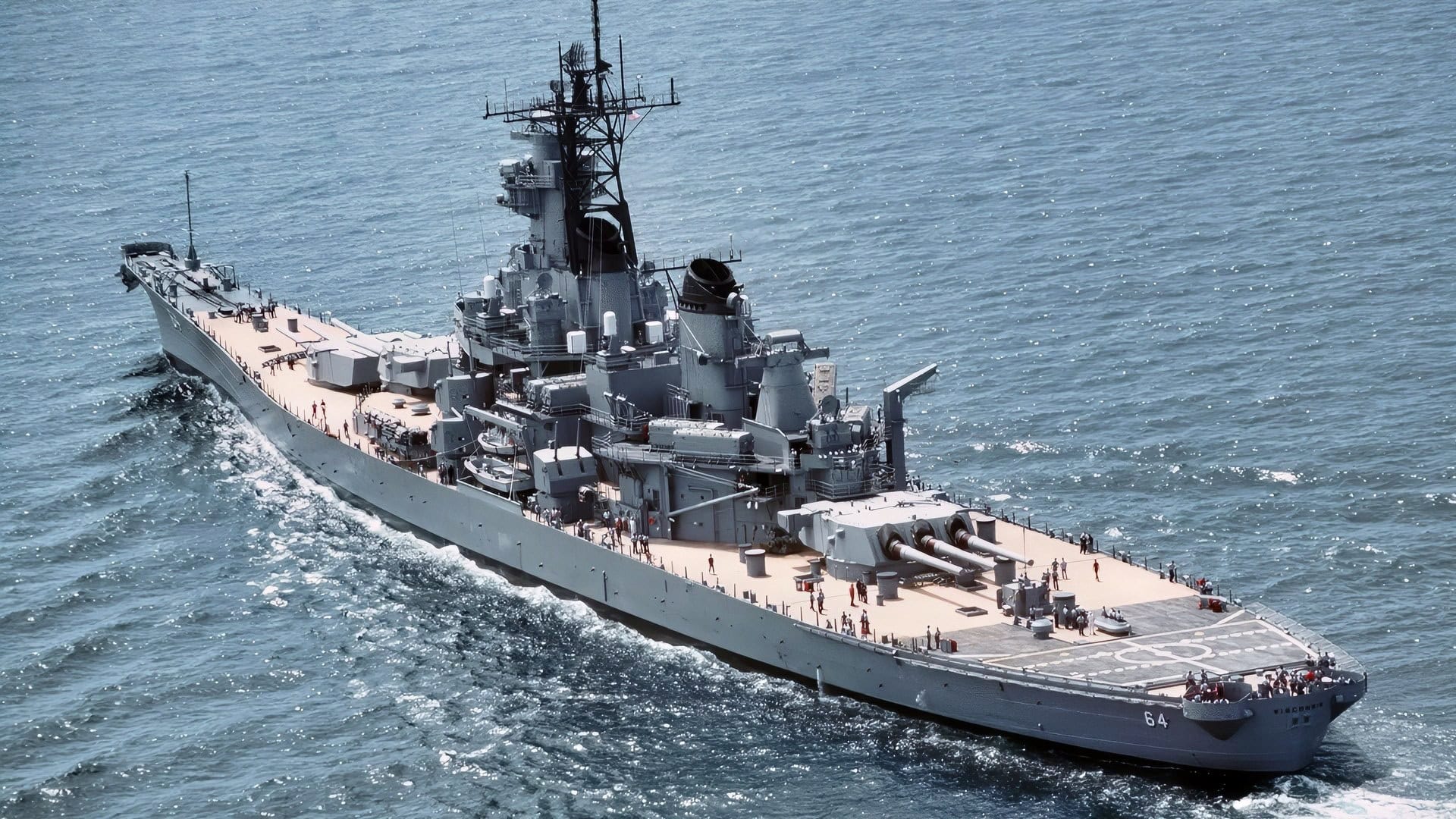
U.S. Navy Iowa-Class Battleship. Image Credit: Creative Commons.
The Second Nuclear Act
That should have been the end of the battleships’ atomic story, but the Iowas came back — and so did the nukes, in a new shape. When President Reagan’s 600-ship Navy reactivated all four battleships in the 1980s, their modernization added armored box launchers for 32 Tomahawk cruise missiles, and the fit included the nuclear-armed TLAM-N variant with its W80 warhead, of which roughly 300 were produced fleet-wide. The battleships were thus nuclear-capable in two different eras with two entirely different weapons: atomic shells in the Eisenhower years, nuclear cruise missiles under Reagan. The second act ended the way the first did, quietly and by policy. In the fall of 1991, President George H.W. Bush ordered tactical nuclear weapons off the Navy’s surface ships, the same season Wisconsin left service for the last time, and the TLAM-Ns went into storage before being dismantled after 2010. America’s nuclear artillery inventory, Katie’s whole family, was gone from the stockpile entirely by 2004.
The Weapon That Explains an Era
The Katie never fired a shot in anger, and that is precisely what makes it worth remembering. It belongs to the brief, strange period when America put atoms into everything: artillery shells, depth charges, even air-to-air rockets. The battleship nuclear shell was that era’s logic at its purest, the biggest gun ever sent to sea mated to the biggest explosive ever invented. Today, as Washington debates building battleships again, the first ones’ most secret cargo sits in a museum case in New Mexico, a sixteen-inch cylinder of the 1950s that officially never went anywhere, and almost certainly did.
About the Author: Harry J. Kazianis
Harry J. Kazianis (@Grecianformula) was the former Senior Director of National Security Affairs at the Center for the National Interest (CFTNI), a foreign policy think tank founded by Richard Nixon based in Washington, DC. Harry has over a decade of experience in think tanks and national security publishing. His ideas have been published in the NY Times, The Washington Post, The Wall Street Journal, CNN, and many other outlets worldwide. He has held positions at CSIS, the Heritage Foundation, the University of Nottingham, and several other institutions related to national security research and studies. He is the former Executive Editor of the National Interest and the Diplomat. He holds a Master’s degree focusing on international affairs from Harvard University.

