
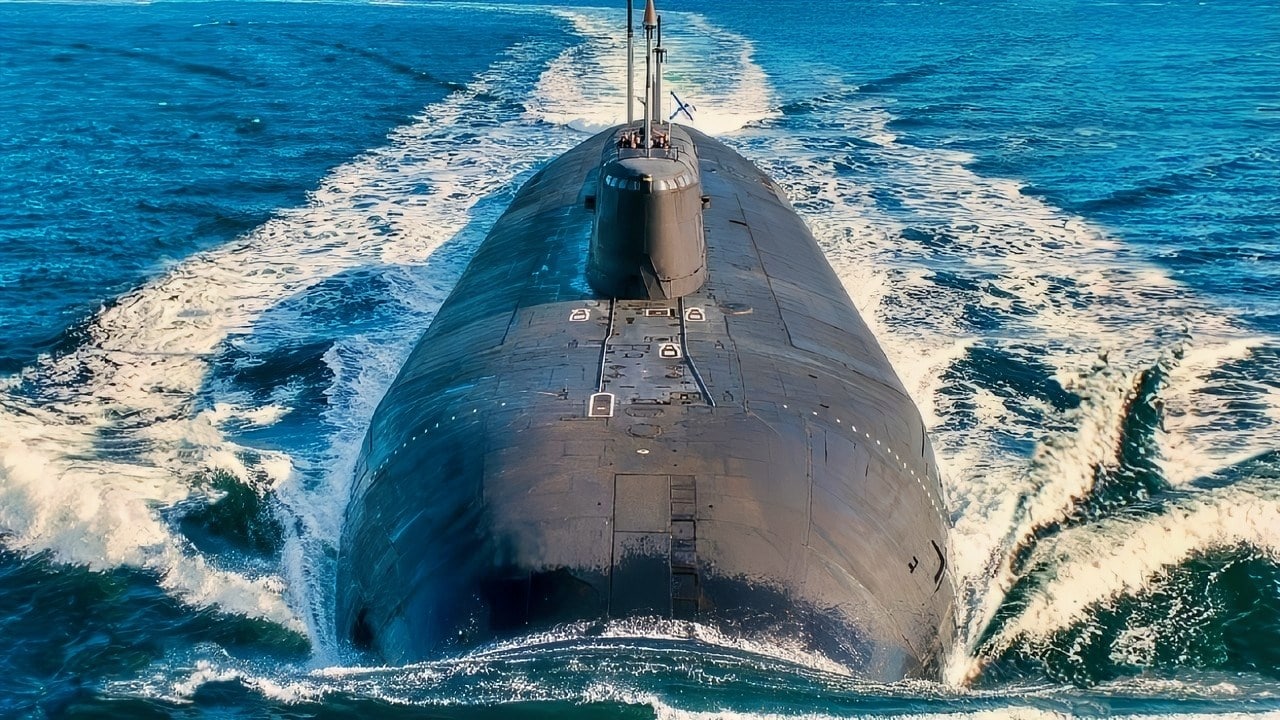
Russia’s Navy Had a Terrible War. Its Submarines Are the One Force That Still Scares NATO. Even They Are Cracking: Assess the Russian Navy in 2026, and you will find two navies. The surface fleet has been humiliated by a country without one: its Black Sea flagship sunk, its only carrier rusting, its Mediterranean anchor lost. Beneath the waves is a different story. The submarine force remains the most capable instrument Russia owns, the one arm of its military NATO planners genuinely fear, and this year it is fielding a hypersonic-armed attack boat and the first purpose-built carrier for a nuclear doomsday torpedo. But the cracks are showing there too: a submarine lost in drydock, another towed home on the surface, a shipyard that builds one boat a year, and a modernization plan that shrinks the fleet it saves. Here is where Russia’s undersea force actually stands.
The One Force That Still Works
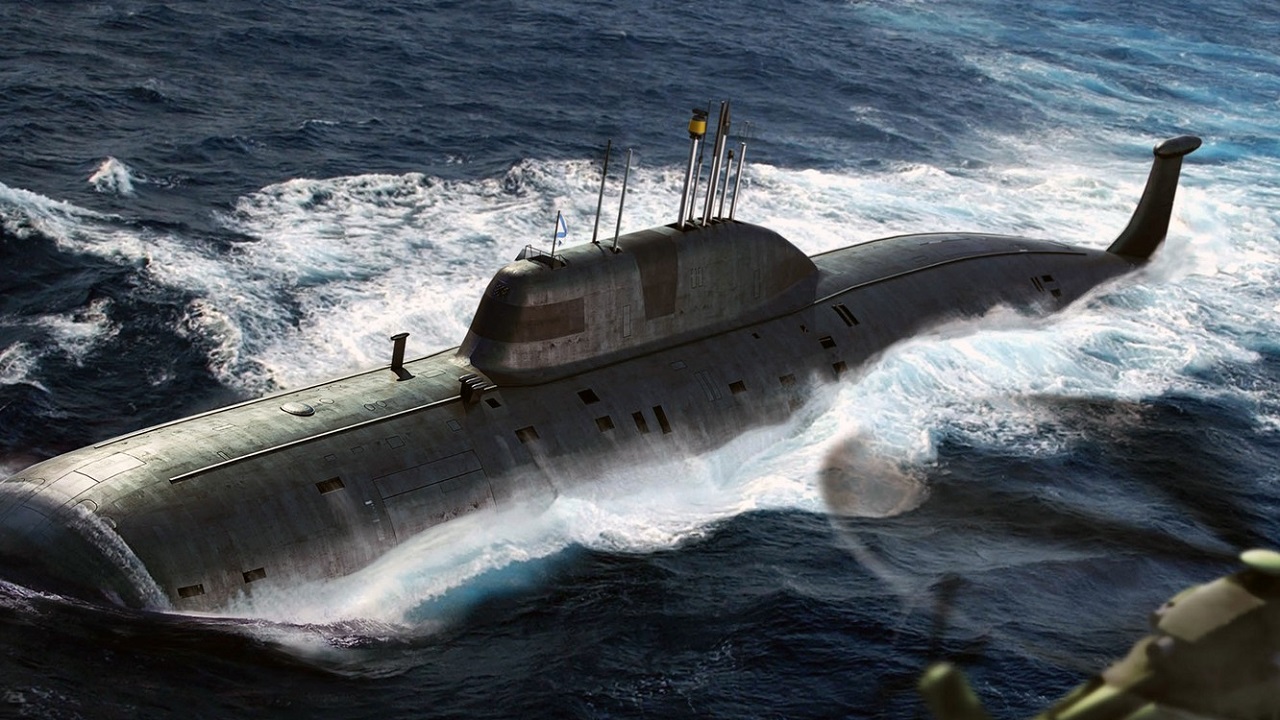
Akula-Class Submarine. Image Credit: Computer Generated Image, Screenshot.
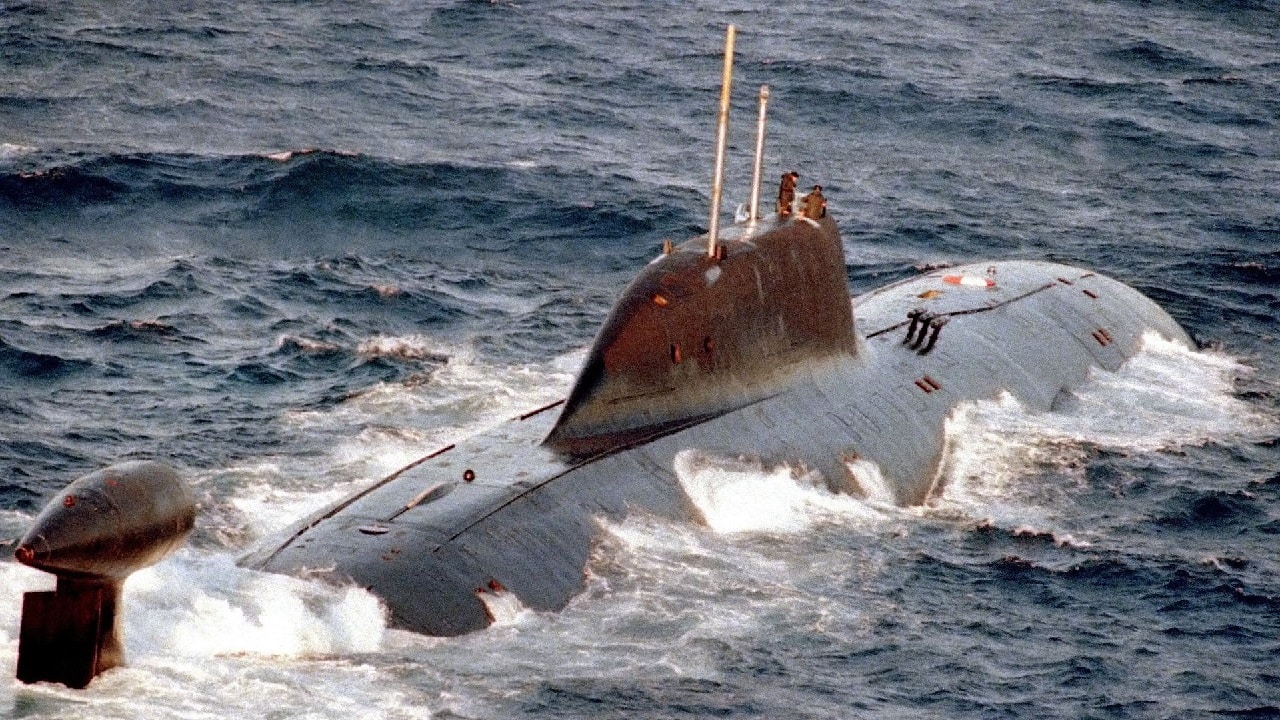
K-322 Cachalot, Akula class submarine underway. A port quarter aerial view of the Russian Northern Fleet AKULA class nuclear-powered attack submarine underway on the surface.
The context is the wreckage above. Since 2022, Russia’s surface navy has lost the cruiser Moskva to a state with no navy, watched its only aircraft carrier decay toward the scrapyard, and surrendered its Mediterranean foothold at Tartus, while what remains of the Black Sea Fleet hides in eastern ports. The submarine force is the exception, and Western navies treat it as one. American naval intelligence has long rated the Yasen-class boats among the quietest Russia has ever sent to sea. Russian submarines probe the North Atlantic and the approaches to undersea cables with a tempo not seen since the Cold War, and every serious NATO planning document treats the undersea arm as the part of Russian seapower that survived the war with its teeth intact. The honest 2026 assessment is that the teeth are real, and the jaw is aging.
The Deterrent Core Still Delivers
The strategic fleet is the healthiest leg. Eight Borei and Borei-A ballistic missile submarines are now in service after the eighth boat, Knyaz Pozharsky, joined the fleet in 2025, each carrying 16 Bulava missiles and built for quiet patrols under the Arctic ice that Moscow prizes for its bastions. More are under construction toward a planned force in the low teens. Behind them, the Soviet-era Delta IVs soldier on, with four to five of seven operational at any time by the Nuclear Threat Initiative’s count, holding the line until enough Boreis arrive. Whatever else has failed, the Kremlin protected the sea leg of its deterrent, and with Russia’s participation in New START suspended, nothing constrains how far it builds.
An Attack Fleet Betting Everything on One Class
The attack force is where ambition and arithmetic collide. In March, Navy Commander-in-Chief Aleksandr Moiseyev confirmed to the Krasnaya Zvezda newspaper, in remarks relayed by the state agency TASS, that Russia will retire every third-generation nuclear attack submarine, the Akulas, Sierras, and Oscar IIs, within a decade, replacing them all with a standardized fleet of 10 to 12 Yasen and Yasen-M boats. The logic is sound: the Soviet holdovers run on worn reactors and orphaned logistics chains, and the attempt to modernize the Oscar IIs stalled after a single boat, the Irkutsk, years late and alone. The Yasen-M is a genuinely formidable replacement, quiet, heavily armed with Kalibr and Oniks missiles, and now Zircon hypersonics: the newest boat, Perm, launched with Putin presiding in March 2025, is in trials and, per Russian officials, due in service by the end of this year as the first submarine built around the Zircon from the keel up.
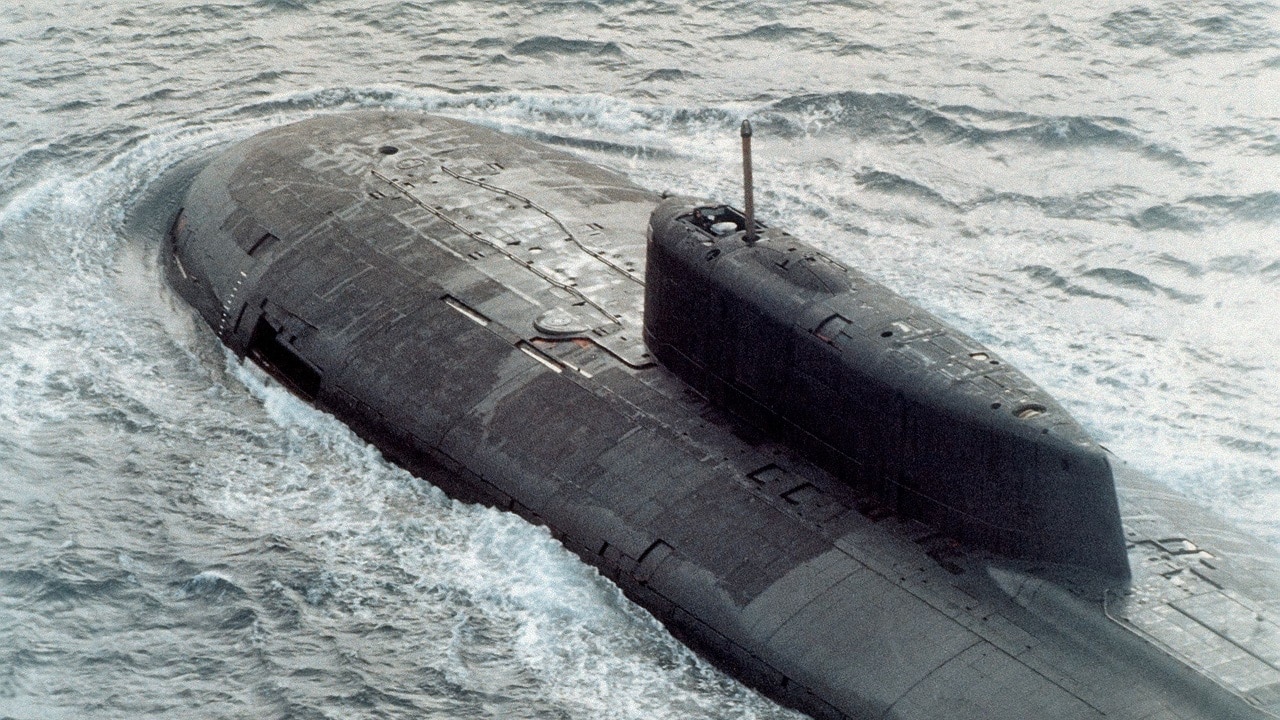
Oscar-class Submarine from Russia.
The arithmetic is the problem. Five Yasen-family boats are in service today, and Sevmash, Russia’s only nuclear submarine yard, delivers roughly one boat a year or fewer, with each hull taking eight years or more to build. Dozens of Soviet-era attack boats will age out faster than ten Yasens can arrive, which means the all-Yasen plan is also, unavoidably, a plan for a smaller Russian attack fleet, year after year, through the 2030s. Moscow is trading numbers for quality because it has no third option.
The Doomsday Annex
The strangest and newest part of the force answers to a different logic entirely. On November 1, 2025, Sevmash launched the Khabarovsk, the first purpose-built serial carrier for the Poseidon, the nuclear-powered, nuclear-armed intercontinental torpedo Putin unveiled among his “invincible” weapons in 2018, days after the Kremlin claimed a successful Poseidon test that included starting the weapon’s reactor at sea. Naval analysts piecing together satellite imagery assess the roughly 135-meter boat as a Borei stern grafted to a Belgorod-style bow, carrying six Poseidons in flooded hangars and built for nothing else. German naval professionals at Marineforum note that commissioning is planned for the end of 2026, with the boat earmarked for the Pacific Fleet. U.S. Naval Institute analysis counts plans for at least 30 Poseidons across four submarines, split between the Northern and Pacific Fleets, with two to three more carriers already ordered or building, and reads the whole enterprise as a deliberate second-strike hedge, a nuclear pillar constructed outside the traditional triad to outflank American missile defenses that cannot touch a deep-running torpedo. The honest caveats: every performance claim about the Poseidon is Russian and unverifiable, its military utility is contested even among Western analysts, and a weapon whose purpose is apocalyptic retaliation says more about the Kremlin’s fear of falling behind than its confidence.
The Fleet Within the Fleet
Alongside the combat force runs a shadow flotilla that may matter more day-to-day. Russia’s Main Directorate of Deep-Sea Research, the secretive organization known as GUGI, operates a family of nuclear-powered special-mission submarines and deep-diving craft built for the seabed: tapping and cutting cables, planting sensors, and servicing what Marineforum describes as the Harmony network of underwater listening posts. The converted Belgorod doubles as the directorate’s mothership, capable of carrying mini-submarines beneath its hull. This is the force behind the anxiety now running through European capitals every time a data cable or pipeline fails in the Baltic or North Atlantic, because seabed sabotage is deniable, cheap, and squarely within GUGI’s charter. It is also a force that has already paid the price of its ambitions: in July 2019, a fire aboard the deep-diving station Losharik killed 14 officers, including some of the directorate’s most experienced submariners, a loss of human capital that money cannot quickly replace. The special-mission fleet is Russia’s most asymmetric naval card, and like everything else undersea, it is irreplaceable in every sense.
The War Record Nobody in Moscow Brags About
Set the showpieces against the operational record, and the picture darkens. The workhorse Improved Kilos of the Black Sea Fleet have fired Kalibr missiles at Ukraine throughout the war, and paid for it: in September 2023, Ukrainian cruise missiles caught the Rostov-na-Donu in a Sevastopol dry dock, and British intelligence assessed the boat as a likely total loss, the first submarine killed by a navy-less state in modern memory, driving the surviving boats to disperse eastward to Novorossiysk. With Turkey’s wartime closure of the straits, no replacements can enter the Black Sea and no boats caught outside can return, which is how the Kilo Novorossiysk ended up limping home from the Mediterranean on the surface behind a tug in October 2025 after a breakdown, prompting NATO’s secretary general to jeer that the scene looked “more like a hunt for a mechanic than The Hunt for Red October.” Beneath the mockery sits a structural failure: the Lada class meant to replace the Kilos never worked as designed, leaving 1980s-vintage boats to carry the conventional load indefinitely.
The Honest Balance
Both columns of the ledger are true at once. The Russian submarine force in 2026 remains genuinely dangerous: its newest boats are quiet enough to strain NATO’s anti-submarine networks, its Kalibr and Zircon batteries hold European ports and headquarters at risk from bastions NATO cannot cheaply penetrate, its seabed-warfare arm sits astride the cables and pipelines a modern economy bleeds without, and its strategic boats keep the ultimate deterrent on patrol no matter what happens to the fleet above. The reach is not theoretical: Pacific Fleet boats have ranged as far as the approaches to Hawaii in recent years, as Nordic Defence Review notes, and the coming Poseidon carriers are slated for both oceans. And it is a force under real strain: one shipyard building roughly one boat a year, a retirement wave it cannot outbuild, an attack fleet that will be smaller in 2035 than it is today, a war economy that feeds the army first, and an operational record that now includes a submarine destroyed in a drydock and another towed home in public.
The 2026 verdict fits in a sentence: the submarine fleet is the most dangerous thing Russia owns, and it is quietly shrinking while it remains so. The things to watch are concrete. Whether Perm commissions its Zircons on schedule this year, whether Khabarovsk’s trials meet their end-of-2026 target, whether Sevmash can launch hulls faster than the Soviet legacy retires, and whether GUGI’s next special-mission hull appears at Severodvinsk. Those four clocks, not the parade-day claims, will tell you where Russian seapower actually stands.
About the Author: Harry J. Kazianis
Harry J. Kazianis (@Grecianformula) was the former Senior Director of National Security Affairs at the Center for the National Interest (CFTNI), a foreign policy think tank founded by Richard Nixon based in Washington, DC. Harry has over a decade of experience in think tanks and national security publishing. His ideas have been published in the NY Times, The Washington Post, The Wall Street Journal, CNN, and many other outlets. He has held positions at CSIS, the Heritage Foundation, the University of Nottingham, and several other institutions related to national security research and studies. He is the former Executive Editor of the National Interest and the Diplomat. He holds a Master’s degree focusing on international affairs from Harvard University.

