
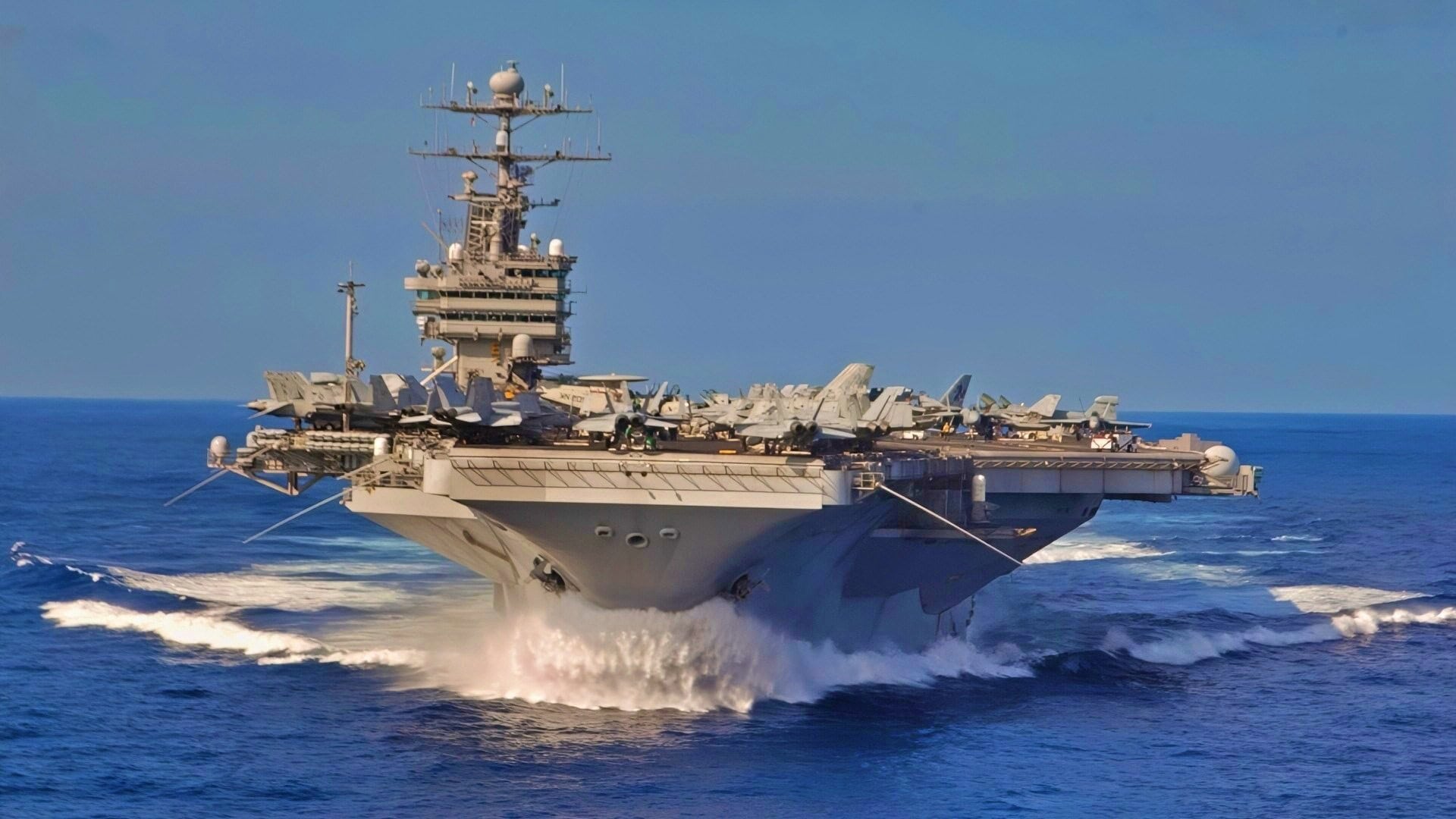
Summary and Key Points: China now floats more warships than any navy on Earth, and Russia and North Korea both rank higher on raw numbers than the United States. Line the world’s fleets up by the sheer count of hulls they put to sea and the order looks nothing like the usual hierarchy of naval power — a picture that says as much about which countries can still build ships at scale as it does about who would win a war at sea. Here is how the five largest navies actually stack up, and why the most powerful fleet in the world does not come first.
The 5 Biggest Navies on Earth by Raw Ship Count: An Unconventional Look at Who Has the Most Hulls in the Water
Rank the world’s navies by the sheer number of ships they put to sea, counting every hull as one, whether it is a 100,000-ton supercarrier or a 200-ton patrol boat, and the order that results looks almost nothing like the usual hierarchy of naval power.
This is an unconventional way to measure a navy, and an admittedly crude one.
It rewards quantity over quality, treats a nuclear-powered cruiser and a coastal gunboat as the same single unit, and produces a list in which the United States, the most powerful naval force on the planet by a wide margin, does not come first.
I honestly set out to be different when I put this piece together. The point of doing it this way is not to crown a winner but to look at raw numbers on their own terms, because those numbers say something real about shipbuilding capacity, industrial output, and where different countries have chosen to put their resources.
Industrial Questions: How This Ranking Counts Ships, and Why It Is Unconventional
Before the list, the method behind it, because in naval rankings, the method is the whole argument.
There is no single agreed-upon figure for how many ships any navy has, and the totals swing dramatically depending on what gets counted.
The most authoritative narrow measure is the “battle force” standard, the count of ships that actually contribute to a navy’s fighting strength. By that yardstick, the Congressional Research Service describes China’s fleet as the largest in the world, with a battle force of more than 370 ships, including over 140 major surface combatants, a figure that pointedly excludes roughly 60 missile-armed Houbei-class patrol craft.
The Center for Strategic and International Studies, using a stricter definition that counts only active, manned, missile- or torpedo-armed ships over 1,000 tons, arrives at a much lower 234 Chinese warships against 219 American ones.
Then there are the broad hull-count tallies kept by open-source trackers such as Global Firepower and the World Directory of Modern Military Warships, which count essentially every vessel that flies a naval ensign, from auxiliaries and minesweepers to coastal patrol boats. Those counts put China above 730 ships, Russia in the 700s, and the United States in the mid-400s.
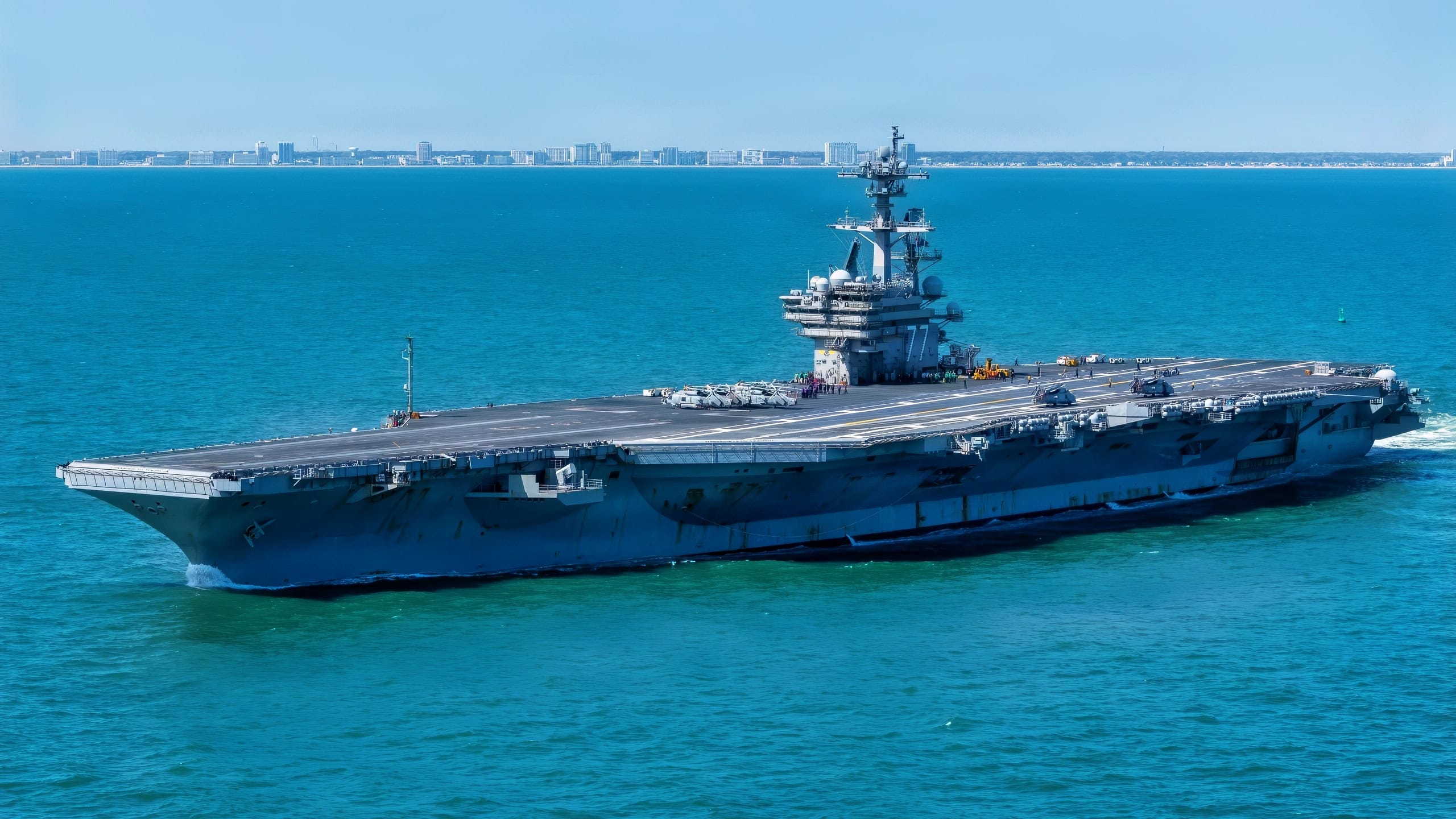
ATLANTIC OCEAN (March 31, 2026) Nimitz-class aircraft carrier USS George H.W. Bush (CVN 77) departs Naval Station Norfolk for a regularly scheduled deployment. The George H.W. Bush Carrier Strike Group departed Naval Station Norfolk on March 31, 2026. The strike group, comprised of nearly 5,000 Sailors, provides combatant commanders and America’s civilian leaders increased capacity to underpin American security and economic prosperity, deter adversaries, and project power on a global scale through sustained operations at sea. (U.S. Navy photo by Mass Communication Specialist 2nd Class Jayden Brown)
This article uses the broadest reading, total hull count, because it is the most literal interpretation of “biggest” and because it produces the most counterintuitive and revealing picture. Again, I set out to look at this question through a different lens.
The trade-off is that it is the least meaningful measure of actual capability. A navy can rank near the top of this list while being unable to operate more than a few dozen miles from its own coast, which is exactly what happens at number three.
Every figure below should be read as an estimate that varies by source and by date, and the ordering of the middle of this list genuinely shifts depending on which counting standard is applied. What does not shift is that China sits at the top and the United States, despite owning the most powerful fleet afloat, ranks lower on pure numbers than its strength would suggest.
Number 5: South Korea’s Republic of Korea Navy
The fifth slot marks the boundary between the enormous coastal fleets that dominate a raw hull count and the smaller, heavier blue-water navies, and South Korea sits right on that line with roughly 150 to 230 vessels, depending on the source, around 150 to 155 of them commissioned warships.
The Republic of Korea Navy is one of the most modern fleets in Asia, and its hull count is built from capable ships rather than patrol swarms, which is why it edges out larger-numbered but far less capable contenders for a place on a serious version of this list.
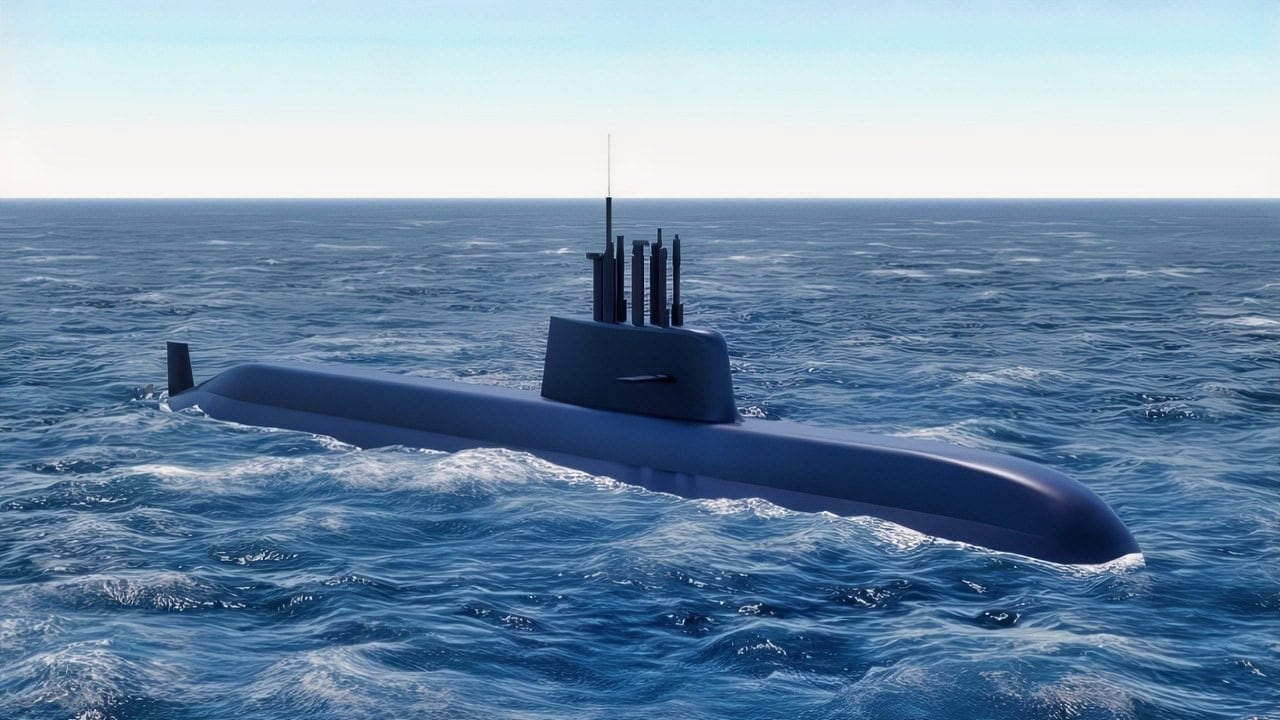
KSS-III. Image Credit: Creative Commons.
At the heart of the fleet are the Sejong the Great-class destroyers, among the most heavily armed Aegis-equipped warships in existence, carrying large vertical-launch missile batteries for air defense, anti-surface, and anti-submarine work. The navy operates around 22 submarines, including the domestically produced Dosan Ahn Changho-class boats with air-independent propulsion, and it has pushed its undersea force into strategic territory, fielding submarines capable of launching ballistic missiles, an unusual capability for a conventional fleet and a direct response to the threat from the north.
South Korea also operates Dokdo-class amphibious assault ships that can deploy helicopters and troops, and its shipbuilding industry, through the indigenous KDX destroyer and KSS submarine programs, produces world-class platforms domestically, turning the country into a significant arms exporter. The fleet has no aircraft carrier, though plans for one have been studied on and off. With roughly 70,000 personnel, including a Marine Corps, the ROK Navy combines regional deterrence against North Korea with a steadily expanding blue-water reach, and it represents the kind of fleet where a modest hull count understates real strength.
Number 4: The United States Navy
Here is where the hull-count method shows its limits most starkly. Please, hold the hate mail. Thanks.
The United States Navy, the most powerful naval force in the world by any measure of capability, ranks only fourth on raw numbers, with a battle force of around 290 to 296 ships.
The Navy’s fiscal 2026 planning put its deployable battle force near 287 ships, and even the broadest counts that include auxiliaries and support vessels only push the American total into the mid-400s, well behind China and within range of fleets that would lose badly to it in any actual contest.
The reason for the gap is that the United States builds fewer ships but vastly larger and more capable ones. By aggregate tonnage, the measure of how much warship a navy actually floats, the U.S. Navy is first in the world by a wide margin, at roughly seven million tons, more than double China’s total.
It operates 11 nuclear-powered aircraft carriers, the largest carrier fleet on earth, each one a mobile air base displacing around 100,000 tons and carrying an air wing larger than many countries’ entire air forces. Its surface combatant force is anchored by more than 70 Arleigh Burke-class destroyers, and its submarine fleet of roughly 66 boats is entirely nuclear-powered and globally deployable, a combination no other navy comes close to matching.
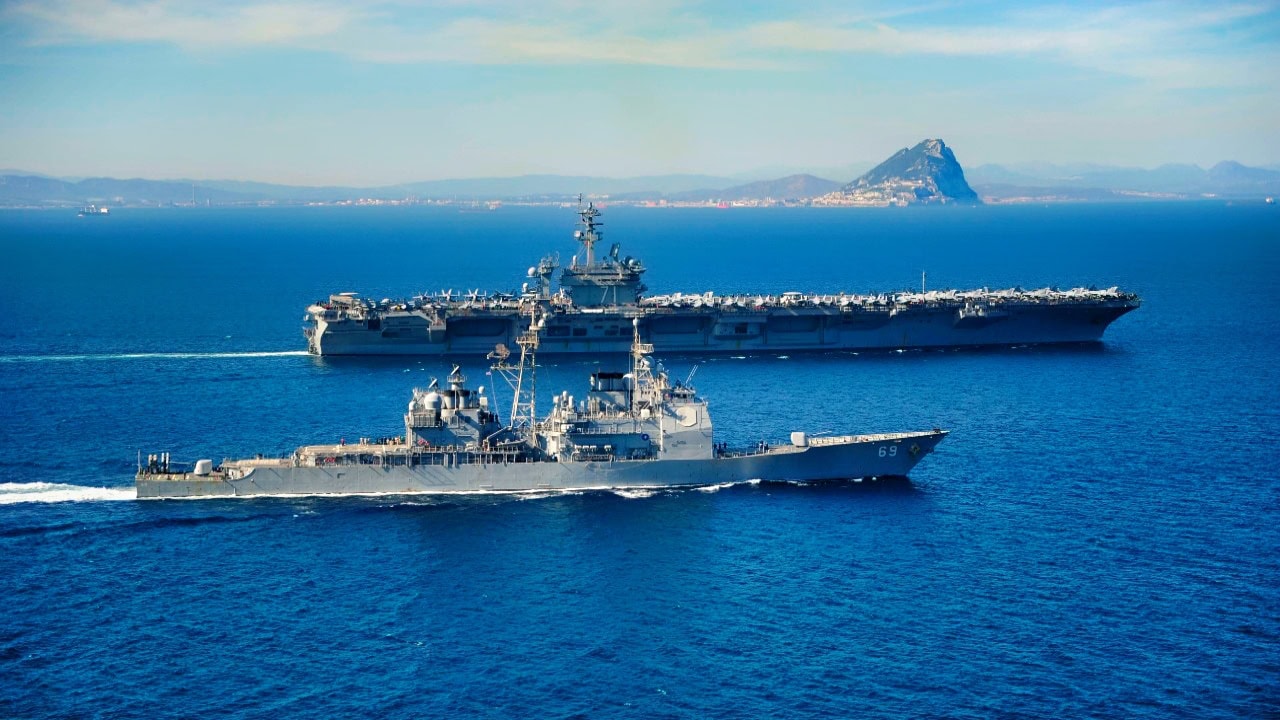
Ticonderoga-Class Cruiser U.S. Navy. Image Credit: Creative Commons.
The Navy also maintains a worldwide network of bases that lets it sustain operations anywhere, something only it can do. The catch is industrial. American shipyards are struggling to build and maintain ships fast enough, and the Navy has cycled through force-level goals, a 355-ship target, then a 381-ship target, and now a forthcoming benchmark it calls the Golden Fleet goal, whose details it had not released as of early 2026.
The fourth-place finish here is purely an artifact of counting hulls instead of measuring power, and no reader should mistake it for anything else.
Again. Hold. The. Hate. Mail. Thanks.
Number 3: North Korea’s Korean People’s Army Naval Force
North Korea is the entry point that proves why a pure hull count is misleading.
By total vessels, the Korean People’s Army Naval Force ranks among the largest navies on the planet, with open-source trackers crediting it with anywhere from roughly 385 to 780 hulls, a number that places it ahead of nearly every European navy and, by the broadest counts, in the global top four. Almost none of that translates into the ability to project power, and the fleet’s composition explains why.
The North Korean navy is built overwhelmingly from small craft. Analysts at the Korea Institute for Maritime Strategy count a surface fleet of over 370 coastal patrol ships and only two to four frigates as its sole large combatants, alongside more than 120 corvettes and small craft. Its submarine arm is one of the largest in the world by number, with the Nuclear Threat Initiative estimating roughly 64 to 86 boats, but these are aging Romeo-class diesel boats and Sang-O and Yono coastal and midget submarines, most of them old, noisy, and easy to track.
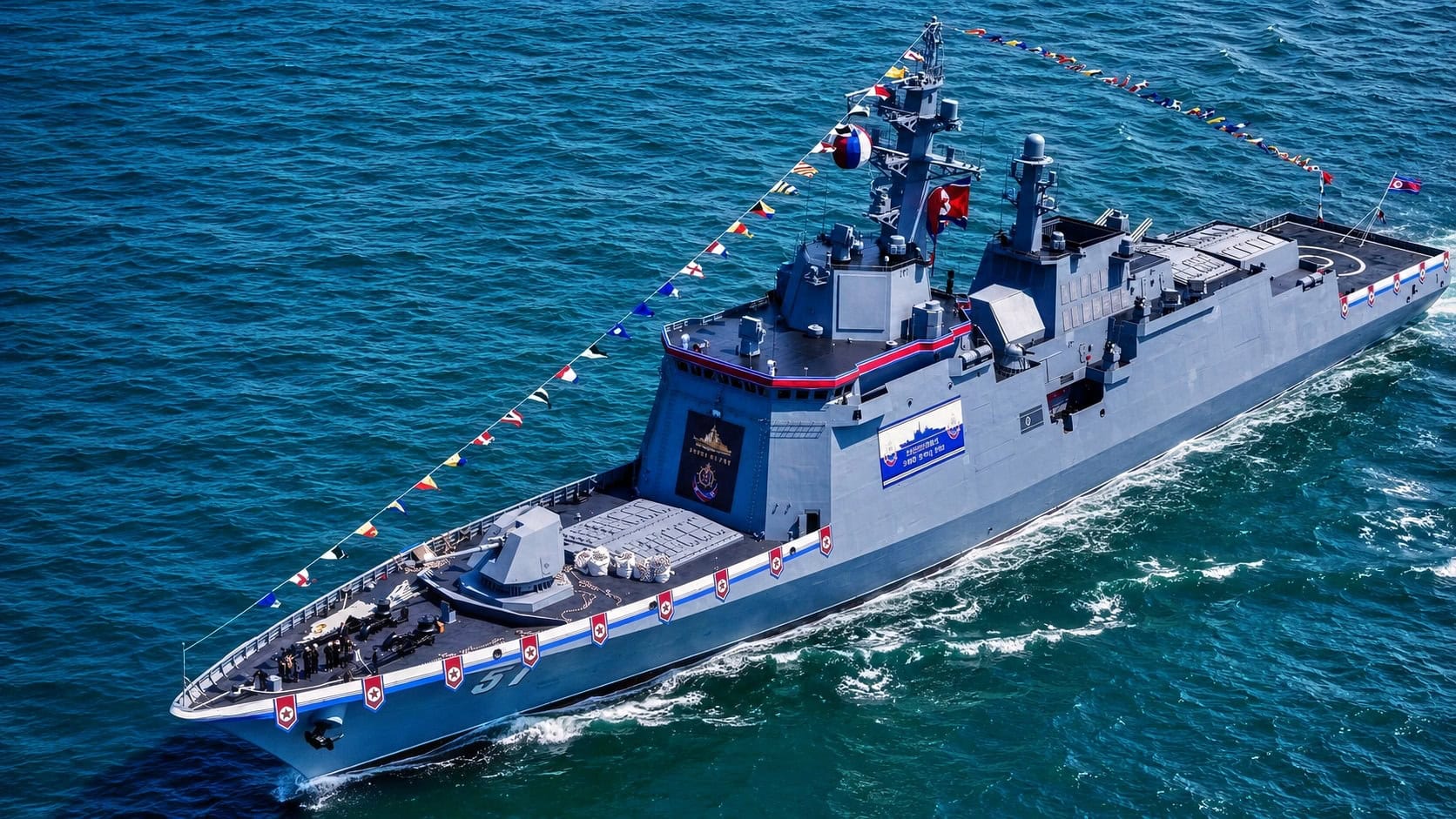
Choe Hyon class from North Korea. Image Credit: Banana Nano.
The U.S. Defense Intelligence Agency assesses the force as a primarily coastal navy whose vessels are mostly small and can operate only about 50 nautical miles offshore, well-suited to defending territorial waters and inserting special operations forces rather than fighting on the open ocean. The most capable surface units are guided-missile patrol boats armed with anti-ship missiles, and fuel and spare-parts shortages raise real questions about readiness.
Counting each of these as one ship, the same way one counts an American destroyer, is what lifts North Korea so high on a raw tally. Pyongyang has recently begun reaching for something larger, launching the 5,000-ton Choe Hyon-class destroyer, its first major surface combatant, reportedly with Russian help, but a single new warship does not change the character of a fleet that remains overwhelmingly coastal.
It is a genuinely large navy by hull count and a negligible one by blue-water capability, and it is the single clearest illustration of why this method, taken alone, tells you so little about who would actually win a war at sea.
Number 2: The Russian Navy
Russia ranks second by a broad hull count, with totals ranging from roughly 360 active warships by stricter measures to around 470, and into the 700s by the most inclusive aggregator counts. The spread itself reflects a fleet in an unusual condition, large on paper, heavily Soviet in origin, and increasingly difficult to assess as the war in Ukraine grinds on. Russia’s own counting traditions further complicate matters, since vessels can remain formally in commission long after they have ceased to be operational.
The most credible and modern part of the Russian Navy is its submarine force, which remains genuinely world-class. Russia fields around eight Borei- and Borei-A-class ballistic-missile submarines that form the sea-based leg of its nuclear deterrent, along with roughly five Yasen-class cruise-missile and attack submarines armed with Kalibr cruise missiles and Zircon hypersonic weapons, with more of both classes under construction. Its surface fleet is a different story.
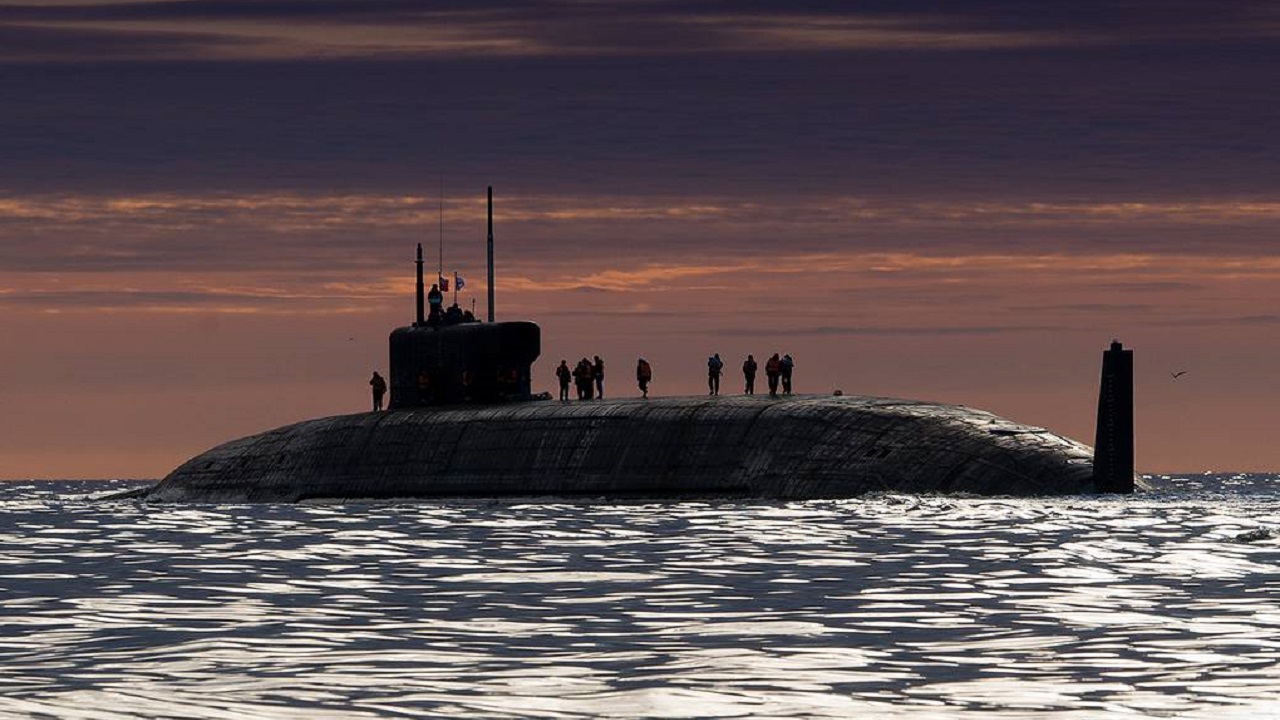
MAY 30, 2021: The Project 955A (Borei A) nuclear-powered ballistic missile submarine Knyaz Oleg sets off on its first sea trial in the White Sea. Oleg Kuleshov/TASS/Russian State Media.
The aging force is in uneven repair, the sole aircraft carrier Admiral Kuznetsov has not put to sea since 2017 and is widely judged unlikely ever to return to service after a fire and years of stalled refits, and the Black Sea Fleet has suffered severe losses to Ukrainian drone and missile attacks, losing at least four major warships, several amphibious ships, and a submarine, and being effectively driven from open waters into eastern Black Sea ports that are themselves no longer fully secure.
Russia also lost regular use of its Mediterranean base at Tartus, Syria, after the fall of the Assad regime in late 2024, a serious blow to its global reach. What keeps Russia high on this list is a combination of a large legacy fleet and a potent undersea arm, but the gap between its hull count and its operational readiness is among the widest of any navy here.
Number 1: China’s People’s Liberation Army Navy (PLAN)
China’s People’s Liberation Army Navy is the largest in the world by hull count, and it holds that position under every counting standard, from the narrowest battle-force measure to the broadest total tally.
The Pentagon’s most recent assessment and the Congressional Research Service both identify it as the world’s largest navy, with a battle force of more than 370 ships and submarines, while the most comprehensive open-source counts put its total fleet at more than 730 hulls.
Sometime between 2015 and 2020, by the Congressional Research Service’s account, China surpassed the U.S. Navy in the number of battle-force ships, and it has been pulling ahead on numbers ever since.
What makes the Chinese fleet formidable is not just its size but its trajectory. The U.S. Department of Defense’s annual report on China’s military projects the PLA Navy growing toward 395 ships in the near term and 435 by 2030, a continuation of the steady expansion the Pentagon has tracked for years, powered by a shipbuilding industry it assesses as nearly self-sufficient and capable of producing any class of warship in the numbers China wants. The fleet now operates three aircraft carriers, the refitted ex-Soviet Liaoning, the indigenous Shandong, and the Fujian, which is fitted with advanced electromagnetic catapults and began operational deployments in early 2026 after completing its sea trials.
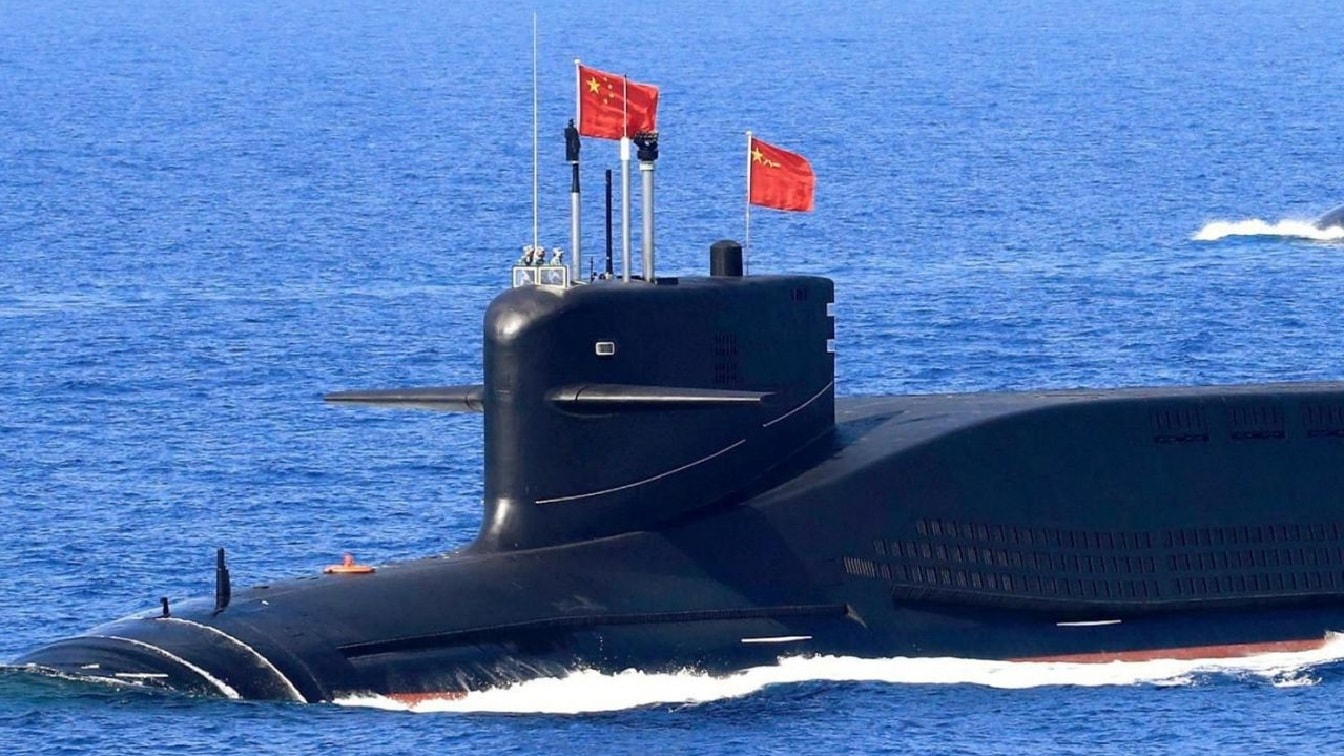
Chinese nuclear missile submarines. Image Credit: Creative Commons.
According to the Pentagon’s reporting, analyzed in detail by Chinese naval specialists, Beijing aims for as many as nine carriers by 2035, with its next vessel expected to be nuclear-powered. The PLAN’s surface force is anchored by more than 140 major combatants, including large Type 055 cruisers, and its submarine arm, per the Congressional Research Service, includes six Jin-class ballistic-missile submarines, six nuclear attack submarines, and around 48 diesel-electric attack boats, a force projected to reach 65 submarines in the mid-2020s and 80 by 2035.
For all of that, China still trails the United States where it counts most. Its roughly three million tons of aggregate fleet tonnage is less than half the American figure, its carriers and their air wings are less capable and less battle-tested than their U.S. counterparts, and its ability to sustain operations far from home, what navies call blue-water persistence, is still maturing, limited in part by a basing network that consists of just a couple of overseas outposts. China is unambiguously the biggest navy in the world by the number of ships, and the fastest-growing among the major fleets, but the distance between most ships and the most powerful is the same distance that separates this entire ranking from a ranking by strength.
What Raw Hull Counts Do and Do Not Show
Counting ships one for one is a poor way to judge who would prevail in a war at sea, which is why no serious navy planner relies on it alone. A single American carrier strike group carries more combat power than several of the fleets that outrank or nearly match the U.S. Navy on this list, and tonnage, missile-cell capacity, sensor quality, crew training, and logistics all matter more than the number of hulls.
Several capable navies sit just outside the top five on raw numbers and would climb sharply on a capability ranking, among them Japan, with its Aegis destroyers and two Izumo-class ships now converting to operate F-35B fighters, India, with two aircraft carriers and a fast-growing fleet, and the carrier-operating navies of the United Kingdom and France.
A ranking by overall strength reorders the list entirely, but what a raw count does reveal is industrial reality. The same shipbuilding capacity that gives China the largest fleet by hull count is also what lets it keep launching warships faster than any Western yard, and in a long war, the ability to build and replace ships can matter as much as the quality of any single one. That is the story the numbers tell, and it is the reason a crude measure is still worth a careful look.
About the Author: Harry J. Kazianis
Harry J. Kazianis (@Grecianformula) was the former Senior Director of National Security Affairs at the Center for the National Interest (CFTNI), a foreign policy think tank founded by Richard Nixon based in Washington, DC. Harry has over a decade of experience in think tanks and national security publishing. His ideas have been published in the NY Times, The Washington Post, The Wall Street Journal, CNN, and many other outlets worldwide. He has held positions at CSIS, the Heritage Foundation, the University of Nottingham, and several other institutions related to national security research and studies. He is the former Executive Editor of the National Interest and the Diplomat. He holds a Master’s degree focusing on international affairs from Harvard University.

