
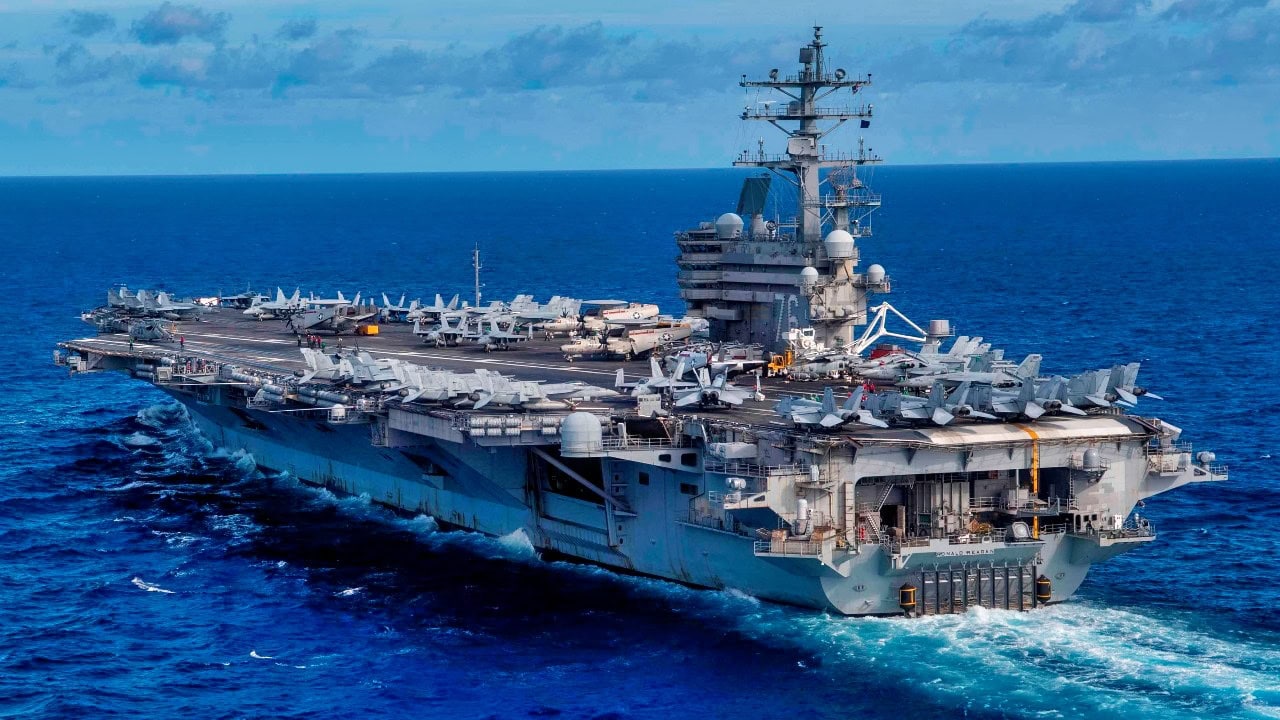
Synopsis: The World Directory of Modern Warships and Submarines has released its ranking of the globe’s top five naval forces, utilizing a “True Value Rating” that prioritizes combat power and modernization over sheer ship counts.
-While the U.S. Navy retains the number one spot due to its unmatched tonnage and eleven aircraft carriers, China’s rapidly expanding fleet—now the largest by number—secures a firm second place.
-The ranking also highlights significant shifts in global maritime power, with Russia holding third place despite recent struggles, and Asian powers Indonesia and South Korea surging into the top five, displacing traditional European fleets.
US vs. China: Who Has the Most Powerful Navy? The Top 5 Global Fleets Ranked by ‘True Value’
In compiling a list of the Top Five Naval Forces in the world, the parameters include not only the number of ships in each fleet but also the tonnage and combat power that are imperative to the ranking.
The World Directory of Modern Warships and Submarines (WDMMW) published a list of the Top 40 Navies worldwide. And in compiling their list, they use a formula that takes into account each navy’s “True Value Rating,” which is based on quantity, modernization, logistical support, and attack and defense capabilities.
The US Navy retained its top ranking, based on its mix of surface and submarine fleets, and the sheer number of top-line aircraft carriers. Not surprisingly, China’s PLAN was nipping at its heels due to the incredible modernization and increased shipbuilding capacity, now second to none worldwide.
But the rest of the list may surprise some.
#5: The Republic of (South) Korea Navy
The ROKN is today the third-largest Asian fleet, after China and Japan. The South Korean Navy nudges out Japan for the #5 slot.
A heavyweight of the Asia-Pacific region with approximately 155 commissioned vessels, the fleet combines regional deterrence with expanding blue-water reach. Its ongoing FFX Batch IV frigate program is one of many advancements in both anti-submarine and surface warfare domains.
The South Korean Navy is one of the most modern naval forces in Asia. It has approximately 70,000 personnel, including a Marine Corps (amphibious forces), and a diverse fleet of 155 units, with 22 conventional submarines.
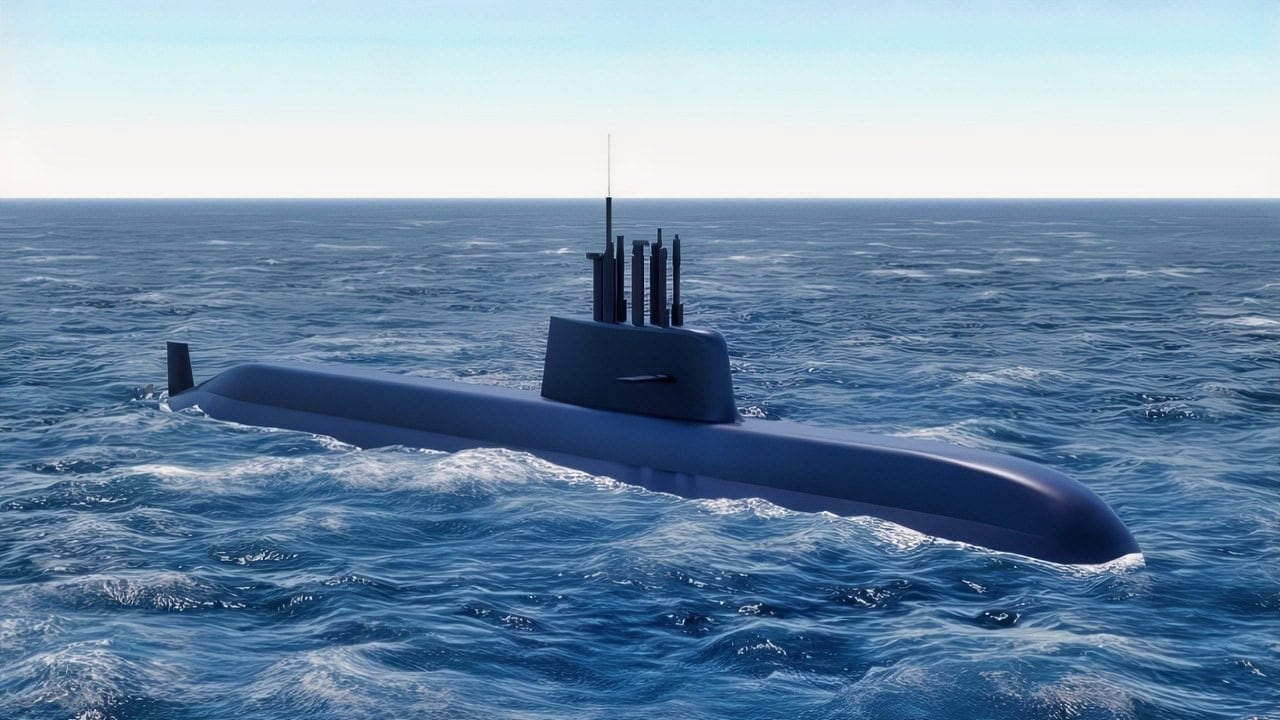
KSS-III. Image Credit: Creative Commons.
The CVX (formerly known as LPX-II) is a class of aircraft carriers proposed for the South Korean Navy. The CVX-3 model proposed a carrier with a minimum displacement of 40,000 tons, enabling the inclusion of EMALS and AAG systems.
However, the carrier is expected to have a displacement of up to 70,000 tons and a length of 270 meters once she is fully equipped. The new CVX-3 model features a dual-island bridge and a docking well capable of deploying USVs and UUVs.
South Korea’s navy is a powerful, modern, and rapidly expanding force, ranking among the world’s most capable, leveraging advanced shipbuilding and technology to possess Aegis destroyers, advanced submarines, and amphibious capabilities, focusing on countering North Korean threats and projecting power in the Indo-Pacific, making it a significant maritime power.
If the US and China ever engage in hostilities, South Korea’s Navy will no doubt prove a capable ally against Chinese aggression.
#4: The Indonesian Navy
The Indonesian Navy, also known as TNI-AL, is recognized for its large fleet (around 245 units), strong regional position (second in Asia), and ongoing modernization efforts. However, it is still developing capabilities for actual “blue-water” operations.
They boast a diverse inventory, including frigates, submarines, patrol craft, and amphibious ships, aiming to secure vital sea lanes in the vast archipelago.
Key Assets include four submarines, nine frigates, 12 corvettes, 205 patrol crafts, and 23 tank landing ships, with expansion plans.
Areas of focus include modernization and the acquisition of new vessels, such as Italian-built PPA frigates, to enhance capabilities for extended, blue-water operations.
The Navy’s mission is to protect crucial maritime routes, given Indonesia’s status as the world’s largest archipelagic state. Growing local shipyard capacity contributes to fleet balance and self-sufficiency.
The Indonesian Navy is rapidly evolving from a coastal defense force into a more capable regional maritime power, strategically vital for its vast naval territory and surrounding sea lanes.
Under its “Minimum Essential Force” modernization plan, it is simultaneously refurbishing older frigates and locally building Arrowhead-140–derived frigates and Scorpène-class submarines. This progress has significantly enhanced Indonesia’s power-projection capabilities, though budgetary and industrial constraints constrain it.
While not a global naval power, given the size and composition of its Navy, Indonesia remains one of the best in the world.
#3: The Russian Navy
The Russian Navy is a complex force: it ranks globally as a significant power (after the U.S. and China) due to its large submarine fleet, including crucial nuclear deterrent vessels, and advanced anti-ship missiles.
However, its surface fleet suffers from aging ships, poor maintenance, and tactical defeats, as shown by disasters in the Black Sea against Ukraine, limiting its ability for sustained global power projection compared to the U.S.
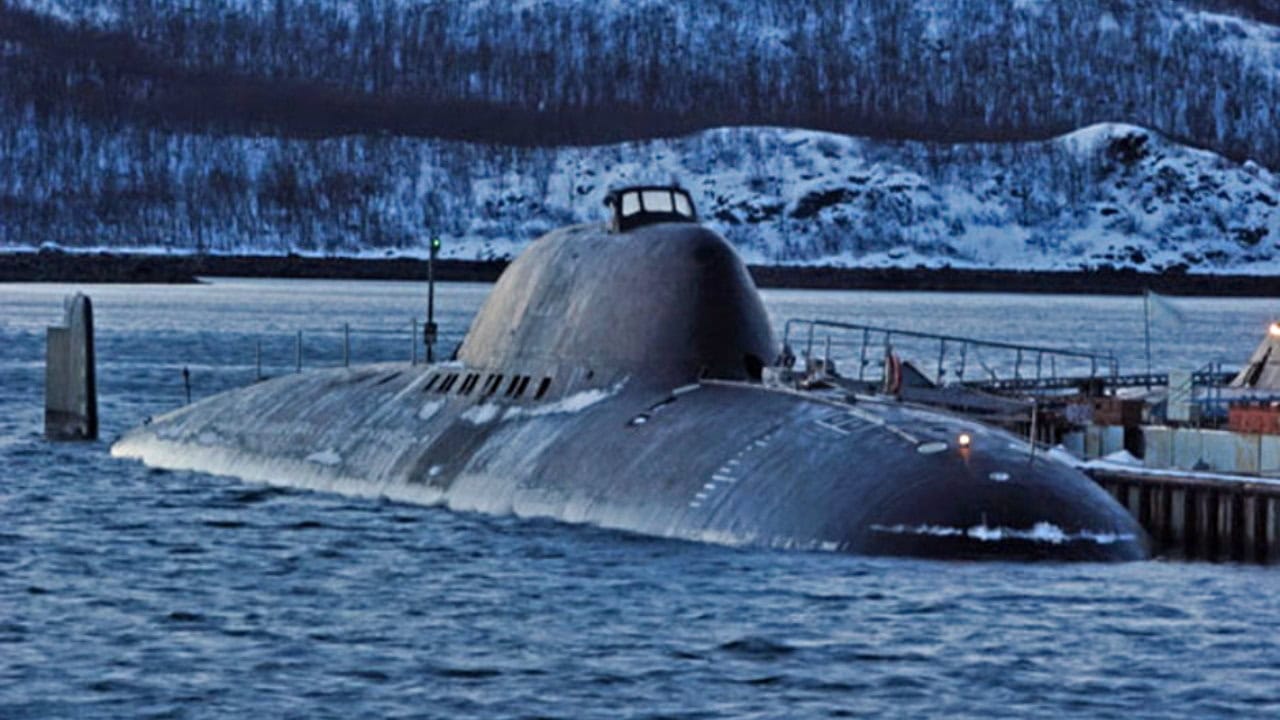
Alfa-Class Russian Navy. Image Credit: Creative Commons.
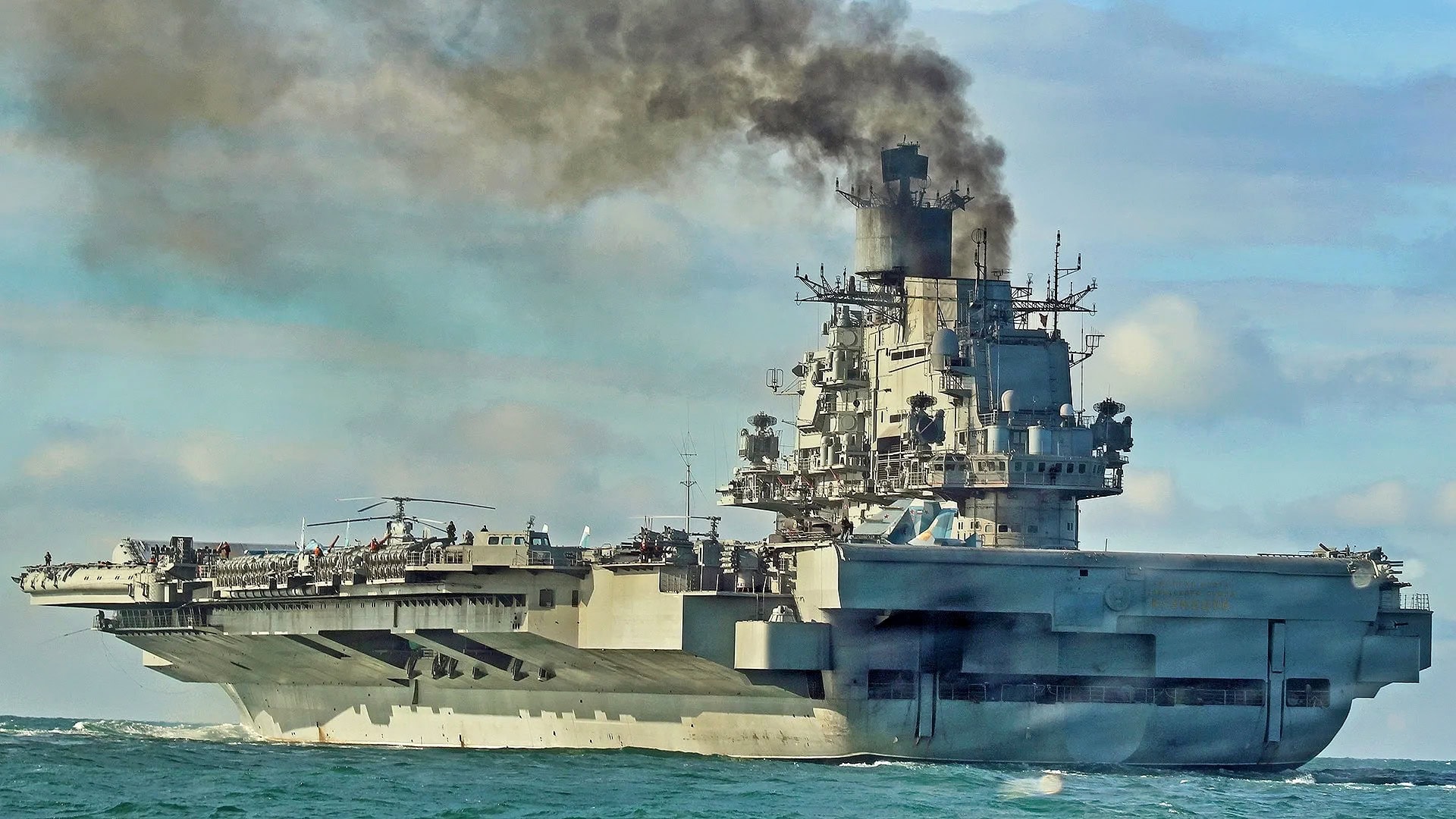
Aircraft Carrier Admiral Kuznetsov Russian Navy. Image Credit: Creative Commons.
Russia possesses a significant fleet of ballistic missile submarines (SSBNs) and modern nuclear attack submarines (SSNs), forming the bedrock of its sea-based nuclear deterrent.
Its naval vessels carry potent long-range hypersonic (Zircon) and cruise (Kalibr) missiles, capable of striking land targets from afar.
While the Russian Navy remains a significant naval power, particularly with its submarine force and advanced missiles, it’s a far cry from its Soviet-era peak. It faces severe challenges in its surface fleet, limiting its ability to challenge the U.S. or NATO in large-scale, open-ocean conflicts.
The Soviet Navy’s international role was severely abbreviated by the collapse of the Soviet Union and the end of Cold War hostilities. Its power projection capabilities took a hit with the loss of its Syrian port.
#2: China’s People’s Liberation Army Navy
China’s PLAN is #2 with a bullet. It won’t be long before China’s Navy is the most powerful naval force in the world, thanks to its modernization and the sheer number of warships it is producing. It is now the largest navy by ship count and continues to grow.
The Department of Defense’s 2024 China Military Power Report assessed the PLAN’s battle force at over 370 ships and submarines and highlighted its maturing power-projection capabilities.
The PLAN has the most ships globally, including destroyers, frigates, corvettes, submarines, and landing craft, and its rapid expansion continues. China is the world’s largest naval shipbuilder, rapidly expanding its fleet and capabilities.
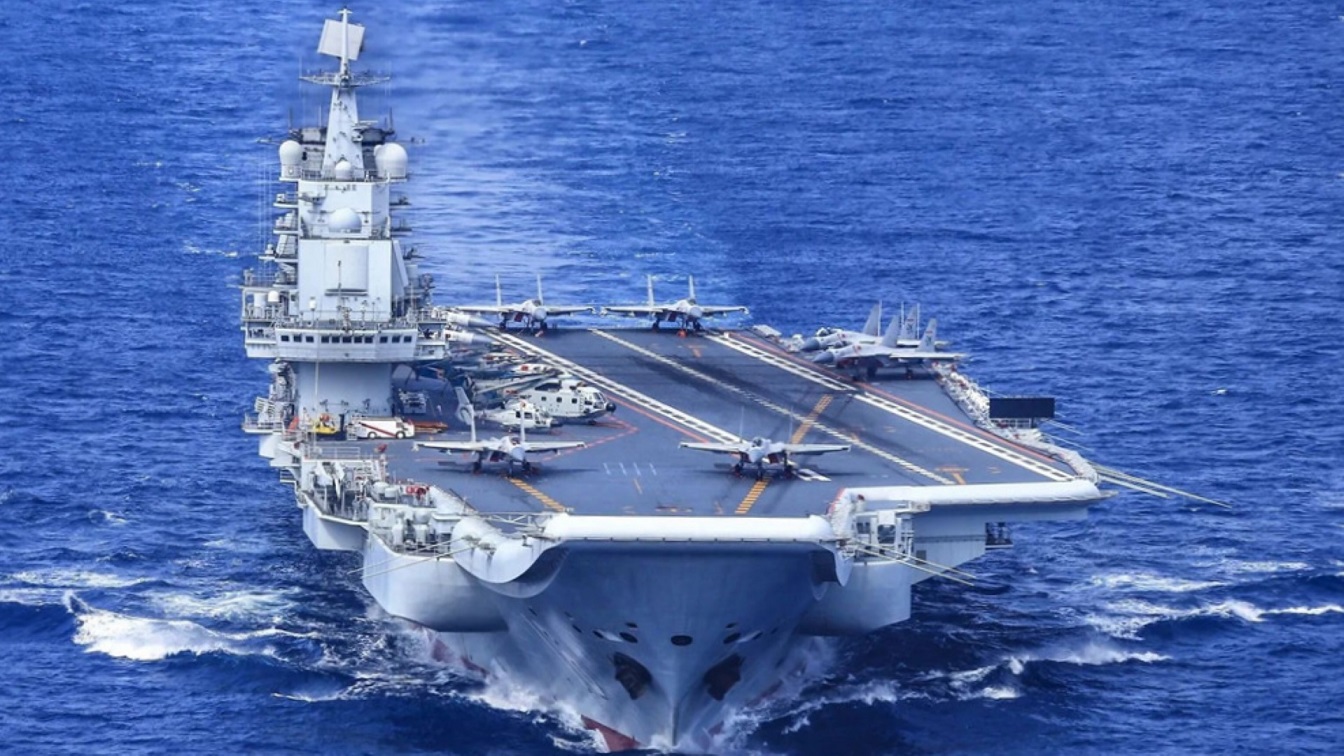
Image Credit: Creative Commons.
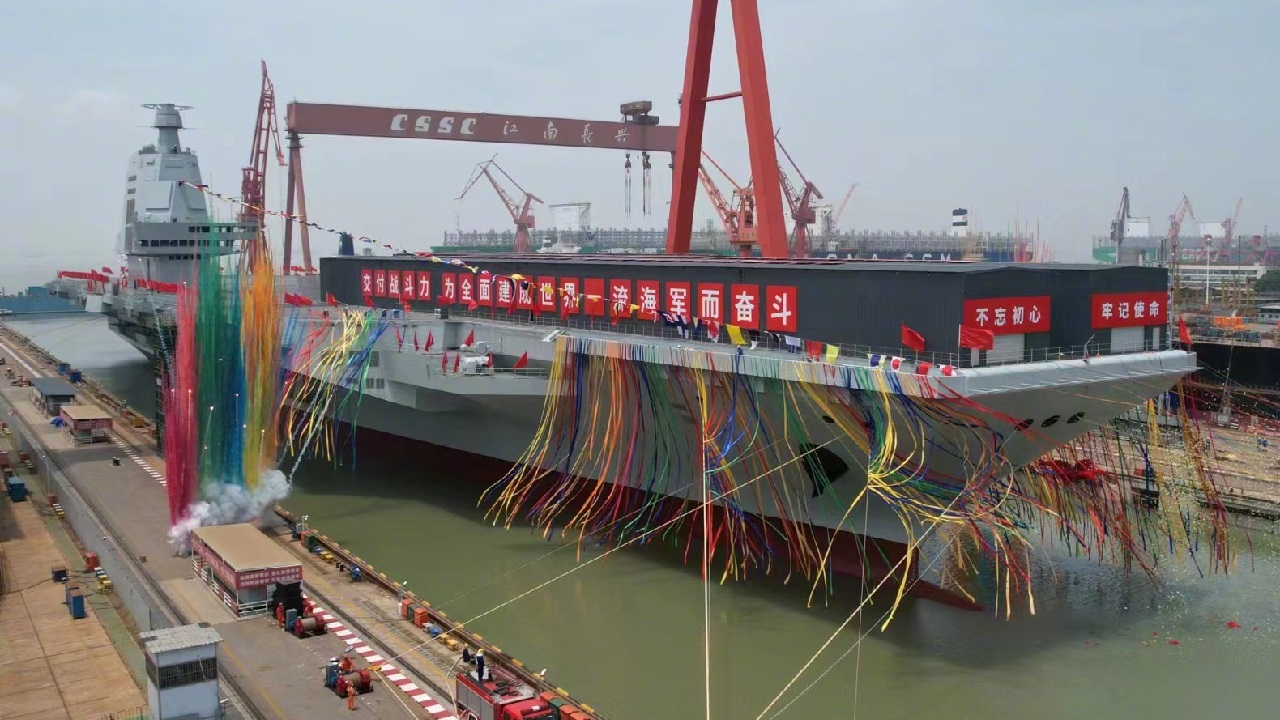
Fujian, China’s New Aircraft Carrier. Image Credit: Chinese Internet.
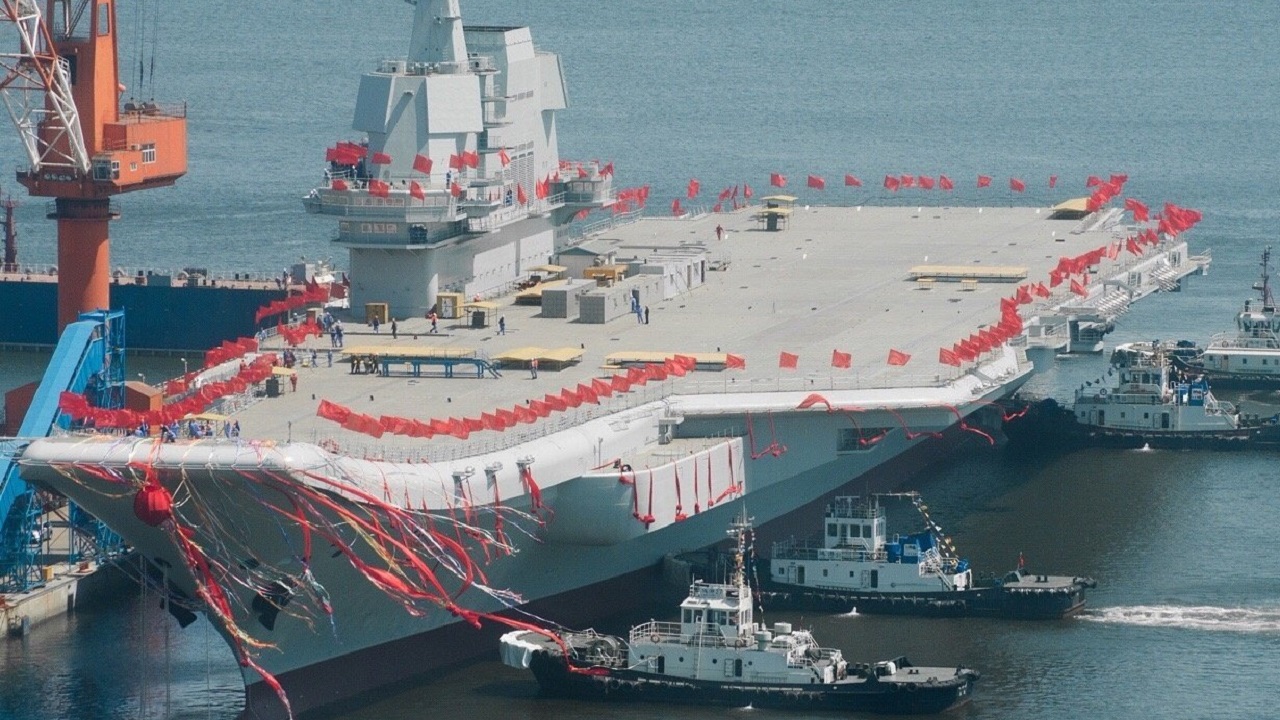
Fujian, China’s new aircraft carrier. Image Credit: Chinese Internet.
The PLAN is increasingly modernizing, with advanced vessels, including large destroyers (such as the Type 055) and newer aircraft carriers, and is closing technology gaps.
The PLAN’s commissioning of the Type 003 Fujian in November 2025, China’s first CATOBAR carrier with electromagnetic catapults that enable heavier aircraft and airborne early warning platforms.
China’s navy is a rapidly growing, numerically superior force that’s transforming from a regional to a global power. While the U.S. Navy remains qualitatively superior in certain aspects, the quantitative gap and China’s relentless shipbuilding mean the balance of naval power is shifting, posing significant strategic challenges, particularly in the Indo-Pacific.
#1: United States Navy
The U.S. Navy is still the best in the world. Although the PLA Navy has more ships, the US Navy retains a commanding lead in capital ships and tonnage.
US Nimitz-class carriers are aging out but are being replaced 1-for-1 by Ford-class carriers. No other platform offers the same power projection and deterrence value, so carriers still reign supreme on the seas.
As well as a massive array of surface ships, the United States also boasts an extensive submarine fleet, which is being modernized with Virginia-class submarines. Additionally, the US Navy has many modern light warships and, along with Russia, is the only nation with cruisers. In terms of fleet composition, firepower, and the ability to project power across the globe, the US Navy is still in a class of its own.
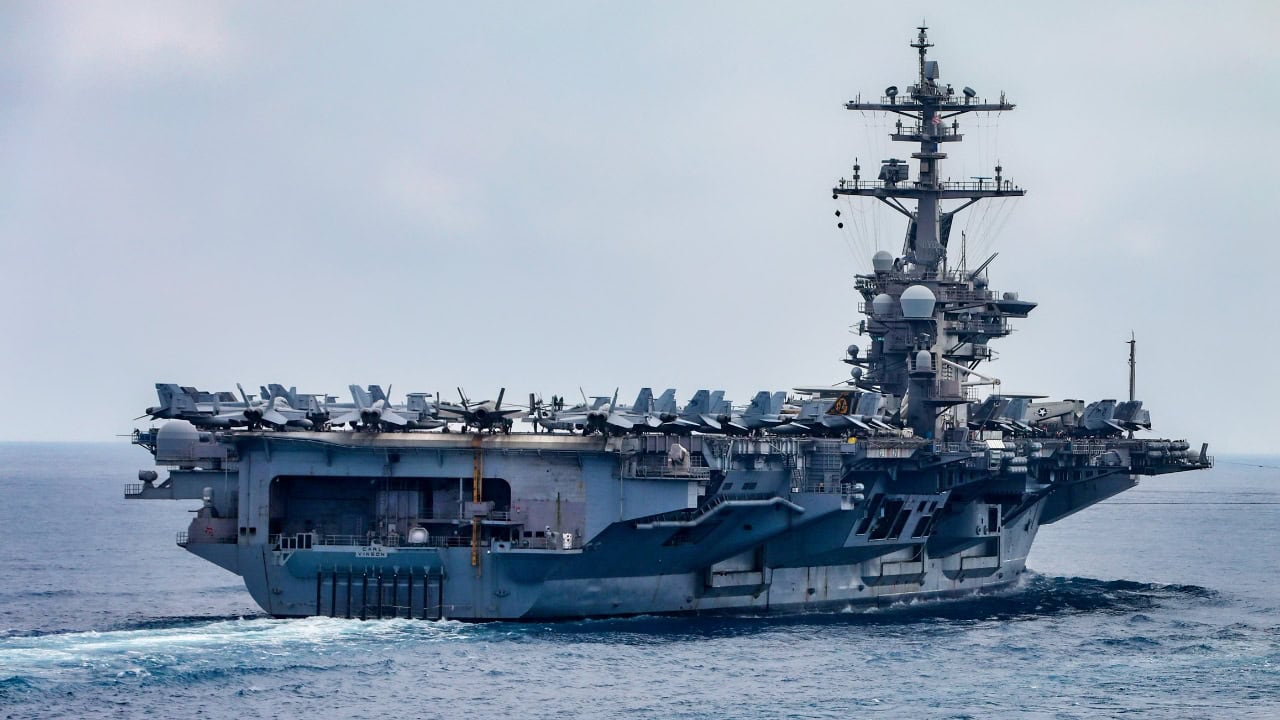
SOUTH CHINA SEA (Feb. 2, 2025) The Nimitz-class aircraft carrier USS Carl Vinson (CVN 70) conducts a replenishment-at-sea with the dry cargo and ammunition ship USNS Carl Brashear (T-AKE 7) Feb. 2, 2025. The Carl Vinson Carrier Strike Group is underway conducting routine operations in the U.S. 7th Fleet area of operations. (U.S. Navy photo by Mass Communication Specialist 1st Class Jacob I. Allison)
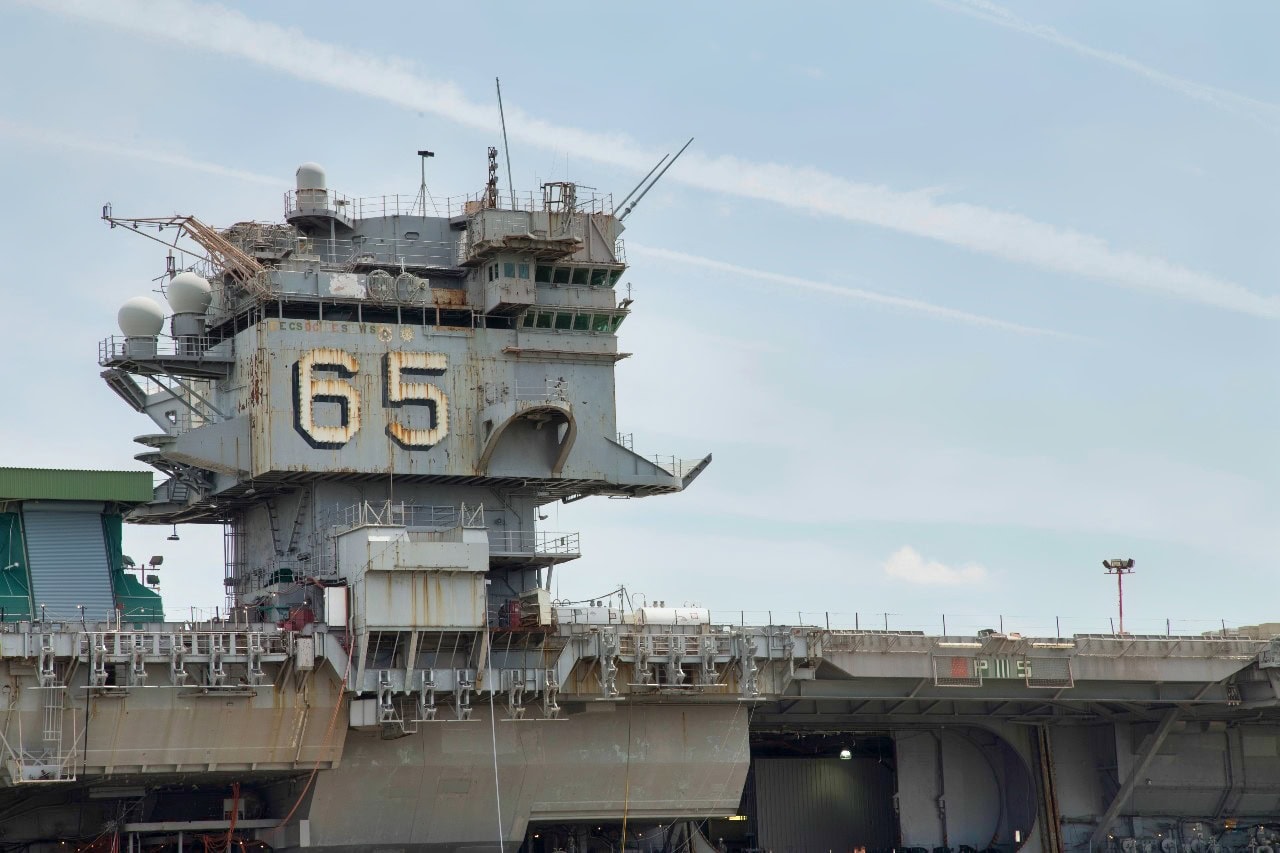
NEWPORT NEWS, Va. (July 15, 2018) — USS Enterprise (CVN 65) sits pierside at Newport News Shipbuilding following its decommissioning in February 2017. (U.S. Navy photo by Mass Communication Specialist 2nd Class Cat Campbell/RELEASED)
As of 2025, the fleet stood near 296 battle force ships, with official reporting in February 2025 noting 296 as of January 27; the FY2026 submission plans a deployable battle force of 287 ships for that fiscal year while procuring nineteen battle force ships to sustain the trajectory thereafter.
The Congressional Budget Office’s 2025 analysis of the Navy’s shipbuilding plan projects a long path to an ambitious plan of nearly 390 battle force ships by 2054, with shipbuilding costs averaging about $40 billion per year in 2024 dollars.
The Navy would purchase a total of 364 new combat, logistics, and support ships. Overall, under the 2025 plan, the Navy would buy more current-generation ships and more smaller ships than it would have purchased under any of the 2024 plan’s three alternatives.
The United States Navy’s greatest strength lies in its 11 aircraft carriers, which form the backbone of its global force projection: ten Nimitz-class carriers and the newer Gerald R. Ford-class flagship, the USS Gerald R. Ford. These massive vessels carry numerous fighter jets and support aircraft, ensuring U.S. air superiority and rapid response to crises, with at least one Carrier Strike Group (CSG) deployed overseas at all times.
Besides its unparalleled capability of nuclear-powered aircraft carriers, cutting-edge technology ( advanced weapons, electronic warfare, missile systems), global presence, extensive training, strategic partnerships, and its ability to project power worldwide, making it the most potent and versatile force at sea, despite other nations like China building larger numbers of ships.
About the Author: Steve Balestrieri
Steve Balestrieri is a National Security Columnist. He served as a US Army Special Forces NCO and Warrant Officer. In addition to writing on defense, he covers the NFL for PatsFans.com and is a member of the Pro Football Writers of America (PFWA). His work was regularly featured in many military publications.