
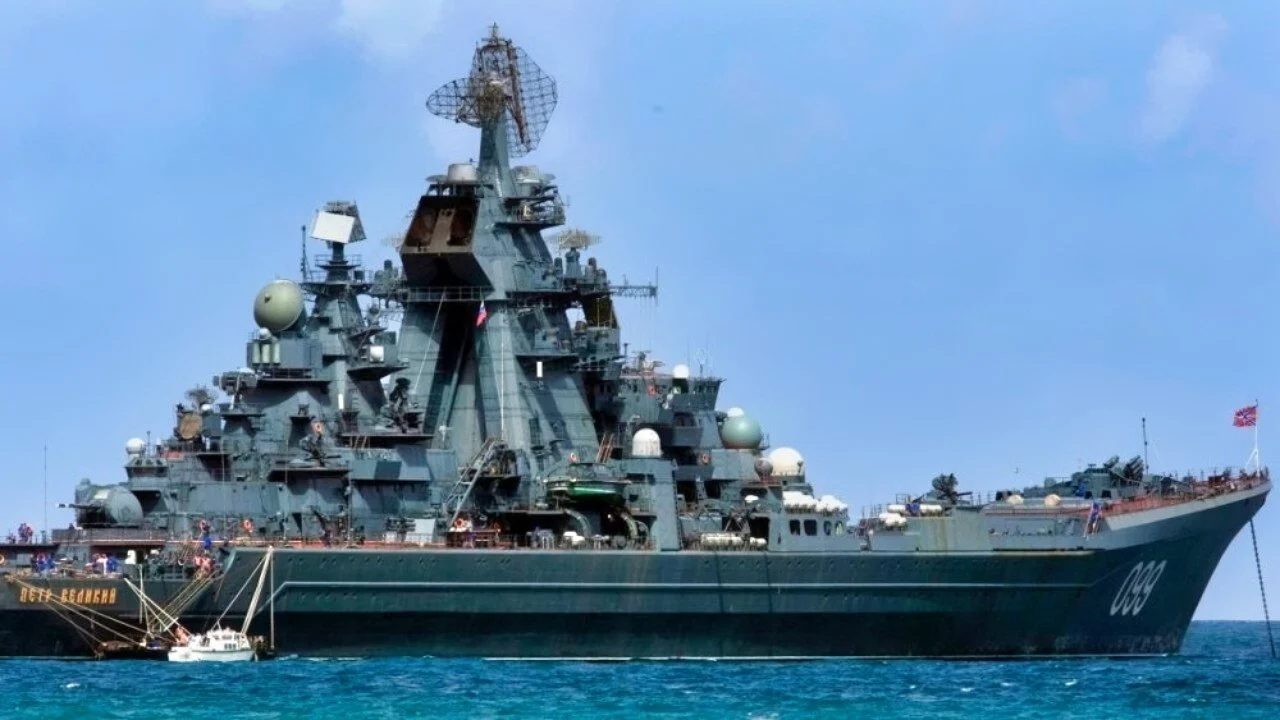
Russia Built Four Kirov-Class Battlecruisers. It Spent Decades Saving One: The Soviet Union completed four Kirov-class nuclear-powered battlecruisers. As of July 2026, one has been sent for dismantlement, one has spent decades awaiting disposal, one remains in service but is expected to retire, and only Admiral Nakhimov has received the full modernization once discussed for the class.
Displacing about 28,000 tons at full load, a Kirov carried nuclear propulsion, a crew of roughly 700, and a dense mix of anti-ship, air-defense, and anti-submarine weapons. A 1981 U.S. intelligence assessment called the lead ship one of the most heavily armed surface combatants afloat.
That size still generates headlines. It also hides the class’s real history. Russia did not preserve a four-ship force or establish a repeatable modernization program. It selected one hull, spent years deciding what to do with it, and then required more than a decade of active shipyard work to send it back to sea.
Admiral Nakhimov last operated with the Northern Fleet in 1997 and arrived at Sevmash in 1999. Major modernization began in 2014, with its return originally expected in 2018. The ship started sea trials in 2025 and entered the final testing stage in 2026.
The First Two Kirov-Class Ships Were Too Far Gone
The lead ship Kirov, later renamed Admiral Ushakov, suffered a reactor problem in 1990 and never returned to sea. It remained at Severodvinsk with old nuclear fuel still aboard. Shipyard officials warned that the deteriorating reactor plant made continued storage expensive and potentially dangerous.
The second ship, Frunze, later Admiral Lazarev, entered reserve in the 1990s and was formally decommissioned in 1998. Russian officials once discussed restoring it for the Pacific Fleet, but the hull and machinery had sat idle too long. Rosatom signed a 5-billion-ruble dismantlement contract in 2021.
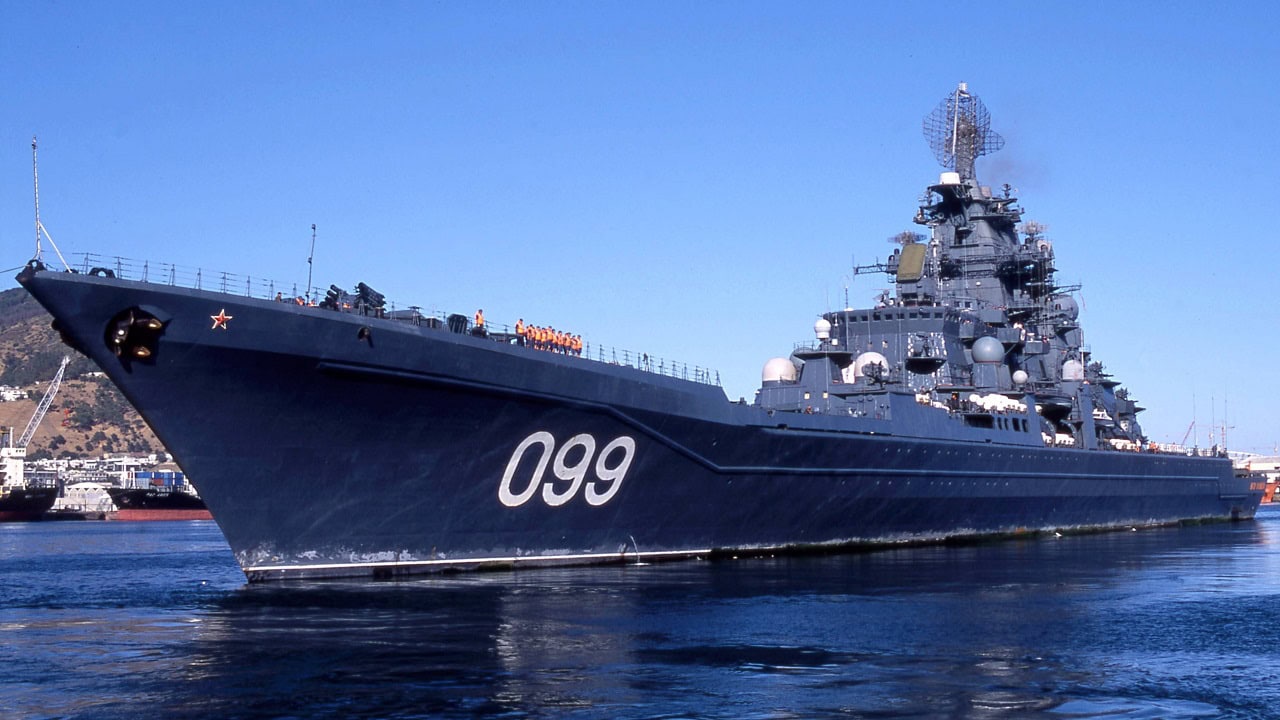
Russian Navy Kirov-Class Battlecruiser. Image Credit: Creative Commons.
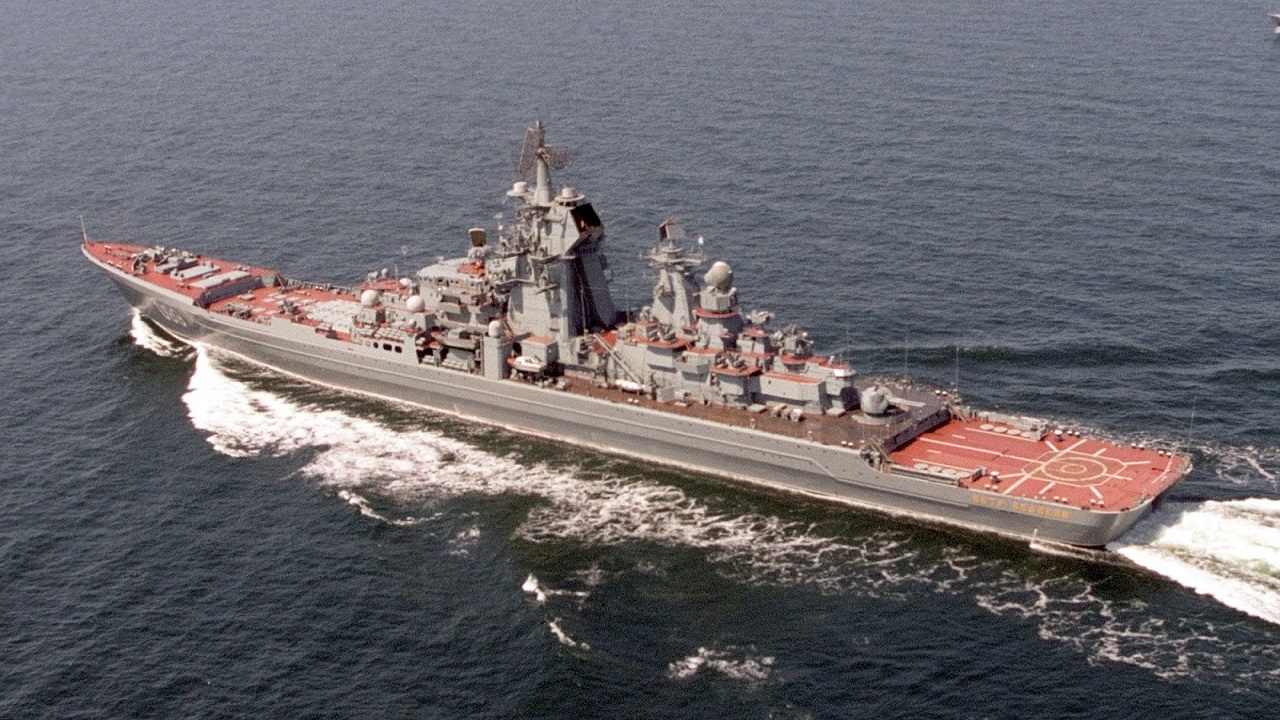
Kirov-Class battlecruiser. Image Credit: Creative Commons.
Those decisions exposed the limits behind public talk of restoring the class. Russia faced old fuel, aging reactor compartments, obsolete electronics and machinery no longer supported by a live production base. The fate of the first ships explains why the Kirov class has steadily disappeared despite repeated announcements about a possible revival.
Admiral Nakhimov Was the Least Bad Hull to Rebuild
Nakhimov was commissioned in 1988 and spent less time in active service than Pyotr Velikiy. Its hull was described as sound, and the ship was already at Sevmash, Russia’s main nuclear shipbuilding yard. That made it the strongest candidate for an exceptionally expensive reconstruction.
The project became closer to a partial rebuild than an overhaul. The old P-700 Granit launchers were replaced by 80 universal cells for Kalibr, Oniks, and Zircon missiles. Another large group of cells supports area air defense. New radars, close-in weapons, electronic systems, life-support equipment, and reactor fuel were also installed. The reported total exceeds 170 major missile cells.
Later estimates placed the modernization cost in the billions of dollars, with some reaching $5 billion. The exact figure remains unavailable, but repeated delays show how badly the early estimates missed. The result is an impressive missile ship with many of the same concentration problems once associated with battleships.
Russia Did Not Spend 27 Straight Years Rebuilding the Ship
Nakhimov’s 1999 arrival at Sevmash creates the dramatic “nearly three decades” headline. Much of that period was inactivity. Russia lacked money, a settled design, and a firm decision about whether the ship deserved restoration. Intensive modernization began only after the later contract and design work.
That distinction does not make the record reassuring. A navy confident in the class would have funded a standard package and moved ships through a planned sequence. Russia instead turned Nakhimov into a one-off engineering program with no follow-on production line.
Sevmash also had more urgent work. The yard builds Borei ballistic-missile submarines and Yasen attack submarines, both central to Russian strategy. Battlecruiser work competed directly with submarine construction and repair. Russia’s surface fleet increasingly depends on frigates, corvettes, and Soviet-era ships because its yards struggle to replace large combatants.
The refit therefore says as much about industrial limits as naval ambition. Russia possessed a giant hull it could not reproduce and spent years deciding whether restoring it was preferable to admitting the Kirov era had ended. The project became an attempt to recover one Cold War asset, not the revival of a ship class.
Pyotr Velikiy Is Unlikely to Receive the Same Treatment
Pyotr Velikiy joined the fleet in 1998 and became the Northern Fleet’s flagship. It deployed far more often than Nakhimov and accumulated greater wear across its propulsion plant, sensors, and hull systems.
Russia once planned to modernize Pyotr after Nakhimov returned. Current reporting points toward retirement instead. Repeating the refit would tie up Sevmash for years, consume another multibillion-dollar budget, and preserve a ship requiring hundreds of sailors and extensive escort support. Naval analysts expect key crew members to transfer from Pyotr Velikiy to Admiral Nakhimov.
The Russian Navy has shifted toward submarines, Admiral Gorshkov-class frigates, corvettes, and smaller missile ships. Those vessels distribute weapons across more hulls and fit the capacity of Russian yards. The Kirov was built to meet a Cold War requirement to threaten American carrier groups, not the fleet structure Russia can now sustain.
One Rebuilt Kirov Is Not a Sign of Class-Wide Confidence
Admiral Nakhimov should return with an enormous missile magazine and a useful Arctic role. Near Russian air bases and coastal sensors, it would provide air defense, command facilities, and long-range strike capacity.
The ship also represents concentration. One casualty—an extended repair or a reactor problem—would eliminate the entire modernized Kirov capability. Russia has no second upgraded hull, no replacement under construction, and no production line capable of building another vessel of comparable size. That is why the class has no clear long-term future despite Nakhimov’s firepower.
A single battlecruiser also needs escorts, submarines, aircraft, intelligence, and repair support to operate safely. Without those layers, the ship becomes an unusually valuable target carrying a large share of Russia’s surface-fleet power.
When Nakhimov completes its trials, Russia is expected to transfer personnel from Pyotr Velikiy and begin retiring the ship it was once supposed to join. The Navy will have spent almost three decades not restoring the Kirov class, but exchanging one aging battlecruiser for another.
MORE – The US Navy Can’t Build A Navy Anymore
About the Author: Harry J. Kazianis
Harry J. Kazianis (@Grecianformula) was the former Senior Director of National Security Affairs at the Center for the National Interest, a foreign policy think tank founded by Richard Nixon in Washington, D.C. Harry has more than a decade of experience in think tanks and national security publishing. His ideas have been published in The New York Times, The Washington Post, The Wall Street Journal, CNN and many other outlets worldwide. He has held positions at CSIS, the Heritage Foundation, the University of Nottingham and several other institutions related to national security research and studies. He is the former Executive Editor of The National Interest and The Diplomat. He holds a master’s degree focusing on international affairs from Harvard University.

