
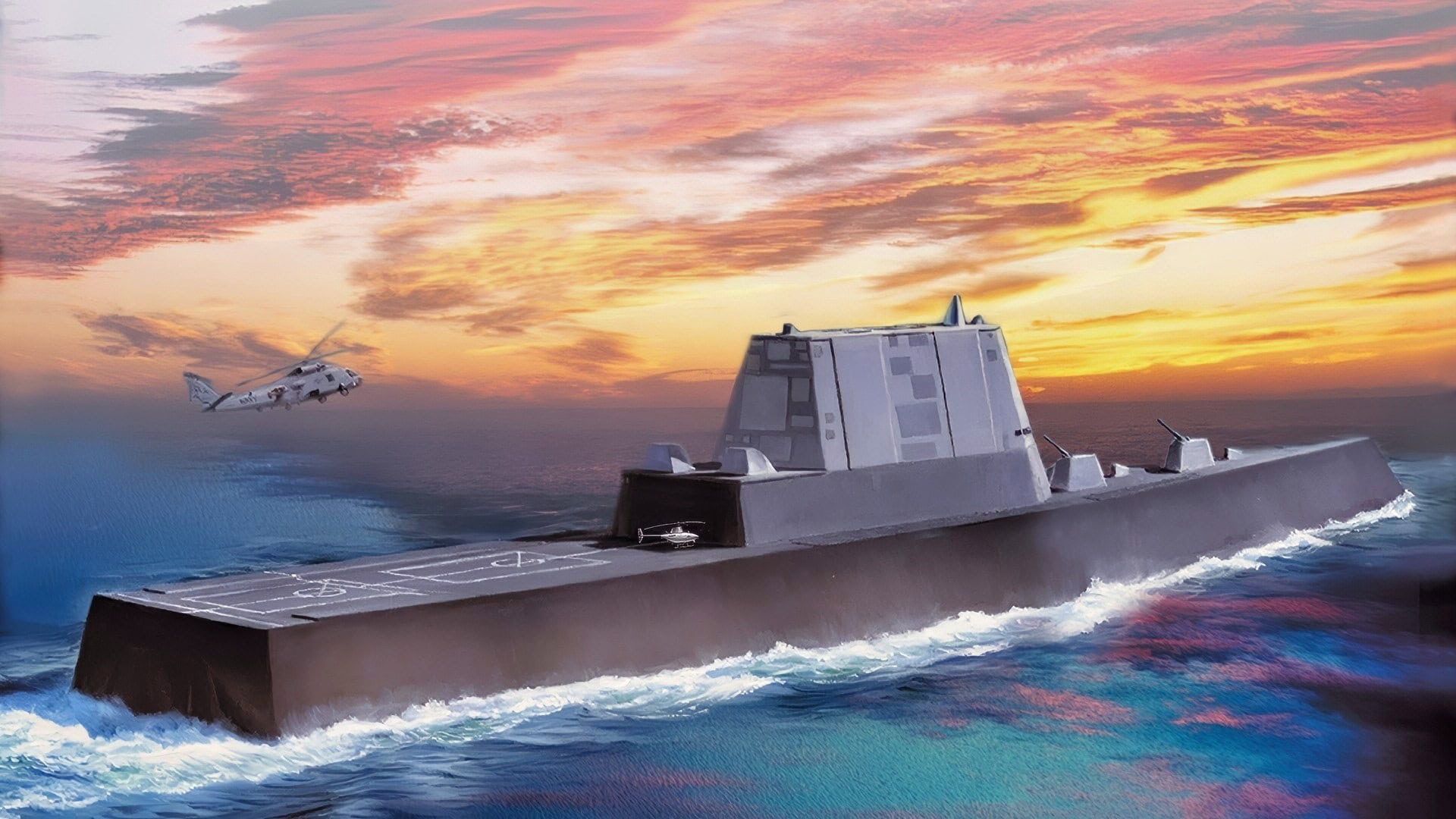
While the new Trump-class battleship has enjoyed much fanfare from the White House, the planned effort, called the USS Defiant, could have an uncertain fate.
The new BBG(X) is the apple of the president’s eye.
The Trump-class will have perhaps as many as 200 Vertical Launch cells that can fire Conventional Prompt Strike hypersonic weapons and nuclear-tipped cruise missiles. This will be one heavy-duty missile barge if built.
Three Classes of Warships Have Languished
However, the U.S. Navy has not enjoyed a good track record with new ships.
The Littoral Combat Ship, the Zumwalt-class destroyer, and the Constellation-class frigate are troubled programs. These shipbuilding projects have either been canceled or seen the number of ships reduced from earlier goals. The Navy struggled to build them on time and under budget.
They did not deliver on promises made before serial production, and sometimes they could not meet naval strategic needs.
The designs were not concrete until they were in the hands of engineers and shipyard workers. New requirements as time elapsed made the ships more expensive and their production uncertain.
The USS Gerald R. Ford Is Also a Cautionary Tale
There were perhaps too many technologies at once.
Look no further than the USS Gerald R. Ford supercarrier, which was designed to feature new launch systems and arresting gear, plus over 20 new systems.
These plunged the program into delay mode, and the money invested in the flat-top evaporated.
LCS, Zumwalt-class, and Constellation-class Mired In Misery
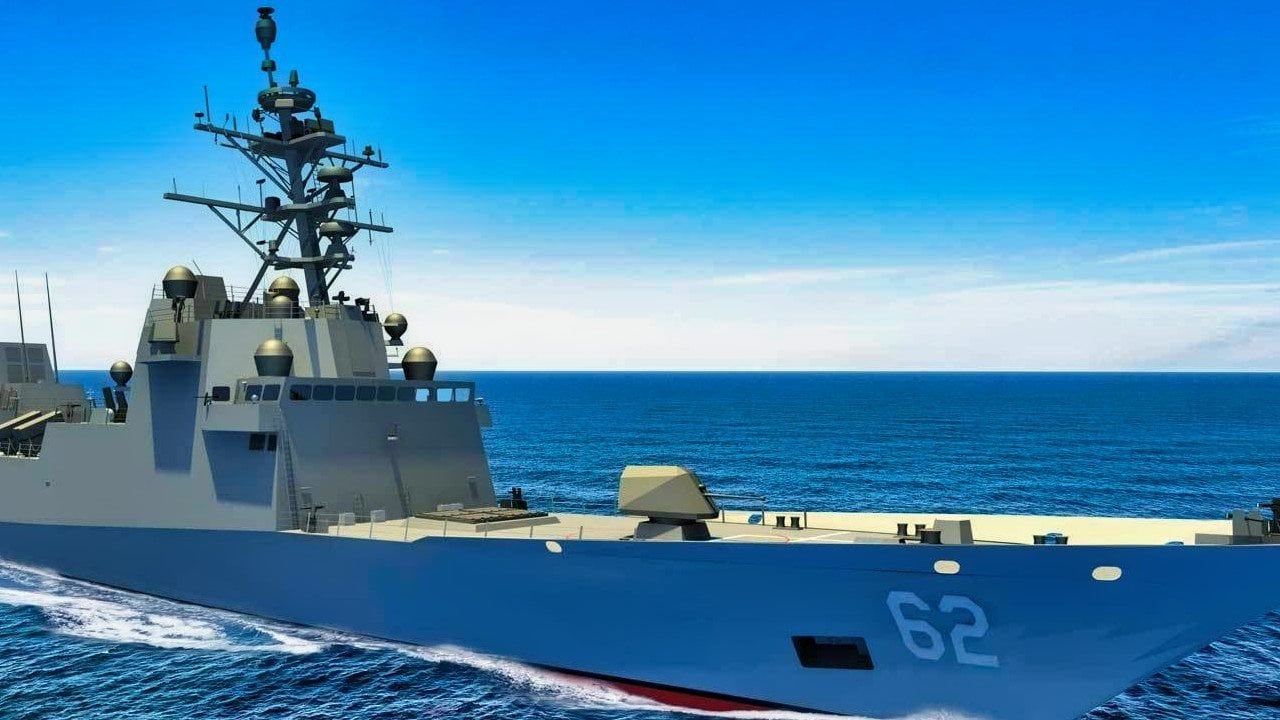
Constellation-Class Frigate. Image Credit: Creative Commons.
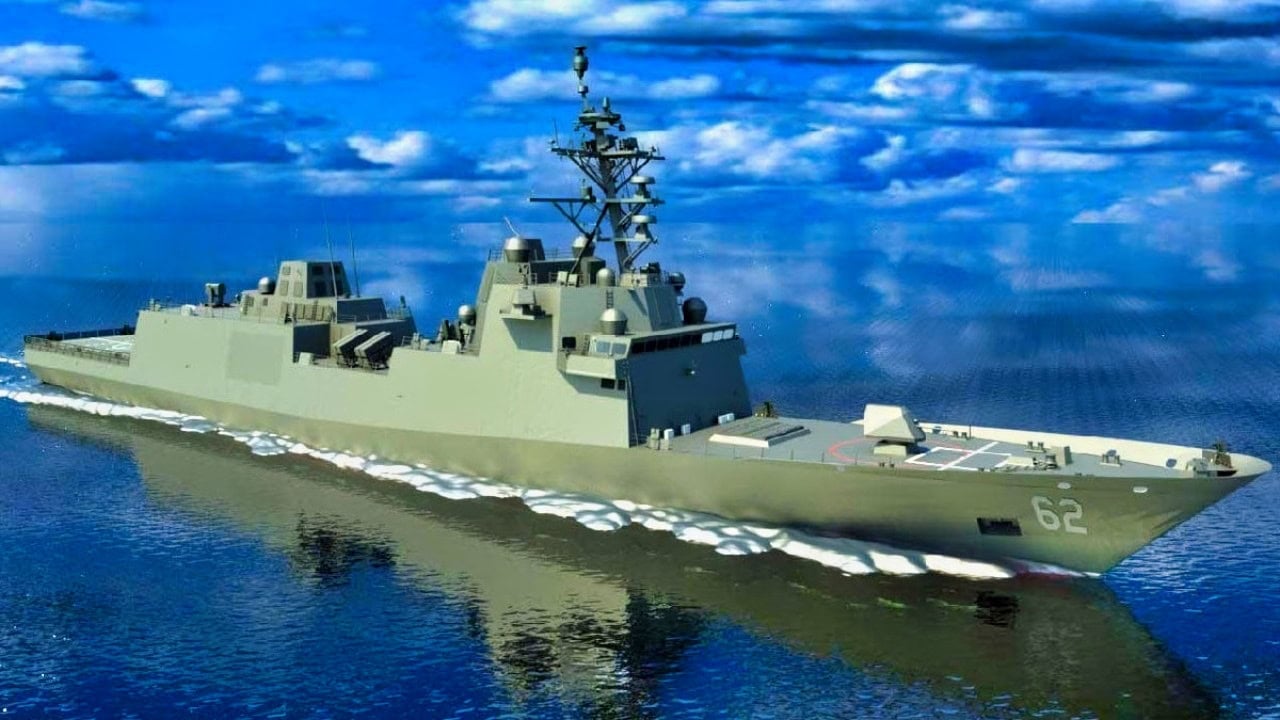
Constellation-Class Frigate. Image Credit: Creative Commons.
The cost for other programs has been considerable.
The Littoral Combat Ship program burned through $22 billion.
The small, lightly armored vessels were not suitable for ship-on-ship warfare against great powers and would be sitting ducks in what I call the Kinetic Missile Fight.
The Navy originally wanted 32 Zumwalt-class destroyers.
That heady goal was nowhere near accomplished.
Only three of the destroyers were built.
Its main gun had major problems, as the rounds it was designed to fire cost close to a million dollars each.
One could argue the Zumwalt-class could still be a hit once it is outfitted with hypersonic missiles, but the entire class should still be considered a failure.
The Constellation-class may be the most disappointing case study in how not to build a ship.
The program was canceled in November 2025. Only two are being built, compared with an original goal of 20.
Lack of Technological Foresight
One major problem that a government auditor found was that the Navy began working on the ships without considering the difficulty of incorporating new technology.
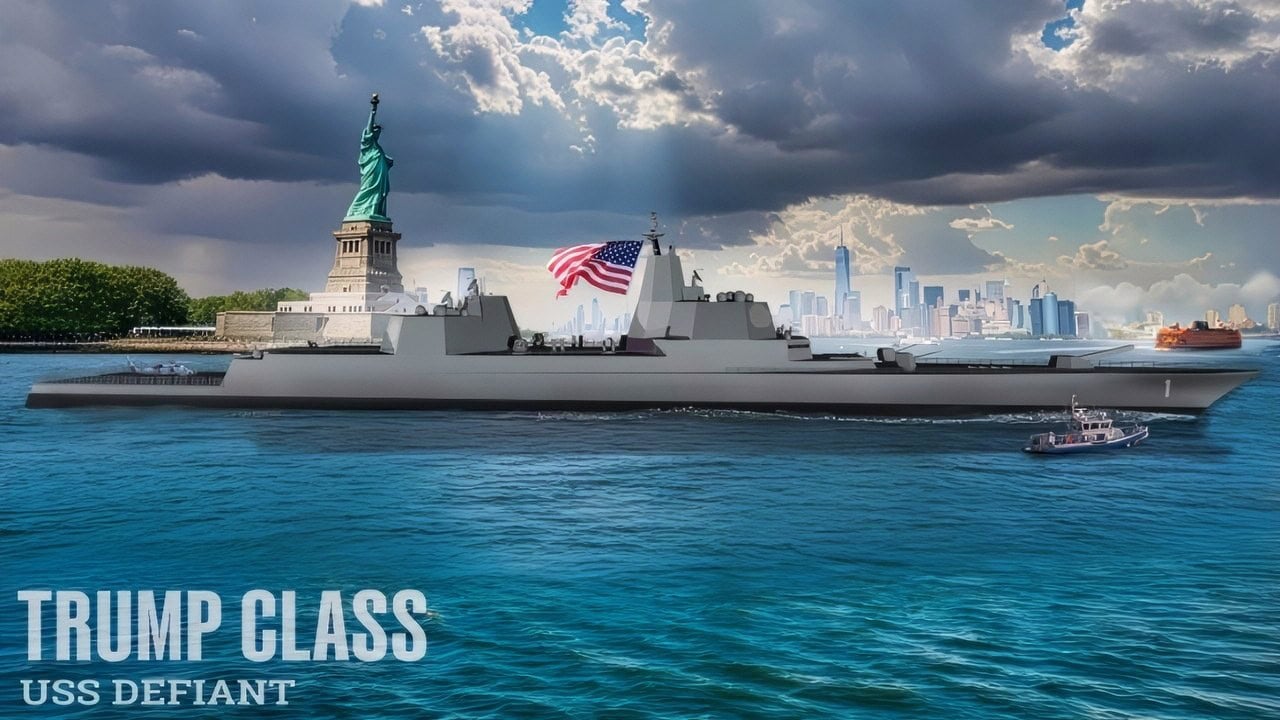
Trump-Class Battleship. Image Credit: Creative Commons/White House.
The lead vessels were built without a stable design.
The Government Accountability Office conducted a post-mortem review of all three failed programs, and the watchdogs were not pleased with what they found. Industry experts agree.
It’s All About Human Capital
PBS interviewed Cynthia Cook from the Center for International and Strategic Studies about why naval shipbuilding in the U.S. has become so hard in recent years.
Cook believes naval contractors are plagued by workforce shortages, which create schedule slips.

Littoral Combat Ship from Fleet Week 2025. Image Credit: Stephen Silver/19FortyFive.com
“Ships are being constructed slower than we’d like them to be for a number of reasons. And, really, one of the biggest reasons is labor-force challenges.
I had one shipyard executive tell me that he would love to have a second shift, but he just can’t find the labor. During the pandemic, a number of workers retired, and so the labor force is relatively new, or, as they’re called, green labor,” Cook said.
People Power Is Limited
Tyler Koteskey at Georgetown University also pointed to problems with personnel and human capital.
The Navy “so frequently changes its force size goals in response to political and budgetary pressure that these precise targets lead to significantly varying procurements each year.
These fluctuating demand signals create uncertainty for the maritime industry, discouraging investment in workforce development and infrastructure initiatives necessary to increase production capacity,” he wrote.
The Navy Cannot Repeat the ‘Cycle of Death’
Mackenzie Eaglen and Representative Filemón Vela, writing for the National Commission on the Future of the U.S. Navy, are afraid that this and other “cycles of death” will be repeated in new shipbuilding programs.
They declared the main problem is insufficient planning. “The Navy routinely begins construction before it knows what it is building,” the authors explained, as noted by Real Clear Defense.
Acquisition Blues
These problems snowball, leading to overall project difficulties. “This pattern reflects a broader acquisition dynamic: an institutional tendency to pursue incremental capability enhancements even when doing so destabilizes production timelines.
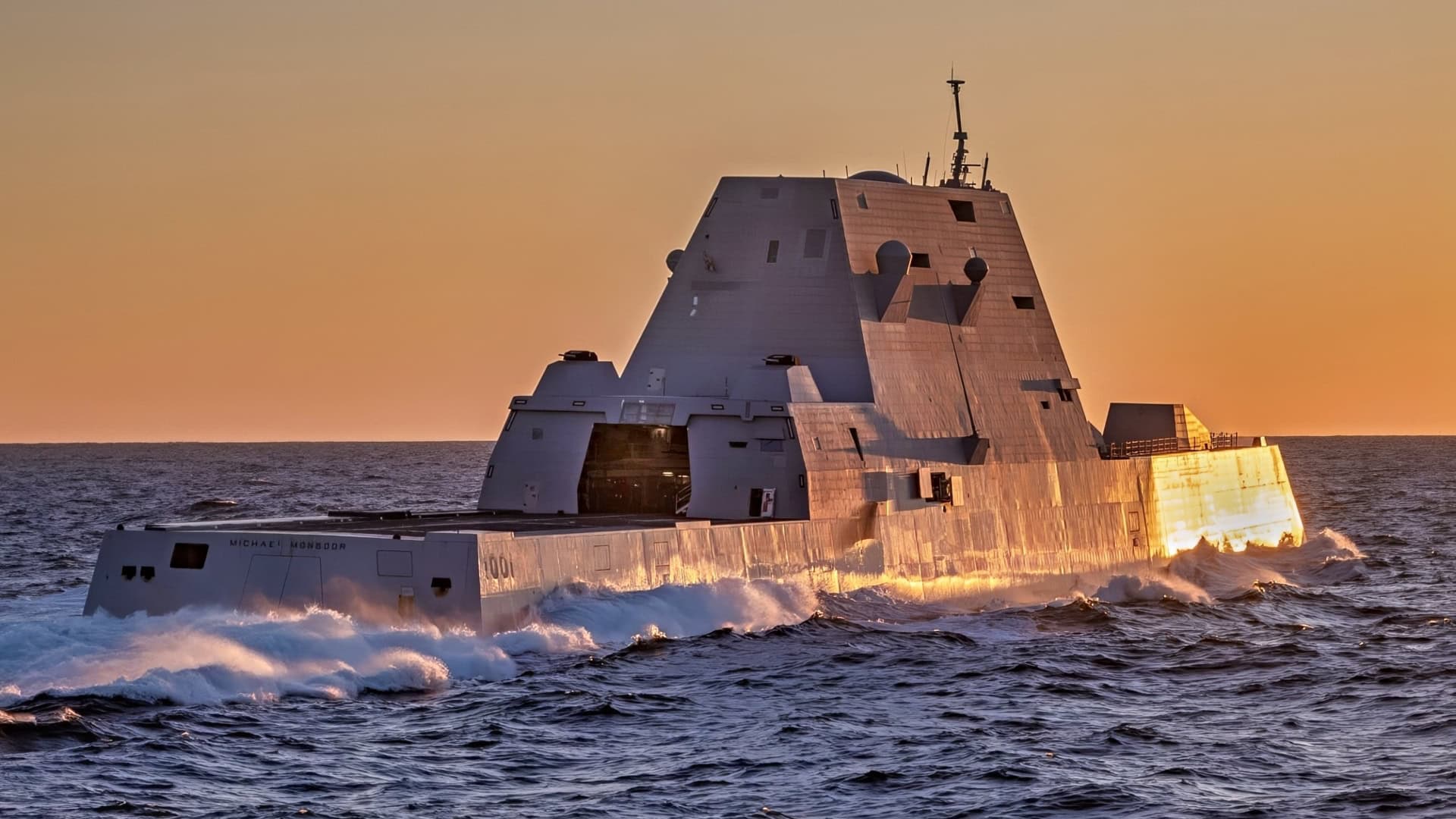
PACIFIC OCEAN (February 10, 2024) — The Zumwalt Class Guided Missile Destroyer USS Michael Monsoor (DDG 1001) breaks away from the Henry J. Kaiser-class fleet replenishment oiler USNS Pecos (T-AO 197) shortly before sunset after taking on fuel. (U.S. Navy photo by Chief Mass Communication Specialist Mark D. Faram)
Requirements creep in, personnel rotate through program offices, and each new stakeholder arrives with improvements to propose,” according to Christopher Carroll of Pepperdine University.
Many other issues have cropped up in U.S. warship production efforts. “Several factors contribute to the Navy’s procurement woes: fixed ever-changing force-level goals, faulty design and construction methods, and misplaced fleet design priorities,” according to Koteskey.
The new Trump-class battleship will be an extreme test for the Navy and its contractors.
But are there institutional problems with shipbuilding that will not yield even one new vessel?
The biggest problem is human capital. Everyone involved in ship development and construction needs to do a better job.
Efficiency and economies of scale must be improved. Shipyards should hire new expert workers and retain others before they leave for new jobs.
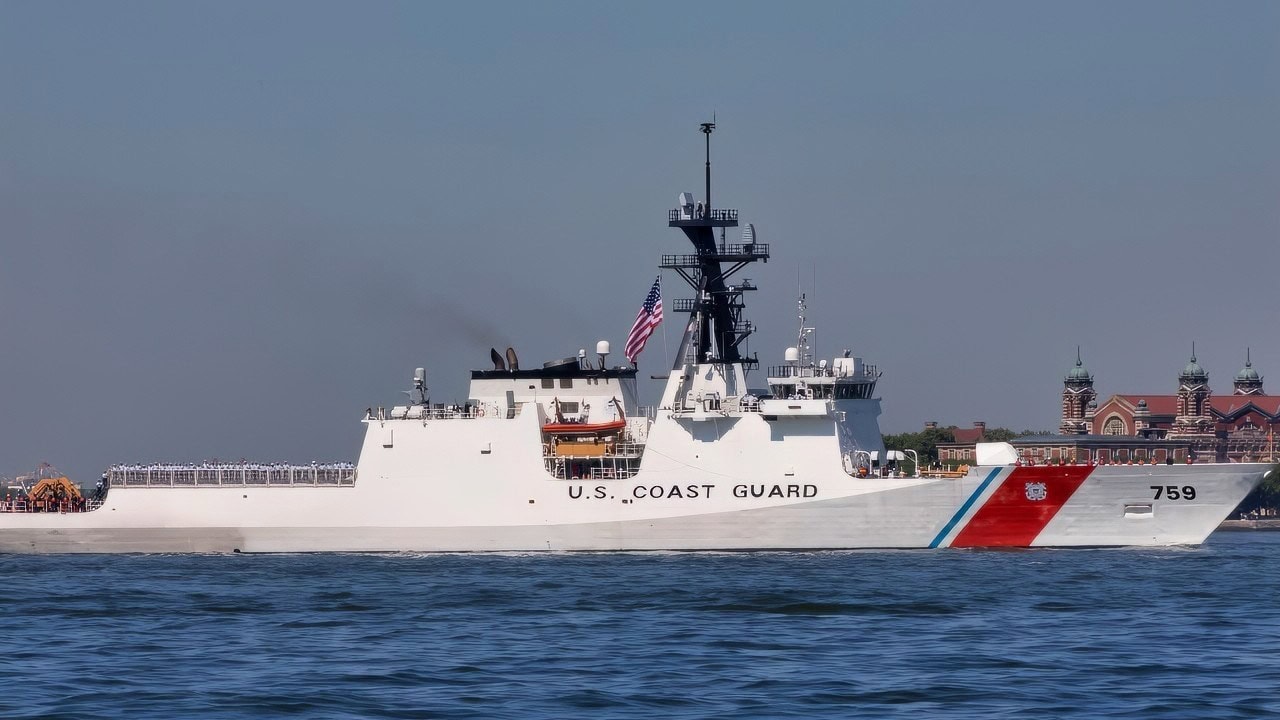
NEW YORK (May 22, 2024) The USCGC Calhoun (WMSL 759) sails in for Fleet Week New York, May 22. Navy and Coast Guard ships arrived in New York marking the beginning of Fleet Week New York. Fleet Week New York is a time-honored sea service celebration that allows citizens of New York City and the surrounding tri-state region to witness today’s maritime capabilities first-hand. The 2024 celebration will host nearly 3,000 Sailors, Marines, and Coast Guardsmen. (Mass Communication Specialist 3rd Class Leah Moore)
Design efforts need a rethink, and the number of new technologies that sometimes fail to integrate should be subject to better oversight.
The stakes are high to keep up with China. The Americans cannot afford to fail in future shipbuilding programs.
The Pentagon and Congress must change their ways, focusing on new remedies that can move the needle and refraining from falling back on old processes.
More ships are desperately needed, and the strategic outcome should favor a shipbuilding industry second to none.
The Navy must take a long look at watchdog reports and industry expert efforts to achieve improvements that will keep failures in check.
MORE – US Navy Aircraft Carriers Have A Fatal Flaw – Fire
About the Author: Brent M. Eastwood, PhD
Author of now over 3,500 articles on defense issues, Brent M. Eastwood, PhD, is the author of Don’t Turn Your Back On the World: A Conservative Foreign Policy and Humans, Machines, and Data: Future Trends in Warfare, plus two other books. Brent was the founder and CEO of a tech firm that predicted world events using artificial intelligence. He served as a legislative fellow for US Senator Tim Scott and advised the senator on defense and foreign policy issues. He has taught at American University, George Washington University, and George Mason University. Brent is a former US Army Infantry officer. He can be followed on X @BMEastwood.