
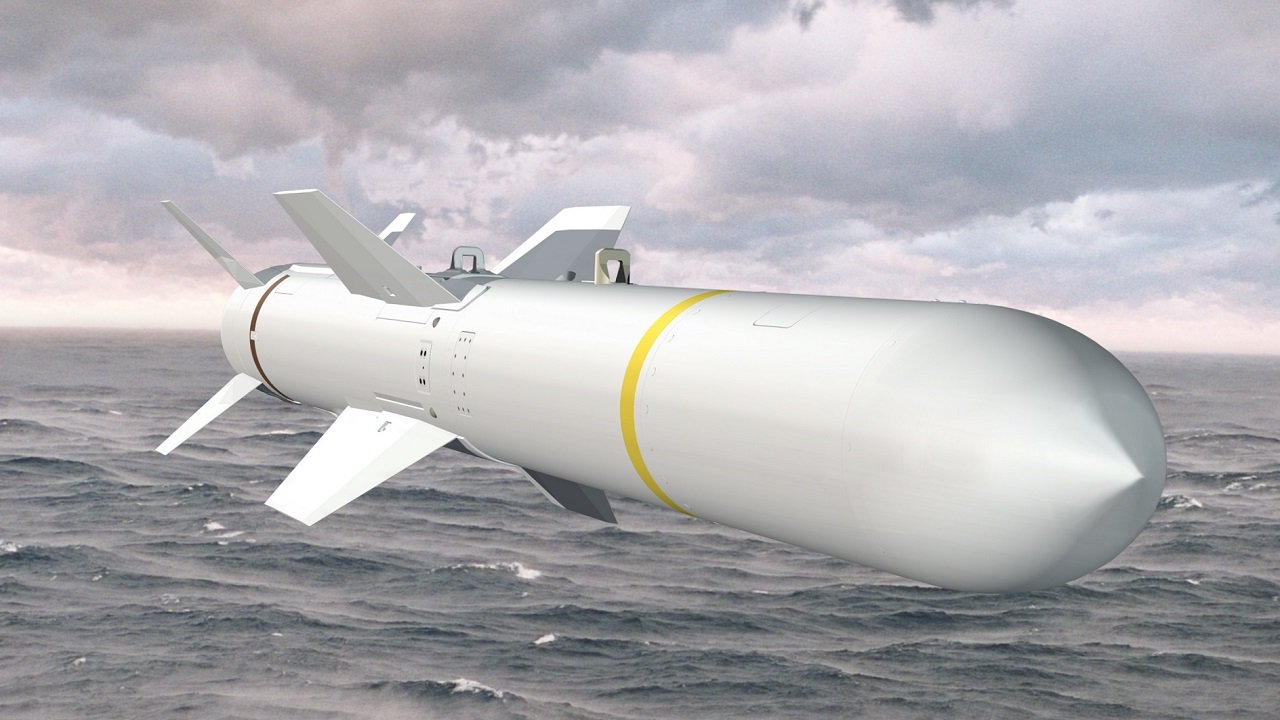
The Harpoon was conceived in the 1960s to kill surfaced submarines, whales, in Navy slang, which is how it got its name. Then a shocking sinking in 1967 turned it into America’s first real ship-killing missile, and over five decades, it became the most widely fielded anti-ship weapon in the Western world, with nearly 6,000 delivered to 30 nations. Now, in a single month, its story has turned again: the U.S. Navy has closed out one production era, opened another, and Taiwan has stood up a brand-new command built around a Harpoon coastal wall. The missile America is retiring from its own fleet has never mattered more.
The Harpoon Missile Is Something Special
July 2026 is turning out to be one of the most consequential months in the life of a missile designed when Richard Nixon was president. On July 1, Taiwan formally stood up its new Littoral Combat Command, a two-star headquarters on the island’s west coast that unifies all of its ground-launched anti-ship missile forces, and the arriving centerpiece of that force is the American Harpoon, hundreds of them, on trucks. In the same season, the U.S. Navy delivered the final missiles of Lot 91, closing out the classic Harpoon Block II production run, its program office noted that since 1977 it has delivered nearly 6,000 Harpoons in air, surface, submarine, and exercise configurations to 30 partner nations, while a newly updated variant completed its first flight test and moves into production with first deliveries this year. A weapon nearing its fiftieth birthday is ending one era, beginning another, and anchoring the most watched coastal defense buildup on Earth, all at once. How it got here is one of the better evolution stories in modern weaponry.
The Whale-Hunter
The Harpoon was not designed to sink ships. In 1965, the U.S. Navy began studying a missile in the 45-kilometer class for patrol aircraft to use against surfaced submarines. The logic was a snapshot of its moment: early Soviet missile submarines had to surface to fire their weapons, and some needed to linger on the surface to guide them, making them briefly vulnerable. A missile to kill those exposed boats was, in the Navy’s slang for submarines, a weapon to harpoon whales, and the name stuck.
Then the job changed overnight. In October 1967, Egyptian missile boats sank the Israeli destroyer Eilat with Soviet-built Styx anti-ship missiles, the first warship ever destroyed by ship-launched missiles, and the U.S. Navy recognized a widening gap in its own arsenal: the Soviets had ship-killing missiles in quantity, and America had none. In 1970, Chief of Naval Operations Admiral Elmo Zumwalt accelerated the Harpoon under his Project Sixty initiative to restore striking power to U.S. surface ships. McDonnell Douglas won the contract in 1971, the first test round flew in 1972, and the missile entered service in 1977, first on P-3 patrol aircraft and soon on surface ships and submarines. The whale-hunter had become a ship-killer, and the anti-submarine mission it was born for faded into a footnote.
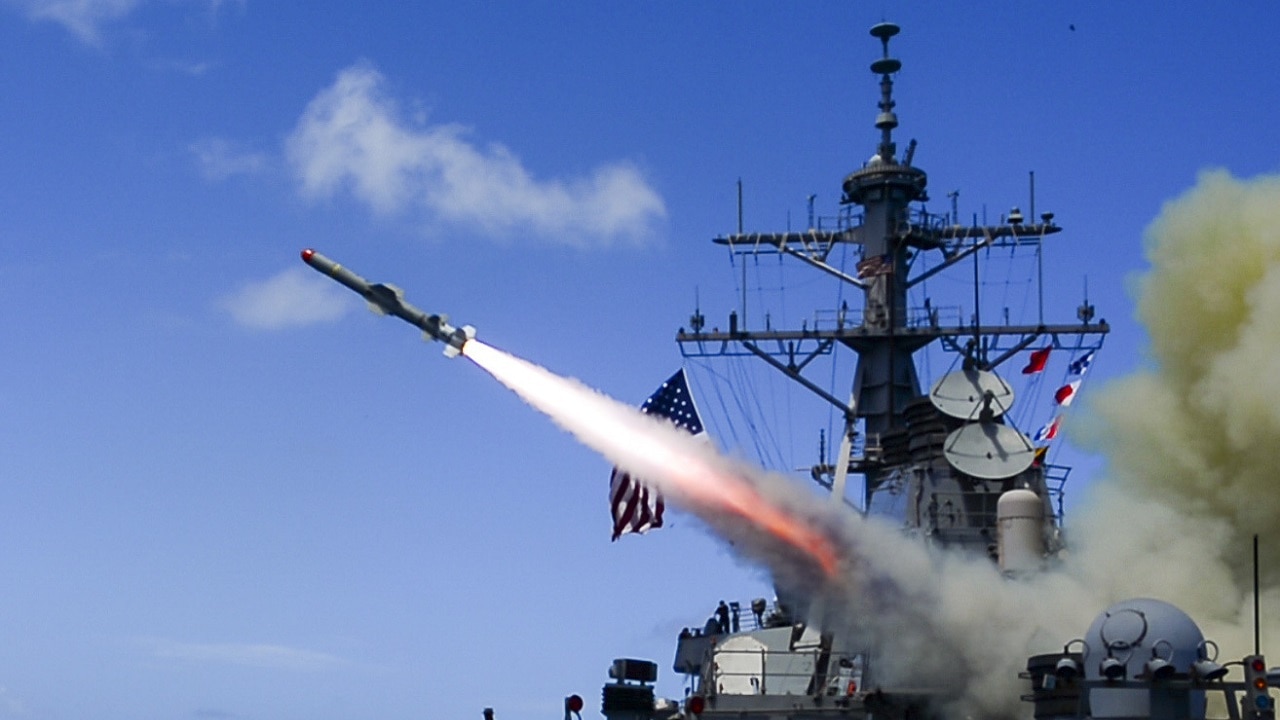
WATERS NEAR GUAM (Mar. 10, 2016) – Arleigh Burke-class guided missile destroyer USS Fitzgerald (DDG 62) conducts a live fire of a harpoon missile during Multi-Sail 2016. Multi Sail is a bilateral training exercise aimed at interoperability between the U.S. and Japanese forces. This exercise builds interoperability and benefits from realistic, shared training, enhancing our ability to work together to confront any contingency. (U.S. Navy photo by Mass Communication Specialist 3rd Class Eric Coffer/Released)
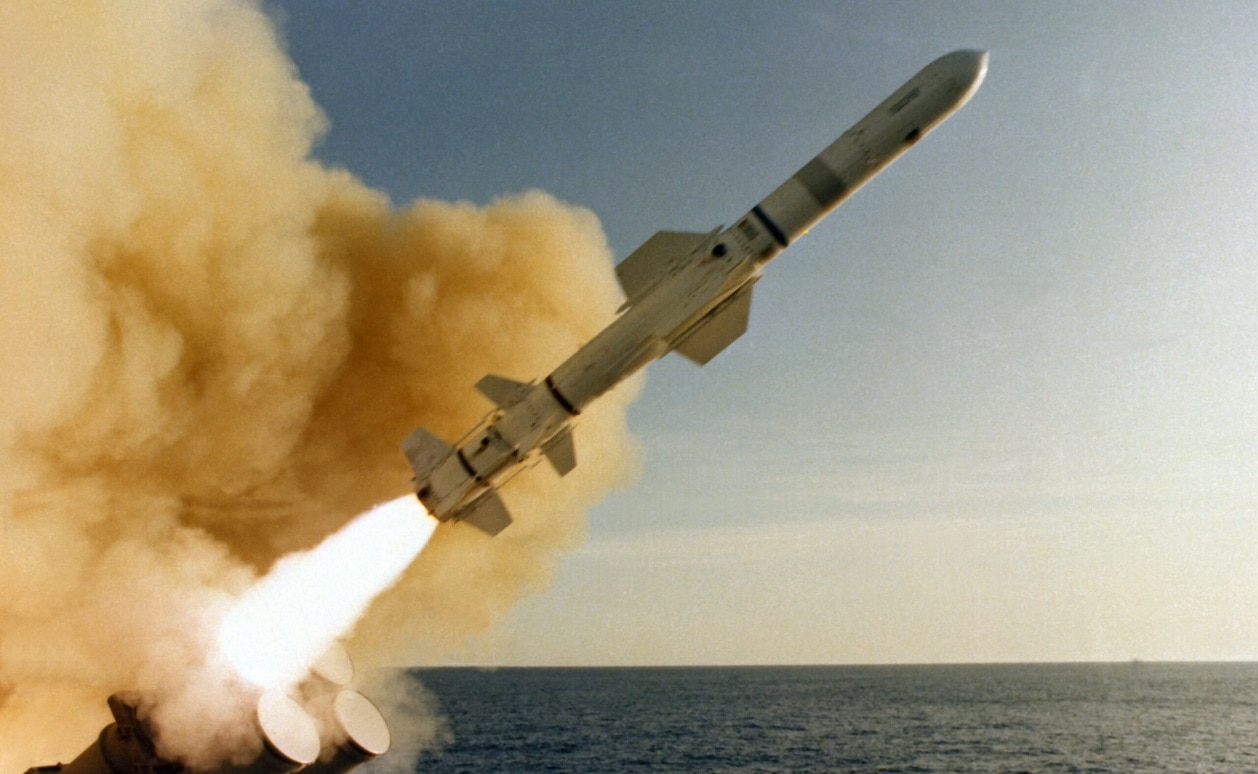
A view of an RGM-84 surface-to-surface Harpoon missile, immediately after leaving a canister launcher aboard the cruiser USS LEAHY (CG-16), near the Pacific Missile Test Center, Calif.
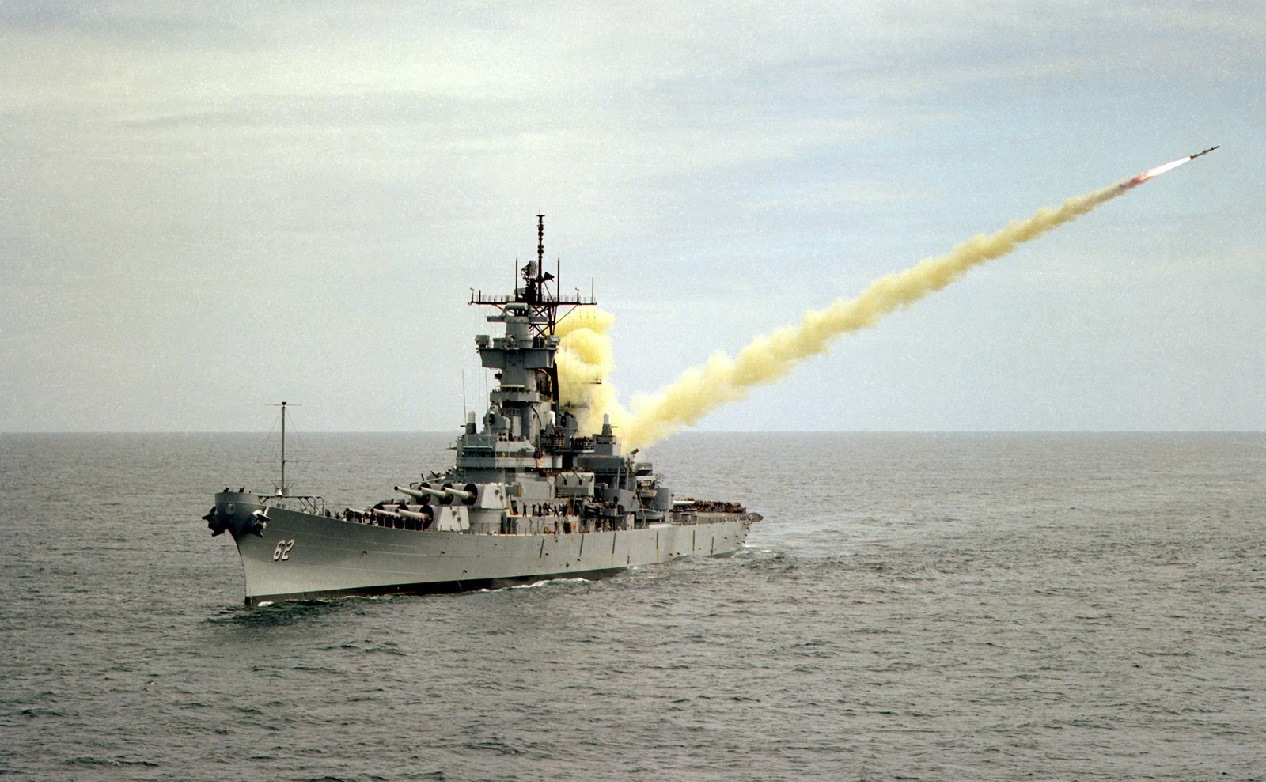
An aerial port bow view of the battleship USS NEW JERSEY (BB-62) launching an RGM-84 Harpoon missile on the Pacific Missile Test Center Range.
Becoming the Default
What made the Harpoon the West’s standard was never any single spectacular attribute. It was the combination of good-enough performance with go-anywhere flexibility. The same basic missile could be dropped from an aircraft, fired from a ship’s deck canisters, or ejected from a submarine’s torpedo tube in a buoyant capsule, with a solid rocket booster added for surface and undersea launch. It flew a sea-skimming profile at high subsonic speed, navigated by inertial guidance to a search area, then switched on its own active radar to find and strike its target, no operator required, with a roughly 500-pound warhead that could cripple a warship.
The design then evolved in place for half a century. Successive Block 1 versions refined its flight profiles and seeker logic through the 1980s and 90s, and a land-attack branch, SLAM and the SLAM-ER, grew out of the same airframe. The transformative upgrade came with Block II, first delivered in 2009, which borrowed the guidance package from the JDAM smart bomb and the SLAM-ER, adding GPS-aided navigation that let the missile fight in cluttered coastal waters and strike targets in port or even ashore, not just ships in the open ocean. Later variants added a data link for in-flight retargeting and, in the extended-range version, a lighter warhead and improved engine that roughly doubled its reach. Along the way, more than 7,000 Harpoons were built, and the export list grew to 30 countries across every region America counts as friendly, which produced the missile’s quiet superpower: interoperability. An allied coalition at sea can share targeting, tactics, and stockpiles for the Harpoon in a way true of no other anti-ship weapon.
The Record
The Harpoon’s combat history is thinner than its ubiquity suggests, which is the nature of naval missiles, but what exists is instructive. American Harpoons first drew blood against Libyan patrol boats in 1986. The defining engagement came on April 18, 1988, during Operation Praying Mantis, the U.S. retaliation against Iran for the mining of a Navy frigate, and it remains the only Harpoon-versus-Harpoon duel ever fought. The Iranian missile boat Joshan, closing on U.S. warships despite four warnings, fired its own American-made Harpoon, sold to Iran before the 1979 revolution, at the cruiser USS Wainwright, which defeated it with chaff and electronic countermeasures, then destroyed the Joshan; American Harpoons later that day helped send the Iranian frigate Sahand to the bottom. That single afternoon proved both halves of the Harpoon story at once: the missile kills ships, and a prepared, alert defender can beat it. Both lessons still govern its use today.
Then came three decades of near silence, as the age of great naval battles seemed to end, and the Harpoon aged into an afterthought. Ukraine changed that. In the spring of 2022, with Russia’s Black Sea Fleet strangling Odesa, Denmark donated truck-launched coastal Harpoons, and on June 17, 2022, Ukrainian crews fired two of them at a Russian naval vessel steaming toward Snake Island, the rescue ship Spasatel Vasily Bekh, ferrying troops, ammunition, and an air-defense system to the occupied outpost. British intelligence confirmed the kill. It was a support vessel rather than a cruiser, but the strategic effect outran the tonnage: the strike helped make Snake Island indefensible, Russia abandoned it weeks later, and a 45-year-old missile fired from a truck had visibly bent the naval geometry of a major war. Every coastal defense planner on Earth, and especially the ones in Taipei, was watching.
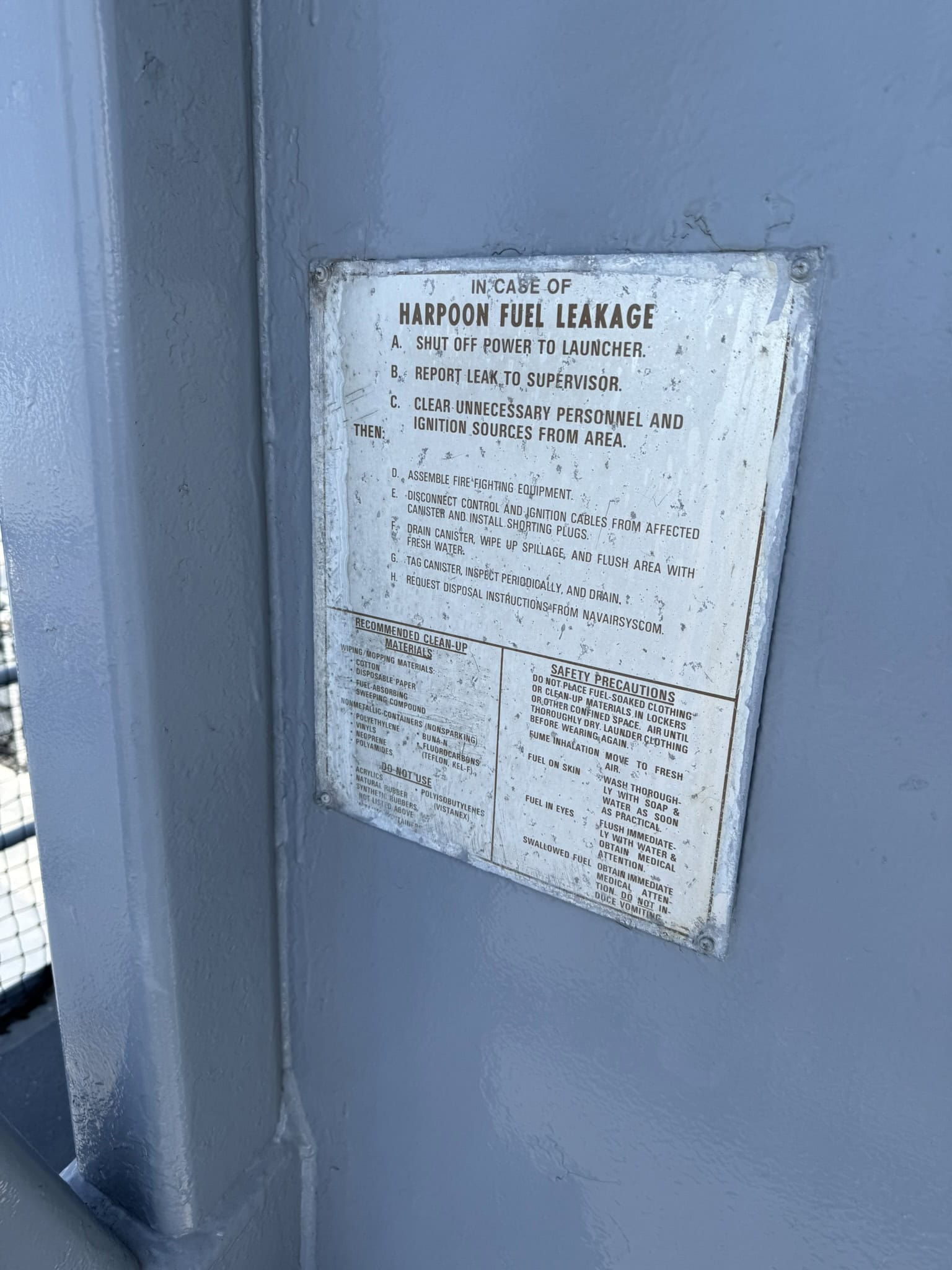
Harpoon Missile Equipment Aboard USS Iowa. Image Credit: 19FortyFive
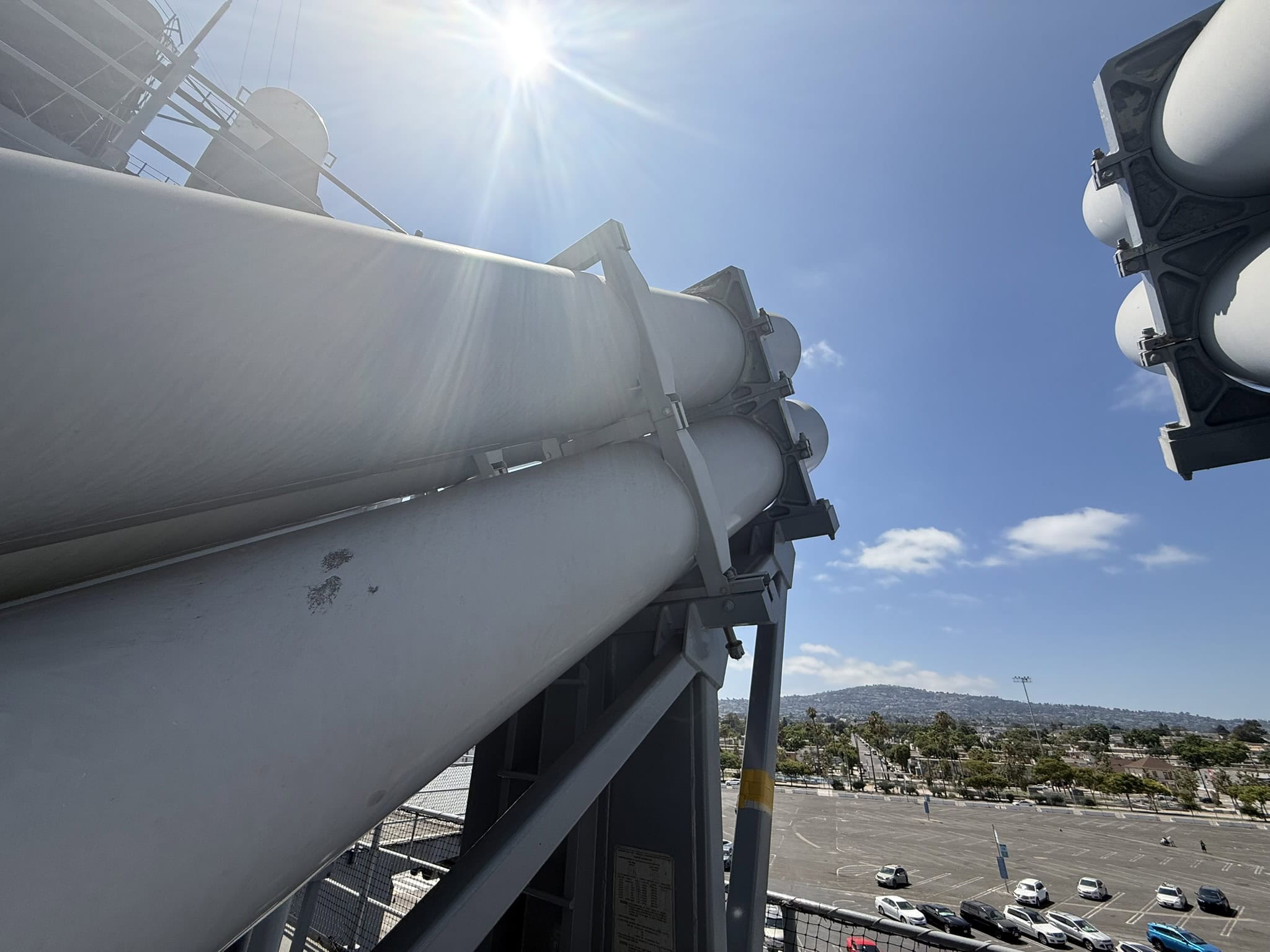
Harpoon Missile Equipment Aboard USS Iowa. Image Credit: 19FortyFive
The Succession, and the Honest Limits
None of this has stopped the United States from moving past the Harpoon, and the reasons are fair. It is a Cold War subsonic missile with a reach, roughly 75 nautical miles in its classic ship-launched form, that modern Chinese and Russian anti-ship missiles far exceed, and its radar seeker and sea-skimming profile, cutting-edge in 1977, are exactly what modern shipboard defenses are built to beat, as the Wainwright demonstrated back in 1988. So the U.S. Navy’s future is elsewhere: the stealthy, smart Naval Strike Missile is replacing the Harpoon aboard the Royal Navy’s warships and already arms America’s littoral combat ships, new Constellation-class frigates, and the Marines’ NMESIS launcher trucks, while the air-launched LRASM and a new anti-ship Tomahawk cover the long-range fight. In the U.S. fleet’s spine, the Harpoon’s era is closing, and the final Lot 91 delivery makes it official.
The Migration
But here is the turn that makes the Harpoon’s evolution interesting rather than elegiac: the missile is not dying, it is migrating, and its destination is the coastline of Taiwan. Under a $2.37 billion deal, Taiwan is receiving 400 Harpoon Block II missiles and 100 truck-mounted launchers, a variant its naval officers have told lawmakers outranges the standard American version, with the first launchers and missiles already delivered and the balance due by 2028. The new Littoral Combat Command, which stood up this month, exists largely to wield them, alongside Taiwan’s homegrown Hsiung Feng missiles, in a dispersed, road-mobile shore arsenal that officials say will give the island the “world’s densest anti-ship missile network,” with more than 1,400 missiles ringing the strait. It is the Snake Island lesson industrialized: mobile trucks, hidden along a coast, holding a hostile fleet’s amphibious shipping at risk, which is precisely the mission this missile has proven it can do.
And the sunset weapon still shows up when American planners game the war that matters. In CSIS’s simulations of a three-week fight over Taiwan, U.S. forces expended on average about 400 Harpoons alongside thousands of newer missiles, and the same institution’s industrial-base work flagged that Harpoon inventories may be insufficient for wartime demands. That is why the production line’s story this year is one of renewal rather than closure: the final classic lot ships out even as the updated Block II variant enters production, built first and foremost to fill Taiwan’s order.
What Fifty Years Teaches
The Harpoon’s evolution ends up carrying a lesson bigger than one missile. It was born for a mission that vanished, remade by a single catastrophic sinking, standardized across an alliance, proven and humbled in the same afternoon in 1988, written off in the 2010s, and revived by a truck crew on the Black Sea coast. What kept it alive through all of it was never being the best missile in the world. It was being good enough, cheap enough, launchable from nearly anything, and owned by nearly everyone, so that when the naval world rediscovered its need for ship-killers in mass, the Harpoon was the weapon thirty nations already knew how to use. The United States Navy will sail into its next war behind newer, smarter missiles. But if that war comes in the Taiwan Strait, the opening shots from the beach will very likely be fired by the old whale-hunter, aging, unfashionable, and pointed exactly where it matters.
About the Author: Harry J. Kazianis
Harry J. Kazianis (@Grecianformula) was the former Senior Director of National Security Affairs at the Center for the National Interest (CFTNI), a foreign policy think tank founded by Richard Nixon based in Washington, DC. Harry has over a decade of experience in think tanks and national security publishing. His ideas have been published in the NY Times, The Washington Post, The Wall Street Journal, CNN, and many other outlets worldwide. He has held positions at CSIS, the Heritage Foundation, the University of Nottingham, and several other institutions related to national security research and studies. He is the former Executive Editor of the National Interest and the Diplomat. He holds a Master’s degree focusing on international affairs from Harvard University.

