
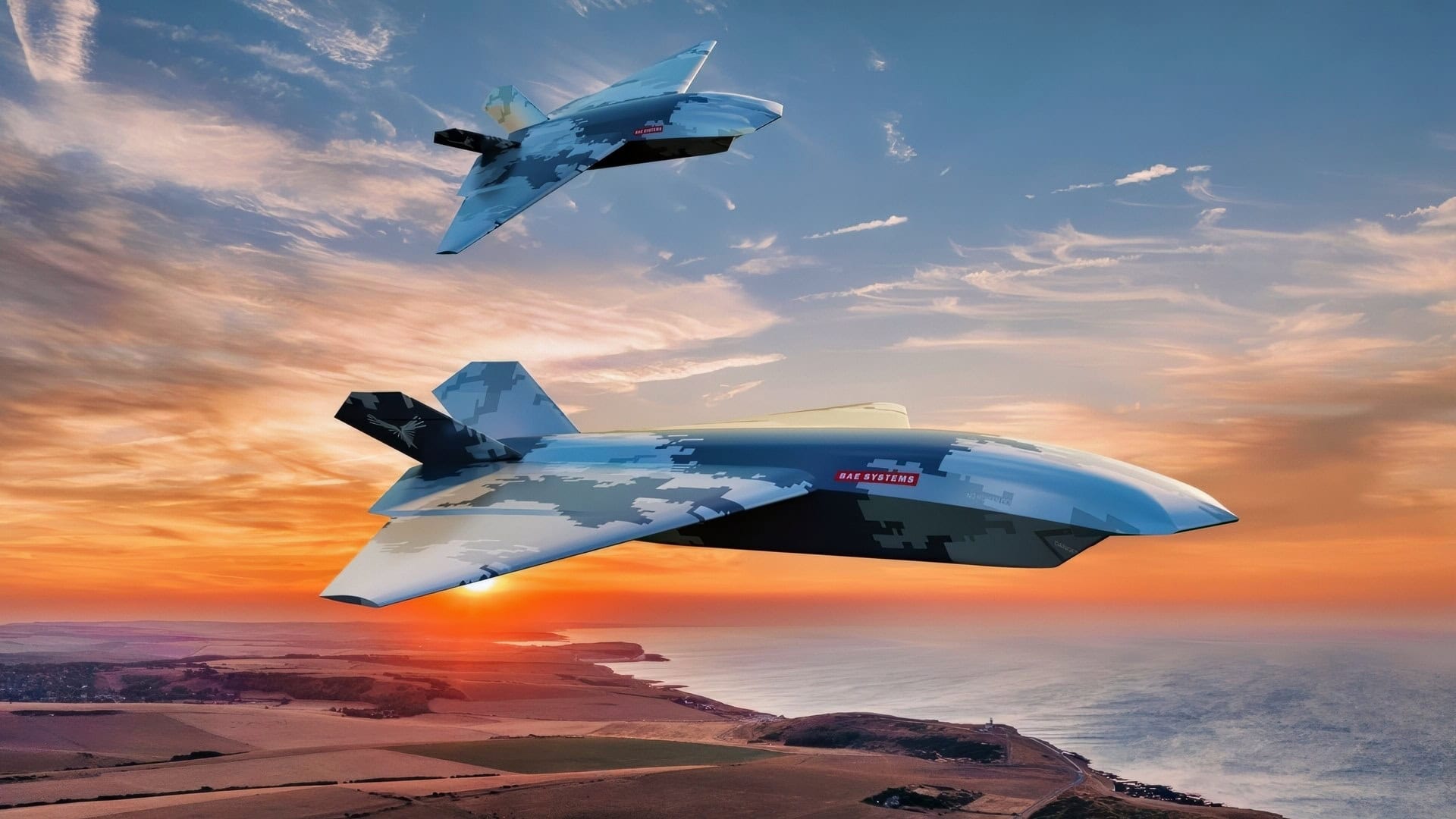
The UK has officially designated its Collaborative Combat Aircraft (CCA) drone wingman program as the Storm Fighter and is planning at least two new unmanned aircraft designs to bolster its unmanned ambitions.
The UK is seeking to build “Europe’s first sixth-generation air force,” according to an official when the announcement was made on July 16.
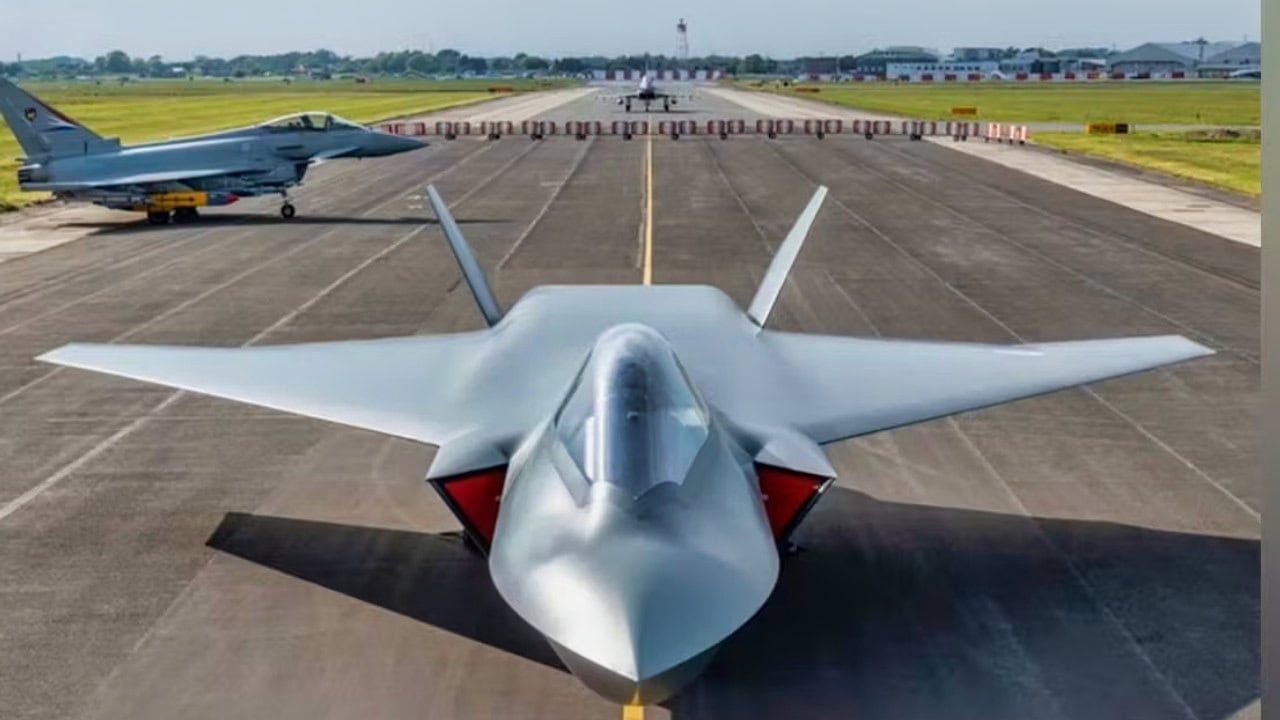
Tempest Fighter 6th Generation.
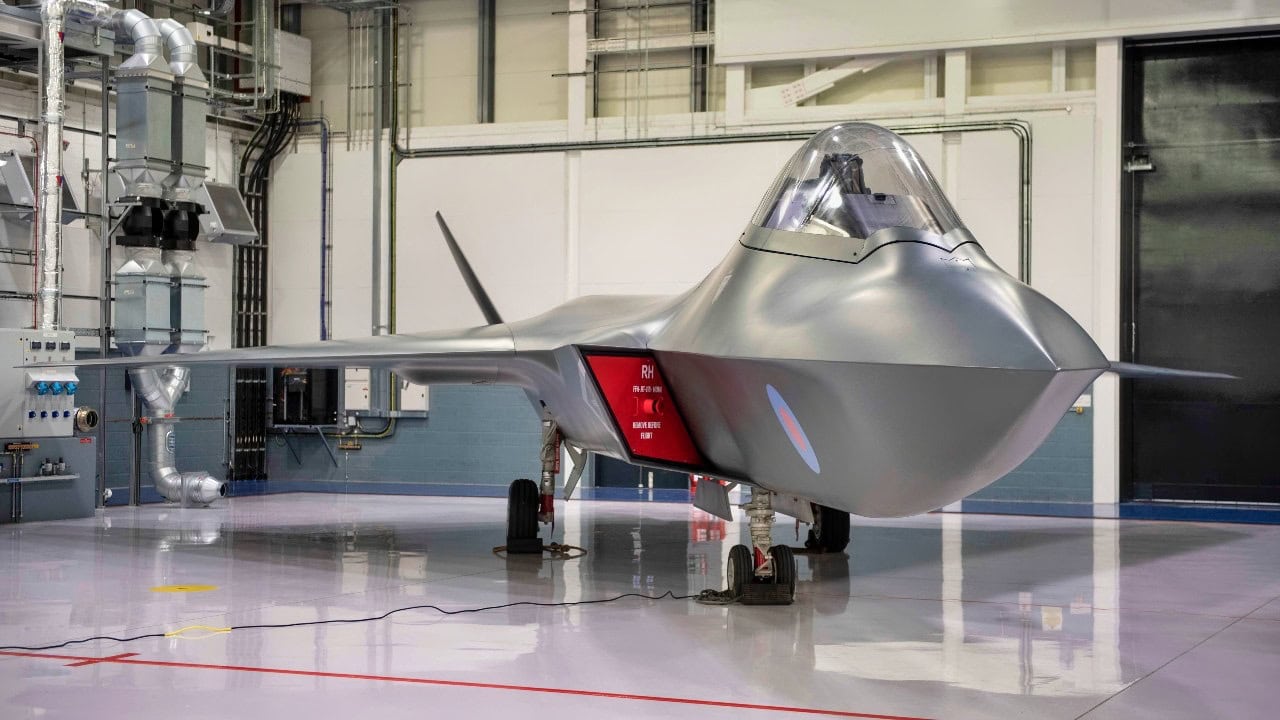
Image of the UK’s concept model for the next generation jet fighter “Tempest”, which was unveiled by Defence Secretary, at Farnborough International Air Show back in 2018.
The new CCA program was announced by Luke Pollard, the UK’s minister of state for defense readiness and industry. Speaking during a keynote address at the Global Air and Space Chiefs Conference, Pollard characterized the loyal wingmen’s role as both a “guardian angel” and an “attack dog” for British tactical aircraft.
Along with a planned futuristic fighter, Storm Fighter will “make the Royal Air Force (RAF) Europe’s first six-generation air force,” Pollard said, adding that CCA development would “lay the ground for exports, growth, partnership with friendly nations, more defense jobs, and a more resilient defense industrial base.”
The UK’s $6.6 Billion Drone Initiative
Late last month, former U.K. Prime Minister Keir Starmer set out his government’s long-awaited Defense Investment Plan (DIP). The aim of this is nothing less than “keeping the country safe for years to come,” the government said, as the plan for the UK Armed Forces leans heavily on autonomous systems.
The Defense Investment Plan is part of a 10-year blueprint for national security that increases defense spending to 3 percent of GDP, with the goal of reaching 3.5 percent by 2035.
In the next four years, the plan will invest $6.6 billion in drones and related capabilities.
“Drones are rapidly reshaping warfare, with cheap systems destroying high-value targets and innovation cycles measured in weeks, not years,” the government said in the announcement.
“Ukraine uses roughly 200,000 drones a month to defend itself from Russia’s barbaric invasion, while at the height of the Iran conflict, 700 offensive drones were being launched per day,” it added.
“Future Combat Will Be Swarming With Drones”
“We are maximizing our air power in the eye of the storm of future combat, which will be swarming with drones, sixth-generation fighter jets and ever-evolving EW (electronic warfare) capabilities,” Pollard said.
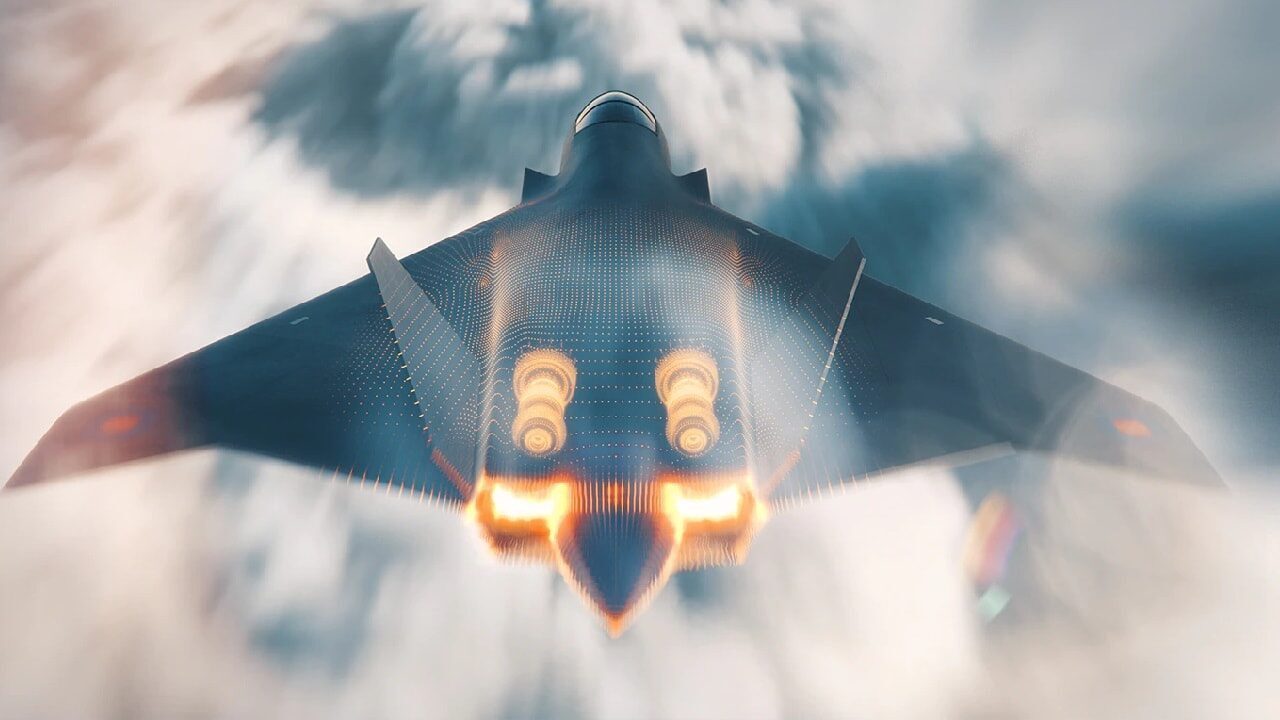
Tempest Artist Rendition. Image Credit: Industry Handout.
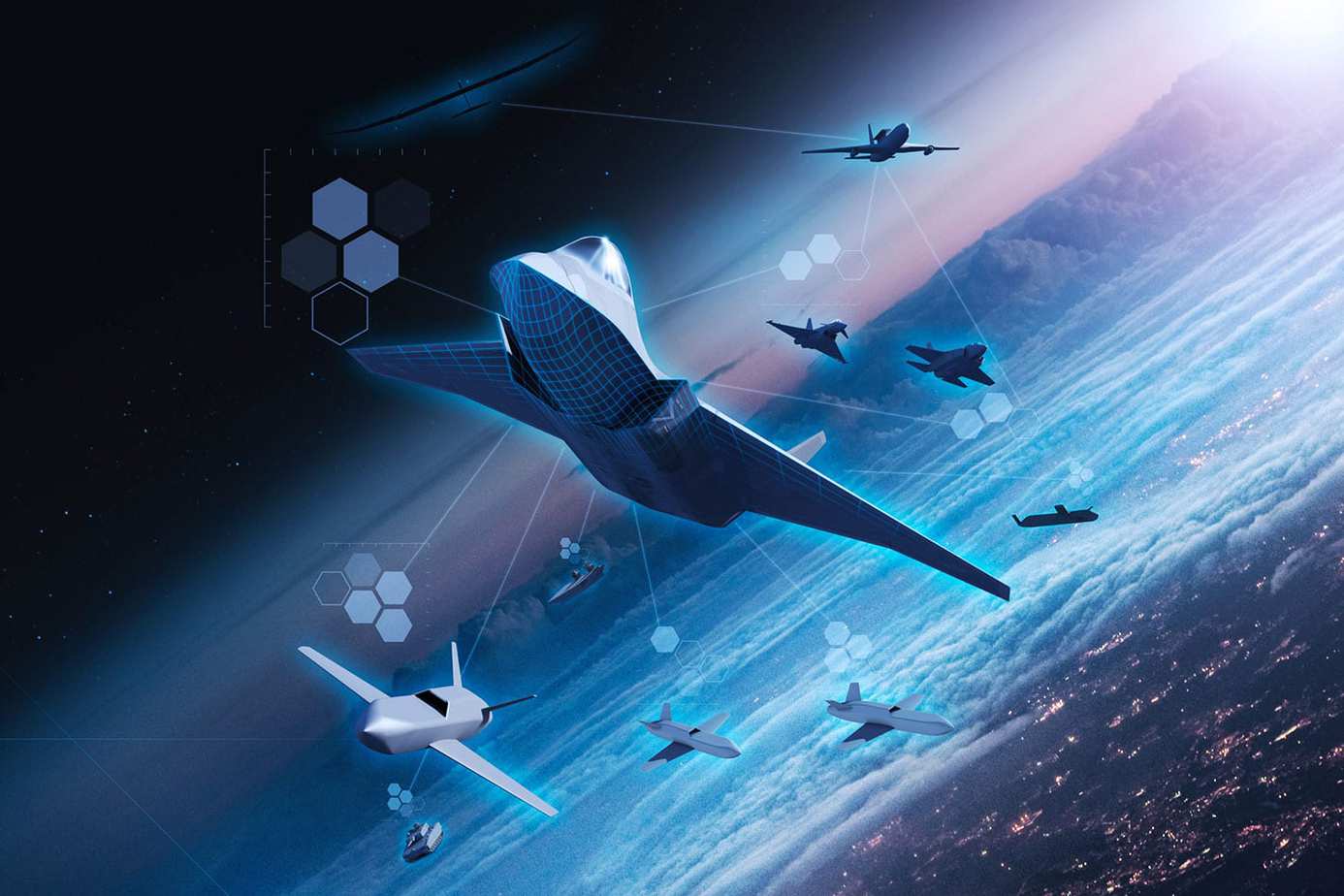
Tempest. Image Credit: Industry handout.
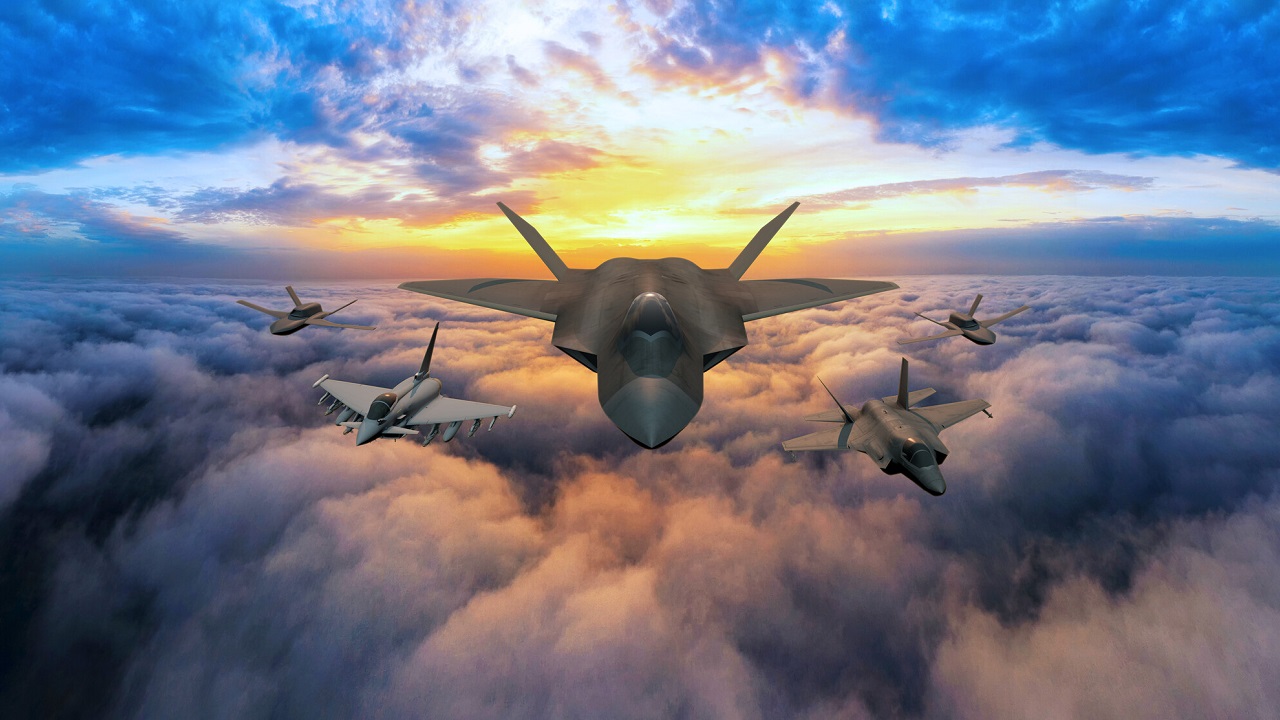
BAE Systems artist image of Tempest Stealth Fighter. Image Credit: BAE.
“I am delighted to reveal that our new autonomous CCA program will be named Storm Fighter … to deliver guardian angel and attack dog drones to fly into combat with the Typhoon, F-35, and Tempest. Storm Fighter will make the RAF Europe’s first sixth-generation air force,” he added.
The drones will extend the sensor reach and carry additional weapons for crewed fighters, increasing overall combat mass and survivability.
The RAF Gets A Huge Funding Boost In the DIP
The RAF is getting a huge boost in funding from the Defense Investment Plan (DIP), published late last month, Pollard said, with $41.7 billion earmarked for air and space programs, with money for the GCAP development, upgrades for the Eurofighter Typhoon, and additional F-35 Joint Strike Fighters.
Replacing combat aircraft entirely with uncrewed systems is “not the right lesson” from Russia’s war in Ukraine, Pollard adds, noting that the UK needs a “type of air power that only combat jets and deep strike can deliver.”
Storm Fighter will “develop autonomous jets here in the UK, providing new levels of lethality and survivability for our crewed jets” and helping to maximize UK air power, Pollard said at the summit.
The UK’s “Storm” Programs Of The RAF
In addition to the Storm Fighter drone program, Chief of the Air Staff Air Chief Marshal Harv Smyth separately unveiled two new supporting uncrewed designs.
These include Storm Chrome, a dedicated electronic warfare jamming platform, and Storm Fire, a one-way attack drone with a 1,000-mile range.
Smyth told the conference that the service is targeting an operational CCA capability before the end of the decade, Aviation Week reported.
The new systems build on operational experience gained through Storm Shroud, an autonomous platform that entered RAF service last year.
According to the RAF, Storm Shroud is a groundbreaking autonomous electronic warfare drone designed to fly ahead of crewed combat aircraft, such as the F-35B Lightning and Eurofighter Typhoon. It jams and blinds enemy radars to suppress air defenses and protect pilots in high-threat environments.
Delivered in just six months, it serves as the RAF’s first uncrewed electronic warfare aircraft and as the basis for a broader family of Autonomous Collaborative Platforms (ACP), recently paving the way for newer concepts such as Storm Fighter and Storm Fire.
“Our new CCA program, Storm Fighter, will fundamentally shift the economic balance in our favor by absorbing risk and allowing our crewed platforms to survive far more effectively,” said Smyth.
About the Author: Steve Balestrieri
Steve Balestrieri is a National Security Columnist. He served as a US Army Special Forces NCO and Warrant Officer. In addition to writing on defense, he covers the NFL for PatsFans.com and is a member of the Pro Football Writers of America (PFWA). His work was regularly featured in many military publications.