
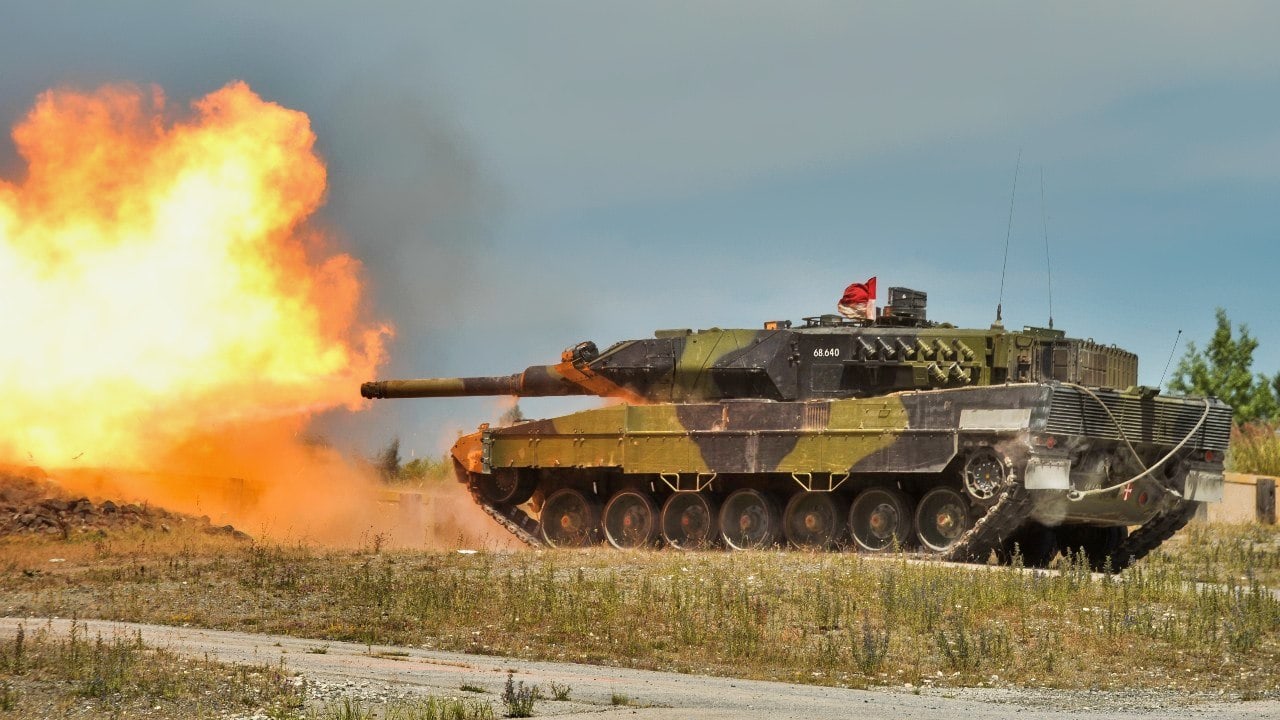
The missile that came down near Tarnawa-Kolonia on Thursday will not start a NATO-Russia war. The one that gets intercepted over western Ukraine by a Polish pilot might.
That’s a strange thing to say, given the incident is already generating the usual statements from Brussels and a grim inspection of a crater in eastern Poland.

A U.S. Air Force F-16 Fighting Falcon aircraft pilot receives fuel from a KC-135R Stratotanker aircraft, assigned to the 340th Expeditionary Air Refueling Squadron, over Southwest Asia Feb. 26, 2021. The F-16 is a compact, multirole fighter aircraft that delivers airpower to the U.S. Central Command area of responsibility. (U.S. Air Force photo by Master Sgt. Joey Swafford)
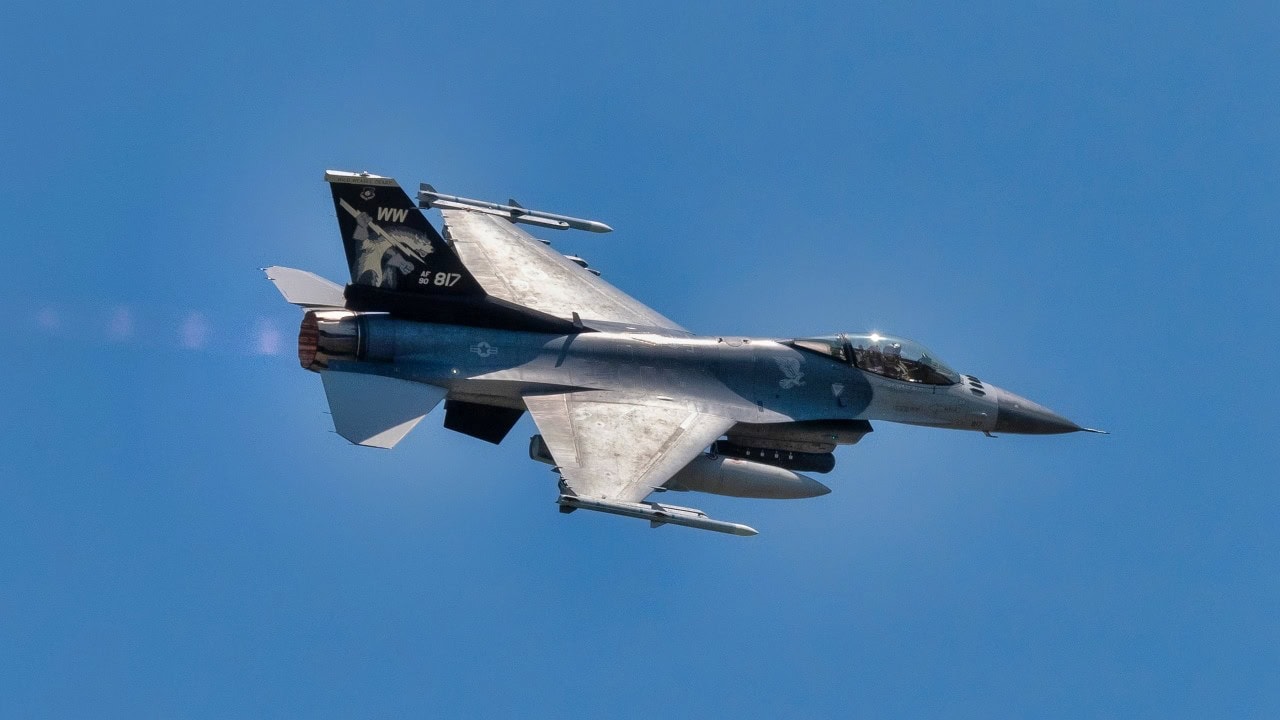
Capt. Charles “Static” Trader, both with the 13th Fighters Squadron F-16 pilots, performs an aerial demonstration in an F-16 Fighting Falcons during the Japanese-American Friendship Festival 2024 at Yokota Air Base, Japan, May 18, 2024. During two-day bilateral festival, The F-16 Fighting Falcon performs a multitude of aerial maneuvers during air festivals to showcase the ability and skill of the aircraft and pilot. (U.S. Air Force photo by Yasuo Osakabe)
The crater matters less than what Poland does next time, because Warsaw has already asked whether it should wait at all before the missile crosses the border.
Why This One Is the Easy Case
During a mass Russian strike that killed civilians across Ukraine, an object believed to be a Kh-101 cruise missile crossed into Polish airspace and came down 90 to 100 kilometers from the border.
No one was hurt. Tusk said there was no reason to think Poland had been the target; Polish F-16s were already scrambled before the missile showed up on radar, and Ukrainian pilots had been trying to intercept missiles approaching the border.
Poland was not caught flat-footed.
Invoking Article 5 here would be a mistake.
The missile was dangerous, but NATO assesses armed-attack claims case by case, and Article 5 requires a collective political decision, not an automatic one.
The alliance has been through this before: a missile that killed two people at Przewodów in 2022 was probably fired by Ukrainian air defense, not Russia, and NATO investigated first and escalated not at all.
This incident points more clearly to a Russian weapon, and Moscow owns the consequences of a war that keeps sending missiles across a NATO border.
An accidental incursion, though, is a different animal from an attack on Poland.
The harder case sits further east, over Ukrainian territory Poland doesn’t govern, but has begun weighing whether to help defend.
The Shot Nobody’s Talking About
Picture the next Russian barrage against Lviv or somewhere else in western Ukraine.
Polish radar picks up a missile heading roughly toward the border, and for a while its exact course is genuinely uncertain — a guidance fault or Ukrainian jamming can push a cruise missile off its intended path.
Waiting until it crosses into Poland keeps a clean line between NATO airspace and the war next door.
It also leaves Polish pilots less time to identify the target and destroy it without debris landing on someone’s house.
The better shot, from a purely military standpoint, comes while the missile is still over Ukraine.
Poland and Ukraine actually signed a bilateral security agreement in July 2024 calling for a study of possible interceptions of Russian missiles over Ukrainian territory when those weapons were heading toward Poland.
Thursday’s attack is the sort of scenario that the study was written for: Ukrainian pilots were already defending their own airspace during the same barrage, and the study is meant to work out the feasibility and procedure for Poland to do the same before a missile crosses the border.
A Polish F-16, flying with Kyiv’s consent, could destroy a Russian missile on a threatening course while it’s still inside Ukrainian airspace. No debris in a Polish field, no Polish civilians to explain to.
What Moscow does next would tell you something important. It can treat the intercept as tolerable, a one-off in a war with sloppy edges, or conclude that letting a NATO air force operate against Russian ordnance sets a precedent that hardens every time it goes unchallenged.
If a Russian aircraft, or an air-defense system tracking the Polish jet, moves to challenge that F-16 instead, the character of the episode changes instantly: a missile crossing into Poland can be explained by guidance failure, but firing on the aircraft sent to stop it takes a deliberate choice.
How little needs to go wrong here is the real problem.
Once Poland starts treating any Russian weapon near its airspace as fair game for an early intercept, Moscow has to decide whether that’s a nuisance worth tolerating or a NATO combat role worth resisting.
Russia doesn’t need a good reason to pick the second answer, only an intelligible one — the fear that today’s intercept becomes tomorrow’s standing patrol isn’t a paranoid read of the situation. Misjudging that fear, on either side, is enough to widen the war.
NATO Has Not Decided
Russian calculations depend on how the alliance would answer one question in advance: would NATO treat a downed Polish aircraft over Ukraine as an attack on a member state, or as Warsaw’s private complication?
Moscow will be more willing to test a Polish aircraft if it expects the latter, and Poland may act on an assumption of allied backing that Washington and Berlin have never put in writing.
Better radar and faster identification don’t solve this; they just move the decision earlier in the timeline, and the alliance still hasn’t settled whether Poland’s defense begins at the border or while the missile is still over Ukraine.
Washington cannot leave that determination to Warsaw alone. Poland sits closest to the danger, which is exactly why its judgment shouldn’t be the only one that counts; an engagement over Ukraine creates exposure for every ally.
Washington has spent years maintaining that heavy material support for Kyiv doesn’t make NATO a belligerent, and a standing Polish mission to intercept missiles over Ukrainian territory presses against that distinction whether or not it’s framed as defensive — a strain nobody in Washington has publicly reckoned with.
None of this requires a no-fly zone. What it actually calls for is narrower: may a Polish aircraft destroy a weapon clearly bound for Poland while it’s still a few miles short of the border?
It sounds like a modest carve-out until Russia challenges the aircraft sent to make that shot — at which point the alliance is deciding, in real time, what a frontline ally’s defensive action means for everyone standing behind it.
What Happens After the Next Crater
The wreckage near Tarnawa-Kolonia will get logged as one more entry in a lengthening record of Russian spillover along NATO’s eastern edge, and the absence of casualties will make it easy to move on.
But the pressure underneath Thursday’s incident isn’t going anywhere, and the next missile may leave a Polish commander only a couple of minutes to decide whether to wait for it to cross the border or take the shot while it’s still Kyiv’s problem.
NATO has yet to settle that question in Brussels or Washington, which leaves open the chance that the first real answer comes from a Polish pilot with only minutes to decide.
Moscow, by then, will already be weighing whether the shot was a narrow defense of Polish territory or the start of something larger.
About the Author: Dr. Andrew Latham
Andrew Latham is a professor of international relations and political theory at Macalester College in Saint Paul, MN. You can follow him on X: @aakatham.