
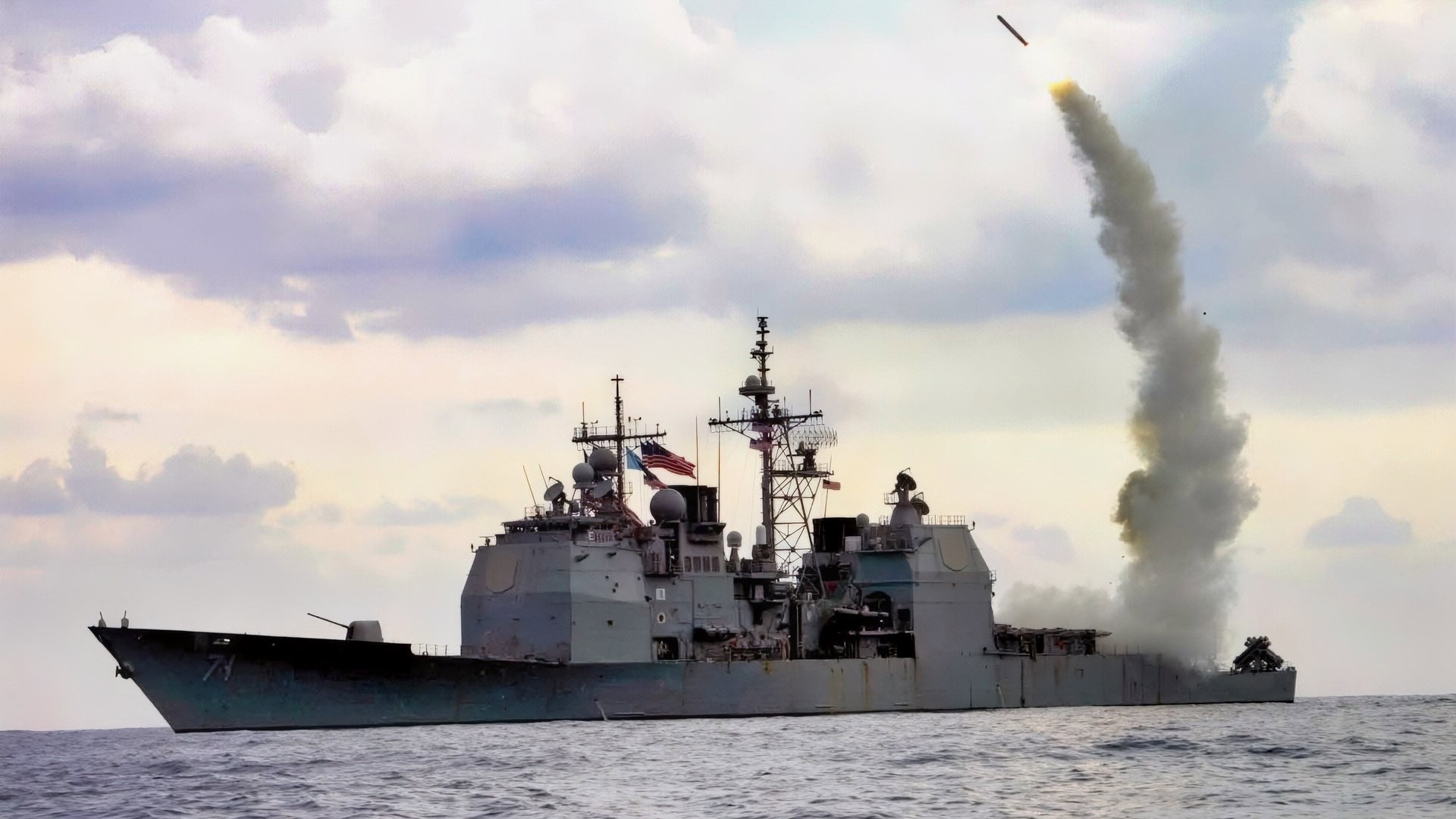
The U.S. Navy’s Ticonderoga-class cruiser modernization plan was supposed to preserve 11 large air-defense warships during a difficult fleet transition. By July 2026, only USS Gettysburg, USS Chosin and USS Cape St. George had completed the process. The Government Accountability Office found that the Navy spent about $3.7 billion on seven cruisers and put $1.84 billion into four ships retired before returning to operational service.
Those lost hulls would have been useful. Each Ticonderoga has 122 Mk 41 missile cells and the command facilities needed for the Air and Missile Defense Commander role in a carrier strike group. A Flight III Arleigh Burke destroyer brings a newer SPY-6 radar, but carries 96 cells.
The plan began after the Navy proposed retiring several cruisers in 2012 and 2013 to save money. Congress refused and funded modernization. The compromise became the “2-4-6” strategy: no more than two cruisers would enter each year, each ship would remain in modernization for no more than four years, and no more than six would be unavailable at once.
The Navy later extended Gettysburg, Chosin and Cape St. George through fiscal 2029. Demand for the class has not disappeared. USS Lake Erie returned to San Diego on June 27, 2026, after 11 months of sustained operations, yet Lake Erie and USS Shiloh remain scheduled for decommissioning on September 30.
The 2-4-6 Plan Began Without a Real Program Structure
The effort grew out of a budget dispute rather than a disciplined acquisition process. GAO found that the Navy considered no formal alternatives before proposing phased modernization, and delaying near-term costs was a primary motivation.
Despite using roughly $2 billion in procurement funding, the program lacked an independent cost estimate, a comprehensive risk plan, a stable baseline, an integrated master schedule and regular acquisition reviews. Seven ships entered the effort, but the Navy managed their repair periods largely as separate events instead of one coordinated program, creating a wider Ticonderoga-class failure.
The Navy Did Not Know How Bad the Cruisers Had Become
The ships entered modernization carrying years of deferred work. Maintenance was postponed during the wars in Iraq and Afghanistan, then canceled between 2011 and 2014 because the Navy expected to retire the cruisers. Later surveys did not fully expose cracked fuel tanks, corrosion, worn machinery and other problems inside aging hulls.
The Navy then transferred each ship from the fleet to Naval Sea Systems Command, inactivated it and reduced its crew from more than 350 sailors to about 45 caretakers. Systems were shut down and deteriorated while inactive.
Many defects appeared only when larger crews returned to reactivate the ships, helping turn a planned life extension into part of the surface fleet’s wider maintenance crisis.
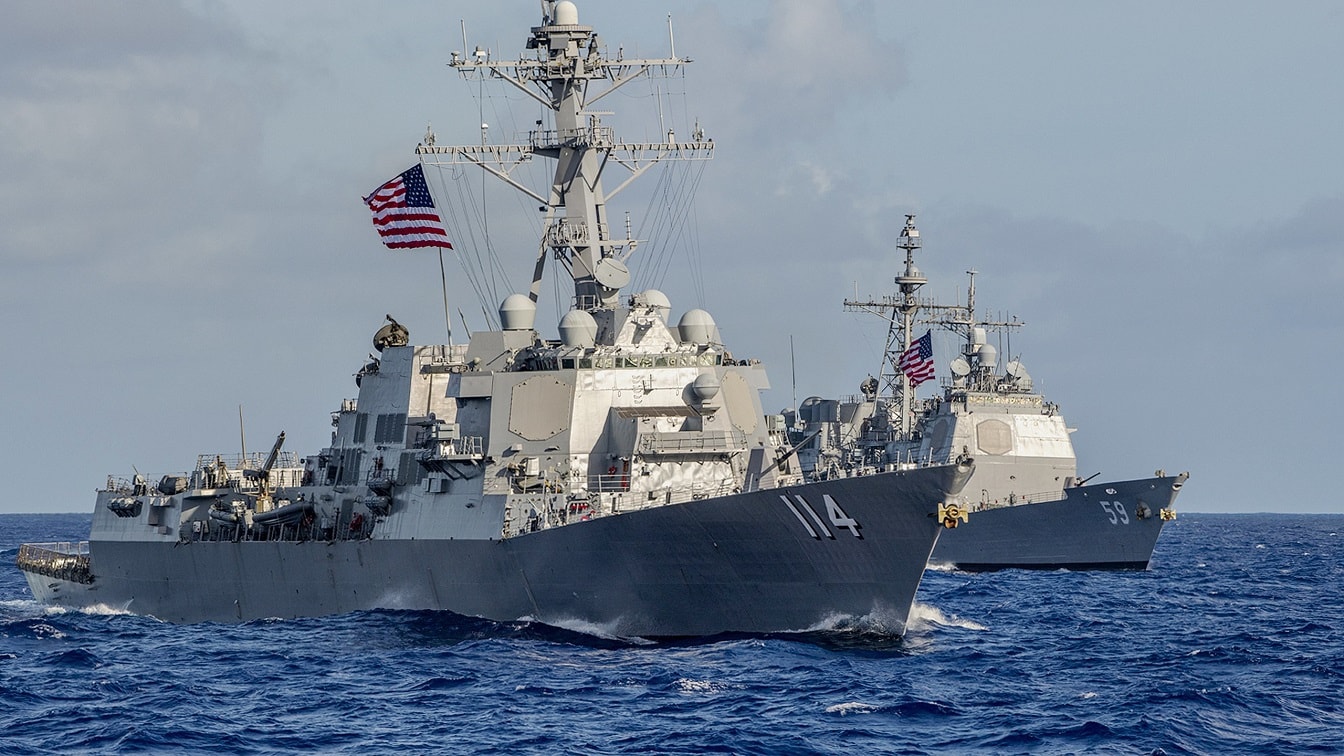
The Arleigh Burke-class guided-missile destroyer USS Ralph Johnson (DDG 114) and the Ticonderoga-class guided-missile cruiser USS Princeton (CG 59) steam in formation during dual carrier operations with the Nimitz and Theodore Roosevelt Carrier Strike Groups (CSG). Dual carrier operations unify the tactical power of two individual CSG, providing fleet commanders with an unmatched, unified credible combat force capable of operating indefinitely. The CSGs are on a scheduled deployments to the Indo-Pacific.
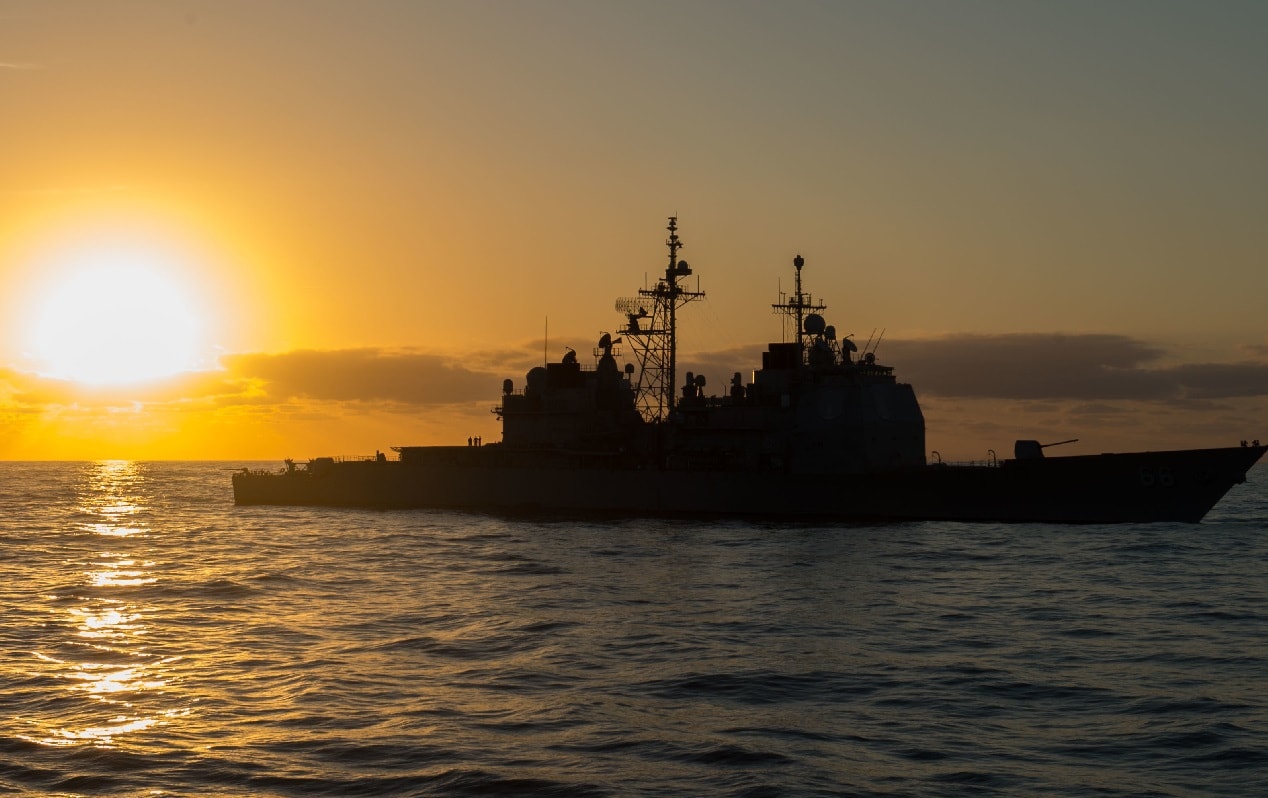
The sun rises over the Ticonderoga-class guided-missile cruiser USS Hue City (CG 66) in the Atlantic Ocean March 28, 2018. Hue City is underway supporting Carrier Strike Group Four Task Force Exercise 18-2. (U.S. Navy photo by Mass Communication Specialist 3rd Class Danny Ray Nuñez Jr.)
Unplanned Work and Poor Quality Broke the Schedule
The result was about 9,000 contract changes. One cruiser accumulated more than 2,500 unplanned work items across three contracts, adding over $103 million. The five ships that reached full modernization experienced 36 percent cost growth and more than 15 cumulative years of delay. Cowpens and Vicksburg remained in the process for roughly eight years each.
Contractor performance added more trouble. Navy maintenance centers issued 1,409 corrective action requests. On Vicksburg, a contractor damaged a new sonar-dome window, forcing the government to buy another for more than $1 million.
After a pressure test failed, workers used unauthorized plastic wrap, tape, expanding foam and store-bought superglue while trying to seal leaks. Vicksburg later became a parts source for Gettysburg and other cruisers, one of the clearest examples of the modernization program’s collapse.
The Navy also weakened its own leverage. Senior leadership restricted monetary penalties without high-level approval and reduced inspection checkpoints by almost half. Officials said they wanted to preserve relationships with a ship-repair industry the Navy depended upon.
Oversight teams had fewer tools while poor workmanship continued.
The Ships Returned Too Late or Never Returned at All
USS Hué City entered the effort but never began modernization. Work on USS Anzio stopped after an early maintenance period. Cowpens and Vicksburg advanced much further, yet both still required years of work and substantial additional money when the Navy ended the effort.
The fleet lost four potential 122-cell missile magazines after spending $1.84 billion, deepening the decline in surface-fleet missile capacity.
The three completed ships show that the basic idea had military value. Gettysburg returned to Norfolk in March 2026 after a five-month deployment. Cape St. George returned to San Diego in April 2025 following extensive hull, engineering and combat-system work. Chosin completed modernization and later hosted the Navy’s first open-ocean demonstration of reloading a Mk 41 missile canister at sea.
The program failed because the Navy combined deferred maintenance, deep combat-system upgrades, long preservation periods and skeleton crews without the controls required for a multibillion-dollar acquisition.
The Navy is now applying some lessons to DDG Modernization 2.0, a program expected to spend more than $10 billion upgrading 23 destroyers.
The four failed cruiser modernizations cannot be recovered, and Lake Erie and Shiloh are still scheduled to leave the fleet on September 30, 2026.
About the Author: Harry J. Kazianis
Harry J. Kazianis (@Grecianformula) was the former Senior Director of National Security Affairs at the Center for the National Interest (CFTNI), a foreign policy think tank founded by Richard Nixon based in Washington, DC. Harry has over a decade of experience in think tanks and national security publishing. His ideas have been published in the NY Times, The Washington Post, The Wall Street Journal, CNN, and many other outlets worldwide. He has held positions at CSIS, the Heritage Foundation, the University of Nottingham, and several other institutions related to national security research and studies. He is the former Executive Editor of the National Interest and the Diplomat. He holds a Master’s degree focusing on international affairs from Harvard University.

