
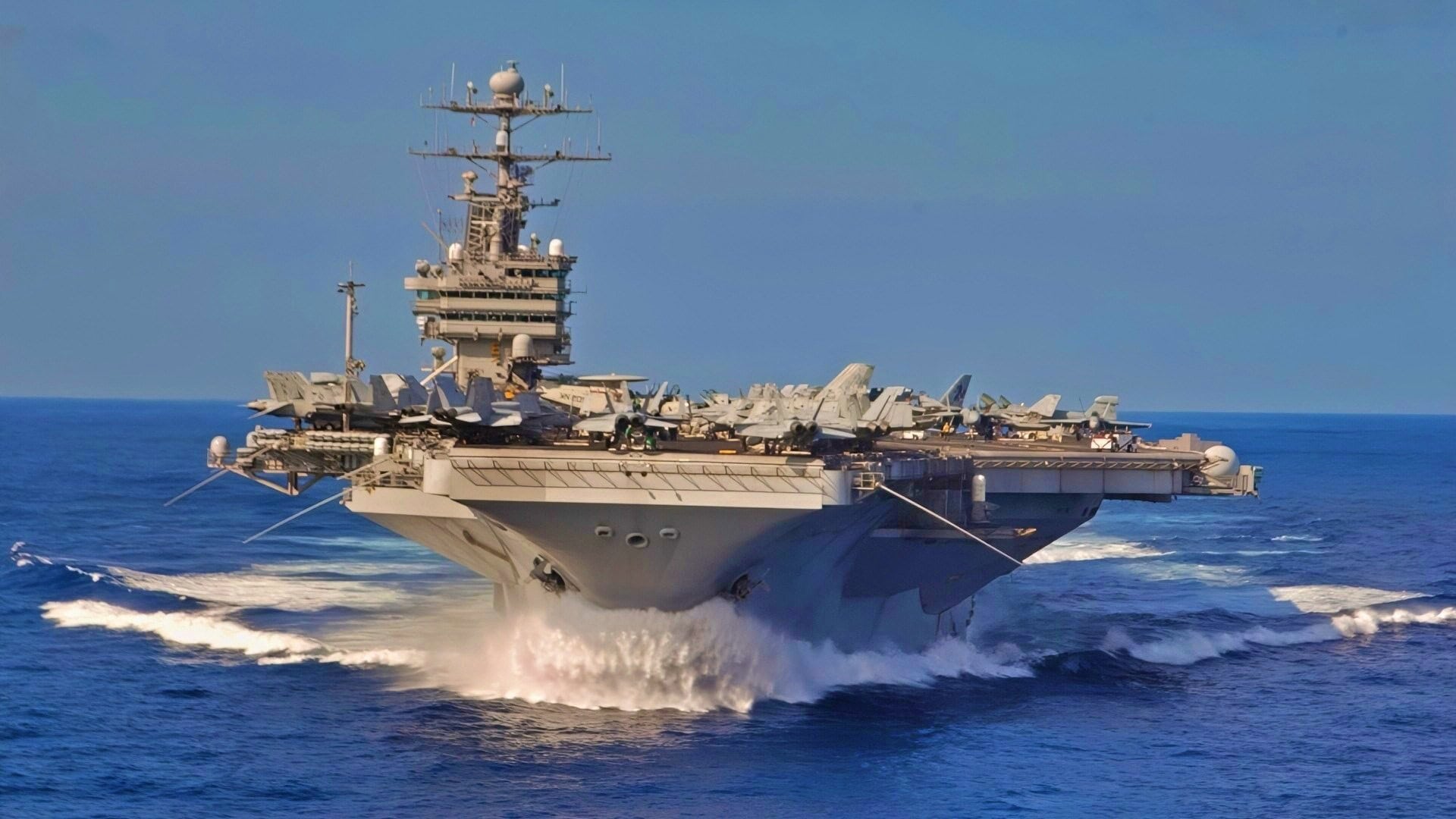
The USS John C. Stennis (CVN-74) is projected to complete its midlife refueling and overhaul and return to the U.S. Navy around October 2026, with full operational sea trials and deployment readiness following into 2027, making it one of the longest in recent history.
The USS John C. Stennis (CVN 74) is named for Senator John C. Stennis of Mississippi and is the seventh of the Nimitz-class of nuclear-powered supercarriers in the United States Navy.
She was commissioned on December 9, 1995. Her temporary home port is Norfolk, Virginia, for her scheduled refueling and complex overhaul (RCOH), which began in 2021, under a $3 billion contract. After her overhaul is completed, she is expected to return to Bremerton, Washington.
“RCOH construction enhances nearly every space and system on the carrier, beyond the most critical requirement to defuel and refuel the ship’s two nuclear reactors and to repair and upgrade the propulsion plant,” Capt. Mark Johnson, manager of the PEO Aircraft Carriers In-Service Aircraft Carrier Program Office, said.
“We work on every part of the ship, from the hull, screws and rudders to more than 600 tanks; thousands of valves, pumps and piping components; electrical cables and ventilation; as well as combat and aviation support systems.
It’s demanding, complex work that challenges every member of the planning team, shipyard crews and ship’s force.”
The Stennis’ Long Delayed RCOH Is More Than 14 Months Overdue
Stennis’ RCOH was slated for completion in August of last year. That will now be at least 14 months late. The five and a half years that it will take come at a precarious time for the Navy.
The US is currently still conducting combat operations against Iran, although they are currently on a break while attempts are made at negotiation.
The typical RCOH for a carrier consists of replacing nuclear fuel in the reactors, modernizing electronics, repairing structural components, upgrading combat systems, and improving crew living spaces.
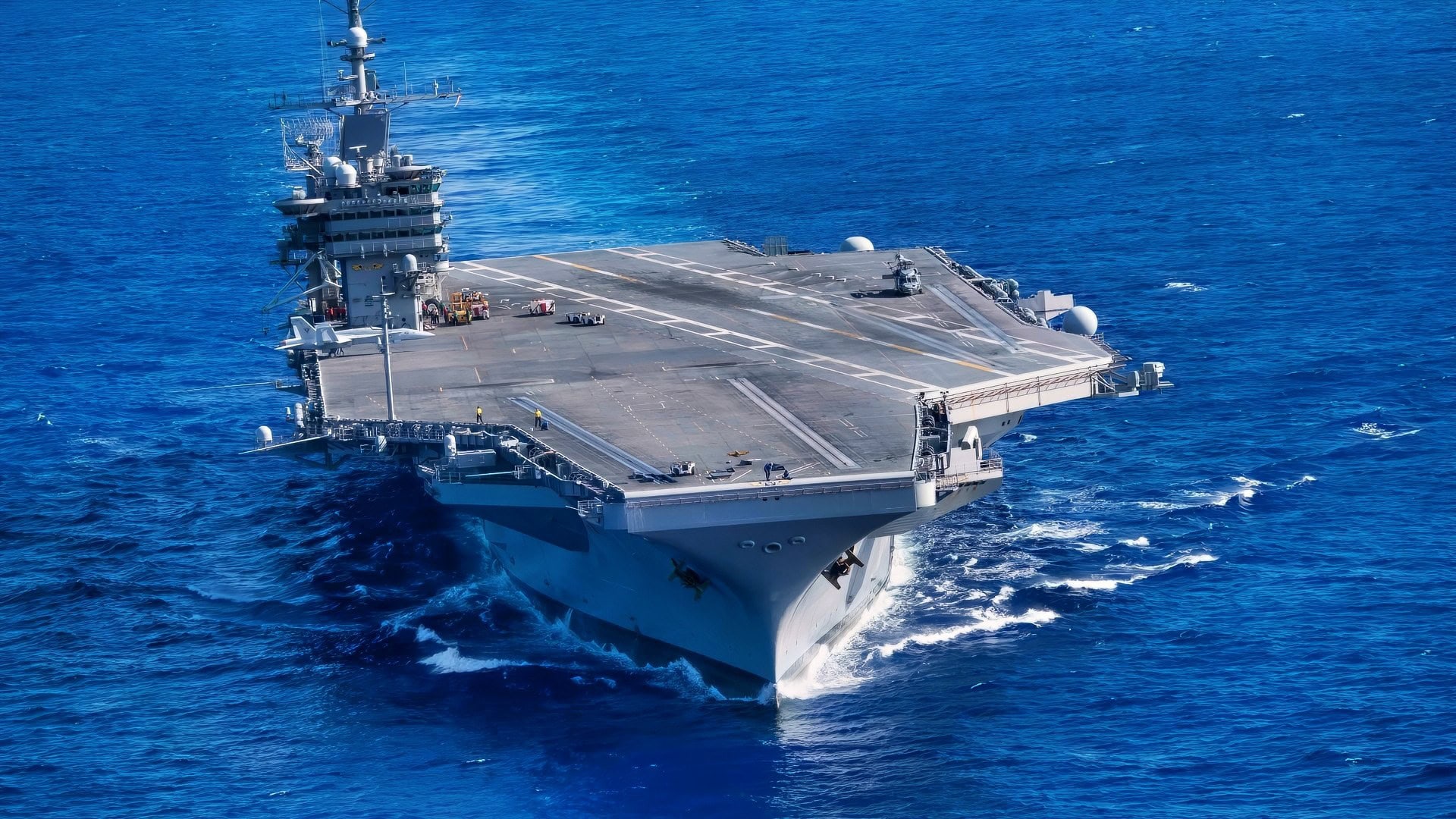
The aircraft carrier USS John C. Stennis (CVN 74) steams through the Atlantic Ocean, Sept. 6, 2019. The John C. Stennis is underway as part of a Commander, U.S. 2nd Fleet ordered sortie ahead of Hurricane Dorian, which is forecasted to bring high winds and heavy rain to the East Coast. Ships are being directed to areas in the Atlantic Ocean where they are best postured for storm avoidance. (U.S. Navy photo by Mass Communication Specialist 3rd Class Grant G. Grady)
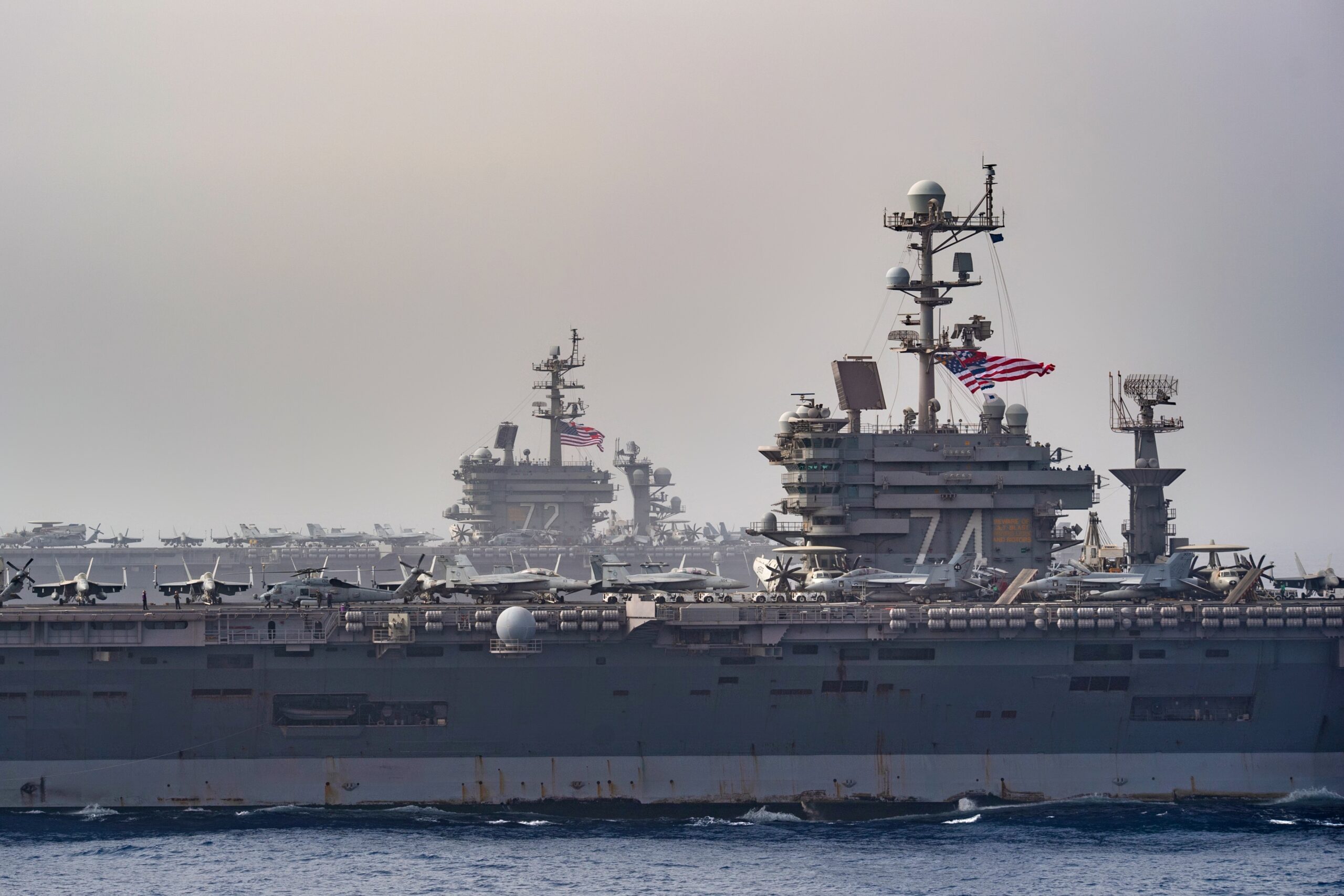
The aircraft carrier USS John C. Stennis (CVN 74) steams alongside the aircraft carrier USS Abraham Lincoln (CVN 72), background, in the Mediterranean Sea, April 24, 2019. The John C. Stennis Carrier Strike Group (CSG) 3 and Abraham Lincoln Carrier Strike Group (CSG) 12 are conducting dual carrier operations, providing opportunity for two strike groups to work together alongside key allies and partners in the U.S. 6th Fleet area of operations. John C. Stennis is underway in the Mediterranean Sea as part of the John C. Stennis Carrier Strike Group (JCSCSG) deployment in support of maritime security cooperation efforts in the U.S. 6th Fleet area of responsibility. (U.S. Navy photo by Mass Communication Specialist 3rd Class Grant G. Grady)
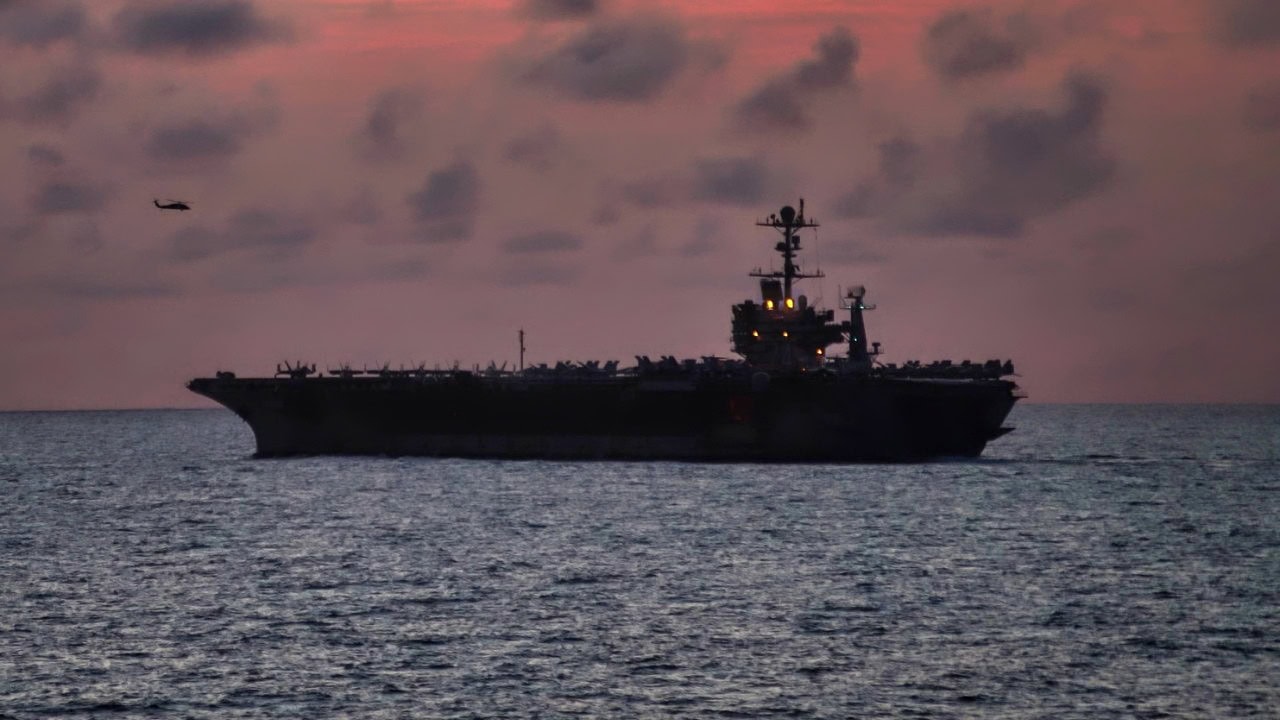
USS John C. Stennis Aircraft Carrier. Image Credit: Creative Commons.
The work is over 65 percent complete, and the ship has transitioned out of the dry dock into the second phase of testing, with the finishing touches being applied.
The Stennis delay means it will remain in the final testing phase.
At the same time, the USS Harry S. Truman (CVN-75) begins its own multi-year RCOH in June 2026, creating a situation in which two carriers are in deep maintenance simultaneously.
Compounding the issues are the constant US shipbuilding industry issues, which are well-documented.
Meet The USS John C. Stennis
The Stennis is 1,092 feet long and soars some 20 stories above the waterline. As a self-contained city, the Stennis has virtually the same amenities as any American city with a comparable population.
It features a daily newspaper, radio and television stations, a fire department, a library, a hospital, a general store, a laundry, two barbershops, and even a post office with its own zip code.
The carrier is powered by two Westinghouse A4W nuclear reactors (HEU 93.5 percent), four steam turbines, and four propeller shafts, each with five blades. This produces 260,000 shp (190 MW)
The top speed of the Stennis is 30 knots (35 mph) or higher, and she has an unlimited range until her nuclear fuel rods need replacement every 20–25 years. The carrier is crewed by 6,500 officers and crew (with embarked airwing).
The Stennis’ Sensors and Processors
The Stennis has an enormous number of sensors to protect the ship.AN/SPS-48E 3-D air search radar, AN/SPS-49(V)5 2-D air search radar, AN/SPQ-9B target acquisition radar, AN/SPN-46 air traffic control radars, AN/SPN-43C air traffic control radar, AN/SPN-41 landing aid radars, 4 × Mk 91 NSSM guidance systems, 4 × Mk 95 radars
Electronic warfare & decoys include the AN/SLQ-32A(V)4 countermeasures suite, and the SLQ-25A Nixie torpedo.
The Stennis Is Heavily Armed
The carrier is armed with four Mk 57 Mod3 Sea Sparrow Missile launchers, two RIM-116 Rolling Airframe Missile launchers, and three Phalanx CIWS anti-aircraft systems.
The USS John C. Stennis is capable of carrying approximately 85 to 90 fixed-wing aircraft and helicopters. However, the exact number can vary depending on the specific air wing and mission requirements.
USS John C. Stennis (CVN 74) History
In 1999, the Stennis ran aground in a shallow area adjacent to the turning basin near North Island in San Diego Harbor.
Silt clogged the intake pipes to the steam condensing systems of the nuclear reactor plants, causing the carrier’s two nuclear reactors to be shut down (one reactor by crew, the other automatically) for 45 minutes. She was towed back to her pier for maintenance and observation for the next two days. The cleanup cost was about $2 million.
In the early spring of 2001, the Stennis was the site of the world premiere of the film “Pearl Harbor,” which was billed as “the world’s largest and most expensive outdoor theater.” Special, enormous screens were erected on the flight deck, along with bleachers that seated 2,000 people.
Post 9/11 Deployment To The Middle East
After the terrorist attacks in the United States during 9/11, the Stennis deployed to the Persian Gulf in November 2001, in support of air operations during Operation Enduring Freedom.
In mid-January 2007, the Stennis’ carrier strike group set sail for the Persian Gulf as part of an increase in US military presence. She arrived in the area in mid-February, joining USS Dwight D. Eisenhower in the United States Fifth Fleet area of operations.
This marked the first time since 2003 that two aircraft carrier battle groups were present in the region simultaneously.
Later, on May 23, 2007, the Stennis, along with eight other warships, including the aircraft carrier Nimitz and amphibious assault ship Bonhomme Richard, passed through the Strait of Hormuz.
US Navy officials said it was the largest such move since 2003.
In December 2011, the Stennis flew the final command-and-control mission for U.S. forces over Iraq, which was conducted by an E-2C Hawkeye from Carrier Airborne Early Warning Squadron 112 (VAW-112).
The mission launched from the carrier at 7:32 a.m. and returned at 11:04 a.m., both local times. This mission effectively ended U.S. naval support for Operation New Dawn.
The overhaul for the Stennis has stretched from four years to more than five, and it has come at a particularly bad time for the Navy to be short a carrier with the conflict in Iran likely to reignite at a moment’s notice.
MORE – The US Navy’s Attack Submarine Shortage
About the Author: Steve Balestrieri
Steve Balestrieri is a National Security Columnist. He served as a US Army Special Forces NCO and Warrant Officer. In addition to writing on defense, he covers the NFL for PatsFans.com and is a member of the Pro Football Writers of America (PFWA). His work was regularly featured in many military publications.