
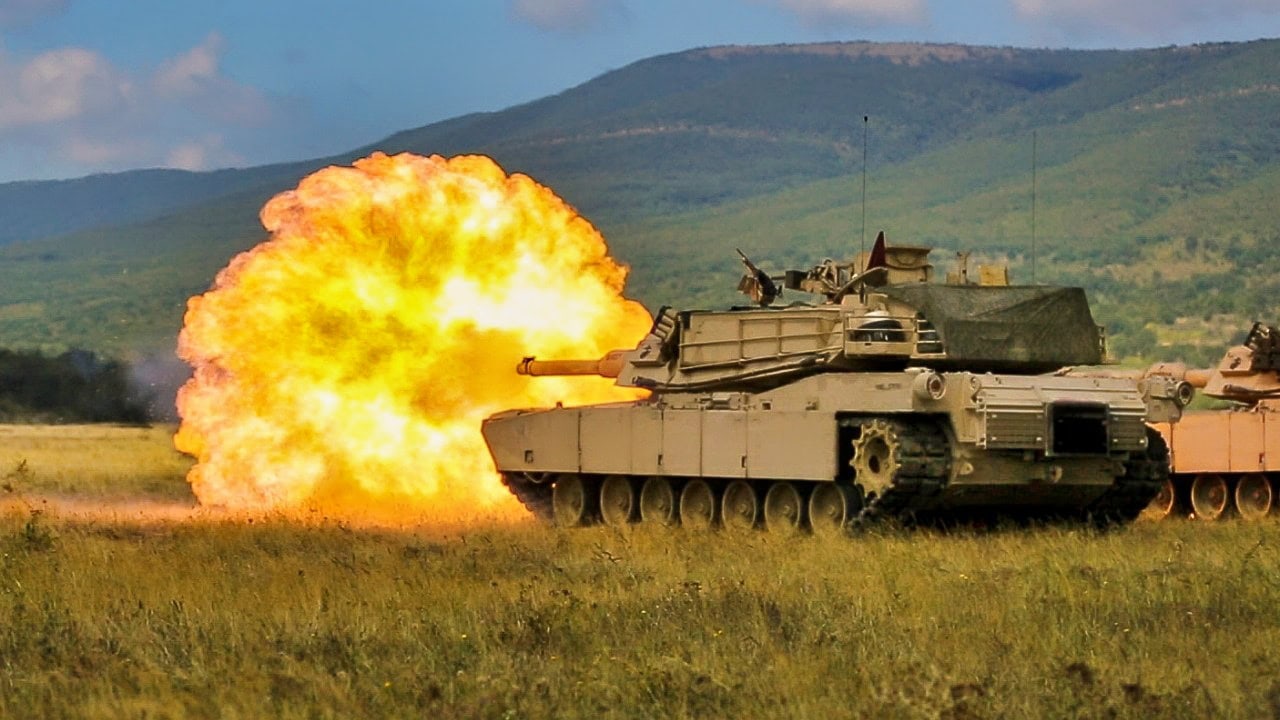
Australia Sent Ukraine 49 M1A1 Abrams Tanks Despite U.S. Warnings: Australia completed the transfer of 49 retired M1A1 Abrams tanks to Ukraine in December 2025, giving Kyiv a large batch of American-designed heavy armor. The shipment went forward despite private frustration among U.S. officials, who had warned Australia that the vehicles would be difficult for Ukraine to sustain.
The disagreement never became a formal Pentagon objection. Washington approved the transfer, required for any shipment of American-made tanks to a third country. Officials instead questioned whether the retired Abrams justified the shipping, maintenance and support burden after Ukraine’s first U.S.-supplied M1A1s struggled on a drone-saturated battlefield.
Australia announced the A$245 million donation in October 2024 after a direct request from Kyiv. Its Defence Department said 37 tanks arrived in July 2025 and the final 12 were prepared in Poland and handed over in December. Australia retained a small number of M1A1s while introducing 75 M1A2 SEPv3 tanks.
The Australian Broadcasting Corporation reported in May 2025 that American officials remained privately frustrated. One anonymous U.S. official said Australia had been warned that the transfer would be complicated and the tanks difficult for Ukrainian forces to sustain. A separate Australian defense official questioned their vulnerability from above in a war dominated by drones.
The Pentagon Had Already Seen the Abrams Struggle in Ukraine
The United States delivered 31 M1A1 Abrams to Ukraine in 2023. By April 2024, Ukraine had temporarily pulled them from the front because Russian drones made them easier to locate and strike. The Associated Press reported five had been lost. U.S. military officials said the tanks retained value, but required different tactics and stronger combined-arms support.
That experience shaped Washington’s view of the Australian donation. The Abrams carries a 120-millimeter cannon, advanced fire-control equipment, and substantial frontal protection. Australia’s version weighs about 62 tonnes, uses a gas-turbine engine, and has an operational range above 400 kilometers. None of those specifications include the vehicles needed to keep it moving.
Australia’s original Abrams purchase included seven M88A2 recovery vehicles, 14 heavy tank transporters and eight fuel trucks, alongside ammunition, spare parts and training equipment. The American package for Ukraine’s first 31 tanks likewise included maintenance services, fuel trucks, communications gear, spares and ammunition. An Abrams donation is a logistics system, not a line of tanks on a pier.
Cheap drones increase the burden. A disabled Abrams often requires another heavy armored vehicle to tow it from danger. Recovery crews, fuelers, mechanics, and repair locations then become targets. The problem affects every modern tank, though the Abrams’ weight and specialized systems make battlefield recovery harder.
Australia Had Sound Reasons to Accept the Risk
Ukraine asked for the tanks, and Australia was already retiring them. Keeping 49 M1A1s in storage offered Canberra little military value while crews and infrastructure shifted to the M1A2. Sending them gave Ukraine vehicles for direct fire, training, reserve stocks and parts recovery after combat losses reduced its first American batch.
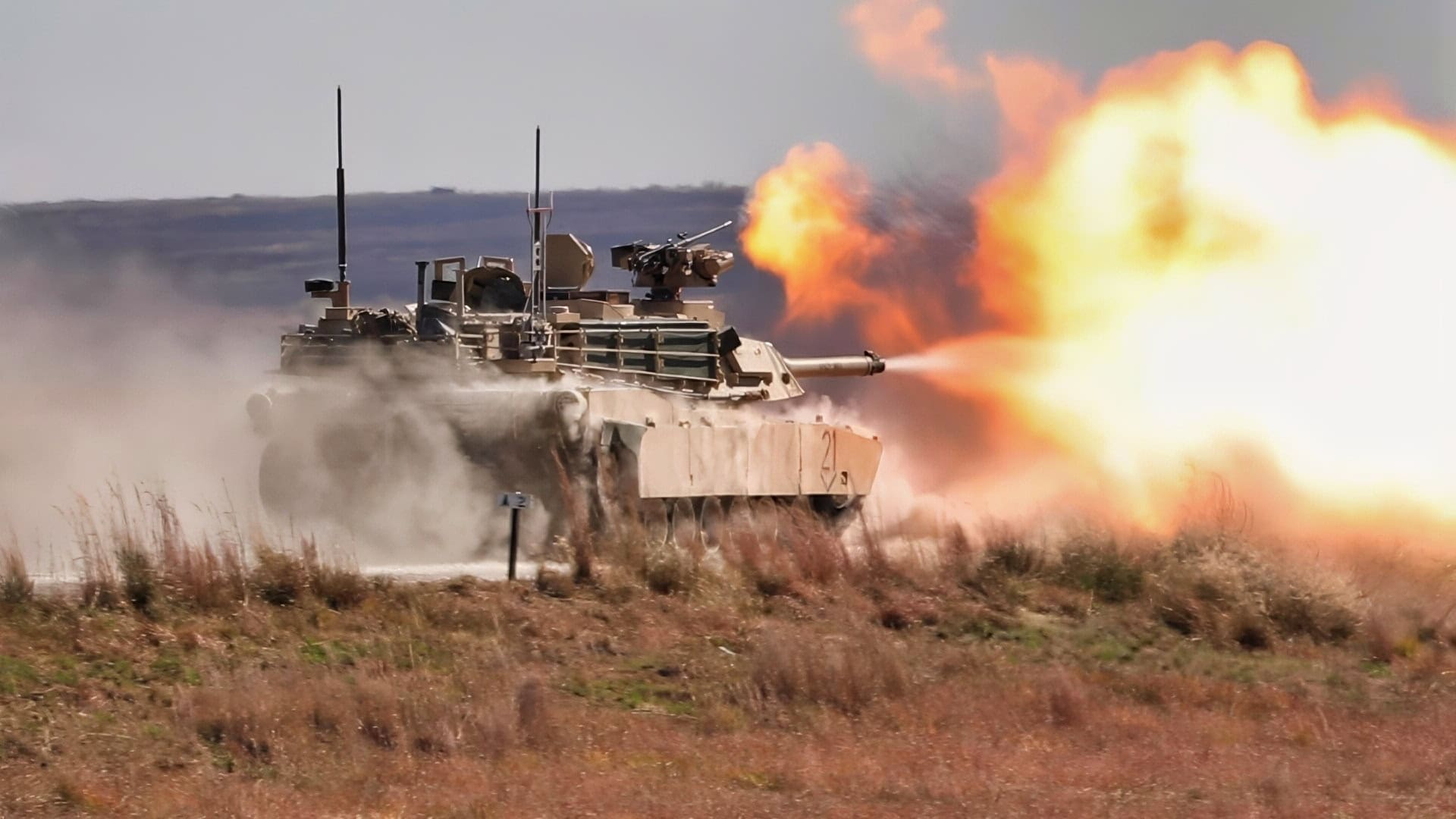
An M1A1 Abrams tank operated by Soldiers with the 2nd Battalion, 70th Armored Regiment, 2nd Armored Brigade Combat Team, 1st Infantry Division, fires while moving at the Douthit Gunnery Complex on Fort Riley, Kansas, Oct. 19, 2022. The tank crew was conducting gunnery for qualification. (U.S. Army photo by Sgt. Jared Simmons)
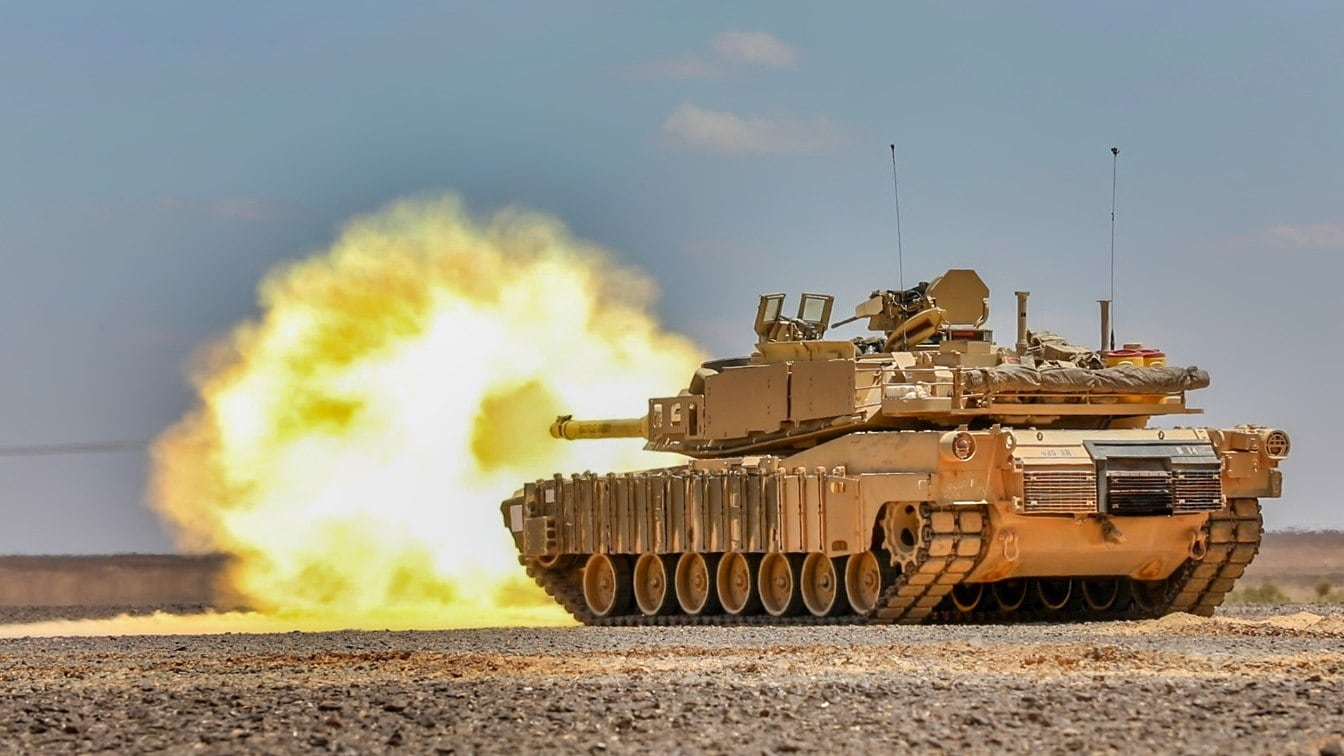
A U.S. Army M1A1 Abrams tank fires as part of Eager Lion 2024 at Training Area 5, Jordan, May 13, 2024. Eager Lion 24 is a multilateral exercise, with 33 participating nations, hosted by the Hashemite Kingdom of Jordan, designed to exchange military expertise, and improve interoperability among partner nations, and considered the capstone of a broader U.S. military relationship with the Jordanian Armed Forces. Jordan is one of U.S. Central Command’s strongest and most reliable partners in the Levant sub-region. (U.S. Army photo by Spc. Nataja Ford)
The larger batch also improved the economics of operating the type. Ukraine’s original 31-tank fleet was too small to absorb losses while comfortably maintaining training and repair rotations. Forty-nine additional vehicles did not erase the support problem, but gave commanders more freedom to hold tanks back while others fought or underwent repairs.
Washington’s approval showed that the dispute was not about banning Ukraine from receiving Abrams tanks. American officials were questioning the return on a difficult transfer. Australia judged that an imperfect tank available now was worth more to Ukraine than a retired tank parked at home.
Ukraine Rebuilt the Australian Tanks for a Different War
Ukraine did not send the Australian M1A1s into combat in their retirement configuration. Unit imagery and specialist reporting showed tanks fitted with explosive reactive armor, camouflage, overhead mesh, and wire barriers designed to interfere with first-person-view drones. Modified Australian Abrams reportedly entered combat near Pokrovsk with the 425th Separate Assault Regiment in early 2026.
Those additions support the American warning while explaining why Kyiv wanted the vehicles. Standard Abrams protection was not designed around small drones approaching from above or behind. Ukrainian units adapted the tanks for dispersed direct-fire missions and later added more elaborate anti-drone structures instead of relying on massed armored breakthroughs.
The modifications show why survival depends on new protection and tactics. The Abrams still supplies accurate, protected direct fire, though it must operate inside a network of infantry, electronic warfare, reconnaissance drones, and recovery support.
Ukraine’s Abrams Experience Is Shaping America’s Next Tank
The war in Ukraine is influencing American tank development. The U.S. Army says its M1E3 prototype combines reduced weight, a smaller logistical footprint and protection against drones and long-range precision weapons. The redesign addresses concerns raised before Australia’s tanks left Geelong and reflects the wider effort to adapt the Abrams for the drone age.
Delivering the vehicles required a 55-day voyage, Australian specialists in Poland, and final readiness work before handover. Australia said many tanks from the July shipment had reached the front by December 2025.
Key Point: Ukraine has not published a current accounting of how many Australian M1A1s remain operational, damaged, under repair, or lost.
About the Author: Harry J. Kazianis
Harry J. Kazianis (@Grecianformula) was the former Senior Director of National Security Affairs at the Center for the National Interest (CFTNI), a foreign policy think tank founded by Richard Nixon based in Washington, DC. Harry has over a decade of experience in think tanks and national security publishing. His ideas have been published in the NY Times, The Washington Post, The Wall Street Journal, CNN, and many other outlets worldwide. He has held positions at CSIS, the Heritage Foundation, the University of Nottingham, and several other institutions related to national security research and studies. He is the former Executive Editor of the National Interest and the Diplomat. He holds a Master’s degree focusing on international affairs from Harvard University.

